Aphids on Green Chilli: Identify and Control Them Safely
Quick answer
Aphids on Green Chilli gather on tender tips, leaf undersides, and flower buds, leaving curled new leaves or sticky honeydew. First, separate the pot from nearby plants and rinse the colonies off with a steady stream of water; then check the tips again over the next several days.
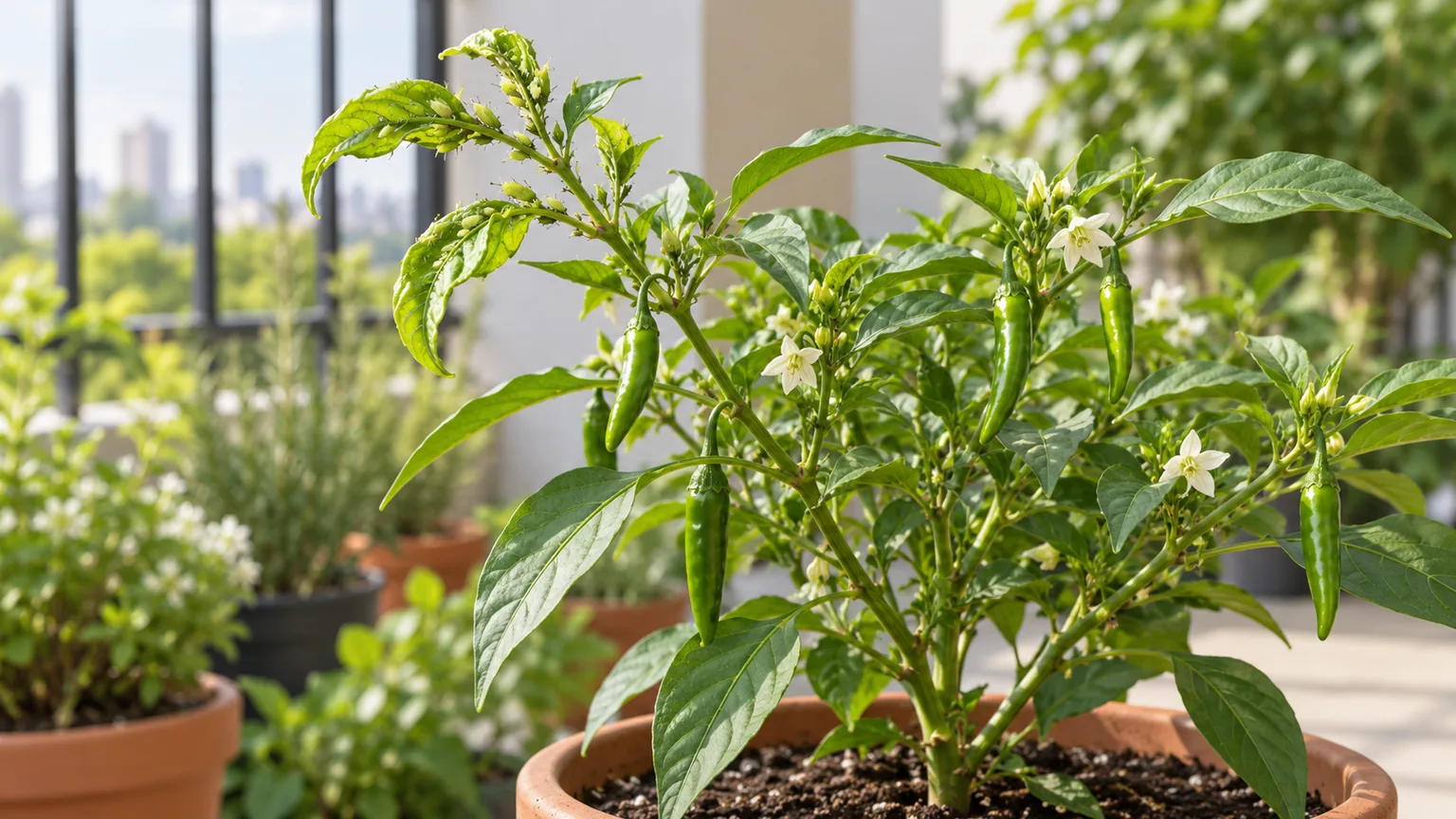
Aphids on Green Chilli: Causes, Checks & Fixes
This guide covers aphids on Green Chilli. See also the general Aphids guide, watering, and light pages for this plant.
Aphids on Green Chilli: Causes, Checks & Fixes
Quick answer
Aphids on Green Chilli usually appear as clusters of soft, pear-shaped insects on tender shoot tips, the undersides of young leaves, or flower buds; aphids form dense colonies. You may also see shiny honeydew, ants, or pale shed skins. For the general aphid pattern across plants, see our aphids guide; the first step on a chilli is to separate it from nearby plants, then rinse the visible colonies from both sides of the leaves with a steady stream of water. Check again after the foliage dries and repeat the inspection over the next several days.
Green Chilli here means a hot-fruited Capsicum annuum grown for its edible pepper, often in a sunny pot or garden bed; NC State notes that cultivars range from spicy to sweet within the species. Aphids matter most when a plant is young, new shoots are expanding, or flowers are setting fruit. A few insects on a mature leafy plant are not automatically an emergency, but persistent colonies can distort shoot tips and feeding on blossoms can reduce fruit set, especially in heavy infestations. Avoid treating every curled leaf as proof of aphids: confirm the insects before you spray.
What aphids look like on Green Chilli
Check the newest leaves first. Green peach aphids are common on peppers, and other aphid species can also use pepper as a host. Depending on species and life stage, they may look green, yellow-green, pink, or darker than the foliage. The insects are small and soft-bodied, with a pear-like outline; a hand lens may reveal a pair of short tubes, called cornicles, near the rear. They often sit still in groups along tender stems, leaf veins, and the underside of a leaf that has begun to curl. NC State Extension describes green peach aphids as soft-bodied and pear-shaped, while UC IPM notes their paired cornicles and range of colors.
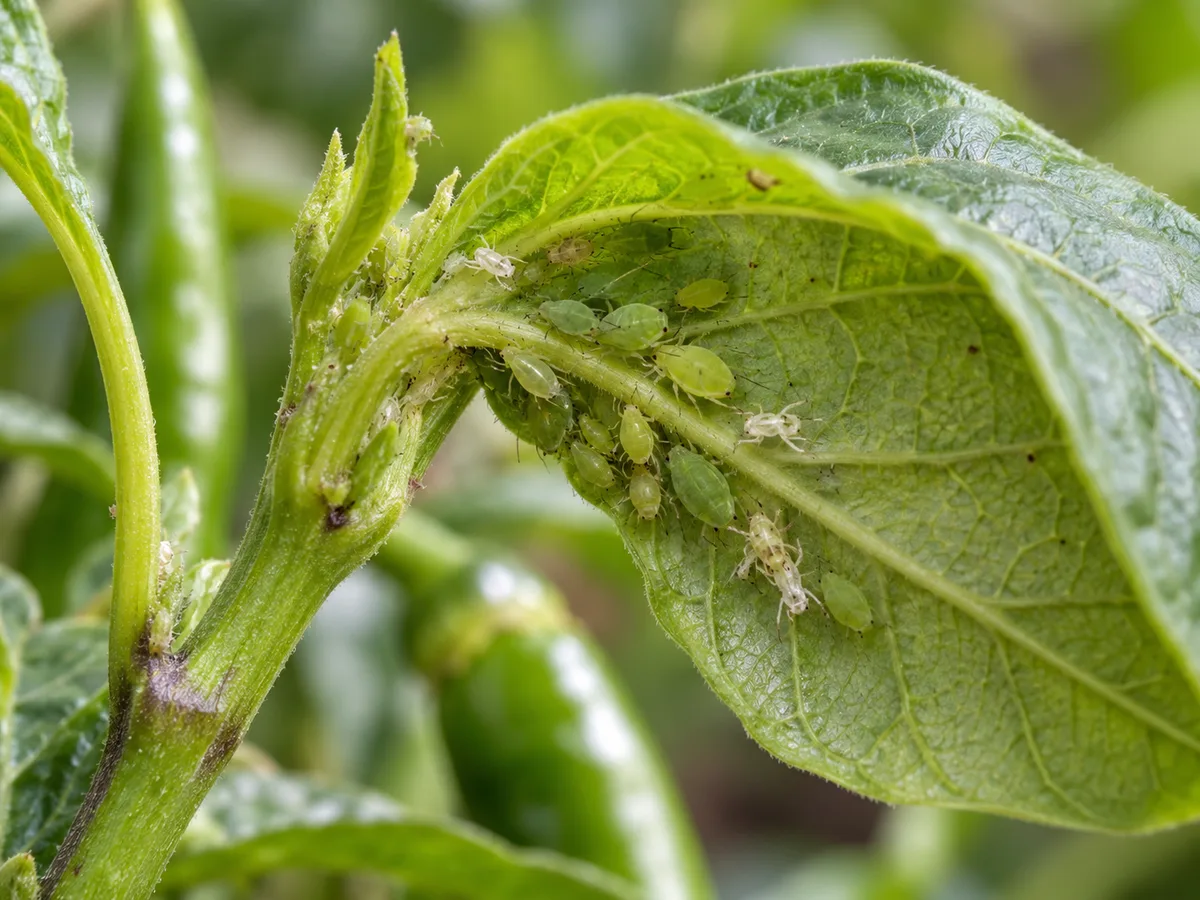
Aphids tend to cluster on tender chilli growth; inspect under curled leaves and around the shoot tip before treating.
Look for a combination of signs rather than relying on leaf shape alone. A glossy, sticky film on leaves or below the plant is honeydew, the sugary waste aphids excrete while feeding. Ants may visit the residue, and a dark superficial coating can develop where sooty mold grows on honeydew; UC IPM describes aphids, ants, and honeydew as a common combination. Small white flecks may be shed aphid skins, not eggs, because aphids molt as they develop. If you see live insects, honeydew, and new leaves that are puckered or curled around a colony, aphids are a strong explanation. UF/IFAS describes honeydew and sooty mold on pepper crops.
The absence of visible insects matters too. Old curled leaves may stay misshapen after the colony is gone, and chilli leaves can curl for other reasons. Gently unfold only leaves that open without tearing; do not pull apart a tight growing tip and mistake damage from handling for pest feeding. Turn the plant slowly and check several shoot tips, the flower stems, and leaves directly below the newest growth. A phone photo from the same angle every few days makes it easier to tell whether the problem is still spreading.
Why chilli tips and flowers are vulnerable
Aphids feed on soft, actively growing tissue, so the tender flush after transplanting, pruning, or a warm spell is the first place to inspect. They can build colonies quickly in favorable conditions. In Florida pepper guidance, UF/IFAS describes young aphid nymphs on the undersides of young leaves and notes that nymphs can mature in about a week; this is a reason to check again soon after rinsing, not a universal timetable for every climate or aphid species. UF/IFAS pepper guidance and Utah State’s vegetable guide both identify aphids as pests of peppers.
Green Chilli is a sun-demanding edible crop, not a shade-loving indoor foliage plant. If it is pale, stretched, or slow to branch, improve the growing conditions as a separate issue rather than adding fertilizer as an aphid treatment. Capsicum annuum prefers full sun and evenly moist, well-drained soil, according to the NC State Extension plant profile. Check placement against the Green Chilli light guide and keep irrigation steady using the Green Chilli watering guide; neither a dry root ball nor a saturated one is corrected by spraying the leaves.
Excess nitrogen deserves restraint. A chilli that receives more fertilizer than it can use may push abundant soft foliage, and Utah State reports that aphid densities tend to be higher on plants with excess nitrogen. This does not mean you should starve a fruiting plant or stop a balanced feed that it needs. Instead, check what product was applied, when, and at what label rate; use the Green Chilli fertilizer guide before changing its normal crop nutrition. Utah State Extension’s pepper guidance supports avoiding excess fertilizer as one part of aphid prevention.
The damage pattern can affect the harvest differently by stage. A light colony on a mature leaf may do little visible harm, while repeated feeding at a young tip can leave that flush curled or stunted. Aphids on blossoms can reduce fruit set, so look under the calyx and around flower stalks when buds drop or flowers fail to develop. UF/IFAS lists reduced fruit set from blossom feeding and stunting or distortion under heavy infestation in its pepper guidance. If the plant is small or a large share of its newest growth is colonized, act promptly; if you find a few aphids on a vigorous plant, a targeted rinse and follow-up check is a proportionate start.
Confirm aphids before choosing a treatment
Use this quick inspection sequence while the plant is dry enough to handle:
- Look at the newest growth. Check the shoot tip, the folded surfaces of young leaves, and the underside of the first few fully opened leaves. Aphids favor tender tissue and can hide where leaves overlap.
- Check the stem and flower joints. Look where a leaf stalk meets the main stem and around flower buds. Pepper aphids may feed on blossoms as well as foliage.
- Use a white card or your phone camera. Tap a leaf gently over a white surface. Aphids usually remain clustered or crawl slowly; winged individuals may fly when disturbed. A small lens helps distinguish the pear-shaped body and cornicles from debris.
- Look for secondary signs. Sticky honeydew, ants visiting the plant, cast skins, and a dark surface film support aphids, but none alone identifies them. Wipe a small patch of residue with a damp cloth: honeydew is sticky, while leaf tissue itself should remain intact.
- Photograph and compare. Record whether new leaves are curling around a visible colony or whether distortion continues on leaves with no insects. Check again after rinsing rather than assuming the first inspection caught every colony.
Do not diagnose a virus from a single curled leaf. Aphids can transmit some pepper viruses while probing, and a settled colony may be controlled without reversing an infection already established. UF/IFAS explains that certain aphid-borne viruses can be transmitted rapidly, so killing the colony does not guarantee that virus spread has been prevented. If a chilli develops persistent mosaic-like yellow and green patches, widespread distorted growth, or continuing decline despite clean new growth and stable care, isolate it and seek a local extension diagnosis. Do not keep applying stronger sprays in an attempt to cure a virus. UF/IFAS describes rapid virus transmission by aphids.
First fix: rinse the colonies from the plant
Move a container-grown chilli away from neighboring plants, then use a controlled stream of water to dislodge aphids from leaf undersides and tender stems. Support a thin branch with your free hand, and angle the water so it reaches the hidden side of each affected leaf without tearing flowers or flooding the pot. For a plant in a bed, shield nearby seedlings if needed and rinse the affected shoots where they grow. Water can remove aphids and honeydew from sturdy plants; UC IPM recommends using a strong spray and doing it early enough that foliage dries promptly. UC IPM’s aphid management guidance supports this nonchemical first step.
After the rinse, let the foliage dry and inspect the same locations again. If a small colony remains confined to one curled leaf or a shoot that would not flower, prune only that part with clean scissors; do not shear off the whole chilli canopy. A pepper needs its healthy leaves to support flowering and fruit, and heavy pruning during active growth removes useful crop surface. Bag or discard heavily infested cuttings rather than carrying them across the garden. If the plant has flowers or tiny fruit, preserve those stems and rinse carefully instead of trimming broadly.
Do not repot a Green Chilli for aphids alone. Aphids are usually on above-ground shoots; a new pot does not remove the colonies and can add transplant stress. Likewise, do not fertilize in response to curled leaves. First confirm whether live aphids remain, then check the root zone and the plant’s light separately if growth is still weak. If the mix stays wet and leaves yellow, compare drainage and moisture retention in the Green Chilli soil guide; if the pot dries too quickly, check the normal irrigation cues in the Green Chilli watering guidance rather than trying to compensate with pesticide.
If aphids return after rinsing
Recheck the plant within a few days, including the undersides of fresh leaves and any folded tip that was difficult to rinse. Aphid generations can turn over quickly in warm conditions, and one wash may miss insects hidden inside curled growth. Also inspect plants that touched the chilli or sat close enough for winged aphids to reach. Keep the container separate until repeat inspections show no active colonies and the next flush is clean; separation reduces the chance of carrying the infestation to another edible plant.
If a small number persists, repeat the water rinse and remove only the most heavily colonized leaves. Watch for lady beetle larvae, lacewing larvae, hoverfly larvae, and the darkened “mummies” left by parasitic wasps. These natural enemies feed on aphids; broad-spectrum insecticides can harm them as well as the pest. UF/IFAS lists pepper aphid natural enemies, and UC IPM discusses aphid predators and parasitoids.
Consider a spray only if repeated physical removal is not keeping pace with an active colony or the plant is losing new growth or flowers. For an edible chilli, use only a pesticide whose current local label specifically permits use on peppers or edible crops at the relevant site. Read and follow the whole label, including application timing, protective equipment, pollinator precautions, and any interval required before harvesting; see the EPA pesticide label guidance. A product labeled for ornamentals is not automatically appropriate for a food crop. Never make a homemade dish-soap spray: household detergents are not the same as a labeled insecticidal soap and can injure leaves.
Contact products such as insecticidal soap or horticultural oil only affect aphids they reach, so coverage of leaf undersides matters; they will not undo distorted leaves or a virus infection. Avoid spraying a wilted or drought-stressed chilli, and do not apply products in hot conditions or when pollinators are visiting flowers. UC IPM notes that oils and soaps can injure some plants under stress or high heat and that contact sprays do not reach aphids protected within curled leaves. Follow the product label rather than copying a rate or schedule from a general article, because formulations and legal directions differ by location. See UC IPM’s oil and soap cautions for flowering edible crops.
Lookalikes: aphids, water stress, or another pest?
| What you notice | More consistent with | What to check next |
|---|---|---|
| Clusters of pear-shaped insects on tender tips, with sticky honeydew or cast skins | Aphids | Rinse one affected shoot and check the same underside after it dries. |
| Leaves droop across the plant and the potting mix is dry several centimeters below the surface | Water stress | Restore even moisture based on the potting mix; do not treat the soil condition as a pest. |
| Lower leaves yellow while the mix remains wet, with slow drainage or a sour smell | Root-zone trouble | Check drainage and roots; compare the pattern with the Green Chilli soil guidance before spraying. |
| Powdery-white adults rest under leaves, while pale, scale-like nymphs remain attached | Whiteflies | Check both leaf surfaces; UF/IFAS describes whiteflies on peppers. They can also produce honeydew, so sticky leaves alone do not confirm aphids. |
| Mottled yellow-green patches or distortion continue on new leaves after no aphids are found | Possible disease or another stress | Isolate the plant; NC State describes mosaic virus symptoms on Capsicum annuum, but a visual pattern alone is not a confirmed diagnosis. |
Pepper leaves can curl from water stress, heat, or disease, so match the evidence to the plant as a whole. Aphids should be visible or leave recognizable signs on the tissue they fed on; a dry pot, waterlogged mix, or spreading mosaic pattern points to a separate investigation. For yellowing without a visible colony, use the Green Chilli problems hub to choose a more relevant diagnosis and avoid using insecticide as a diagnostic test.
Recovery and what damaged leaves can tell you
The best recovery sign is a clean, normally expanding shoot tip, not an old leaf returning to a perfect shape. Aphid feeding can leave new leaves curled or puckered; those leaves may stay distorted after insects are removed. Keep the unaffected canopy and flowers, stabilize light and moisture, and judge progress from fresh growth. Epic Gardening’s practical guide likewise notes that previously curled foliage may remain misshapen after aphids are gone, so do not keep spraying simply because old damage is still visible. Epic Gardening’s aphid guide supports treating new growth as the useful recovery signal.
If colonies are gone but a chilli continues to lose leaves, develop mottling, wilt in evenly moist soil, or fail to produce normal new shoots, reconsider the diagnosis. A few aphids do not explain every later change. Check the Green Chilli problems hub to route the next check, and use the relevant care guide only when the evidence points to a water, light, or root issue. A plant with extensive persistent distortion or likely virus symptoms may not return to normal; keep it isolated while you seek local advice, and replace it if it cannot produce healthy growth or maintain the crop.
Prevent aphids on Green Chilli
Inspect the plant when bringing it home and before setting it beside other pots. Turn over a few leaves, check the flower stems, and look for honeydew or curled shoot tips before transplanting. A short isolation period is especially useful when the chilli came from a nursery or was grown outdoors near other vegetables; inspect it during that time rather than assuming it is pest-free after one look.
During active growth, include the undersides of new leaves in the weekly chilli check. Increase inspections when the plant pushes a flush of soft growth, when ants begin visiting the stems, or after nearby pepper or tomato plants show pests. Keep the plant in the full sun it needs and water deeply when the upper mix begins to dry, while allowing excess water to drain. The Green Chilli overview explains the crop’s overall growing pattern; stable care helps it tolerate limited feeding but does not make it immune to aphids.
Feed according to the product label and the plant’s growth stage. Avoid repeated high-nitrogen boosts intended to force leaves or fruit; excess nitrogen can favor aphid buildup, while too little nutrition can also weaken crop growth. Clear fallen plant debris and keep neighboring plants under observation. In a garden with recurring aphid pressure, preserve beneficial insects and consider a crop-appropriate physical barrier while plants are young; remove covers when flowers need pollinator access. Utah State Extension’s prevention notes discuss excess nitrogen, row covers, reflective mulch, and natural enemies in vegetable production.
When to use this page vs other Green Chilli guides
Use this page when you can find aphids or their honeydew on the chilli and need to remove them without damaging an edible crop. If the leaves are distorted but no insects or shed skins are present, start with the lookalike table and follow the care guide that matches the evidence. A curled leaf by itself is not enough to justify spraying.
Related Green Chilli guides
- Green Chilli overview — use for the whole crop’s light, water, harvest, and seasonal context.
- Green Chilli light — use when weak or stretched growth suggests the chilli is not receiving enough direct sun.
- Green Chilli watering — use when drooping or curling appears alongside a dry or persistently wet root zone.
- Green Chilli soil — use when the mix stays wet, drains slowly, or dries too quickly.
- Compare the aphid signs here with the other problems in the Green Chilli problems hub when the evidence does not fit.
Related tool
Use the Pest Identifier Tool to compare aphids with other pests on this Green Chilli before choosing a treatment.