Green Chilli Wilting: Water, Heat & Disease Checks
Quick answer
When Green Chilli wilts, first check the mix 2–3 cm below the surface and lift a container pot. Water deeply only if the root zone is drying; wilt over wet soil calls for a drainage, root, or disease check.
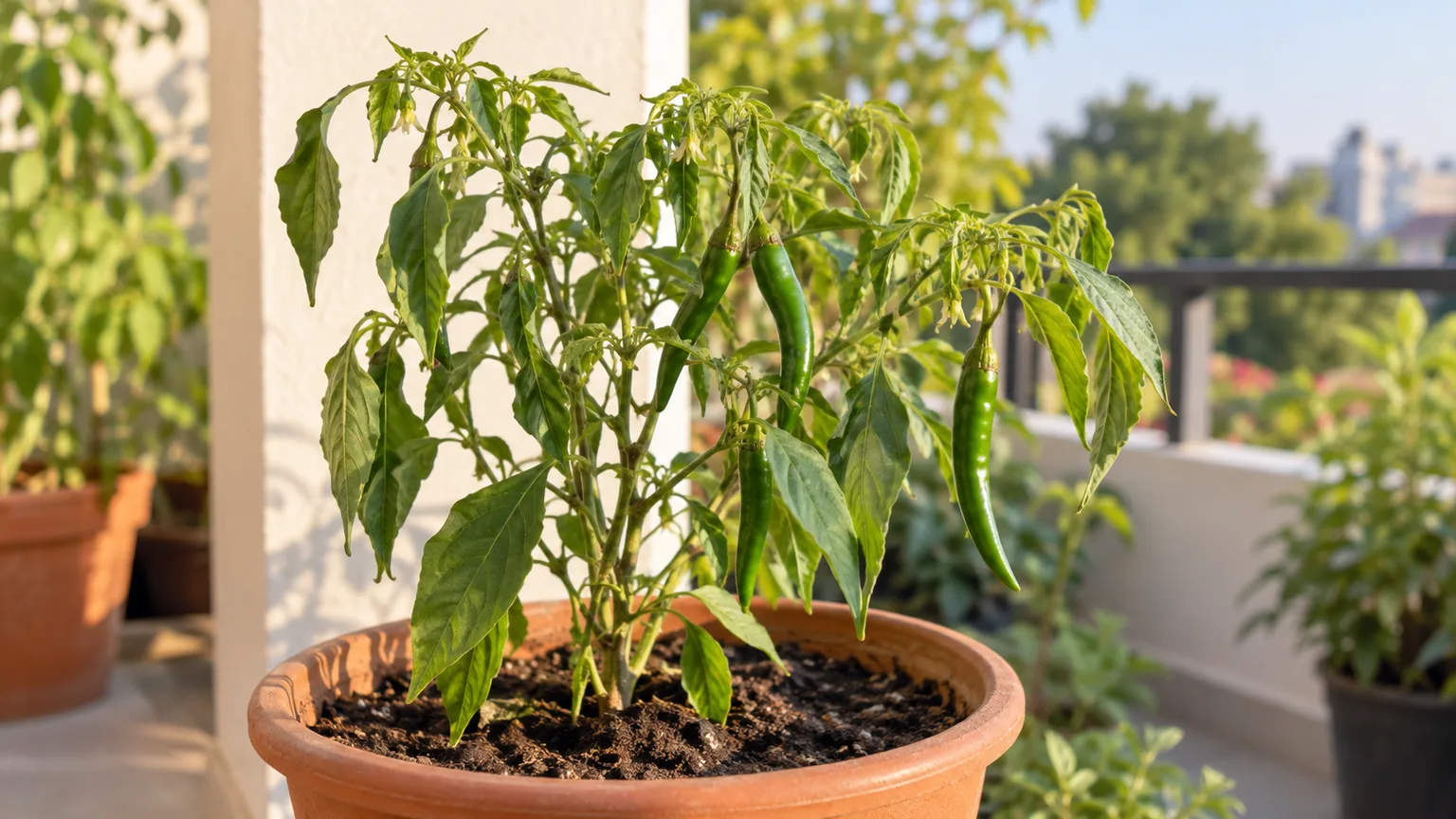
Wilting on Green Chilli: Diagnose Water, Heat & Disease
This guide covers wilting on Green Chilli. See also the general Wilting guide, watering, and light pages for this plant.
Wilting on Green Chilli: Diagnose Water, Heat & Disease
Quick answer
When Green Chilli wilts, first feel the mix 2–3 cm below the surface and lift the container. Water deeply only if the root zone is drying; if it is still wet, more water can deepen the problem. A hot-afternoon slump that eases in cooler hours points in a different direction from a plant that stays limp overnight or wilts with a dark stem base. The general wilting guide explains the broad symptom; the checks below focus on a fruiting pepper.
What wilting looks like on Green Chilli
A wilted Green Chilli has leaves that lose their usual firmness and hang down, sometimes with the upper shoot tips and smaller branches softening as well. One limp plant does not tell you whether the cause is thirst, heat, damaged roots, or disease. Compare the plant in the cooler morning with its posture after the hottest part of the day, then check the soil before changing the watering routine.
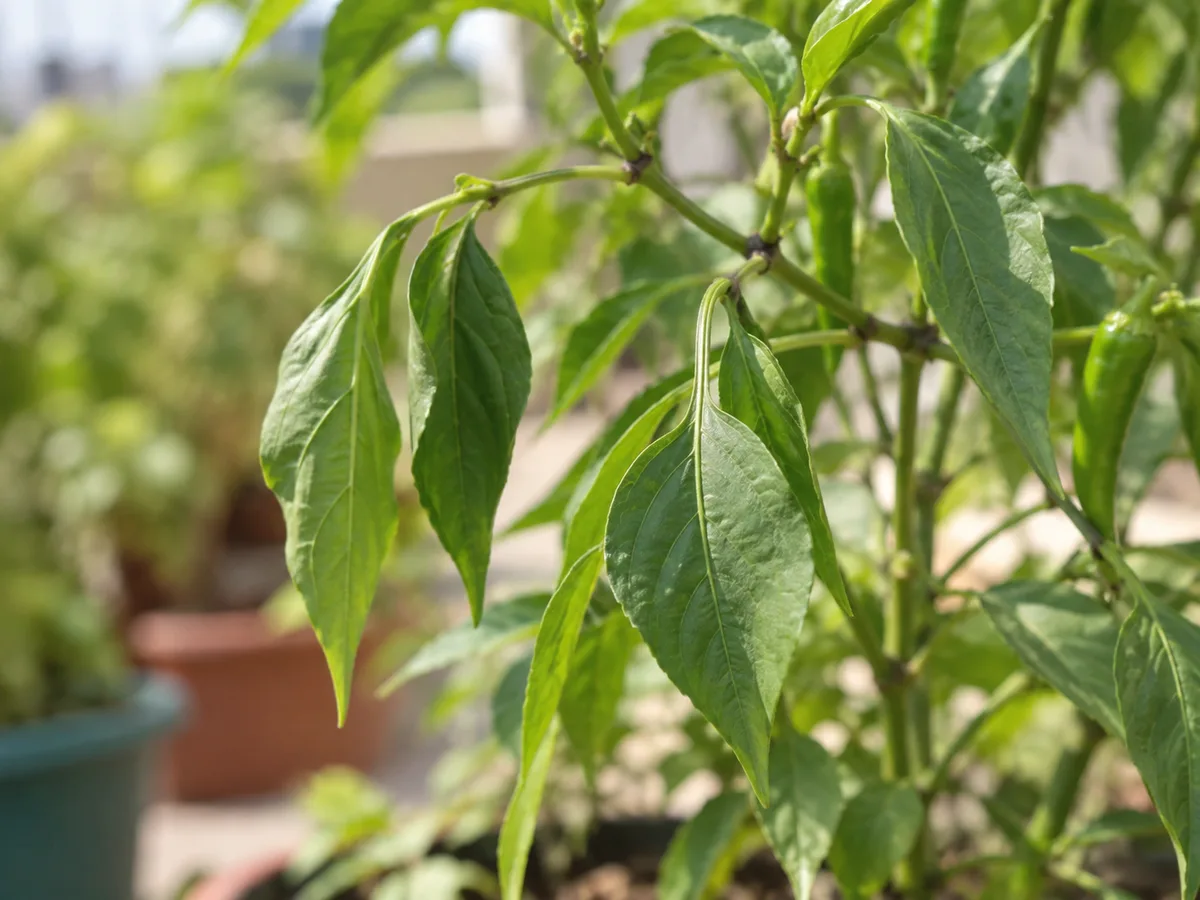
The leaf posture signals stress, but it cannot show whether the chilli needs water or has a root problem.
Here, Green Chilli means a hot-fruited Capsicum annuum cultivar harvested green, as described in the Green Chilli overview. Its leaves and stems can lose firmness when roots cannot replace water quickly enough. NC State describes C. annuum as a full-sun pepper that prefers evenly moist, well-drained soil; that balance matters more than watering by the calendar. The species profile also notes that peppers tolerate drought, but that does not make repeated dry-to-soggy swings useful during flowering and fruiting.
Check the root zone before watering a wilted chilli
Use two readings together: moisture below the surface and the weight of the pot. A dry top crust can hide damp mix below, while a surface that looks dark does not prove that the full root ball is wet. Feel just under the surface, lift the pot if it is movable, and note whether the plant recovers when the afternoon heat passes. The Green Chilli watering guide gives the same plant-specific moisture check; the soil guide covers drainage and mix structure.
| Pattern on the Green Chilli | What it suggests | Next check |
|---|---|---|
| Wilt with a dry, light pot; leaves improve after watering | The root ball may be too dry | Water thoroughly once, then let excess drain; use the plant’s moisture check rather than a fixed schedule if it repeatedly dries too far. |
| Wilt persists while the pot is heavy and the mix stays wet | Roots may be short of oxygen or damaged | Check the drainage hole and stem base; compare with overwatering and root rot. |
| Leaves sag mainly in the hottest hours but firm up later | Heat and rapid water loss may temporarily exceed root uptake | Recheck in the morning and assess the plant’s sun and airflow before changing its watering. |
| A branch or whole plant wilts while the soil is moist, with a dark lower-stem lesion or discolored tissue | A pepper disease is possible | Do not diagnose from wilt alone; look closely at the crown and seek local extension advice if it is spreading. |
The table narrows the next check; it does not identify a pathogen. A plant that was just moved, transplanted, or exposed to a new stretch of sun can also wilt temporarily. If the leaves droop but the plant remains otherwise firm, the Green Chilli drooping-leaves guide helps separate posture changes from persistent whole-plant wilt.
The moisture check differs slightly between a pot and a garden bed. In a container, lift the pot and feel the mix a little below the surface; do not judge by runoff on top or by how dry the rim looks. Confirm that water can leave the drainage hole, but avoid unpotting a pepper just because several leaves are soft. In a bed, feel soil near the outer root area rather than scraping at the stem, then note whether rainwater is pooling around the plant. A chilli rooted into the ground cannot be diagnosed by lifting the rootball, so the crown and the soil’s drainage pattern become more useful clues. Record whether one branch or several are affected and whether the change followed watering, rain, a move, or an unusually hot day.
During flowering and fruit set, also note whether buds or young fruits are dropping. That does not diagnose the wilt, but it can help reveal a recent swing between very dry and very wet conditions. Utah State Extension notes that irregular over- or underwatering can cause flower drop or blossom-end rot in peppers; treat those as a reason to review the irrigation pattern, not as proof of a root disease. Its pepper irrigation section recommends deep, infrequent watering in garden beds.
When a fruiting Green Chilli wilts in afternoon heat
Chilli containers can dry quickly in warm, sunny weather, so check them more often then rather than assuming yesterday’s watering still covers today’s demand. The RHS recommends keeping chilli compost evenly moist and notes that pots may need daily checks in hot, dry summer conditions; that is a cue to inspect, not to water automatically. Its chilli-growing guide also discusses ventilation and shading during hot greenhouse weather.
If a Green Chilli wilts only during the hottest part of the day but firms up again as the air cools, avoid moving it into deep shade or repeatedly soaking an already moist root ball. The Missouri Botanical Garden’s hot-sun wilt note describes plants recovering as the sun moves; that pattern is a clue to compare with soil moisture, not a diagnosis by itself. Ventilate a greenhouse or sheltered growing area, and use temporary light afternoon protection during an extreme heat spell if the plant remains stressed. Return it to the sunny conditions peppers need once temperatures ease; use the light guide to review a lasting placement change. Hot-weather growers at GrowVeg likewise recommend checking moisture often so pepper foliage does not wilt in dry conditions.
What wet-soil wilt means at a pepper’s crown
If the mix stays wet and the chilli remains limp, do not keep watering just because the leaves look thirsty. Waterlogged soil can injure roots and reduce the plant’s ability to take up water, so wet soil and wilt can occur together. The Missouri Botanical Garden explains this root-oxygen problem in its overwatering guidance. For Green Chilli, check whether water drains freely and whether the pot or bed stays saturated after rain; use the root-rot diagnosis if decline continues.
Pepper-specific disease signs deserve a different response from a single dry spell. NC State reports that Phytophthora capsici infects hot peppers and can cause wilt under wet conditions, often with symptoms beginning at the soil line in roots or the crown. Its pepper factsheet describes dark crown lesions that may extend up the stem. Another pepper disease, southern blight, can form a brown or black lesion where the lower stem touches soil; the lesion may girdle the stem and cause sudden, permanent wilt, as described in NC State’s disease factsheet.
Wilt alone cannot confirm either disease. Look for a lesion, softening at the soil line, white growth on a lesion, or a pattern of nearby peppers declining after wet weather. Utah State’s pepper guide also describes wilt diseases that start low on the plant and may show vascular discoloration, slime, or gummy exudates inside or on stems; its inspection table supports treating these as diagnostic clues rather than proof of one pathogen. If those signs appear, keep runoff and soil from the suspect plant away from neighboring peppers and ask a local extension clinic about diagnosis before using a treatment. NC State notes that home gardeners do not have effective chemical control options for Phytophthora blight, so a guessed fungicide is not a reliable first response.
The first fix for Green Chilli wilting
The first action is a moisture check, not a bundle of treatments. If the root zone is dry and the pot is light, water slowly and deeply until the mix is moist through the root ball, then let it drain. Do not add a second quick splash if water runs down the sides; check whether the mix has become hydrophobic and re-wet it gradually. Keep the chilli in its established bright position while it recovers.
If the root zone is still moist, skip that watering. Empty retained runoff and clear an accessible blocked drainage hole; do not unpot the plant unless it continues to decline in wet mix or the crown shows disease signs. Avoid combining root pruning, repotting, hard pruning, and fertilizer in one rescue attempt, because that makes it harder to tell what changed and adds stress to a fruiting pepper. If the diagnosis points toward poor drainage, correct the drainage setup before changing containers or mix.
Recovery signs and when to seek help
A chilli that wilted from a dry root ball may regain firmness after water reaches the roots, but damaged leaves can stay limp or marked. Judge progress by whether the newest leaves remain firm, the plant holds its branches through cooler hours, and no new sections collapse. If the plant stays wilted despite moist soil, or a lower-stem lesion grows, treat the situation as more serious than ordinary thirst.
Persistent wet-soil wilt, sudden collapse, or similar symptoms on nearby peppers warrants a local plant-disease diagnosis. In a garden bed, avoid moving soil from a suspect crown around healthy chilli plants. A container with firm roots, a sound stem base, and a root zone that is drying normally has a better chance of recovery than one with a girdled stem or widespread soft tissue; a photo or leaf posture cannot determine whether a specific pathogen is present.
Prevent repeat wilting while Green Chilli is flowering
Keep Green Chilli in the sunny, warm location it needs, but make the watering routine responsive to the container and weather. Check small pots daily during hot, dry spells and more often when the plant carries fruit; water when the upper layer is beginning to dry, then let excess drain. In a garden bed, water deeply and avoid planting in a low spot that stays wet after rain.
Use an open drainage hole and a mix that holds moisture without remaining saturated. Water the root zone rather than following a fixed weekday schedule, and avoid alternating long dry spells with heavy soaking. These checks protect both sides of the diagnosis: pepper roots need reliable moisture for a crop, but they also need free drainage.
When to use this page vs other Green Chilli guides
Use this guide when the whole plant or several branches are limp and you need to distinguish dry-root wilt, afternoon heat, and disease clues. If the mix is dry and watering history is the main issue, follow Green Chilli’s moisture-guided watering routine; if wilt occurs while it remains wet, use the overwatering guide or root-rot guide for a closer root-zone diagnosis. For a plant whose leaves simply hang but whose overall condition is stable, start with drooping leaves on Green Chilli.
Related Green Chilli guides
- Green Chilli overview: use for the crop’s growth habit and overall seasonal needs.
- Green Chilli watering guide: use to tune moisture checks to a pot, bed, and current weather.
- Green Chilli soil guide: use when drainage or a persistently wet root zone is the likely cause.
- Green Chilli light guide: use when wilt follows intense sun, heat, or a placement change.
- Green Chilli problems hub: use to compare other plant-specific symptoms.
Related tool
Use the Plant Problem Diagnosis Tool to compare moisture, heat, and disease clues before changing more than one part of the growing setup.