Low Humidity on Green Chilli: How to Check and Improve Dry
Quick answer
First confirm that the air around the leaves is actually dry with a hygrometer, and check the root ball before watering. If humidity is low while the mix is already moist, raise ambient humidity gently: use a room humidifier for an indoor plant or damp down a greenhouse floor in warm weather. Green Chilli has no verified cultivar-specific humidity target, so do not chase an invented percentage.
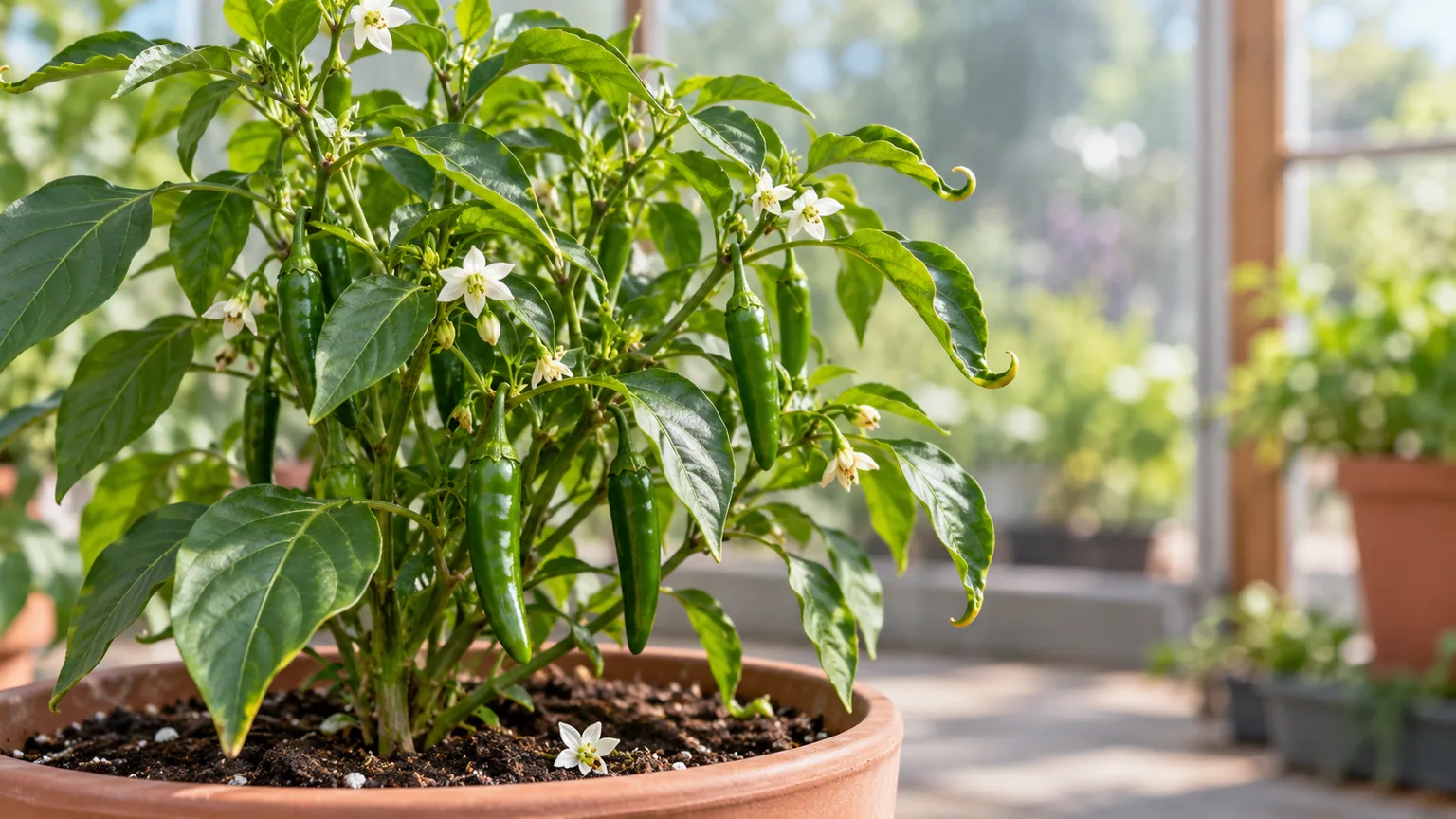
Low Humidity on Green Chilli: Causes, Checks & Fixes
This guide covers low humidity on Green Chilli. See also the general Low Humidity guide, watering, and light pages for this plant.
Low Humidity on Green Chilli: Causes, Checks & Fixes
Quick answer
First confirm that the air around the leaves is actually dry with a hygrometer, and check the root ball before watering. If humidity is low while the mix is already moist, raise ambient humidity gently: use a room humidifier for an indoor plant or damp down a greenhouse floor in warm weather. Green Chilli has no verified cultivar-specific humidity target, so do not chase an invented percentage.
Low humidity matters most when warm, dry air or a hot airflow makes leaves lose water faster than roots can replace it. The RHS chilli guide explains this transpiration risk for chillies, but it does not give a numeric relative-humidity target for every cultivar. Green Chilli is a hot-fruited Capsicum annuum grown for flowers and pods; NC State’s chilli-pepper profile describes hot cultivars within this species and recommends full sun and evenly moist, well-drained soil. It is an edible crop, not a tropical foliage plant that should be kept sealed in a damp enclosure.
What low humidity can look like on a fruiting Green Chilli
Dry air is not diagnosed from one curled leaf. A Green Chilli affected by dry air may lose flower buds or wilt when leaf water loss outpaces roots; a single curled or dry-looking edge cannot confirm it. Heat or a root ball that has dried too far can produce similar-looking stress, so compare air, temperature, and root moisture before naming the cause.
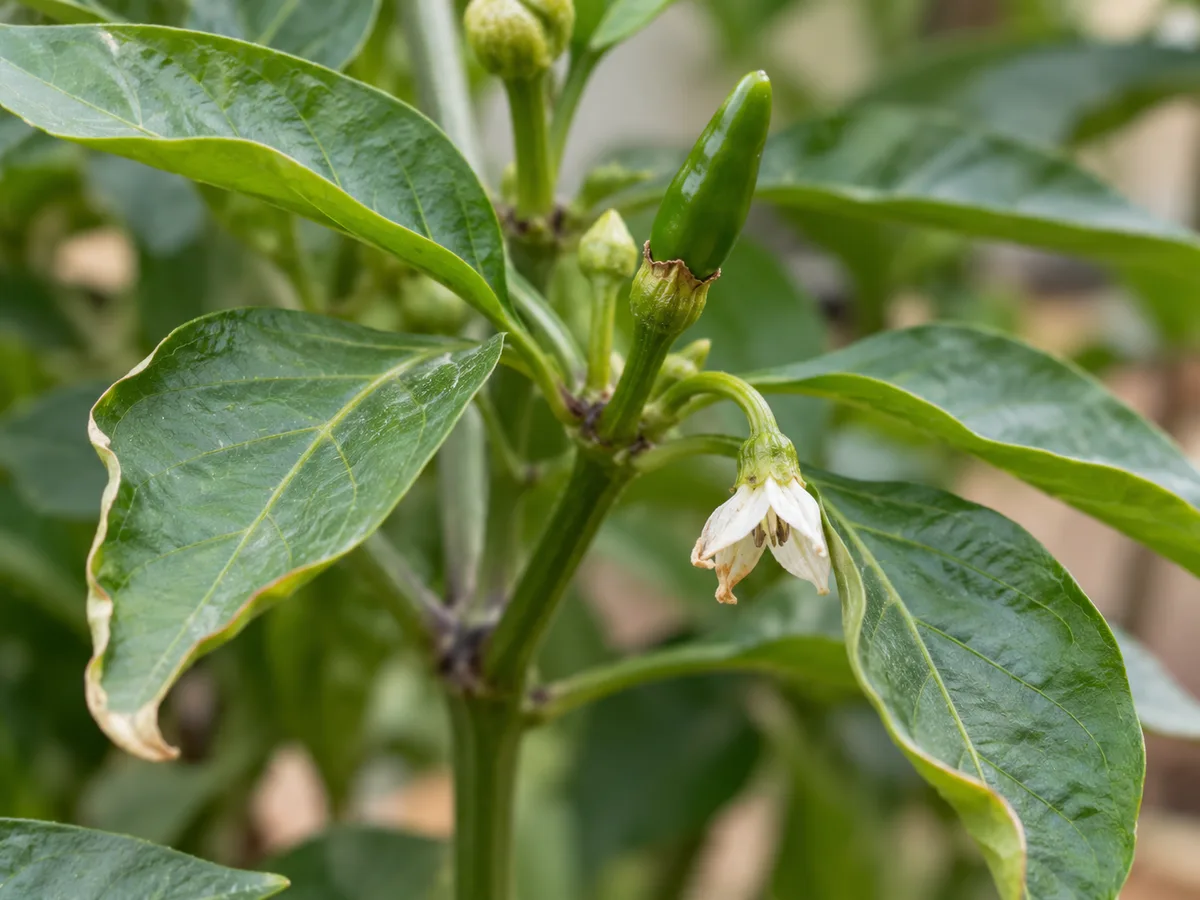
Dry-looking edges and shed flowers are clues to investigate; check air, heat, and root moisture before naming the cause.
Flower drop deserves attention on a fruiting chilli because it interrupts pod set, but it is not a specific humidity symptom. NC State’s sweet-pepper profile lists low humidity among several conditions that can cause flowers to drop from sweet peppers; that is related Capsicum annuum evidence, not a confirmed threshold or diagnosis for every hot Green Chilli cultivar. The Green Chilli overview describes the plant’s own warm, sunny, fruiting context.
Check the air where Green Chilli leaves grow
Place a small hygrometer near the canopy for a few readings, away from direct sun, a wet greenhouse floor, and a heater or fan outlet. A sensor across the room may miss the drier air around a plant beside a window, open door, or warm appliance. Compare readings at the time symptoms appear instead of relying on a single reading taken after the weather changes.
For a fruiting plant, take a reading once during the cooler part of the day and again when the greenhouse or balcony is warmest. Note whether vents are open, whether the plant is in moving air, and whether buds have dropped since the last check. Repeat from the same shaded canopy position over a few days. That small record can show whether dry air coincides with the stress pattern or whether symptoms track a heat spike or a dry pot instead. It also gives you a baseline before using a humidifier or damping down, so you can tell whether the change affects the air around the leaves rather than just the room across from them.
There is no reliable Green Chilli-specific relative-humidity number in the plant record or the sources used here. Penn State Extension’s humidity guide notes that indoor plants differ in humidity needs and that there is not one best level for every houseplant. Use the reading to confirm a persistently dry setting and to compare before and after a modest change, not to force the chilli into a precise percentage.
Check temperature at canopy height too. The RHS says temperatures above 30°C can reduce chilli fruiting and recommends ventilation and shading in hot greenhouse spells. If the greenhouse is very hot, heat is already a major competing explanation; raising humidity while trapping more heat can make the setting less suitable for flowers.
Check Green Chilli’s root ball before changing humidity
Feel the potting mix about 2–3 cm below the surface and lift the container. A dry upper layer and a noticeably light pot suggest the root zone may need water; a heavy pot with cool, damp mix does not. Green Chilli needs an even supply of moisture but freely draining soil. UF/IFAS describes pepper soil as moist, not wet and recommends fertile, well-drained growing conditions.
In a container, compare the upper layer with mix near the outer edge of the root ball; a dry crust can sit above soil that is still cool and damp. In a garden bed, move mulch aside and feel the soil a short distance from the stem, then replace the mulch. Pot weight is useful for containers but not for an in-ground plant. Keep this moisture check consistent while you adjust the air, so a separate watering change does not make the response harder to read.
If the mix is dry at the check depth, water the root ball thoroughly and let excess drain before trying to change the air. In a sun-exposed container, check again during the hottest or windiest part of the day; the RHS notes that chilli pots can dry quickly in summer, and GrowVeg recommends frequent checks in hot weather. Use the Green Chilli watering guide to adjust checks for a pot versus an in-ground plant.
If the mix is still damp, do not add water just because leaves are limp or flowers have fallen. Inspect the drainage hole and whether water is collecting below the pot. For the underlying root-zone balance, see the Green Chilli soil guide; a dry surface can conceal damp soil deeper down, while waterlogged roots may lose oxygen and fail to supply water normally, as the Missouri Botanical Garden explains.
Choose a first fix for Green Chilli’s growing setup
If the air is confirmed dry and the root zone is already moist, make one change to the air around the plant and keep the other conditions stable long enough to judge the result.
Indoors or in a sunny conservatory
Use a room humidifier near the plant and monitor the canopy with the hygrometer. Keep Green Chilli in its brightest suitable position; moving it to a dim bathroom solely for humidity can trade one stress for another. Penn State notes that a humidifier can raise indoor humidity, while misting raises it only until the water evaporates, often briefly. Repeated leaf misting is therefore a poor way to maintain a stable reading.
Do not put a plastic bag over a flowering or fruiting plant as a routine fix. A sealed cover can trap heat and keep foliage wet, and it does not solve a dry root ball. Keep air moving gently and avoid directing a heater, air conditioner, or fan straight at the leaves.
In a greenhouse or polytunnel
In warm weather, wet the greenhouse floor to add moisture as it evaporates; the RHS describes damping down for chilli plants. Keep the vents working: if temperatures rise above 30°C, ventilate and use appropriate shading rather than sealing the structure to hold humidity. If the floor dries quickly, use the plant’s response and canopy readings to decide whether the change helped; avoid overhead wetting that leaves pepper foliage persistently damp.
Outdoors on a balcony or in a garden bed
Open-air humidity is difficult to change around one plant. Keep the chilli in a bright, sheltered place out of a strong drying wind, while preserving the full sun it needs to flower and fruit. Mulch the bed to slow soil-moisture loss, and check a container more often during hot, dry weather. The Green Chilli light guide helps balance a sunny position with afternoon heat on exposed terraces.
Separate dry air from the lookalikes
| Pattern | More likely explanation | Next step |
|---|---|---|
| Low canopy humidity, moist but draining mix, and symptoms following a dry indoor or greenhouse spell | Dry air may be adding to water loss | Make one gentle humidity change and compare later readings and new growth |
| Dry mix, light pot, and daytime limp leaves | Root-zone drought is more likely than humidity alone | Water the root ball once and let it drain; review the plant’s watering routine if the pattern repeats |
| Limp plant with wet mix or a sour smell | Root or drainage trouble needs attention | Stop adding water, check the drainage hole, and review whether the mix stays wet |
| Flowers drop during a heat spike or a sudden hot greenhouse day | Heat may be the stronger stressor | Measure canopy temperature, ventilate, and shade the greenhouse as needed |
| Fine stippling, webbing, sticky residue, or visible insects | A pest problem may be involved | Inspect leaf undersides and follow the Green Chilli brown-tips guide only if the marks are actually dry edges |
The table narrows the next check; it cannot diagnose root disease or pests from a description alone. For a general explanation of dry-air plant stress, see the low-humidity guide. Here, the useful distinction is whether Green Chilli is losing flowers or leaf firmness while its root zone is moist and its air is demonstrably dry.
Recovery: judge new flowers and leaves, not the old damage
If heat or dry air was the main stress, correct the environment and watch the plant through the next several checks rather than changing humidity, soil, and fertilizer all at once. The practical sign of recovery is that later buds remain on the plant and new leaves emerge without worsening curl or dry edges. Old leaf margins are a poor day-to-day measure, so judge the correction by new growth rather than pre-existing damage.
Keep the same root-zone routine while you assess recovery. Green Chilli can be thirsty in a small, warm container yet suffer when a pot stays saturated; check the mix and weight rather than using a fixed daily watering rule. If the whole plant remains limp in damp soil, the stem base softens, or damage spreads despite stable conditions, reassess the roots and pests rather than increasing humidity again. The Green Chilli problems hub helps route persistent symptoms to a more specific diagnosis.
Prevent low-humidity stress without sacrificing fruiting conditions
Keep the chilli in bright sun with shelter from hot drying drafts. In a greenhouse, track both temperature and humidity because a cooler, ventilated space can be more useful than a sealed, humid one. The RHS recommends greenhouse ventilation and shading during excessive heat and describes damping down as a way to add humidity while lowering temperature. Avoid treating humidity as a substitute for the plant’s need for sunshine, drainage, and steady soil moisture.
For containers, check the upper root zone more often during hot, dry, or windy spells, especially while flowers and fruit are developing. Water thoroughly when the mix is beginning to dry, then let drainage work. For beds, mulch can reduce moisture loss without keeping leaves wet; Utah State Extension’s pepper guide includes moisture conservation and well-drained soil in pepper care. If the plant stretches or stops flowering in a shaded spot, use the Green Chilli light guide to reassess exposure before increasing humidity.
Related Green Chilli guides
Use this page when a hygrometer confirms dry air and flower or leaf symptoms coincide with that setting. For a dry root ball, follow the watering guide; for slow drainage or soil that stays wet, use the soil guide. The overview covers the crop’s broader conditions, and the problems hub helps compare other symptoms.
Related tool
Use the Humidity Calculator to compare a room reading with the plant’s conditions before you adjust its setup.