Mold on Green Chilli Soil: Causes, Checks & Fixes
Quick answer
Soft white or gray fuzz limited to the soil is usually surface fungal growth on damp organic mix, not proof that Green Chilli has a plant disease. Keep its root zone evenly moist but freely draining: check the top 2–3 cm, let it begin to dry before watering, and empty the saucer.
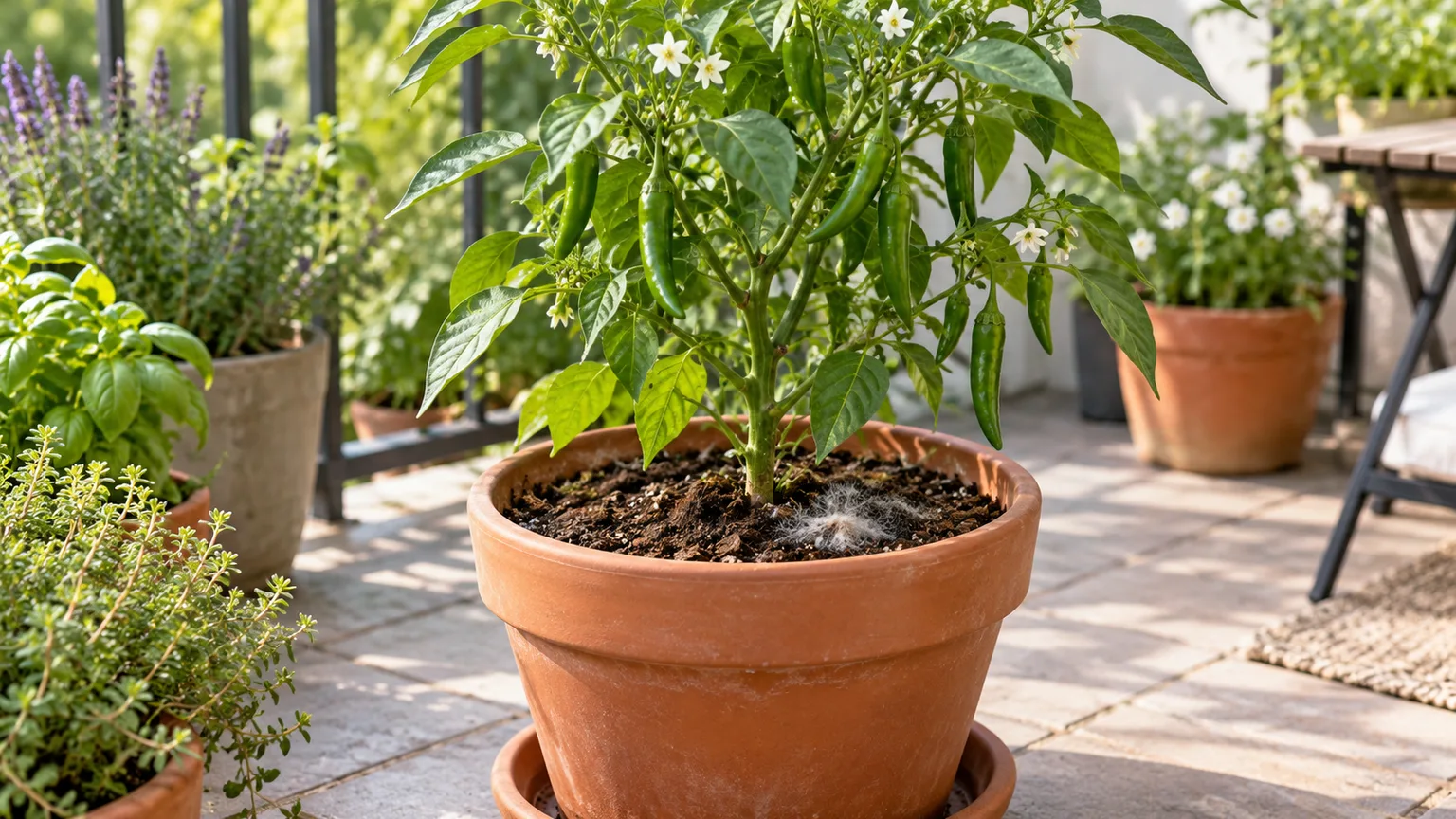
Mold on Green Chilli Soil: Causes, Checks & Fixes
This guide covers mold on soil on Green Chilli. See also the general Mold on Soil guide, watering, and light pages for this plant.
Mold on Green Chilli Soil: Causes, Checks & Fixes
Quick answer
Soft white or gray fuzz on the potting mix of Green Chilli is usually surface fungal growth associated with damp organic material (surface mold on soil). It is not, on its own, evidence that the pepper has a disease or that its roots are rotting. Start by checking whether the patch is fuzzy, whether the top of the mix stays damp between waterings, and whether the pot drains freely. The general mold-on-soil guide covers the broader symptom pattern and other plants.
Green Chilli (Capsicum annuum) needs consistent moisture when actively growing and fruiting, but its roots should not sit in saturated mix. Check the upper 2–3 cm, let it begin to dry, then water thoroughly and empty the saucer. If the plant is firm and growing normally, correct the surface conditions before considering a repot. If it wilts while the mix is wet, smells sour, or has soft brown roots, investigate root health rather than treating fuzz alone.
What mold on Green Chilli soil looks like
The common surface pattern is a low white, off-white, or gray film that looks soft, fuzzy, or threadlike. It sits on the mix, bark, or fallen plant debris; it does not usually form cottony clusters on the pepper’s stems or leaves. A dry, hard crust is a different clue. White fuzzy patches on potting mix are commonly associated with soil that stays too wet, according to The Spruce’s mold guide.
The visible threads are part of fungal growth. Some fungi feed on dead plant material in the mix rather than living pepper tissue. The RHS explanation of saprotrophic fungi describes how these decomposers break down dead organic matter. That distinction is useful, but it is not a promise that every white patch is harmless: confirm the texture and location, then check whether the plant or root zone is also declining.
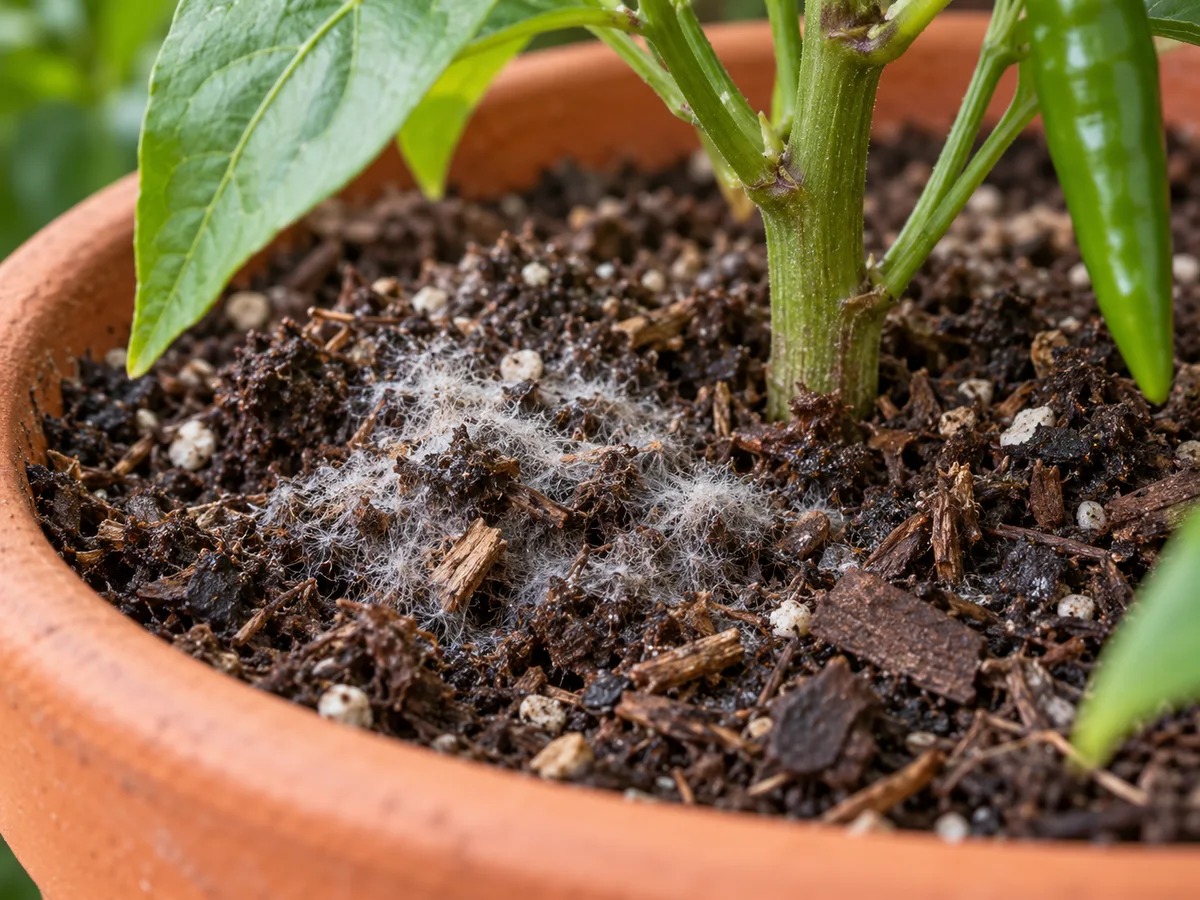
A small surface patch beside a firm pepper stem is different from soft tissue or decay at the soil line.
Why it appears on Green Chilli
Surface growth is favored when the top of the mix remains damp long enough for fungi and other organisms to use decomposing organic particles. The cause is often a pattern, not a single watering: frequent small drinks keep the surface wet; a dense or compacted mix dries slowly; a blocked drainage hole or full saucer holds water; and fallen leaves or flowers add decaying material. Cool or dim conditions can slow water use, while crowded plants or a sheltered corner may limit air movement over the soil.
The plant-specific balance matters. North Carolina State Extension describes Capsicum annuum as preferring full sun and moist, rich, well-drained soil (species care notes). UF/IFAS likewise advises that peppers do best in fertile, well-drained soil that stays moist rather than wet (pepper growing guidance). So do not treat Green Chilli like a cactus and leave the whole root ball dry. The aim is to avoid prolonged surface wetness while maintaining the steady moisture a flowering or fruiting pepper needs.
Container size and placement can change the timing. A large pot around a small plant may stay wet deeper into the mix; a sunny, warm terrace can dry a container much faster than a cool room or greenhouse bench. The Green Chilli watering guide explains how to check the mix before watering, and the soil guide covers drainage and potting mix. Use those plant needs as the boundary for any surface dry-down.
Think about where the pot is growing
On a bright windowsill or in a greenhouse, the plant may receive good light while the mix still dries slowly. Air movement can be weak around a crowded row of containers, and a decorative cover pot can hide runoff. Check the saucer and the mix itself instead of assuming that a bright spot guarantees fast drying. A small patch that appears after repeated shallow watering may stop returning once the surface gets a modest dry-down between thorough waterings.
On a balcony or terrace, rain can add water outside your usual schedule. A saucer may fill after a storm, or a sheltered corner may stay damp even while nearby pots dry. Empty runoff after heavy rain and recheck the pot’s weight before watering again. Do not respond to every damp surface by moving a fruiting pepper into stronger, hotter sun: protect the plant’s normal light routine and fix the water path first. The aim is a pot that drains after watering and then gradually dries, not one that stays saturated or swings from wet to bone dry.
Confirm mold before changing care
Make these checks in order. They take less time and cause less stress than lifting a healthy pepper out of its pot.
1. Check the texture and location
Look at the patch in good light. Soft, fuzzy threads limited to damp mix point toward surface fungal growth. A firm white or tan crust on the pot rim or soil is more consistent with soluble salts from mix, fertilizer, or irrigation water; Colorado State Extension describes how salts form a crust on potting mix (salt-crust identification). A green, slick coating is a different-looking surface condition, so check how long the mix stays wet before treating it as white mold. If white material appears on leaf axils, stems, or leaf undersides, inspect for insects; The Spruce’s lookalike notes distinguish soil fuzz from cottony mealybugs. The Green Chilli plant-problems hub helps compare other symptoms.
2. Test moisture below the surface
Feel the mix a little below the visible patch, not just at the top. Note how many days it stays wet after a normal watering, whether the pot still feels heavy, and whether the top 2–3 cm is drying at all. A small fuzzy patch with a gradually drying root zone is a different situation from growth that returns while the whole pot remains heavy and soggy. Keep a brief note of watering and weather for a week; it can reveal that a fixed calendar is keeping the surface wet.
3. Check the pot and saucer
Make sure the drainage hole is open and that the container is not standing in runoff. Lift the nursery pot out of a decorative cover pot to check for trapped water. Remove fallen leaves and spent flowers from the soil surface. If water pools instead of draining, review Green Chilli’s soil and drainage setup before changing how often you water.
4. Read the plant, not only the soil
If new leaves look normal, stems stay firm, and the plant is not wilting, a surface patch alone does not justify root surgery. More concerning signs are wilt despite wet mix, stalled or yellowing growth, a sour smell, and roots that are soft and brown rather than firm. Wisconsin Extension lists wilt in wet soil and soft brown roots among the signs associated with root rot (root-rot symptoms). Compare the full pattern with the Green Chilli soil guide and watering guide before escalating.
Lookalikes that need a different response
- Mineral or fertilizer crust: Usually hard, dry, and crystalline rather than soft or fuzzy. It may collect near the pot rim as water evaporates. Avoid scrubbing aggressively or adding a treatment until you know which pattern you have.
- Algae: A green, sometimes slippery coating suggests the surface is staying continuously wet. Adjust the moisture and drainage pattern rather than applying a pesticide.
- Mealybugs: White cottony insects gather on living stems, leaf joints, and undersides. They may leave sticky honeydew; mold stays on the soil surface.
- A mushroom: A cap and stem rising above the mix are a fungal fruiting body, not a flat mold film. The yellow flower-pot parasol is one species that can appear in potting soil. Penn State Extension says it is not harmful to a healthy plant but is toxic if eaten (flower-pot parasol details); keep unknown mushrooms away from children and pets and do not eat them.
- Root or stem disease: Dark, soft tissue at the soil line, persistent wilt in wet mix, or a foul smell calls for a root-zone check. Surface mold alone cannot diagnose a pepper disease.
First fix for a healthy Green Chilli
For one small surface patch, use a measured cleanup and change the conditions that let it return.
- Empty standing water. Pour out the saucer or cover pot, and confirm the drainage hole is open. Do not leave the container in runoff.
- Remove the visible surface growth. Use a clean spoon to lift off the fuzzy top layer and any fallen debris without digging into the root ball. Discard the removed material in household waste. If needed, replace just the removed amount with fresh, dry potting mix. Surface removal is a cosmetic first step; The Spruce notes that lasting improvement depends on correcting excess moisture and drainage.
- Adjust the next watering using the plant’s needs. Let the upper 2–3 cm begin to dry before watering again, then water the mix thoroughly and let excess drain. Do not wait for the leaves to collapse or let the entire pot become bone dry. Hot, windy weather and a fruit load may mean the container needs checking more often.
- Clear the surface and improve gentle airflow. Remove fallen leaves and flowers. Give the pot some space so air can move around it, while keeping the pepper in its usual bright, suitable location. Do not move a plant from shade into harsh midday sun as a mold treatment.
- Observe before adding another treatment. Over the next few waterings, note whether the surface dries, whether fuzzy growth returns, and whether the plant keeps producing firm new growth. If fungus gnats also appear, check those insect signs separately and read fungus gnats on Green Chilli; visible flies do not by themselves show that mold is harming the pepper.
For small amounts of mold and a healthy plant, avoid pouring household cleaners, vinegar, peroxide, or unlabelled fungicides onto an edible pepper. These do not correct a blocked drain or a persistently wet root zone and can expose roots to an unnecessary treatment. A cinnamon dusting is also not a substitute for correcting the moisture pattern.
When to repot or inspect roots
Repotting is not the first response to a little surface fuzz. Consider it when the mix stays waterlogged despite an appropriate watering interval, drainage is poor, the substrate has collapsed or compacted, or the mold repeatedly returns along with a sour smell or plant decline. If the pepper is flowering or carrying fruit, avoid disturbing healthy roots without a clear reason.
If the plant is wilting while the mix is wet, check the drainage hole and smell the mix first. When the warning signs point to root damage, slide the root ball out gently enough to look at the outside roots. Healthy roots are firm; soft, brown roots with a bad odor need a more focused recovery plan. When a repot is justified, choose a clean pot with open drainage and a fresh, free-draining mix; the Green Chilli repotting guide covers the plant’s transplant considerations.
Do not bury the stem deeper or pack extra soil tightly around it while topping up the pot. Keep the original soil line visible, and water according to the new mix’s moisture rather than the old schedule. A repotted plant may need a short period to settle, so avoid combining the repot with heavy pruning, a major light change, and extra fertilizer on the same day.
Recovery and prevention
Judge recovery by the trend, not by whether every trace of white disappears immediately. The surface should spend less time wet, new fuzzy growth should slow or stop, and the pepper should maintain firm stems and healthy new leaves. If only the soil surface looks imperfect but the plant is vigorous, continue normal care and keep checking drainage. If the plant’s leaves yellow or droop while the mix remains wet, use the Green Chilli plant-problems hub to compare symptoms rather than treating mold as the cause of every change.
To reduce repeat growth, water from the root-zone check rather than a fixed weekday, use a pot with an unobstructed drain, empty the saucer, and clear dead material from the soil surface. Keep the mix airy and the plant in its normal bright position. The right rhythm changes with temperature, sunlight, pot size, and fruiting; do not copy a watering interval from another plant or season. For the full set of Green Chilli symptom pages, visit the Green Chilli plant-problems hub.
Related Green Chilli guides
- Green Chilli overview — review the plant’s growing conditions.
- Green Chilli watering guide — check when to water without keeping the surface wet.
- Green Chilli soil guide — review mix structure and drainage.
- Fungus gnats on Green Chilli — investigate small flies emerging from damp mix.
- Green Chilli plant-problems hub — compare other symptoms and plant-specific guides.
Related tool
Use the Plant Problem Diagnosis Tool to compare mold on soil with drainage, watering, and root-health clues before changing several parts of the plant’s care at once.