Are Mums Perennials? How to Help Them Return
Find out which mums come back every year, how to identify a hardy garden mum, and how planting time, drainage, pruning, and mulch affect survival.
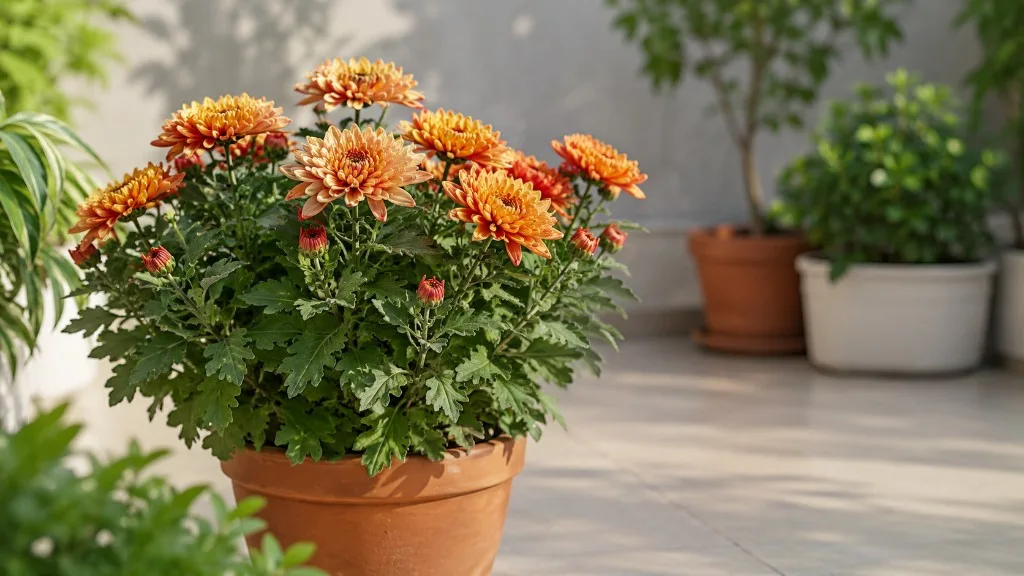
Yes, many mums are perennials, but the answer on a fall plant sale rack is more complicated. A hardy garden mum can go dormant over winter and send up new shoots in spring. A florist mum may be a perennial by ancestry, yet still behave like a one-season plant in your yard because it was bred for a dense fall display, has a shallow or crowded root system, or goes into winter before it can establish.
The useful question is not only “Are mums perennials?” It is which mum do you have, how much time does it have to root, and can your planting site keep the crown alive through winter? Those three details explain most of the success stories and most of the disappointing pots that never return.
The short answer
Garden mums—also called hardy mums or autumn mums—are herbaceous perennials. They die back or become dormant above ground, then regrow from the crown and underground growth in spring. Many are sold as outdoor plants, often in spring or early summer, so they have a full growing season to develop roots before their fall bloom.
Florist mums are the compact, heavily budded plants sold in grocery stores, garden centers, florists, and porch displays in late summer and fall. They are not necessarily “annuals” in a strict botanical sense, but they are often annuals in the way gardeners use them: a temporary display plant that is not reliably hardy or established enough to survive winter outdoors. Utah State University Extension notes that many potted chrysanthemums purchased from florists do not survive their first winter, while hardy varieties persist partly because they produce underground shoots called stolons. Utah State University Extension explains the difference between hardy and nonhardy chrysanthemums.
So the practical answer is this: buy a labeled garden mum for dependable perennial performance; treat an unlabeled fall florist mum as a seasonal display unless you are willing to give it a chance in the ground. A fall pot can survive, especially in a mild climate and a sheltered, well-drained bed, but the odds are never determined by bloom color alone.
What “perennial” means for mums
A perennial is a plant that can live through more than one growing season. That does not mean it stays green and flowering all year, and it does not mean every individual plant will survive every winter. It means the plant has a life cycle that includes dormancy and the potential to regrow rather than ending after one seed-producing season.
Mums make the definition easy to misunderstand because the colorful part people buy in fall is often the least important part for winter survival. Flowers can remain attractive while the plant has almost no time left to build a root system. Conversely, a mum that looks brown and finished after a freeze may still have a living crown below the soil.
Hardiness is a combination of genetics and conditions. A cultivar described as hardy still needs a site with drainage, enough root establishment, and protection from damaging freeze-thaw swings. A sheltered bed beside a foundation may give the same cultivar a better chance than an exposed, waterlogged low spot. A container is riskier because its roots are surrounded by air and can experience much colder temperatures than roots planted in the ground.
The label also matters more than a generic “mums are perennials” statement. NC State Extension describes autumn mum as an herbaceous perennial hybrid with hundreds of cultivars, while also noting that colder locations may require digging plants and overwintering them in a greenhouse. Its plant profile for Chrysanthemum x morifolium is a useful reminder that “mum” covers a large group, not one uniform winter behavior.
Florist mums vs. garden mums
The two retail categories overlap, which is why a quick visual test cannot settle the question. Still, the differences below are useful when you are standing in front of a bench of plants and deciding whether to spend your money on a long-term border plant or a short-term color spot.
Florist mums are bred for a seasonal display
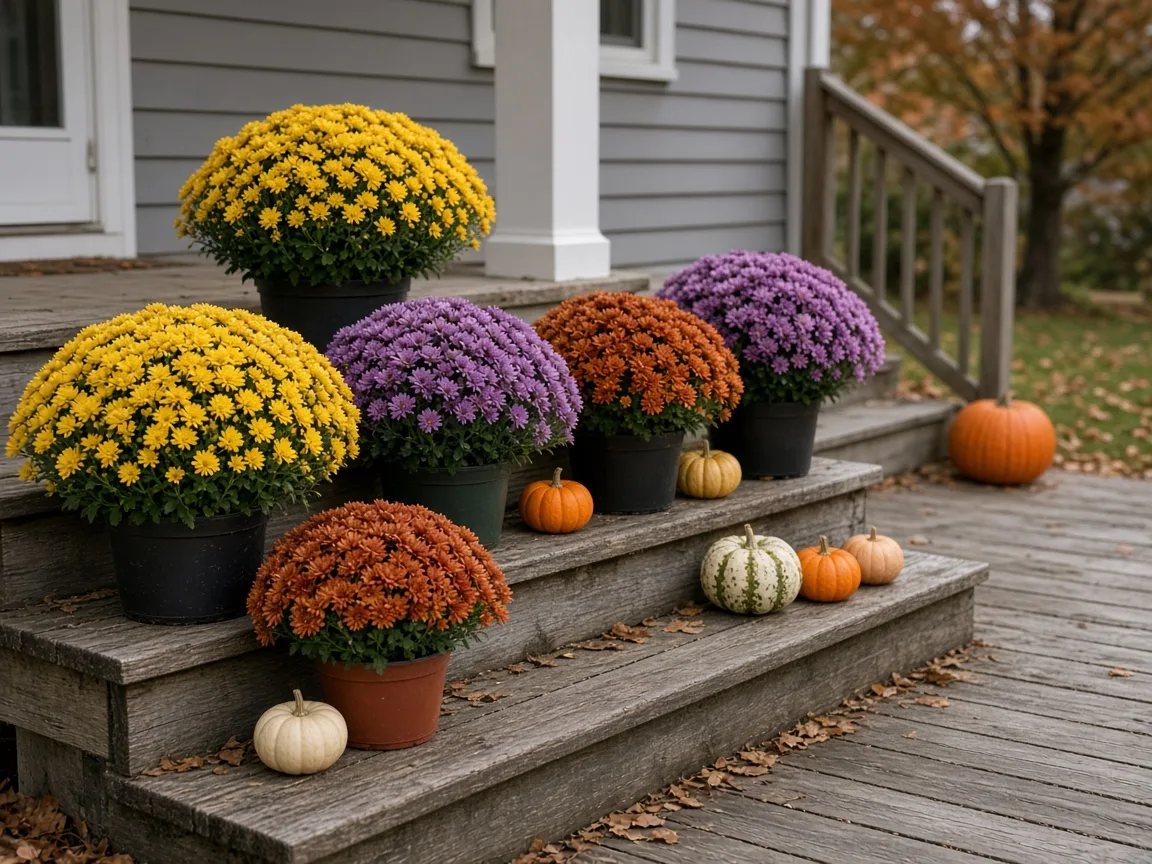
Florist mums are grown to look finished at the moment of sale. They are often short, round, and densely covered with buds or flowers, with the foliage hidden beneath the mound. The plant may have several rooted cuttings packed into one pot so it creates a fuller display immediately. That is excellent for a porch arrangement and not ideal for giving every root enough room before winter.
These plants are commonly sold after the days have already shortened and nights have cooled. Their energy has been directed toward flowering rather than building a deep, spreading root system. Some may survive in a warm region, but survival is not the same as producing a vigorous, well-shaped plant the following year.
That is why repotting a florist mum into a slightly larger container does not magically convert it into a hardy garden mum. It can relieve crowding and make watering easier, but it cannot change the cultivar’s hardiness or give the plant a full summer of root growth. If the plant is already in full bloom when you buy it, enjoy the display first and make the winter decision based on the label, your climate, and the time remaining before hard frost.
Garden mums are the reliable perennial group
Garden mums are selected for outdoor performance, seasonal timing, and the ability to return in climates where the cultivar is hardy. They often have a looser habit, more visible foliage, and a growth pattern that leaves room for new stems. Garden centers may sell them as rooted cuttings, young plants, packaged plants, or established plants before the main fall display season.
The phrase “hardy mum” is helpful but not absolute. Hardy cultivars still differ, and a plant rated for a broad zone range can fail in a poorly drained bed or after an unusually wet winter. Fine Gardening describes hardy garden mums as looser-growing plants with long stems suitable for cutting and notes that they prefer fertile soil and perform best in full sun. Fine Gardening’s hardy garden mum profile supports using the plant’s growth habit and intended landscape role as clues, not as a promise.
How to tell which mum you bought
Start with the plant tag or receipt. Look for “garden mum,” “hardy mum,” “perennial,” a cultivar name, or a hardiness range. A nursery that sells plants in spring is more likely to be offering a landscape-type mum than a florist-style fall bowl, but the sales channel is only a clue.
Use these secondary clues together:
- Timing: Spring and early-summer stock is more likely to be a garden mum. A heavily budded plant sold as instant fall color is more likely to be a florist mum.
- Growth habit: A looser plant with visible stems and foliage often fits the garden-mum type. A perfectly domed plant with flowers hiding nearly every leaf often fits the display-mum type.
- Root room: A pot packed with many small plants or circling roots is harder to establish late in the season. It is not proof of a tender cultivar, but it lowers the margin for error.
- Label language: “Garden,” “hardy,” or a named landscape series is more useful than a color name. “Bronze,” “yellow,” and “fall mix” say almost nothing about winter survival.
- Local performance: Ask the nursery which cultivars return in your area. Local experience can be more useful than a generic tag, especially near the edge of a hardiness range.
None of these clues is conclusive without a label. If the tag simply says “chrysanthemum,” make a conditional plan: give the plant a sunny, well-drained bed if you want to try saving it, but do not count on it as a guaranteed perennial.
Planting timing determines the odds
The same mum can have very different results depending on when it reaches the ground. A plant that is rooted and growing in May can spend months building a crown. The same plant bought in late October may flower beautifully and still have too little time to anchor before the soil freezes.
Spring and early-summer planting gives roots a head start
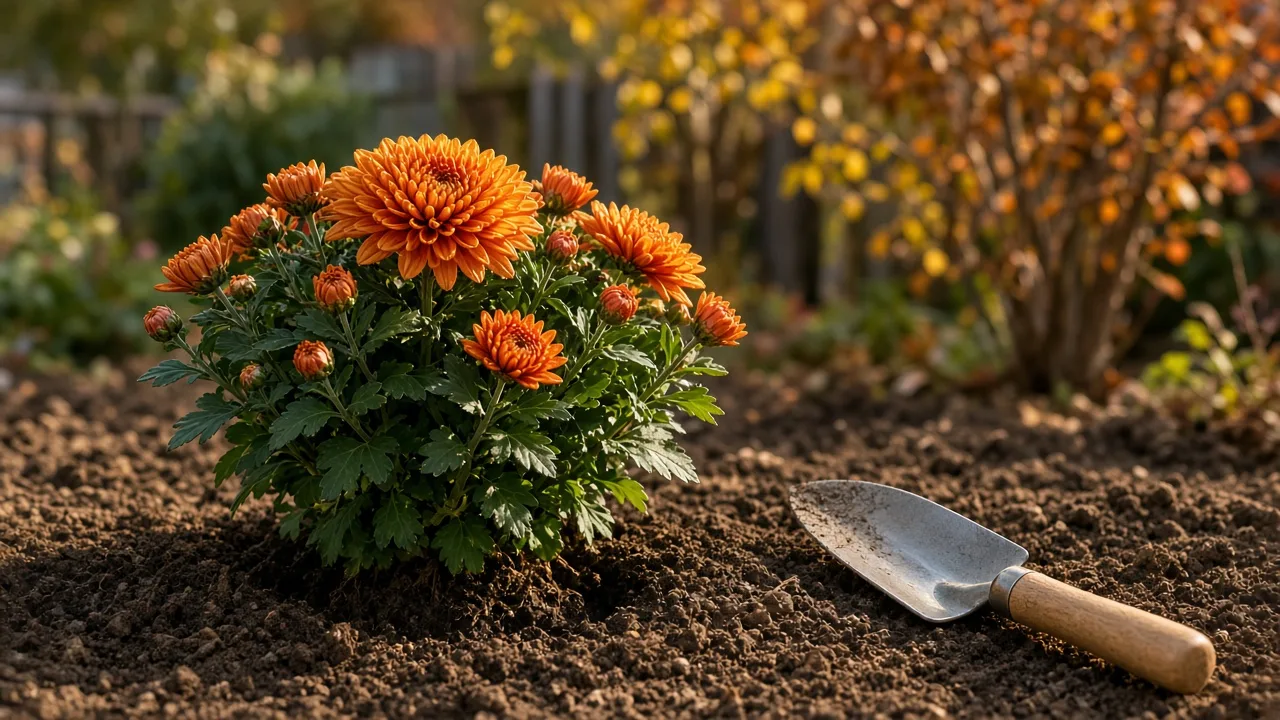
Spring is the best time to plant a hardy mum when your goal is a perennial clump. Plant after the danger of hard frost has passed, or follow your local nursery’s planting window. A young plant can then develop roots and shoots through summer before its natural fall bloom.
Prepare the bed rather than dropping the root ball into a narrow hole in compacted soil. Loosen the soil broadly, mix in finished compost if the bed is poor, and make sure water can drain away after rain. Set the plant at the same depth it occupied in its pot; planting the crown too deeply is an easy way to create rot.
Water thoroughly after planting, then keep the root zone evenly moist while new growth is getting established. Do not keep it saturated. Space plants according to the mature size on the tag, since a crowded clump dries unevenly and has poorer air circulation later in the season.
Late-season planting is a rescue attempt, not a guarantee
You can plant a fall-bought mum in the ground, but the calendar changes the objective. You are no longer trying to create a large perennial mound before bloom; you are trying to give the roots as much undisturbed contact with the soil as possible before severe cold. Utah State University Extension suggests allowing about six weeks for fall-planted mums to establish before winter, a useful benchmark rather than a universal deadline.
If six weeks of mild soil weather are not available, you have three reasonable choices. Plant the mum anyway in a well-drained, sheltered bed and accept the odds. Keep it as a seasonal container display and replace it next year. Or, if the cultivar is clearly hardy and you have a suitable cool, protected space, overwinter the pot with careful moisture control and plant it outdoors in spring.
Do not delay planting because the plant is still flowering. Flowers are temporary; the root system is the part you are trying to protect. Remove spent flowers only if they are collapsing or diseased, and handle the root ball gently so it can make contact with the surrounding soil.

Give hardy mums the conditions they need
Mums are forgiving enough to bloom in less-than-perfect situations, but returning year after year requires a better root zone than a one-season display does. Aim for steady growth in summer, strong air circulation, and a crown that is not sitting in cold water during winter.
Sun, soil, and drainage
Give mums full sun for the best shape and flower production. A site with at least six hours of direct light is a practical target. In very hot climates, morning sun with some protection from harsh afternoon heat can prevent stress, but deep shade usually produces weak, sprawling stems and fewer flowers.
Use fertile soil that drains freely. If rain remains in the planting hole for hours, fix the bed before blaming the plant. Incorporate organic matter through the bed, raise the planting area modestly, or choose a different location; simply adding a thin layer of compost around the crown will not repair a saturated root zone.
Shelter helps, especially in exposed areas where winter wind strips moisture from stems and repeated thawing and refreezing heaves the crown. Avoid planting at the bottom of a slope where water collects, under a downspout, or in a pot that has blocked drainage holes. The most valuable winter protection is often good drainage established before the first cold night.
Water, mulch, and fertilizer
Newly planted mums need regular water through the growing season, but they should not be kept constantly wet. Check the soil a short distance below the surface and water deeply when it is beginning to dry rather than applying a little water to the foliage every day. Water early enough for leaves to dry before night when possible.
Mulch helps by moderating soil temperature and reducing moisture swings. After the ground has cooled, apply a few inches of loose organic mulch over the root zone, keeping it slightly away from the stems. Too much dense, wet material pressed against the crown can create the rot you were trying to prevent.
Feed according to the plant label and soil condition. A modest spring feeding or compost top-dressing is usually more useful than a heavy late-season dose. Avoid pushing soft, nitrogen-rich growth just before winter; new growth is less prepared for cold and can make a plant look lush without making its crown safer. If a soil test shows a genuine deficiency, correct that deficiency rather than choosing fertilizer by a promise of more flowers.
Pinching, deadheading, and fall cutback
These three actions are often lumped together, but they solve different problems. Pinching is done while the plant is actively growing to create a bushier shape. Deadheading removes finished flowers to tidy the plant and extend the current display. Fall cutback prepares dormant stems for winter or spring cleanup.
When young garden mums reach roughly 6 to 8 inches tall, pinch out the growing tips. Repeat on new shoots during spring and early summer, stopping by midsummer or by the timing recommended for your cultivar. Pinching too late can remove the growth points that would have carried fall flowers. Utah State University Extension emphasizes that unpinched small-flowered mums can become tall and weak, while the RHS describes pinching through mid-summer as a way to create stockier, more floriferous plants.
Deadhead florist mums if you want the pot to look good longer, but do not confuse a tidier display with winter preparation. Removing spent blooms cannot make a nonhardy cultivar hardy. It also cannot replace the root establishment that a late-season plant missed.
After flowering, wait for the plant to enter dormancy rather than cutting a healthy green mum down immediately. Once stems have been blackened by frost or have clearly died back, cut them to about 8 inches, or leave a short framework until spring in a cold, exposed site. Remove diseased material promptly and discard it rather than carrying leaf spot or rot into the next season. The RHS recommends cutting hardy chrysanthemums down to about 20 centimeters after flowering and using mulch or protected storage according to local winter conditions. Its chrysanthemum growing guide gives the full seasonal sequence.
Overwintering mums in the ground
For a hardy mum planted in the ground, winter care is mostly about reducing extremes rather than keeping the plant actively growing. Let the plant finish its season, keep the root zone from drying severely during autumn, and add loose mulch after the soil cools.
In mild, sheltered areas with well-drained soil, many hardy mums can remain outdoors with mulch over the crown. In colder or more exposed climates, a cultivar’s label and local experience should guide the decision. The RHS notes that many hardy chrysanthemums tolerate temperatures down to around 23 degrees Fahrenheit, but colder conditions can make lifting and storing safer for certain plants. That threshold is a guide, not a promise for every cultivar or microclimate.
If the plant is valuable, borderline hardy, or newly planted very late, use a thicker layer of loose mulch over the root zone after hard freezes begin. Keep the mulch breathable and remove or pull it back gradually in spring once new shoots appear. Do not uncover the plant during a warm spell and then leave a tender flush exposed to a returning freeze.
The crown is the part to protect. You do not need to keep dead flower stems green, and you should not water heavily through cold, wet weather. If the bed stays saturated, a thick mulch layer will not solve the underlying problem. The RHS winter-protection guidance emphasizes matching the method—mulching, lifting, or sheltering—to both the plant and the local climate. RHS guidance on lifting and mulching tender plants is useful when your mum is at the edge of its hardiness.
What to do with mums in pots
Containers give you display flexibility but less winter insulation. Above-ground roots can freeze from several directions, and a small pot can swing from wet to dry more quickly than a garden bed. A container mum may also be rootbound, which leaves little buffer if watering becomes irregular.
If the mum is a proven hardy cultivar and you want it to return, planting it in the ground before the soil freezes is usually the simplest option. If the timing is too late, move the pot to a cool, sheltered, frost-free location after flowering. An unheated garage, cold frame, or similarly protected space can be more suitable than a warm living room, which may encourage weak growth in poor winter light.
Keep stored soil only slightly moist. It should not become bone-dry, but cold roots use little water and can rot if the pot stays wet. Check the drainage holes, remove decorative foil that traps water, and do not let the pot sit in a saucer of winter rain. The RHS specifically cautions that container plants are especially vulnerable to cold and recommends frost-free storage or insulation with clear drainage.
Do not expect every overwintered florist mum to look like the original dome next fall. It may survive as a looser, less synchronized plant, and it may need spring pinching, division, or a new container. If your goal is a reliable fall mound, a labeled garden mum planted in spring is a better investment of space and effort than trying to force every grocery-store pot into perennial service.
Troubleshoot a mum that fails to return
Do not declare a dormant mum dead as soon as the first warm day arrives. Soil temperature, winter exposure, and the cultivar’s natural timing all affect when new shoots appear. Wait until the ground has warmed and other herbaceous perennials in the same bed are waking up.
If you need to inspect it, scratch a small area near the crown. Living tissue may be firm and pale green or cream beneath the surface. A crown that is soft, foul-smelling, or completely dark and mushy is more consistent with winter rot. Dry, brittle roots and a hollow-feeling crown suggest desiccation or freeze damage. Do not excavate repeatedly; every disturbance breaks the new roots you are trying to assess.
When the plant returns but flowers poorly, check the growing season rather than blaming winter. Too much shade creates weak stems. Late pinching can delay or remove buds. Drought during bud formation can shorten the display, while wet foliage and crowding raise the risk of mildew and leaf spot. NC State Extension lists aphids, thrips, spider mites, lace bugs, powdery mildew, rust, root rot, and leaf spot among the problems that can affect autumn mums; its profile is a good starting point for identifying a recurring issue.
If only one plant in a group failed, compare its drainage, planting depth, and root condition with its neighbors. If every mum failed after an unusually wet or cold winter, the site or weather may have overwhelmed otherwise suitable plants. Replace plants with a cultivar proven locally, improve the bed, and plant earlier rather than simply buying larger fall pots.
Conclusion
Mums can be perennials, but “perennial” is a starting point, not a survival guarantee. Garden mums bred for outdoor performance are the best candidates to return. Florist mums may survive, yet their late purchase date, crowded roots, uncertain hardiness, and container exposure make them much less dependable.
For the best odds, choose a labeled hardy mum, plant it in spring or early summer, give it sun and well-drained soil, pinch only through the active growing season, and protect the crown with sensible mulch after the plant goes dormant. If you are trying to save a fall pot, plant it promptly when conditions allow, treat winter survival as a bonus, and judge spring success by the crown and new shoots—not by whether the old flower stems still look alive.



