Baltic Blue Pothos Care: Why Its Leaves Split Indoors
Learn Baltic Blue pothos care, from light and watering to climbing support, propagation, and the reasons a healthy plant may still have unsplit leaves.
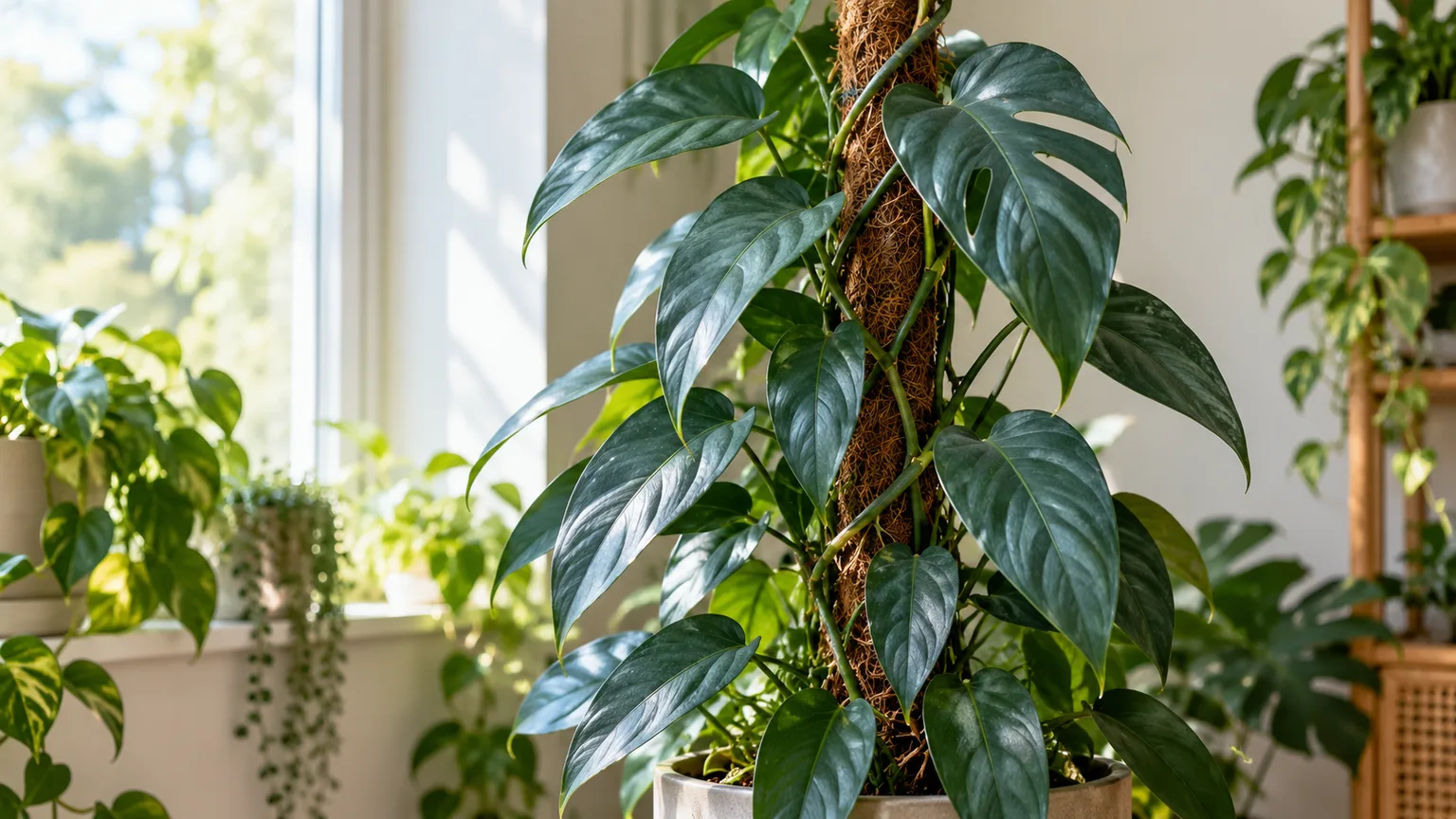
Baltic Blue pothos is a climbing Epipremnum pinnatum cultivar grown for deep blue-green leaves that can develop splits as the vine matures. Give it bright filtered light, an airy potting mix, a thorough drink after the upper mix dries, and a support if you want it to climb. The support and light improve the conditions for larger, more mature foliage, but no indoor setup can guarantee that every leaf will fenestrate.
The biggest care mistake is treating this plant like a golden pothos that can thrive in any dim corner. Baltic Blue is adaptable, but weak light and a permanently wet root ball work against the strong climbing growth that makes it distinctive. Start with the right growing position and root-zone routine; adjust only after you see how new leaves respond.
Baltic Blue pothos care at a glance
| Care factor | Practical starting point | What to watch |
|---|---|---|
| Light | Bright, filtered light near a window | Long gaps between leaves and small new growth suggest too little light; bleached patches suggest harsh sun |
| Water | Let the upper 1–2 inches of mix dry, then water through | A pot that remains heavy and wet needs a longer dry-down, better drainage, or root inspection |
| Mix | Open, moisture-retentive, and fast draining | Dense mix that stays wet for many days increases root stress |
| Growth form | Trail from a shelf or climb a stable support | Climbing can help the plant mature; trailing is easier and still healthy |
| Temperature | Warm, steady indoor conditions; protect from cold | Cold glass, drafts, and abrupt temperature drops can stall growth |
| Feeding | Balanced liquid fertilizer during active growth | Salt crust or brown tips can mean too much fertilizer |
Use these as starting points, not fixed rules. A small plant in a warm room dries at a different pace than a large vine in a cool, dim room, and the potting mix changes that pace as much as the plant does.
What Baltic Blue pothos is—and what the name can hide
The plant sold as Baltic Blue pothos is a cultivated form of Epipremnum pinnatum, a tropical climbing aroid in the Araceae family. Kew’s Plants of the World Online recognizes E. pinnatum as the accepted species name; the common name “pothos” does not make Baltic Blue the same species as golden pothos, E. aureum. Kew Plants of the World Online and the Royal Horticultural Society’s plant profile describe the species as a climbing, root-clinging plant.
Retail names and photographs can be inconsistent, especially when plants are young. Baltic Blue is generally sold for its darker teal or blue-green cast, while Cebu Blue often looks narrower and more silvery; those visual descriptions are useful clues, not laboratory identification. Light, leaf age, camera color, and nursery conditions all affect the way foliage looks, so check the seller’s botanical and cultivar label as well as the leaves.
This distinction matters because generic “pothos” advice often assumes a trailing E. aureum. E. pinnatum can climb and change its leaf shape as it matures. You can still grow Baltic Blue in a hanging basket, but if your goal is larger, more mature leaves, treat vertical support and good light as part of the growing setup rather than optional décor.
Why its leaves change as the vine matures
Young Baltic Blue plants usually have smaller, simple leaves along a flexible vine. Mature E. pinnatum can produce larger leaves with deep cuts or openings, a change associated with the plant’s climbing growth. The RHS notes that mature plants grown under suitable conditions can develop substantially larger, deeply lobed foliage; it also describes the species as climbing with aerial roots.
Think of fenestration as a sign of a growth phase, not a switch controlled by one care product. The plant needs enough energy to make new growth, a stable route upward, and time to develop. Some indoor plants stay juvenile for a long time, and leaves on a trailing vine may remain whole even when the plant is otherwise healthy.
Do not cut holes into leaves, raise fertilizer to force a split, or move a plant suddenly into direct sun. Those actions cannot make an existing leaf mature. Judge progress by the newest leaves and the overall vigor of the vine: firm stems, healthy roots, and steady new growth matter more than whether one leaf has an opening.
Choose whether to trail or climb
Choose the growth form before the vines become long and tangled. A hanging pot or high shelf lets the stems cascade and is the simplest choice when you have limited floor space or prefer an easy-care display. A moss pole, coir pole, or trellis gives the stems a vertical surface and makes it easier to keep growth compact and visible.
The RHS recommends either allowing Epipremnum to trail or giving it a moss-pole support. A moss-covered support can give aerial roots a place to attach; a dry coir pole or trellis still offers structure but may not provide the same rooting surface. Choose a support with enough stability for the eventual plant, and install it before the vine becomes heavy rather than pushing it through a crowded root ball later.
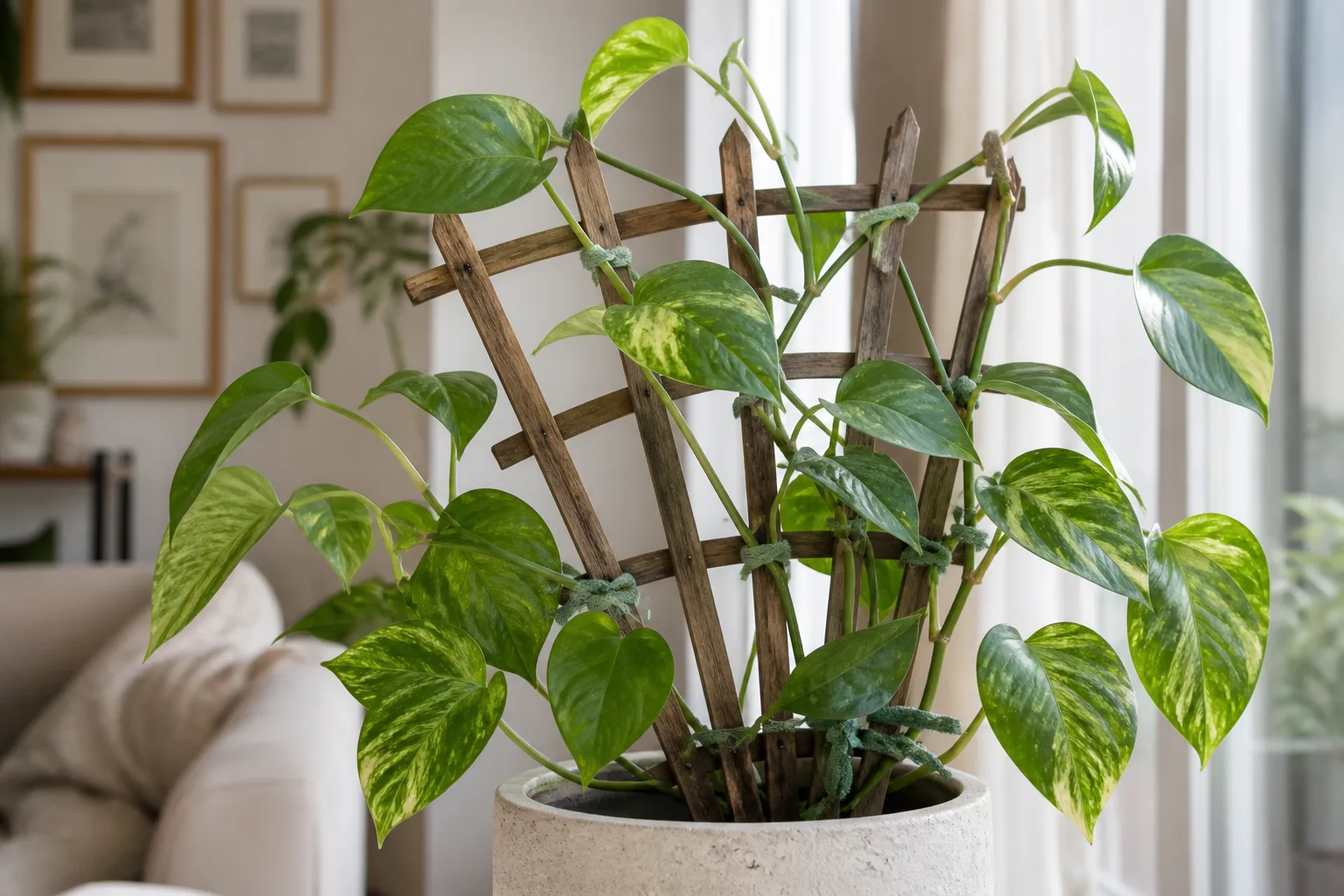 A loose tie guides a climbing vine while leaving room for the stem to thicken.
Use soft ties or clips and fasten the stem gently; do not cinch it tightly against the support. Aim each node or aerial root toward the pole without bending the vine sharply. Keep the pole’s moisture separate from the pot’s watering decision: you may dampen a moss pole while still waiting for the potting mix to dry.
Give it enough light for sturdy new growth
Place Baltic Blue where it receives bright, filtered daylight for much of the day, such as near an east-facing window or a short distance back from a brighter south- or west-facing window. A sheer curtain can soften strong sun. The RHS plant profile recommends full or bright filtered light under glass, while House Plant Journal’s practical discussion of indoor light explains why a room that looks bright to people may still provide weak light to a plant.
Use the plant’s new growth as feedback. Long bare stretches, small leaves, and a vine leaning toward the window point toward insufficient light. If the plant is growing steadily but leaf surfaces scorch or bleach on the window-facing side, filter the sun or move it back a little. A phone photo from the same angle every month can help you see whether new leaves are getting larger or the gaps are increasing.
Increase light gradually when moving a plant from a dim room. Start closer to the window for an hour or two of brighter exposure, then extend the time over several days while watching for pale, dry patches. A grow light can help in a dark room, but place it according to the fixture’s instructions and use a regular day-night schedule rather than leaving it on continuously.
Water by the root zone, not by the calendar
Check the top 1–2 inches of mix with a finger or wooden skewer, then lift the pot to learn its dry and watered weight. When the upper layer has dried and the container feels lighter, water slowly across the surface until a little drains from the bottom. Empty the saucer or decorative outer pot so the roots do not sit in runoff.
The interval changes with the room and container. Warm bright conditions, a smaller pot, and a more open mix usually mean faster drying; a cool room, low light, a large plastic pot, or dense soil can keep the root ball wet longer. Gardening Know How’s general pothos-care guide also treats watering as a root-zone decision rather than a strict weekly appointment. Use any suggested interval only as a reminder to check, not as an instruction to water.
If water runs down the pot wall while the center remains dry, the mix may have shrunk or become water-repellent. Apply a small amount, wait a few minutes, and water again in passes until the root ball is moistened. If the pot stays heavy for many days, do not add more water because the leaves droop; inspect the drainage hole, mix, and roots first.
Use an airy mix and a pot that drains
Choose a houseplant mix that holds some moisture but does not compact into a dense, muddy mass. A workable home blend is two parts quality potting mix, one part perlite, and one part fine orchid bark. The exact ratio is flexible: use more airy material in a cool, humid home where pots dry slowly, and a little more moisture-retentive mix if your room is hot and the plant dries too quickly.
The container needs an open drainage hole. A decorative cachepot is fine if you remove standing water after irrigation. Do not try to fix heavy soil by putting gravel at the bottom; the plant needs a suitably open mix throughout the root zone, not a layer that merely raises the wettest soil higher in the pot.
Choose a pot only modestly wider than the root ball. A container that is far too large holds unused wet mix around the roots and can delay drying. If you are unsure whether the mix is the problem, note how many days it takes to dry through the upper couple of inches after a thorough watering; repeated slow dry-down is more useful evidence than a single yellow leaf.
Keep the plant warm without chasing high humidity
Baltic Blue grows best in a warm, steady indoor environment. Keep it away from cold window glass in winter, exterior doors that open onto freezing air, and direct blasts from heating or air-conditioning vents. The species is tender, so do not leave it outdoors where frost is possible; bring it in before chilly nights become routine.
Ordinary household humidity is often adequate if the plant is watered consistently and the roots stay healthy. If the room is unusually dry and new leaves have crisp edges, group plants together or use a humidifier that raises humidity for the room. A pebble tray or daily misting is not a substitute for correcting dry soil, root damage, or a cold draft.
Watch the plant instead of aiming for a single humidity number. A sudden change from a warm, humid greenhouse to a heated winter room may cause a pause or a few damaged leaves. Keep conditions stable, avoid placing the pot over a radiator, and give the plant time to adjust before changing several care factors at once.
Feed lightly while it is growing
Apply a balanced liquid houseplant fertilizer at the label’s diluted rate during active growth, usually spring and summer indoors. The RHS recommends monthly balanced feeding for E. pinnatum during the growing season. If your plant is growing slowly in a dim room, fertilizer is not a shortcut to bigger leaves; improve light and root conditions first.
Pause feeding when the plant is not producing new growth, when it has just been repotted in fresh pre-fertilized mix, or when the roots are stressed. A pale salt crust on the mix, browned tips after feeding, or unusually limp growth can indicate overfeeding or salt buildup. Flush the pot with plain water and allow it to drain; restart at a lower frequency once the plant resumes active growth.
Follow the product label rather than combining several fertilizers. More nutrients do not make fenestrations appear faster, and strong feed can injure roots that are already sitting in wet soil. Steady light and healthy roots provide the basis for growth; fertilizer only supplies nutrients that the plant can use.
Adjust care as room conditions change
Spring and summer usually bring more active growth, so the plant may dry faster and use a light monthly feed. Increase the frequency of checks, not automatic watering. A vine that is climbing into a brighter part of the room may also begin producing larger leaves, so make sure the support and pot remain stable.
In fall and winter, shorter days and cooler rooms often slow growth. Let the mix take longer to dry before watering again and reduce or pause fertilizer if the plant is resting. If you use a grow light, keep it on a predictable daily cycle. Do not compensate for winter slowdown with extra water, feed, or heat from a radiator.
Seasonal changes indoors are local. A heated apartment with a bright window may support continued growth through winter, while a cool north-facing room may nearly stop it. Track the pot’s dry-down and new-leaf pace for several weeks, then adjust; the calendar is a clue, not the final diagnosis.
Prune for shape and useful cuttings
Pruning is optional. Trim a vine when it has grown beyond its support, developed a bare stretch, or become difficult to display. Cut just above a healthy node with clean scissors; the node left on the parent stem may produce a new shoot, while the removed section can become a cutting if it includes nodes.
If you want a fuller pot, root several cuttings and plant them back into the same container after they establish. Do not remove most of the healthy foliage in one session, because the remaining leaves provide energy for recovery. A few measured cuts during active growth are easier for the plant to recover from than a severe reset.
Wear gloves if the sap irritates your skin, keep the trimmings away from pets and children, and clean the blades before using them on another plant. A clean cut heals more readily than a crushed stem, and removing dead or diseased tissue promptly helps keep problems from spreading.
Propagate from a stem node
Baltic Blue is propagated from stem cuttings, which preserve the parent plant’s cultivar traits. A leaf without a node is not enough to make a complete new vine: roots and new shoots form from stem nodes, the slightly raised joints where leaves and aerial roots emerge. The RHS lists stem-tip cuttings as a propagation method for E. pinnatum; Gardening Know How’s pothos-in-water guide also walks through rooting stem sections rather than loose leaves.
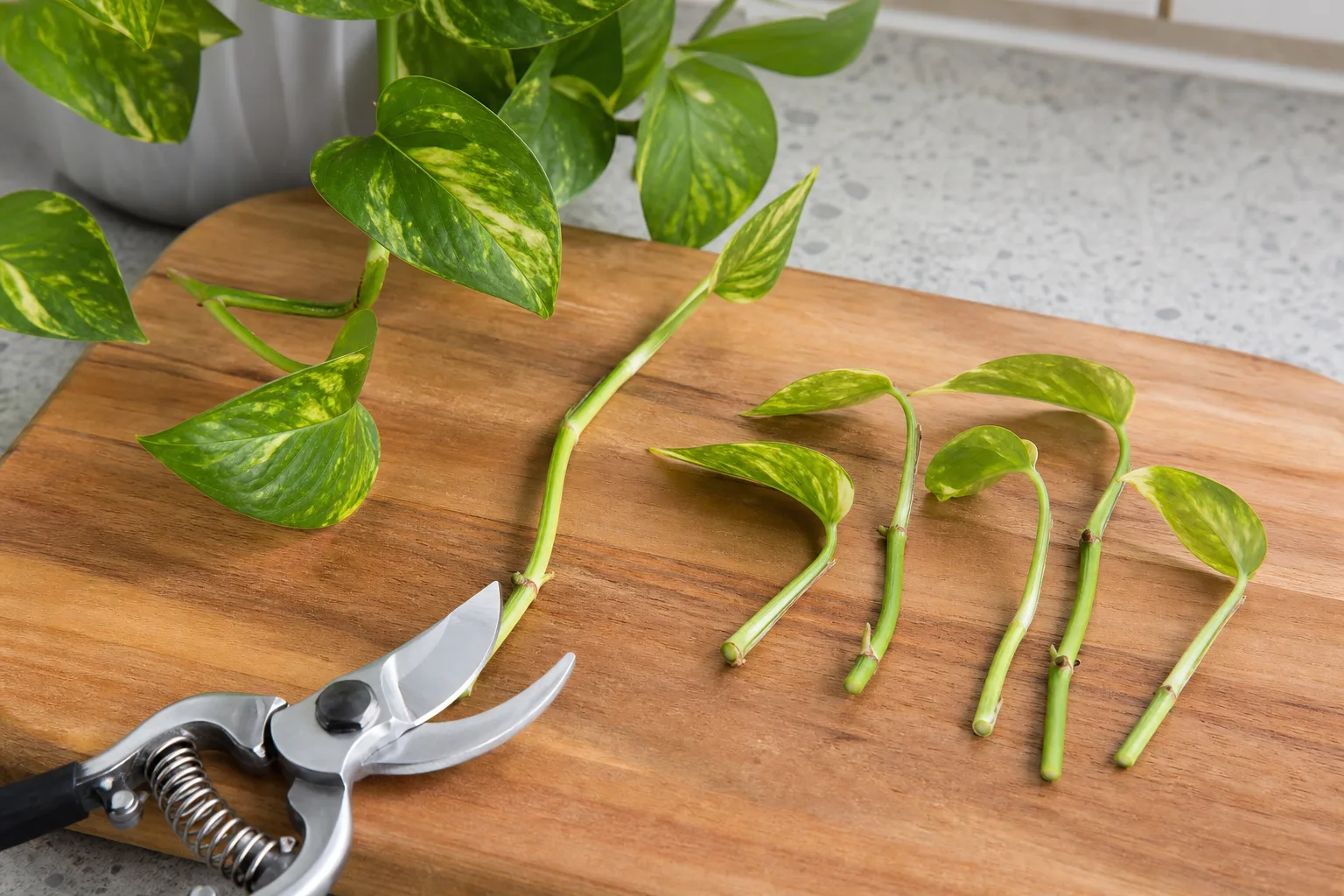 For propagation, keep at least one node on every cutting; the pictured vine is a general pothos example.
For water propagation, cut below a node with clean shears, remove any leaf that would sit underwater, and place the bare node in a clean jar. Keep the foliage above the waterline and set the jar in bright indirect light. Refresh the water when it becomes cloudy and pot the cutting once it has several roots long enough to anchor into mix; do not wait for a dense, tangled water-root mass.
You can also place a node directly in lightly moist, airy propagation mix or sphagnum moss. Keep the medium evenly damp, not saturated, and warm the cutting with bright filtered light. Resist pulling it up every day to check for roots. New leaf growth and a firm stem are better signs that the cutting has established.
Water-rooted cuttings need a short transition to potting mix. Plant them in a small drainage pot, keep the mix lightly moist while the roots adjust, then return to the normal dry-down routine. If a cutting softens or turns dark at the base, trim back to firm tissue, refresh the container or medium, and check whether it has enough light and warmth.
Repot when the roots—not the calendar—call for it
Repot when roots circle densely around the root ball, emerge repeatedly through drainage holes, or the pot dries unusually fast despite a healthy mix. A plant that has stopped growing is not automatically rootbound; check light, temperature, and soil moisture before disturbing it. When repotting is needed, spring or another active-growth period gives the plant a better chance to re-establish.
Slide the plant from its pot and inspect the roots. Firm roots can stay; remove only roots that are mushy, hollow, or clearly decayed with clean scissors. Move up one pot size, loosen only the outer roots that are tightly circling, and set the plant at the same depth in fresh airy mix. Water once to settle the soil and allow the pot to drain.
If the vine is already on a support, repotting is a convenient moment to secure the pole and redirect loose stems. Do not force a tall support into the root ball without checking where the roots are. If the plant is healthy and the pole is stable, leave it alone; unnecessary repotting can set back new growth without improving the leaf form.
Diagnose a Baltic Blue that will not fenestrate
Start with the growth habit. If the vine hangs freely from a basket, the leaves may remain juvenile; train a healthy stem upward on a stable support if mature foliage is the goal. Next, review the light. A plant in a dark corner may survive but lack the energy for vigorous climbing and larger leaves.
Then consider age and establishment. A recently purchased plant may need to acclimate, extend its vine, and attach to the pole before its leaves change. The exact timing varies with plant size, season, light, warmth, and root health. There is no reliable “number of weeks until a split leaf” that applies to every home-grown specimen.
Use this order before making changes: improve light gradually; provide a secure climbing surface; keep roots healthy through measured watering; then wait for new leaves. Do not repeatedly repot, overfeed, or move the plant into direct sun to force a result. If the plant is making firm leaves at a steady pace, whole leaves alone are not evidence of a care failure.
Read yellow, brown, or curled leaves in context
One older lower leaf that slowly yellows may be normal turnover. Several yellow leaves at once, especially when the pot feels heavy, point first to root-zone stress rather than a fertilizer deficiency. Stop watering until the upper mix dries, confirm that the pot drains freely, and inspect roots if the mix stays wet or smells sour.
Brown patches on the side facing a window can signal sun scorch; crisp tips with very dry mix may reflect inconsistent watering or dry air. Brown soft areas that spread, especially when foliage stays wet in a cool room, need a closer look for disease or damaged tissue. Do not remove a healthy leaf just because its color looks slightly different; follow the pattern over several days and check both sides of the plant.
| What you see | Check first | Practical response |
|---|---|---|
| One old lower leaf fading | New growth and stem firmness | Monitor; remove once mostly yellow |
| Several soft yellow leaves and a heavy pot | Drainage, mix, and roots | Let the root zone dry; inspect if it remains wet |
| Long gaps and small new leaves | Window distance and seasonal light | Increase filtered light gradually |
| Pale dry patch on window side | Direct sun and hot glass | Filter or move the plant back |
| Crispy tips with dry mix | Pot moisture, airflow, and room humidity | Correct watering first; then assess dry air |
An injured leaf will not turn green again. Remove it when most of the blade is damaged, correct the condition that caused the symptom, and judge whether the fix worked by the next leaves. Changing watering, light, fertilizer, and humidity all at once makes it harder to learn what the plant actually needed.
Prevent pests and respond early
Inspect a new Baltic Blue before placing it beside other houseplants, then check the undersides of leaves, stem joints, and support at least monthly. Mealybugs often resemble small cottony patches, scale can look like fixed tan or brown bumps, and spider mites may cause fine stippling or webbing. Thrips can scar tender new leaves and may hide in folds.
Isolate a plant when you find pests and identify the insect before choosing a treatment. Remove visible insects with a damp cloth or rinse the foliage if the room is warm enough for the leaves to dry quickly. If you use a pesticide or horticultural soap, choose one labeled for the plant and pest, test a small area if the label permits, and follow all label directions; homemade mixtures can burn foliage.
Persistently wet soil can also encourage fungus gnats, while poor airflow and repeated wet foliage may worsen leaf-spot problems. Keep the leaves reasonably dry when watering, improve air movement without exposing the plant to a cold draft, and remove fallen material from the pot. Recheck the plant after treatment rather than assuming one cleaning eliminated every life stage.
Keep it away from pets and children
Treat Baltic Blue as a plant that should not be chewed. NC State Extension’s E. pinnatum profile lists the species as toxic and identifies calcium oxalate crystals in the plant; the RHS also marks its species profile as potentially harmful if eaten. Keep foliage, prunings, and propagation jars out of reach, especially when a trailing vine hangs at pet or child height.
Wash your hands after pruning and avoid touching your eyes or mouth while handling sap. If a pet may have eaten the plant, contact a veterinarian or animal poison-control service for guidance and provide the plant name and a photo if available. If a child chews the plant, contact a local poison center or medical professional; do not rely on a guess based on how much leaf appears to be missing.
Conclusion
Grow Baltic Blue for the foliage it can develop, not for a promise that every leaf will split. Give the vine bright filtered light, open soil in a pot with drainage, and water only after the upper root zone has dried; choose a stable support if you want it to climb. Those decisions give the plant a better chance to make vigorous, mature growth while keeping the roots healthy.
If the leaves stay whole, check light, support, and plant maturity before reaching for fertilizer or repotting. If the leaves yellow, begin with pot weight and root condition. Once the plant is growing steadily, prune selectively, root cuttings that include nodes, and keep the vine where pets and children cannot chew it.