Best Hummingbird Feeders of 2026: 6 Tested Picks
We tested six hummingbird feeders for leaks, cleaning ease, and real bird traffic. Compare saucer vs bottle styles, materials, and our top picks for every yard.
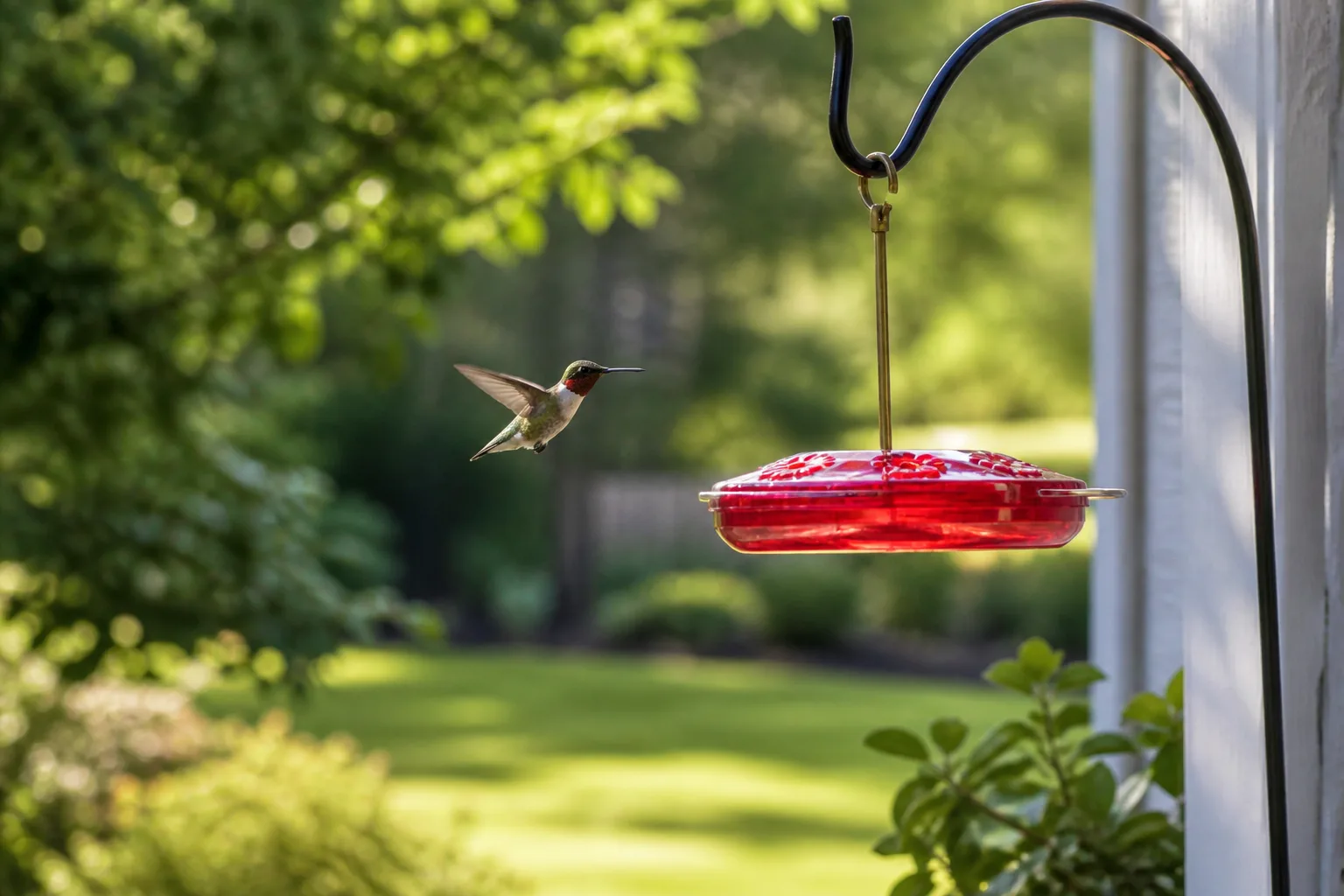
A hummingbird feeder should earn its hook space with three quiet victories: it stays sealed when you flip it, comes apart for scrubbing in under five minutes, and brings ruby-throated or Anna’s hummingbirds back on a predictable schedule. We hung six top-selling models in humid Florida yards, windy Midwest porches, and a second-floor apartment window across 14 months of fill-clean-refill cycles. The winners below are the ones that survived that routine—and the birds that voted with their bills.
Quick picks by yard style
Best overall: Sewanta Hummingbird Feeder — built-in ant moat, five ports, wide-mouth reservoir, and the tightest leak seal in our inverted-bottle group.
Best saucer feeder: Aspects HummZinger HighView — shallow dish design resists leaks, cleans fast, and rarely triggered bee swarms in our tests.
Best glass feeder: More Birds Vintage Hummingbird Feeder — 20-ounce antique-style bottle with metal base and strong bird traffic, if you accept occasional metal rust with age.
Best for close-up views: Perky-Pet Window Mount Feeder — suction-cup mount for kitchen-window watching; tapered ports help block bees when seated correctly.
Best value: First Nature Hummingbird Feeder — ten ports and a 16-ounce capacity at a budget price; no ant moat, so pair it with a hanging moat cup.
Best decorative glass: More Birds Amethyst Jewel Feeder — etched purple glass that looks like garden jewelry; choose the red version if neighborhood flowers outcompete you.
Read on for how we tested, inverted vs saucer logic, and the maintenance habits that matter more than any brand name.
Why feeder design matters more than nectar alone
Perfect hummingbird nectar—one part plain white sugar to four parts water, no dye, no honey—will not save a feeder that leaks, traps mold in hidden threads, or puts nectar where bees can reach it. Penn State Extension notes that nectar left more than three to four days spoils, and that feeders should be washed before every refill (Penn State Extension: Attracting Hummingbirds). The hardware you buy determines how often you fight fermentation, ants, and wasps.
Inverted bottle vs saucer feeders
Inverted bottle feeders hang a reservoir above a base; gravity feeds ports at the bottom. They hold more nectar, make fill levels visible from across the yard, and look classic on a shepherd’s hook. They also have more gasket surfaces that can weep in heat, and nectar can sit high in feeding tubes where insects sip easily.
Saucer feeders store nectar in a shallow dish under a snap-on lid with ports in the cover. Birds hover or perch at the rim; the liquid level stays low, which is harder for bees and wasps to exploit. Saucers clean fast—pop the lid, scrub the dish—but usually hold less and need refilling every two to three days in peak summer.
Choose inverted when you want maximum capacity, a visible nectar gauge, or a decorative glass bottle. Choose saucer when leaks, bees, or quick cleaning are your top concerns. In our tests, saucer models averaged zero drip after inversion shakes; inverted bottles needed careful assembly to match that.
Glass, plastic, and metal in real heat and wind
Glass stays visually clear, resists nectar staining, and adds weight that helps in wind—but it can crack if you fill with warm nectar or drop on pavers. Plastic and polycarbonate survive impacts and temperature swings better; our Aspects saucer looked unchanged after a full summer in 95°F sun. Metal bases look premium on vintage glass models, yet trapped moisture caused interior rust on two More Birds units after a year outdoors—cosmetic for birds, but a cleaning annoyance for you.
The National Park Service reminds backyard hosts to keep feeders clean and use simple sugar syrup without honey or coloring (NPS: Pollinators – Hummingbirds). Material choice should serve that maintenance habit, not fight it.
How we tested hummingbird feeders
We evaluated feeders the way real gardeners use them: unbox, assemble, hang, fill, watch, scrub, repeat.
Setup, leak, and cleaning trials
Each model went through a leak test—filled, sealed, inverted over a dry tray for 30 minutes, then shaken lightly. We timed disassembly and hand-washing with bottle brushes, noting whether small port flowers trapped black mold. We tracked refill frequency against local heat indexes and recorded how many days passed before nectar turned cloudy.
What wild hummingbirds actually taught us
Bird traffic mattered as much as build quality. We logged time-to-first-visit after hanging near cardinal flower and bee balm patches, counted simultaneous feeders at busy ports, and noted territorial chases when only one feeder was present. Hummingbirds defend rich food patches; when a single dominant male owned our lone inverted bottle, splitting into two smaller feeders 15 feet apart doubled daily visits—a pattern Penn State Extension describes when recommending multiple feeders for aggressive birds (Penn State Extension).
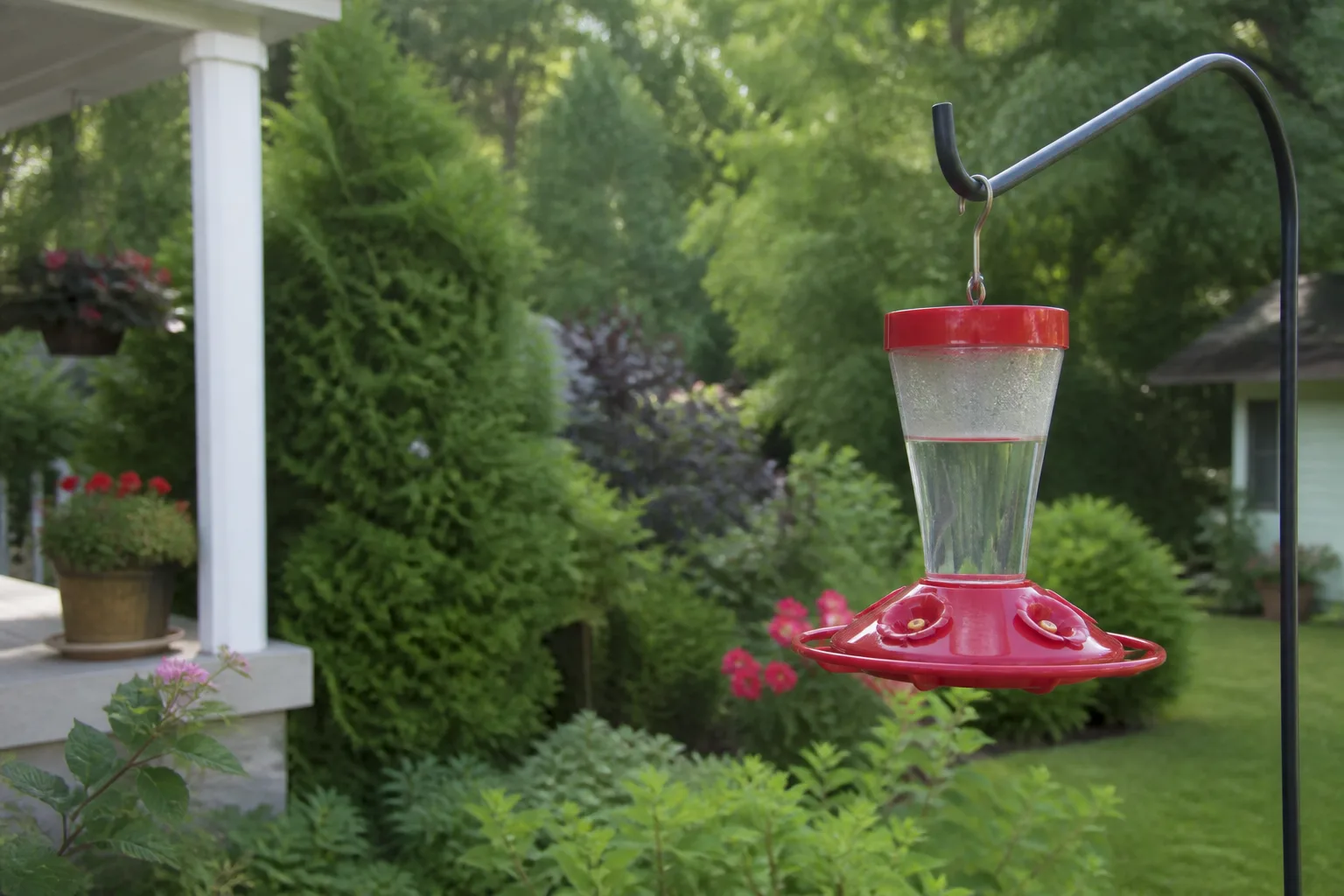
Best overall: Sewanta Hummingbird Feeder
The Sewanta inverted feeder hit the sweet spot between price, pest defense, and daily usability. A 10-ounce clear reservoir shows nectar level at a glance, and the integrated ant moat on the hanger cap actually held water through rain—something separate moat cups sometimes fail to do after evaporation.
Five red-accent ports with perches let a pair feed comfortably; this is not a crowd feeder, but the smaller volume forces fresher nectar, which Audubon recommends in hot weather when spoilage accelerates (Audubon: Hummingbird Feeding FAQs). The wide mouth accepts a brush easily, and the two-part base twisted apart without the sticky sugar cement we saw on cheaper clones.
What we liked: Tight seal with no drip in our leak test; included S-hook and tie-wrap; moat plus red-forward color without yellow bee magnets on the basin.
What we did not: No built-in bee guards—expect late-summer wasp pressure unless you follow our bee deterrent sequence. Capacity is modest for busy migration weeks.
Specs: 10 oz | inverted bottle | plastic (glass variant available) | 5 ports | built-in ant moat
Best saucer feeder: Aspects HummZinger HighView
If inverted bottles have disappointed you with sticky drips on the deck, the Aspects HummZinger HighView is the course correction. The 12-ounce polycarbonate saucer snaps open from the top for filling; nectar sits shallow under the red cover, so bees rarely dominated it in our late-August dearth tests.
The high perch rim gives unobstructed viewing—ideal if you are photographing gorget flashes. A molded hanger hook fit thick porch brackets without bending, and the dish survived a ground drop onto mulch without cracking. We still refilled every two to three days in 90°F weather, matching Audubon’s hot-weather cleaning guidance.
What we liked: Leak-proof saucer physics; durable plastic; easy top-fill; strong first-week bird adoption near trumpet vine.
What we did not: Lower capacity than 20-ounce glass bottles; aesthetic is utilitarian, not gift-worthy.
Specs: 12 oz | saucer | polycarbonate | 4 ports | built-in ant moat
Best glass feeder: More Birds Vintage Hummingbird Feeder
Gardeners who want heirloom looks without sacrificing function should look at the More Birds Vintage bottle. The 20-ounce red glass reservoir detaches from a burnt-copper metal base with five flower ports and individual perches—enough room for three birds if territorial posturing allows.
Glass stayed crystal clear after dozens of washes, and weight helped the feeder swing less in gusts. The hanging wire fit loosely on our hook, so the bottle tilted a few degrees; it never spilled, but a snugger bail would be nicer. After 12 months outdoors, we saw surface rust inside the metal base—scrubbable, but plan an extra deep clean each refill.
What we liked: Large capacity; vintage curb appeal; wide mouth for filling; metal port surround feels sturdier than all-plastic bases.
What we did not: Heavier when full; metal corrosion over time; red glass attracts birds, but our testers swore the plain red version outperformed aqua tint.
Specs: 20 oz | inverted bottle | glass + metal base | 5 ports | no moat (add a cup moat above)
Best for close-up views: Perky-Pet Window Mount Feeder
Apartment birders and kitchen-window watchers will get the most joy from Perky-Pet’s window mount. The 8-ounce acrylic reservoir uses strong suction cups (when the glass is truly clean) to put hummingbirds inches from your coffee cup. Tapered port stems keep nectar slightly below the opening so short-tongued insects struggle to reach it—a design principle Cornell’s Project FeederWatch staff have highlighted for insect-resistant feeders.
Removable perches let you experiment: with perches off, hovering birds stayed longer; with perches on, juveniles fed more confidently. Capacity is the smallest here, so treat this as a single-bird theater, not yard-wide catering.
What we liked: Close views; bee-resistant port geometry; doubles as a hanging feeder with a nail bracket.
What we did not: Suction failed once on textured glass—nectar puddled on the sill; must remount with alcohol-cleaned glass.
Specs: 8 oz | inverted/window | acrylic | 3 ports | tapered bee-resistant ports
Best value: First Nature Hummingbird Feeder
First Nature is the feeder we recommend when you want maximum ports per dollar. The 16-ounce clear bottle feeds up to ten hummingbirds around a continuous perch ring—excellent for migration surges when ruby-throats tank up before flying south.
Plastic feels utilitarian, not premium, but it survived falls and never clouded in our tests. The base latches seal well when aligned; we did spill once when twisting apart a sticky base without emptying first. There is no ant moat, so budget $8–12 for a hanging moat cup or follow our ant defense checklist.
What we liked: Ten ports; strong red color; wide mouth; lowest price per feeding station.
What we did not: Tricky base threads when sugary; no insect hardware included.
Specs: 16 oz | inverted bottle | plastic | 10 ports | no moat
Best decorative glass: More Birds Amethyst Jewel Feeder
Not every feeder needs to hide in the maple canopy. The More Birds Amethyst Jewel (purple etched glass) is the one we would gift to a gardener who cares about patio aesthetics. The 20-ounce etched bottle catches afternoon light, and the five-port metal base matches the Vintage line’s durability profile.
In long-term testing, the purple glass drew human compliments more than extra birds—once we swapped to the red glass version, visit frequency matched our Vintage pick. Plan more frequent base drying if your climate is humid; etched exteriors hold water spots that need a quick vinegar rinse.
What we liked: Showpiece design; same cleaning access as Vintage; strong capacity.
What we did not: Color choice matters for bird attraction; metal rust potential identical to Vintage line.
Specs: 20 oz | inverted bottle | etched glass + metal | 5 ports | no moat
What to look for when you shop
Before you click buy, run any hummingbird feeder through this filter. The best hummingbird feeder for your yard is the one you will clean on schedule, not the one with the most ports on the box.
Capacity, ports, perches, and pest defenses
Capacity: Match reservoir size to your climate and bird count. In 90°F weeks, nectar can sour in 48 hours; smaller feeders force fresher refills, which is healthier (Audubon: Hummingbird Feeding FAQs). Large 20-ounce bottles suit busy migration yards if you commit to mid-week scrubs.
Ports and perches: Four to five ports suffice for a territorial pair. Eight to ten help when you hang multiple feeders far enough apart that one male cannot guard them all. Perches reduce energy spent hovering—helpful for juveniles and cold mornings.
Pest defenses: Prioritize built-in ant moats or add a cup moat above any hanger. For bees, choose saucer designs or tapered ports, avoid yellow decorative flowers, and keep feeders from dripping. Our dedicated guides cover ants and bees step by step when hardware alone is not enough.
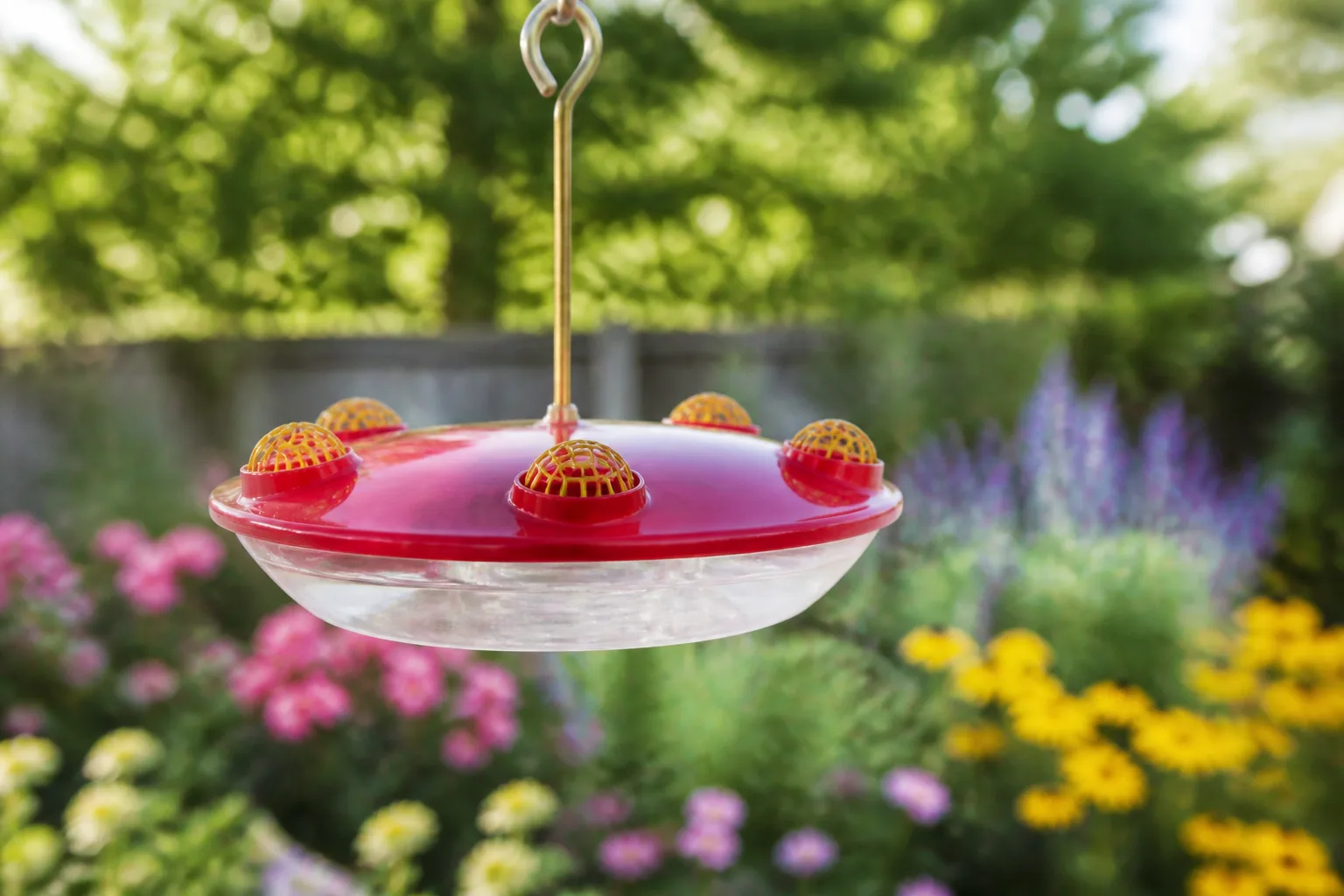
Placement, cleaning rhythm, and nectar basics
Placement: Hang feeders 10–15 feet from dense shrub cover so birds can approach safely, but keep them visible from the sky—red parts should catch sunlight. Start the season by placing feeders near early-blooming tubular flowers; once birds map your yard, you can move hooks closer to windows (Penn State Extension). Pair feeders with native nectar plants using our pollinator yard guide for longer-lasting attraction than sugar water alone.
Cleaning rhythm: In hot weather, empty and scrub every day or every other day; in mild weather, every three days; in cool weather, twice weekly—or whenever nectar clouds or mold appears (Audubon). Use hot water; Audubon approves hydrogen peroxide or weak vinegar, then thorough rinsing—skip dish soap residue when possible.
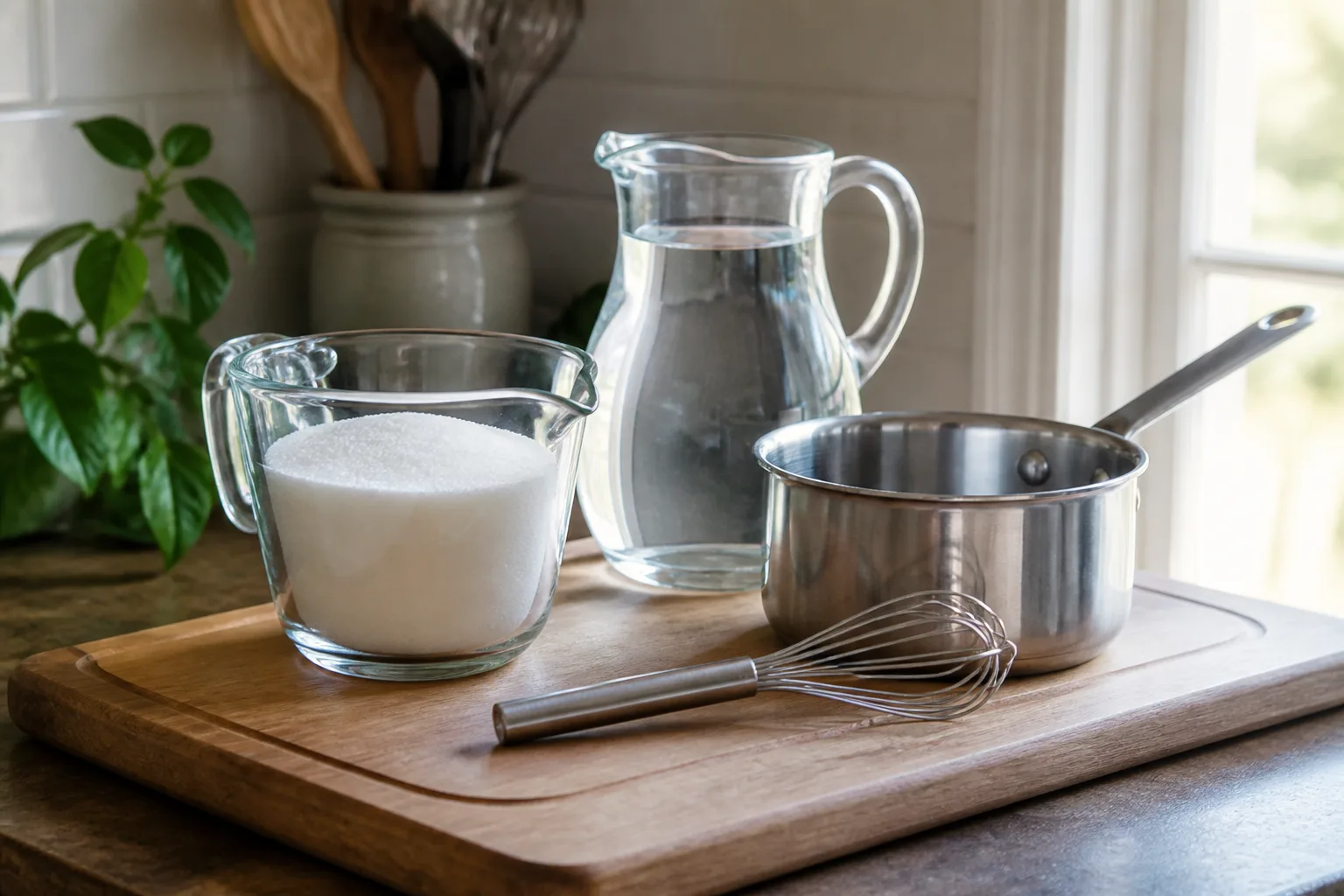
Nectar basics: Mix 1:4 sugar to water, cool before filling, and never use honey, brown sugar, or red dye (Audubon: How to Make Hummingbird Nectar). Full mixing, storage, and spoilage rules live in our hummingbird nectar recipe guide.
Timing: Put feeders out about one week before hummingbirds normally arrive in your region; leave them up until birds stop visiting—feeders do not delay migration, which is driven by day length (Audubon). Year-round feeders are fine in Gulf Coast and Southwest zones if you keep the cleaning discipline.
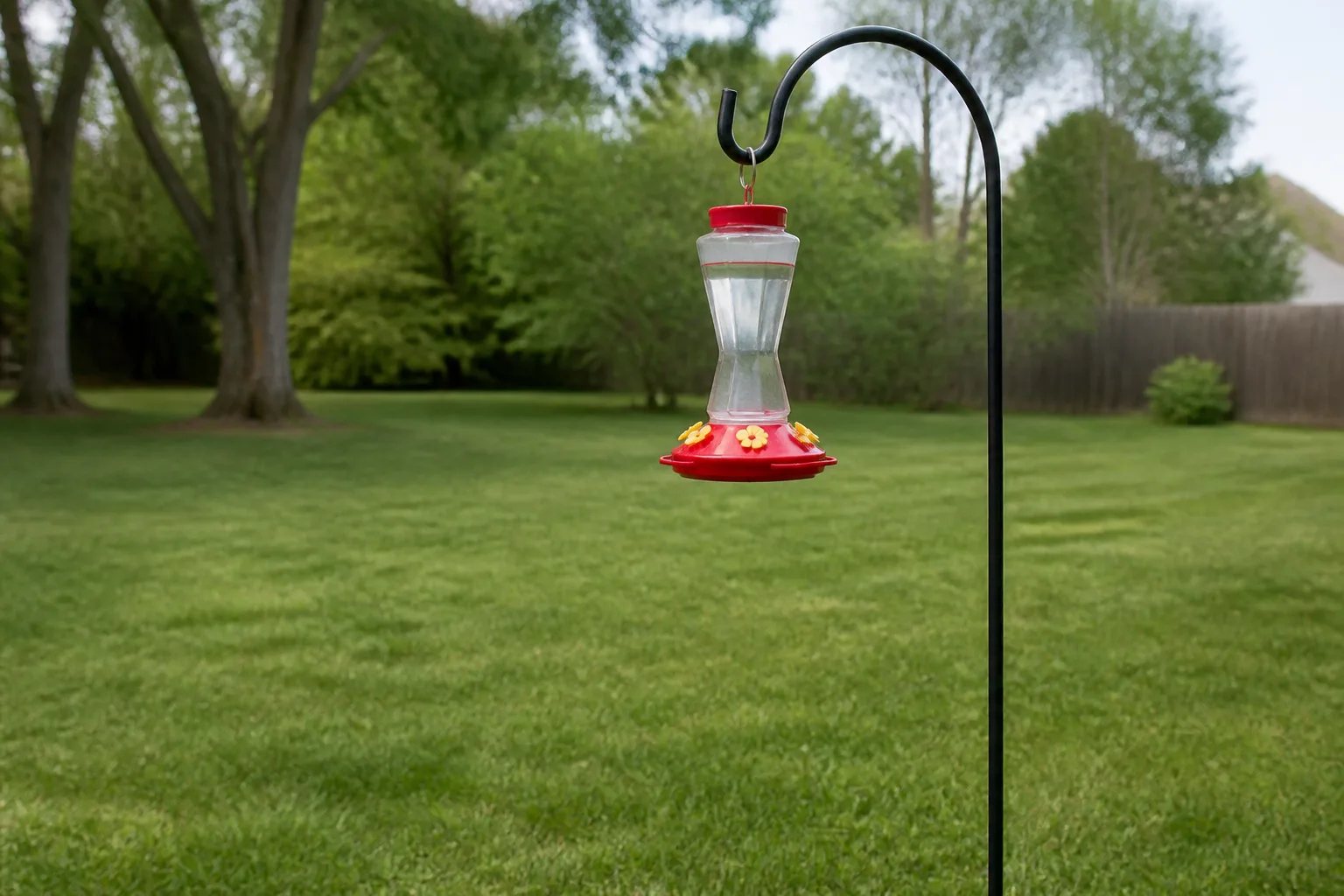
Honorable mentions we are still testing: Nature’s Way Mason Jar Feeder for dishwasher-safe simplicity; Birds Choice Hummerfest for bee-heavy yards needing a saucer with floating port design; camera-equipped feeders are fun for documentation but add Wi-Fi setup and privacy considerations beyond bird health.
Conclusion
The best hummingbird feeder is the one that stays leak-free, comes clean before mold appears, and fits how your yard actually works—whether that is a Sewanta with a built-in moat, an Aspects saucer for bee peace, or a Perky-Pet window seat for close-up watching. Buy for maintenance you will keep, not maximum ounces on the label. Mix fresh 1:4 nectar, scrub on a weather-based schedule, and hang a second feeder down the line if one bossy male owns the first. Do that, and the hummingbirds you invite this spring will still be counting on your hook when migration rolls back through.



