How to Grow and Care for Black Bamboo
Learn black bamboo care from planting and watering to pruning, winter protection, propagation, and the root-barrier choices that keep running rhizomes contained.
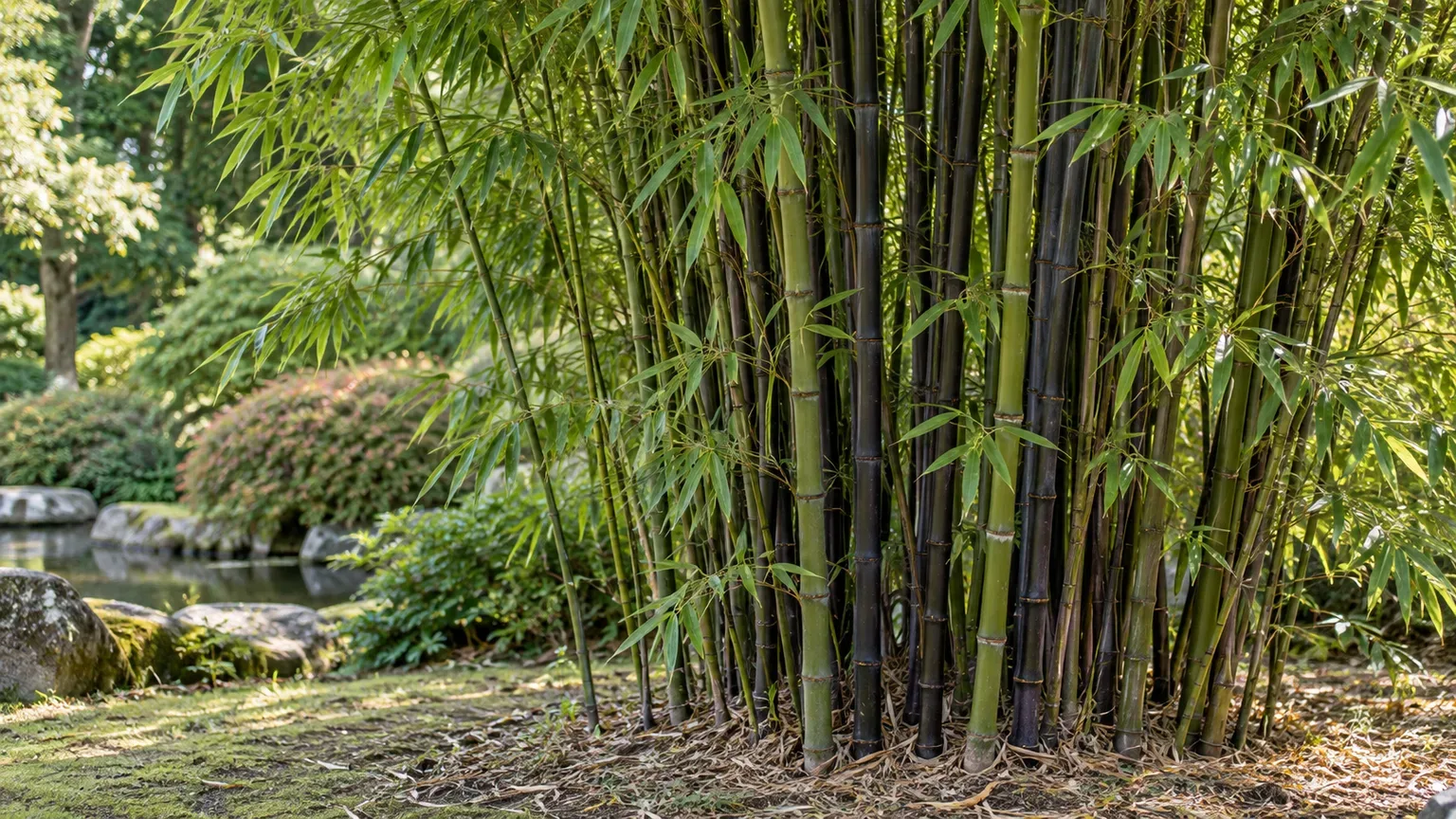
Black bamboo (Phyllostachys nigra) earns its name slowly: new culms emerge green, then deepen through brown and purple tones until older canes become a polished near-black. The narrow green leaves make that color contrast especially effective in a privacy screen, modern border, or large patio container.
The important catch is underground. This is a running bamboo, not a self-contained clump, so its rhizomes can travel away from the planting you intended. Good black bamboo care begins before the shovel goes into the soil: choose a site you can inspect, install containment when needed, and then provide steady moisture, drainage, light, and seasonal thinning.
What Makes Black Bamboo Different
Black bamboo is an evergreen woody grass in the Poaceae family. Its culms are the upright stems, its nodes are the jointed rings along each culm, and its rhizomes are the underground stems that produce new shoots. Those terms matter because each part needs a different kind of attention: prune culms above ground, but control rhizomes at the perimeter.
The plant’s dark canes are not necessarily a sign of stress or a special fertilizer response. Depending on light, climate, age, and growing conditions, new canes may stay green for a year or more before darkening. A planting can therefore show green, brown, and black culms at the same time; that mixed age is normal and can be part of the plant’s best appearance. RHS Plants
Running bamboo biology also explains why a handsome screen can become a difficult neighbor. Extension guidance describes running rhizomes as producing horizontal growth and multiple new culms along their length, with much of the rhizome system concentrated in the upper soil layer. That is why routine mowing, root pruning, trenching, or a properly installed barrier works better than waiting until a mature grove has escaped. Alabama Cooperative Extension System
How to Identify a Mature Plant
Look for tall, upright to slightly arching culms with distinct nodes and fine, narrow leaves. The youngest shoots and culms are greener; older culms carry the darkest color. Height varies widely with climate, water, soil, age, and space, so a nursery label’s mature-size estimate is a planning guide rather than a promise for every yard.
Use the plant’s growth habit as the identification test, not just the color. Several unrelated bamboos are sold under “black bamboo,” but Phyllostachys nigra is the running species covered here. If a seller cannot provide the botanical name, ask before buying, because clumping and running bamboos have very different containment requirements.
Decide Where It Belongs Before Planting
The right question is not only “Will black bamboo grow here?” It is “Can I keep this planting inside the space I want it to occupy?” Avoid planting it tight against a foundation, property line, septic area, drainage ditch, or natural area where an escaped rhizome would be hard to find and remove.
Leave enough working room to see the soil and perimeter. A narrow strip hidden behind a fence may look attractive for a season, but it makes the very maintenance that keeps running bamboo safe much harder. For privacy, it is usually better to plant a shorter, manageable row with access on both sides than to create a dense wall that you cannot inspect.
In-Ground, Barrier, or Container?
Choose an in-ground planting only when you can commit to recurring perimeter checks. A strong belowground barrier is the safest default for most residential beds, especially when the planting is near lawn, paving, a neighbor’s property, or other plants that would hide new shoots.
For a barrier, use a durable material designed for bamboo or similarly persistent rhizomes and bury it at least about 2 feet deep. The Alabama Cooperative Extension System notes that barriers redirect rhizomes rather than stopping their growth; an outward angle can encourage rhizomes to turn upward where they are easier to see and cut. Inspect the exposed edge and joints regularly, because a barrier that is too shallow, weak, or poorly joined can be bypassed. Alabama Cooperative Extension System
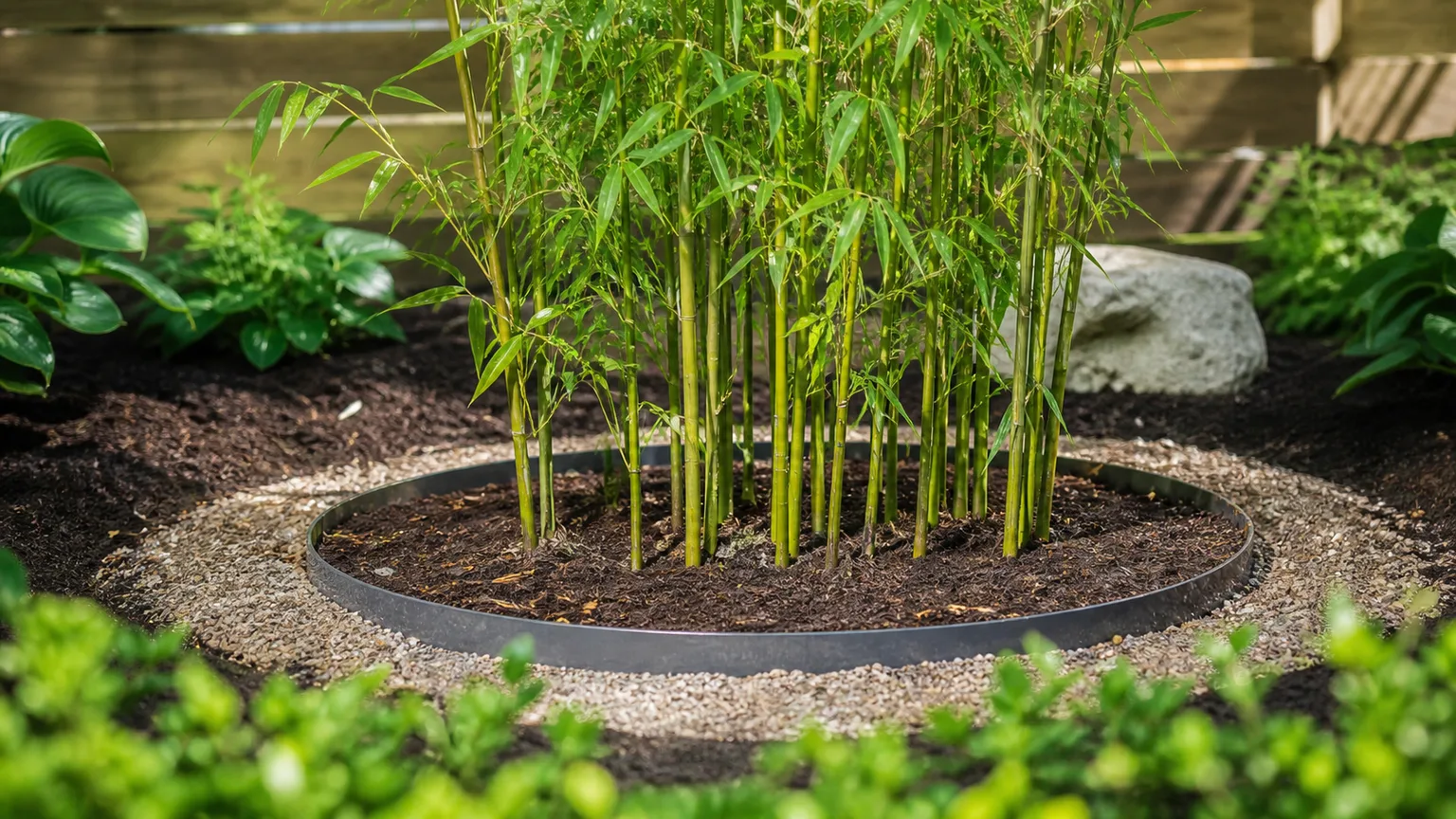
An open perimeter trench is another option where you can keep a clear inspection strip. A trench around 12 inches wide and roughly 1 to 2 feet deep can expose rhizomes that cross the boundary, but it is not a one-time installation; it has to be monitored and cleaned out. If digging or monitoring is not realistic, a large, heavy container is the more honest choice.
Container growing reduces the chance of an underground escape, but it does not make black bamboo low-maintenance. Choose a broad, deep pot with excellent drainage and enough weight to resist wind. A tall plant in a light plastic pot can tip long before the root system fills it, and a pot that is too small will dry rapidly and restrict the rhizomes.
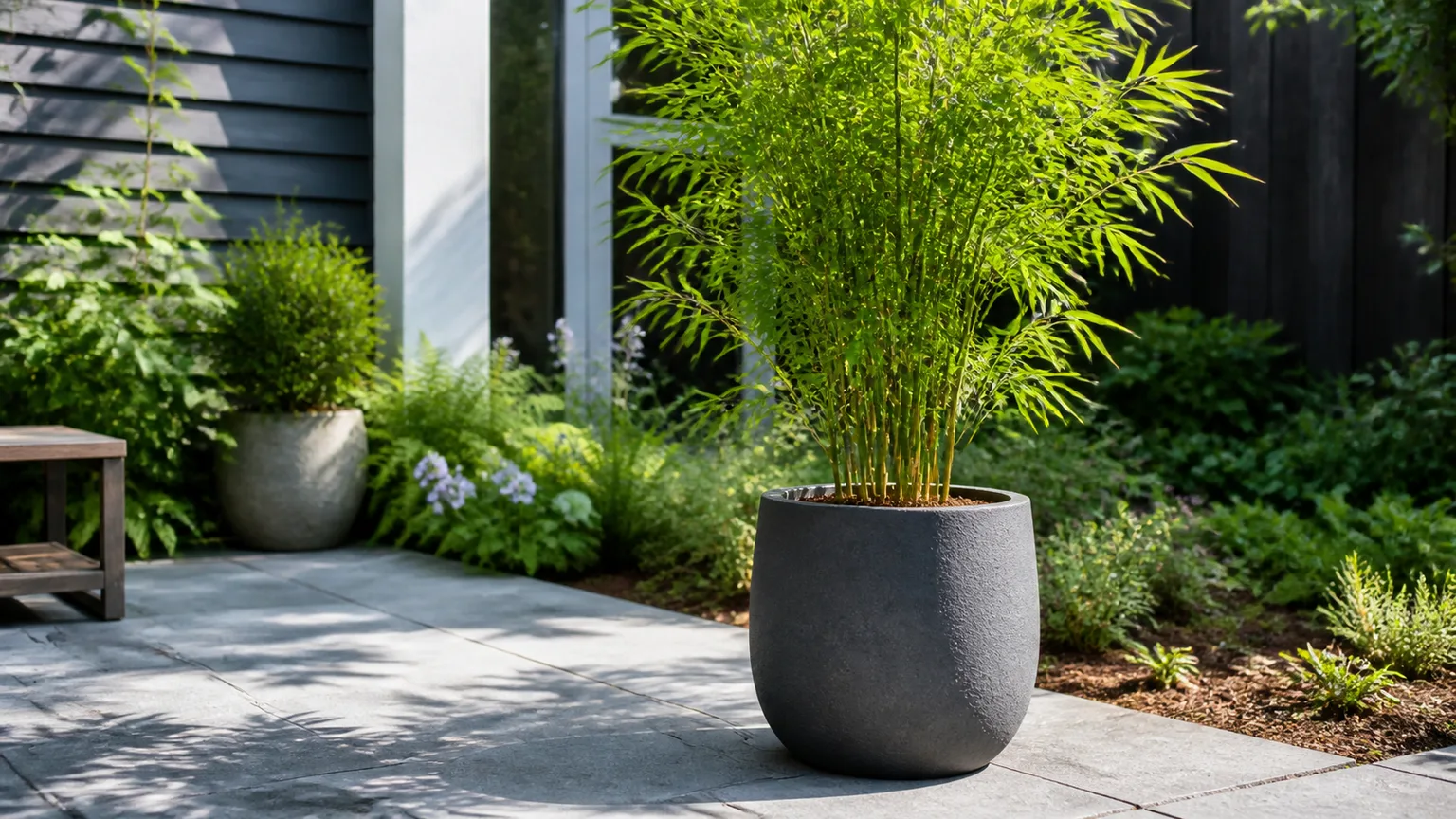
Do not put a layer of rocks in the bottom of a pot as a substitute for drainage. Use a drainage hole, a free-draining growing medium, and a stable pot; a rock layer takes up root space without fixing a blocked or compacted mix. Keep container-grown bamboo where you can turn the pot, check the drainage hole, and spot rhizomes circling the inside.
Plant Black Bamboo Step by Step
Plant in spring where winters are severe, or during another mild establishment window in climates with a long growing season. The goal is to give the root ball time to make new roots before either extreme heat or freezing weather makes watering more difficult.
- Water the nursery plant first. A hydrated root ball is easier to remove intact and suffers less transplant stress.
- Mark the final footprint. Decide the barrier, trench, or container before digging the planting hole.
- Prepare a hole about twice the root ball’s width. Keep the finished soil level at the same depth as the plant’s original container soil; burying the culm bases can create avoidable problems.
- Loosen circling roots gently. If the root ball is densely matted, tease only the outer roots that will not separate without force.
- Backfill with the excavated soil improved with modest organic matter. Black bamboo needs moisture retention and air in the root zone, not a permanently rich, waterlogged pocket that behaves differently from the surrounding soil.
- Water slowly and thoroughly. Fill air gaps around the root ball, then apply a 2-inch mulch layer while keeping mulch away from direct contact with the culms.
MyGardenLife’s species guide recommends preparing soil deeply, setting the plant at the same level as it grew in the pot, and watering new plantings daily for the first couple of weeks before adjusting to weather and soil. Use that as an establishment framework, then let an actual moisture check—not the calendar—decide the next watering. MyGardenLife
Prepare the Root Zone
Break up compacted soil across the planting area rather than creating only a soft hole. A loamy soil that drains after a deep watering but stays lightly moist between waterings is the target. If water sits after rain, fix the drainage or raise the bed before planting; adding more water to a saturated site will not compensate for a root zone without air.
In heavy clay, work outward from the root ball and consider a raised bed or another drainage solution instead of filling a small hole with a dramatically different mix. In very sandy soil, organic matter and mulch can improve the root zone’s water-holding capacity, but you will still need shorter intervals during hot, windy weather.
First-Season Watering
For the first two weeks, check the root ball and surrounding soil frequently. Water deeply when the upper few inches begin to dry, allowing excess water to drain away. Then extend the interval as roots move into the surrounding soil; a plant that is established in clay may need less frequent watering than one in sand, while a container may need checking every day during hot weather.
Direct water at the root zone rather than spraying the leaves. A soaker hose or slow hand watering wets the soil more efficiently and reduces the period foliage stays damp. Deep watering every few days is generally more useful than a light sprinkle that wets only the surface, but never use “deep watering” to justify leaving the site soggy. MyGardenLife
Give It the Right Light, Soil, and Water
Black bamboo grows best with plenty of light and consistent moisture. It can tolerate light shade, but lower light may slow the development of dark culms and produce a thinner, less upright screen. A site with morning sun and some protection from harsh late-afternoon heat can be a good compromise in hot climates.
Light and Wind Exposure
Aim for full sun to light shade, then adjust for your site’s heat and wind. Strong light supports sturdy culms and the darkest color, while intense reflected heat from masonry or paving can increase leaf scorch if the root zone dries. On the other hand, a deeply shaded, wind-tunnel-like location can produce weak growth and poor drying after rain.
Wind deserves as much attention as light. Tall canes catch moving air, and exposed leaves lose moisture quickly even when the soil still looks damp. Shelter the plant with a fence or mixed planting where practical, but do not crowd it so tightly that leaves and culms remain wet with no air movement.
Soil and Drainage
Use soil that is fertile enough to support vigorous shoots but drains freely after rain. Black bamboo is more forgiving of soil texture than of repeated waterlogging. If lower leaves yellow while the soil remains wet, the first correction is drainage and watering frequency—not more fertilizer.
Mulch helps buffer soil temperature, slow evaporation, and protect shallow rhizomes from abrupt weather changes. Keep the mulch layer around 2 inches in a bed, renew it as it settles, and leave a small gap around the culm bases so trapped moisture does not stay against the stems.
Feed and Mulch for Steady Growth
Black bamboo does not need a complicated feeding program. Spread compost or a balanced slow-release fertilizer over the root zone in early spring as new growth begins, then follow the product label if a second feeding is appropriate. High-nitrogen fertilizer can support leafy, vigorous growth, but excess feeding can create soft growth, salt buildup, or a plant that outgrows its available space faster than you can manage it.
Container plants lose nutrients with repeated watering and usually need more regular feeding than established in-ground plants. Use a complete fertilizer at the label rate, water the container first if the mix is dry, and stop late-season feeding early enough that the plant is not pushed into tender growth before cold weather. An annual mulch or compost top-dressing can reduce the need for frequent fertilizer while improving the soil surface. RHS Plants
Prune Culms and Manage the Height
Pruning has three separate jobs: improving the appearance of the stand, removing damaged or weak culms, and managing spread. Cutting the tops of existing culms can lower the visible screen, but it does not remove the rhizomes that produce new shoots.
Do major structural pruning in late winter or early spring before the main flush of new shoots. Use clean loppers or a pruning saw to remove dead, damaged, crossing, or very thin culms at ground level. Thin from the center of a crowded grove so air and light can reach the remaining canes, and remove selected low side branches if you want the black stems to read as an architectural feature.
To lower a culm, cut just above a node rather than leaving a ragged stub between nodes. Stagger the final heights so the top of the planting looks intentional instead of sheared flat. A culm reaches its height in its first season; future height comes from new culms, which is why selecting shoots and managing the perimeter matter as much as a pruning cut. Alabama Cooperative Extension System
Seasonal Root and Shoot Checks
Walk the barrier or trench during the spring shooting period, then repeat the check after heavy rain or irrigation changes. Young shoots are easier to remove than woody culms, and catching one on the wrong side of the barrier is far simpler than discovering a network of rhizomes years later.
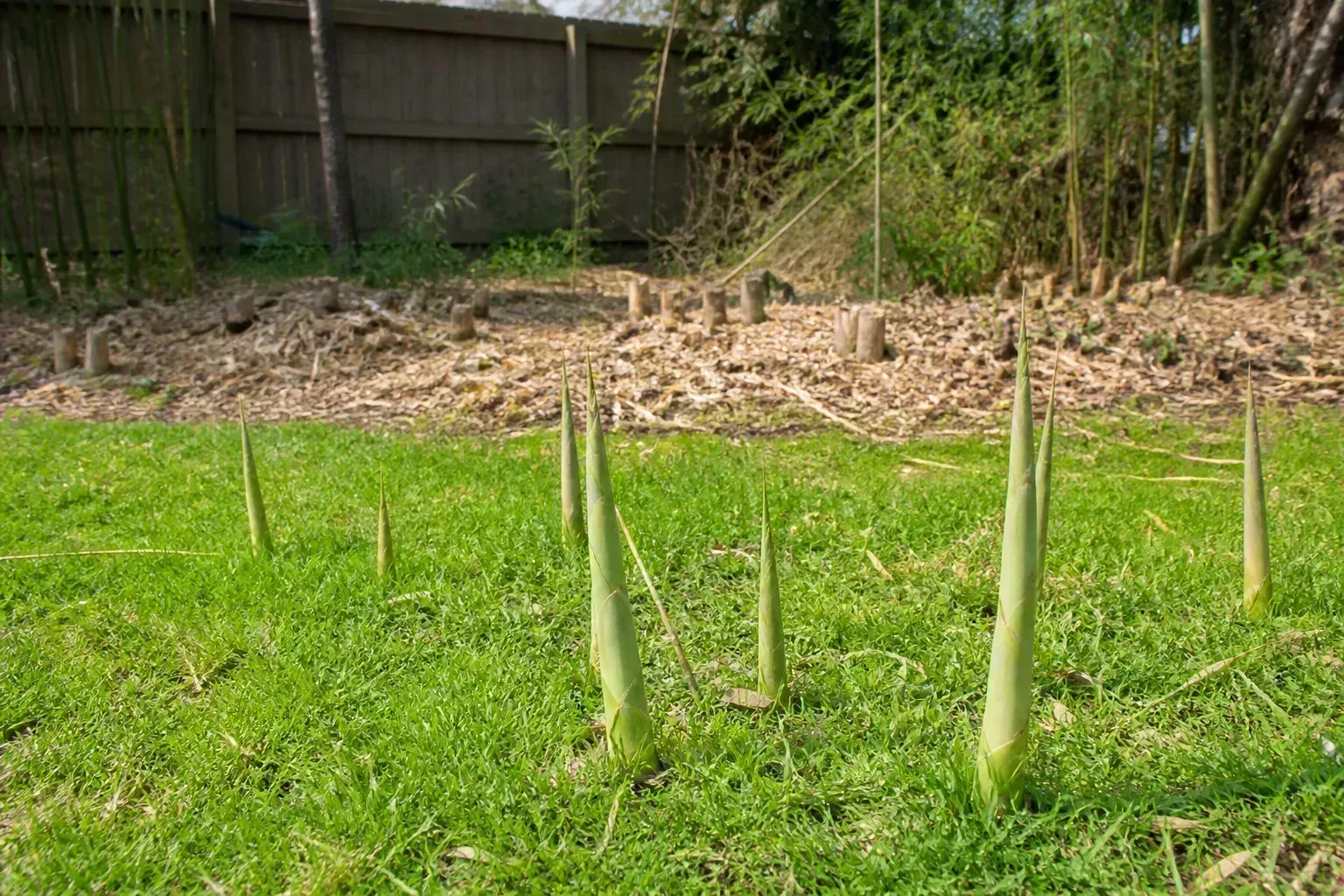
If a rhizome reaches the inspection edge, cut it cleanly and remove the severed piece rather than leaving it in loose soil. In an open buffer, knock down or cut new shoots while they are young, and continue checking until new emergence stops for the season. Extension guidance emphasizes that running bamboo requires repeated attention because new culms do not all emerge at once. Alabama Cooperative Extension System
If bamboo has already escaped, do not assume one pass with a shovel solves the problem. Excavation must remove the connected rhizome system and follow-up monitoring is still needed; when the planting is large, near a boundary, or intertwined with desirable trees, get help from a qualified local professional or extension service. University of Maryland Extension describes removal as labor-intensive and recommends combining physical removal with containment where complete removal is not practical. Ask Extension
Propagate by Division
Division is the practical way to propagate black bamboo, but every new division is another running-bamboo management project. Divide in late winter or early spring before the main shoot flush, when the plant is easier to handle and the new divisions have a longer establishment window.
Prepare the destination first: have the container, barrier, or final planting hole ready before lifting the parent. Dig down and under a section that includes several healthy culms plus a substantial rhizome and root mass. Use a sharp spade, pruning saw, or similar clean tool to make a firm cut, then replant the division at its original depth without allowing the roots to dry out.
Water immediately and keep the division evenly moist while it re-establishes. Shelter a fresh division from extreme wind and heat until it is producing strong new growth, but do not move it into a dim indoor room for long-term care. Sanitize tools between cuts if dividing several plants, and dispose of weak or diseased material rather than multiplying it.
Overwintering and Container Care
In a mild climate, an established black bamboo can remain outdoors year-round. Cold, drying wind can scorch foliage even when the roots survive, so a sheltered position and mulch over the root zone are useful. Do not interpret winter leaf damage as proof that the entire plant is dead; wait for spring and inspect the canes and new shoots before making heavy cuts.
Container roots are more exposed to freezing than roots in the ground. Before severe weather, move a pot to a sheltered location such as a protected porch or unheated garage that still avoids prolonged deep freezing, and keep the mix just moist rather than bone dry or waterlogged. Return it outdoors gradually when conditions moderate, watching for sudden sun and wind exposure.
Black bamboo is not a good permanent houseplant. Indoors it usually lacks the intense light, root volume, airflow, and seasonal temperature pattern that support a tall outdoor bamboo. Use indoor shelter as a short-term winter strategy for a container, not as the main growing plan.
Troubleshoot Yellow Leaves and Pests
Black bamboo is generally resilient, but “yellow leaves” is a symptom rather than a diagnosis. Start by asking what changed, which leaves are affected, and what the soil feels like several inches below the surface.
- Yellowing after planting, moving, or a sudden weather shift can be transplant or environmental shock. Keep moisture steady, protect from drying wind, and look for healthy new growth before making several changes at once.
- Yellow lower leaves with wet, sour-smelling soil point toward poor drainage or overwatering. Check the planting area, reduce irrigation, and inspect roots if a container stays wet for days.
- Pale stippling, fine webbing, or bronzed leaves suggest mites, especially during hot, dry weather. Check leaf undersides, rinse the plant with a firm stream of water, and improve root-zone consistency before reaching for a pesticide.
- Sticky residue and a black film often indicate honeydew-producing insects such as aphids or scale with sooty mold growing on the residue. Treat the insect problem first; washing the mold alone does not remove its source.
- Crisp margins or curled leaves after wind, heat, or drought are more consistent with water stress or leaf scorch than a fertilizer deficiency. Restore moisture gradually, add mulch, and reduce exposure to harsh reflected heat if possible.
The practical UK care guidance for this species also flags root rot in overly wet conditions and leaf scorch during prolonged dry periods. Compare symptoms with root-zone moisture and recent weather before applying a generic treatment. Web Garden Centre
Yellowing Leaves and Leaf Scorch
If only a few older leaves yellow while the plant is making healthy shoots, remove those leaves and continue normal care. If yellowing is widespread, pause fertilizer and inspect roots, drainage, wind exposure, light changes, and the undersides of leaves for pests.
Avoid correcting every possible cause at once. Moving the plant, heavily pruning it, fertilizing it, and changing the watering schedule in the same week makes it impossible to tell what helped. Fix the most likely stress first—usually water and drainage—then give the plant time to show whether new foliage is healthy.
Conclusion
Black bamboo is a striking privacy plant when its beauty and biology are planned together. Give it bright light, a root zone that stays moist but drains freely, mulch, moderate feeding, and seasonal culm thinning; more importantly, decide how you will contain the running rhizomes before planting.
For a large yard with an accessible perimeter, use a durable barrier or monitored trench and inspect it during the shooting season. For a small yard, rental property, or gardener who cannot monitor spread, choose a heavy container—or choose a non-running alternative. That decision is the foundation of successful black bamboo care.