How to Grow and Care for Calibrachoa (Million Bells)
Learn how to grow calibrachoa with the right sun, soil, watering, feeding, pruning, container size, and troubleshooting for nonstop summer color.
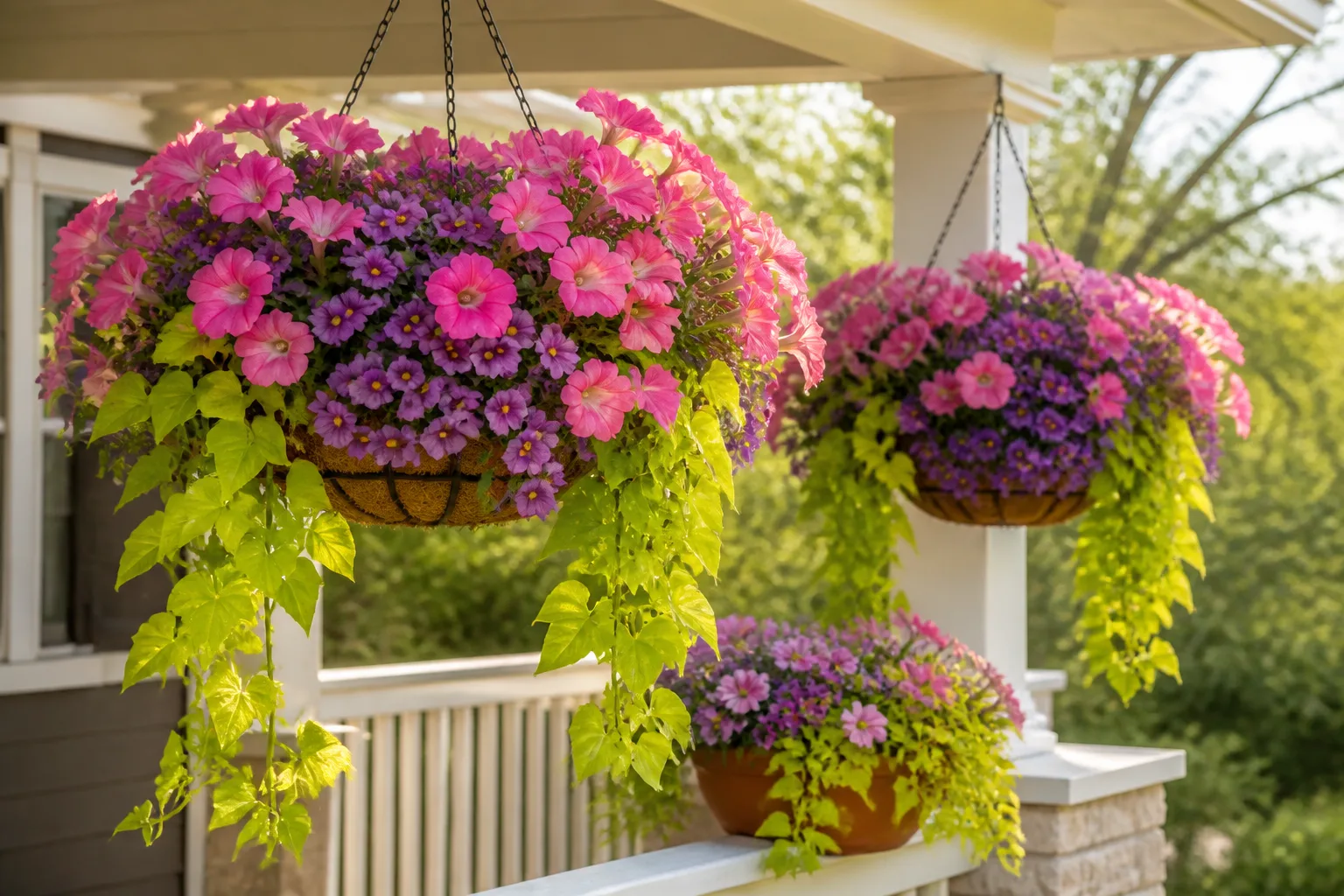
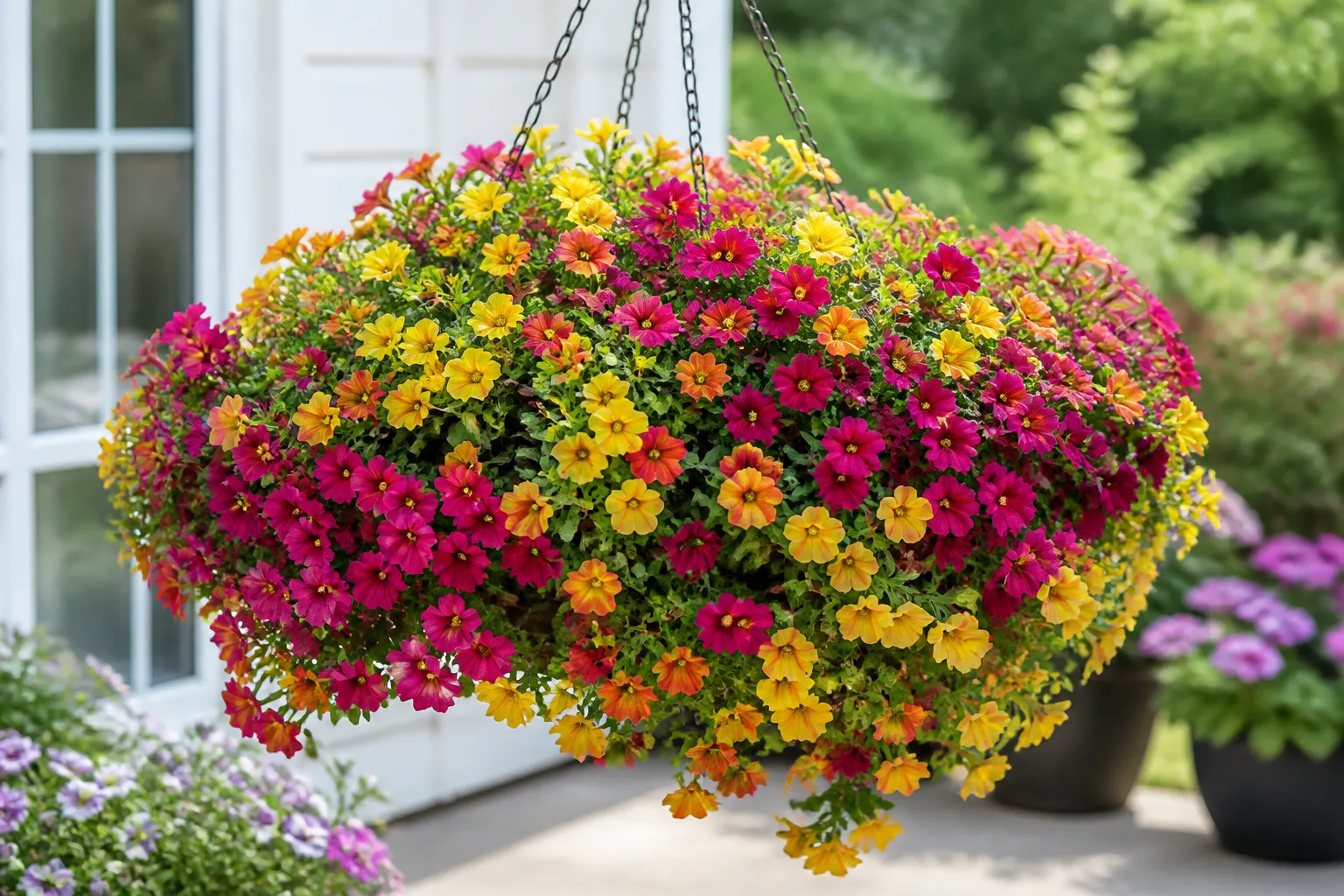
Calibrachoa is the plant to choose when you want a container to look full of flowers rather than full of leaves. Its small, trumpet-shaped blooms cover trailing stems in pink, purple, red, orange, yellow, white, and bicolors. A healthy plant can mound over a pot rim, pour from a hanging basket, or soften the edge of a sunny bed without asking you to remove every spent flower.
The catch is that million bells is a fast-growing container plant. Fast growth uses water and nutrients quickly, while a small root ball can stay wet after a cool spell or dry out in one windy afternoon. The best care is therefore less about a rigid schedule and more about matching light, pot volume, drainage, and feeding to the conditions you actually have.
What calibrachoa is and why it excels in containers
Calibrachoa is a group of hybrid plants in the nightshade family, Solanaceae. It is closely related to petunias, but it is not simply a miniature petunia. The flowers are smaller, the habit is usually more trailing, and many garden selections are bred to be self-cleaning, meaning they drop old blooms without needing daily deadheading. NC State Extension describes calibrachoa as a full-sun plant for moist, organically rich, well-drained soil and notes that it generally does not need deadheading. NC State Extension Plant Toolbox
In USDA Zones 9–11, some plants may survive as short-lived perennials when protected from hard freezes. Everywhere else, gardeners usually grow calibrachoa as a warm-season annual. That is not a failure of care: a hanging basket has exposed roots, and one freezing root ball can end the season even when the foliage looked perfect the day before.
The plant’s natural shape explains its best uses. It commonly reaches about 6–12 inches tall and spreads or trails 12–24 inches, though cultivar vigor varies. Place it at the rim of a basket, near the front of a mixed pot, or along a sunny border where its stems can spill rather than being buried by an upright neighbor.
Choose the right site before you buy
Buy calibrachoa for a location with bright light, moving air, and a realistic watering plan. A plant tag that says “full sun” describes light, not immunity from drought. A basket on a south-facing wall may receive ideal illumination but still need checking twice in one hot, windy day; a large ceramic pot on a morning-sun porch may dry much more slowly.
How much sun does million bells need?
Aim for at least six hours of direct sun for the strongest flowering and most compact growth. Four hours can be enough for a plant to survive, particularly in a hot climate with afternoon relief, but flowering usually becomes lighter and stems stretch toward the brightest opening. If a basket is green and vigorous but has very few buds, move it toward more direct light before assuming it needs more fertilizer.
In very hot regions, morning sun plus bright afternoon protection can be a useful compromise. Watch the plant rather than treating “full sun” as a command to place it against heat-reflecting masonry. Leaves that wilt only at the hottest part of the afternoon and recover by evening may be heat-stressed; a plant that remains limp after the root zone has been watered needs a different diagnosis.
Use a container and soil that can recover from mistakes
Choose a high-quality, soilless potting mix that drains freely but still holds enough moisture for a flowering annual. Do not fill a pot with garden soil. It is too dense for most containers, can collapse around roots, and makes it harder for excess water to leave after rain.
Drainage holes are essential, but drainage is not the same as a layer of gravel at the bottom. A gravel layer does not create a magic dry zone; it reduces the volume available for roots and can leave the potting mix above it saturated. Use a draining mix throughout the container and raise the pot slightly if the hole sits against a flat surface.
Container size, drainage, and spacing
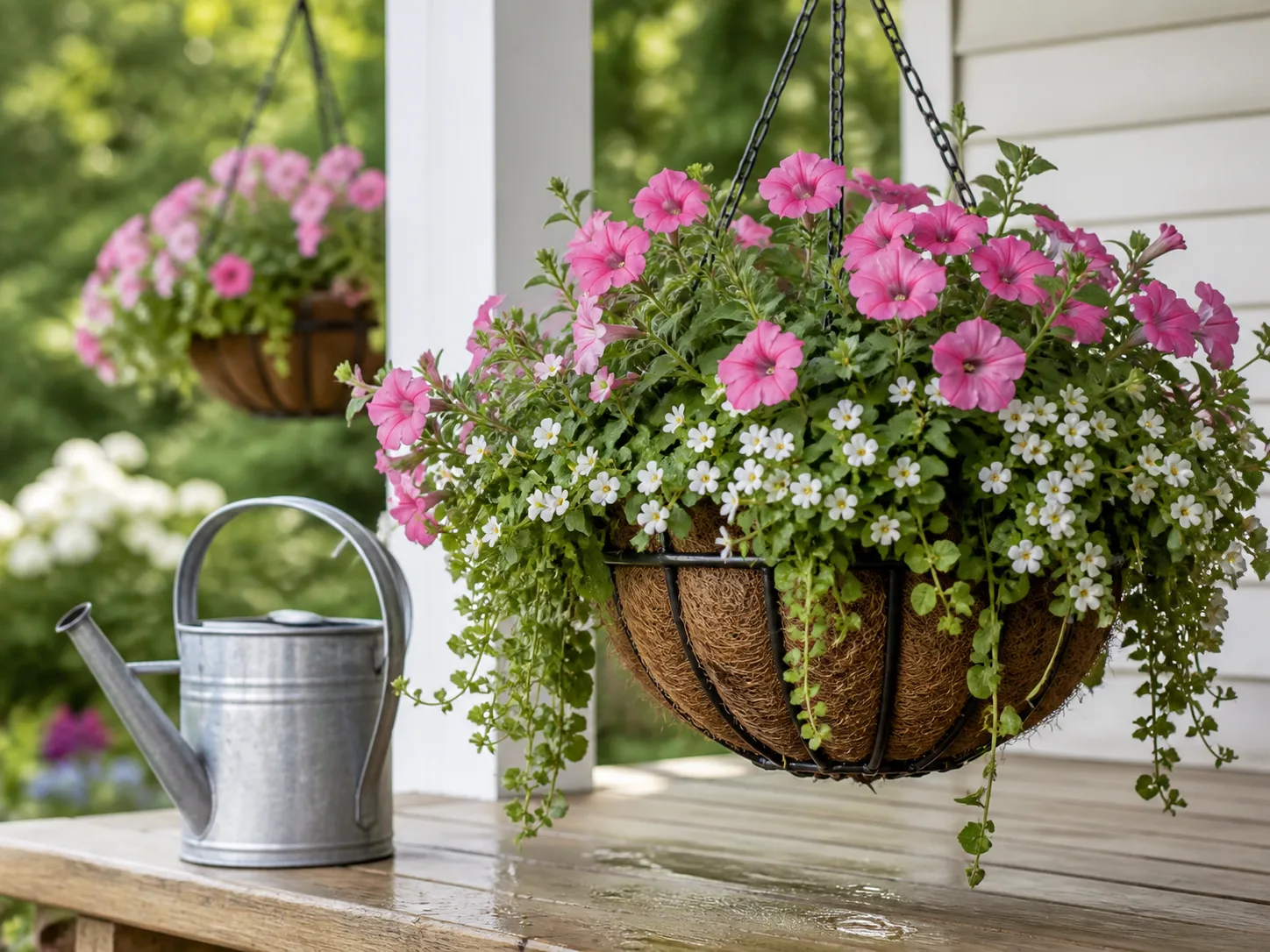
A tiny nursery pot can work temporarily, but a mature million bells plant is easier to manage in a container with enough soil volume to buffer heat and missed watering. For a single plant, a pot around 10–12 inches wide is a practical starting point. A 12–14-inch hanging basket can hold about three plants if they are evenly spaced and the cultivar is not exceptionally vigorous. More plants create a faster initial display but also create a root system that dries and exhausts nutrients sooner.
In a mixed container, leave headspace below the rim so water can soak in rather than run over the sides. Keep calibrachoa at the edge, where its stems can trail. Avoid crowding the crown against an upright plant; dense, constantly wet foliage has poorer air movement and is harder to inspect for aphids.
Water by root-zone condition, not the calendar
Water when the upper layer of mix has begun to dry, then water thoroughly until some drains from the bottom. Do not give a few sips every day. Shallow watering encourages a small, surface-heavy root system and can leave the lower portion of the pot chronically wet.
Check a basket in two places: near the rim, where roots and wind may dry it first, and in the center of the root ball. A finger pushed about an inch into the mix gives useful information, but a very root-bound plant can feel dry at the surface while the center remains dense and wet. Lift the pot when it is freshly watered, then lift it again as it dries; the change in weight becomes a surprisingly accurate personal watering guide.
Heat, wind, small containers, and dark-colored pots increase demand. University of Georgia Extension explains that small containers restrict root volume and can force much more frequent watering, while larger containers buffer the root zone better. UGA Extension: Gardening in Containers
That is also why hanging baskets deserve a separate check from floor-level pots: they are exposed on more sides and can lose moisture quickly in moving air. Fine Gardening’s guidance on keeping baskets flowering emphasizes the same practical habit—match basket placement and irrigation to the weather rather than assuming one routine will last all season. Fine Gardening: How to Take Care of Hanging Baskets
If water runs immediately down the sides and out the bottom, the mix may have pulled away from the pot or become hydrophobic. Water slowly in two passes, or set the pot in a shallow basin for a short soak and then let it drain completely. If the plant wilts while the soil is wet, stop adding water and inspect roots and stems instead.
Feed a heavy bloomer without salt buildup
Calibrachoa flowers continuously only when it has light, moisture, and enough available nutrition. At planting, mix a controlled-release fertilizer into the potting mix according to the label. During active growth, a diluted complete liquid fertilizer every two to three weeks can help a container plant replace nutrients lost through frequent watering.
More fertilizer is not a shortcut to more flowers. Excess salts can injure roots, especially in a small pot that is rarely flushed by rain. If pale leaf edges, a crust on the soil surface, or sudden decline appears after repeated feeding, pause fertilizer and flush the pot with plain water, allowing it to drain freely. Resume at the label rate only after new growth looks healthy.
Pale leaves can indicate hunger, but they can also reflect low light, cool roots, high pH, or damaged roots. Diagnose the site and moisture first. Fertilizer cannot repair roots that have been sitting in stagnant water.
Plant calibrachoa in beds, pots, and baskets
Plant after your local frost risk has passed and nights are reliably mild. A nursery plant that has been grown under cover needs a gradual transition to outdoor sun and wind. Put it outside in a sheltered bright location for a few days, lengthening exposure before placing it in its final position. This hardening step reduces scorch and shock.
In a bed, choose soil that drains well and amend compact soil with organic matter rather than creating a rich, water-holding pocket. Space plants far enough apart that mature stems can spread without forming a solid mat. In a basket, loosen badly circling roots gently, set the crown at the same depth it was growing, and water the entire root ball after planting.
Calibrachoa can also be planted at the front of a sunny border. In-ground roots have more room than basket roots, so the plant may need less frequent watering, but it still dislikes a low spot that stays saturated after storms.
Keep the plant blooming and compact
Most modern calibrachoas do not need flower-by-flower deadheading. Removing every tiny bloom is time better spent checking the root zone, rotating a basket, or trimming one long stem that is shading the rest of the plant. If a cultivar holds spent flowers visibly, a light cleanup can improve appearance, but it is not the main bloom trigger.
Deadheading, pinching, and renewal pruning
Pinch the growing tips early if you want a bushier plant. Once established, let the stems extend until they begin to look thin, tangled, or bare near the crown. Then cut the longest runners back by about one-third to one-half, making the cut just above a healthy leaf joint. Water deeply afterward and resume a gentle feeding routine; new side shoots need both moisture and energy.
Do not shear a drought-stressed or severely wilted plant immediately. Rehydrate first and wait until the foliage has recovered. A hard cut removes the plant’s remaining photosynthetic surface and can turn temporary heat stress into a long recovery. Late-summer renewal pruning is most useful when the root system is healthy and the plant still has time to make new growth before frost.
Choose companions with the same needs
Design a mixed pot around conditions, not just color. Calibrachoa pairs well with other sun-loving plants that prefer evenly moist but well-drained soil, such as verbena, fan flower, some bacopa cultivars, angelonia, and compact marigolds. A trailing partner can echo its shape, while an upright accent provides height.
Avoid putting it beside a plant that requires deep shade or permanently wet soil. A dramatic combination can still fail when one plant demands frequent irrigation and the other develops root problems in the same mix. Keep vigorous companions from shading the calibrachoa crown, and remember that one fast-growing spiller can overwhelm a small pot by midsummer.
Calibrachoa types and what cultivar labels tell you
Garden calibrachoas are mostly complex hybrids sold in series and named cultivars rather than as species chosen from a wild-plant collection. Labels may describe flower size, double or single blooms, trailing strength, color pattern, heat tolerance, or whether the plant is intended for seed. Treat the mature spread and light instructions as more useful than the marketing name.
Single flowers often give a lighter, more open look; double flowers can create a fuller display but may be more visually heavy after rain. A compact series suits the front of a mixed pot, while a vigorous trailing series is better for a basket with enough soil volume. Record the cultivar if it performs well: “purple calibrachoa” is not enough information to recreate the same habit next year.
Solve yellow leaves, wilting, and weak flowering
Yellow leaves are a symptom, not a diagnosis. Start at the roots and work upward:
- Feel the mix several inches down. If it is wet and sour-smelling, pause watering and check drainage and roots. If it is bone dry and the pot is light, water slowly and thoroughly.
- Check light and the direction of growth. Long, soft stems and few buds point toward insufficient direct sun or excessive competition.
- Look at which leaves are yellow. A few old lower leaves can be normal; widespread yellowing after frequent watering is more concerning.
- Inspect leaf undersides and growing tips for aphids, sticky honeydew, stippling, or distorted new growth.
- Only after those checks consider feeding, and use a complete fertilizer at the label rate.
Root rot is more likely when the plant wilts despite wet soil, the crown is dark or soft, or roots are brown and collapsing rather than firm and pale. Move a salvageable plant into fresh, airy mix, remove dead roots with clean tools, and use a clean container with drainage. If the entire root ball is decayed, replacing the annual is often more realistic than trying to force recovery.
Watch for aphids and other pests
Aphids gather on tender tips and the undersides of leaves. They may cause curling, sticky residue, or sooty mold on honeydew. Inspect weekly, especially when a dense basket is growing quickly. A firm spray of water can dislodge a light infestation; repeat after a few days because a single rinse rarely reaches every colony.
For a persistent problem, identify the pest and use a product whose label includes the plant and pest. Follow the label exactly, avoid spraying open flowers when pollinators are active, and do not assume a homemade dish-soap mixture is harmless. Strong or repeated soap solutions can burn foliage. Healthy airflow and avoiding lush overfertilization also make the plant less attractive to recurring aphid outbreaks.
Grow calibrachoa from seed or cuttings responsibly
Many named calibrachoas are protected hybrids and do not come true from saved seed. Some produce little usable seed, and vegetative propagation may be restricted by plant patents or trademark terms. Check the label before taking cuttings for sale or distribution.
For permitted propagation, take a 4–6-inch nonflowering tip cutting, remove the lower leaves, and place it in a clean, lightly moist rooting medium under bright indirect light. Warmth, humidity, and patience matter more than constant saturation. Once roots resist a gentle tug and new growth begins, pot the cutting into a small container and acclimate it gradually.
Seed-grown plants require light to germinate. Sow on the surface of a sterile seed-starting mix, keep the medium evenly moist and warm, and provide strong supplemental light after emergence. Seedlings become fine and weak quickly when placed in a dim window; a timer-controlled grow light is more dependable than guessing from daylight.
Protect million bells from heat, cold, and winter
During a heat wave, move a container away from reflected afternoon heat if possible, check moisture more often, and provide morning sun with afternoon relief if the plant repeatedly collapses. Do not compensate for hot weather by keeping the mix constantly saturated. The goal is a moist root zone with oxygen, not mud.
Before a frost, move a portable basket to a bright sheltered place. A brief cold night may damage flowers without killing the roots, but a hard freeze can end the plant. Indoor overwintering is possible in a bright, cool space, yet it often produces a stretched, pest-prone plant that is less attractive than a fresh spring start. If you try, reduce feeding, keep it just moist, and inspect closely for pests before bringing it near other plants.
Calibrachoa versus petunias
Choose calibrachoa when you want smaller flowers, a dense trailing habit, and less deadheading. Choose a petunia when larger blooms, stronger fragrance in some cultivars, or a particular upright and spreading form matters more. Both need bright light, drainage, regular moisture, and nutrition in containers; neither is automatically low-water simply because it tolerates sun.
The practical difference is often scale. Calibrachoa can fill a basket with a fine-textured cascade, while a large-flowered petunia makes a bolder focal display but may show spent flowers more clearly. In a mixed pot, use the plant whose mature vigor matches the container instead of assuming the smaller flowers need less root space.
Conclusion
Successful calibrachoa care is a balancing act: strong light without reflected-heat punishment, consistent moisture without saturated roots, and regular nutrition without fertilizer excess. Start with a roomy, well-drained container, check the root zone before watering, and treat weak flowering as a light-and-root question before adding feed.
Give million bells room to trail, trim tired stems when the plant is hydrated, and pair it only with companions that share its sun and moisture needs. In most climates it is a seasonal annual, but within that season it can deliver a remarkable amount of color with surprisingly little grooming.