Planting Store-Bought Mums in the Ground: What Works
Yes, you can plant store-bought mums in the ground—but only some survive winter. Learn how to tell florist mums from hardy types, when to plant, and what to expect next spring.
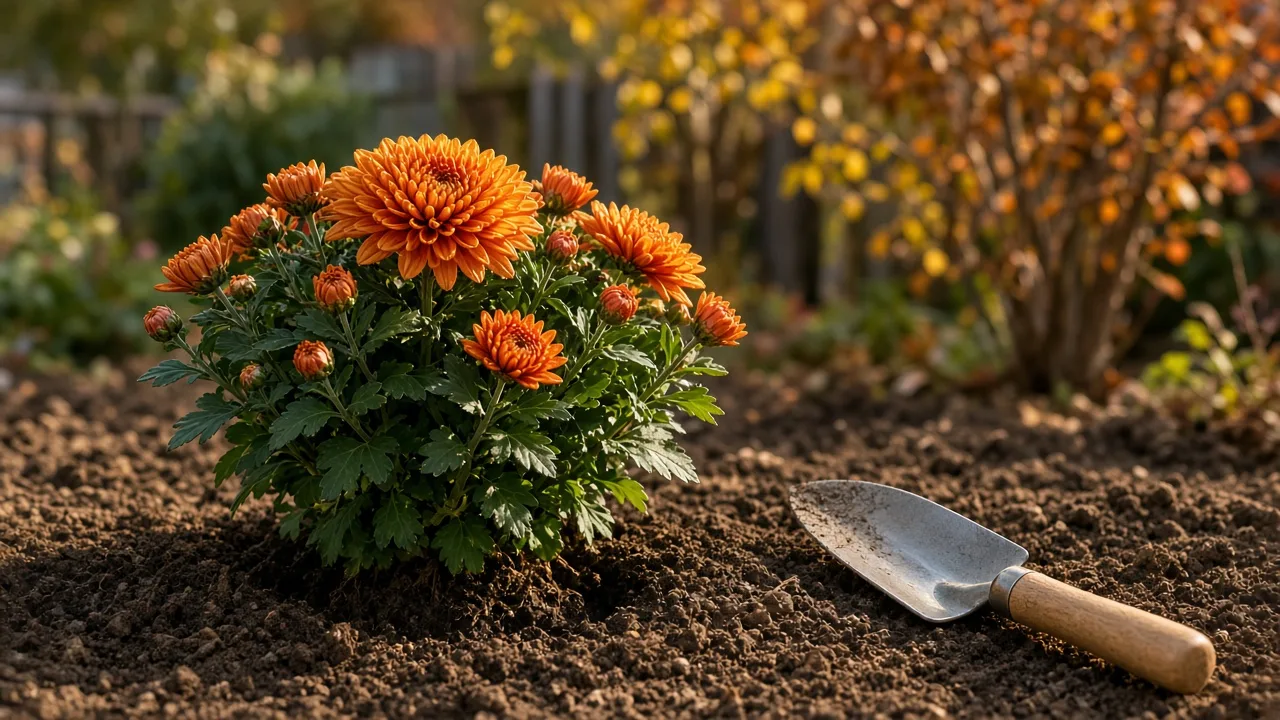
Every September, pots of chrysanthemums appear on grocery store endcaps, garden-center tables, and front porches across the country. They are inexpensive, instantly colorful, and exactly what fall decorating demands. When the blooms fade and the first frosts arrive, a reasonable question follows: can you plant store-bought mums in the ground instead of throwing them away?
The honest answer is yes—but whether they survive and bloom again depends almost entirely on what kind of mum you bought, when you plant it, and how cold your winters get. Some pots are bred for a six-week porch show. Others are hardy garden perennials that happen to be sold in bloom. Treating them the same way is the most common mistake.
The Short Answer Before You Grab a Shovel
You can plant a store-bought mum in the ground, and in mild climates (roughly USDA zones 7–9) some pots will overwinter and push new growth the following spring. In colder zones, most fall-purchased, budded-up pots behave like short-lived annuals even after planting: they may green up briefly, but they rarely deliver the tight, mounded habit and heavy fall bloom you saw at purchase.
If your goal is a mum that returns year after year, the highest-odds path is to buy hardy garden mums in spring, plant them after the last frost, pinch them through early summer, and let them establish roots all season before they flower. If your goal is to rescue a pot you already bought, plant it as soon as you get home—not after Thanksgiving—and follow the planting steps below while keeping expectations modest.
Store-Bought Mums Are Not One Single Plant Type
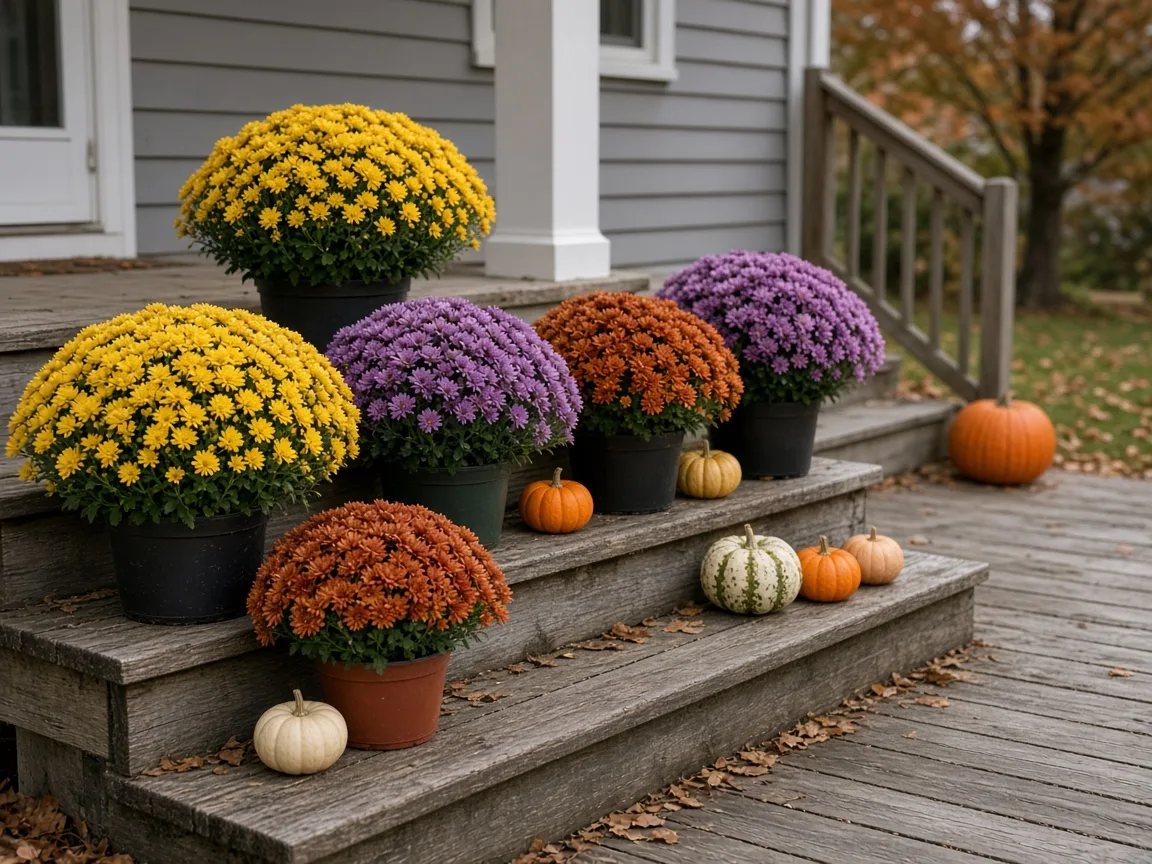
The word “mum” hides an important split. Most chrysanthemums sold in North America belong to complex hybrids derived from Chrysanthemum × morifolium and related species, but breeding goals divide them into two very different products.
Florist and gift-potted mums
Florist or “pot mum” types are raised in greenhouses for maximum instant impact: large flowers, dense color, and a uniform cushion shape at shipping time. Growers achieve that look with tight spacing, heavy feeding, growth regulators, and sometimes root pruning that keeps the root system small relative to the top growth. These plants are optimized for display, not for surviving frozen soil.
Telltale signs you have a florist-type pot include foil or decorative wrap around the container, oversized blooms on relatively little foliage, long stems that look more like a cut-flower crop than a landscape plant, and tags that say nothing about USDA hardiness or list your zone as “annual” or “tender.”
Hardy garden mums sold for the landscape
Hardy garden mums (sometimes labeled garden chrysanthemums or hardy mums) are bred for outdoor beds and borders. They typically have smaller flowers in greater numbers, a naturally mounding or spreading habit, and—critically—underground stolons (horizontal runners) that help the plant regenerate after winter. The RHS Growing Guide for chrysanthemums classifies these early or hardy garden types as perennials that go dormant in winter and resprout in spring, though even hardy selections benefit from frost protection in the coldest parts of their range.
You are more likely to find true garden mums at a full-service nursery in spring or early summer, not at a checkout display in full bloom during October.
How Garden Mums and Fall Pot Mums Actually Differ
Understanding the breeding split saves you from guessing. Here is how the two products compare in practice:
| Trait | Fall pot / florist mums | Hardy garden mums |
|---|---|---|
| Primary purpose | Porch color, gifts, impulse display | Landscape perennial |
| Typical purchase season | Late summer–fall, in full bloom | Spring to midsummer |
| Flower size | Large, showy | Smaller, often in sprays |
| Winter survival (zones 5–6) | Poor to fair | Good with proper siting |
| Root system at sale | Often tight, rootbound | Usually less stressed |
| Stolons at base | Usually absent or few | Present on healthy plants |
| Rebloom next fall without pinching | Unlikely to match first year | Possible; improves with pinching |
Hardy garden mums also respond to photoperiod: they set buds as nights lengthen in late summer. Greenhouse-grown fall pots arrive already triggered to bloom. If you plant them in October, the plant has spent its energy on flowers instead of roots—exactly the opposite of what a perennial needs heading into winter.
Industry breeders note additional differences in branching habit, vigor, and cold tolerance between potted cut-flower types and free-branching garden lines. The takeaway for home gardeners is simpler: a mum bred to look perfect in a pot on September 15 is not the same plant as a mum bred to survive March in your flower bed.
Can You Plant Supermarket Mums in the Ground?
Yes, you can plant them, and doing so is still better than sending a living plant to the landfill if you have a suitable site. Just understand what you are buying with your labor.
In zones 7–9, fall-planted pots sometimes overwinter, especially near a warm south-facing foundation that creates a microclimate. In zones 5–6, success is sporadic even when you mulch and cut back properly. In zone 4 and colder, treat fall supermarket mums as seasonal color unless the tag explicitly lists your zone and you plant early enough for root growth.
Katherine Rowe at Epic Gardening summarizes the practical view many growers share: greenhouse-raised fall mums put most of their energy into flowering, not rooting, so late-season planting in cold climates carries real winter-damage risk. Where she sees the best results with potted fall mums in the ground is in warmer zones with good drainage and early planting.
That does not mean planting is pointless in colder regions. It means you should plan for annual performance and celebrate a surprise return rather than expecting one.
How to Tell What You Bought in Five Minutes
Before you dig, spend five minutes identifying the pot. This single step prevents most disappointment.
Read the plant tag and hardiness zone
Look for a variety name, a hardiness range (for example “Zones 5–9”), and words like garden mum, hardy, or perennial. If the tag lists no zone, says “tender,” or treats the plant strictly as a seasonal item, assume florist-type genetics.
The Old Farmer’s Almanac chrysanthemum profile notes that many garden mums are hardy in zones 5–9, but also warns that purchased potted mums in full bloom are often not the same as hardy landscape varieties. The tag is your first reality check.
Inspect the root ball, pot, and wrapper
Slide the plant partway out of the pot. Rootbound mums—roots circling tightly, little visible soil—are common on fall display tables because plants have been held in small containers while being watered heavily to keep blooms fresh. Rootbound status is not a death sentence, but it means you must tease or slice the root ball at planting so roots can grow outward.
Avoid planting through decorative foil or a non-draining wrapper. Remove it first. Leaving foil in place traps water, encourages root rot, and is a strong signal the plant was packaged for temporary display, not garden culture.
Look for stolons at the base of the plant
Stolons are short, horizontal shoots at or just below the soil surface. Garden mums use them to spread and regenerate. Florist pots often lack visible stolons because the cultivar or production method does not prioritize that trait.
You do not need a microscope—just look at the crown after gently loosening the top inch of the root ball. Stolons plus a zone-appropriate tag is the best combination you will find on a fall display.
When to Plant Mums in the Ground for the Best Odds
Timing matters as much as type. The goal is always the same: give roots time to contact real soil before stress arrives—whether that stress is summer heat or winter freeze.
Spring planting for true garden mums
The RHS recommends planting overwintered or newly purchased young garden mums after the last frost, typically from mid-May into June in many temperate climates. Spring planting lets roots develop all summer. By mid-July, garden mums begin setting buds for fall flowers, and by the second year established plants often look fuller than first-year pots.
If you want the textbook perennial path, buy hardy cultivars in spring, plant in full sun, and pinch growing tips when young plants reach about 8 inches (20 cm) and again on side shoots until midsummer. Pinching produces a bushier plant with more flowering stems—something fall gift pots never received.
Fall planting for pots you already own
For potted mums you already bought in autumn, earlier is dramatically better. Aim to plant six to eight weeks before your average first hard frost, not the week before Halloween. If you are reading this in late October and ground is still unfrozen, you can still plant, but shift expectations toward root anchoring for compost later rather than a perennial comeback.
Do not wait for blooms to finish completely. Spent flowers can be deadheaded, but delaying planting until the pot looks tired usually means roots had weeks of stress in a too-small container.
Step-by-Step: Planting a Potted Mum in the Garden
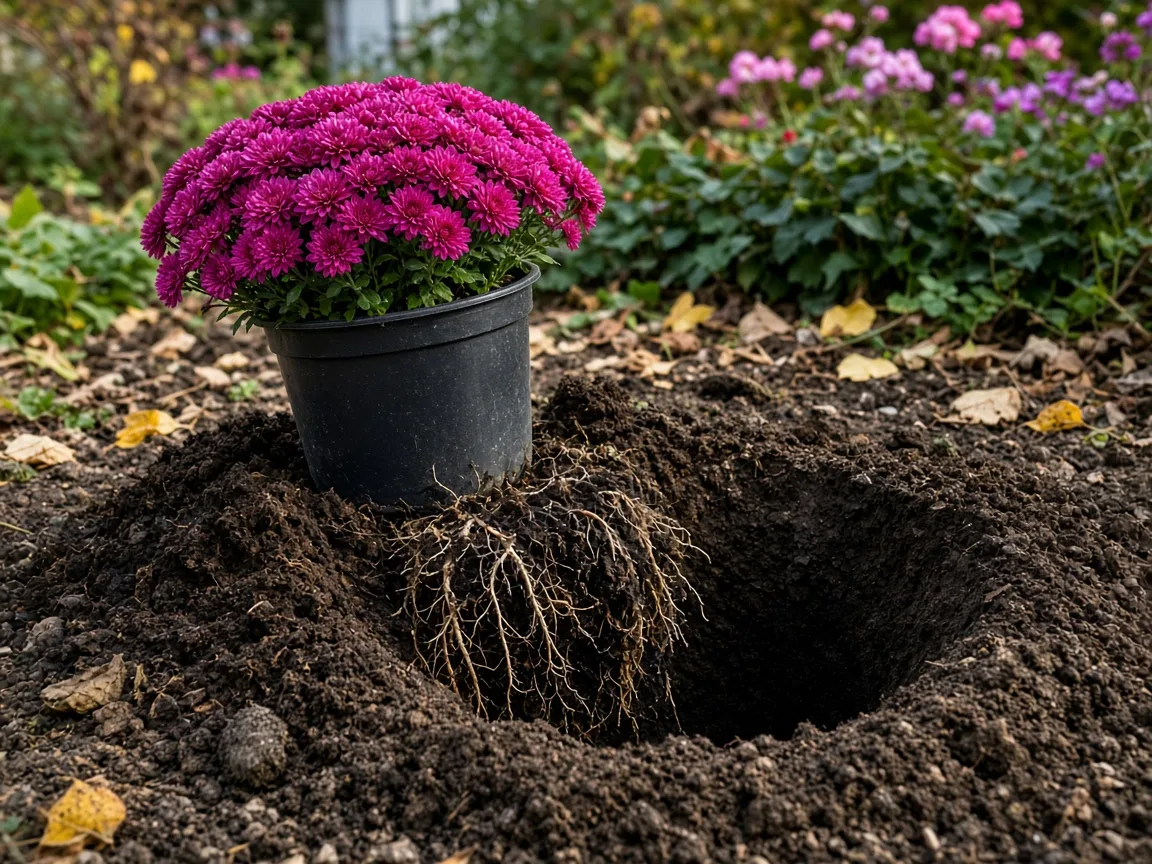
Once you have identified the plant and checked the calendar, planting itself is straightforward.
Choose the site. Hardy mums and most fall pots perform best in full sun—at least six hours daily, with morning sun especially helpful in hot regions. Too much shade produces leggy stems and sparse bloom. Pick well-drained soil; chrysanthemums are vulnerable to crown and root rot in soggy conditions, a pattern noted in Connecticut Agricultural Experiment Station guidance on garden chrysanthemum health.
Prepare the hole. Dig a hole about 1.5 times the width of the root ball and the same depth as the pot. Mix compost into the backfill if your soil is heavy clay or very sandy. Mums prefer fertile, well-aerated soil but will tolerate a range of textures if drainage is good.
Hydrate and loosen roots. Soak the root ball in a bucket of water for 15–20 minutes if the plant is dry and tight. Gently tease circling roots outward or make two or three vertical slices through the bottom third of a severely rootbound ball.
Set the crown correctly. Place the plant so the crown sits at the same level it was in the pot—never deeper. Burying the crown is a common cause of rot. Backfill, firm soil gently, and water deeply until the surrounding soil is moist.
Space for air. Allow 18–24 inches (45–60 cm) between plants depending on mature spread. Good airflow reduces foliar disease pressure on lower leaves—a recurring issue on crowded mums.
Mulch, but do not smother. Apply 2 inches of shredded leaves, bark, or compost around the plant, keeping mulch away from the stems. Mulch moderates soil temperature and retains moisture without packing against the crown.
Initial trim. If the plant is tall and leggy, cut stems back by up to one-third before or immediately after planting to reduce top-heavy stress on limited roots. Remove spent blooms so energy shifts below ground.
Aftercare Through Fall and the First Winter
Planting day is only the start. Fall-planted mums need steady care until the ground freezes.
Watering, mulch, and frost protection
Newly planted mums need about 1 inch of water per week from rain plus irrigation until the soil cools consistently. Deep, infrequent watering beats daily sprinkles that wet foliage without reaching roots.
After the first hard frost, leave dormant stems in place in cold zones. They provide slight insulation for the crown. Add a light extra layer of straw or evergreen boughs after the ground begins to freeze if you are pushing hardiness limits. Because chrysanthemum roots are relatively shallow, mulch helps reduce frost heaving—the freeze-thaw cycle that pushes crowns out of soil.
Do not fertilize heavily in late fall. Plants are entering dormancy, not building new top growth. Save balanced feeding for spring when new shoots emerge.
Overwintering potted mums you want to try again
If you are not ready to plant, or winter came too fast, you can overwinter the pot itself:
Cut stems back to 3–4 inches after bloom fades. Move the pot to an unheated garage, shed, or cool basement where temperatures stay roughly 32–45°F (0–7°C). Water lightly every few weeks so roots do not desiccate, but avoid soggy soil. Return the plant outdoors after the last frost and plant in ground or repot into a larger container for the growing season.
This garage-dormancy method works better than leaving an above-ground pot exposed on an open porch in zone 5 or colder, where roots freeze solid through thin plastic.
What to Expect Next Spring—Realistically
Come spring, check the crown before you declare failure. Scratch a low stem gently—green tissue means the plant is alive. Remove winter mulch and cut last year’s stems back to 2–3 inches as new growth appears.
Then adjust expectations:
Survival without a good fall show is common. Many fall-planted florist-type mums that live through winter do not bloom on schedule the next autumn because they missed pinching, were planted too late, or lack the stolon-backed vigor of true garden cultivars.
Leggy growth is likely on pots that were already tall in the greenhouse. Without summer pinching, you may get sparse, uneven flowers.
Division and renewal help true garden mums every two to three years. Lift clumps in spring, discard woody centers, and replant vigorous outer shoots.
If the plant fails, you have lost little except time—the compost pile gets the remains, and you know to buy spring garden mums or plant asters next round.
Better Fall Color If You Want Perennials That Return

If reliable return matters more than instant porch perfection, plant these hardy fall performers instead of gambling on October grocery-store pots:
Asters (Symphyotrichum spp.) deliver daisy-shaped color from late summer into fall and support migratory pollinators when many nectar sources fade. See our perennial aster guide for cultivars and planting depth.
Heleniums (sneezeweed) bring warm reds, oranges, and golds on sturdy stems suited to cottage and meadow-style beds.
Sedums (stonecrop) offer late-season structure; varieties like ‘Autumn Joy’ deepen in color as temperatures drop.
Japanese anemones extend bloom into fall in partial shade where mums would stretch and flop.
Marigolds remain an underrated annual bridge—hardy in spirit if not in frost— for inexpensive color until heavy freeze. Our marigold companion planting guide covers pairing them in mixed beds.
Spring-purchased hardy mums remain the direct solution if you want chrysanthemum form specifically. Plant in May, pinch through July, and let the calendar do what a September greenhouse cannot.
Conclusion
Store-bought mums can go in the ground, but the phrase “store-bought” hides everything important. Florist and gift pots bred for autumn display are not the same plants as hardy garden mums bred to survive winter and rebloom with summer pinching. You improve your odds by reading the tag, checking for stolons, planting early, setting the crown at soil level, and mulching without smothering stems.
In cold climates, treat most fall-purchased pots as beautiful annuals and enjoy them without guilt if they do not return. In warmer zones—or when you rescue a clearly labeled hardy cultivar with weeks left before frost—planting is absolutely worth the shovel work. For gardeners who want fall color they can bank on, spring-planted garden mums and native asters beat October impulse pots almost every time.



