How to Grow and Care for Chicago Hardy Fig
Learn how to grow Chicago Hardy fig in the ground or a pot, with practical guidance on sun, watering, pruning, winter protection, and harvest.
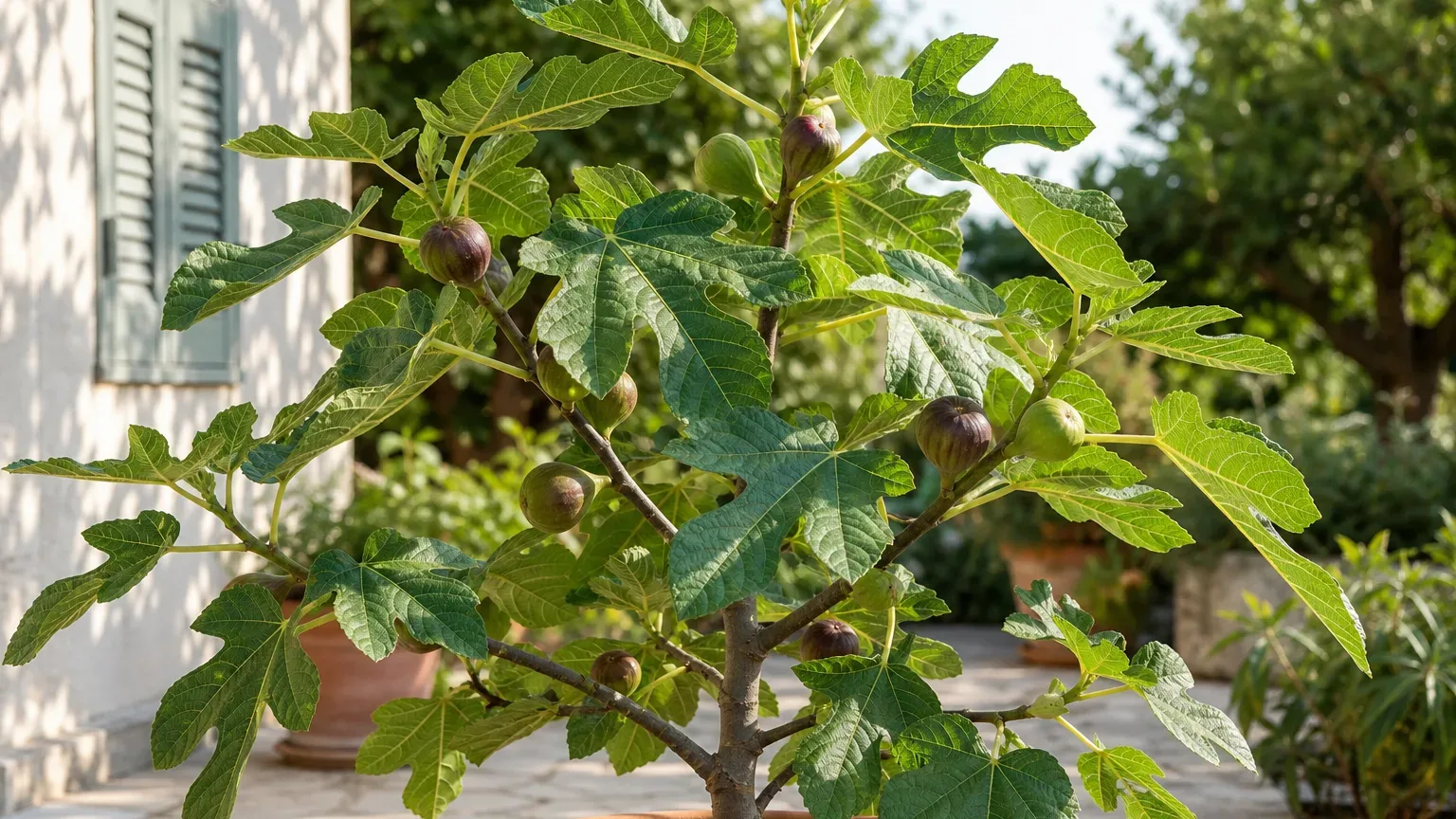
The Chicago Hardy fig (Ficus carica ‘Chicago Hardy’) is a good choice for gardeners who want fresh figs but do not live in a reliably mild winter climate. Its advantage is not that every branch survives every freeze. Its advantage is that the roots are unusually resilient, the tree can regrow quickly from the base, and the main crop forms on new-season growth. In the right microclimate, that combination makes a real harvest possible even after winter damage. (UT Gardens)
The catch is season length. A tree can survive winter and still fail to ripen fruit if it spends spring rebuilding from the ground, grows in too much shade, stays too wet, or receives a late flush of soft growth before a freeze. Treat this as a fruit-tree decision rather than a generic low-maintenance plant: choose a warm site, decide how you will protect it in January, and manage water and nitrogen so the wood is ready for winter.
The short answer: give it sun, drainage, and a winter plan
Plant Chicago Hardy fig in the warmest spot you have, ideally with at least six to eight hours of direct sun during the growing season, fast-draining soil, and shelter from prevailing winter wind. A south- or southwest-facing wall can add reflected heat and reduce exposure, especially in zones 5 through 7. (UT Gardens)
Use the ground when you have a long enough season and can protect the plant where it grows. Use a large container when winter temperatures, late spring frosts, or a short growing season make the harvest window uncertain. In either setup, water deeply during establishment, keep the root zone evenly moist while fruit is swelling, avoid heavy late-season feeding, and let the tree enter dormancy before you move or cover it.
Chicago Hardy is self-fruitful. You do not need a second tree, hand pollination, or a special wasp to set its common-fig crop. The figs develop without fertilization, so one healthy, well-sited tree is enough for a home harvest. (UF/IFAS)
Chicago Hardy fig at a glance
| Factor | Practical target | What changes the plan |
|---|---|---|
| Botanical name | Ficus carica ‘Chicago Hardy’ | Also sold as ‘Hardy Chicago’ or ‘Bensonhurst Purple’ |
| Mature size | About 10–15 feet tall and 9–12 feet wide in a mild climate | Cold winters may kill the top and keep it shrub-sized |
| Light | Full sun; aim for six to eight hours or more | Less light means slower ripening and less sweetness |
| Soil | Organically rich, moist but well drained | Standing water and compacted soil can damage roots |
| Fruit | Medium, brown-purple skin with sweet pink flesh | Color varies slightly with weather and crop stage |
| Pollination | Self-fruitful, parthenocarpic common fig | One tree can produce fruit |
| Crop wood | Main crop on current-season growth | Breba fruit depends on surviving older wood |
| Winter behavior | Stems can die back while roots survive | Protection improves the chance of keeping fruiting wood |
| Best use | In-ground tree in a warm microclimate or large movable pot | A pot is safer where winter or season length is marginal |
The temperature numbers attached to this cultivar are useful as a guide, not a warranty. Missouri Botanical Garden lists the stems as hardy to about 10°F and the roots to about -20°F, while also noting that zone 5 plants need a warmer microclimate and heavy dormant-season protection. (Missouri Botanical Garden) Wind exposure, the duration of a freeze, soil moisture, plant age, and whether the tree has hardened off all change the result.
Choose ground or container before you plant
The best growing method is the one you can maintain through winter. Planting a small nursery fig in the ground and deciding later to dig it up is stressful for the roots and often costs you a season. Decide whether you want maximum root room or maximum control before you choose the permanent container or planting site.
In-ground growing trades mobility for root room
An in-ground Chicago Hardy fig usually has the strongest growth and the greatest potential crop because its roots can explore a broad soil volume. It also stays warmer at the root crown than a pot sitting above ground, and it does not need to be carried through a doorway each autumn. The trade-off is that you must protect the exact plant you have, and a tree that freezes to the ground may need most of the next season to rebuild.
Ground growing is a sensible first choice in zones 7 and 8 when the site is sheltered, and it can work in zones 5 and 6 with an excellent microclimate and a realistic expectation of dieback. In a marginal climate, a surviving tree is not the same as a dependable crop: if your first fall frost arrives before the new wood can finish its figs, the roots may live while your harvest does not.
A container makes winter management easier and can extend the season by letting you start the tree in a protected spring location. It also limits root spread, dries faster, becomes heavy to move, and can produce a smaller plant if the pot is undersized. Choose a pot you can actually move with a dolly, and give it large drainage holes; a giant pot that cannot pass through your garage door is not a workable winter plan.
Plant for heat, light, and drainage
Chicago Hardy fig does not need a fussy soil recipe. It needs a place where water drains away after rain, leaves dry reasonably quickly, and the canopy receives enough sun to turn a short season into ripe fruit. UF/IFAS describes figs as deep-rooted trees that perform best in full sun, while UGA Extension recommends a protected site and at least eight hours of seasonal sunlight where winter is colder. (UF/IFAS; UGA Extension)
If you are planting in the ground, choose a south or southwest side of a building, wall, or fence when that location still receives strong summer light. Keep the tree away from foundations, drains, water lines, and paving that could be lifted by expanding roots. A fig may begin as a modest shrub, but its root system and canopy can become much larger than the nursery plant suggests.
Use organically rich loam or a good garden soil improved with finished compost. Do not turn the planting hole into a rich pocket surrounded by hard clay; roots can circle inside the amended hole and sit in a basin after rain. Improve drainage across the planting area when necessary, and reserve root restriction for a deliberate design such as a lined planting pit or large container. A soil test is more useful than guessing with lime or fertilizer; UGA Extension gives a slightly acidic target around pH 5.5 to 6.5 for its home-garden guidance. (UGA Extension)
Planting steps that prevent a slow start
Plant a container-grown tree in spring after the danger of hard freezes has passed in your area. Spring gives a young tree time to establish before winter, although a dormant, well-rooted tree can also be planted during a suitable fall window in milder climates. Avoid planting when the soil is waterlogged or when a sudden freeze is forecast.
- Water the nursery plant, then slide it from the pot without pulling on the trunk.
- Inspect the roots. Loosen a few circling roots at the edge, but do not tear apart the root ball.
- Set the tree at the same soil level it had in the pot, or slightly deeper only when a low, multi-stem form is part of your plan and local extension guidance supports it.
- Backfill with the soil you removed, firming gently so there are no large air pockets.
- Water slowly until the full root ball and surrounding soil are moist.
- Add a two- to three-inch mulch layer over the root zone, keeping it a few inches away from the stems.
Do not put concentrated fertilizer in the planting hole. A young tree that is pushed into lush growth before it has a strong root system is more vulnerable to drought, winter injury, and transplant stress. Give it water, warmth, and time first.
Water for growth without bland fruit
Newly planted figs need a consistent moisture supply while roots move into surrounding soil. Check the root zone several inches down rather than watering by calendar. In hot, dry weather, a slow deep watering is more useful than frequent surface sprinkles; mulch reduces evaporation but does not replace a moisture check.
Once established, Chicago Hardy fig becomes more drought tolerant, but drought tolerance is not a fruit-quality goal. A dry spell during fruit swelling can leave figs small, cause leaves or young fruit to drop, and shorten the ripening window. UGA Extension uses roughly one to one and a half inches of water per week from rain or irrigation as a home-garden rule of thumb, with adjustments for soil and heat. (UGA Extension)
Too much water creates a different set of problems. Waterlogged soil deprives roots of oxygen, encourages root disease, and can make the fruit watery or bland. If the soil is still wet a few days after rain, improve drainage before increasing irrigation. Never compensate for shade or excess nitrogen by adding more water.
Container figs need closer observation because their root volume is small and their potting mix can go from moist to dry quickly. Water thoroughly until some drains from the holes, then empty any saucer. If a very dry mix sheds water down the sides, wet it lightly, wait a few minutes, and water again so the root ball actually rehydrates. RHS guidance similarly emphasizes steady moisture during active growth while warning against leaving a container in standing water. (RHS)
As autumn approaches, reduce watering gradually as leaves yellow and fall, especially for a tree headed into a cool garage. Do not keep a dormant tree saturated. The goal is a slightly moist root ball, not active growth and not bone-dry roots.
Fertilize lightly and let the wood harden
Chicago Hardy fig usually needs less fertilizer than a grower expects. If the soil is fertile and the tree is making a foot or more of healthy shoot growth, adding more nitrogen can create a large leafy canopy without a better crop. UF/IFAS notes that excess fertilization can promote vegetative growth and low yield, while UGA Extension advises limiting fertilizer where winter injury is a recurring problem. (UF/IFAS; UGA Extension)
Start with finished compost spread over the root zone in spring, or use a balanced slow-release fertilizer according to its label when a soil test or weak growth indicates a need. Container trees lose nutrients through repeated watering and may need more regular feeding during active growth, but use the product label and avoid stacking fertilizer types. A tree that is pale because its roots are waterlogged will not be fixed by fertilizer.
Stop high-nitrogen feeding by midsummer in a cold climate. Late soft growth is the part most likely to be killed by the first freeze, and a late flush does not buy you a longer season. If a plant is vigorous, green, and producing long shoots but no ripe fruit, suspect excess fertility, too little sun, too much water, or a crop that started too late before reaching for another dose.
Prune to match your winter strategy
Pruning is not a ritual requirement for fruit production. It is a way to keep the canopy reachable, remove damaged wood, direct light into the fruiting zone, and choose how much older wood you are willing to protect. Chicago Hardy naturally leans toward a multi-stem shrub, which is often the most practical form where winter can kill a single trunk.
Late-winter inspection
Wait until the coldest part of winter has passed and you can see which stems are alive. A dead fig branch is brittle and gray; a living branch is flexible, and a light scratch may reveal green tissue beneath the bark. Do not prune healthy-looking wood too early in a region where another deep freeze could still arrive. Remove dead, diseased, crossing, or rubbing branches, and cut back to a live bud or sound branch rather than leaving long stubs.
In a cold climate, major pruning in late winter or early spring prepares the tree for a flush of new shoots from the crown. Keep the strongest, best-spaced shoots and remove weak suckers that will only crowd the center. Avoid taking more than about one-third of a living canopy at once unless winter damage has already done the work for you.
In a warm climate where you want breba fruit, be more conservative with older branches. The small first crop forms on wood that survives winter, so removing every mature branch removes the opportunity for that crop. The main crop forms on new wood and is usually the more dependable crop for cold-climate growers.
Single trunk or multi-stem form
A single-trunk tree is tidy and can suit a patio or a small landscape, but it concentrates winter risk in one structure. A multi-stem form takes more width and may need more thinning, yet it gives the plant several routes to recover if one stem is damaged. UGA Extension recommends widely spaced leaders for a bush form so they can thicken without crowding or splitting under wind and crop weight. (UGA Extension)
For a container, prune to a size you can move and support. Do not leave a tall, top-heavy tree in a small pot and then try to solve the problem with severe pruning; reduce the root and canopy decisions together during dormancy. Wear gloves and long sleeves when pruning. Fig latex can irritate skin, and UF/IFAS describes the milky sap as containing ficin, a protein-degrading enzyme. (UF/IFAS)
Winterize the tree before a hard freeze
Winter protection has two different jobs: keeping roots alive and preserving fruiting wood. Mulch can help the root crown survive, but it cannot make a container root ball behave like deep ground soil or guarantee that every branch will live. Start protecting after the tree has entered dormancy and dropped its leaves; covering a still-growing tree can trap moisture and delay hardening.
Protecting an in-ground tree
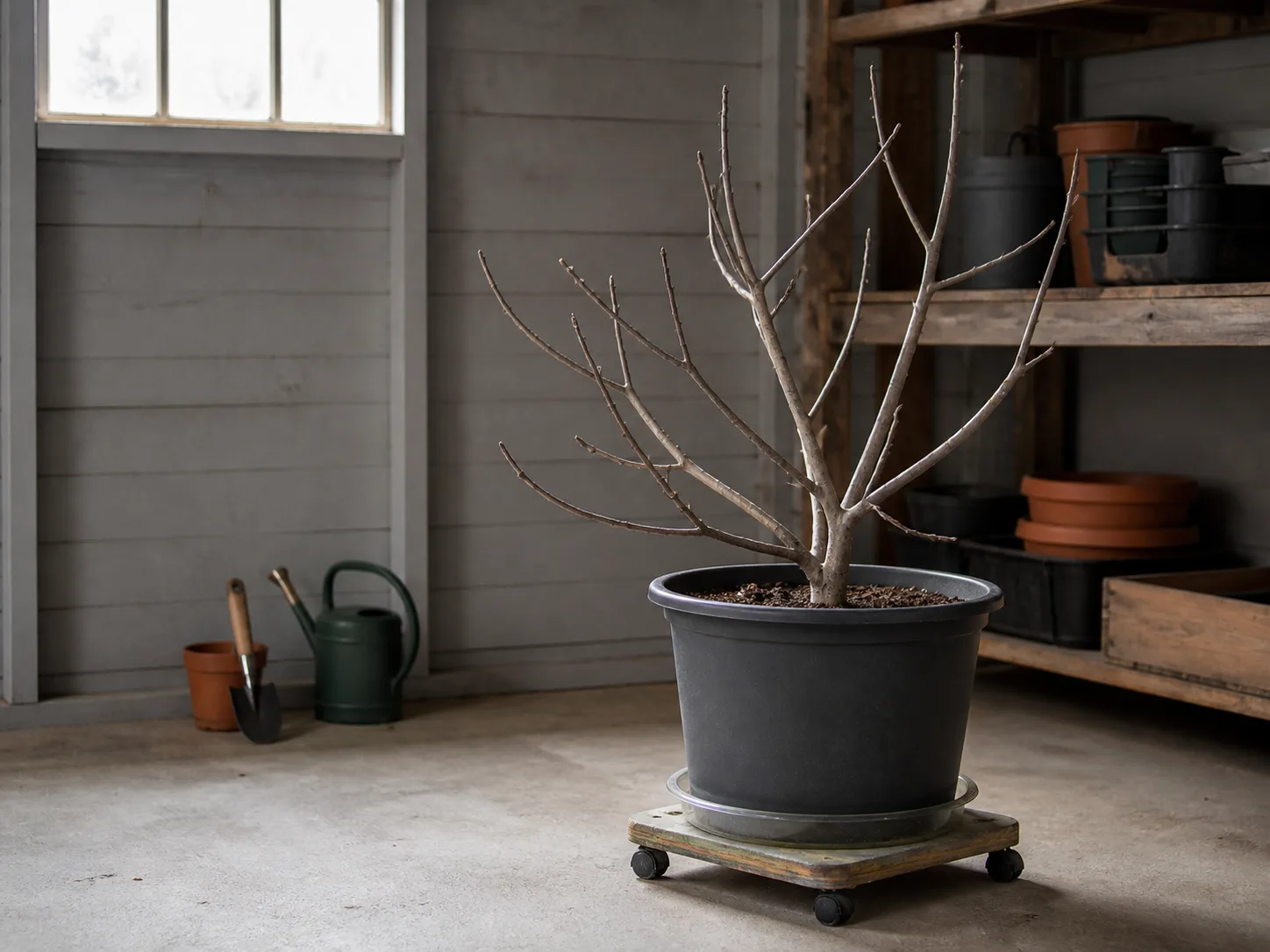
In a sheltered zone 6 or 7 site, a thick organic mulch over the root zone may be enough to improve survival, especially when the tree is already established. Keep mulch away from direct contact with the stems so rodents and rot do not get an easy path. In colder or exposed locations, surround the shrub with a breathable cage filled loosely with dry leaves or straw, then shield the outside from wind and wet snow with a cover that does not crush the branches.
Do not seal a wrapped fig in airtight plastic against wet stems for the entire winter. Ventilation matters, and rodents may nest inside loose insulation. Check after wind events, and remove or open the protection in late winter as temperatures moderate so the tree can wake and dry normally. Missouri Botanical Garden recommends additional protection below about 15°F and notes that outdoor plants in zones 5 through 7 often show significant dieback even when the roots survive. (Missouri Botanical Garden)
The most reliable cold-climate microclimate is still site selection: warm wall, full sun, wind shelter, and soil that drains. A protected tree that keeps even a few fruiting branches has a longer head start than one that regrows from the crown every year.
Storing a container tree dormant
Move a potted fig after leaf drop but before a hard freeze reaches the pot. An unheated garage, shed, basement, or similar space is suitable if it stays cool enough for dormancy and does not swing through repeated freeze-thaw cycles. A dormant tree does not need a sunny window; keeping it warm and bright can trigger weak early growth that is difficult to support indoors.
Before storage, inspect the foliage and stems for pests, remove dead leaves from the soil surface, and make sure the pot drains. Do not fertilize. Check the mix every few weeks and water lightly only when the root ball is becoming genuinely dry. A dormant fig should not be wet, but it should not be allowed to desiccate until fine roots die.
Return the container outdoors gradually in spring after the strongest frost risk has passed. Put it in a bright sheltered location first, then expose it to more direct sun over several days. If new leaves emerge indoors, protect them from abrupt full sun and freezing nights. A container is a tool for managing risk, not a reason to keep a fig as a year-round houseplant.
Get fruit: breba, main crop, and pollination
Chicago Hardy may produce two crops when winter is mild. The breba crop forms on older wood that carries small fruitlets through dormancy. It can ripen early, but it is more vulnerable to frost and may be smaller or less flavorful. The main crop forms on new-season shoots and is the crop cold-climate gardeners should plan around. UT Gardens describes Chicago Hardy as a short-season producer that can mature a crop on new wood after winter dieback, often within roughly 90 to 100 days in a suitable season. (UT Gardens)
If blackened breba figs hang on the plant in spring, remove them. They are dead fruit, not a delayed harvest, and clearing them helps the tree direct energy toward new growth. If the main crop stays pea-sized for weeks, look at the whole system: is the tree receiving enough sun, is the root zone too wet, did winter remove all fruiting wood, or is your first frost simply arriving before the cultivar can finish?
One Chicago Hardy fig can fruit by itself because it is a common, parthenocarpic fig. That does not mean every nursery label is reliable. If a plant never sets fruit despite strong growth, verify the cultivar with the seller, compare its leaves and fruit, and ask a local extension office before assuming pollination is the issue.
Troubleshoot the four crop failures gardeners see first
Lots of leaves, no ripe figs: Start with light and timing. A shaded tree may grow but fail to accumulate enough heat and sugar, while a tree killed back to the ground may have started its crop too late. Stop adding nitrogen, check drainage, and protect the next winter’s wood if your season is short.
Small figs that shrivel or drop: Check moisture during fruit swelling. Drought, root damage, severe heat, and inconsistent watering can all interrupt the crop. Then inspect the roots and soil: a plant that is constantly wet may show the same above-ground collapse as one that is dry because damaged roots cannot supply water.
Yellowing leaves: Test the soil before adding lime or fertilizer. Yellow leaves can follow drought, root stress, nutrient imbalance, or natural seasonal dormancy. If the yellowing occurs while the soil is wet and the plant is not growing, correct drainage and watering first.
Spots, rust, or early leaf drop: Improve airflow by thinning crowded interior growth and removing fallen leaves. UF/IFAS identifies fig rust as a common disease in the Southeast and notes that it can cause defoliation and reduce fruit quality and cold tolerance. Do not copy a pesticide recipe from a generic article; identify the problem and follow current local extension or product-label guidance. (UF/IFAS)
Root-knot nematodes deserve special attention in sandy soils. UGA Extension calls them a leading cause of fig decline in some regions and advises testing a prospective site rather than trying to cure an infested tree later. Galls on roots, chronic stunting, drought-like stress despite watering, and poor fruiting together are reasons to stop treating the symptom and test the soil and roots. (UGA Extension)
Propagate with dormant cuttings
Hardwood cuttings preserve the cultivar and are usually more predictable than seed. Seed-grown figs are genetically variable and can take years to fruit, while a cutting from a productive Chicago Hardy tree gives you a clone with a better chance of matching the parent’s fruit and climate performance.
Take a dormant cutting in late winter, or follow your local extension service’s timing for hardwood propagation. Choose firm, healthy one- or two-year wood roughly six to ten inches long. Mark the top and bottom so you do not plant it upside down, and make the basal cut just below a node.
Insert at least half of the cutting into a clean, moist, porous medium such as perlite or a propagation mix. Keep it evenly moist rather than wet, provide bright indirect light, and use gentle bottom heat if you can hold the medium around room temperature. UF/IFAS reports that the basal end can callus in a few weeks under suitable conditions, while UGA Extension recommends dormant hardwood cuttings and notes that rooted cuttings can be planted out after they establish. (UF/IFAS; UGA Extension)
When new leaves appear, do not assume roots are ready. Wait until the cutting resists a gentle tug and has enough roots to hold the medium, then pot it up. Protect young plants from severe cold during their first seasons; a cutting has not yet built the root crown that makes an established Chicago Hardy valuable in a marginal climate.
Harvest by feel, not by calendar
Figs do not improve after picking, so harvest is the moment to be patient. Chicago Hardy figs usually shift from green toward brown or deep purple, but color alone is not reliable because light, crop load, and weather change the pace. A ripe fig hangs or droops, feels soft rather than firm, and often releases easily from the stem. UT Gardens lists color change, softness, and hanging fruit as the useful combination of signs. (UT Gardens)
Check the tree every day or two as fruit approaches ripeness. Use clean pruners if the stem does not release with a gentle lift, and handle ripe figs carefully because the skin bruises and the fruit spoils quickly. A firm, rubbery fig needs more time; a leaking, fermented-smelling, or collapsing fig is past its best and should be removed before it attracts more insects.
Protect the crop from birds and squirrels before the first figs soften. Use netting installed so wildlife cannot become tangled, and keep it away from the fruiting branches with supports. Once picked, refrigerate fresh figs and use them quickly, or freeze, dry, preserve, or cook them before quality declines.
Conclusion
Chicago Hardy fig is genuinely useful for cool-climate gardeners, but its hardiness is a strategy, not a promise that a full-sized tree will behave like one in the Mediterranean. Give it the warmest sunny site you can, choose ground or a movable pot based on your winter and season length, and protect the root crown before you worry about cosmetics.
The most dependable crop comes from matching pruning and winter protection to the wood that will fruit next. Keep older wood when your climate can preserve a breba crop; expect the main crop on new wood when winter is severe. Water deeply but not constantly, fertilize only when growth calls for it, test suspicious soil for nematodes, and pick only when the figs are soft and hanging. Those decisions turn a surviving fig into a productive one.



