Chicken Manure Fertilizer: Pros, Cons, and Safe Use
Learn the pros and cons of chicken manure fertilizer, when to compost it, how to apply it, and which crops need extra caution around harvest.
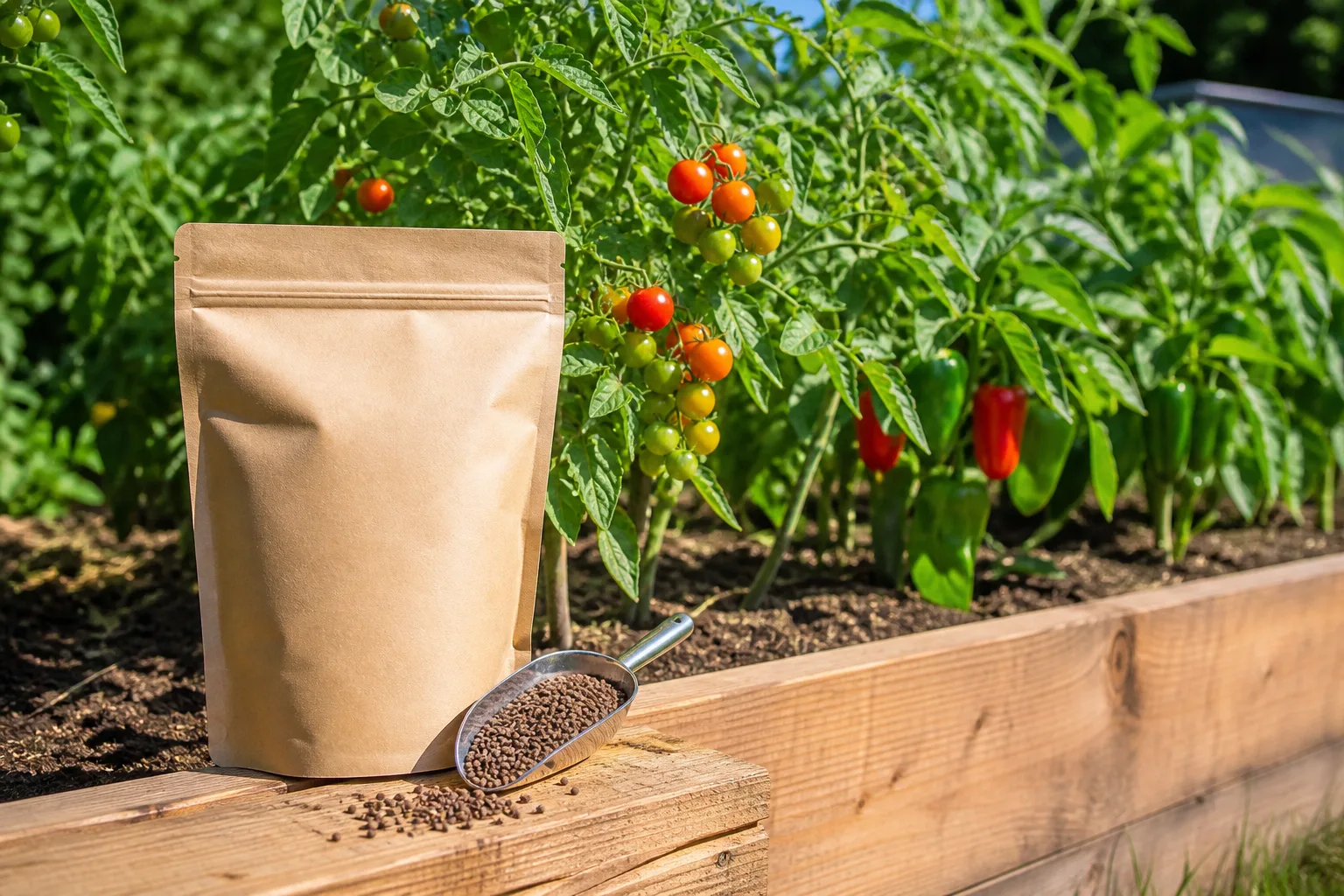
Chicken manure fertilizer can be an excellent way to add nutrients and organic matter to garden soil, but it is not a “more is better” amendment. The form you have—fresh coop litter, aged manure, finished compost, dried powder, or pellets—determines whether it is useful now, needs more time, or should stay away from a particular bed.
The simplest safe rule is this: never spread fresh chicken manure directly around growing plants, and never guess at a large application when a soil test or product label can narrow the decision. Composting or aging reduces ammonia and pathogen risk, while measured use prevents nitrogen, phosphorus, salt, and pH problems from building up over time.
This guide weighs the benefits against the drawbacks, then gives you a practical sequence for choosing, preparing, timing, and applying chicken manure fertilizer in an ornamental or edible garden.
The short answer: powerful, useful, and easy to misuse
Chicken manure is good fertilizer when it is properly processed and applied to soil that actually needs what it supplies. It contains nitrogen for leafy growth, smaller amounts of phosphorus and potassium, and organic material from bedding and feed residue. That combination can improve a tired bed more broadly than a single-purpose soluble feed.
The same concentration that makes poultry litter valuable makes it unforgiving. Fresh droppings are wet, alkaline, rich in ammoniacal nitrogen, and potentially contaminated with disease-causing organisms. Spread them against roots, fold them into a small container, or apply them before harvesting salad greens and you create problems that a darker, greener plant cannot justify.
The right decision depends on four questions: What form is it? What is already in the soil? What will grow there? How long until harvest? A bag of pellets with a label is a different input from a neighbor’s wet coop clean-out, even though both may be sold or described as chicken manure.
What chicken manure fertilizer actually contains
“Chicken manure” usually means more than droppings. Coop material can contain feces, urine, feathers, spilled feed, and bedding such as straw, hay, paper, or wood shavings. The carbon in the bedding changes the balance of the pile; the birds’ diet, age, housing system, and moisture change the nutrient concentration.
That variability is why poultry manure is not a perfectly standardized fertilizer. The Royal Horticultural Society’s chicken-manure guidance gives a typical dried-pellet analysis around 4% nitrogen, 2% phosphorus, and 1% potassium, but also emphasizes that the actual nutrient content varies. A commercial label and a soil test are more useful than a generic promise that every chicken manure product has the same NPK ratio.
Nitrogen is the headline nutrient. It supports chlorophyll and vigorous leaf growth, which is helpful for leafy vegetables and hungry annuals. Phosphorus supports root development and reproductive growth, while potassium contributes to water regulation and general plant function; neither should be added blindly if a soil report already shows plenty.
The manure also contributes organic matter. As bedding and droppings decompose, they can help a mineral soil hold water without becoming as dense, improve pore space for air and roots, reduce erosion, and give soil organisms a carbon-and-nutrient food source. Those physical benefits are often the reason a composted manure application keeps helping after the immediately available nitrogen has been used.
Fresh, aged, composted, dried, and pelleted are not the same
Fresh chicken manure is the material most likely to burn roots and create hygiene problems. It is wet and concentrated, can release ammonia, and may contain pathogens. Treat it as a compost ingredient or a future amendment, not as a mulch and not as a side-dress touching stems.
Aged manure has been stored long enough for moisture, oxygen, temperature, and time to reduce ammonia and gradually reduce viable pathogen populations. Aging is useful, but it is not the same as a documented hot-composting cycle. A pile that sits in a cold, wet heap without heating should not be described as sterilized.
Composted manure has gone through an active decomposition process in which the pile heats, receives oxygen, and eventually cools into a more stable material. Proper composting can kill many pathogens and weed seeds and makes nutrients less likely to arrive as a sharp ammonia hit. It still deserves gloves, careful storage, and crop-specific timing.
Dried or pelleted manure is usually manufactured from processed material. Pellets are tidier, easier to measure, and generally less odorous than a coop clean-out. Some products are sterilized during manufacture, but “bagged” does not mean “apply at any rate”; the label remains the authority for that product.
The main pros of chicken manure fertilizer
The case for chicken manure is stronger than “it is organic.” Its value comes from combining plant nutrients with a soil-building material and from recycling a difficult waste stream. Those advantages are real, but they work best when the amendment is matched to the garden rather than spread by habit.
It feeds plants and improves soil at the same time
Many soluble fertilizers deliver a quick nutrient pulse and little lasting structure. Finished poultry compost can do two jobs: supply a gradually available source of nutrients and add organic matter that changes how soil holds water and air.
That matters in a sandy bed that dries quickly, a compacted bed with few stable pores, or a raised bed that has settled and lost its crumb. The University of Nevada, Reno Extension factsheet on using chicken manure safely describes composted chicken manure as a slow-release source of macro- and micronutrients and notes improvements in water-holding capacity, aeration, drainage, erosion resistance, nutrient retention, and soil structure.
The improvement is not instant magic. Organic matter has to decompose, and roots still need adequate light, water, oxygen, and a suitable pH. Think of composted manure as a soil-building investment that also feeds crops, not as a rescue treatment for a wilted plant or a substitute for correcting poor drainage.
Poultry litter can also feed the organisms that cycle nutrients. Microbes break down complex organic material into forms roots can use, while the physical structure of the compost gives the soil food web a more stable habitat. That is a long-term benefit, but it is one reason a moderate annual amendment can be more useful than repeated heavy fertilizer doses.
Its concentrated nutrients can be useful when soil needs them
Chicken manure is relatively nutrient-dense compared with many other common manures. That can be useful in a productive vegetable bed where crops remove nutrients every season, or before planting a crop that needs steady nitrogen for leaves and stems.
Tomatoes, peppers, cucumbers, beans, squash, melons, leafy greens, and many annual flowers can respond well to composted or labeled poultry manure when the soil is not already overloaded. The point is not that these plants “love poop”; it is that they often have substantial nutrient demand during active growth.
The best result comes when chicken manure fills a measured gap. If the soil is low in nitrogen but already high in phosphorus, a high-phosphorus manure may be the wrong tool even if the plants look hungry. If the bed is fertile and growth is already dark green and overly leafy, adding more nitrogen can delay flowering, increase soft growth, and waste money.
There is also a practical supply advantage. A backyard flock produces a regular stream of bedding and manure, and a gardener can turn that material into compost instead of buying every unit of organic matter. The savings are only real if the pile is managed safely and the final amendment is used at a rate the garden can absorb.
The main cons and risks to understand
Chicken manure’s drawbacks are not arguments against all manure; they are reasons to be precise. The biggest mistakes happen when gardeners treat raw and processed material as interchangeable, assume organic means risk-free, or repeat applications without checking what has accumulated in the soil.
Fresh manure can burn roots, add salts, and unbalance a bed
Fresh manure can scorch plants because ammonia and soluble nitrogen create a harsh root-zone environment. In a pot, the risk is amplified: a small volume of mix has little capacity to dilute salts, and drainage may be too limited to move excess material away from the roots.
Even composted manure can be too much when applied repeatedly. Nitrogen that is not taken up can move through soil or run off during heavy rain. Phosphorus can accumulate because plants need it in smaller quantities than nitrogen, and poultry manure also contributes calcium, potassium, and salts that may matter in dry climates or poorly drained beds.
Overfertilization often looks like success at first. Leaves become very green and growth accelerates, but flowering and fruiting may lag, roots can be damaged, and salt stress can show as brown edges, wilt despite moist soil, or a crust on the soil surface. A soil test is cheaper than trying to diagnose a bed after several years of overapplication.
Poultry manure can also influence soil pH. The RHS notes that poultry manure commonly falls around pH 6.5 to 8.0, depending on age, bird diet, and litter. That makes it a poor default amendment for acid-loving plants such as blueberries, azaleas, rhododendrons, camellias, and heathers unless a test and a crop-specific plan say otherwise.
Pathogens and unknown inputs make source history matter
Animal manure may harbor E. coli, Salmonella, Cryptosporidium, and other organisms that can make people or animals ill. A well-managed composting process reduces this risk, but no gardener should handle manure with bare hands, breathe dusty particles, or store a pile where children, pets, or runoff can reach it.
Source history matters beyond pathogens. A flock’s feed, bedding, medications, weed-killer residues in hay, and the materials mixed into the coop all affect what ends up in the amendment. If you do not know whether a pile includes treated lawn clippings, persistent herbicide residues, or other questionable inputs, do not put it in a vegetable bed simply because it is free.
There is a difference between “the material has aged” and “the material has been composted under conditions designed to heat evenly.” Aging reduces microbial populations over time by creating unfavorable conditions; it does not actively kill pathogens in the same way a properly heated pile does. The Nevada Extension factsheet recommends isolating stored manure from people and animals, using gloves, washing produce, and respecting harvest intervals even when manure has been composted or aged.
Choose the right form for your garden
Use this quick decision rule before you pick up a fork or open a bag:
| What you have | Best use now | Main caution |
|---|---|---|
| Fresh coop clean-out | Add to a managed compost pile | Raw material can burn plants and carry pathogens; control runoff and access. |
| Cold-aged manure | Ornamental beds or future garden use after conservative aging | Time alone does not prove the pile heated evenly or killed pathogens. |
| Finished composted poultry litter | Soil amendment before planting or around established ornamentals | Apply modestly; nutrients, salts, pH, and source history still matter. |
| Dried or pelleted bagged manure | Label-directed top-dressing or soil incorporation | Do not infer a rate from another brand or from fresh manure. |
| Unknown mixed manure | Skip edible beds until the source is verified | Persistent herbicides, contaminants, and poor composting are hard to undo. |
For a first-time gardener, labeled pellets are the easiest form to control because you can measure a known product and follow its instructions. For a flock owner, composting the bedding is often the best long-term route because it handles the manure and the carbon-rich bedding together.
Do not use raw chicken manure as a houseplant fertilizer, seed-starting ingredient, or thin mulch around herbs. Containers and seedlings have less room for an error, and indoor dust and odor are not worth the shortcut.
How to compost or age fresh chicken manure
The safest home process is a contained, managed pile with manure mixed into carbon-rich bedding or other dry material. Keep it away from wells, drains, play areas, food-preparation spaces, and places where pets can dig. Cover it enough to limit rain-driven runoff while preserving airflow and avoiding a sealed, anaerobic mass.
Build the pile with a mix of nitrogen-rich manure and carbon-rich browns such as dry leaves, straw, shredded untreated cardboard, or clean wood shavings. A pile made only of wet droppings tends to smell strongly and compact; a pile with too much dry bedding may decompose slowly. Moisture should feel like a wrung-out sponge, not a dripping clump.
A monitored hot-composting checklist
Hot composting is more dependable than simply waiting for the calendar because you can observe heat, moisture, oxygen, and the pile’s progression.
- Start a substantial pile. A small sprinkle of manure across a large, exposed area will not heat reliably. Build enough volume for a warm center, then cover the pile to protect it from heavy rain.
- Mix bedding through the droppings. Add carbon as needed so the pile stays open and does not collapse into a wet, airless core.
- Check moisture and temperature. A compost thermometer is useful. The Nevada Extension guidance identifies about 140–160°F as the range generated by proper composting that is sufficient to kill most human and animal pathogens such as E. coli and Salmonella.
- Turn the pile regularly. Turning introduces oxygen and moves cooler outer material into the heated center. If the pile smells like sewage or ammonia, it is usually too wet, too compact, or short on oxygen.
- Let it finish. After the active heating stage, allow the material to cool and stabilize. Finished compost should be dark and crumbly, with an earthy smell rather than a sharp ammonia odor and no recognizable fresh droppings dominating the mix.
The Nevada factsheet says chicken litter can compost in roughly five to six weeks under managed conditions, but that is a process estimate, not permission to use every pile after 35 days. A pile that never reached the target heat, was repeatedly topped up, or stayed saturated needs more time and should be treated as unfinished.
What cold aging can and cannot do
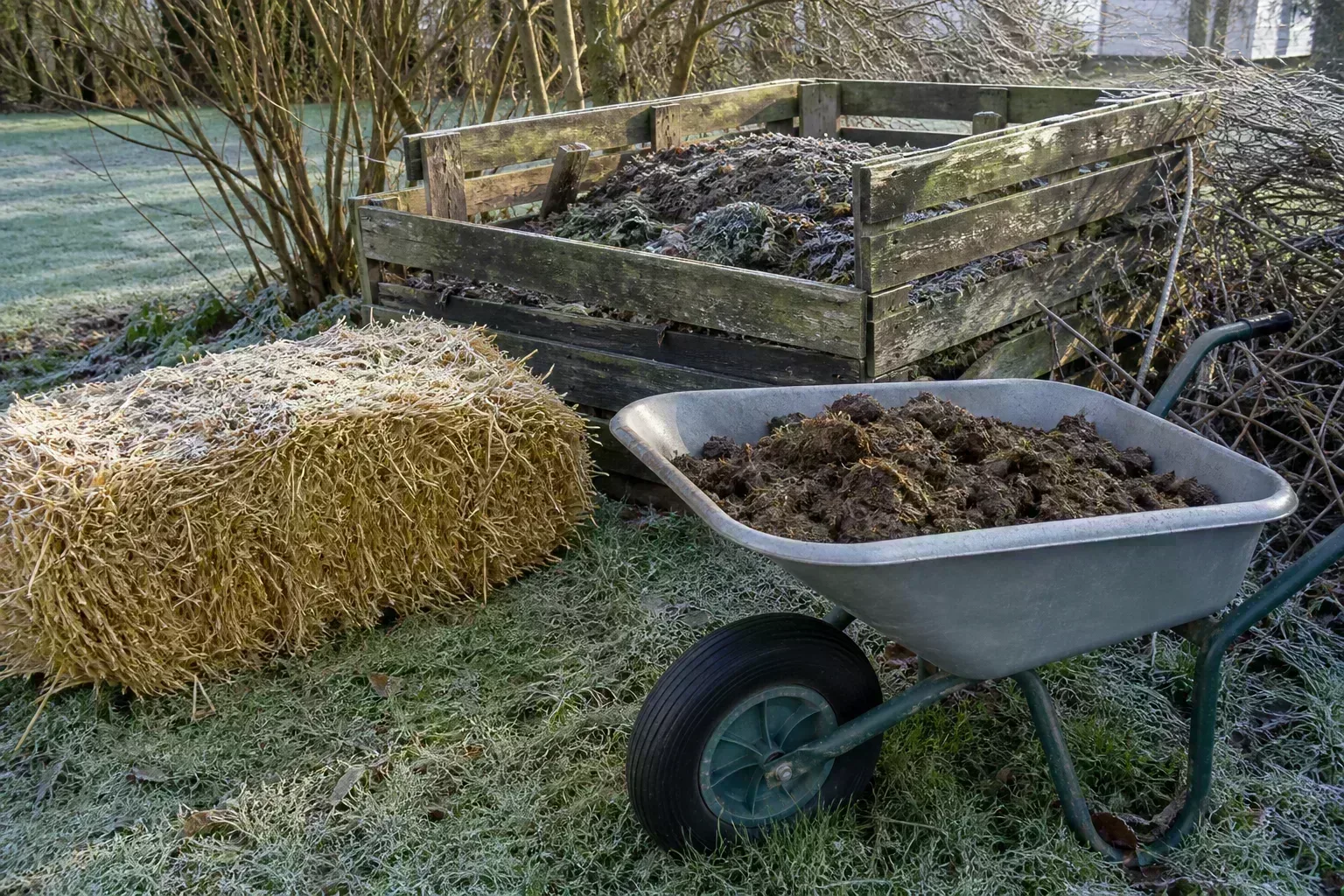
Cold aging is a useful fallback when you cannot turn a pile or maintain enough volume for hot composting. Store the manure in a protected, well-drained location for several months, keep it inaccessible to children and pets, and prevent liquid from flowing toward edible beds or waterways.
Practical chicken-keeping guidance from Fresh Eggs Daily treats three to four months as a minimum aging period and six months as the more conservative choice. That kind of seasonal schedule is especially sensible for a fall coop clean-out that will not be used until the following spring.
Cold aging reduces moisture and ammonia and allows microbial populations to decline, but it does not provide the same documented kill step as a pile that heats evenly. For food gardens, prefer properly composted, traceable material or use a conservative fall application with enough time before planting, while following local extension guidance for your crop and climate.
When to apply chicken manure fertilizer
Apply processed manure when soil is workable and plants can use the nutrients, not automatically whenever you clean the coop. Spring is a common window for established beds, and fall can work well for a future vegetable bed when the material is safely aged or composted and will be incorporated well before planting.
Avoid spreading manure before a heavy rain, on frozen or waterlogged soil, or where a slope sends runoff toward a pond, drain, well, or neighboring property. Do not apply it to a drought-stressed container and assume watering will solve the problem; concentrated salts can become more damaging as the root zone dries.
Food crops need a harvest-safety calendar
For edible crops, count backward from the expected harvest rather than forward from the day you found the manure. The Nevada Extension guidance uses a 90-day interval between application of raw or aged manure and harvest for crops whose edible parts do not touch the soil, such as trellised tomatoes, cucumbers, and peppers. It uses a 120-day interval for ground-contact crops such as lettuce, strawberries, and carrots.
These intervals are a useful baseline, not a reason to put fresh manure beside a mature tomato. Apply as early as possible, keep manure off edible plant parts, wash produce thoroughly, and follow stricter local or certification rules if you sell food or garden under an organic standard. If you cannot confidently identify when a pile was applied or how it was processed, choose another bed or another fertilizer for the current crop.
Dose, soil testing, pH, and the label should work together
For bagged pellets, follow the package directions exactly. Rates differ with moisture, processing, nutrient analysis, and intended use. The RHS gives a general top-dressing reference of about 150 grams per square meter for many crops, with lower rates for less-hungry crops or lawns at risk of scorch and split applications for greedy vegetable crops; convert only if your product and local guidance are compatible.
For composted homemade manure, a cautious light layer is safer than a deep blanket. Spread it evenly across the bed, keep it away from stems, and mix it into the upper few inches when appropriate. A soil test should decide whether repeated applications make sense, especially if the bed has received manure every year or if phosphorus, potassium, salinity, or pH is already high.
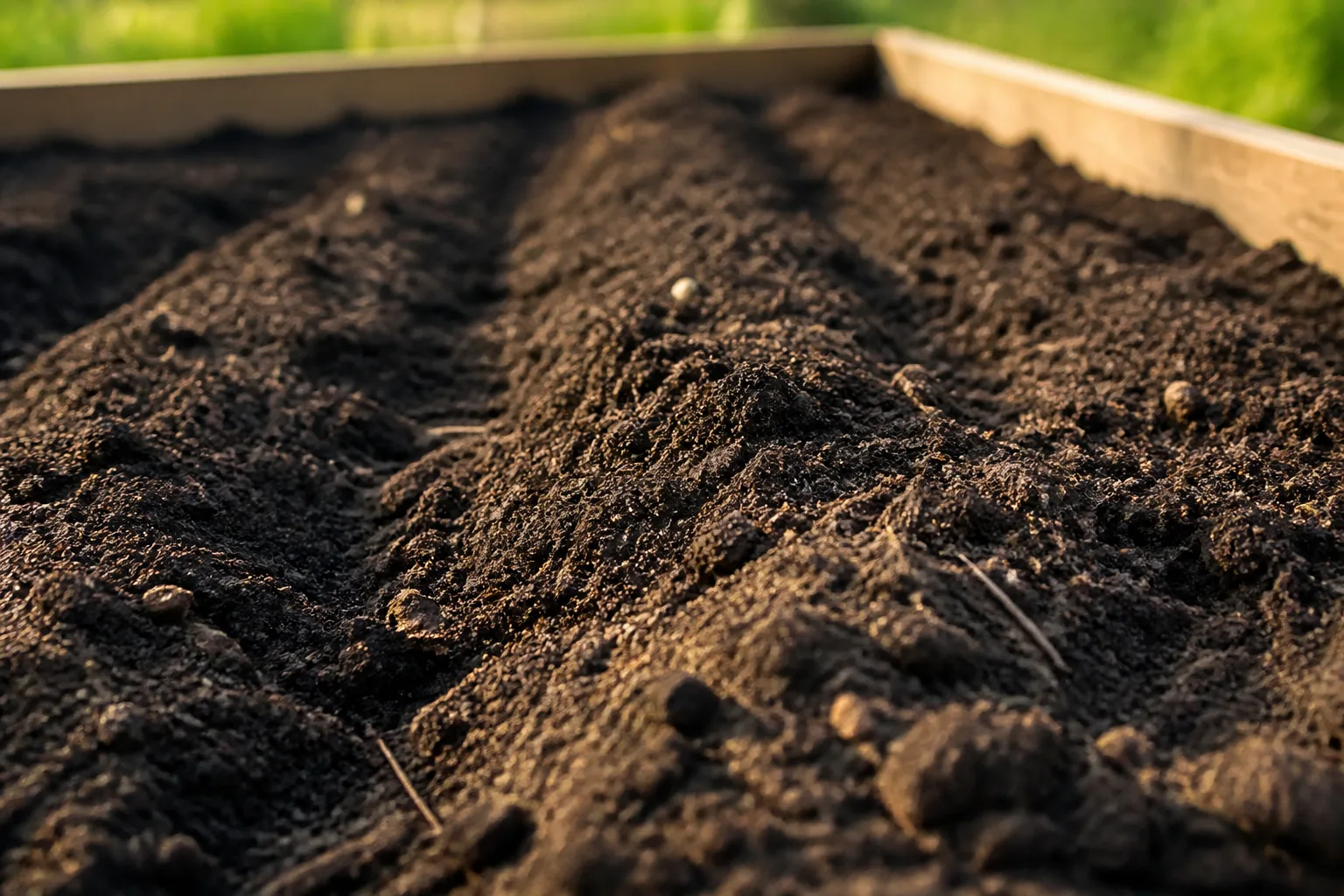
Do not pair chicken manure with a full dose of another nitrogen-rich fertilizer without a reason. Watch the plants after the first application: deep green leaves with weak flowering, leaf-edge scorch, a crusted soil surface, or a sudden decline despite adequate water are signs to stop feeding and test the soil rather than adding more.
How to use it in beds, containers, lawns, and borders
In vegetable and raised beds, apply finished compost or bagged pellets evenly over the root zone before planting, then incorporate according to the product directions. Around established plants, side-dress in a broad ring several inches from the stem so water carries nutrients outward instead of creating a concentrated pocket against the crown.
In containers, use only a labeled, processed product and calculate the dose from the pot’s soil volume or diameter. Do not drop a handful of homemade manure into a 10-inch pot; the limited mix volume and frequent watering can turn a modest bed rate into a damaging salt load. If the container already contains slow-release fertilizer, compost, or rich potting mix, reduce inputs rather than stacking them.
On a lawn, choose a product labeled for turf and apply below the maximum rate, especially in hot, dry weather. Fresh coop litter is a poor lawn fertilizer because uneven clumps can scorch grass, smell, attract animals, and wash away. Watering in a dry product may reduce surface burn, but it does not make raw manure appropriate.
In ornamental borders, composted manure can help hungry annuals, roses, fruit trees, and many shrubs when the soil test and plant preferences agree. Keep it away from acid-loving shrubs and from plants that prefer lean, sharply drained soil. Succulents, alpine plants, and many Mediterranean herbs generally need much less nutrient-rich organic material than a tomato bed.
The best application is boring: identify the material, check the soil, measure a modest rate, keep it off leaves and stems, water if the label calls for it, and record the date. If the garden does not respond, diagnose light, water, roots, pests, and pH before assuming it needs another scoop.
Conclusion
Chicken manure fertilizer earns its reputation when it is processed, measured, and matched to the soil. Its nitrogen, minerals, and organic matter can support productive vegetables and improve structure, water handling, and microbial activity over time.
Its disadvantages are equally practical: fresh manure can burn roots, pathogen risk matters around food, repeated doses can load a bed with phosphorus or salts, and alkaline material is a poor fit for acid-loving plants. Start by identifying the form and source, compost or age fresh litter safely, test the soil, count backward from harvest, and let the label or local extension recommendation set the rate. That turns a messy by-product into a useful amendment without asking the garden to absorb more than it can use.



