DIY Bird Feeder Ideas: 45 Weekend Projects
From pine cones to pallet feeders: 45 DIY bird feeder projects with safety rules, seasonal feeding guidance, and placement advice that helps birds actually visit.
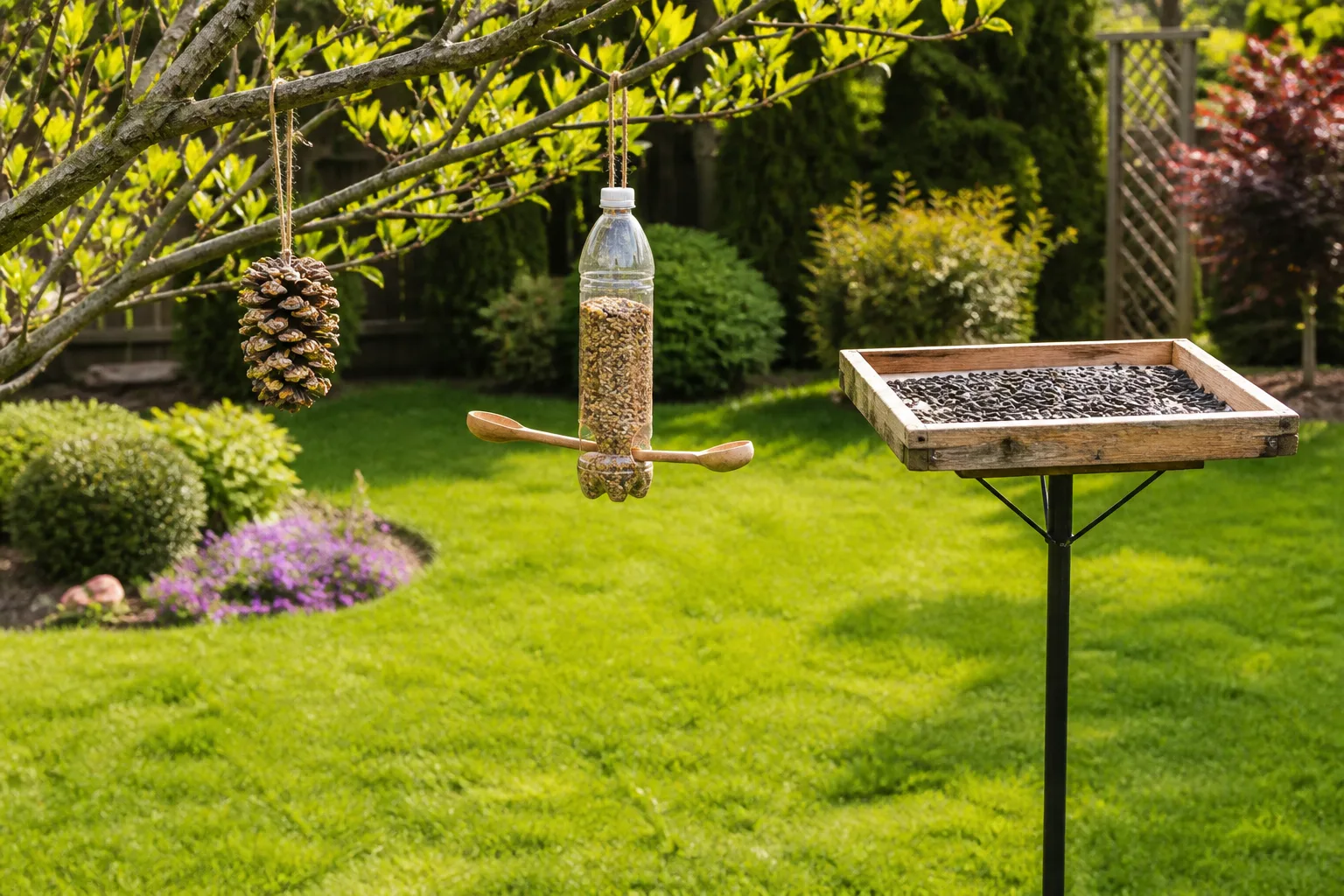
A DIY bird feeder turns scrap materials and an afternoon into something birds can actually use—but only if you match the design to the birds in your yard, choose safe food, and hang the feeder where birds feel secure. The best weekend projects are not the prettiest ones on Pinterest. They are the ones with drainage, a stable perch, seed that stays dry, and a spot you can reach for weekly cleaning.
This guide organizes 45 DIY bird feeder ideas the way a builder would sort them: by skill level, materials, and the birds each style attracts. You will find quick kid crafts, upcycled bottle feeders, rustic wood platforms, suet stations for winter, and hummingbird setups—plus the safety, placement, and maintenance steps most craft roundups skip entirely. If you want birds to show up consistently, pair any feeder with habitat basics from How to Attract Birds to Your Yard and keep squirrels from hijacking the buffet with the tactics in How to Keep Squirrels Out of Bird Feeders.
Start With the Right Feeder for Your Yard
Before you glue a teacup to a stake or drill holes in a wine bottle, decide what problem the feeder solves. Are you entertaining kids on a rainy Saturday, filling a bare winter yard with calories, or trying to photograph finches from the kitchen window? The answer changes which of the 45 projects is worth your time.
Match the Feeder Style to the Birds You Want
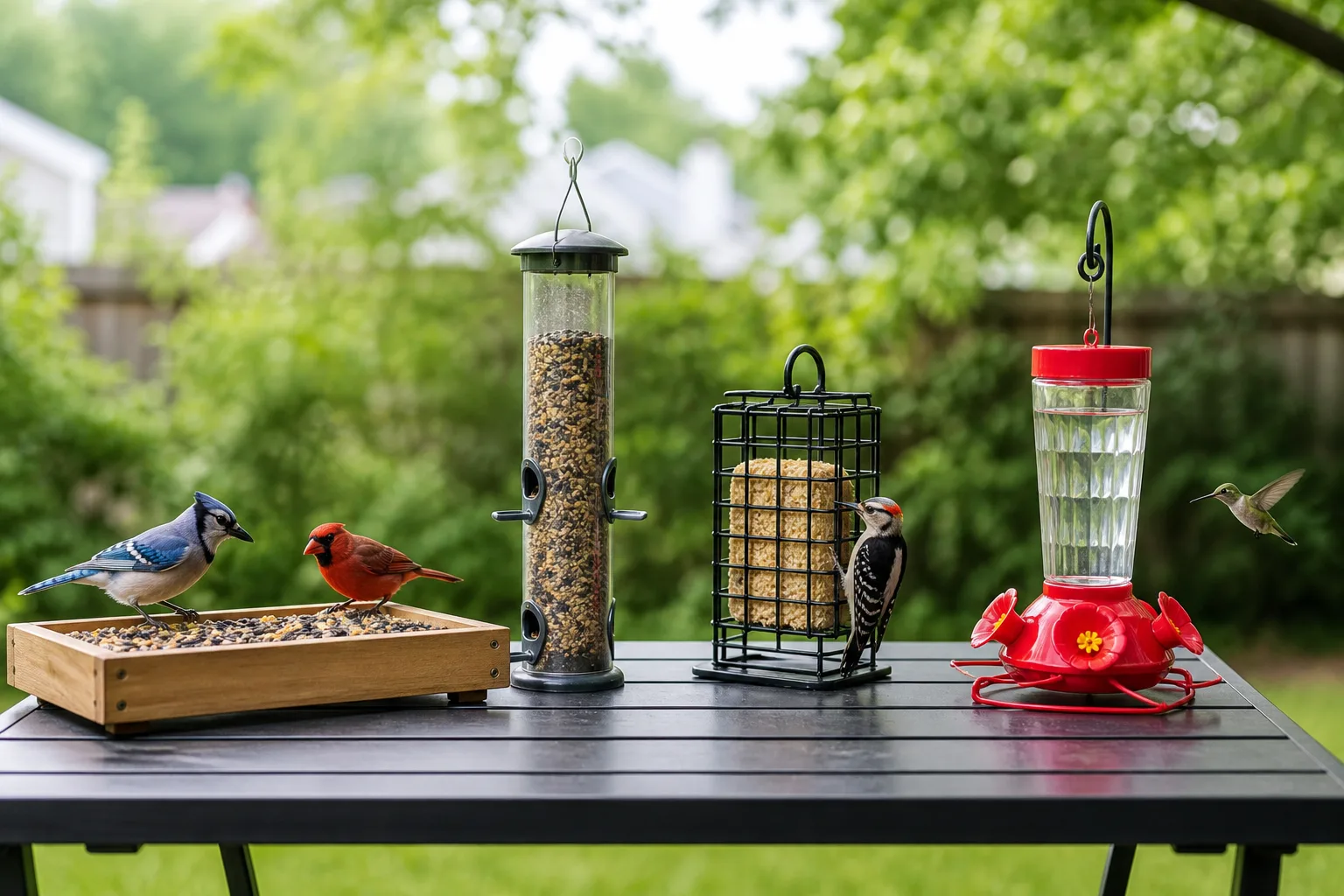
Platform and tray feeders—picture frames, clay saucers, napkin holders, thrifted candle sconces—attract the widest mix: cardinals, jays, doves, and ground-feeding sparrows. They are easy DIY builds but expose seed to rain and need frequent refills.
Tube and bottle feeders with small ports suit chickadees, titmice, and finches that cling vertically. A plastic bottle with wooden spoon perches is the classic beginner build because seed gravity-feeds through a small opening while birds balance on the spoons.
Suet and high-fat feeders—coffee mugs packed with suet, suet plug logs, birdseed wreaths—target woodpeckers, nuthatches, and winter visitors that need dense calories. Avoid homemade fat balls in hot summer weather; they melt, go rancid, and can smear onto feathers.
Nectar feeders serve hummingbirds only. A macramé hanger around a glass hummingbird feeder is a stylish DIY wrapper; a jar with red accents and feeding ports is a true homemade nectar station. Use the 1:4 sugar-water ratio from our Hummingbird Nectar Recipe—never honey, brown sugar, or red dye.
Fruit and nut specialty feeders—orange halves, apple slices, squash bowls—pull in orioles, mockingbirds, and robins during migration when insects and berries are scarce. Treat these as short-term offerings, not all-day buffets.
Choose a Project by Skill Level and Time
| Time & skill | Best project types from the list |
|---|---|
| Under 30 min, no tools | Pine cone + peanut butter, orange cup, cardboard tube, paper plate, cookie-cutter seed ornaments, ice-cube seed ornaments |
| 1–2 hours, basic craft supplies | Popsicle-stick house, macramé saucer hanger, painted milk carton, duct-tape carton feeder, sea-shell tray, terra-cotta lighthouse |
| Half-day, some hardware | Mason jar feeder, wine-bottle gravity feeder, picture-frame platform, wire basket thrift find, scrap-wood two-tier station |
| Weekend, tools required | Pallet feeder, dried gourd drill-hang feeder, suet plug 4×4 log, twig-and-cardboard structural feeder |
If this is your first feeder, start with a pine cone or plastic bottle build you can hang tomorrow, observe which species arrive, then invest in a sturdier wood or pallet design. Birds forgive humble materials; they do not forgive moldy seed or a feeder swinging in an exposed kill zone.
Safety Rules Every DIY Feeder Needs
Craft blogs love aesthetics. Birds need dry food, clean surfaces, and non-toxic materials. A gorgeous teacup feeder mounted low beside a shrub looks charming and functions as a cat ambush station. Build for bird health first; decorate second.
Safe Foods and What to Leave Out
Good choices for DIY feeders:
- Black-oil sunflower seed, sunflower hearts, safflower, nyjer (finches), and quality mixed seed without filler grains birds discard
- Unsalted peanut butter in thin layers on pine cones or logs (not deep gobs that trap beaks)
- Commercial suet cakes or homemade suet using rendered fat plus seed—offered in cool weather
- Dried mealworms in small amounts during nesting season
- Fresh orange halves, apple chunks, or squash cups—removed within 24 hours
- Plain popcorn (unsalted, unbuttered) as a rare treat mixed into wreaths
Skip these common “bird food” suggestions:
- Bread, crackers, and stale baked goods — low nutrition, expands in stomachs, and molds quickly on wet platforms
- Salted nuts, chips, or seasoned scraps — sodium levels birds cannot process safely
- Moldy or fermented fruit — spreads disease; RSPB advises against mouldy offerings (RSPB)
- Raw dry rice or dried beans — filler birds rarely eat and that rots on wet ground
- Chocolate, avocado, or anything sugary — toxic or harmful to many bird species
Scatter a small amount of seed on a patio stone or platform if you have no feeder yet—but only on dry days. Wet ground lets seed rot and concentrates rodents. For ground feeding without a structure, brush away hulls daily and never pile seed deep enough to stay wet overnight.
Materials, Glue, and Weatherproofing
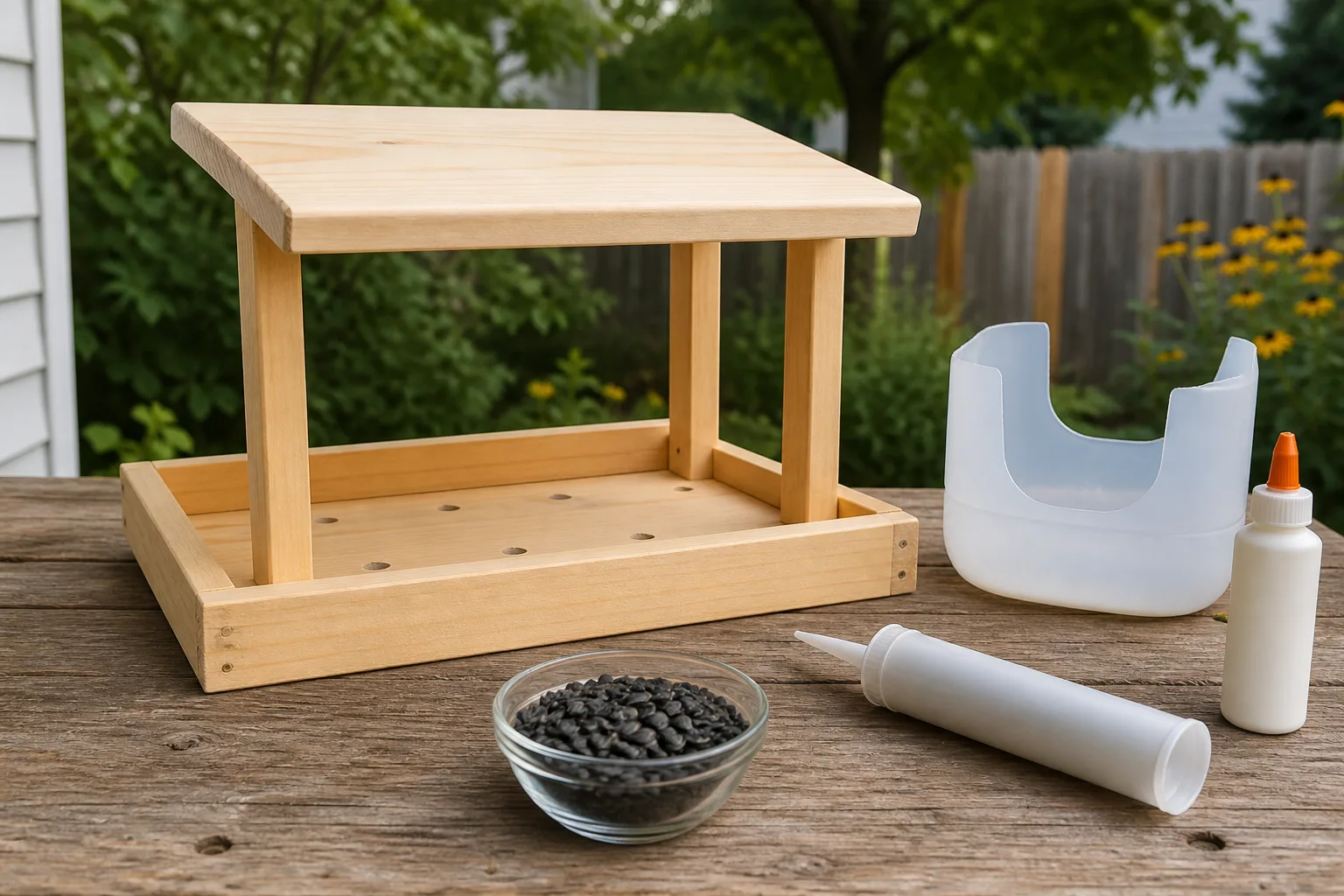
Use exterior wood glue or waterproof silicone on outdoor builds—not school glue or hot glue alone, which fails in rain. Seal untreated wood with a water-based exterior finish labeled safe for garden use; avoid lead-based paints and creosote.
Drainage is non-negotiable. Drill small holes in bottle caps, jar lids, and platform bases so water does not pool. Seed sitting in water ferments within days.
Avoid sharp edges on cut plastic bottles and metal can lids. Sand or tape rim cuts so birds do not cut feet.
Do not grease poles or hooks to deter squirrels. Grease mats feathers and can poison clinging birds like chickadees and woodpeckers—see Greasing Bird Feeder Poles: Why to Avoid It for safer hardware options.
Window safety: If you hang feeders near glass, apply collision decals or move feeders to within 3 feet of the window (too close for fatal impact speed) or farther than 30 feet. A picture-frame platform feeder on a suction-cup window bracket is popular—but only with strike prevention in place.
Quick Kid-Friendly Projects for Under 30 Minutes
These nine projects from the full list need no power tools and teach kids how birds eat while keeping expectations realistic: craft feeders are often seasonal or short-term, perfect for a Saturday morning, not a decade of service.
Pine Cone, Orange Cup, and Cookie-Cutter Feeders
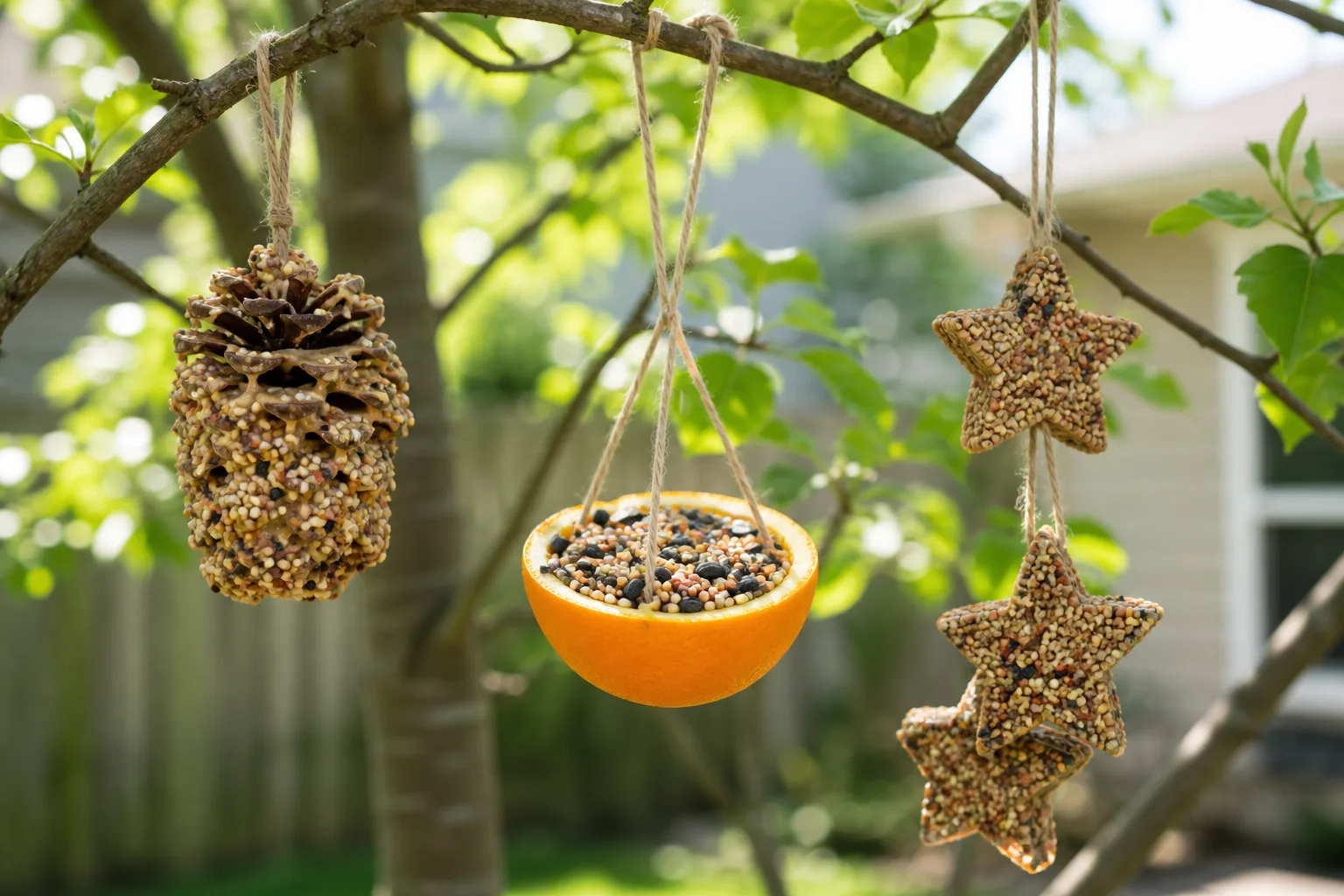
Pine cone feeder: Tie twine around a large open pine cone, spread a thin layer of unsalted peanut butter into the scales, and roll in birdseed. Hang from a branch at eye level so kids can watch visitors. Expect squirrels to share this one—hang it away from prized vegetable beds.
Orange half cup: Scoop out citrus flesh, poke three holes near the rim, thread twine, and fill the cup with seed or suet mix. Orioles and mockingbirds may visit orange halves directly; seed-filled cups attract chickadees and finches. Remove the fruit within a day before mold sets in.
Cookie-cutter seed ornaments: Mix gelatin or unflavored agar with birdseed, press into cookie cutters, insert a straw for a hanging hole, chill until firm, and hang. These are winter or cool-day crafts—heat melts gelatin fast. Birdseed wreaths made in Bundt pans follow the same logic with nuts and dried fruit added for texture.
Birdseed ice ornaments (cranberry-studded ice cubes) are beautiful cold-weather novelties. They melt, so treat them as a one-day project when temperatures stay below freezing.
Cardboard Tube and Paper Plate Trays
Cardboard tube feeder: Smear peanut butter on a toilet-paper tube, roll in seed, and slide it onto a branch. Add a bamboo skewer through the bottom as a perch. This is the fastest build on the list—and the fastest to fall apart in rain. Fine for a dry weekend demo.
Paper plate tray: Punch holes, thread yarn through the rim, and fill the plate with a thin seed layer. Kids decorate with crayons; birds care about the seed, not the art. Hang under a porch eave to keep the plate dry longer.
Popsicle-stick house feeders take an hour but still qualify as kid-friendly with adult help hot-gluing the roof. Paint with exterior craft paint and seal the roof seam so seed does not dump through gaps.
Sugar-cone feeders (ice cream cone + peanut butter + seed) are edible crafts—expect them to be eaten by squirrels before dawn. Fun, not durable.
Upcycled Container Feeders You Can Build This Afternoon
Fourteen projects in the full roundup turn kitchen and thrift-store castoffs into functional feeders. These are the sweet spot for adult weekend builders who want something that lasts a few seasons with basic maintenance.
Plastic Bottle and Milk Jug Designs
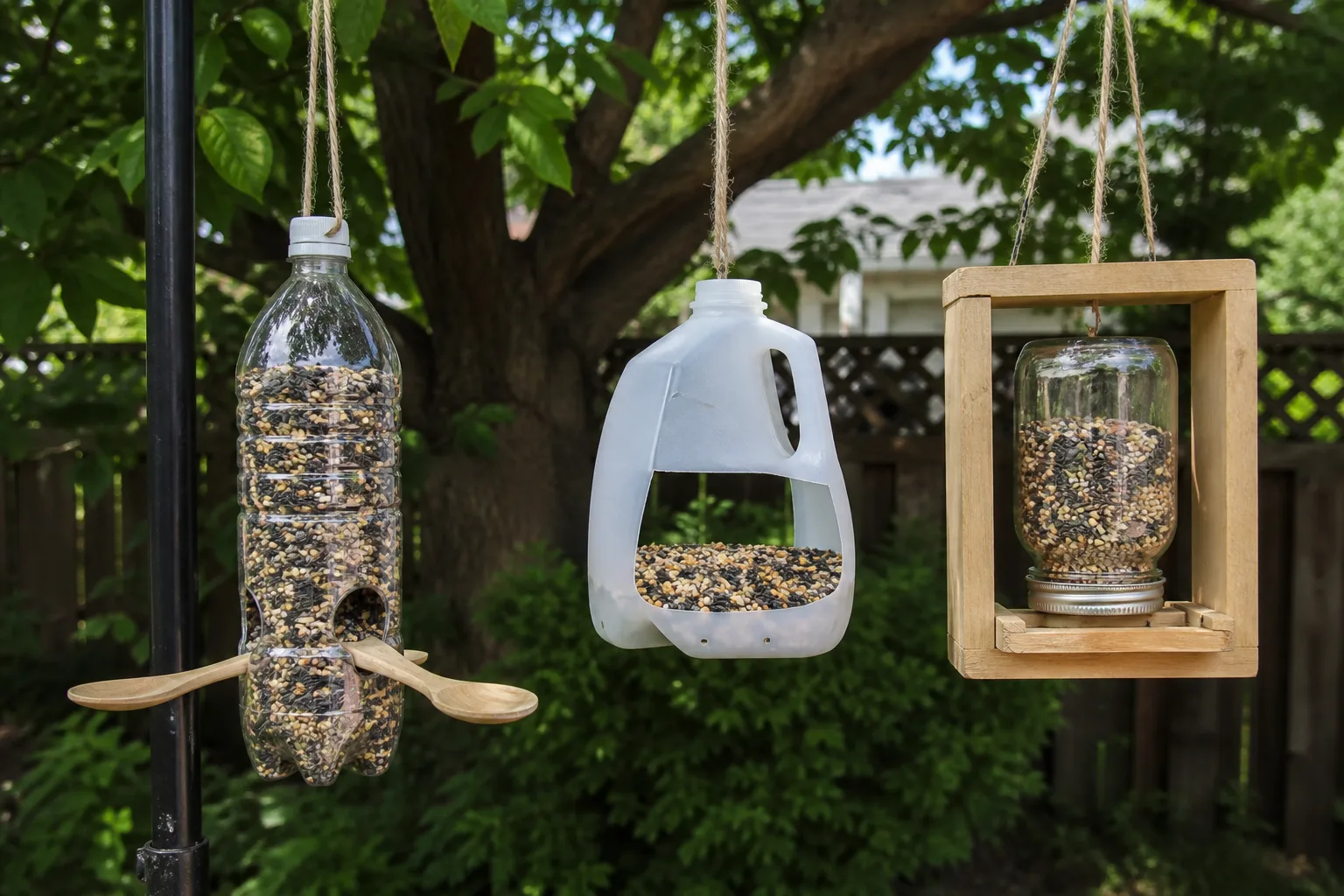
Classic bottle + spoon feeder: Cut a window on opposite sides of a clean plastic bottle, insert wooden spoons through horizontal slits (bowl inside, handle outside as perch), fill with seed through the cap, and hang. The seed level should reach spoon bowls as it empties. This design appears in countless school projects because it works—until UV-crazed plastic cracks. Replace bottles yearly.
Milk jug platform: Cut a large opening on one side, poke drainage holes in the bottom, and hang or nail the jug to a post. Kids decorate with chalk markers. Leave the cap on to reduce rain entry.
Duct-tape carton feeder: Wrap a milk carton in colorful duct tape for water resistance, cut a feeding window, and tape a popsicle-stick perch below. Honest and quick.
Mason Jar, Wine Bottle, and Jar-Lid Platforms
Mason jar chick feeder base: Invert a jar into a commercial or DIY chick-feeder base (available at farm stores) or build a wooden collar that lets seed flow onto a small tray. Vintage blue jars are pretty; function depends on the base allowing flow without clogging.
Wine bottle gravity feeder: Mount an empty bottle neck-down in a wooden frame with a shallow tray below. Seed flows as birds eat. One plank of wood and a bottle is enough for a satisfying shop project—seal the wood and angle the tray for drainage.
Canning jar lid trays: Paint wide-mouth lids, add a mesh of twine as a hanger, and fill lids with seed for small clinging birds. Charming on a porch; refill often because capacity is tiny.
Candy jar and thrifted candle-sconce feeders turn glass into platform trays. Removable glass cups make cleaning easier—important when humidity fogs glass and seed sticks.
Napkin holder platform: A wooden napkin holder laid flat becomes a covered tray feeder with a built-in roof. Chalk paint adds color; a coat of exterior sealer adds seasons.
Sea shell, pot lid, and wire basket feeders from thrift stores work as shallow trays when you add drainage and stable hanging hardware. Spray-paint metal baskets for rust resistance.
Rustic Wood, Twig, and Pallet Builds
When you are ready for a real weekend project, wood feeders outlast plastic and hold more seed. Ten ideas from the list fall here:
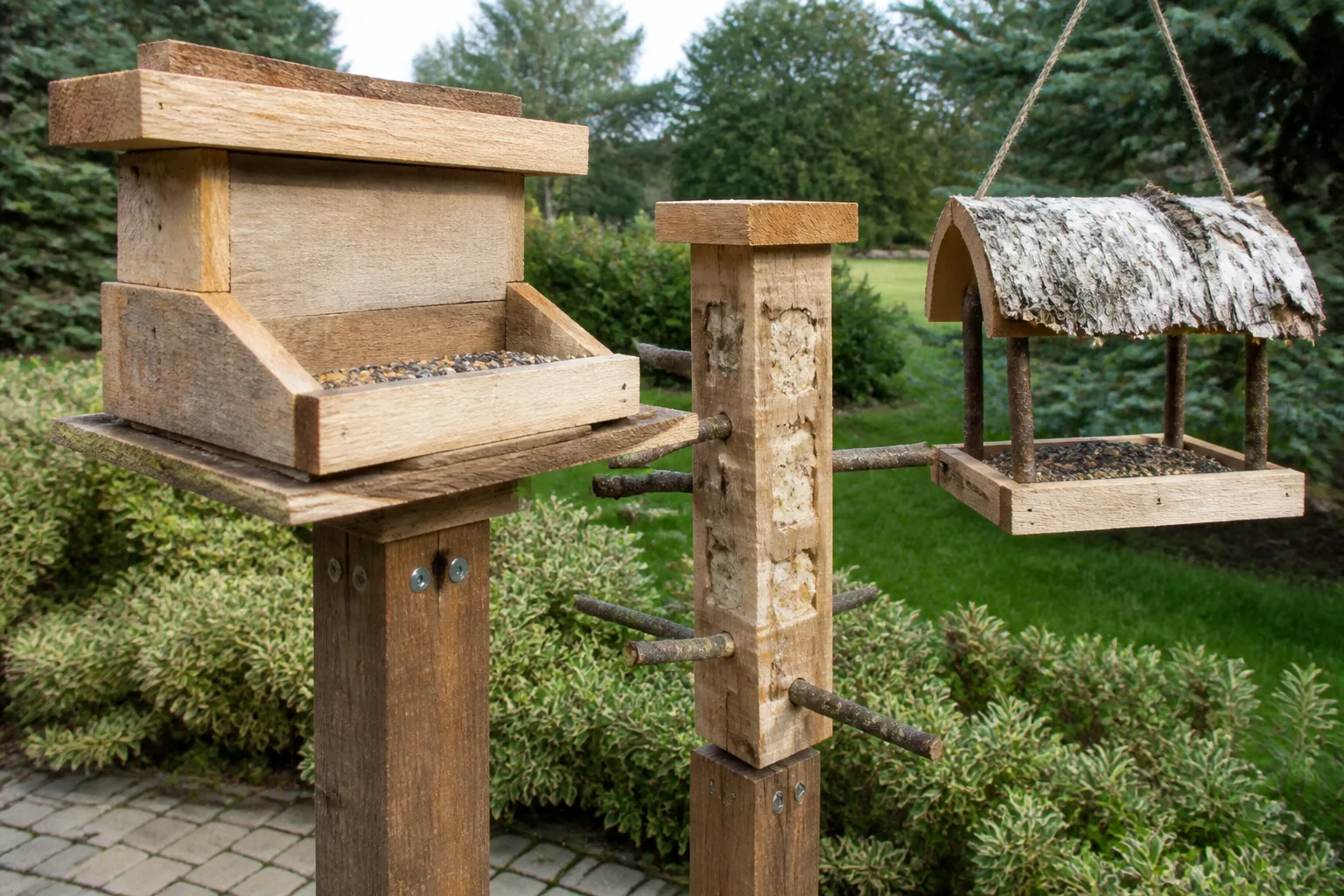
- Scrap wood two-tier station with suet on top and seed on a coconut-shell cup below
- Suet plug log from 4×4 scrap with drilled holes packed with suet plugs and a small roof
- Pallet feeder disassembled and rebuilt as a hopper or platform—sand rough pallet wood and confirm the pallet stamp is heat-treated (HT), not chemically treated
- Twig and cardboard structural feeder using yard sticks and glue for a rustic open tray
- Natural roofed feeder with birch-bark roof and branch perches
- Dried gourd feeder drilled and hung with wire—excellent drainage if you drill bottom holes
- Picture-frame platform with hardware cloth or mesh bottom for drainage and a simple roof optional
- Clay pot lighthouse stacked terra-cotta pots with a saucer seed tray—decorative with a functional saucer level
- Tin-can fairy lighthouse combining whimsy with a fruit skewer side arm for apples
- Scrap wood + stick post feeder from Instagram-style rustic builds using found branches
Build tips that separate lasting wood feeders from craft failures:
- Use galvanized screws, not nails alone, in freeze-thaw climates
- Angle tray floors slightly toward drainage holes
- Add a removable roof panel or hinged lid for refilling without uninstalling the whole unit
- Mount on a 4×4 post with a baffle if squirrels are abundant—hardware beats hope
Suet and High-Energy Feeders for Cold Weather
Eight projects target high-calorie feeding when insects disappear:
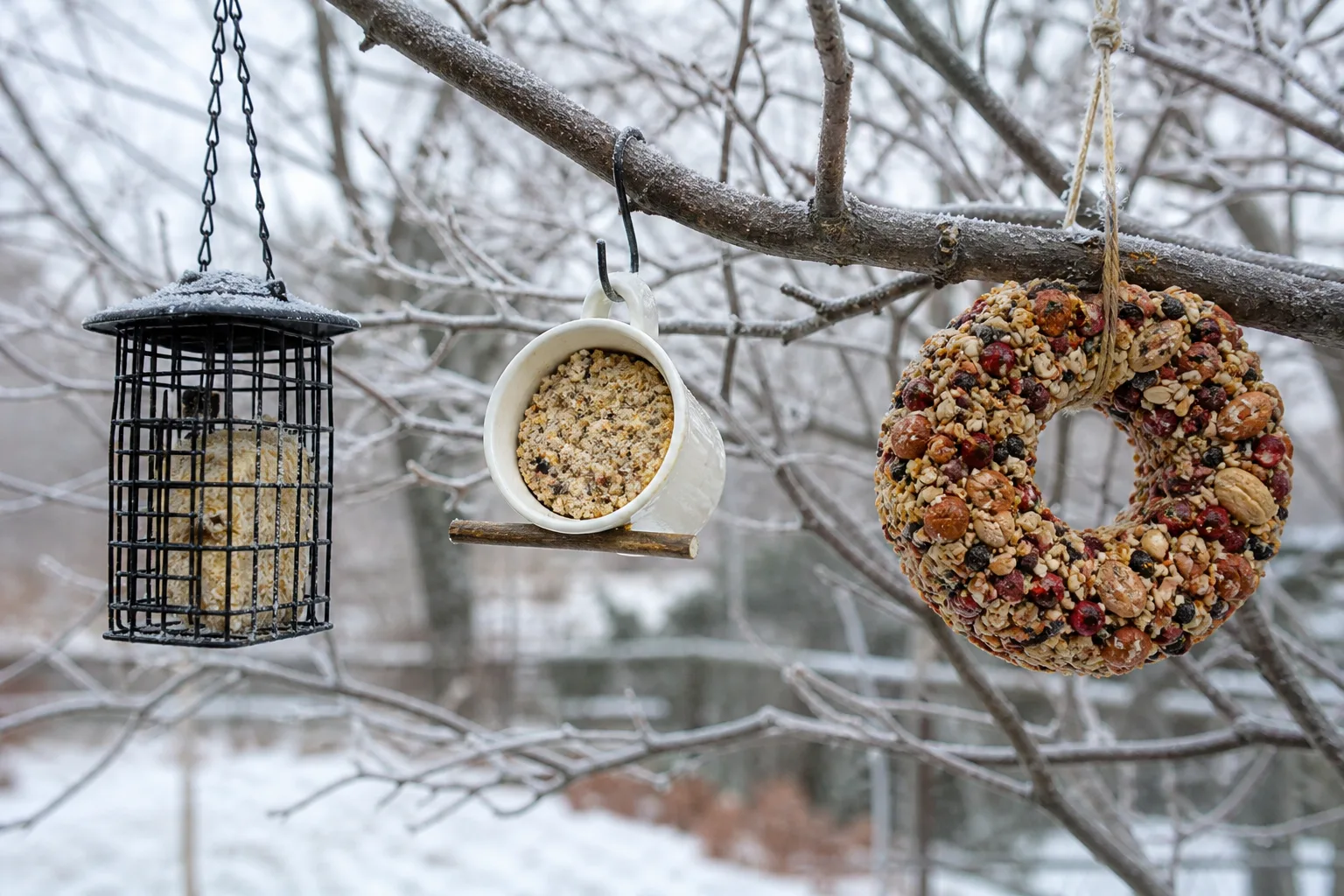
- Coffee mug suet feeder hung by the handle with a stick embedded in suet for a perch
- Suet plug log (above)
- Birdseed wreaths and Bundt-pan seed rings with added nuts and cranberries
- Two-tier stations with suet cages
- Homemade fat balls—winter only; RSPB notes homemade fat balls can melt in warm weather and should be avoided in summer (RSPB)
- Seed ornaments and ice ornaments for cold snaps
Offer suet when nighttime temperatures stay cool and remove rancid blocks at the first sour smell. In spring and summer, switch emphasis to mealworms and fruit in small quantities rather than heavy fat. The RSPB currently recommends avoiding seed and peanuts May through November in the UK to reduce trichomonosis spread—a regional guideline worth knowing if you garden there; in North America, focus on frequent cleaning and smaller portions during warm months rather than eliminating seed entirely, unless local wildlife agencies issue disease alerts.
For winter-only feeding decisions, see Should You Leave Your Bird Feeder Up This Winter?.
DIY Hummingbird Feeder Options
Three hummingbird projects from the list wrap or build nectar feeders:
- Macramé hanger around a store-bought glass feeder—pure aesthetics, but it elevates a basic feeder into patio décor. Keep knots above the nectar line and take the feeder down for weekly hot-water scrubbing.
- Jar feeder with ports — drill or punch small feeding ports in a lid, use red accents nearby (not dye in the nectar), and hang with wire. Test for leaks before hanging; dripping nectar attracts ants and bees.
- Heated crate enclosure for late-season hummingbirds in cool climates—an advanced build that wraps a feeder in a frost-protected box with a low-wattage heat source. Only attempt with proper electrical safety and remove when birds migrate.
Hummingbird feeders need more frequent cleaning than seed feeders—change nectar every 3–5 days, or every 2 days in heat, and scrub with hot water weekly (Cornell Lab). Never coat feeding ports with oil to deter insects; oil contaminates nectar. For bee problems, move the feeder or add bee guards instead.
Where to Hang Your Feeder So Birds Actually Use It
Placement matters as much as design. The RSPB recommends a spot that is quiet, sheltered from harsh wind, and safe from ambush—close enough to shrubs that birds can escape, but not so close that cats hide within pounce range (RSPB).
Practical placement checklist:
- Height: Roughly 5–6 feet on a post or branch for easy refilling and reduced cat access
- Clearance: 8–10 feet from squirrel launch points (fences, trees, roofs) unless you use a baffle
- View: Position where you can see the feeder from indoors—you will notice empty seed and sick birds faster
- Rotation: Move feeders every few weeks during cleaning to prevent waste buildup on the ground below
- Cover: A porch eave, tree canopy, or feeder roof reduces rain spoilage on platform designs
New feeders often sit ignored for several days. Birds are cautious. Consistent food at the same time of day builds routine. A shallow water source nearby—birdbath or plant saucer—doubles visit frequency more than a second feeder does.
If you are comparing DIY effort against buying hardware, our Best Bird Feeders roundup covers tested store-bought options worth pairing with your homemade platforms.
Clean, Fill, and Maintain Your DIY Feeder
A DIY feeder without a cleaning plan becomes a disease source. Moldy seed, accumulated hulls, and wet suet spread salmonella and other infections when birds crowd shared surfaces.
Cleaning schedule:
- Every two weeks minimum for seed feeders; weekly during heavy use, rain, or if you see sick birds
- Hummingbird nectar changed every 3–5 days; scrub feeders weekly with hot water (no soap residue on nectar ports)
How to clean:
- Empty old seed and discard anything moldy
- Disassemble plastic or wood parts
- Wash with hot soapy water or soak 10 minutes in a 1:9 bleach solution (1 part bleach, 9 parts water), per Cornell Lab and Project FeederWatch guidance (Cornell Lab)
- Rinse thoroughly, air-dry completely, then refill
- Sweep hulls and droppings from the ground below
Fill discipline: Offer only what birds eat in 1–2 days on platforms and a few days in weatherproof tubes. Refill less but more often rather than topping off moldy leftovers.
If you see a sick bird (fluffed feathers, lethargy, difficulty swallowing): remove feeders for 2–4 weeks, deep-clean everything, and wait until no new sick birds appear before resuming. Wear gloves when cleaning and wash hands afterward—some bird diseases can infect people, though risk is low (RSPB).
Conclusion
The best DIY bird feeder idea is the one you will refill, clean, and watch—not the one that wins a photo contest. Start with a quick pine cone or bottle build this weekend, note which birds arrive, then level up to wood or suet designs that match your climate and visitors. Keep food dry and fresh, hang feeders where birds can see danger coming, and skip shortcuts like bread, moldy fruit, or greased poles that hurt the animals you are trying to support.
Forty-five projects sounds like a lot because it is—but you only need one working feeder to change what flies through your yard. Build it safely, maintain it weekly, and let the birds tell you whether your next project should be a finch tube, a suet log, or a hummingbird hanger. Everything else on the list is there for when you are ready for round two.