6 Simple Plant Care Tips for Forgetful Plant Owners
Learn six simple plant care tips for forgetful owners, including better watering checks, self-watering tools, plant selection, fertilizer timing, and quick recovery steps.
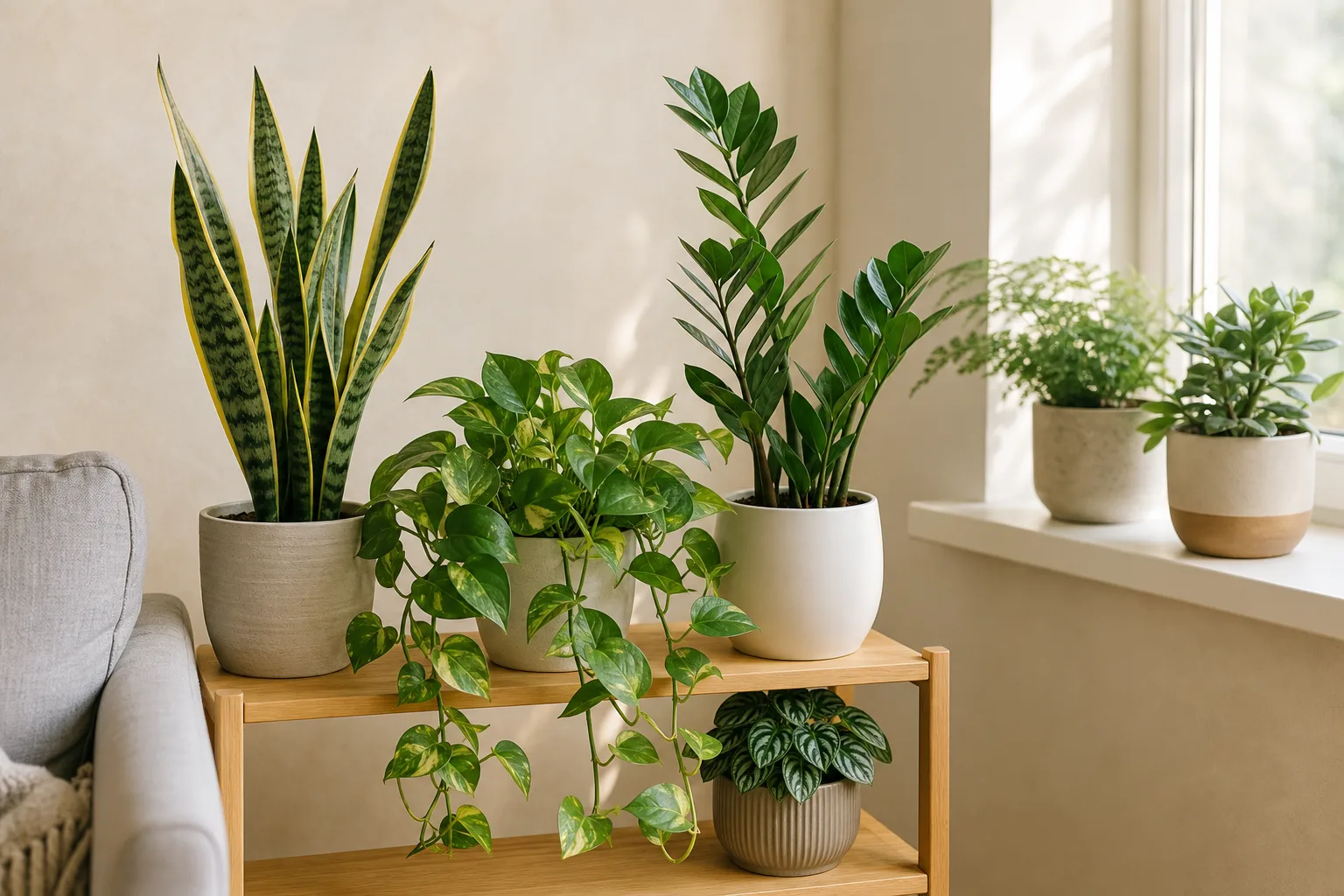
You do not need a perfect memory to keep plants healthy. You need a setup that makes the right action obvious, makes mistakes recoverable, and stops one missed watering from turning into a week of frantic overcorrection.
The most reliable approach is to treat plant care as a small system: choose a plant for the light you actually have, make its pot drain properly, check moisture instead of obeying a calendar, and attach the few remaining jobs to a visible trigger. The six tips below are designed for real homes, where work, travel, heat, pets, and half-finished to-do lists all compete for attention.
Why forgetful plant care needs a system, not guilt
Plants rarely fail because their owner forgot one task once. Trouble usually comes from a mismatch that repeats: a moisture-loving plant in a hot sunny window, a cactus in dense wet soil, a pot with no drainage hole, or a reminder that says “water everything” even though every pot dries at a different speed. Fix that mismatch and the occasional missed day becomes much less dramatic.
Houseplants also respond slowly. A plant may look fine while its root ball is drying, then collapse after the damage is already underway. Conversely, yellow leaves and drooping can appear in wet soil as well as dry soil. The goal is not to react to every visual change with water; it is to build a short inspection that tells you what is happening before you act.
1. Put each plant in the light you actually have
The best “low-maintenance plant” is one growing in a suitable place. Light controls how much energy a plant can make and how quickly it uses water, so a plant in brighter light may dry faster than the same species across the room. The Royal Horticultural Society’s houseplant guide recommends considering light, temperature, water, and humidity together rather than placing a plant for decoration alone.
Start with a two-minute light audit. Notice where direct sun lands at midmorning and afternoon, whether a sheer curtain filters it, and whether the plant is beside a heater, air-conditioner, or drafty window. “Low light” does not mean no light: a dark corner may keep a plant alive for a while but still produce weak, stretched growth and a slower recovery after missed care.
Match a plant’s thirst to its location
For a bright room where you may forget to water, snake plants, ZZ plants, aglaonema, and many pothos are sensible starting points because they can tolerate some drying between thorough waterings. In a sunny window, jade plants and other succulents can work when planted in fast-draining mix and allowed to dry substantially. These are starting points, not permission to ignore the label; a plant kept in a hot window, a small pot, or very dry air may still need frequent checks.
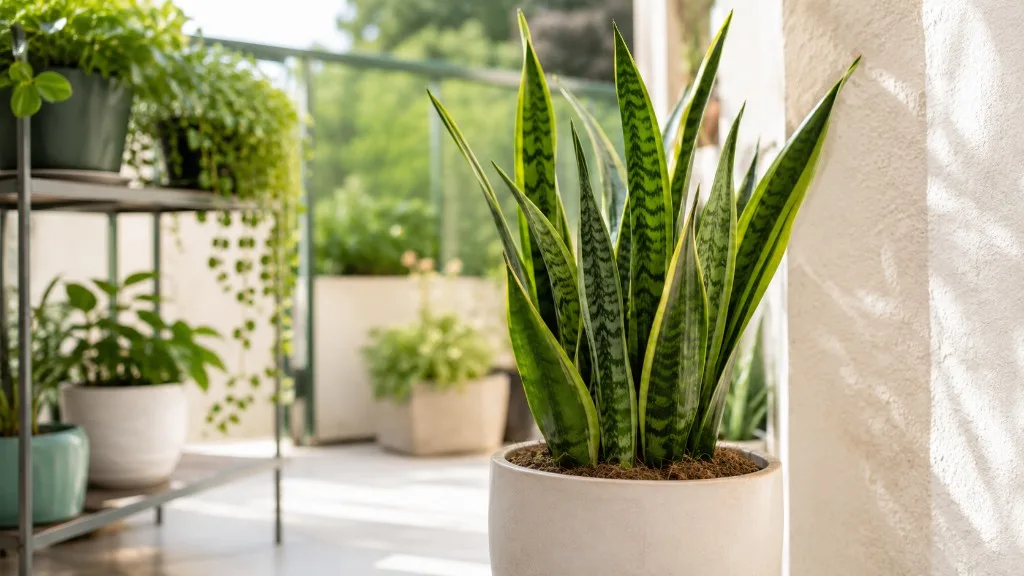
For a dim room, choose a plant that tolerates the available light instead of compensating with more water. Extra water cannot replace missing light and may leave roots wet for too long. If you love ferns, fittonia, prayer plants, or other plants that prefer steadier moisture, put them where you will naturally see them and where the room is not being dried by a vent.
When buying, read the plant tag for both light and moisture preferences, and note the botanical name if the common name is vague. A plant that is “easy” in a humid greenhouse may be demanding in a heated apartment. If you are growing outdoors, use the local climate and microclimate as part of the decision; a plant that handles a cool, cloudy summer may struggle in a hot exposed balcony.
2. Make the pot forgiving before you miss a watering
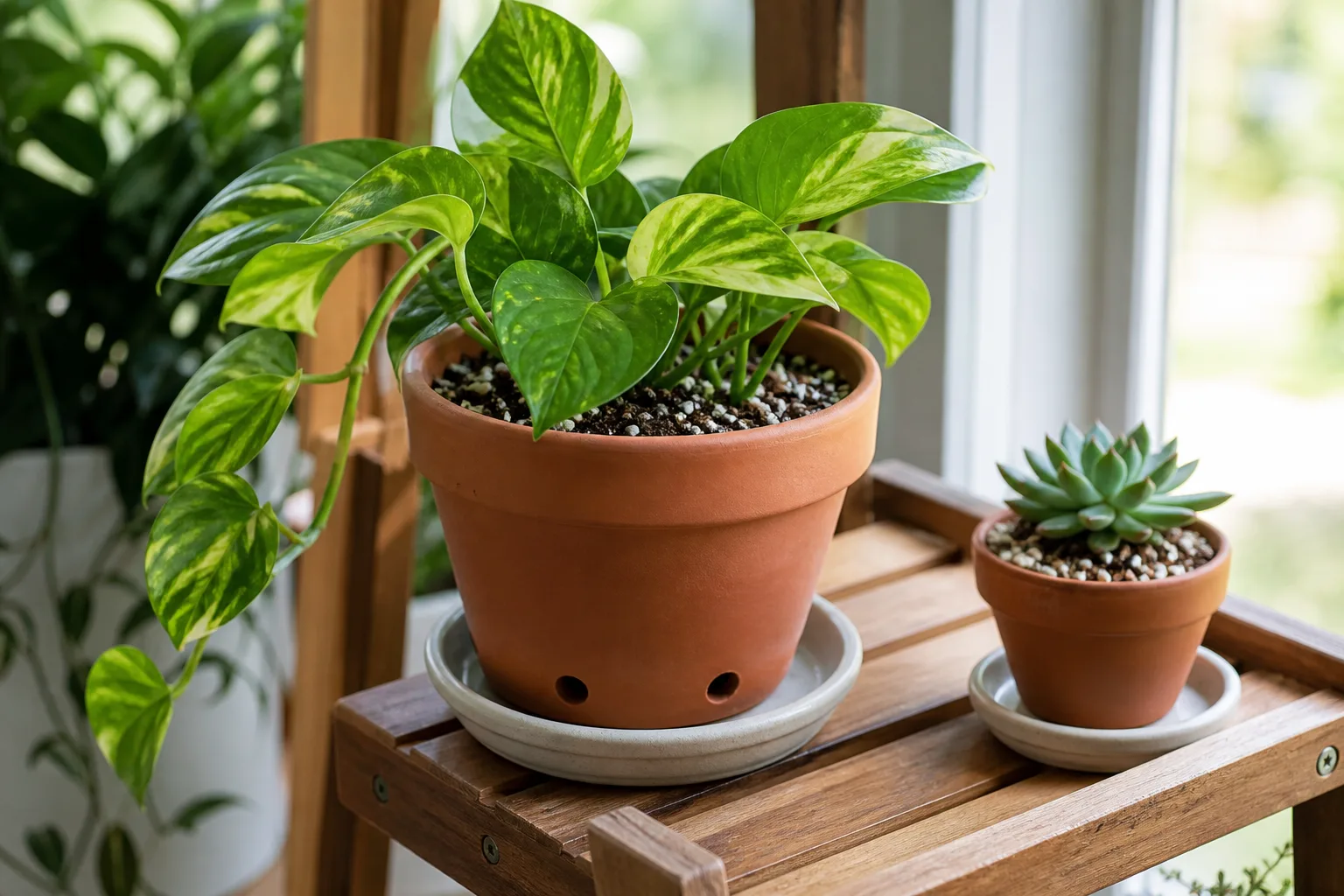
Good drainage is a safety feature for forgetful owners. A container with at least one open drainage hole lets you water thoroughly and then remove the excess; a decorative cover pot or foil sleeve that traps water can quietly keep the root zone saturated. The Missouri Botanical Garden’s watering guide emphasizes both points: roots need oxygen, and a plant should not sit in drained water for a long time.
Drainage, pot size, and soil do the quiet work
Use a nursery pot with drainage inside a stable cover pot, or place the pot on a saucer that you can empty. When it is time to water, move small plants to a sink or tray, soak the mix until water exits the bottom, wait for it to finish draining, and then return it to its place. A small amount poured onto the surface every day is harder to judge and can leave dry pockets in a hydrophobic root ball.
Pot size matters just as much. A very large pot holds a large volume of wet mix around a small root system, so the plant may stay wet long after the surface looks dry. Choose a pot only modestly larger than the root ball when repotting, and do not “upgrade” a plant to a huge container because you want to postpone the next job. A pot that is a little snug is often easier to manage than one that stays soggy.
Match the mix to the plant. Succulents and cacti need a gritty, fast-draining medium; ordinary foliage plants need a mix that holds some moisture while still containing air spaces. Plastic and glazed pots usually dry more slowly than unglazed clay, so the same watering rule should not be copied from one pot to another. If a plant repeatedly stays wet for many days, fix the container or mix before reaching for a reminder.
3. Water by evidence, not by weekday
The most useful watering reminder is a prompt to check, not an instruction to pour. BBC Gardeners’ World Magazine notes that houseplants from different environments have different watering requirements, and the Missouri Botanical Garden likewise groups plants by how much drying they tolerate. A weekly schedule may be a helpful inspection day, but it is not a universal watering day.
Use weight, finger, and meter checks in that order
Use this quick sequence whenever a reminder fires:
- Look. Check for sudden drooping, crispy edges, yellowing, pests, or water still standing in the saucer.
- Lift. A small pot that feels much lighter than it did after watering has lost substantial moisture. Learn the difference by lifting it when wet and again as it dries.
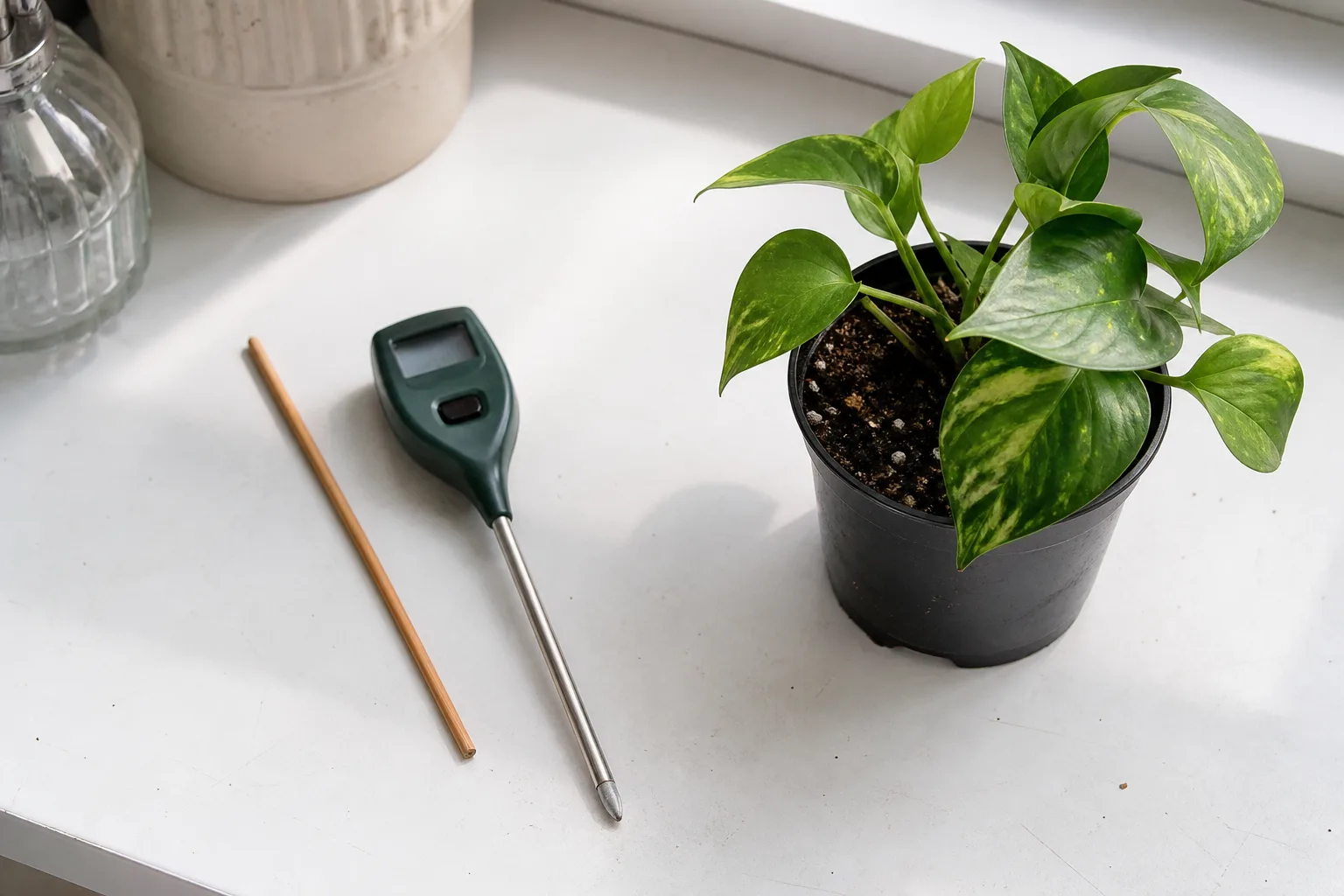
- Feel. Push a clean finger a little below the surface, not just across the crust. For many foliage plants, water when the upper layer is dry but the deeper mix is not bone dry; succulents generally need a more complete dry-down, while moisture lovers need a smaller gap between waterings.
- Measure if useful. A moisture meter can help with a large pot that is awkward to lift, but take the reading at root level and compare it with the plant’s preference. Do not treat a single probe reading as a universal “water” signal.
- Water thoroughly or wait. If the evidence says the plant is ready, water the root ball evenly until some drains out. Empty the saucer rather than leaving the pot in the runoff.
The pot-weight habit is free and often more useful than an app. The Missouri Botanical Garden explains that a dry soilless mix can make a small plastic pot feel very light, while the same lightness may be normal for a cactus but dangerous for a plant that wants evenly moist soil. Calibrate your hand to each pot instead of expecting one threshold for the whole collection.
If you use a meter, avoid pressing the probe only into the top layer. Soil near the surface dries first, while the bottom of a large pot may still be wet. Epic Gardening’s moisture-meter guide describes meters as estimates that can reduce guesswork, not replacements for knowing the plant and checking the soil at more than one depth. Wipe and store the probe as directed, and use the same meter consistently so its readings become meaningful in your home.
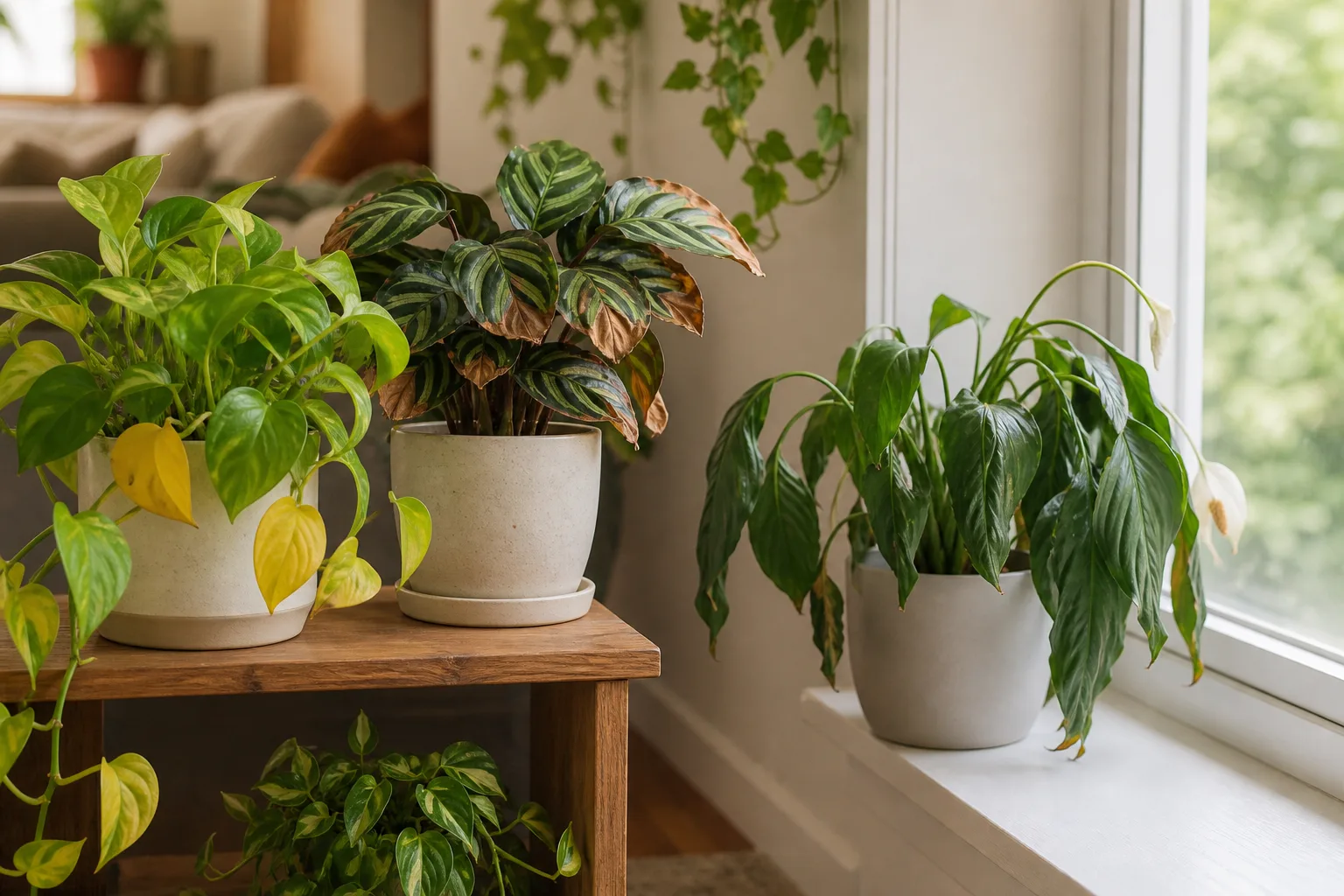
Learn the difference between dry stress and wet stress before you pour. Dry plants often have crisp edges, a light pot, and a dry mix; overwatered plants may wilt while the mix remains heavy and damp, and can develop yellowing, mushy roots, or a sour smell. If a plant is drooping in wet soil, adding more water is the fastest way to make the original problem harder to diagnose.
4. Let a reservoir remember for you—selectively
Self-watering planters use a reservoir and a wick or capillary path to make moisture available over time. That can be useful for a thirsty plant, a patio herb, or an owner who is regularly away for a few days. It does not turn the pot into a plant sitter: the reservoir can run dry, the mix can be poorly suited to wicking, and the plant can still be in the wrong light.
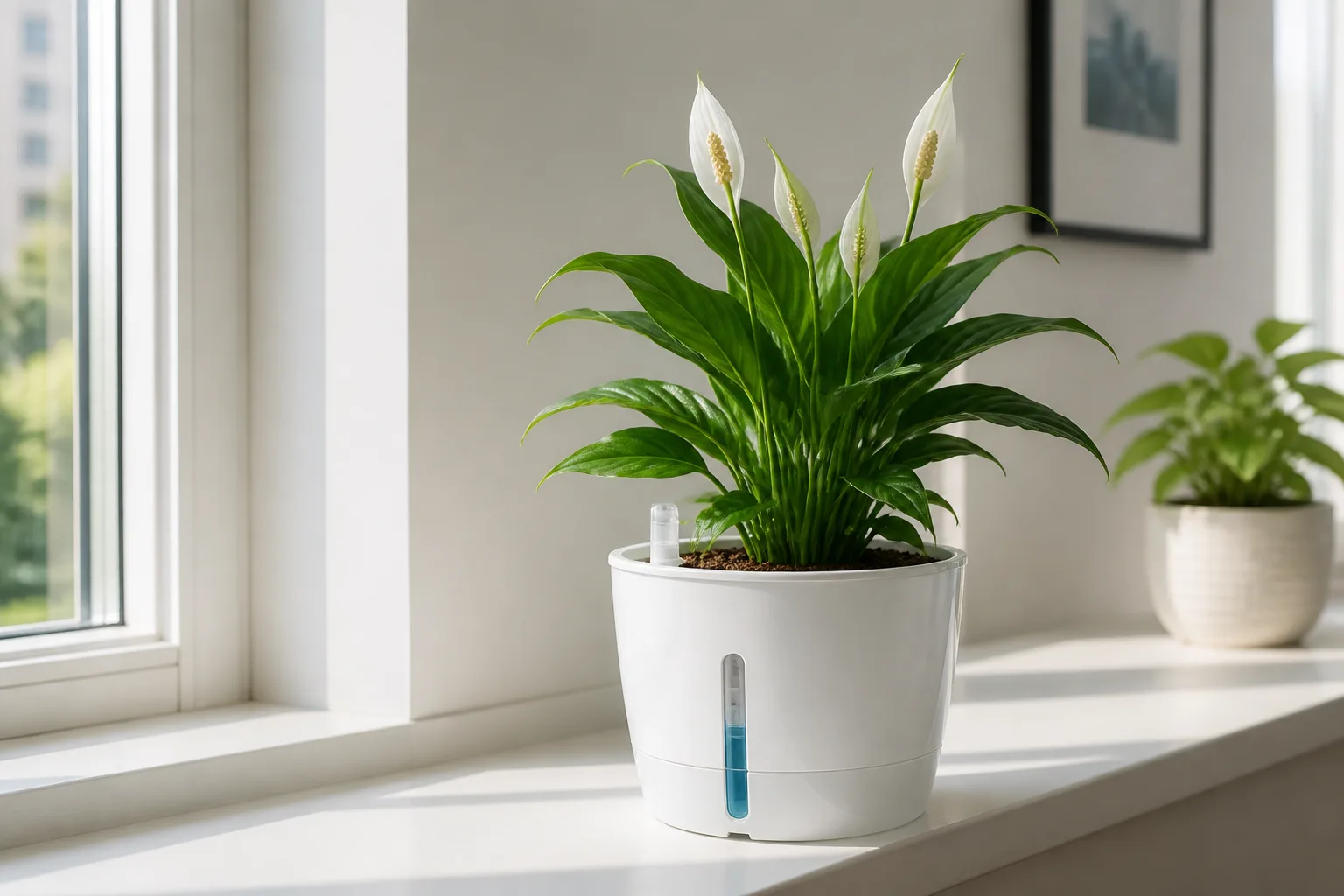
When self-watering helps and when it creates risk
Choose a self-watering setup for plants that prefer consistent moisture and are actively growing, provided the inner pot and mix are designed to work with the reservoir. Basil is a practical example because it dislikes repeated severe dry-downs, while many tropical foliage plants can appreciate a steadier supply when the room is bright enough to use it. Start with a healthy plant, a clean reservoir, and a mix that can draw water without turning airless.
Skip or use extra caution with cacti, succulents, and plants whose crowns or stems rot when kept continually damp. A reservoir also deserves a trial period before you rely on it for travel. Water the plant normally at first, confirm that the indicator changes as expected, and inspect the soil a week later. If the top stays wet, the pot smells stale, or the plant declines, empty the reservoir and reassess rather than assuming the system is working.
Fill only to the manufacturer’s line, and put a recurring reminder on the reservoir itself rather than on a generic “water plants” list. Check the mix occasionally with a finger even when the indicator looks reassuring. Algae, mineral buildup, or a sour smell means the container needs cleaning and the plant needs a root-zone check; convenience is not a reason to let a small problem remain hidden.
For a short holiday, a wick from a water container can sometimes extend the interval for a moisture-loving plant. The RHS lists capillary matting and wick methods among holiday-care options, but the same boundary applies: test the setup before leaving, keep the plant out of harsh sun while it is unattended, and do not use a wick to force a dry-loving plant to stay wet.
5. Replace frequent feeding with a seasonal plan
Fertilizer is a maintenance task, not emergency medicine. A plant with poor light, compacted mix, damaged roots, or inconsistent watering will not become healthy simply because you add nutrients. In fact, adding fertilizer to a dry, stressed root ball can cause more trouble.
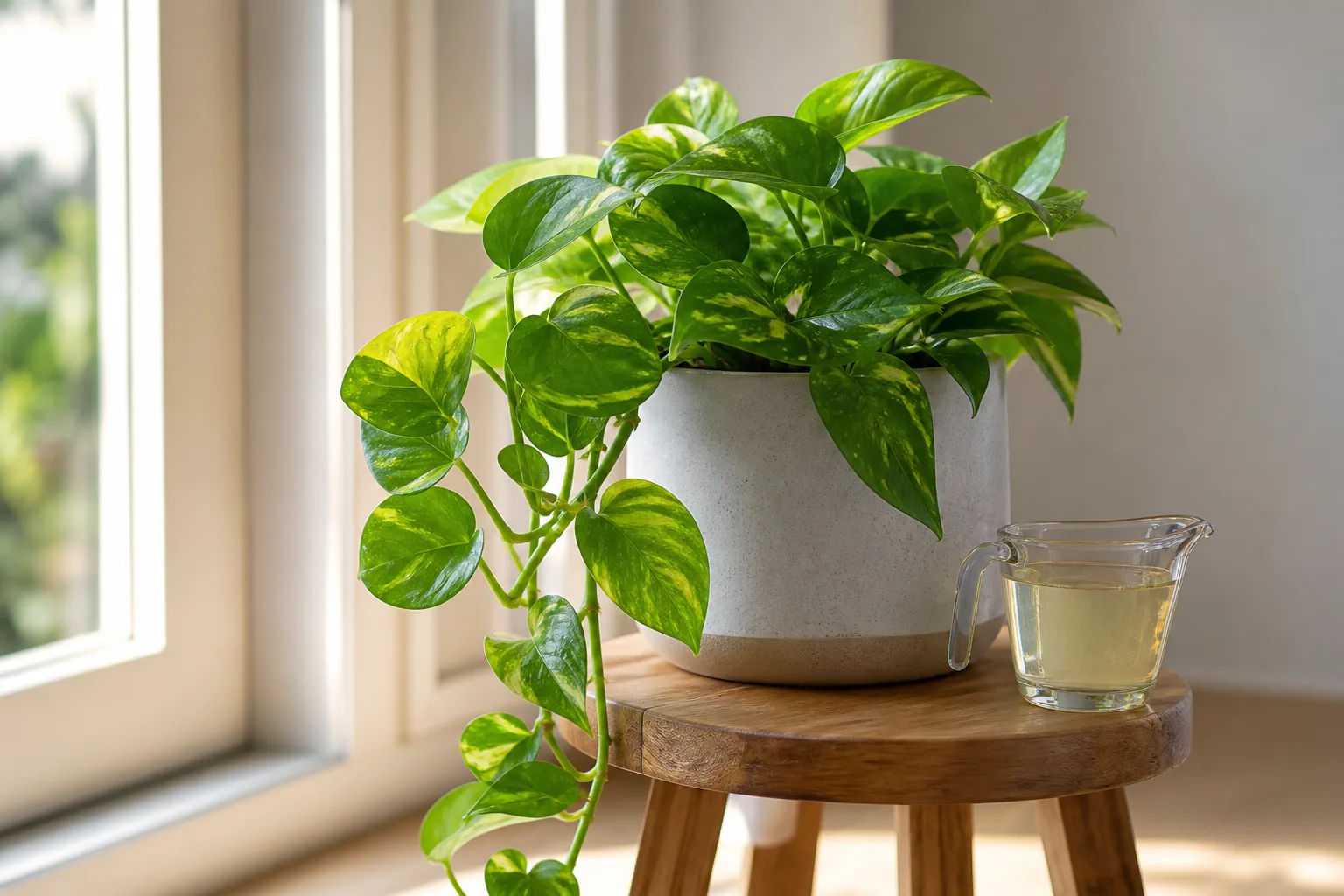
Container plants eventually use or lose nutrients because they have a limited volume of mix. Epic Gardening’s houseplant fertilizer guide explains that fertilizer needs vary with species, growth rate, environment, soil quality, and time since repotting. That is why the most forgetful-friendly plan is a small number of deliberate feedings during active growth, not a strong product added whenever a leaf looks pale.
Use slow-release fertilizer without guessing
Slow-release granules or prills can reduce the number of feeding dates you need to remember. Sprinkle or mix them according to the label, distribute them through the root zone as directed, and record the application date on the pot or in one shared calendar. Pellets are not automatically safer than liquid fertilizer; a concentrated product used at the wrong rate can still injure roots.
For a liquid product, follow the dilution and frequency on that specific label. Feed when the plant is hydrated and growing, not when the mix is dust-dry. The RHS recommends feeding houseplants during the growing season, using liquid fertilizer periodically or granular fertilizer less often, and avoiding fertilizer on dry soil because it can burn roots. In a dark, cool winter room, reduce or pause feeding unless the plant is clearly growing under warm, bright conditions.
Watch for the timing of symptoms. Brown tips, yellowing, stalled growth, or a white salt crust that appears soon after feeding can indicate overfertilization, but they can also have other causes. Stop feeding, water through the pot with plain water if the plant’s drainage is good, and allow the excess to run out; do not keep adding products to “correct” the color. If the mix is old, compacted, or repeatedly salty, fresh potting mix may solve more than another dose.
6. Build a five-minute rescue-and-reset
Forgetfulness becomes manageable when the care task is small enough to start. Pick a trigger you already notice—emptying the coffee maker, changing a pet’s water, taking out recycling, or returning from the grocery store—and use it for a five-minute plant scan. The trigger is for inspection, not automatic watering.
Read the pattern before you add water
Work through the collection from the outside in. Look at the leaves, stems, and soil surface; lift the pot if it is small; inspect the underside of a few leaves; check the saucer; and remove dead leaves that are touching the mix. Wipe dust from broad leaves when appropriate, rotate plants that are leaning toward a window, and isolate a plant with obvious pests until you know what you are dealing with.
Use the symptom pattern as a branching decision:
| What you notice | First check | Safer next action |
|---|---|---|
| Drooping plus dry, light mix | Root-ball moisture | Rehydrate slowly, drain well, and recheck tomorrow |
| Drooping plus heavy, wet mix | Drainage and roots | Do not water; improve airflow and inspect for rot |
| Yellow leaves | New or old leaves, light, and soil | Diagnose the pattern before changing water |
| Crispy tips or edges | Moisture, dry air, heat, and salts | Correct the environment; remove only dead tissue |
| Sticky leaves or fine webbing | Leaf undersides and joints | Isolate and identify pests before treatment |
| Long, weak new growth | Distance from window and light direction | Move gradually toward suitable light |
The RHS guide to poorly houseplants makes the important point that wilting, yellowing, and browning are not diagnoses by themselves. Low light, excess water, dry air, temperature stress, nutrient problems, pests, and disease can overlap. A short inspection prevents the classic forgetful-owner cycle of missing care, seeing a symptom, and then applying every remedy at once.
When a plant looks unwell, change one or two conditions you can identify and give it time. Prune only tissue that is clearly dead, avoid fertilizing a severely stressed plant, and do not move it from dim shade to harsh midday sun in one dramatic step. Recovery is often a matter of stopping the repeated stress rather than finding a magic treatment.
Make outdoor containers easier to remember
Outdoor plants face more variable demand than houseplants. Sun, wind, heat, pot material, rainfall, and local humidity can change the drying rate within a day, so a timer needs to support observation rather than replace it. For a new bed or a group of containers, a drip line or sprinkler timer can act as a bridge while roots establish, especially during a hot spell.
Test the system while you are home. Put a finger into the soil under several emitters, look for blocked nozzles or runoff, and adjust for rain instead of letting the timer run on a blind schedule. One pot in full sun may need water while another under an overhang remains wet. For outdoor plants, local cooperative extension guidance and your site’s actual exposure are more useful than copying a frequency from a different climate.
Keep the same design principles outdoors: a container must drain, a newly planted root ball should not be allowed to swing repeatedly from flooded to bone dry, and a dry-tolerant plant should not be placed on the same irrigation zone as a moisture-loving herb. If the system fails, you want the plant to have a day or two of resilience—not a pot that is already saturated or a shallow root ball that depends on a timer every few hours.
A low-memory weekly and monthly plant care routine
Use one weekly appointment as a plant walk, not a watering command. Visit every plant with a small can, your finger, and a towel for saucers. Check the plants that are easiest to forget first: those behind furniture, in hanging baskets, in small pots, or in bright windows where they dry faster.
Once a month, group plants by behavior instead of by room. Make a “let it dry more” group for cacti, succulents, and other dry-loving plants; an “upper layer dry” group for many foliage plants; and an “evenly moist” group for plants that decline when the mix fully dries. Keep the groups flexible as seasons and room conditions change, but use them to stop one blanket reminder from making every pot equally wet.
At the same monthly check, record one useful baseline: the date a reservoir was cleaned, the date slow-release fertilizer was applied, the approximate wet weight of a small pot, or the distance from a window. A note such as “pothos: water when top layer dry, pot light” is more useful than “water weekly.” The record is not paperwork for its own sake; it gives you a reference after a busy month.
The missed-week recovery protocol
If you return to a neglected plant, do not start by flooding the entire collection. Check each pot separately. If the mix is dry and pulling away from the sides, water slowly in two or three passes so the root ball can absorb it, then let it drain fully. If water runs straight through a hard, dry root ball, a brief soak in a basin followed by thorough draining may be more effective, as BBC Gardeners’ World describes for severely wilted plants.
If the mix is still wet, leave it alone. Move the plant away from intense heat or harsh sun while you inspect drainage, and check for dark, mushy roots only if the plant continues to decline. Remove fallen leaves, empty standing water, and wait for new evidence before watering again. A stressed plant usually needs stable conditions more than a surge of fertilizer or a series of emergency repottings.
After the rescue, make the next care task easier. Put the plant where you can see it, add a saucer that is easy to empty, group it with plants that have a similar moisture preference, or switch to a suitable reservoir only after the root zone is stable. The best recovery lesson is not “remember harder”; it is “remove the hidden obstacle that made the plant easy to overlook.”
Conclusion
Forgetful plant owners do well when the collection is designed to forgive ordinary life. Choose plants for your real light, use a draining pot and suitable mix, check moisture by weight or soil evidence, reserve self-watering planters for compatible plants, feed seasonally and cautiously, and make a five-minute inspection part of an existing routine.
That system gives you a clear next action without promising maintenance-free plants. Missed care becomes a small, diagnosable event instead of a reason to abandon the plants you love.



