How to Grow and Care for Eureka Lemon Trees
Learn how to grow Eureka lemon trees with practical guidance on sun, drainage, watering, feeding, pruning, pots, cold weather, pests, and harvest.
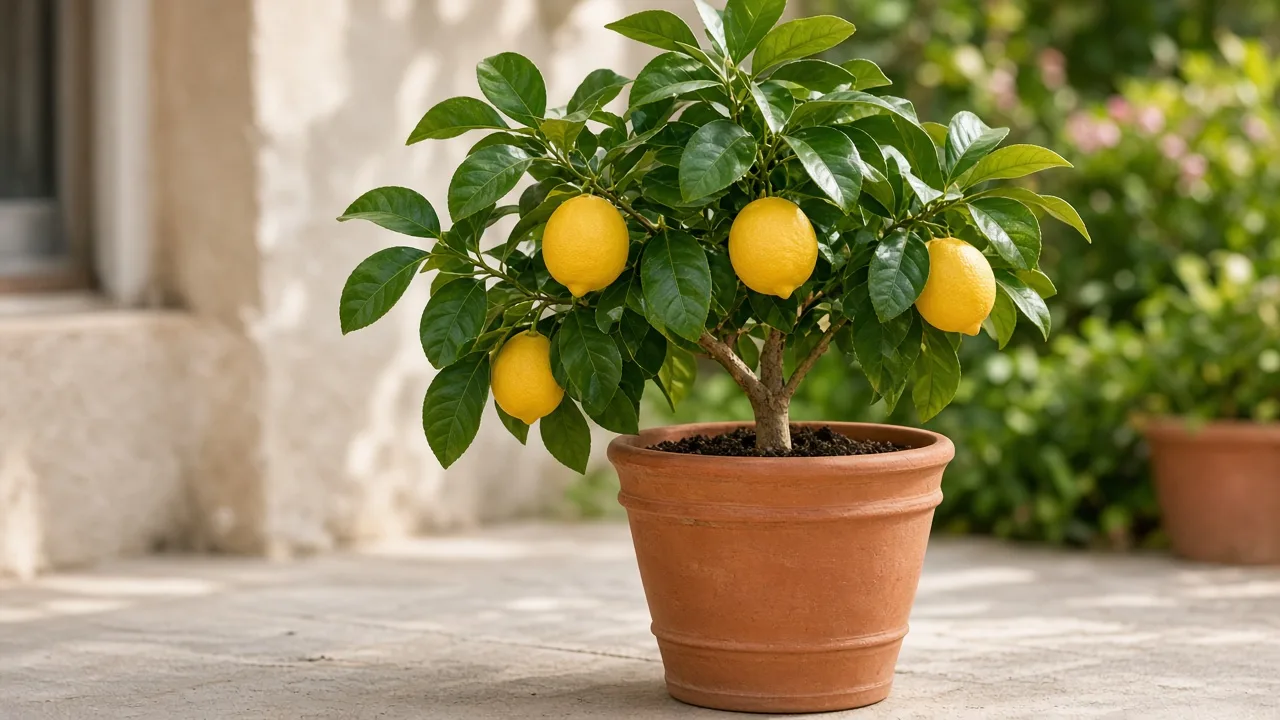
Eureka lemon is a productive choice for a gardener who can provide strong light, fast drainage, and protection from hard freezes. The tree is nearly thornless, naturally open in shape, self-fertile, and capable of flowering and carrying fruit at the same time. It is also less forgiving than its glossy reputation suggests: a wet root zone, a sudden cold snap, or an overfed young tree can set it back for months.
The most useful way to care for one is to think in priorities. Protect the roots from saturation, give the canopy as much direct light as your site allows, water deeply when the root zone actually dries, and feed in proportion to active growth. The details below apply to both young in-ground trees and container-grown trees, with the differences called out where they matter.
Know the Eureka lemon before you plant
Eureka is a true lemon cultivar, Citrus x limon ‘Eureka’, in the citrus family Rutaceae. It has a spreading, open canopy and fruit that tends to form toward the outside of branches, so it usually looks less dense than vigorous Lisbon lemon. University of Florida IFAS describes the cultivar as nearly thornless, cold-sensitive, and capable of bearing through much of the year, with a heavier season commonly running from late winter into spring and early summer. UF/IFAS describes Eureka’s growth and fruiting habit.
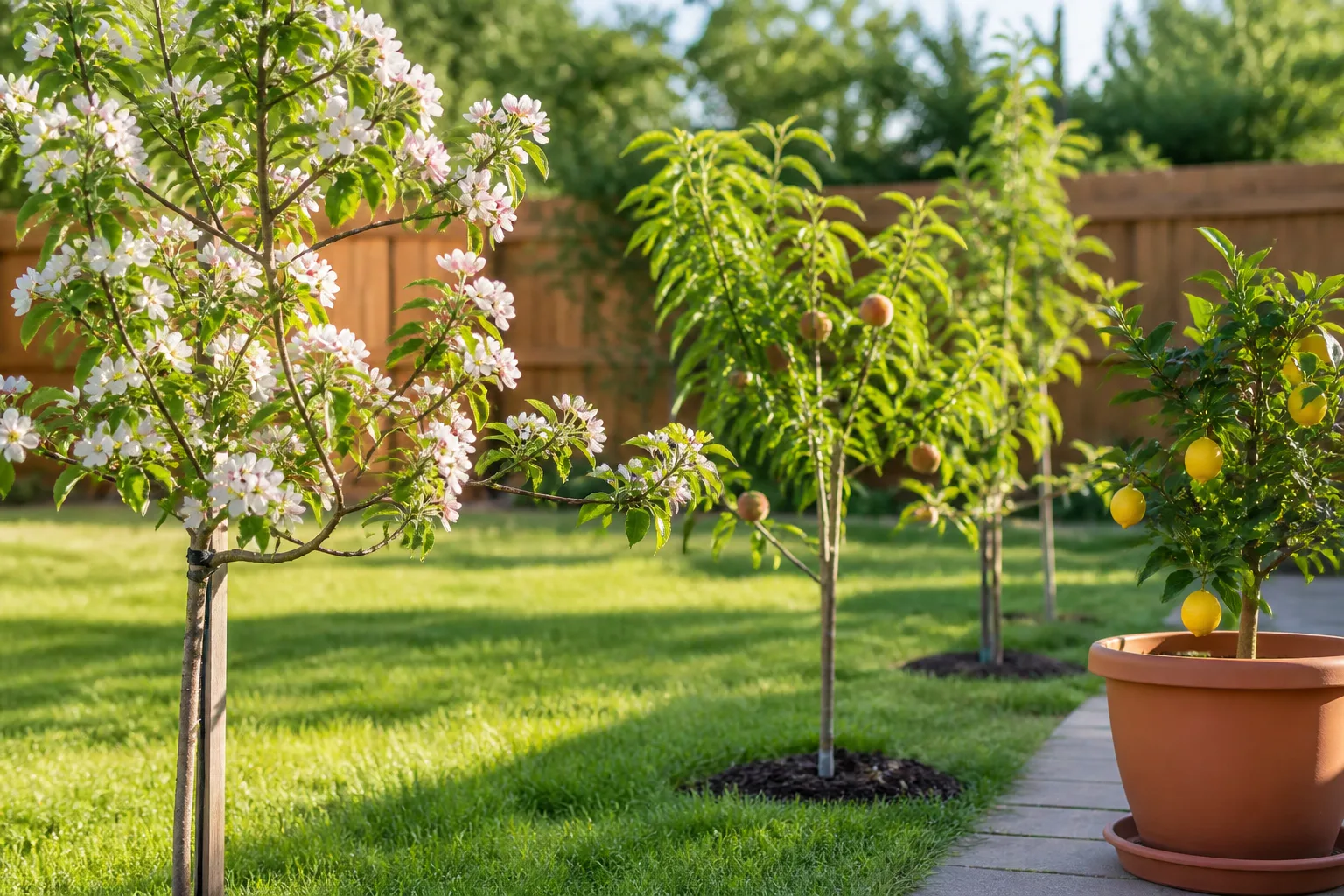
That year-round potential does not mean a new tree will produce continuously. Flowering and fruiting depend on age, light, temperature, water consistency, crop load, and the root system supplied by the nursery. A healthy young tree may spend its first seasons building leaves and roots before it can carry a meaningful crop; extension guidance puts initial production around the third year under favorable conditions.
Match the tree to your climate
Eureka lemon belongs outdoors year-round in warm subtropical or Mediterranean-style climates, roughly USDA Zones 9–11, but a zone label is only a starting point. A sheltered urban courtyard can be warmer than an exposed rural yard, while a frost pocket beside a lawn can be colder than the rest of the property. Cold air draining downhill, wind, and wet soil can turn a marginal site into a poor one.
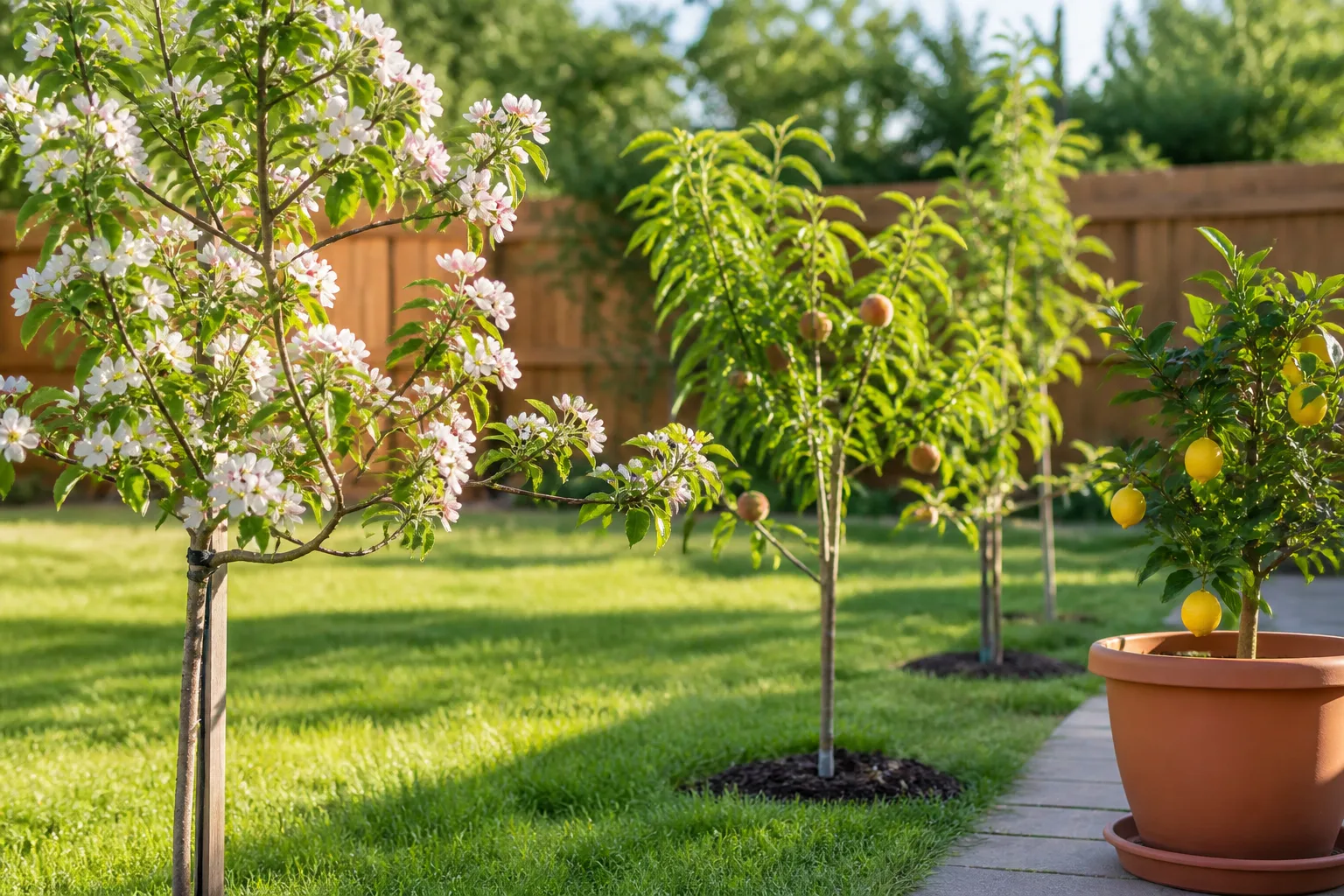
Flowers and young fruit are damaged at temperatures close to freezing, and the UF/IFAS lemon guide reports leaf loss around 22–24°F and severe wood damage near 20°F. Treat those figures as damage thresholds, not as safe operating temperatures. If a hard freeze is forecast, protect a small tree temporarily and move a container tree to a bright, frost-free location; do not wait until leaves are already limp or blackened.
Choose a warm, drainable planting site
Choose the brightest, warmest position that does not stay wet after ordinary rain. A south- or southwest-facing wall can provide reflected warmth in a cool climate, while a hedge or fence can reduce wind without casting afternoon shade. Keep the canopy away from large trees, buildings, and overhead lines; crowding reduces light and air movement and makes pest and disease management harder.
Planting depth, spacing, and graft unions
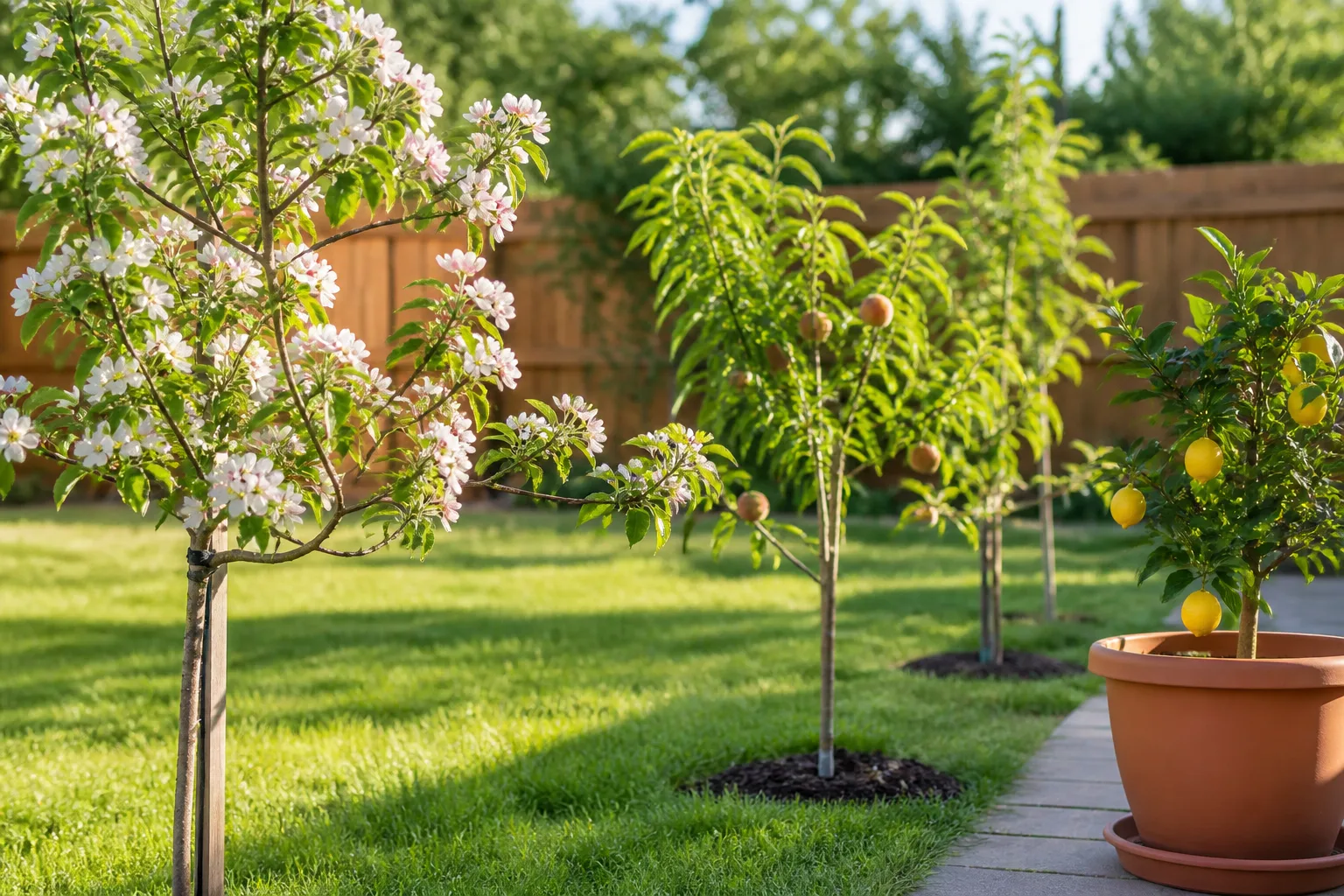
Dig a hole at least twice the root ball’s width, but do not bury the trunk deeper than it stood in the nursery container. The top of the root ball should sit level with, or slightly above, the surrounding soil. If the tree is grafted, keep the graft union clearly above soil and mulch; buried unions and constantly wet bark invite trouble.
Give a mature in-ground tree more room than its nursery size suggests. UF/IFAS recommends roughly 15–25 feet from buildings and other trees for landscape lemons, while a homeowner who intends to keep the tree compact can use closer spacing only with an honest long-term pruning plan. A broad mound is a better solution than planting in a flat, poorly drained lawn.
Build soil that holds moisture without staying wet
Lemon roots need oxygen as well as water. Well-drained sandy loam is ideal, but a heavy soil can work if you improve the planting position and do not create a rich, soggy pocket inside a compacted site. Do not fill the hole with a different texture of compost and potting soil; that can act like a basin. Use the excavated native soil for backfill and fix drainage at the scale of the whole planting bed.
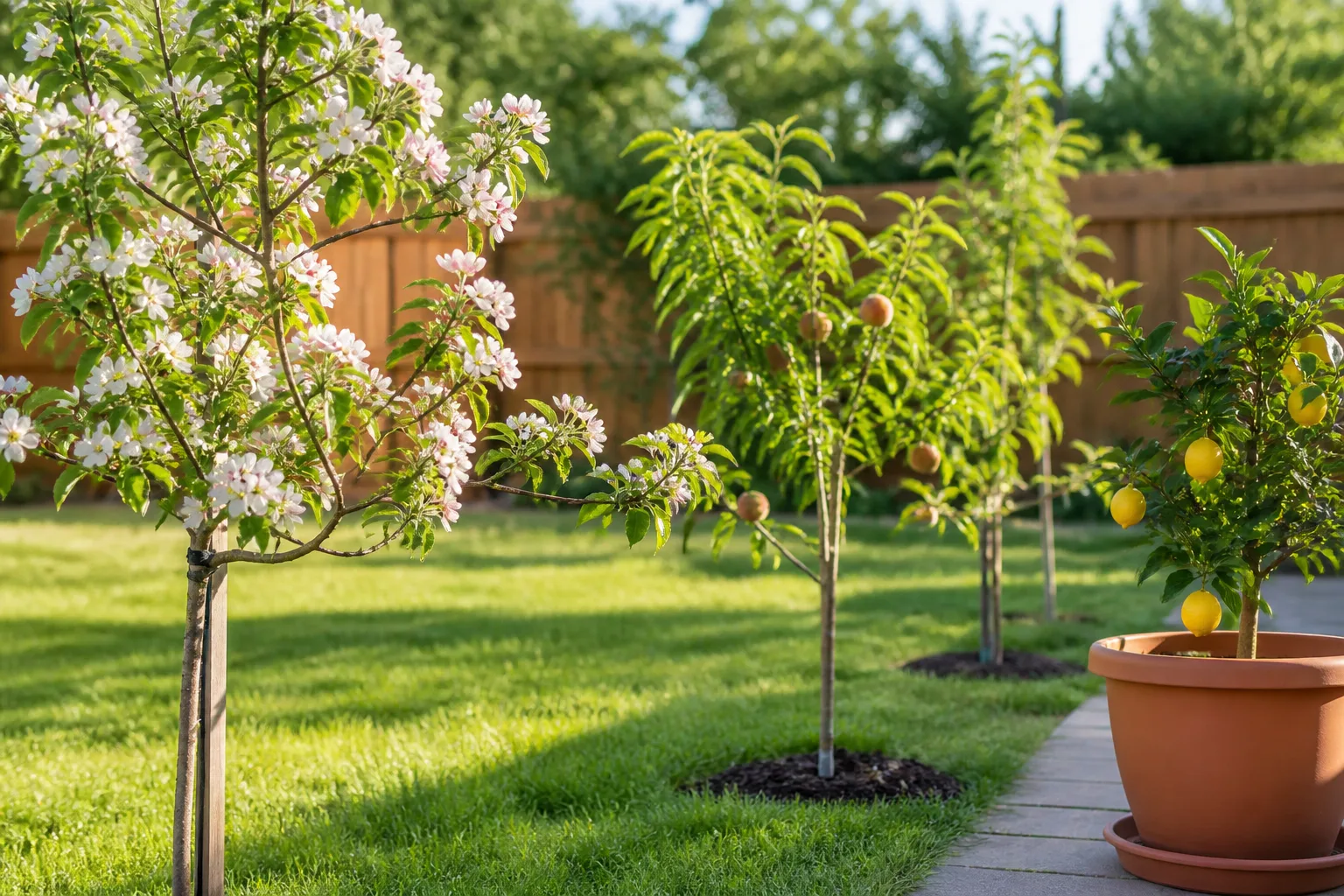
The preferred soil reaction is mildly acidic to near neutral; UF/IFAS gives a pH range of about 5.5–6.5. Test before adding lime, sulfur, or iron. Yellow leaves with green veins can indicate iron availability problems in high-pH soil, but yellowing can also come from wet roots, cold stress, pests, or normal aging. Diagnose the pattern and the soil moisture before reaching for a supplement.
Get watering right from planting through fruiting
Ignore fixed calendars such as “water every day” for an established tree. Instead, check moisture several inches below the surface in the root zone, then water slowly enough to wet the full area beneath the canopy when the soil has begun to dry. The goal is a deep drink followed by some air-filled pore space—not a permanently shiny, muddy bed.
Newly planted trees need closer attention while roots spread. Water thoroughly at planting, then check frequently; in a typical warm, dry establishment period, watering every other day for the first week and once or twice weekly for the next couple of months is a reasonable starting framework, adjusted for rain and soil. Mature trees usually need supplemental water mainly during prolonged drought. UF/IFAS warns that frequent watering of established lemons can make them decline rather than grow better.
During flowering and fruit enlargement, a long dry spell can cause flower or young-fruit drop, but soaking the foliage, flowers, and fruit repeatedly increases disease risk. Apply water to the soil, preferably in the morning, and keep emitters away from the trunk. A 2–3 inch layer of organic mulch can reduce evaporation if it is kept several inches from the trunk; mulch is not a substitute for drainage.
Give Eureka lemon the light it needs
Aim for at least six hours of direct sun, with eight hours or more usually producing stronger growth and better cropping. “Bright shade” is not equivalent to sun for citrus fruit. A tree can stay green in partial shade while producing few flowers, stretching toward light, and ripening fruit slowly.
If you move a container tree outdoors for summer, acclimate it over several days. Put it in bright shade first, then increase direct exposure; moving a tree from a dim room straight into hot afternoon sun can scorch leaves even when the final location is correct. Rotate the pot occasionally indoors so one side does not grow weakly toward a window.
Feed for fruit, not just leafy growth
Eureka is a hungry, fruiting plant, but more fertilizer is not automatically more lemons. Excess nitrogen can create a flush of soft leaves and long shoots while delaying or reducing fruiting, and fertilizer salts accumulate faster in pots than in open ground. Use a citrus fertilizer according to its label and the tree’s size, applying it during active growth rather than piling feed against the trunk.
For an in-ground tree, split the annual amount into several applications during the growing season. Young trees need smaller, more frequent doses; mature trees need more total nutrition but still benefit from measured applications. If new leaves are pale, check roots, pH, irrigation, and pests before assuming a lack of nitrogen. In alkaline soils, iron may be unavailable even when total soil iron is adequate, so use a soil test and a locally appropriate chelated product rather than guessing.
Support flowering and fruit set
You only need one Eureka lemon tree to set fruit. Lemon flowers contain the necessary reproductive structures, and insects often visit them, but cross-pollination is not required. Indoors, gently moving a small paintbrush across open flowers can help when air movement and pollinators are absent; it cannot compensate for insufficient light or a stressed root system.
A tree that flowers but sheds fruit usually has a stress problem rather than a pollination problem. Sudden cold, drought followed by flooding, low light, excessive nitrogen, root damage, or an over-large crop can all reduce retention. Keep conditions steady and let the tree carry a manageable crop; removing a few damaged or crowded young fruits can prevent a small container tree from exhausting itself.
Prune lightly and at the right time
Eureka’s open habit rarely needs routine shaping. Remove dead, broken, diseased, crossing, or ground-level branches with clean pruners. Also remove shoots emerging below the graft union because those belong to the rootstock and can outgrow the desired Eureka canopy.
Avoid shearing the whole canopy after flowering. Citrus often flowers on new lateral growth, and indiscriminate cuts can remove the very shoots that would carry the next crop. If the tree is too tall, reduce one or two competing branches gradually after a harvest flush rather than stripping the canopy in one operation. Wear gloves even with a nearly thornless cultivar: rootstock shoots and hidden spines can still injure you.
Grow Eureka lemon in a container
Container growing is the practical route for gardeners who have cold winters, limited space, or only a patio. Choose a pot with multiple drainage holes and enough weight to resist tipping. A container only slightly larger than the root ball is safer than an oversized pot full of wet mix; move up one size when roots have filled the current pot or water runs through unusually quickly.
Use a free-draining citrus or container mix. Do not put gravel in the bottom as a drainage “layer”; it reduces the depth of usable mix and does not repair a blocked hole. Set the root crown and graft union high, water until excess exits, and empty any saucer after the pot has drained.
Pots dry faster in wind and summer heat, but they also stay wet longer in a cool room. Check the mix with a finger or moisture meter and water thoroughly when the upper portion has begun to dry, not when the entire root ball has turned dusty. In winter, reduce watering as growth and evaporation slow. RHS guidance emphasizes that overwatering indoors is a common cause of yellow leaves and root rot. RHS container citrus guidance covers drainage, winter watering, and pot size.
Move a potted tree through the seasons
Move a container Eureka lemon outside only after nights are reliably mild for your location, and bring it in before frost or a sharp cold snap. The tree still needs the brightest available window or a suitable grow light indoors; a warm but dim room is not a good winter fruiting environment. Dry heated air, cold drafts, and frequent location changes can trigger leaf drop.
Make the transition gradual in both directions. Inspect leaves and stems for scale, aphids, and mites before bringing the pot indoors, and isolate it from other plants for a short observation period if possible. This simple quarantine step prevents a summer pest population from becoming an indoor collection problem.
Harvest lemons by maturity, not by calendar
Eureka lemons can be left on the tree to color, but fruit maturity is not determined by yellow alone. Size, gloss, firmness, juice development, and the tree’s crop timing all matter. UF/IFAS reports that the interval from flowering to harvest can range from roughly four to twelve months, depending on cultivar, crop load, temperature, and cultural conditions.
Pick a representative fruit when it has reached normal size and feels heavy for its size. Fully yellow fruit is an easy visual cue, while greenish-yellow fruit can be usable if weather or a move requires early harvest. Cut or twist gently; do not yank, because tearing the stem can damage the branch and create an entry point for disease. RHS recommends using secateurs rather than pulling ripe citrus from the branch.
Identify and manage common pests
Inspect tender growth, leaf undersides, and the junctions of branches weekly during active growth. Aphids cluster on new shoots, scale insects form fixed bumps, mealybugs leave white wax, and mites can cause stippling or bronzing. Small infestations are often manageable with a strong water spray, hand removal, pruning of badly affected tips, and improved airflow.
The Asian citrus psyllid deserves special attention in regions where it occurs because it feeds on new growth and can transmit citrus greening. Distorted flushes, waxy nymph residue, or progressive decline warrant prompt contact with your local extension service. Use only products labeled for citrus and the specific pest in your jurisdiction; “natural” does not mean harmless to pollinators, beneficial insects, or the person applying it.
Prevent disease and root problems
Most lemon disease prevention is cultural: start with healthy nursery stock, avoid wetting the canopy, sanitize pruning tools, remove fallen diseased material, and keep the trunk and graft union dry. Citrus canker can produce raised lesions on leaves, twigs, and fruit; citrus greening causes a serious systemic decline and is associated with psyllid vectors. These are not problems to diagnose confidently from a single yellow leaf.
Root rot and foot rot are more likely when soil stays saturated or mulch touches the trunk. If leaves wilt despite wet soil, growth stalls, bark darkens near the soil line, or roots smell sour, stop routine irrigation and inspect drainage. Contact an extension office for a local diagnosis, especially where regulated citrus diseases are present; moving infected citrus or taking unverified cuttings can spread problems.
Propagation and rootstock: what is worth doing
Seed-grown lemon trees are not reliable clones of a named Eureka and may take years to fruit. Nursery trees are commonly grafted or budded onto rootstocks selected for soil, vigor, disease tolerance, and local conditions. The grafted tree is usually the better choice when the goal is predictable fruit.
Semi-hardwood cuttings can root under warm, humid conditions, but a rooted cutting does not give you the same rootstock benefits as a certified grafted tree. It may also carry disease from the parent. For a home gardener, propagation is an experiment or a way to preserve a known healthy clone—not the quickest route to a productive landscape tree.
Eureka, Lisbon, or Meyer: which fits your garden?
Choose Eureka when you want a classic acidic lemon, a relatively open canopy, few thorns, and fruit on the outside of the tree. Choose Lisbon when wind tolerance, vigor, and a denser canopy matter more, though its stronger growth and thorns can make it less convenient in a small garden. Meyer lemon is a different hybrid with a sweeter, more floral fruit and often better container appeal, but it should not be treated as an interchangeable care or flavor choice.
The best cultivar is the one your winter conditions, available light, and space can support. A Lisbon that survives your site is more useful than a Eureka repeatedly damaged by frost, while a potted Eureka is sensible only if you have a realistic place to keep it bright and frost-free.
Troubleshoot the most common failures
Leaves yellow and the soil is wet: suspect overwatering, poor drainage, or root damage before adding fertilizer. Let the surface and upper root zone dry somewhat, improve drainage, and inspect the roots if the problem persists.
Leaves yellow with green veins: check pH and root health. Iron availability is a likely factor in alkaline soil, but a foliar symptom alone is not proof; confirm with a soil test or extension diagnosis.
Flowers appear but fruit drops: review recent cold nights, drought, sudden heavy watering, low light, and fertilizer rates. A few dropped fruits are normal; widespread drop signals stress or an excessive crop.
Lots of leaves, few lemons: increase direct light, stop high-nitrogen overfeeding, and avoid severe pruning. A young tree may simply need time to reach bearing age.
Leaves fall after moving indoors: expect some adjustment, but check for cold drafts, low light, dry air, pests, and wet winter mix. Keep the location bright and stable and avoid compensating with more water.
Fruit stays green: allow more time and assess size and firmness rather than using color alone. Cool temperatures, low light, and a heavy crop can slow color development.
Conclusion
Eureka lemon succeeds when its roots receive oxygen, its leaves receive real sun, and its environment changes gradually. Plant it high enough to stay dry at the trunk, water by soil condition rather than a rigid schedule, feed modestly during active growth, and protect a cold-sensitive tree before frost arrives.
For a gardener in a warm climate, that routine can produce fragrant flowers and a long succession of sharply flavored lemons. For everyone else, a movable container is a workable compromise—but only if winter light, drainage, and space are planned before the tree comes home.



