Ficus Leaves Turning Yellow: Causes and Fixes
Ficus leaves turning yellow? Run a 5-minute soil-and-light check first, then match overwatering, low light, drafts, pests, or root stress to the right fix.
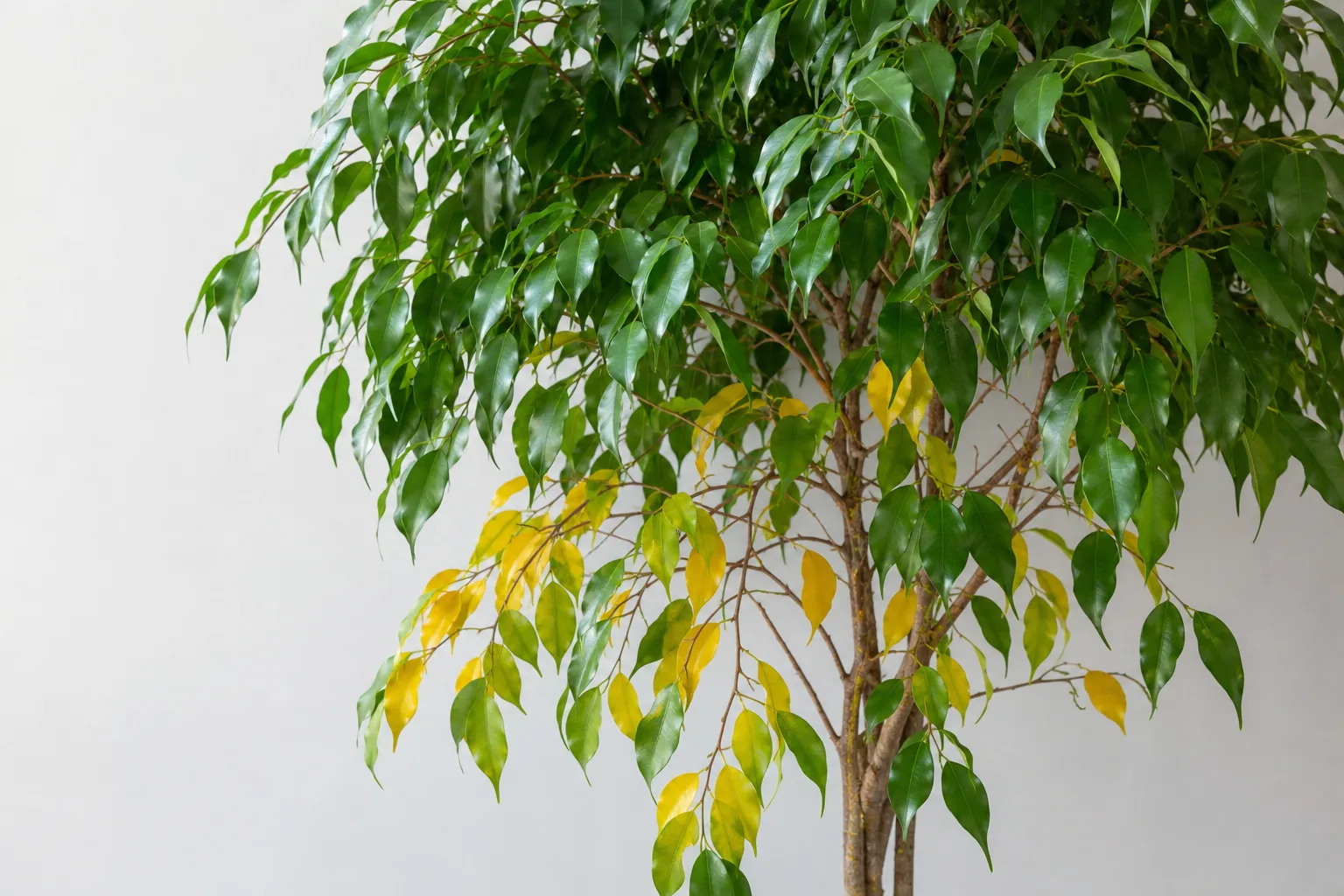
Your ficus looked fine last week—glossy green leaves, upright stems—and now a whole section is butter yellow. Before you repot, fertilize, or drag it to a brighter window, check the soil moisture and lift the pot. On ficus, that two-minute test eliminates more wrong fixes than any product on a shelf.
Ficus species—from the weeping fig (Ficus benjamina) to the rubber plant (Ficus elastica) and fiddle-leaf fig (Ficus lyrata)—are popular because they look architectural indoors. They are also famously sensitive. North Carolina State Extension notes that weeping fig is very sensitive to light and may drop leaves when moved, then grow new ones adapted to the new conditions (NC State Extension). Yellowing is how a ficus tells you something in its environment shifted before the whole plant declines.
This guide gives you the diagnostic order plant pros use, then walks through each cause with specific rescue steps. For baseline care after you stabilize the plant, see the rubber plant care guide and the ficus benjamina hub.
Why Ficus Leaves Yellow Faster Than Most Houseplants
Ficus are not fragile, but they respond quickly to inconsistency. A pothos might shrug off a draft or a dim corner for months; a ficus often shows stress within days as yellowing lower leaves or a sudden leaf drop. Gardening Know How describes ficus as sensitive to temperature changes, being moved, lighting, and watering—sometimes defoliating for reasons that feel invisible (Gardening Know How).
That sensitivity is not a flaw—it is an early warning system. Yellow leaves often appear before stems soften or roots fail completely, which gives you time to correct care if you read the pattern correctly.
What yellow foliage actually signals
Yellowing—chlorosis when tissue loses chlorophyll, or senescence when an old leaf finishes its life—is how ficus reallocates resources under stress. On a healthy plant, one or two oldest lower leaves may slowly yellow while new glossy leaves emerge from the top. That is normal turnover.
Abnormal yellowing shows up as multiple leaves changing color together, yellow on new growth, yellow paired with soft stems, sour-smelling soil, fine webbing, or sticky residue on leaves. Center-of-plant yellowing is more serious than a single lower leaf aging out, because it often points to roots, crown stress, or pests—not routine senescence.
Start Here: The 5-Minute Yellow-Leaf Diagnostic
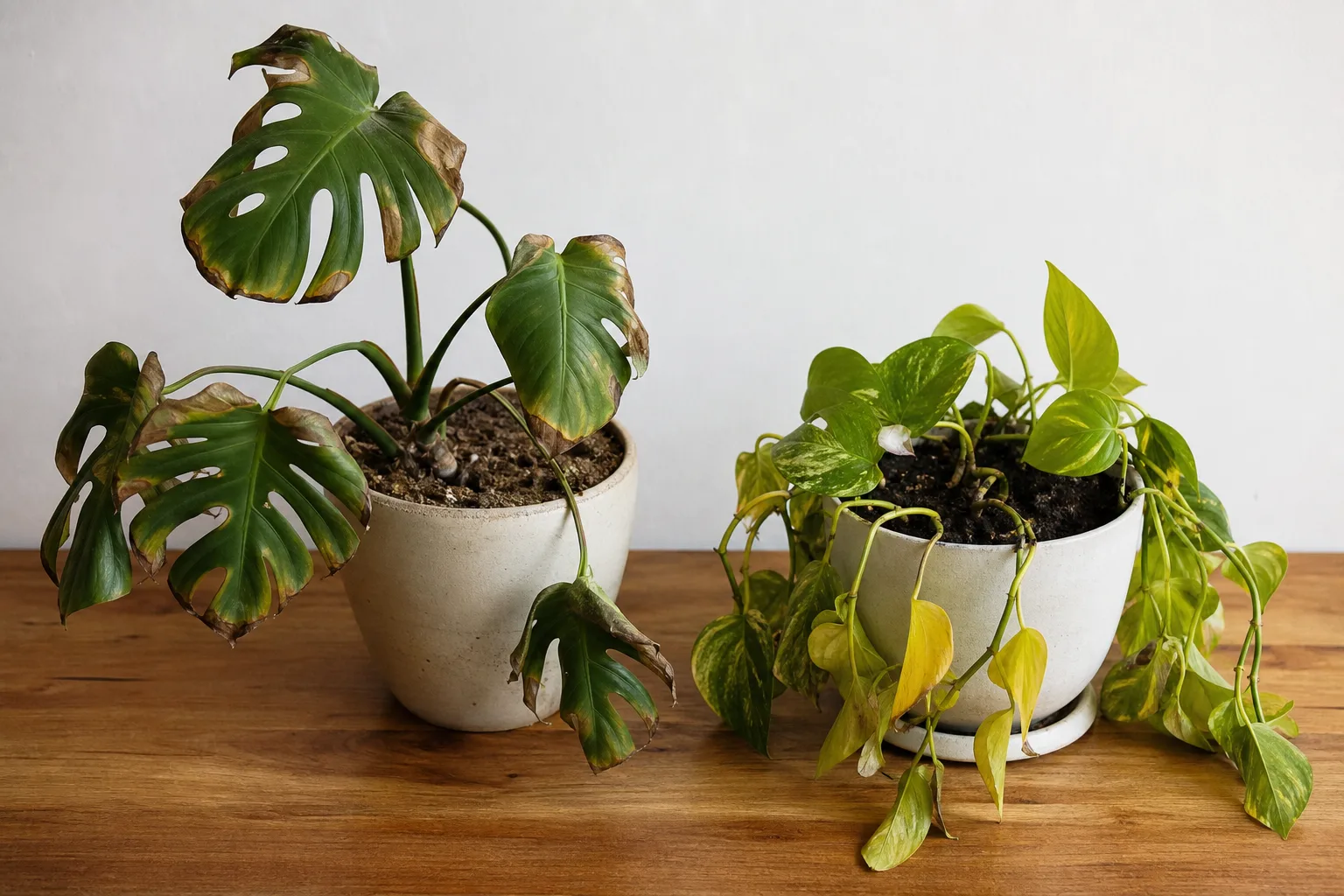
Do not start by moving the plant, trimming every yellow leaf, or adding fertilizer. Run this sequence. Each step narrows the cause before you commit to a fix.
Step 1 — Finger-test the root zone. Push your finger or a bamboo skewer two inches into the potting mix. Light, dusty, and dry? Lean toward underwatering. Clinging, cool, and wet for days? Lean toward overwatering and possible root stress.
Step 2 — Lift the pot. A ficus in soggy mix feels heavy even days after watering. A chronically dry plant feels feather-light.
Step 3 — Scan light exposure. Is the plant in a dim corner, or getting direct afternoon sun through glass? Both cause yellowing—one from weak photosynthesis and slow water use, the other from scorch.
Step 4 — Check the microclimate. Heat registers, air-conditioning vents, and single-pane winter windows create hot or cold drafts that yellow leaves within days.
Step 5 — Count which leaves are affected. One or two oldest lower leaves only? Often normal aging. New growth plus multiple older leaves yellowing together? Active stress—keep investigating water, light, or pests.
Step 6 — Review recent changes. New purchase, repot, fertilizer dose, or seasonal shift to dry heating air? Ficus hate stacked stresses. Fix one variable at a time.
Wet soil vs dry soil — the fork that matters most
This fork prevents the most common ficus mistake: watering a plant that is already drowning.
| What you find | Pot feel | Leaf pattern | Likely cause | First action |
|---|---|---|---|---|
| Top 2 in. dry; pot light | Very light | Crispy edges, dull color, slow new growth | Underwatering | Deep soak until drainage; discard saucer water |
| Top 2 in. wet days later; pot heavy | Very heavy | Soft yellow lower leaves; may wilt despite wet soil | Overwatering / root stress | Stop watering; check drainage; inspect roots if smell or softness |
| Even moisture; good drainage | Moderate | Yellow after a move or draft | Environmental shock | Hold position; stable light; no repot yet |
| Dry surface but heavy pot | Heavy | Yellow lower leaves; roots may be circling | Rootbound + uneven watering | Plan repot in growing season if roots are crowded |
| Sticky leaves, stippling, webbing | Any | Mottled yellow, distorted new growth | Pests | Isolate; inspect undersides; treat before watering changes |
Overwatering Is the Mistake Pros See First
If plant pros had to guess one cause for yellow ficus leaves, overwatering tops the list. When soil stays consistently wet, air pockets collapse and roots cannot breathe. Function declines—roots stop absorbing water and nutrients even though the mix is wet—and chlorophyll production drops. Leaves yellow from the bottom up.
Overwatering is not only “watering too often.” It is any setup that keeps the root zone saturated: no drainage holes, a dense potting mix, a decorative cachepot holding runoff, a pot far too large for the root ball, or watering on a summer schedule while winter light is weak.

Watch for lower leaves turning yellow, limp stems despite wet soil, a soft or dark stem base, fungus gnats, and mix that stays cool and wet long after watering. Epic Gardening warns that waterlogged soil leads to disease and root rot and stresses the importance of drainage holes and a well-draining mix (Epic Gardening).
How soggy soil yellows leaves before roots fail
Roots need both moisture and oxygen. When every pore stays filled with water, fine roots die first. The plant cannot move water normally—so it may look thirsty while the soil is wet. Yellow leaves are an early signal; brown mushy roots and stem rot come later if the wet cycle continues.
First response: Stop watering until the top two inches dry. Confirm the inner pot drains freely and empty the saucer after every soak. If the stem base is soft or the soil smells sour, unpot and inspect roots. Trim dark mushy tissue with clean scissors, repot into fresh airy mix in a pot with drainage only slightly larger, and withhold fertilizer until new growth appears firm.
Low Light and Sudden Light Shifts
Insufficient light is the second-most common yellowing trigger after overwatering. Ficus use sunlight for photosynthesis; when light is too dim, the plant sheds older leaves it cannot support and may pale new growth.
RHS recommends growing rubber plant in bright but filtered or indirect light—not deep shade (RHS). Epic Gardening suggests east, west, or south-facing windows with at least six hours of bright indirect light daily for indoor ficus (Epic Gardening).
Too little light produces dull yellow lower leaves, long gaps between leaves, and weak new growth. Too much direct sun—especially a sudden move to a hot window—bleaches or crisps leaves to straw-yellow or tan. NC State Extension emphasizes that weeping fig may drop leaves when relocated even if light improves, then regrow leaves suited to the new spot (NC State Extension).
Fix: Move gradually over a week—shift the pot a foot per day toward brighter indirect light. Use sheer curtains to soften direct rays. Do not rotate a stressed ficus daily; stability matters more than perfect symmetry while it recovers.
Temperature Swings, Drafts, and Winter Heat
Ficus are tropical to subtropical. Gardening Know How recommends keeping indoor ficus around 70–85°F (21–29°C) and avoiding drops below 60°F (15°C) once the plant is acclimated (Gardening Know How). Cold damage can show purple or bronze leaves, irregular yellow patches, and leaf drop; Epic Gardening notes that cold damage rarely kills roots immediately, so recovery is possible once warmth returns (Epic Gardening).
Drafts from winter windows, summer AC blasts, and heating vents dry leaf edges and trigger yellowing within days. A ficus purchased from a warm store and carried through cold parking-lot air may yellow from transport shock alone.
Fix: Place ficus away from vents and leaky windows. Use a thermometer at the leaf level—not just room air—to find cold pockets. In winter, pull plants slightly back from single-pane glass at night. Do not fertilize a cold-stressed ficus; wait until stable warmth returns and you see firm new leaves.
Underwatering and Salt Buildup
Underwatering is less common than overwatering on ficus, but chronic drought still yellows leaves. The plant sheds tissue it cannot hydrate. Soil may be bone dry several inches down, the pot feather-light, and leaf edges crisp.
NC State Extension advises watering weeping fig just often enough to keep soil from completely drying out indoors—not on a rigid calendar (NC State Extension). RHS similarly recommends moderate watering during growth and sparingly in winter (RHS).
Salt buildup from tap water, softened water, or excess fertilizer can yellow margins even when you water on schedule. White crust on the pot rim or soil surface is a clue. Flush the pot with plain water until runoff runs clear, or repot if crust is heavy. Rainwater or filtered water helps sensitive ficus over time.
Fix: When dry, soak until water drains freely, then empty the saucer. Resume checking the top two inches rather than watering on a fixed weekly schedule. Leaves already fully yellow from drought will not re-green; judge recovery by new firm leaves.
Pests That Yellow Ficus Leaves
Sap-sucking pests damage leaf tissue and interrupt nutrient flow, producing stippled yellow patches, distorted new growth, and sticky honeydew that can lead to sooty mold. NC State Extension lists scale, aphids, mealybugs, thrips, and spider mites as common ficus insect problems (NC State Extension).
Stressed ficus attract pests faster. Epic Gardening notes that when stress signs appear, ficus become prone to invasion—watch for honeydew on leaves or stems (Epic Gardening).
Spider mites, scale, and thrips on ficus
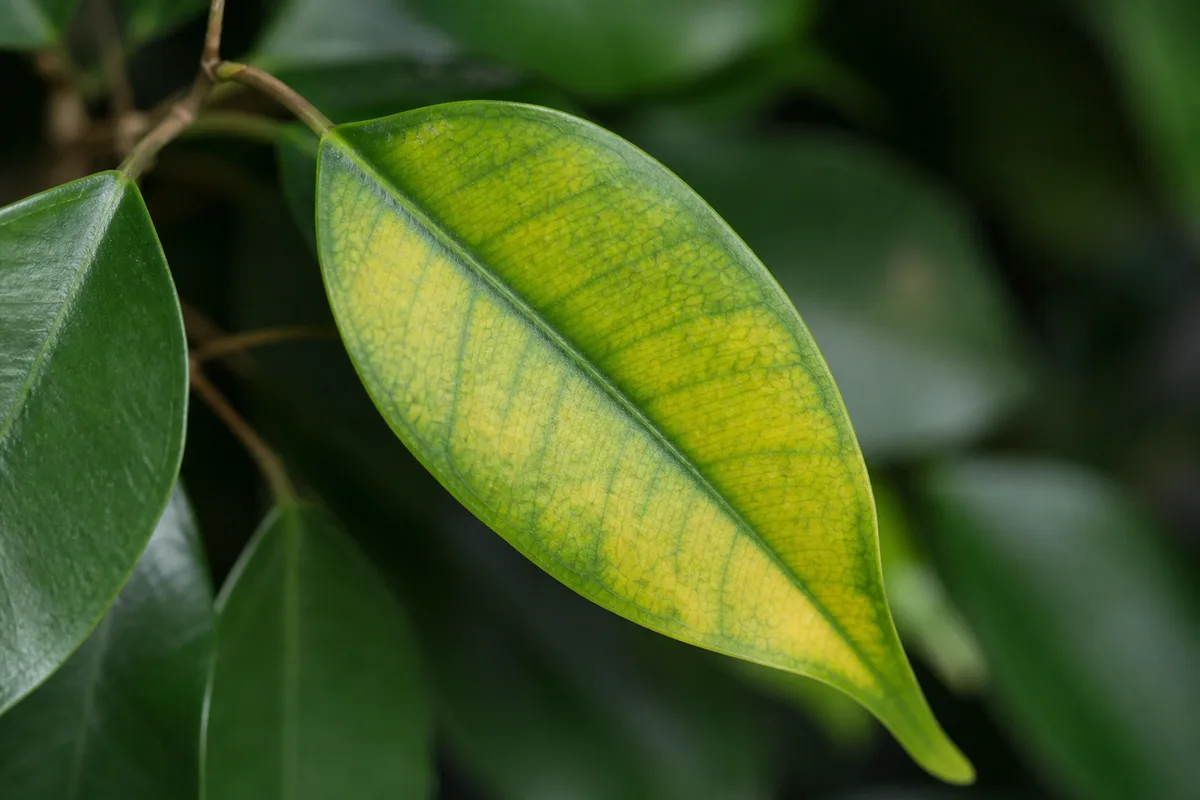
Spider mites thrive in dry air. Look for fine stippling, webbing on leaf undersides, and leaves that look dusty. Increasing humidity and rinsing leaves breaks up colonies; severe cases need repeated treatment.
Scale appears as immobile brown or tan bumps on stems and leaf undersides. They blend with bark color and are easy to miss until yellowing spreads.
Thrips scar young leaves and cause silver or pale patches that later yellow. Inspect newest growth and flower buds if present.
Fix: Isolate the plant. Wipe or rinse visible pests, use insecticidal soap on a test leaf first, and repeat weekly as needed. Correct underlying water and light stress so the plant can outgrow damage. Pesticide on a drowning plant solves nothing.
Rootbound Plants and Repotting Stress
When roots circle a pot for years, water runs through too fast or sits unevenly, and nutrient uptake suffers. Signs include roots protruding from drainage holes, soil drying out unusually fast after watering, and yellow lower leaves despite careful watering.
Repotting into a slightly larger container during the active growing season can help—but repotting a already-stressed ficus often triggers more leaf drop. NC State Extension notes weeping fig does not appreciate being rootbound; tight roots slow growth and impair water absorption (NC State Extension).
Fix: Repot only when roots are crowded and the plant is not in acute wilt-or-rot crisis. Choose a pot one size up with drainage, use airy houseplant mix, and water once lightly after repotting. Expect some yellowing for two to four weeks after repotting even when done correctly.
Normal Leaf Drop vs Real Trouble
Ficus are famous for dropping leaves when moved—sometimes after shifting the pot a few feet to dust the shelf. Epic Gardening calls this the plant’s “panic” response; if care is otherwise sound, new leaves often follow (Epic Gardening). Winter leaf drop in lower light is also common as day length shortens.
Normal: A few leaves yellow and fall over weeks; remaining stems are firm; soil behavior is consistent; new growth continues.
Trouble: More than half the canopy yellows quickly; stems soften; soil stays wet or never takes water; pests are visible; smell is sour.
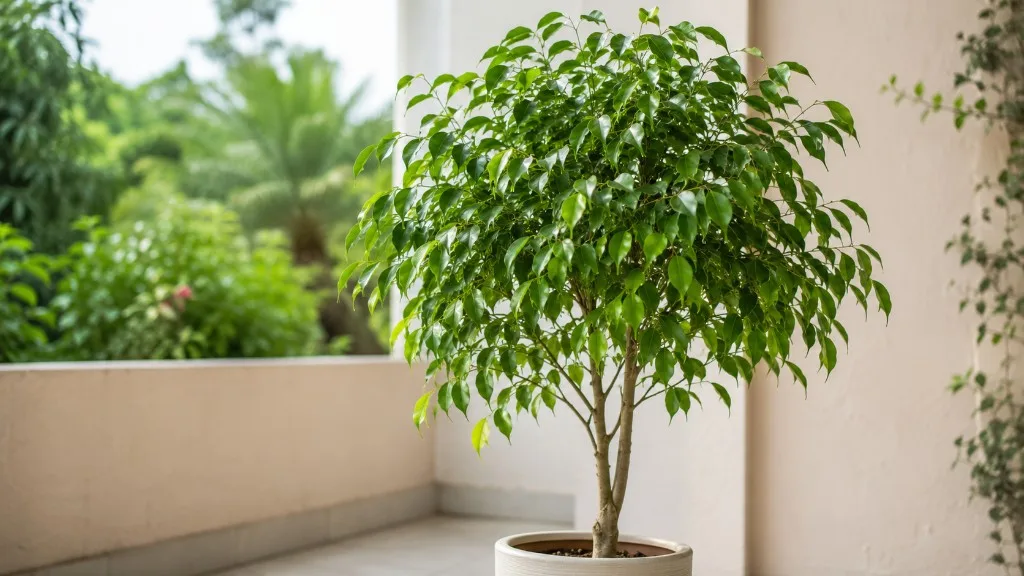
When buying a new ficus, choose a permanent bright spot before the plant fully acclimates. Every move risks another drop cycle.
Can Yellow Ficus Leaves Turn Green Again?
No—not once yellowing is extensive. Chlorophyll loss in mature leaves is generally permanent. The goal is to stop further yellowing and grow healthy new green leaves. If stems are still firm, roots are mostly healthy, and you see green buds along branches, the plant can recover once conditions improve.
If all leaves have yellowed and stems or roots are soft, rotting, or hollow, recovery is unlikely. Visible green growth points along the stem are the best sign the plant can bounce back.
Remove fully yellow or brown leaves with clean scissors at the petiole base—they will not re-green, and pruning redirects energy. Do not strip the plant bare while it is still stressed.
Recovery Plan: Fix One Variable at a Time
Stacking repotting, fertilizing, pruning, and relocation on a yellowing ficus usually worsens leaf drop. Use this sequence:
- Diagnose with the soil fork above—wet, dry, or environmental.
- Stabilize water before anything else. Most yellow ficus are too wet or too dry; fix that for two weeks.
- Hold position and light unless the plant is in direct scorch or deep shade. Gradual light improvement only.
- Address drafts and temperature if vents or windows are obvious culprits.
- Treat pests if inspection finds them—isolate first.
- Repot only when roots are crowded and the plant is not in active rot crisis.
- Fertilize only after firm new growth appears, using a diluted houseplant fertilizer per label—never on a sick plant.
Judge success by new leaves over four to eight weeks, not by old yellow tissue turning green. Epic Gardening recommends consistent moderate watering during the growing season and reduced water in winter (Epic Gardening). RHS advises topdressing annually and repotting every two to three years for rubber plant (RHS).
Conclusion
Yellow ficus leaves are stressful, but they are rarely random. Overwatering, low light, drafts, drought, pests, and root crowding cover almost every case—and the pattern of which leaves yellow, plus whether soil is wet or dry, tells you which to tackle first.
Run the five-minute diagnostic before you repot or fertilize. Fix one major variable, keep the plant stable, and watch for firm new green growth. Old yellow leaves will not re-green, but a ficus with solid stems and healthy roots can look architectural again within a season when care matches what this sensitive genus actually needs indoors.