How to Grow & Care for Fishbone Cactus
Fishbone cactus care for beginners: light, water, soil, humidity, propagation, bloom triggers, and fixes for leggy stems, rot, and pests.
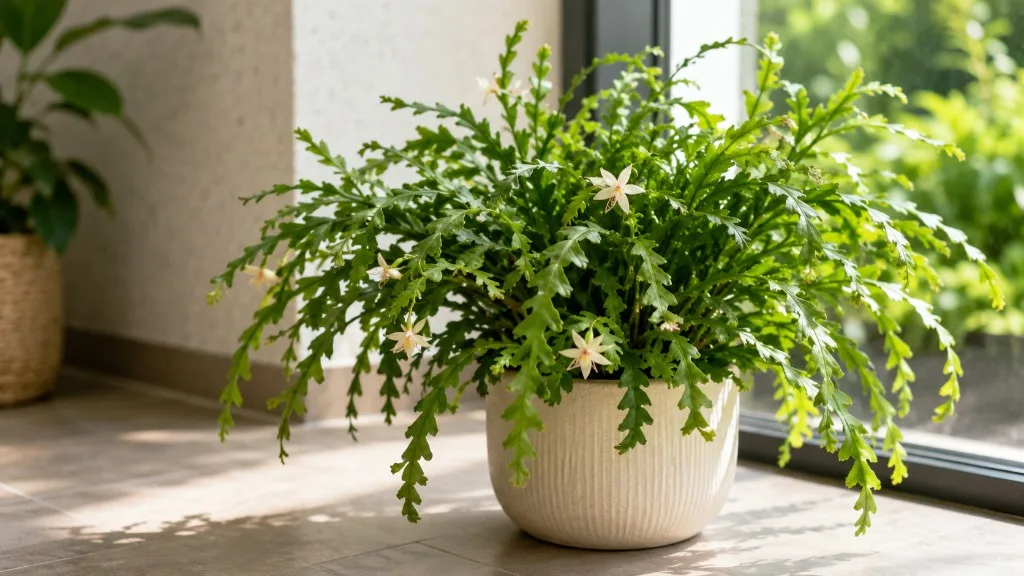
Fishbone cactus (Disocactus anguliger) is the houseplant for people who love sculptural trailing foliage and dramatic night flowers—but who do not have blazing south-window sun. Its flat, deeply lobed zigzag stems trail from hanging baskets like living ric-rac trim, and mature plants can produce large, fragrant white blooms that open after dark. The catch is taxonomy: it is a cactus, but not a desert one. Treat it like a sun-hungry barrel cactus and it rots. Treat it like a tropical fern and it stretches, spots, and never flowers. The care sweet spot is bright filtered light, fast-draining epiphytic mix, and soak-and-dry watering checked by the pot—not a calendar.
What Makes Fishbone Cactus Different From Desert Cacti
Fishbone cactus belongs to the tribe Hylocereeae alongside Christmas cactus and orchid cactus. In western Mexican cloud forests it grows as an epiphyte on tree branches, absorbing moisture from rain, fog, and decaying leaf litter while roots stay airy. Missouri Botanical Garden’s Plant Finder describes it as an epiphytic cactus with flattened stems and nocturnal, fragrant flowers—ecology that explains almost every indoor care decision.
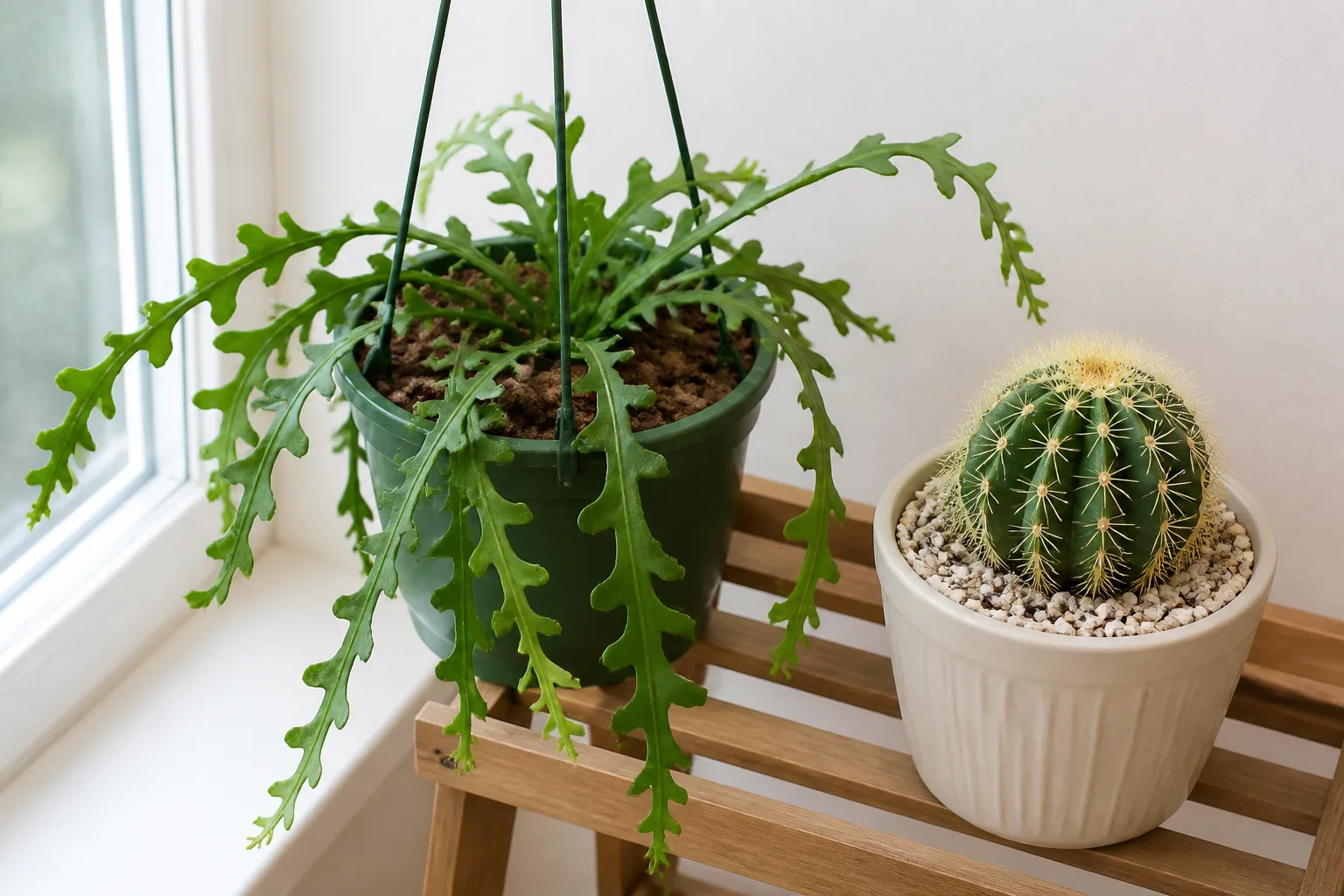
That background creates three non-negotiable shifts at home. Use bark-heavy, porous mix instead of straight mineral cactus grit. Water when the upper mix dries, not after months of desert-style drought. Prioritize bright indirect light over harsh afternoon sun on unacclimated stems. Fishbone cactus stores water in succulent stem tissue and forgives missed drinks during active growth, but repeated bone-dry cycles produce shriveled, ribbed segments that recover slowly.
You will still see the older name Epiphyllum anguliger on tags and in catalogs. Molecular work moved the species to Disocactus; both names refer to the same plant for practical care. For a deeper species profile and year-round rhythm, see the Fishbone Cactus overview hub on LeafyPixels.
Quick ID Check Before You Change Anything
Before adjusting light or water, confirm you have Disocactus anguliger and not a look-alike. Selenicereus anthonyanus shares zigzag stems and similar care, but its flowers run pink and cream rather than white and yellow. More importantly, some Euphorbia species are sold under zigzag common names and carry very different toxicity profiles. Check the botanical name on the pot label. Pet-safe confidence requires Disocactus anguliger specifically—the ASPCA lists Epiphyllum as non-toxic to cats and dogs, the genus under which fishbone cactus is still commonly filed in toxicity databases.
| Trait | Fishbone cactus (epiphyte) | Typical desert cactus |
|---|---|---|
| Native habitat | Humid forest canopy | Open desert |
| Light indoors | Bright indirect; gentle morning sun OK | Often full sun |
| Watering | Soak when top 1–2 in. dry | Long dry periods between deep soaks |
| Soil | Bark, perlite, compost blend | Grit-heavy mineral mix |
| Humidity | 40–60% helpful | Low humidity tolerant |
| Spines | None on mature flat stems | Usually spiny |
Fishbone Cactus at a Glance
| Common names | Fishbone cactus, zigzag cactus, ric rac cactus, orchid cactus |
|---|---|
| Botanical name | Disocactus anguliger (syn. Epiphyllum anguliger) |
| Family | Cactaceae |
| Type | Epiphytic trailing cactus |
| Mature size | Stems 3 ft. long or more in hanging baskets; plant body stays compact |
| Light | Bright indirect; east window or filtered south/west |
| Soil | Airy epiphytic mix with orchid bark and perlite |
| Water | When top 1–2 inches of mix dry; reduce in winter |
| Temperature | 65–80°F (18–27°C) active growth; brief cool rest for blooms |
| Humidity | 40–60% ideal; tolerates average homes |
| Bloom | Late summer to fall; night-opening, fragrant |
| Hardiness | USDA zones 10–12 outdoors |
| Pet safety | Widely considered non-toxic; confirm botanical ID |
Fishbone cactus is a moderate grower—faster than most desert cacti, slower than pothos. Expect one or two new stem segments per year on a settled plant rather than a monthly flush. The payoff is spine-free trailing foliage safe around most pets and, once the plant matures, some of the most dramatic nocturnal flowers in the houseplant world.
Best Light for Indoor Fishbone Cactus
Fishbone cactus needs bright indirect light for most of the day. In habitat it lives under forest canopy with strong filtered light, not open desert exposure. Indoors, place it at an east-facing window where gentle morning sun is usually safe, or set it back from south- or west-facing glass behind a sheer curtain. A few hours of early direct sun on an acclimated plant is fine; harsh afternoon sun bleaches flat stems and leaves permanent brown scorch patches.
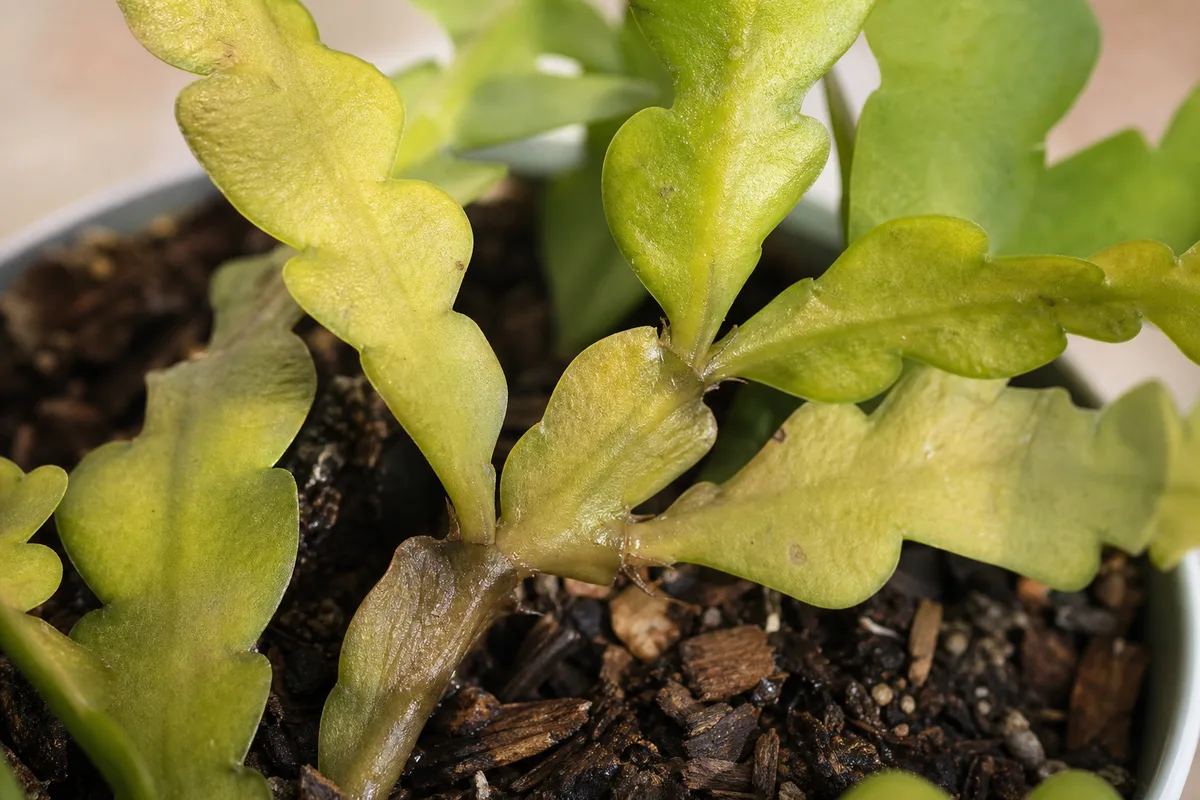
This is where many care guides go wrong. Fishbone cactus is not a low-light plant. It tolerates medium indirect light for survival but stretches, grows thin round stems instead of broad zigzags, and dries so slowly that overwatering becomes likely if you keep a summer watering rhythm through winter. If your only spot is dim, add a full-spectrum grow light 12–18 inches above the stems on a 10–12 hour timer and check moisture more carefully because photosynthetic demand drops.
For bloom potential, light matters in every season. Mature plants that flower reliably receive several hours of bright filtered light daily year-round, not just during summer. Dim winter quarters may keep the plant alive while quietly eliminating bud formation for the following autumn. Full placement guidance lives in the Fishbone Cactus light guide.
Signs Your Plant Needs More or Less Light
Read new stem growth, not old damage. Compact new segments with deep green color and relatively short internodes mean the plant is probably receiving enough energy. Long, pale, thin stems reaching toward the window mean more light is needed—move gradually over one to two weeks so stems formed in a dim shop do not burn. Yellowing or bleached sun-facing tissue means less direct exposure or slower acclimation.
Leggy growth is the most common light mistake indoors. Stems lose their characteristic fishbone silhouette and become pencil-thin tubes climbing toward the glass. Correct light first; fertilizer will not fix stretch.
Temperature, Humidity, and Airflow
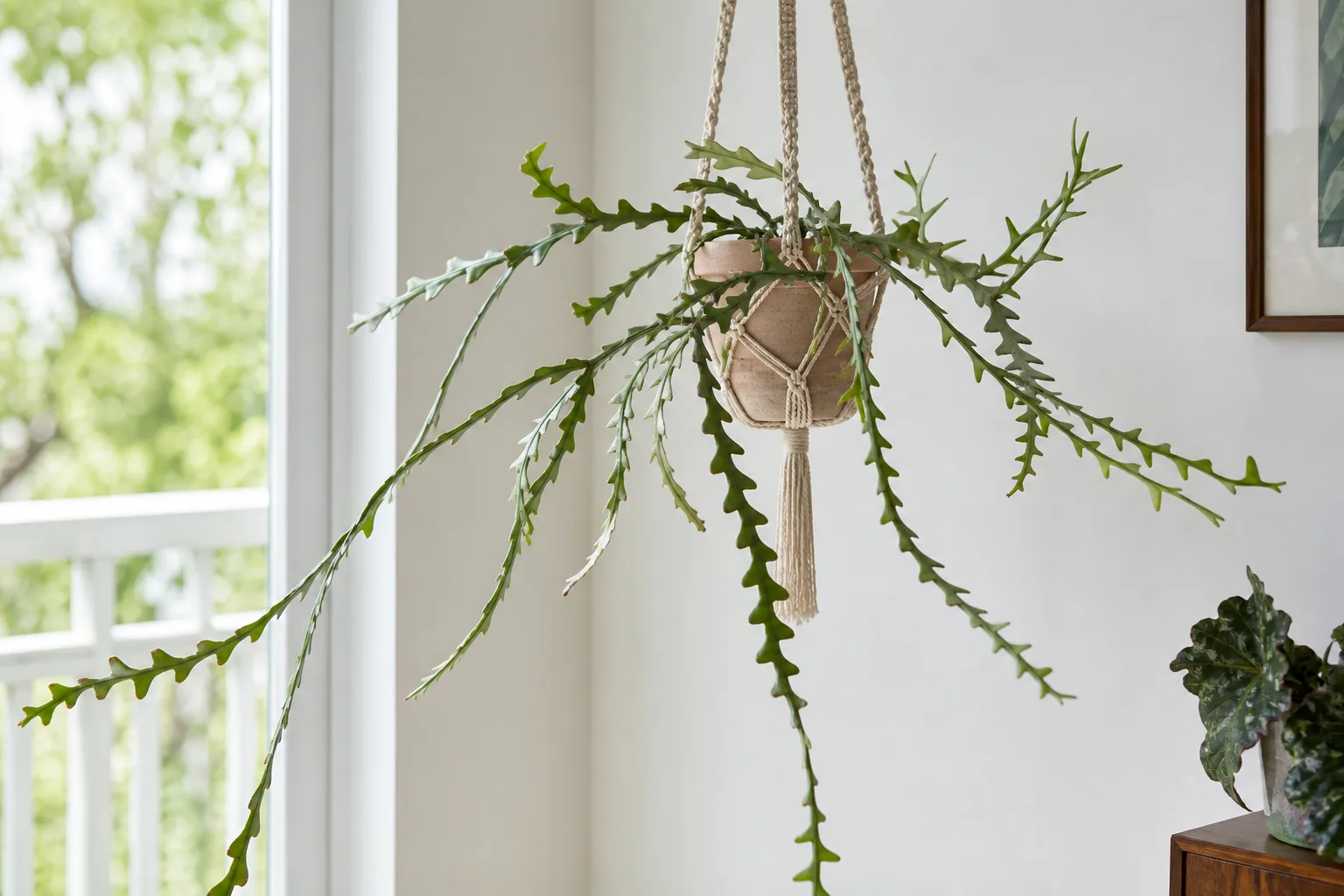
Fishbone cactus prefers stable indoor temperatures between 65 and 80°F (18 and 27°C) during active growth. It tolerates brief dips toward 50°F (10°C) but suffers on sustained cold—watch uninsulated winter window sills, AC vents blowing directly on hanging baskets, and drafty doorways. The RHS recommends a minimum of 15°C (59°F) during the growing season and protection below 10°C (50°F).
Humidity is helpful but secondary compared with light and watering. Target 40–60% relative humidity when you can; average home levels often suffice if watering and light are correct. Very dry air below about 30%—common above radiators in winter—can encourage spider mites on stressed plants. A pebble tray with the pot elevated above the water line, grouping plants, or a small humidifier near the basket all outperform misting, which raises humidity briefly and can leave wet stem surfaces that invite fungal spotting when airflow is poor.
Good air circulation matters in humid rooms. A ceiling fan on low or an open window on mild days reduces stagnant moisture around flat stems without blasting cold drafts directly on the plant.
Soil Mix and Pot Choice for Epiphytic Roots
Use an epiphytic, airy potting mix that drains fast while holding slight moisture in the root zone. A proven home recipe is 40% potting compost, 30% perlite, and 30% orchid bark—the blend consistent with Fishbone Cactus soil guidance and epiphytic cactus recommendations from multiple horticultural sources. Some growers add 10% horticultural charcoal for extra freshness in humid rooms. The principle matters more than exact percentages: large pore spaces, bark chunks, and no compaction.
Standard bagged cactus mix alone is usually too mineral-heavy and too slow to dry indoors. Straight peat-heavy houseplant mix is worse—it compacts, suffocates epiphytic roots, and stays wet too long. Target slightly acidic pH around 5.5–6.5; hobbyists rarely need to meter pH, but if the mix has broken down into fine mud after two years, repot regardless of calendar.
Always use a container with a drainage hole. Aerial roots growing above the soil line are normal— in the wild they anchor to bark and absorb moisture from the air. Do not bury them unless you are deliberately mounting the plant. Cachepots and saucers must not hold standing water; epiphytic roots begin failing within days of saturation.
Hanging Baskets vs Mounted Displays
Most growers choose a hanging basket so trailing zigzag stems arch naturally. Any pot with drainage works if you empty runoff.
Alternatively, mount fishbone cactus on driftwood or cork with sphagnum moss around the roots for a more natural epiphytic display—mist the moss lightly and expect more frequent attention than a bark-heavy pot. Whichever style you pick, the roots must never sit in a waterlogged core.
How to Water Fishbone Cactus Correctly
The reliable rule: water when the top 1 to 2 inches (2.5 to 5 cm) of mix feel dry, then soak thoroughly until a small amount runs from the drainage hole. That usually works out to roughly every 7 to 10 days in spring and summer and every 2 to 3 weeks in autumn and winter for a typical 15–20 cm hanging basket in bright indirect light—but your calendar should remind you to check, not dictate. Pot size, bark ratio, room temperature, humidity, and light all change the interval.
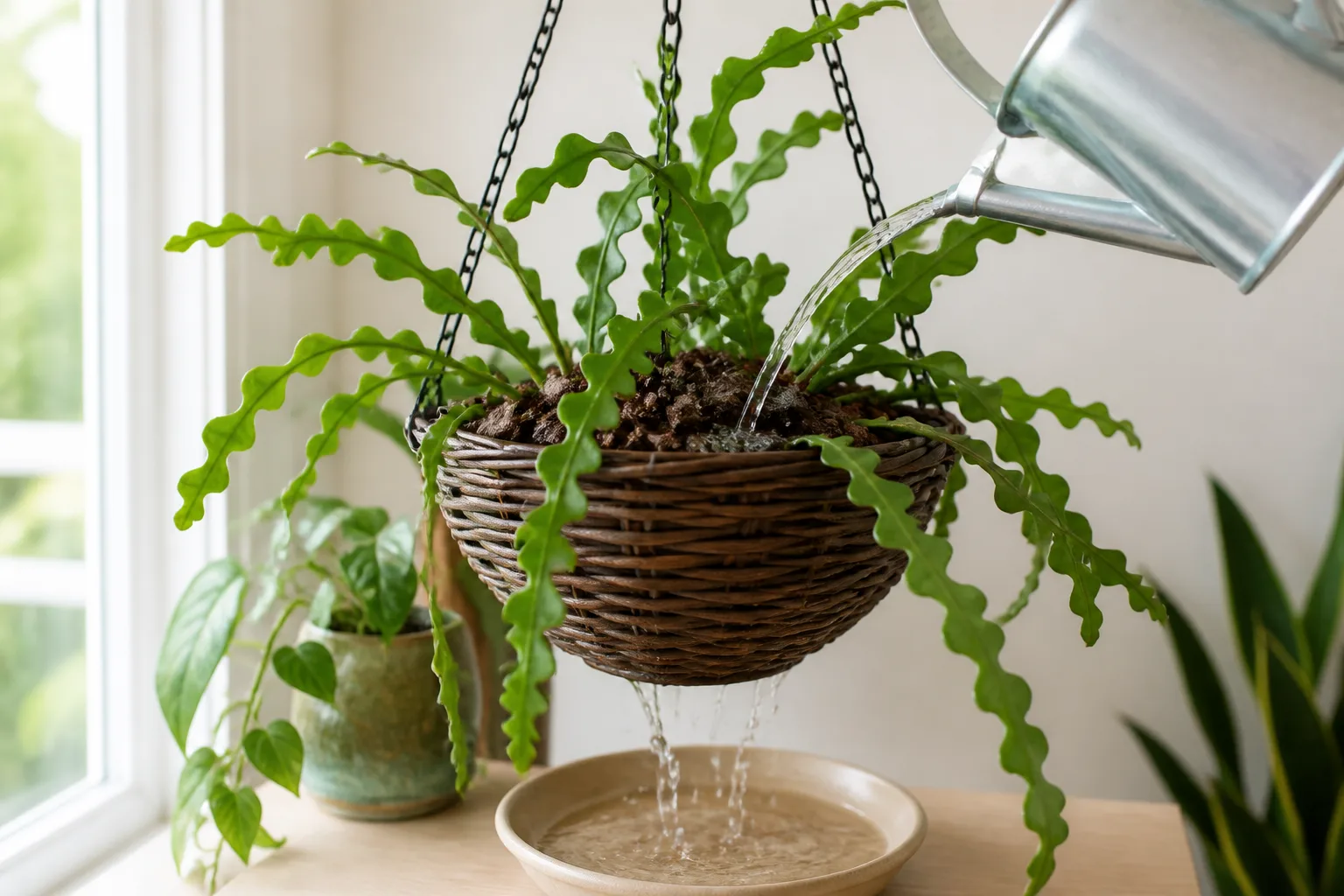
Fishbone cactus is drought-tolerant in that it stores water in stem tissue and survives occasional missed waterings without immediate death. It is not drought-loving like a desert cactus. Letting the entire root zone stay bone dry for weeks during active growth produces flattened, ribbed, or shriveled stem edges that recover slowly even after you rehydrate. The goal is a full drink followed by an appropriate dry-down, not permanently damp soil and not desert-style neglect.
Check moisture with a finger, a wooden skewer, or by lifting the basket—a noticeably lighter pot means the root zone has dried. For hanging baskets, weight is often the fastest tell because the top surface dries faster than the center. Water with room-temperature water; cold water can shock tropical roots. If your tap water is very hard, let it sit 24 hours or use filtered water to reduce mineral buildup on mix and stem tips.
During warm, bright months when new stem segments form, water evenly across the mix surface until water exits the drainage holes, then empty the saucer within 15 minutes. Shallow daily splashes encourage weak surface roots without reaching the center. More detail and seasonal tables live in the Fishbone Cactus watering guide.
Winter Dry-Down and Bloom Prep
Taper watering in early to mid-fall as day length drops. Most indoor fishbone cactus need less water from late fall through winter when growth slows—often half the summer frequency. Soil should dry deeper between drinks, but do not let stems shrivel repeatedly; that is drought stress, not a bloom shortcut.
The cool rest that triggers flowering is deliberate, not accidental cold damage. From late autumn through early winter, aim for cool nights around 50–60°F (10–16°C) for several weeks in a bright room without freezing exposure. That is different from leaving the plant on a windowsill where glass temperature plummets below safe limits. Resume normal warmth and watering when you see bud initials in late winter or spring.
Fertilizing During Active Growth
Fishbone cactus is a light feeder. Use a diluted balanced or cactus-specific liquid fertilizer at half label strength every 2 to 4 weeks from spring through late summer while new stem segments are forming. Skip fertilizer in fall and winter, and never feed a stressed, dry, or newly repotted plant. The Fishbone Cactus fertilizer guide covers bloom-boost sequences with low-nitrogen formulas in late summer for mature specimens.
Organic matter in bark-heavy mix supplies some nutrients; over-feeding causes salt burn on stem margins and suppresses flowering. If white crust appears on the soil surface, flush with plain water and pause feeding for a month.
Pruning, Repotting, and Division
Fishbone cactus does not need regular pruning to stay healthy. Trim only to control length, remove damaged segments, or harvest cuttings for propagation. Snip with clean scissors just above a stem joint. The Fishbone Cactus pruning guide covers shaping without stressing the plant.
Repot every 2 to 3 years or when roots circle the pot and water runs straight through dry mix. Move up one pot size only; oversized containers stay wet too long. Refresh bark-heavy mix even if the pot size stays the same. Wait 4 to 6 weeks after repotting before fertilizing. See Fishbone Cactus repotting for step-by-step timing.
Division works when you want multiple plants without a larger basket: remove the root ball, gently separate clumps with a clean knife if needed, and pot each section in fresh mix. Established roots mean little downtime compared with leaf cuttings.
How to Propagate Fishbone Cactus From Stem Cuttings
Propagation is one of the easiest jobs on this plant—and the fastest way to fill a sparse hanging basket.
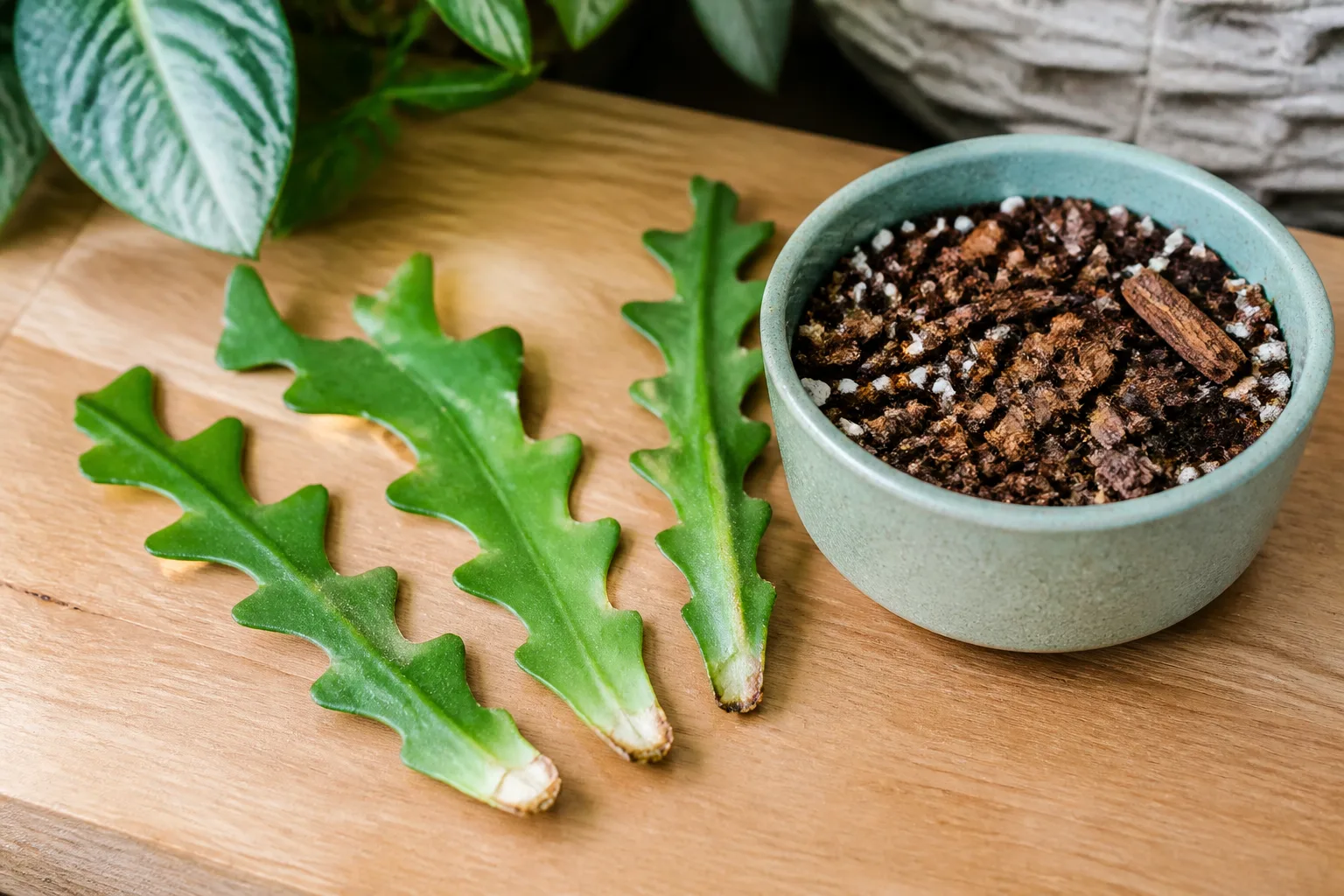
- In spring or early summer, take 4- to 6-inch cuttings comprising one or two zigzag segments with clean scissors.
- Lay cuttings in a dry, shaded spot for 24 to 48 hours until the cut end calluses.
- Fill a small pot with moist epiphytic mix (same bark-perlite blend as the parent).
- Insert the callused end 2 to 3 cm deep; firm lightly so the cutting stands.
- Place in bright indirect light; keep mix lightly moist, not soggy, for the first few weeks.
- Test for roots with a gentle tug after 3 to 6 weeks; resume normal care when new growth appears.
Avoid propagating in fall or winter when the plant rests. Root several cuttings in one basket for a fuller display faster. Full troubleshooting for failed cuttings is in the Fishbone Cactus propagation guide.
Encouraging Night-Blooming Flowers
Fishbone cactus blooms late summer into fall, opening at night with a sweet, heady fragrance. Each flower lasts a day or two. Indoor blooming is not guaranteed on young plants—it often takes three or more years of consistent care before the first show.
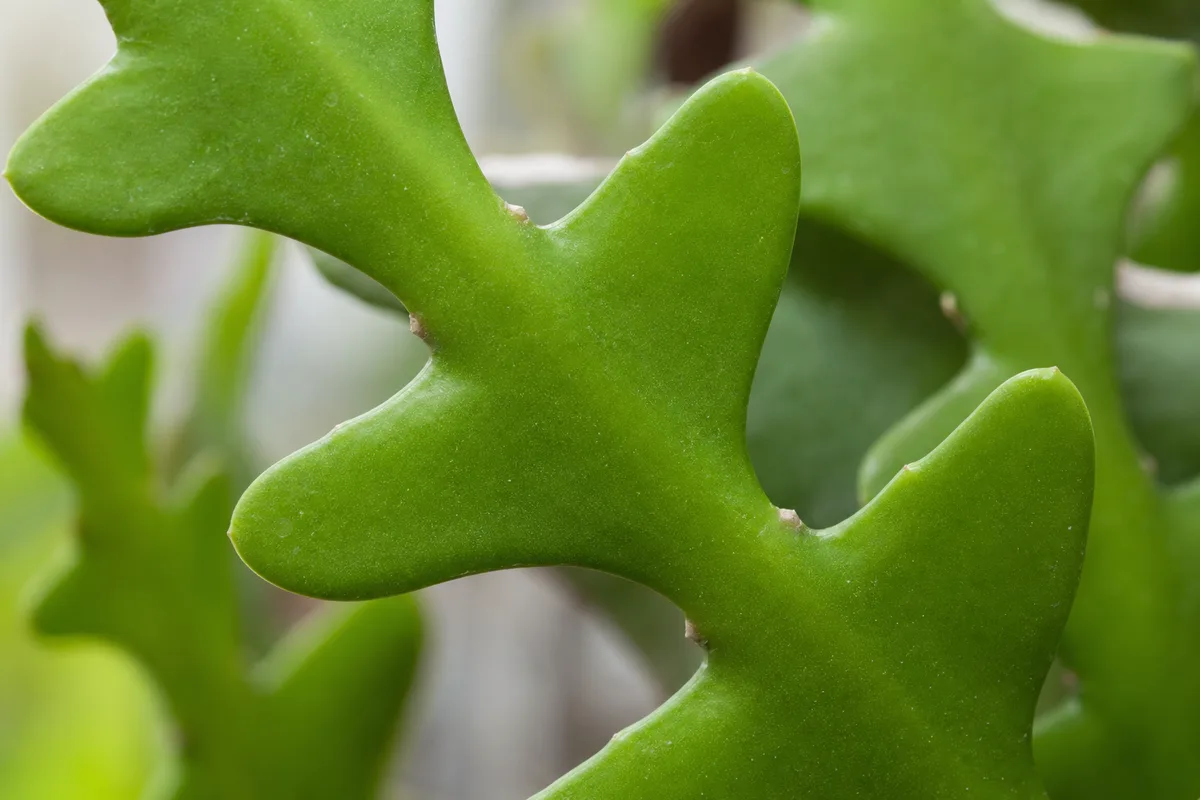
To maximize odds on a mature plant:
- Provide bright filtered light year-round, including winter.
- Run a cool rest (50–60°F nights for several weeks in late autumn) while keeping days bright.
- Resume normal warmth and watering when buds form in late winter or spring.
- Optionally apply two to three half-strength low-nitrogen, higher-potassium feeds in late summer—only on healthy, well-lit specimens.
- Avoid repotting or heavy pruning the season you expect flowers.
Flowers are white to cream with yellowish inner tepals on species plants; selective breeding has produced apricot, pink, and multicolored forms in collector circles. If blooms fail after two seasons of correct rest, the limiting factor is usually insufficient light or plant immaturity, not fertilizer brand. No flowers on Fishbone Cactus covers diagnosis in depth.
Common Pests and Diseases
Humid, sheltered conditions that fishbone cactus enjoys also favor a short list of pests. Inspect stems weekly, especially leaf axils and undersides.
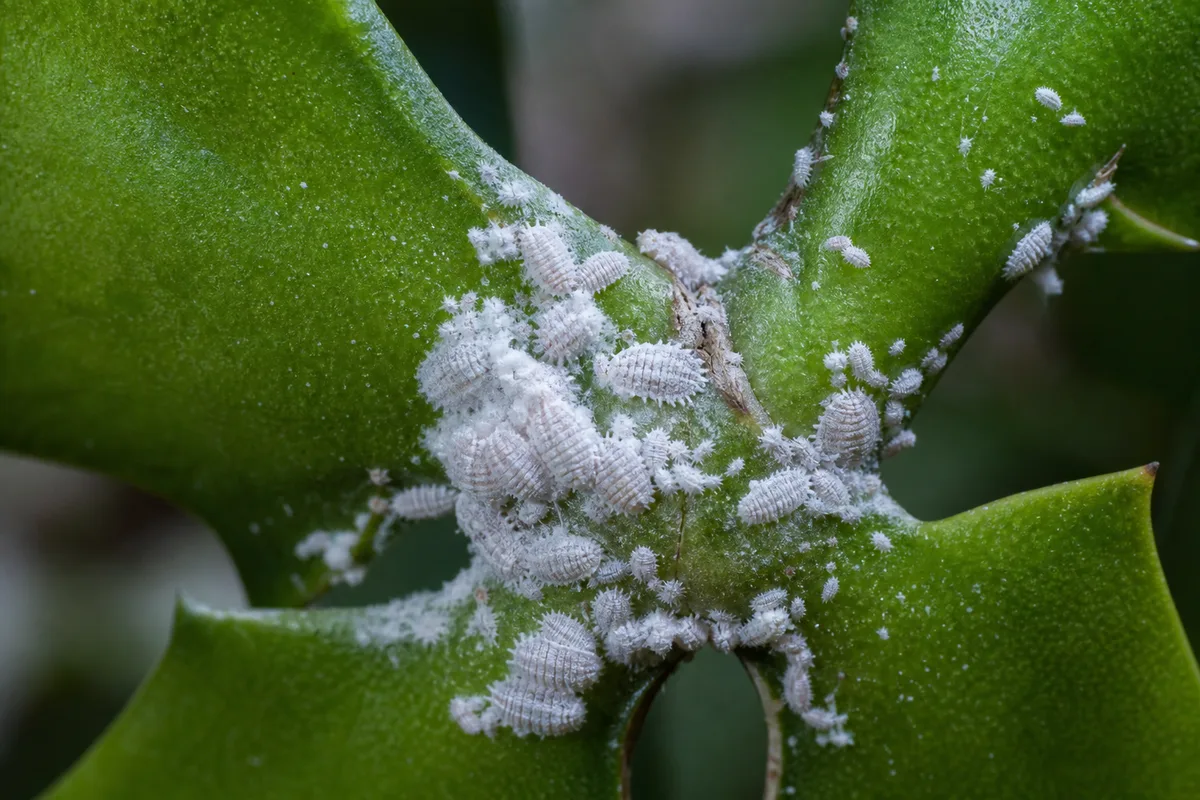
| Problem | Signs | First action |
|---|---|---|
| Mealybugs | White cottony clusters in stem joints | Isolate; dab with isopropyl alcohol; repeat weekly |
| Aphids | Soft green insects on new growth | Rinse stems; insecticidal soap if persistent |
| Fungus gnats | Tiny flies; larvae in wet mix | Let top mix dry; yellow sticky traps; address overwatering |
| Spider mites | Fine webbing; stippled stems in dry heat | Raise humidity; shower plant; miticide if severe |
| Root rot | Mushy brown base; wet mix smell | Unpot; cut rotten tissue; repot dry firm cuttings only |
Fungal leaf spots appear as slightly raised brown patches when water sits on stems in stagnant air. Trim affected segments and improve airflow; spots are cosmetic, not fatal. More on mold on soil when mix stays wet too long.
Troubleshooting Stem Problems
Most fishbone cactus failures trace to water or light, not mysterious cactus diseases.
Thin, round stems instead of flat zigzags mean insufficient light. Move closer to a bright window or add a grow light; do not compensate with extra water.
Wrinkled, ribbed stem edges with dry, light pot weight mean underwatering or root damage preventing uptake. Soak thoroughly once, then establish a consistent dry-down rhythm. If stems stay wrinkled in wet mix, inspect roots for rot.
Brown, mushy stems at the base indicate overwatering or root rot. Cut healthy firm tissue above the rot, callus, and reroot in fresh dry mix. There is no cure for mushy crown tissue left in place.
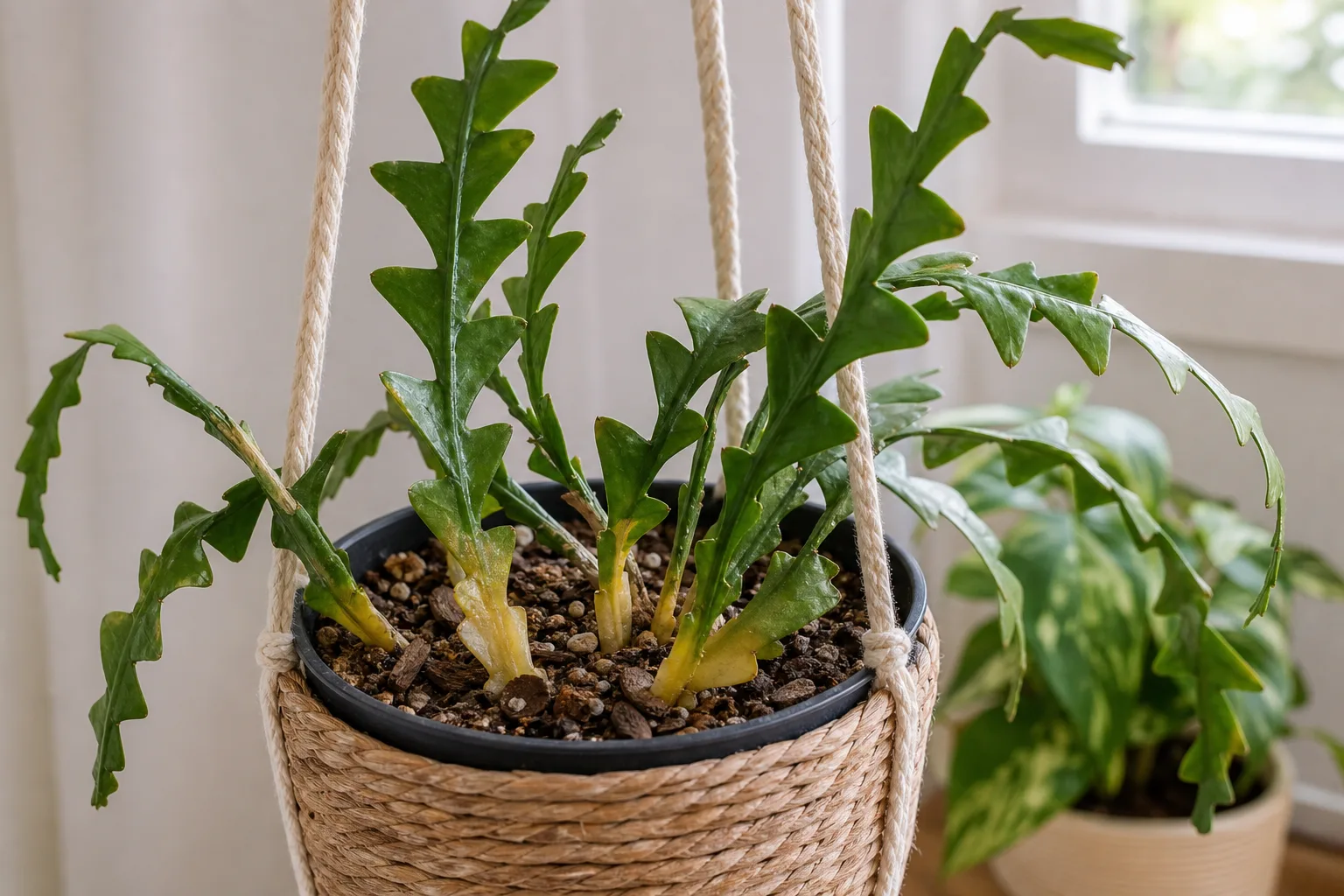
Brown spots on flat stems from sun scorch are permanent on affected tissue; move to filtered light and acclimate gradually. Distinguish scorch (sun-facing patches after a move) from fungal spots (random raised lesions after wet foliage).
Yellow segments may signal overwatering, underwatering, repot shock, or natural aging of older stems. Check mix moisture and pot weight before changing anything else. See yellow leaves on Fishbone Cactus for a cause-matched plan.
Growing Fishbone Cactus Outdoors
In USDA zones 10 through 12, fishbone cactus can live outdoors year-round in sheltered spots. Choose morning sun with afternoon shade—full midday sun burns stems even in warm climates. Bring containers indoors or into a frost-free greenhouse when temperatures drop below 50°F (10°C).
Outdoor plants face more fungal spotting from overhead watering and rain splash. Water at the soil line, not over flat stems, and ensure excellent drainage. Pests may arrive faster outside; quarantine plants before bringing them back indoors for winter.
In cooler zones, treat fishbone cactus as a summer patio plant: acclimate gradually to bright shade, then move inside before frost. The indoor care rules above apply whenever the plant is in active growth.
Conclusion
Fishbone cactus rewards growers who respect its cloud-forest epiphyte origins: bright indirect light, bark-heavy airy mix, soak-and-dry watering checked by pot weight, modest feeding during growth, and a cool bright winter rest if you want blooms. It is not a low-light plant, not a desert cactus, and not a set-and-forget succulent—but it is spine-free, pet-safe for most households, easy to propagate, and unforgettable when those fragrant night flowers finally open. Start with correct ID, match water to your actual light and mix, and use the Fishbone Cactus care hub for deeper guides on light, watering, soil, and propagation as your plant grows.



