Frog Fruit Care: How to Grow Phyla nodiflora
Learn frog fruit care for sun, soil, watering, mowing, propagation, blooms, winter dieback, and lawn use, with practical limits and fixes.
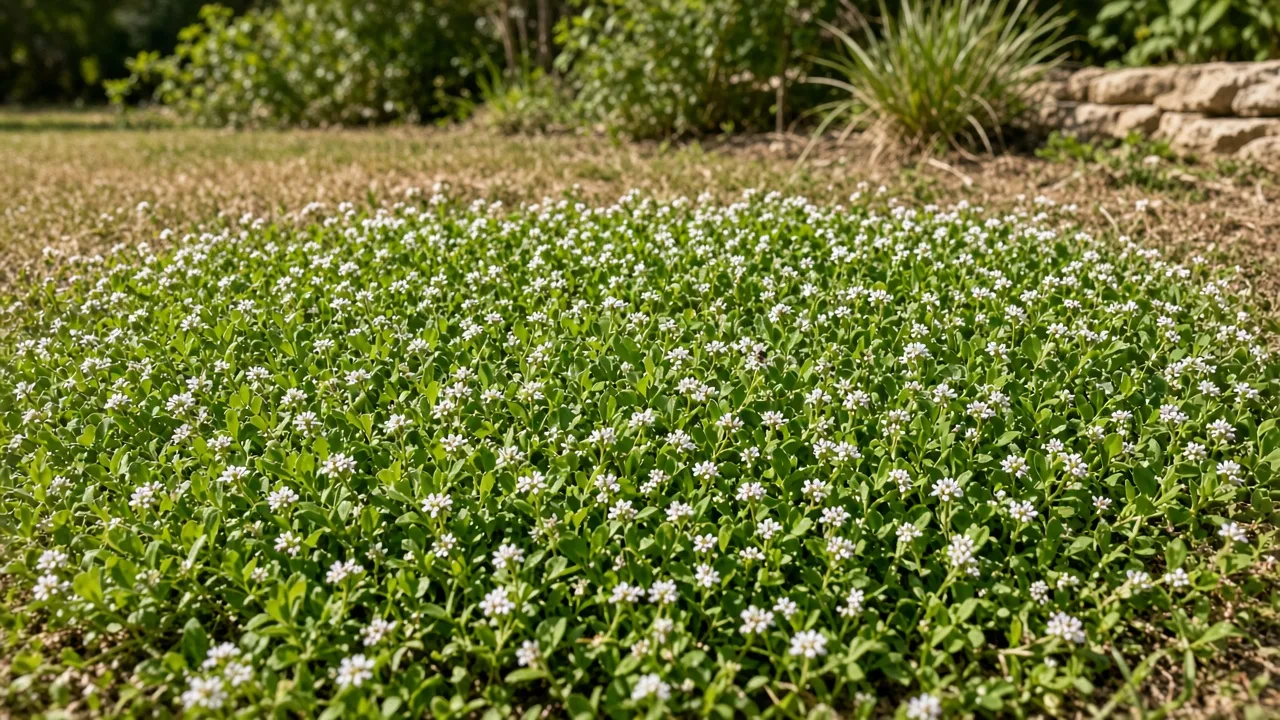
Frog fruit is easiest to understand as a low, spreading native groundcover, not as a miniature shrub and not as a perfect turf substitute. Its thin stems creep across the soil, root at the nodes, and gradually knit into a mat of small green leaves. From that mat rise button-like flower heads with white or pale pink florets around a purple center.
The plant’s toughness is real, but “easy” does not mean “plant it anywhere and forget it.” Frog fruit establishes fastest in warm soil with light, room to spread, and regular water at first. Once rooted, it can handle dry spells and occasional wear, yet it may thin in deep shade, brown after a freeze, or run into neighboring beds when supplemental irrigation is generous. This guide focuses on those decisions: where it fits, how to establish it, and how to keep its natural vigor useful rather than unruly.
Is Frog Fruit Right for Your Site?
Choose frog fruit when you want a relaxed, flowering carpet for a sunny or lightly shaded yard, a low-traffic path edge, a slope, a rain-garden margin, or a mixed lawn. UF/IFAS describes it as a vigorous groundcover and a companion or alternative to turfgrass, while the UF/IFAS Mid-Florida Research and Education Center places it in lower-traffic groundcover situations. Those descriptions are not contradictory: frog fruit can tolerate contact, but it does not have the wear recovery and uniformity of sports turf. UF/IFAS Gardening Solutions UF/IFAS MREC
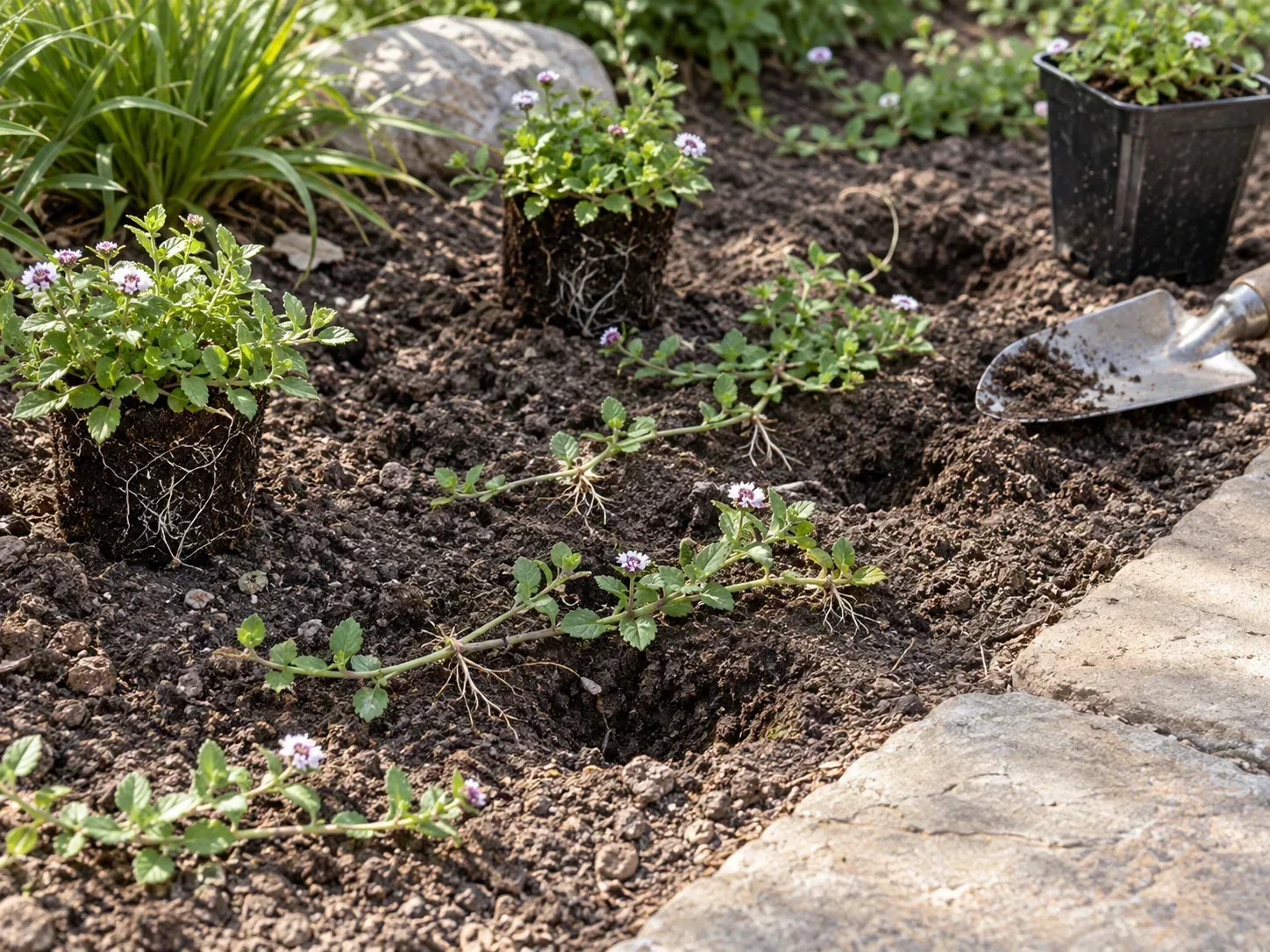
Give it a defined edge if your planting beds are formal or contain slow-growing perennials. A single plant can send runners several feet in a season under warm, moist conditions, and every node that rests against damp soil is an opportunity to root. That spreading habit is excellent for covering bare ground and frustrating when the plant is allowed to wind through young ornamentals. The practical rule is simple: plant it where a widening mat is welcome, and make removal easy where it is not.
Frog fruit is also a good choice when your priority is habitat rather than a uniformly green carpet. The Florida Wildflower Foundation identifies it as a nectar source for bees and small butterflies and a larval host for the white peacock, phaon crescent, and common buckeye butterflies. Flowers are small, but a broad patch can stay busy with insect activity for much of the warm season. Florida Wildflower Foundation
Identify Frog Fruit Before Planting
The accepted name is Phyla nodiflora, a creeping herbaceous perennial in the verbena family, Verbenaceae. You may see frogfruit written as one word, or encounter common names such as turkey tangle fogfruit, matchweed, capeweed, and matchhead. Common names overlap among plants, so use the botanical name when buying or exchanging cuttings.
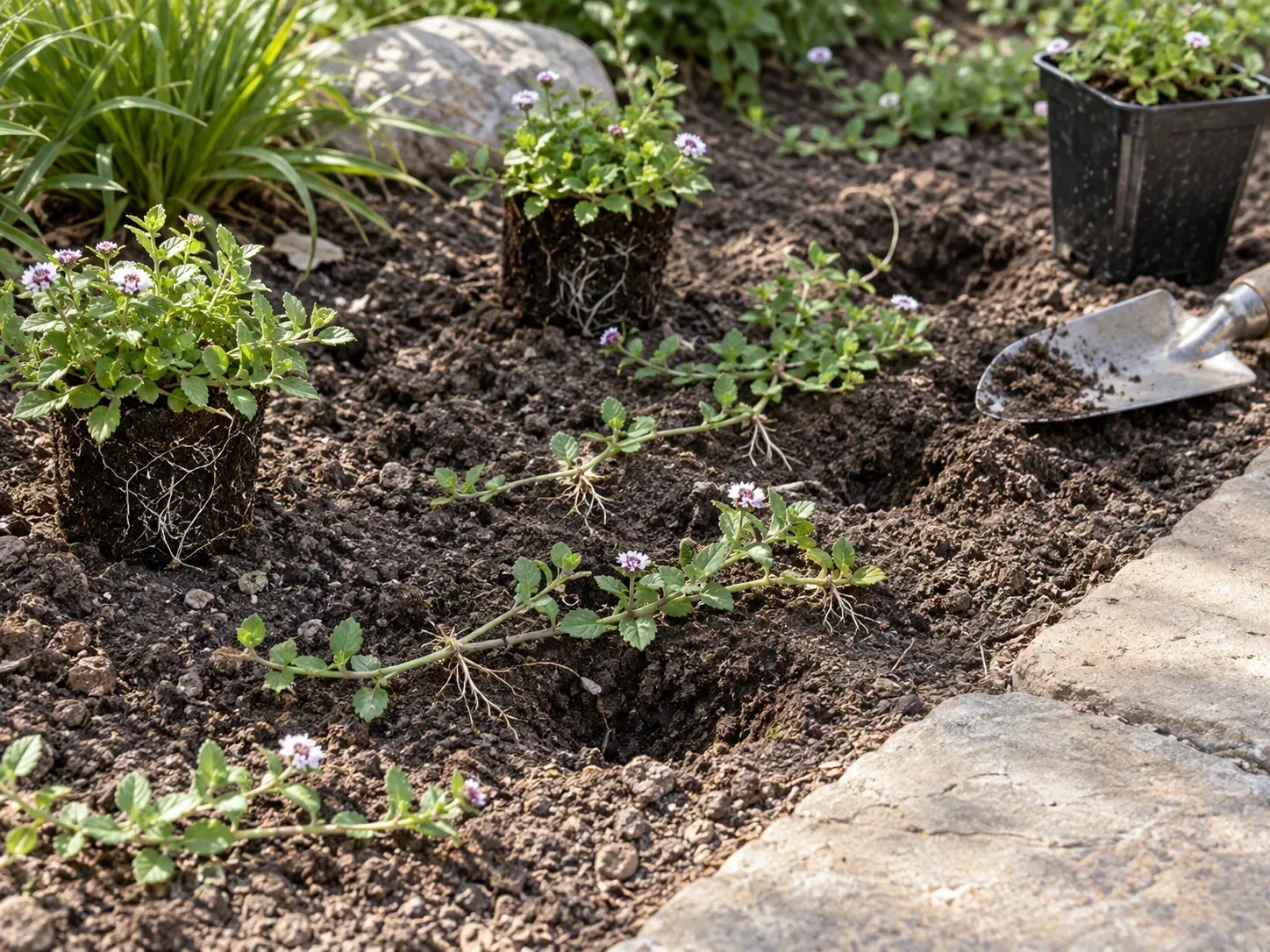
Look for four features together: opposite leaves, thin prostrate stems, small oval leaves with toothed margins, and short flower stalks topped by rounded heads. Each head is made of many tiny flowers, usually white to pinkish around a darker purple center. The stems are the giveaway for groundcover use: they lie along the soil instead of making a woody crown.
Size is best described by habit rather than one mature-height number. The foliage mat may stay only a few inches high, while flowering stalks stand above it and the runners can travel many feet. UF/IFAS notes that a plant can reach 8 to 10 feet in length, whereas some garden references describe a denser mat spreading a few feet. In practice, both observations can be true because the visible carpet and the individual runners are different parts of the plant. UF/IFAS Gardening Solutions Gardenia
Choose the Best Location
Frog fruit tolerates more site variation than many ornamental groundcovers, but it still performs best when you match the location to the result you want. A full-sun bed gives the shortest, densest growth and the greatest flower display. A lightly shaded site can work when you value green coverage more than a heavy bloom show.
Match Sun to the Result You Want
Aim for full sun to partial shade. In the brightest site, expect tighter growth, more upright flower stalks, and a thicker carpet. In morning sun or bright dappled shade, frog fruit can remain healthy while flowering less and leaving more space between runners. In deep, continuous shade, the stems usually stretch toward light and the mat becomes thin, so another shade groundcover may be a better fit.
Watch the ground, not only the sky. A site that receives six hours of sun in spring may become deeply shaded after nearby trees leaf out. Conversely, a hot south-facing strip beside paving may need more establishment water than a bed with afternoon shade. The goal is not to protect frog fruit from sun; it is to give the root zone enough moisture to establish without turning a heat-tolerant plant into a constantly irrigated one.
Check Soil Drainage
Phyla nodiflora can grow in sandy, loamy, or clay soils and is not notably fussy about pH. It also occurs in places that shift between wet and dry. That flexibility is different from tolerating stagnant water around the crown for weeks. Well-drained soil with occasional moisture is the safest baseline, especially in a container or heavy clay bed. UF/IFAS Gardening Solutions Florida Wildflower Foundation
Use a simple site test before planting a large patch. Dig a hole about the size of a nursery pot, fill it with water, and watch whether the water drains away within a reasonable period rather than remaining pooled into the next day. If the area stays saturated, plant on a slight mound or slope, open compacted soil, redirect irrigation, or choose a plant adapted to standing water. Do not solve chronic drainage with extra fertilizer; wet roots cannot use feeding as a substitute for oxygen.
Avoid the reflex to replace ordinary soil with a rich custom mix. Frog fruit is adapted to disturbed, poor, sandy, and clay soils. Amend only to correct a known problem, such as severe compaction or a drainage layer, and keep the finished grade level with the surrounding soil so the crown is not buried.
Plant Frog Fruit for Fast Coverage
Plant plugs, rooted pieces, or nursery-grown plants when the soil is warm and the coming weeks offer active growth. Spring is a straightforward choice in most warm regions. Early fall can also work where the soil stays warm and hard freezes are not imminent; in colder areas, leave enough time for roots to settle before winter.
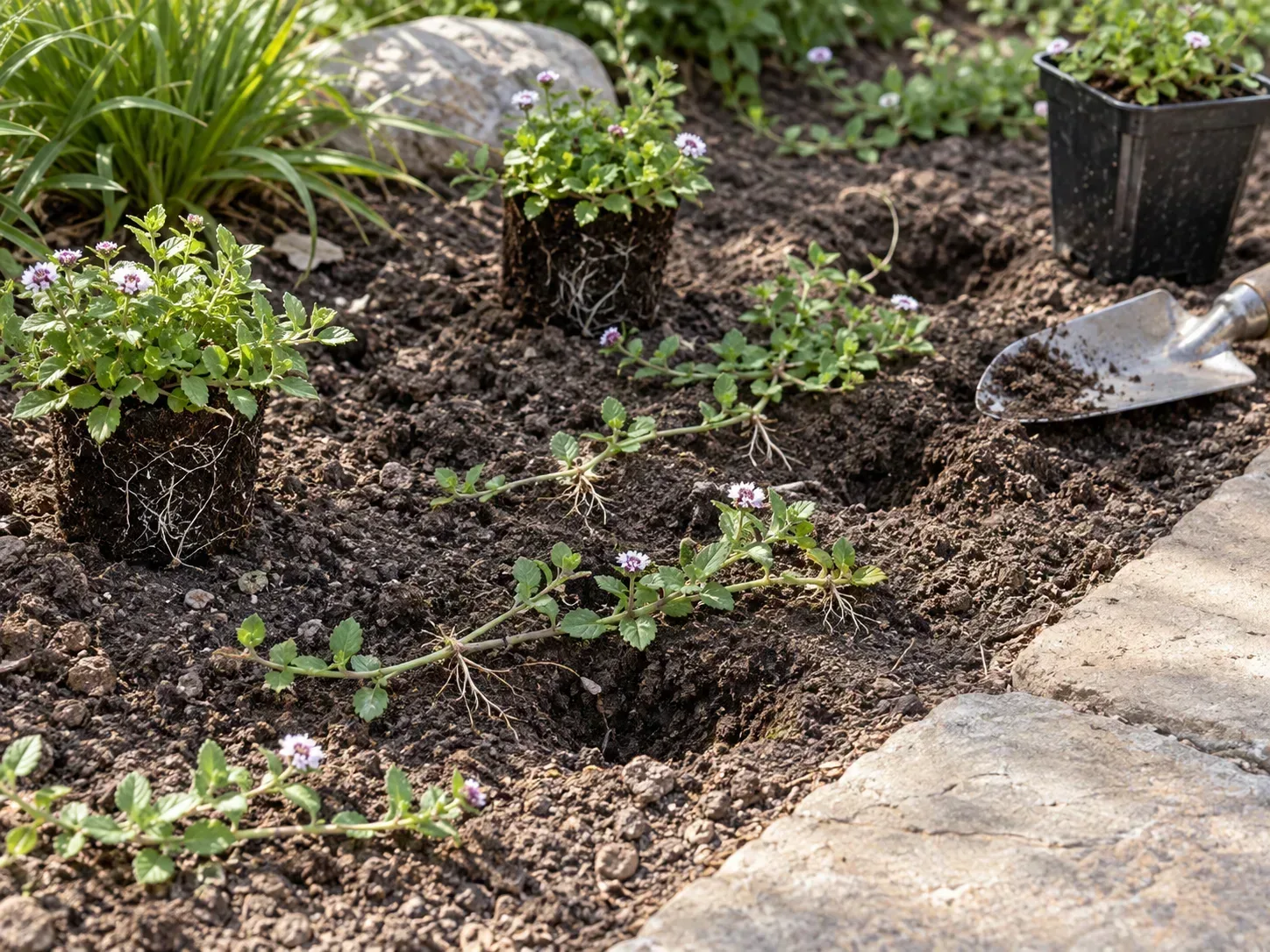
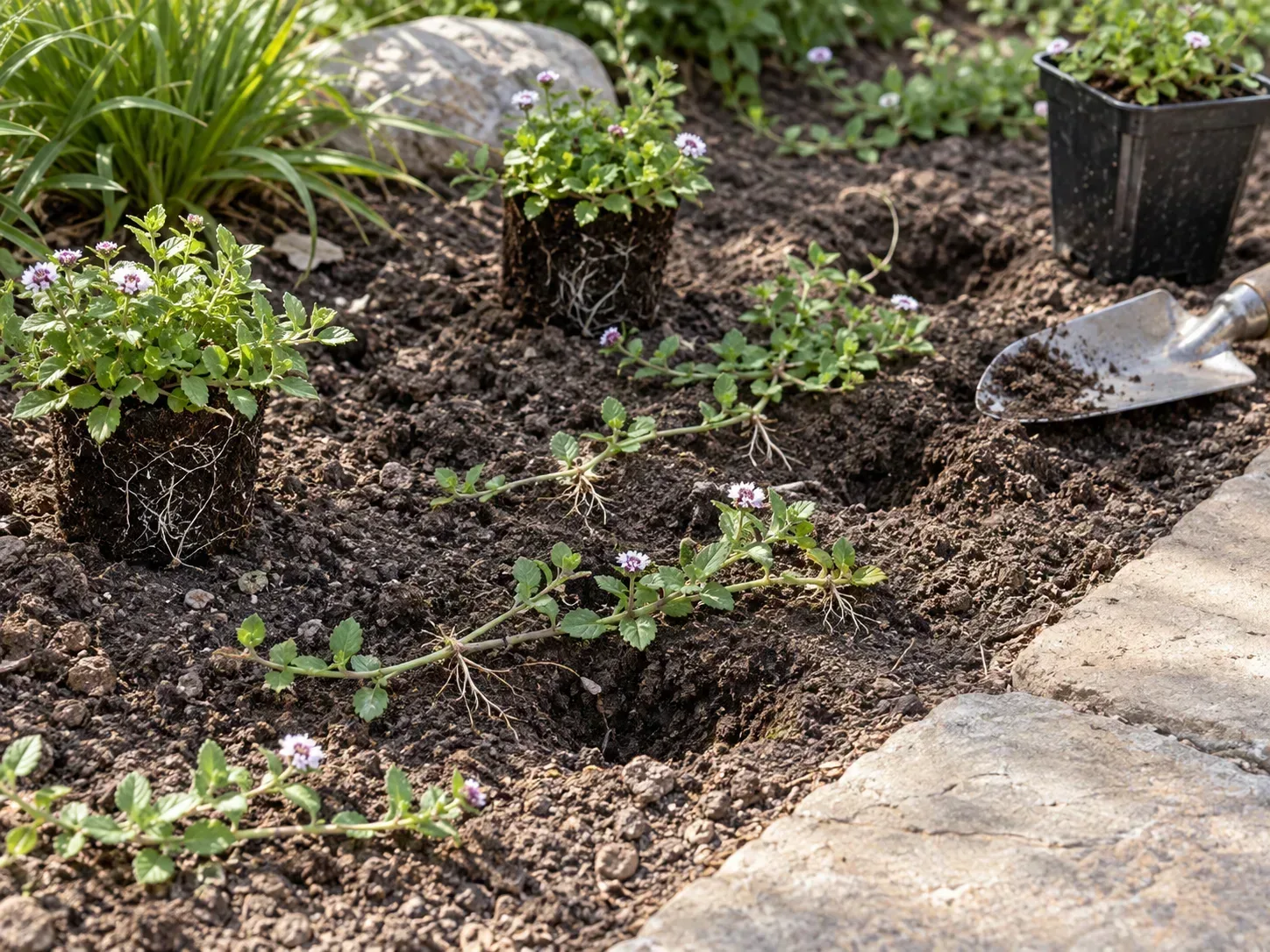
Clear perennial weeds before installing frog fruit. A young mat cannot immediately outcompete established bermudagrass, nutsedge, or a deep-rooted broadleaf weed, and pulling those weeds later can disturb the new runners. Loosen only the planting zone, set each plug at the same depth it was growing in its pot, and press soil around the roots without packing it into a hard layer.
Space plants according to your patience and budget. Close spacing fills faster but increases the initial plant count; wider spacing costs less and gives weeds more room during the first season. A useful middle path is to place plugs far enough apart for runners to meet, then use a thin mulch layer or hand-weeding to protect the gaps. Keep coarse mulch from burying the creeping stems or covering the nodes that you want to root.
Water immediately after planting, then inspect the soil every few days in hot, windy weather. The goal is consistently moist root-zone soil while roots and nodes establish, not a permanently wet bed. Once new growth is obvious and runners resist a gentle lift, start extending the interval between waterings.
Water During Establishment and Drought
Newly planted frog fruit needs the most attention during the first several weeks. Water deeply enough to wet the root ball and the surrounding soil, then let the surface begin to dry before watering again. In hot, dry weather, once or twice a week may be a useful starting point for a ground planting, but sandy soil, wind, slope, rainfall, and plant size can change that schedule. Check the soil instead of obeying the calendar. Gardenia
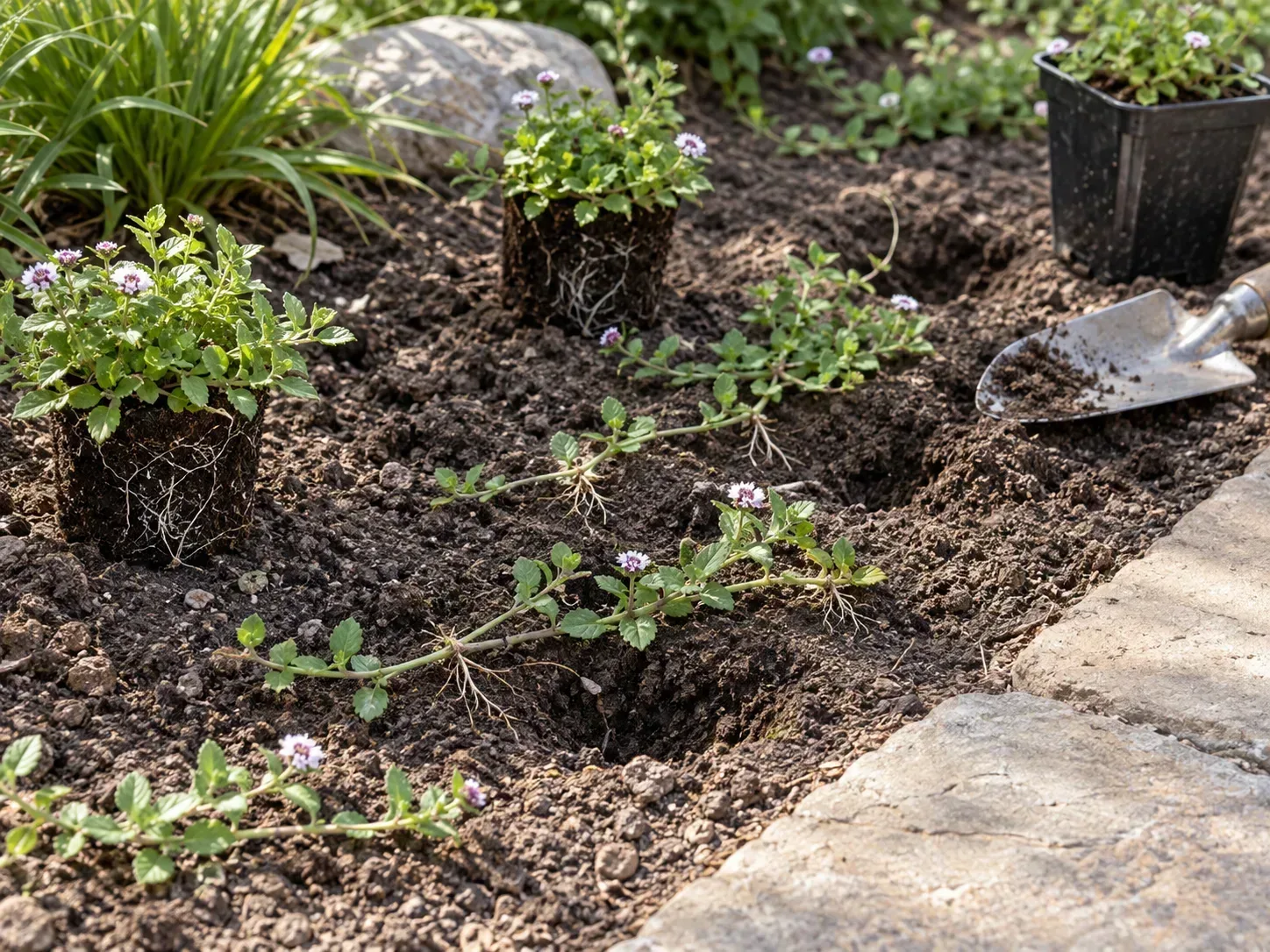
Use a finger or small trowel to look below the surface at the edge of the root ball. If the soil is dry there while the original potting mix is still damp, water slowly around the whole plug so roots are encouraged outward. If the bed is wet several inches down, wait. Short daily sprinkling can leave the surface damp while the deeper root zone stays dry, and it can encourage shallow rooting and weed germination.
Once the mat has knit together, shift to deep, occasional watering. Established frog fruit can ride through dry periods and often rebounds when rain returns, but drought tolerance is not a promise of constant green color in every climate. Prolonged heat on a shallow, rocky slope may cause temporary thinning. Water the root zone thoroughly, then allow it to drain; do not keep the plant wet in an attempt to preserve a lush appearance.
Containers and hanging baskets are the exception to the low-water reputation. They have limited root volume, more exposed sides, and often more wind, so they dry faster than in-ground mats. Use a pot with drainage holes and a free-draining mix, and water when the mix is drying rather than when the foliage has already collapsed.
Feed Lightly, If at All
Frog fruit is a light feeder. In average soil, fertilizer is usually optional, and excessive nitrogen can produce soft, fast runners that need more trimming and compete more strongly with nearby plants. Gardenish recommends light feeding rather than frequent applications, and Dallas County Master Gardeners similarly describes fertilization as conditional rather than routine. Gardenish Dallas County Master Gardeners
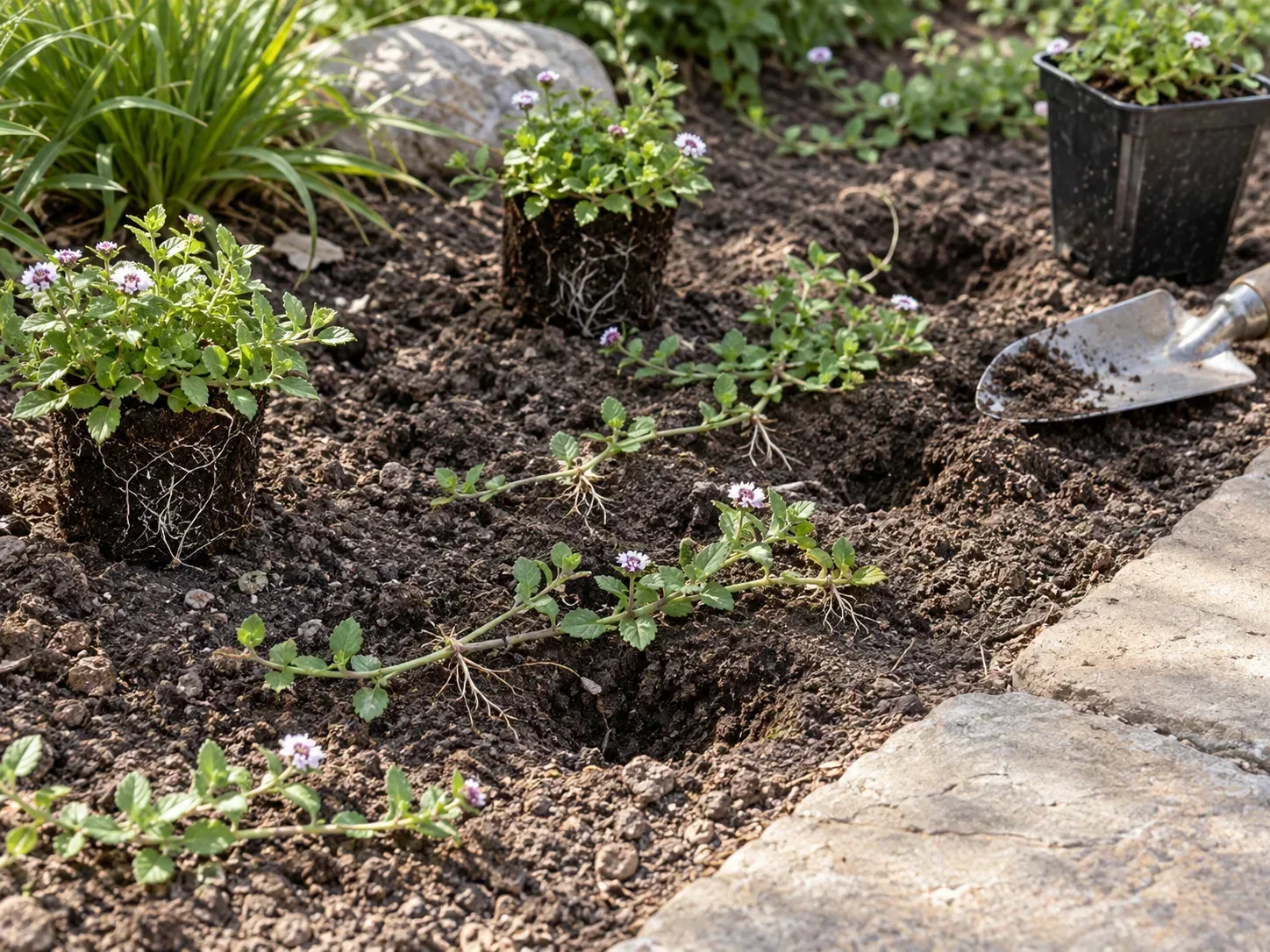
If growth is thin across the whole planting and the soil is genuinely poor, apply a modest balanced fertilizer or a thin compost top-dressing in spring, following the product label. Water after granular fertilizer so it moves into the root zone, and keep it off the leaves. Do not add a bloom fertilizer every few weeks simply because flowers are small; light, water, and warm weather have a larger role in flowering than a heavy feeding program.
When frog fruit is thriving but spreading too aggressively, feeding is not the answer. Reduce fertilizer and irrigation to what the site actually needs, edge the mat, and remove runners from places where they do not belong. A leaner planting is often easier to manage and more resilient between rains.
Mow, Prune, and Edge Without Losing the Plant
Pruning is a design choice, not a survival requirement. Leave a low-traffic patch unmowed if you want the most flowers and a loose, wildlife-friendly look. If the mat becomes tangled, climbs into a path, or looks uneven, trim after a major flowering flush or use a mower set high. UF/IFAS recommends mowing to 4 inches or higher for appearance and recovery. UF/IFAS Gardening Solutions
Avoid scalping during drought, extreme heat, or immediately before a hard freeze. Removing too much leaf area at the wrong time can slow recovery and expose the crown and soil. For a lawn-like patch, mow only often enough to keep the surface usable; for a bed edge, hand snips or a string trimmer may be more precise than a mower.
Edge two boundaries: the one you want to see and the one you want to protect. Pull or cut runners that are crossing into ornamental crowns, then remove the pieces from the bed if rain is expected. Nodes can root wherever they lie against damp soil, so leaving trimmed runners on irrigated mulch can unintentionally create new plants. Clean tools if you are moving from a diseased plant, but routine sterilizing is not a substitute for correct watering and drainage.
Propagate Frog Fruit
Vegetative propagation is the practical choice when you want a predictable clone of a vigorous plant. Frog fruit roots where stems touch soil, so you do not need elaborate equipment. The best method depends on what you have: a rooted runner is fastest for moving coverage, while a stem cutting is useful when you want to start several plants in small pots.
Rooted Runners and Division
Find a runner that has already formed roots at one or more nodes. Cut between the parent plant and the rooted section, lift it with as much root and attached soil as possible, and replant it at the same depth. Keep the new piece shaded from the harshest afternoon sun for a few days if it was moved with very little root, then water it consistently until new growth resumes.
An established mat can also be divided into sections. Each piece should include living stems, several nodes, and some roots. Set divisions out promptly rather than letting them dry on a hot surface. This method has a useful advantage over seed: you can see exactly what plant you are moving, and the new patch begins with a rooted connection.
Do not collect pieces from roadsides or drainage ditches for a home garden. Besides contamination and mowing concerns, you may misidentify the plant or move an unwanted weed. Buy from a native-plant nursery or take a cutting from a plant you know and have permission to propagate.
Stem Cuttings
Take a 4- to 6-inch piece of healthy stem with two or three nodes during active growth. Remove leaves from the lower portion, place at least one node into moist potting mix, and firm the medium around it. You can also root frog fruit in water, but transfer it to soil once roots are formed so the transition is not delayed by a long period of water-only growth. UF/IFAS specifically notes that cuttings can be placed in wet potting soil or water. UF/IFAS Gardening Solutions
Keep the cutting in bright light without harsh midday exposure and keep the medium evenly moist, never waterlogged. New roots may form quickly in warm conditions, but timing varies with temperature and cutting health. Test by looking for fresh growth and gentle resistance rather than tugging repeatedly. Once rooted, harden the plant to its final sun exposure over several days and water it like a new plug.
Protect the Bloom and Pollinator Season
Frog fruit flowers over a long warm-season window, with UF/IFAS listing May through October for Florida conditions. Local timing shifts with frost, rainfall, latitude, and how much sun the mat receives. The flower heads are not large, so judge the display at planting scale: a mass of stems can make more visual impact than a single specimen. UF/IFAS Gardening Solutions
Let at least part of the planting flower before mowing or trimming if pollinator value is a priority. The flowers supply nectar, while the foliage supports caterpillars of several butterfly species in regions where those butterflies occur. That means a completely manicured patch can still be green but provide less of the habitat you planted it for. A useful compromise is to mow a path or small play area and leave a wider, flowering section intact.
Do not spray broad-spectrum insecticides on a flowering patch as a first response to seeing insects. Bees, butterflies, wasps, and other visitors are part of the reason to grow frog fruit, and not every insect on the plant is feeding on it. Inspect for actual damage, identify the pest, and start with nonchemical steps such as a water spray or removal of heavily infested stems. If a pesticide is necessary, follow the product label and avoid treating open flowers.
Troubleshoot Thin, Brown, or Leggy Growth
Start with location and water before reaching for fertilizer. Thin growth usually points to deep shade, new-planting stress, weed competition, or repeated traffic before the mat has rooted. Brown growth may be drought, frost, a harsh mow, or dead tissue at the end of a seasonal cycle. Leggy growth often means too much shade or too much moisture and nitrogen relative to available light.
Check the pattern. If the entire patch is thin on the shaded side of a tree, increase light by pruning nearby branches or move expectations toward foliage rather than flowers. If only the spaces between plugs are struggling, weed competition or uneven irrigation is more likely. If leaves yellow while the soil stays wet, reduce irrigation and investigate drainage before pruning.
Frog fruit generally has few serious pest or disease problems, but stressed plants can attract sap-feeding insects. Look under leaves for aphids, mealybugs, or mite stippling and webbing. Remove badly affected tips, rinse small infestations with water, and improve the growing conditions that caused stress. For persistent problems, use a treatment labeled for the plant and pest rather than improvising a household spray.
Winter Dieback and Freeze Recovery
In frost-free or mild climates, frog fruit may stay evergreen or semi-evergreen. In colder regions, foliage can brown or disappear after freezing weather and then return when warm conditions resume. UF/IFAS notes that it may become dormant in winter or drought and recover with consistent warmth; Gardenia likewise describes cold-related dieback as a regional response rather than a permanent diagnosis. UF/IFAS Gardening Solutions Gardenia
Wait before declaring a freeze-damaged patch dead. Scratch the surface of a stem near a node; living tissue may remain green even when exposed leaves are brown. Remove mushy or clearly dead material once the weather settles, but avoid heavy pruning during a freeze cycle. Protect small new plantings with a light, breathable cover when a hard freeze is forecast, and keep the soil drained rather than wet and cold.
Use Frog Fruit as a Lawn Alternative
Frog fruit can replace or mix with turf in the right kind of lawn: warm climate, low to moderate wear, flexible appearance standards, and room for seasonal variation. It can work between stepping stones, under open trees with adequate light, or in a mixed planting with compatible grasses. UF/IFAS notes that it can blend with lawns including bahiagrass or St. Augustinegrass, which may be a more realistic strategy than removing every blade of turf. UF/IFAS Gardening Solutions
The trade-offs are important. Frog fruit is less uniform than turf, flowers instead of staying visually blank, may brown after a freeze or prolonged drought, and can wander into beds. It handles some walking but is a poor choice for a daily sports surface or a corridor where people cut the same line every hour. Place stepping stones through high-use routes and reserve frog fruit for the spaces around them.
For a lawn conversion, start with a test patch rather than planting the entire yard. Record how many hours of direct sun it receives, how quickly water drains after rain, where people actually walk, and whether winter color matters. Install plugs in the best section first, water them through establishment, and evaluate coverage after one warm growing season. This prevents a mismatch between a plant that is ecologically useful and a lawn standard the site cannot support.
Grow Frog Fruit in Containers and Hanging Baskets
Frog fruit makes a useful spiller for a large container or hanging basket, especially when you want flowers close to eye level. Choose a pot with several drainage holes, use a well-drained potting mix, and leave enough room for runners to trail without immediately touching every neighboring pot. A container also gives you more control over spread, but it removes the deep soil buffer that helps an in-ground plant handle drought.
Place the container in full sun for the strongest flowering, or bright partial shade if afternoon heat dries the pot too quickly. Check moisture by lifting the pot or feeling below the surface. Water thoroughly until excess drains, then empty any saucer so the roots are not left standing in water. In hot weather, a container may need attention several times while an established bed needs only occasional deep watering.
Trim runners when they become tangled or root into nearby pots. You can use the removed pieces as cuttings or tuck a node against the soil in another container. Fertilize sparingly; frequent feeding produces more length, not necessarily a better-looking hanging basket. If the plant outgrows the pot, divide and replant rather than moving it into an oversized container that stays wet after irrigation.
Conclusion
Frog fruit succeeds when you use its natural habits to your advantage. Give it sun or bright partial shade, soil that drains, regular water while plugs and nodes root, and enough room for a mat to widen. After establishment, let the soil dry between deep waterings, feed lightly if the site truly needs it, and trim only when the spread or height no longer suits the space.
Treat it as a flowering groundcover with limits, not as maintenance-free synthetic turf. A test patch, a clear edge, and a protected flowering section will tell you more than a rigid care calendar. In the right warm-climate site, Phyla nodiflora can cover bare ground, soften paths, and provide nectar and caterpillar habitat with very little intervention.



