How to Grow and Care for Black Lace Elderberry®
Learn Black Lace elderberry care with cultivar-specific advice on sun, soil, watering, pruning, pollination, propagation, pests, and raw-fruit safety.
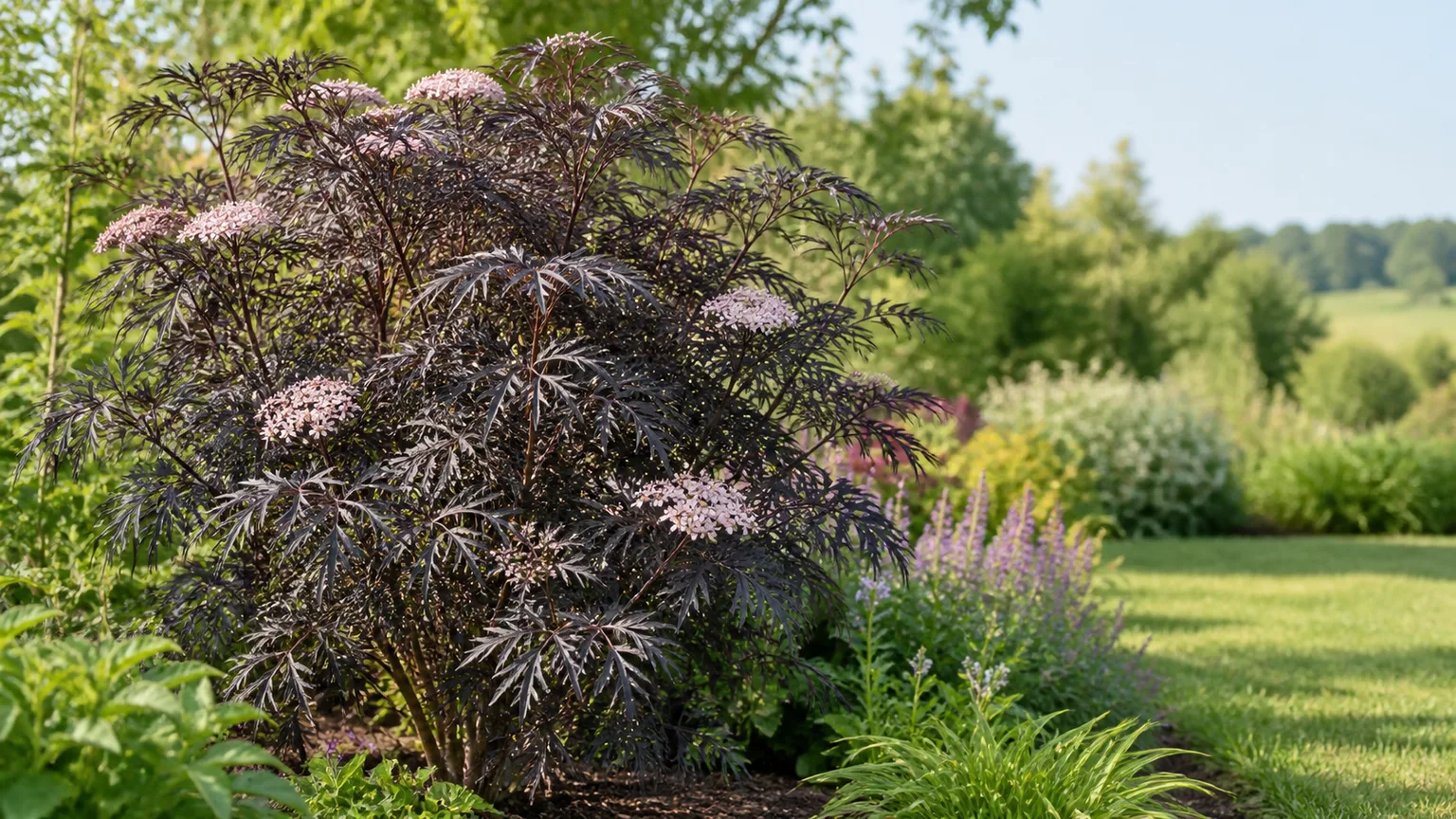
Black Lace elderberry is the shrub to choose when you want the structure of an elderberry with foliage dark enough to play the role of a purple-leaf tree. Its finely cut leaves, pale pink flowers, and fast growth make it a strong focal point, but that speed comes with a price: it needs room, steady moisture while young, and a plan for suckers before they turn one plant into a thicket.
The most important care decision is not a fertilizer brand or a watering gadget. It is deciding whether you want flowers and berries or the darkest foliage and the smallest possible shrub. Those goals change the best pruning time, the amount of fruit you can expect, and even which companion elderberry to buy.
Before You Plant: Black Lace Is an Ornamental Elderberry
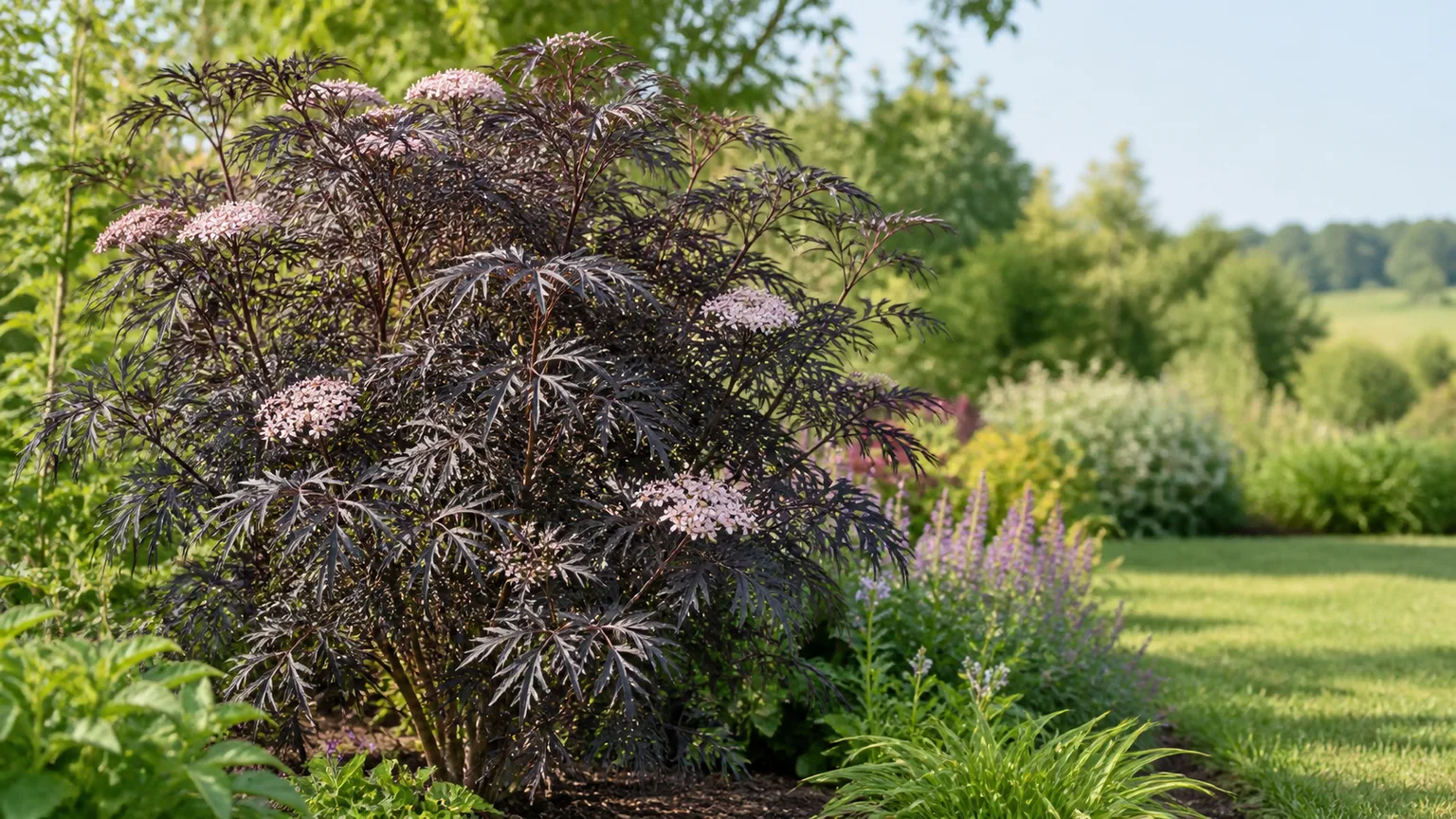
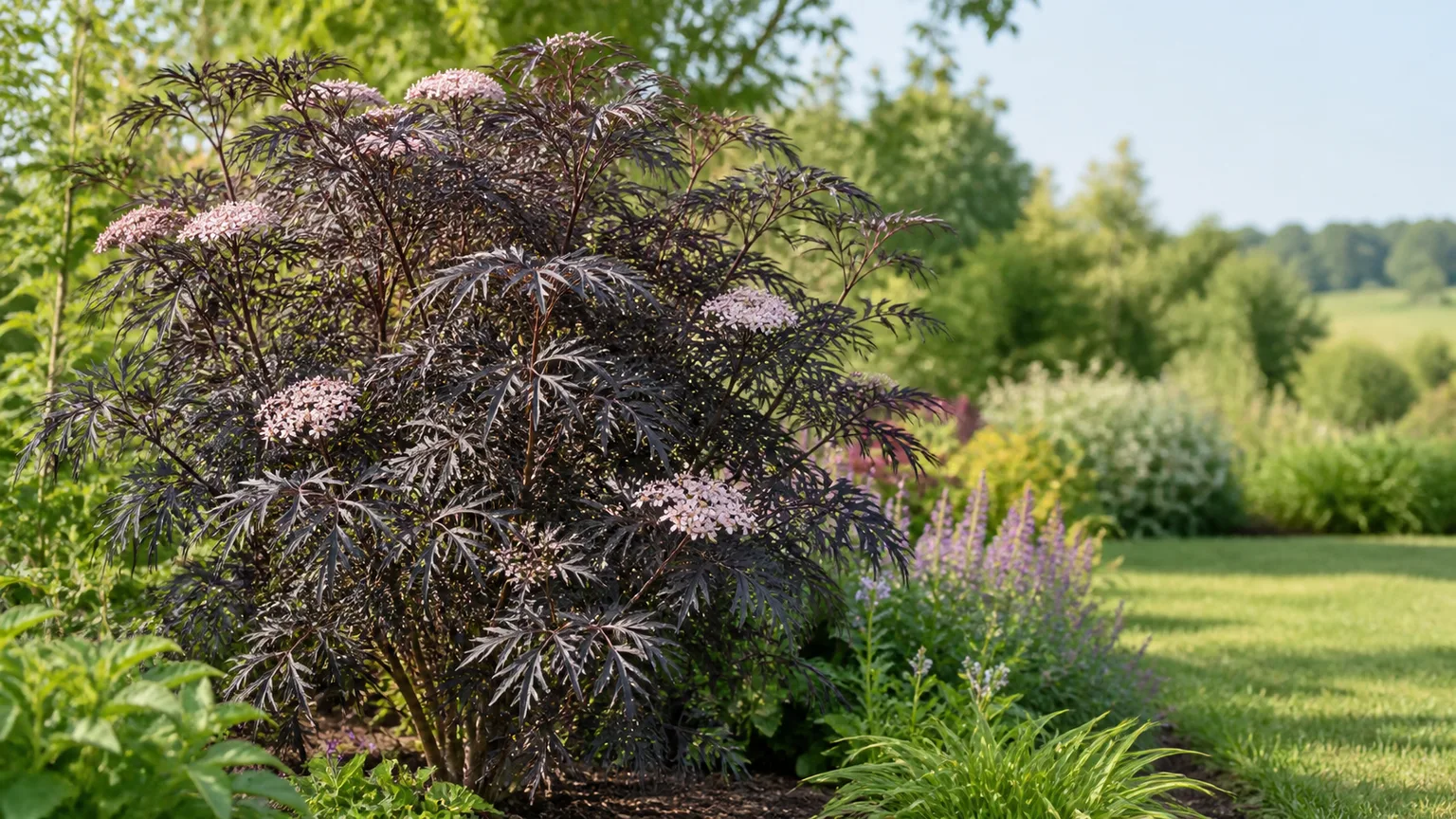
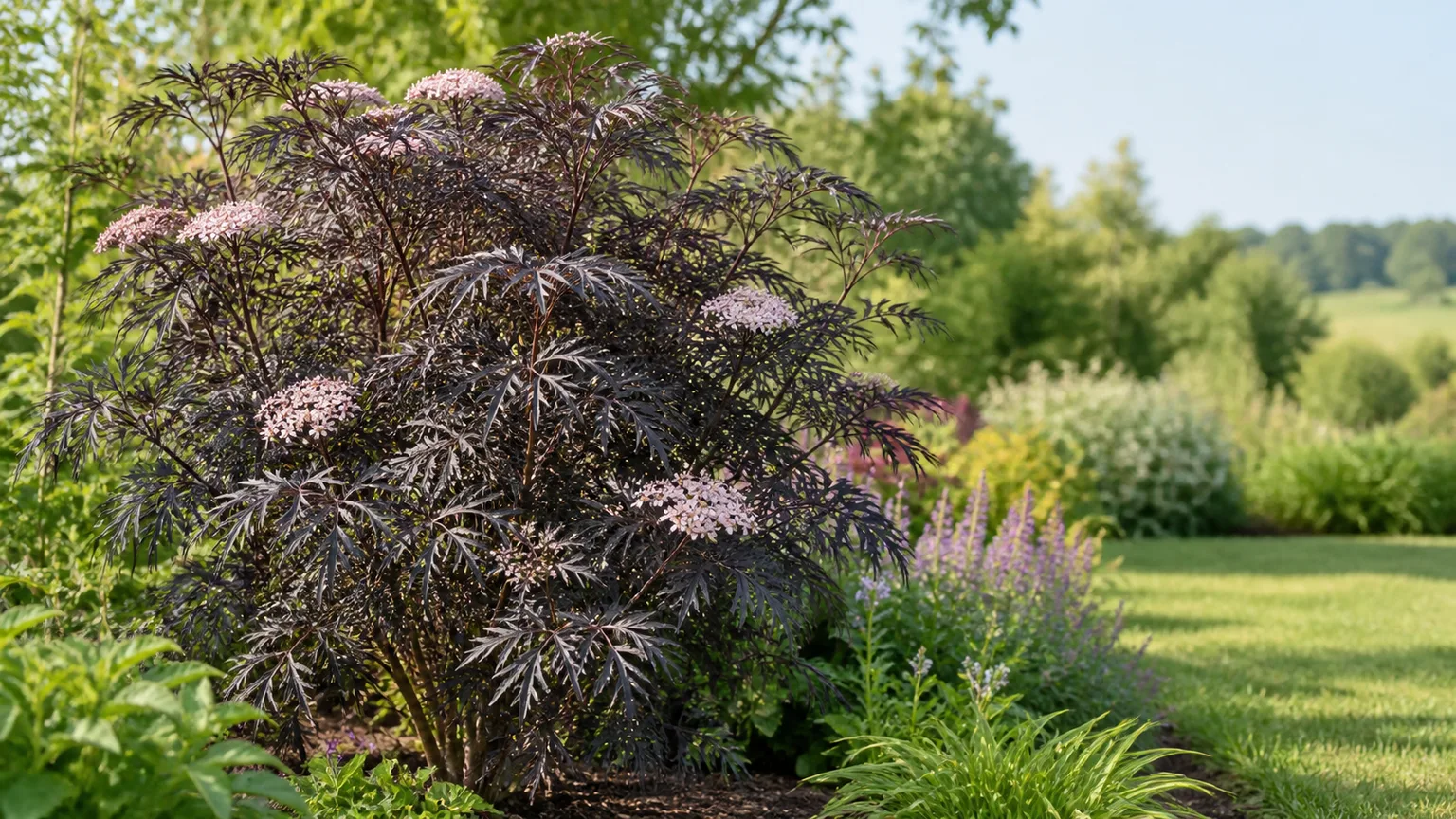
Black Lace® is the trade name for Sambucus nigra ‘Eva’, a cultivated form of European elderberry. The plant patent description identifies ‘Eva’ by the combination of very dark purple foliage and a laciniate, or deeply cut, leaf shape. In a garden, that texture can resemble a Japanese maple from a distance, but the plant grows as a deciduous, multi-stemmed shrub rather than a single-trunked ornamental tree. (Google Patents)
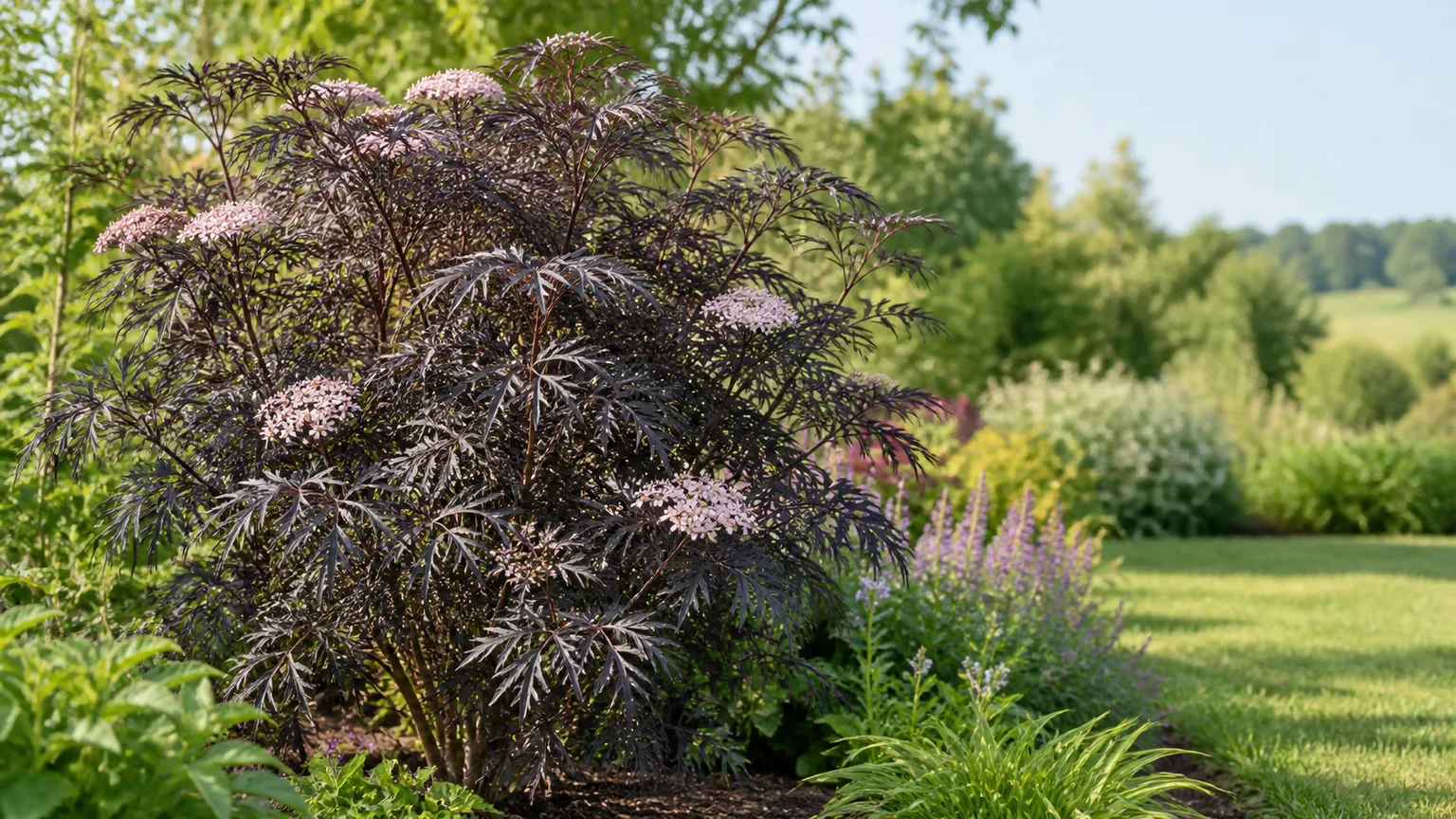
This cultivar is usually grown for foliage and landscape structure first. It can make flowers and black-purple fruit, but a product page from Proven Winners specifically lists compatible elderberry cultivars for berry production and describes the plant as a specimen, border, screen, or container shrub. If a heavy harvest is the main reason you are planting, compare it with fruit-focused American elderberries such as Sambucus canadensis instead of assuming a purple-leaf ornamental will be the best crop plant. (Proven Winners; NC State Extension; Gardening Know How)
Expect seasonal change. New leaves may open greener or reddish before deepening in good light, the shrub loses all of its leaves in autumn, and bare stems remain through winter. That leaf drop is normal; it is not a sign that a healthy Black Lace elderberry has died.
Black Lace Elderberry at a Glance
Use this profile as a planning baseline, not a guarantee stamped onto every plant tag. Nursery production, climate, pruning, and whether you remove suckers all change the final footprint.
| Trait | What to expect |
|---|---|
| Botanical name | Sambucus nigra ‘Eva’ |
| Plant type | Deciduous, upright, multi-stemmed shrub |
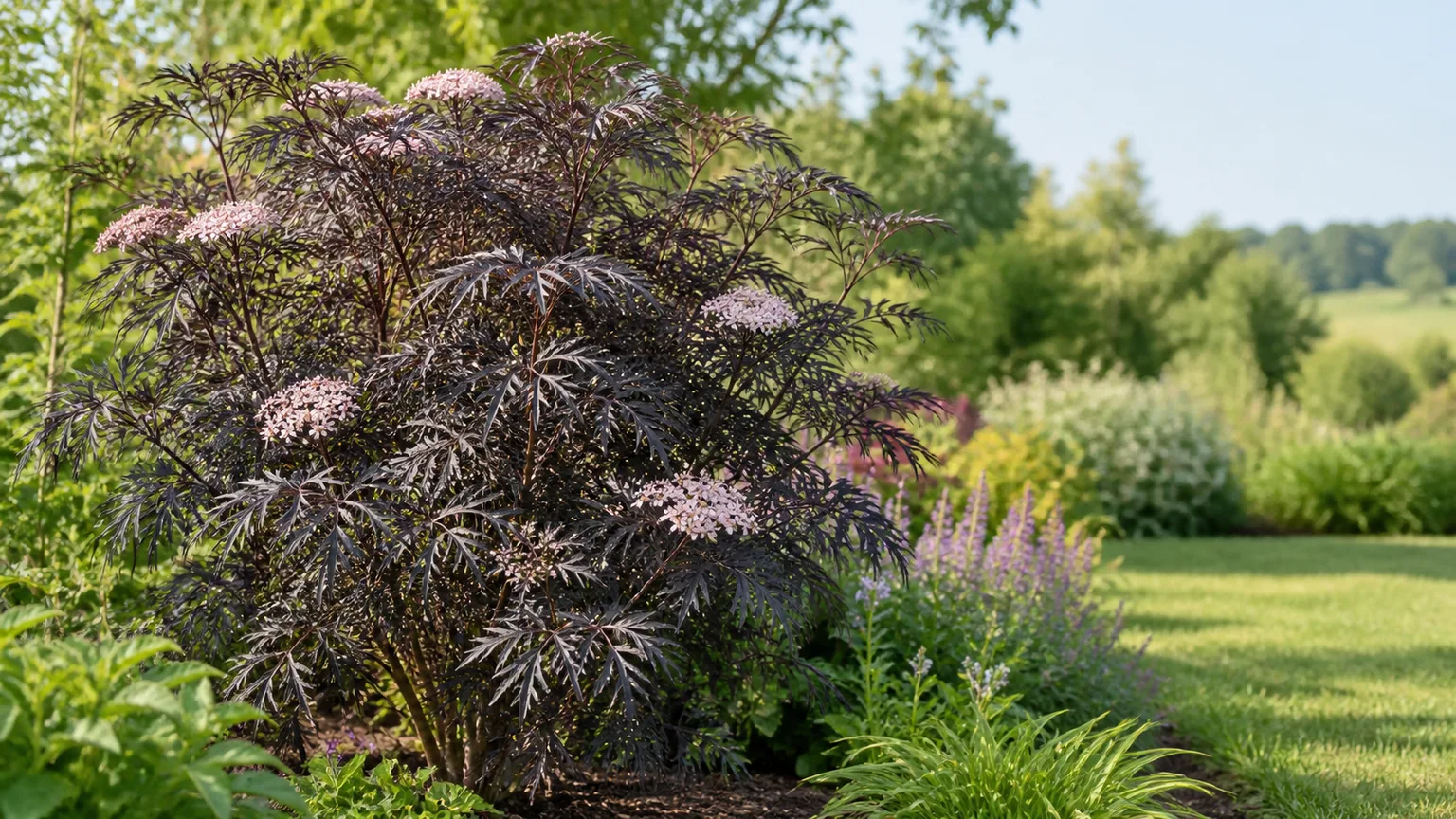
| Mature size | About 6–8 feet tall and wide in the cultivar profile; allow more room if you let suckers develop |
| Hardiness | Commonly listed for USDA Zones 4–7; confirm the local nursery tag and winter exposure |
| Light | Part sun to full sun; full sun gives the strongest color and flowering where heat is not excessive |
| Soil | Moderately fertile, moisture-retentive but well-drained soil; clay is tolerated |
| Flowers | Pale pink, lemon-scented clusters in early summer |
| Fruit | Small dark purple-black berries, with a compatible pollinator improving fruit production |
| Maintenance | Moderate to high if you want a tidy footprint and controlled renewal |
Purdue Arboretum Explorer records the cultivar at 6–8 feet tall and wide, with dark purple deeply cut foliage, pale pink flowers in June and July, medium-to-wet soil tolerance, and high maintenance. Proven Winners lists a similar mature size and a hardiness range of Zones 4a–7b, while NC State’s broader species profile warns that European elderberry grows rapidly through suckering and can become weedy in some regions. (Purdue Arboretum Explorer; Proven Winners; NC State Extension)
Choose a Site for Color, Flowers, and Manageable Growth
Pick the site before you bring the shrub home. Black Lace elderberry is forgiving about soil texture, but it is much less forgiving about being planted where its mature spread, root suckers, or wet-season weight will constantly conflict with a walkway, foundation, lawn mower, or small ornamental bed.
Give It Sun Without Baking the Foliage
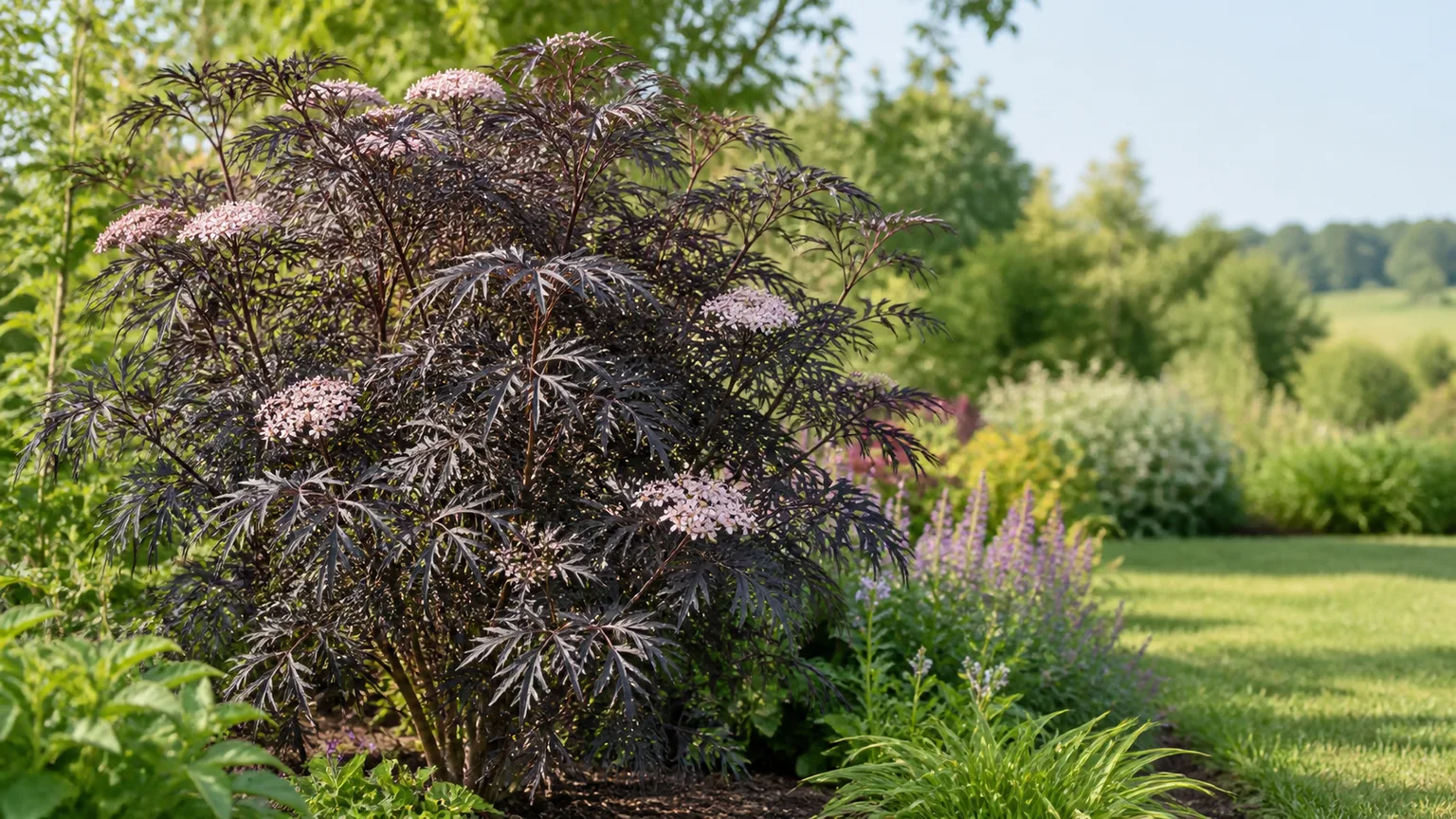
Start with four to six hours of direct sun, and aim for more if your summers are moderate. Full sun generally improves the depth of the purple foliage and supports heavier flowering. In a hot, bright climate, morning sun with some afternoon protection can reduce scorch and water stress, but too much shade usually turns the plant into a green, leafy shrub with fewer flowers.
Color is not a switch that stays on under every condition. Proven Winners notes that Black Lace’s dark color is strongest in cool climates and that hot conditions can produce greener foliage. That is a useful expectation-setting detail: if your site is a reflected-heat corner beside concrete, moving to a place with morning sun and less afternoon heat may improve the result more than adding fertilizer. (Proven Winners)
Avoid the two extremes of a deep woodland shadow and an exposed, heat-reflecting wall. A bright border, rain-garden edge that does not stay submerged, or the back of a mixed shrub bed is usually a better fit than a dry foundation strip or a permanently dark north-facing pocket.
Build Moisture-Retentive, Draining Soil
The ideal root zone stays evenly moist after watering while excess water moves away from the crown. RHS describes Sambucus nigra as adaptable to clay, loam, sand, and several soil reactions when the ground is moist but well drained. NC State similarly recommends moist, high-organic-matter soil with good drainage and notes that the species tolerates heavy clay. (RHS plant profile; NC State Extension)
That does not mean “plant in a swamp.” A site that stays puddled around the stems after ordinary rain can suffocate roots and keep foliage wet for too long. If you have heavy clay, improve the whole planting area modestly with finished organic matter or choose a raised row; do not create a small pocket of rich potting mix inside dense clay, because that can collect water around the root ball.
Test the soil before changing pH. Black Lace can grow in slightly acidic, neutral, and even somewhat alkaline conditions, so adding lime or sulfur by guesswork is more likely to create a new problem than to reveal the shrub’s potential. The useful amendment is usually a moderate layer of finished compost worked through the surrounding bed, not a fertilizer-heavy hole.
Reserve Space for a Shrub That Suckers
Measure at least the mature 6–8 foot spread from the center of the planting hole to paths, fences, and other shrubs. If the shrub will be pruned hard each year and suckers removed promptly, that may be enough. If you want a relaxed screen, wildlife thicket, or room to walk behind it, give it more space than the label’s smallest number.
Root suckers are new shoots that emerge from the root system or near the base rather than from the branch tips. They are not automatically a disease; they are part of the plant’s vigorous growth habit. Decide whether they are useful before planting: keep a few for an informal hedge, or remove unwanted shoots while they are small so the shrub stays a shrub instead of becoming a colony.
Plant Black Lace Elderberry in the Right Season
Container-grown elderberries can be planted in spring or autumn when the soil is workable. Spring is the safer choice at the coldest edge of the range because it gives roots a full growing season before hard winter. Autumn is excellent in milder regions if the plant can root before the ground freezes, and it often reduces the stress of summer heat.
Do not plant into frozen ground, a saturated bed, or a heat wave when you cannot keep the root ball moist. The RHS recommends spring and autumn as the best windows and advises avoiding wet or frozen winter soil and dry summer spells. (RHS growing guide)
Step-by-Step Planting
- Water the nursery plant first. Let the root ball absorb water before you disturb it, especially if the potting mix has pulled away from the sides of the container.
- Dig wide, not deep. Make the hole roughly twice as wide as the root ball and no deeper than the root flare needs. The uppermost substantial roots should end up level with, or slightly above, the surrounding soil.
- Check the flare and roots. If circling roots are tight, tease a few loose or make shallow vertical cuts through the outer mat. Do not bury the lower stems simply because the old scrape of soil on the trunk sits high in the pot.
- Backfill with native soil. Mix in a modest amount of finished compost if the bed is poor, but do not replace the surrounding soil with a rich, water-holding plug.
- Water slowly. Soak the root zone to settle air pockets, then add more soil if the level drops. A slow first watering is more useful than a quick splash that runs off the surface.
- Mulch without smothering the stems. Spread 2–3 inches of organic mulch over the root zone, leaving a clear ring several inches wide around the base.
The first few weeks are about root contact and even moisture, not rapid top growth. If the shrub wilts repeatedly despite watering, check whether water is actually entering the root ball; a dry nursery mix can repel water while the surrounding soil looks wet.
Water, Mulch, and Fertilize With Restraint
Water a newly planted Black Lace elderberry regularly through its first growing season, adjusting for rainfall, temperature, soil, and drainage. The goal is a root zone that is moist several inches down, not a permanently wet surface. A soaker hose or drip line is useful because it wets the soil without keeping leaves and flower clusters damp.
Use a simple check rather than a calendar-only routine. Push a finger or narrow trowel several inches into the soil just outside the root ball; if that layer is dry and the plant is not in a naturally wet site, water deeply enough to wet the full root zone. During prolonged drought, established plants may also need supplemental water even though mature elders are more drought tolerant than newly planted shrubs. (RHS growing guide)
Mulch reduces evaporation, buffers temperature swings, and limits grass competition. Refresh it when it thins, keep it away from the stems, and pull weeds rather than piling mulch against the crown. A wet mulch collar can hide cankers, encourage decay, and make winter rodent damage harder to spot.
Black Lace elderberry does not need an aggressive feeding program. Spread finished compost in spring, and use a balanced tree-and-shrub fertilizer only if a soil test or weak growth gives you a reason. If flowers and berries matter, avoid chasing dark foliage with high nitrogen: lush shoots can come at the expense of flowering and may be more vulnerable to bending, wind, or winter damage.
Prune According to Your Goal
Pruning advice for Black Lace elderberry sounds contradictory because gardeners are often pursuing two different plants. The cultivar’s product information says it blooms on old wood and recommends pruning immediately after blooming; the RHS says established elder can be hard pruned in late winter or early spring to control size and encourage vigorous ornamental foliage. Both can be useful when matched to the outcome you want. (Proven Winners; RHS growing guide)
The basic sequence is always the same: remove dead or broken wood first, then decide whether you are thinning, renewing, or resetting the shrub. Use clean, sharp bypass pruners for small stems and a pruning saw for larger canes. Make cuts close to the base or just outside a branch collar, without leaving long stubs.
Renewal Pruning for Flowers and Berries
If you want the shrub’s pink flowers and fruit, prune lightly immediately after flowering or soon after the fruiting display, depending on your local season. This preserves the older wood that carries the next flush of flowers while still giving you time to remove damaged, crossing, or badly placed branches.
For a mature, crowded plant, remove the oldest and weakest canes at ground level rather than shearing every stem to the same height. A practical renewal system is to take out roughly one-third of the oldest wood over several seasons, leaving a mix of strong young and mature stems with enough open space for light and air. If you remove all flowering wood at once, you may get handsome new foliage but little or no bloom the following season.
Remove suckers outside the footprint when you find them. Cutting only the tip can leave a short-lived stump that sends up more shoots; severing the sucker at soil level, and digging out a small connected root section when practical, is a cleaner way to slow expansion.
Hard Pruning for Foliage and Size Control
If the plant is too large, too bare at the base, or grown chiefly for its foliage, a dormant late-winter or very early spring reset can be appropriate. Black Lace can be cut back severely and regrown as a smaller, fuller shrub, but you are trading away that season’s old-wood flowers and likely its berry crop.
Do not hard prune automatically just because the plant is young. Let it establish for a couple of years unless broken stems or a serious siting problem require action. After a reset, feed only modestly, water consistently, and allow the new stems to mature; repeated severe cuts can create a cycle of soft, crowded growth that needs constant correction.
Understand Flowers, Berries, and Pollination
Black Lace’s flower clusters are pale pink to creamy pink and appear in early summer, usually against the darkest foliage when the shrub is receiving enough light. Flowers are attractive to pollinating insects, and the later berries can feed birds. NC State lists elderberry as wildlife-friendly but also notes weak wood, rapid growth, and the potential for aggressive spread. (NC State Extension)
One Black Lace plant may flower and set some fruit, but do not buy it expecting a heavy crop without a compatible pollinator. Proven Winners recommends ‘Black Beauty’, ‘Instant Karma’, or ‘Laced Up’ near Black Lace for berry production. Place the plants close enough for pollinators to move between them, but far enough apart for mature spread, pruning access, and airflow. (Proven Winners)
Flowering can be sparse for several understandable reasons: the shrub is still establishing, shade is too deep, drought interrupted bud development, high nitrogen pushed leaves instead of flowers, or late pruning removed the old wood that would have bloomed. Diagnose those conditions in that order before assuming you need a different fertilizer or a second plant.
If fruit is the priority, choose cultivars that overlap in bloom and ripening in your climate. A compatible name on a plant tag is not a guarantee of a crop if one shrub is heat-stressed, pruned at the wrong time, or flowering weeks apart from its partner.
Propagate ‘Eva’ Responsibly
The old U.S. plant patent for Sambucus nigra ‘Eva’ is listed by Google Patents as Expired—Lifetime, with an adjusted expiration date in 2023. That corrects the blanket idea that any cutting of Black Lace is automatically a copyright violation. A plant patent, a trademarked marketing name, a nursery contract, and the law in another country are different questions, so read the label and any purchase terms before multiplying or selling a named cultivar. (Google Patents)
The safest practical rule is: propagate for your own garden only when you have confirmed that no current restriction applies, and do not market plants under a branded name unless you have the right to use that name. If you want a low-ambiguity propagation project, use a clearly unpatented elderberry selection or nursery stock sold with propagation permission.
Seed is a poor way to reproduce ‘Eva’ because seedlings recombine genes and will not reliably keep the parent’s near-black, laciniate foliage. A rooted sucker or cutting is a clone and is much more likely to match the parent, but it also carries the parent plant’s vigor and tendency to spread.
Softwood Cuttings, Step by Step
The cultivar’s patent description records softwood cuttings rooted in a coarse, free-draining medium with bottom heat, high humidity, and protection from direct sun. A home gardener can use the same principles on a smaller scale: young flexible growth, clean tools, air-filled medium, steady moisture, and bright shade. The familiar home method of using 4–6-inch shoots, removing lower leaves, and keeping the cuttings in bright indirect light is also outlined by GardenBeast, although a home setup usually roots more slowly than a commercial propagation bench. (Google Patents; RHS growing guide; GardenBeast)
- Take cuttings in late spring or early summer from healthy, current-season shoots that bend before they snap.
- Cut 4–6-inch sections just below a node, then remove the leaves from the lower half. Keep one or two leaf sets at the top.
- Stick the cuttings into a clean, damp propagation mix that drains freely. A simple humidity cover can reduce water loss, but it must not seal in stagnant, dripping conditions.
- Keep the container in bright indirect light and warm, stable conditions. Mist only when needed; the medium should be moist, never swampy.
- Tug very gently after several weeks. Resistance and new growth suggest rooting, but do not pot up a cutting merely because it has stayed green.
- Harden rooted plants gradually, then grow them on until the root system holds the mix together before transplanting outdoors.
Softwood cuttings can fail from rot, wilt, or excessive heat even when the parent is healthy. Take more than one, label the cultivar, and discard any cutting with blackened tissue or a sour-smelling medium rather than trying to rescue a contaminated batch.
Prevent Pests, Diseases, and Winter Damage
Black Lace elderberry is not pest-free, but many problems become severe only when the shrub is stressed or crowded. NC State lists aphids, spider mites, cankers, leaf spot, and powdery mildew; RHS also notes aphids, red spider mite, and occasional diseases such as verticillium wilt. (NC State Extension; RHS plant profile)
Good spacing and base watering are the first line of defense. Thin dense stems, remove diseased material, irrigate the soil instead of repeatedly wetting the leaves, and keep fallen debris from forming a damp mat around the crown. Do not spray a product just because a leaf has one spot; identify the pattern and check whether the rest of the plant is growing normally.
Diagnose Stress Before You Reach for Spray
- Curled or sticky new growth: Inspect young shoots and leaf undersides for aphids. A strong stream of water can dislodge a light infestation; persistent problems call for a locally appropriate, label-directed treatment that will not harm pollinators.
- Fine stippling and dusty webs in hot weather: Check for spider mites, especially when the shrub is dry and exposed. Restore moisture and reduce dust stress before deciding whether treatment is needed.
- White powder on leaves: Powdery mildew is favored by poor airflow and humid foliage. Thin crowded growth, water at the base, and remove heavily affected leaves rather than trying to hide the problem with repeated sprays.
- Spots, dieback, or sunken bark: Prune affected stems back to healthy wood during dry weather, disinfect tools between cuts, and dispose of diseased material. If a canker reaches major structural stems or the shrub declines despite corrected care, ask a local extension office or arborist for a diagnosis.
- Broken branches after snow or wind: Elderberry wood is relatively weak. Remove torn branches cleanly, keep the shrub’s center open, and use a temporary winter cage where rabbits or other gnawing animals are a problem.
This order matters because a pesticide cannot correct buried roots, drought, poor airflow, or a shrub planted in the wrong climate. If several symptoms appear together, inspect soil moisture, planting depth, mulch contact, and recent weather before you blame insects.
Keep the Plant Safe Around People and Pets
Treat Black Lace as an ornamental plant, even when it carries berries. NC State lists medium-severity poison characteristics for Sambucus nigra and identifies leaves, roots, seeds, and stems as poisonous parts. RHS says all parts of Sambucus are harmful if eaten and clarifies that ripe berries and flowers are edible only when properly cooked. (NC State Extension; RHS growing guide)
Do not eat raw berries, unripe berries, leaves, stems, bark, or roots. If you intentionally harvest ripe fruit, remove stems and other plant material and cook it fully using a tested preparation; do not treat a dark color or a sweet smell as proof that a berry is safe. Keep harvested fruit away from children and pets, and wash tools and hands after pruning if sap or plant debris contacts them.
Pet Poison Helpline reports that elderberry plants, uncooked fruit, and excessive supplement ingestion can cause vomiting and diarrhea in pets; it also notes that the risk of cyanide poisoning is low, which is not the same as saying the plant is safe to chew. If a dog or cat may have eaten any part of the plant, contact a veterinarian or animal poison service promptly rather than waiting for symptoms. (Pet Poison Helpline)
Place the shrub where children and animals cannot browse it casually, especially if you do not plan to harvest. This is also a reason to remove dropped fruit and prune low suckers near play areas, not because the plant must be hidden, but because prevention is simpler than identifying which part was eaten.
Conclusion
Black Lace elderberry thrives when you treat it as a vigorous ornamental shrub with a specific job. Give it sun or bright part sun, soil that stays moist but drains, a mature footprint of at least 6–8 feet, and an early plan for root suckers. Water young plants consistently, mulch without touching the stems, and fertilize only enough to support balanced growth.
Then choose your pruning goal. Light post-bloom renewal protects flowers and fruit; dormant hard pruning produces a smaller, foliage-focused plant but sacrifices old-wood bloom. Add a compatible elderberry if berries matter, propagate only after checking current rights and local rules, and handle every raw plant part as a safety concern. With those decisions made before the shrub outgrows its space, Black Lace becomes a dramatic, manageable anchor rather than a yearly battle with shade, suckers, and broken wood.



