How to Grow Flowers: Planting and Care Guide for Gardens
Learn how to grow flowers by matching annuals, perennials, and bulbs to your light, soil, season, and routine, with practical fixes for common bloom problems.
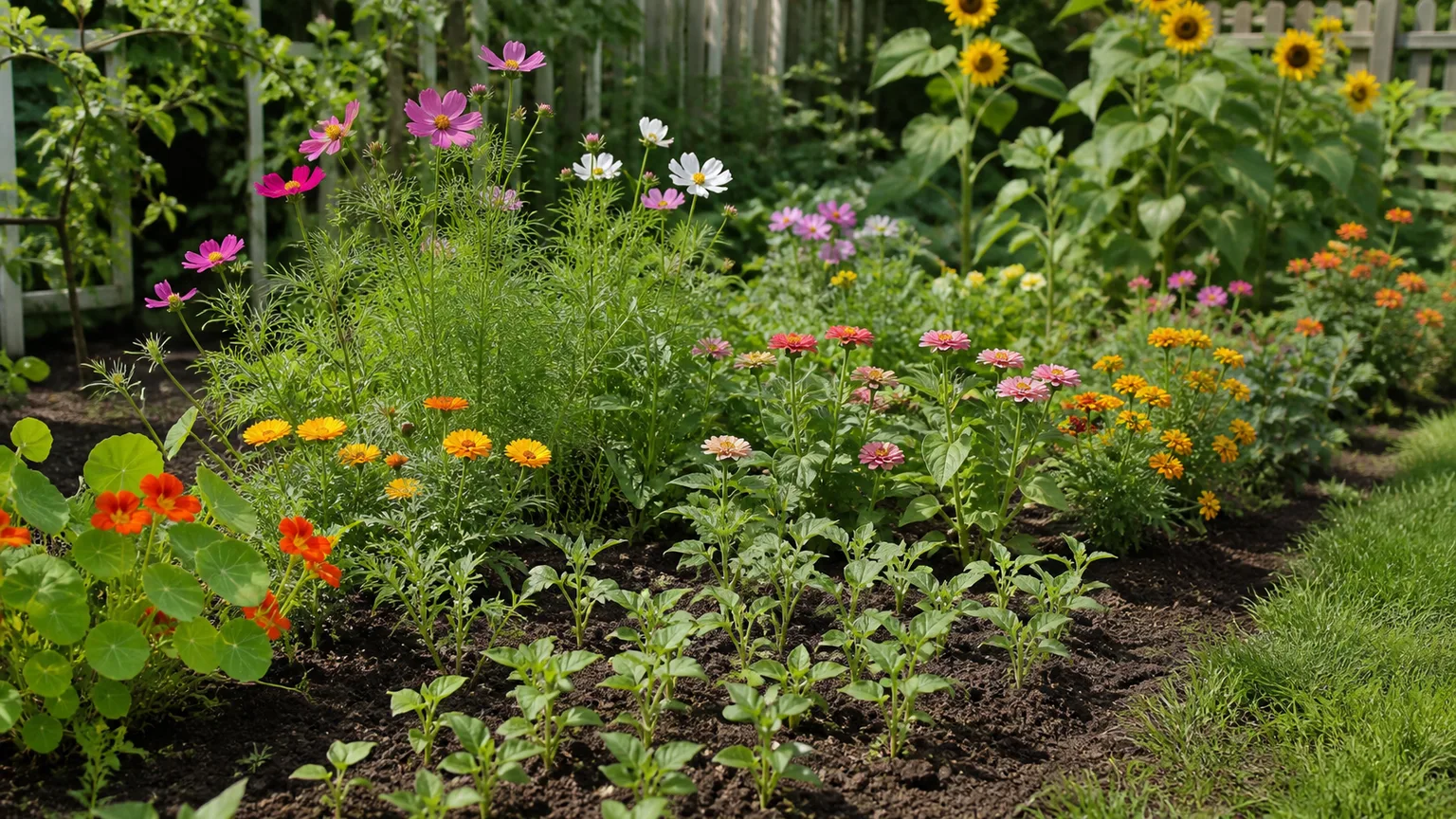
A successful flower garden starts with the conditions you have, not a list of plants that looked good in someone else’s yard. Sun, soil moisture, winter temperatures, and the time you can spend watering or replanting all affect which flowers will thrive and how long they will bloom.
Start by deciding what you want the flowers to do: fill a sunny border, brighten a shady entrance, attract pollinators, supply stems for a vase, or add seasonal color to pots. Then choose plants whose growth cycle and needs fit that goal. This order saves money and makes routine care simpler because plants in the same spot need similar conditions.
Start with the job your flowers need to do
“Flowers” can mean short-lived bedding plants, long-lived garden perennials, flowering bulbs, vines, or woody shrubs. Those groups do not share one care schedule, so identify what you are buying before assuming that a universal rule for watering, pruning, or winter care applies.
A useful plan has three layers: permanent plants that give a bed its structure, seasonal flowers that cover gaps or bring intense color, and a few flexible choices for pots or cutting. If you have only a small area, prioritize the outcome you care about most. A compact border for pollinators needs different flowers and maintenance than a formal row of blooms for bouquets.
Choose the least demanding route that still meets your goal. If you want reliable color without much seed-starting work, a few healthy nursery plants may be worth the added price. If you enjoy experimenting and want many plants for a larger space, seed is often the better fit, provided you have time to start it at the right season.
Choose by lifespan and planting material
The label “annual” or “perennial” tells you how a plant lives, not whether it is automatically easy. Annuals tend to flower during one growing season and then die; biennials usually make leafy growth in their first year and flower in their second; perennials live for multiple years, though their flowers may last for only part of each season. The Royal Horticultural Society’s annual and biennial guide explains how sowing season and frost tolerance differ among hardy, half-hardy, and tender kinds.
| Flower group | Useful when you want | Main trade-off |
|---|---|---|
| Annuals | Fast color, flexible combinations, or stems for cutting | Replant most years; pots and hot beds may need frequent water |
| Biennials | Flowers that establish foliage first and bloom the following season | The timing is less immediate, and plants may self-seed or disappear after flowering |
| Herbaceous perennials | A recurring framework of foliage and seasonal flowers | Establishment takes time, and many have a defined bloom window |
| Bulbs, corms, tubers, and rhizomes | A specific seasonal display or stored underground growth | Planting depth, timing, winter hardiness, and after-bloom care vary by species |
| Flowering shrubs and vines | Height, screening, or a long-term focal point | They need room and pruning suited to their woody structure |
Annuals and biennials create quick seasonal color
Annual flowers are helpful for filling a newly planted bed while slower perennials grow, refreshing a color scheme, or producing a steady harvest of cut stems. Sunflowers, cosmos, zinnias, and marigolds are familiar examples for sunny spaces, but each has its own height, water, and heat tolerance. A packet may also contain a cultivar that grows very differently from the standard species, so follow the variety-specific height and spacing rather than relying on a generic name. A practical regional list such as Stacy Ling’s summer annual guide can help generate ideas, but its Zone 6b examples still need to be checked against your local climate and site.
Biennials ask for more patience. They typically build roots and foliage before flowering in the next season, so a plant that does not bloom during its first year may be following its normal life cycle. Some garden biennials reseed readily; leave seedheads only where you want seedlings to spread, and remove them where seedlings would crowd neighboring plants.
Perennials, bulbs, corms, tubers, and rhizomes return on different schedules
Perennials can reduce annual replanting, but “comes back” does not mean the plant will flower continuously or require no care. Many herbaceous perennials die back above ground in cold weather and regrow from their roots, while evergreen types keep foliage. The RHS guide to perennial plants emphasizes choosing by soil, site, season of interest, and mature size; it also notes that newly planted perennials need regular water while they establish.
Bulbs and similar storage organs are not interchangeable. Tulips and daffodils grow from true bulbs, gladiolus from corms, dahlias from tubers, and irises from rhizomes; their planting depth, seasonal timing, and cold tolerance differ. Do not cut all foliage as soon as flowers fade: leaves replenish the underground storage organ for the next cycle. For plants that need lifting in cold regions, follow the species’ winter-storage guidance instead of assuming every “bulb” can remain in the ground. See our guides to planting lily bulbs and planting dahlia tubers for examples of how different storage organs call for different timing.
For a deeper side-by-side comparison, see annuals versus perennials.
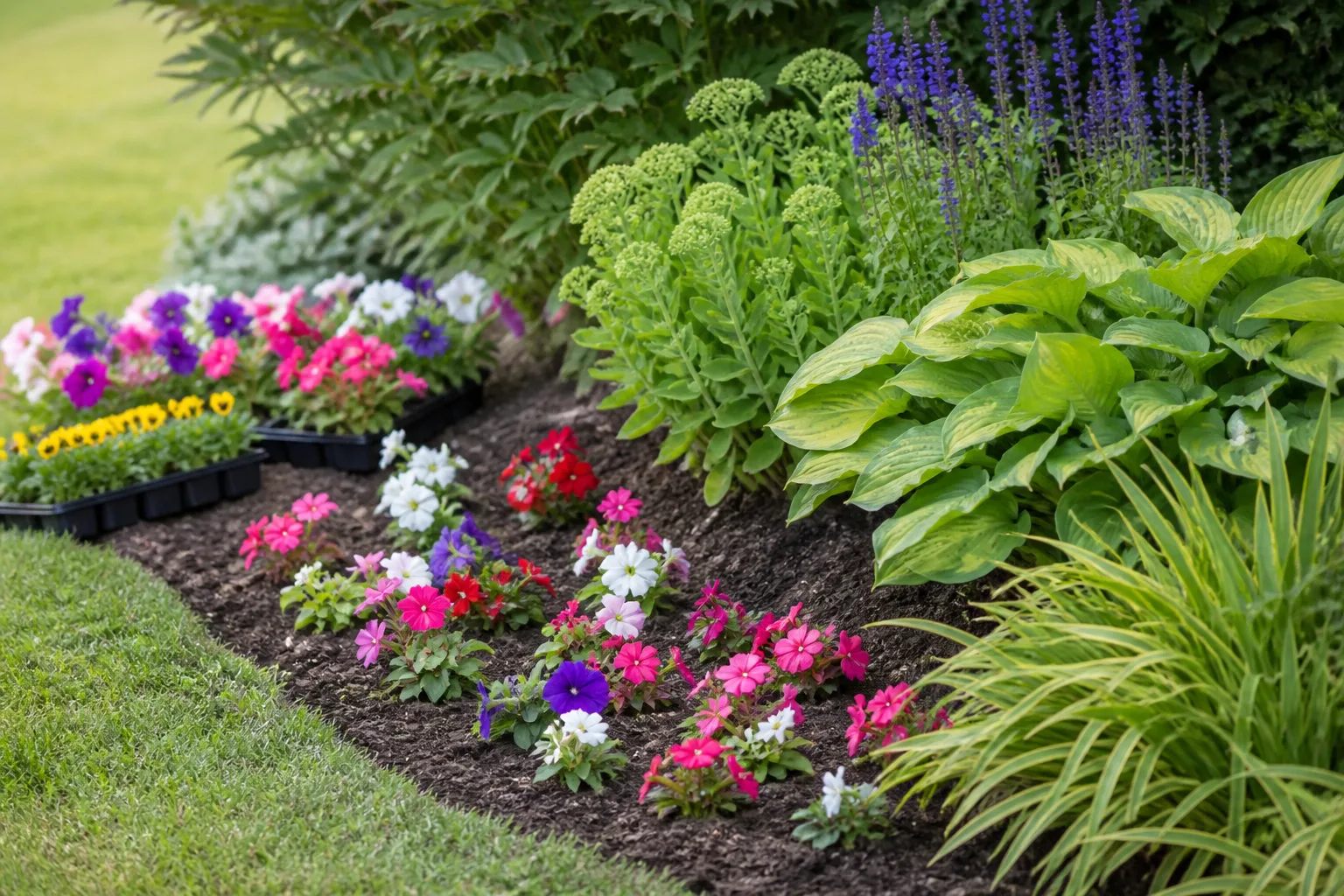
Match a flower to light, soil, and climate
Plant tags are a starting point, but the best site check is your own garden. Observe where direct sun falls over the day, whether a spot gets hotter near a wall or pavement, and how quickly the soil drains after rain. A flower that tolerates shade may still need more light to bloom well, while a sun-loving plant may struggle if its roots sit in waterlogged soil.
Measure sun and watch water
Track the site for a clear day before shopping. Write down when direct sunlight reaches the bed and when shade arrives; morning sun and hot afternoon sun can affect plants differently, especially in regions with intense summers. Better Homes & Gardens uses six or more hours of direct sun as a common definition of full sun, but labels differ and some plants flower in less light. Check the plant’s own requirements and think about seasonal changes: a deciduous tree can shade a bed much more in summer than in early spring. See BHG’s flower planting guide for practical light and planting basics.
Then test drainage rather than trying to “fix” every soil with extra amendment. If water remains around roots after ordinary rain, choose plants that tolerate those conditions or improve the site’s drainage before planting. If the bed dries within hours on a windy slope, use drought-tolerant choices and water deeply during establishment. Most flowers prefer moisture without standing water, but the right balance depends on species, soil texture, weather, and rooting depth.
Check hardiness, mature size, and site exposure
A hardiness rating helps estimate whether a perennial or woody flower can survive winter outdoors where you live; it does not guarantee that the plant will bloom at the same time or perform identically in every microclimate. Use a local frost calendar for annual sowing and transplanting, then account for cold pockets, reflected heat, strong wind, and container exposure. A tender annual can be damaged by a late frost even when nearby established shrubs are unaffected.
Read both the mature height and width on the label. Place taller plants where they will not shade shorter ones, leave the stated spacing for airflow and root expansion, and keep vigorous spreaders away from small slow-growing companions. A flower that needs staking or frequent deadheading can still be a good choice, but put it where those jobs are accessible rather than at the back of a crowded bed.
Plan a bed for flowers across more than one season
A garden that blooms for months is usually a sequence, not a single plant that flowers nonstop. Combine early, middle, and late bloomers, and include foliage or seedheads that look intentional between flowering periods. Penn State Extension’s perennial garden design guidance recommends varying height, density, and bloom time; exact dates shift with cultivar, weather, latitude, and planting time, so plan by season and verify local bloom windows rather than treating a catalog calendar as a promise.
Build the bed around a small number of dependable perennials or shrubs, then add annuals where you want color while the permanent plants establish. Group the same variety in loose drifts instead of scattering one plant at a time; repeated groups are easier to notice and easier to water or deadhead. Include a mix of flower shapes and heights, but avoid cramming every open spot: crowded plants compete for light and air and can be harder to inspect.
If you want flowers for pollinators, choose a succession of blooms and include plants suited to local wildlife rather than relying on one mass flowering at a single point in summer. Penn State Extension notes that color alone is not enough: flower shape, timing, nectar, and pollen also influence which pollinators can use a planting; its guide to choosing flower colors for pollinators explains those differences. The RHS perennial guidance also describes nectar-rich flowers, seeds, and shelter as garden resources for wildlife. If you want bouquets, grow a few productive annuals in a reachable row or patch so frequent cutting does not leave the front border ragged. A bed can serve both purposes when you keep cutting flowers near a path and leave some seed-producing plants standing elsewhere.
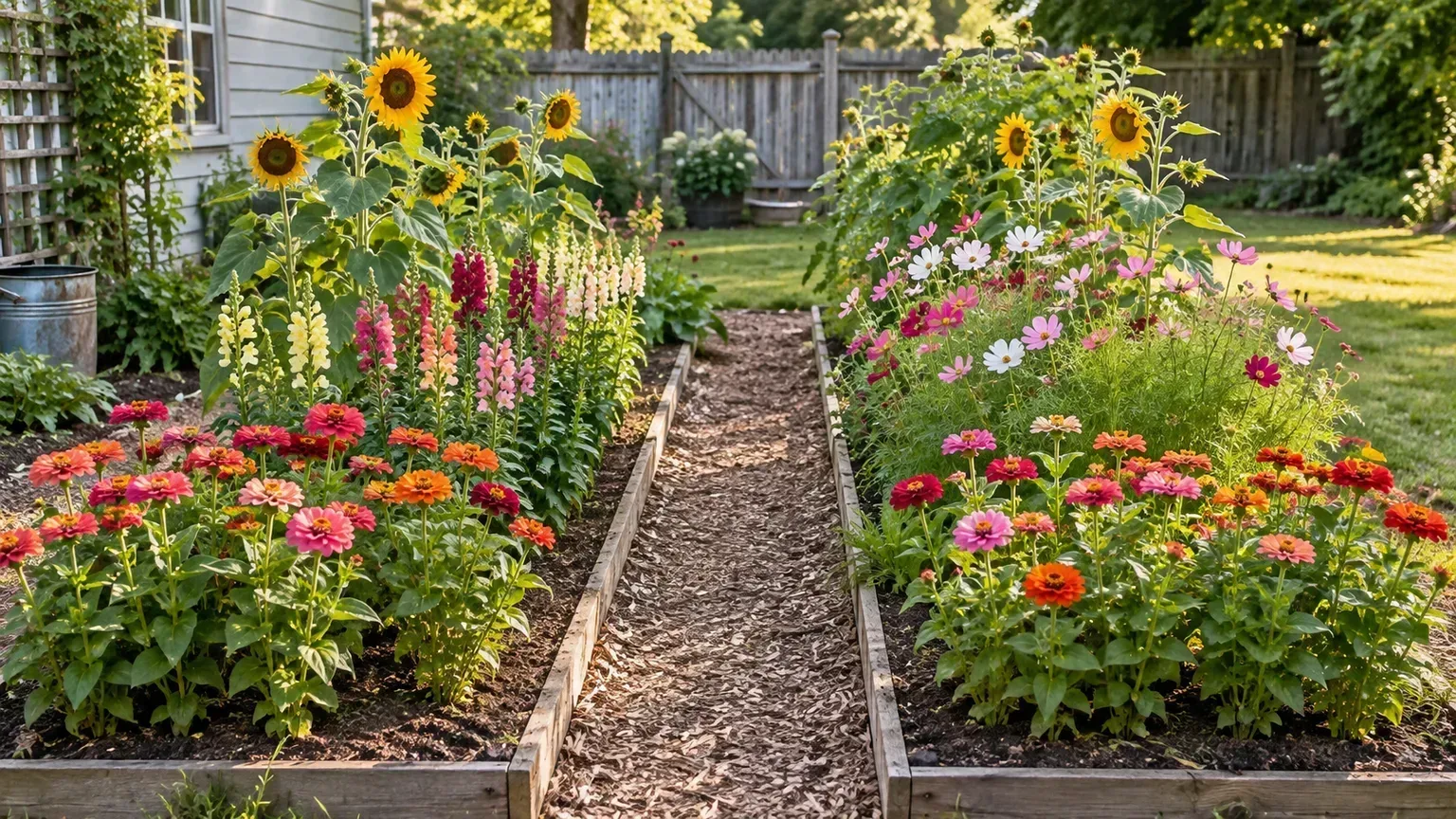
Prepare the planting place before buying plants
Clear weeds before putting in perennials or bulbs that may stay for years. Persistent perennial weeds are especially frustrating once they grow through established roots, and removing them later may damage the flowers you intended to keep. Mark the shape of a new bed with a hose or string, then look at it from the windows and paths where you will actually see it.
Check soil with a local soil test if you are unsure about pH or nutrients, particularly before adding lime or fertilizer. Penn State Extension’s new perennial garden guidance recommends evaluating sun, shade, wind, soil moisture, and compaction before choosing plants; the same site-first sequence prevents many annual-flower problems, too. Most garden flowers benefit from soil that drains well and contains organic matter, but “improve the soil” does not mean adding a deep layer of rich compost to every planting hole. Excessive amendment can create a pocket with different drainage than the surrounding ground, and some adapted plants prefer leaner soil. Spread mature compost over the bed when it is useful as a soil conditioner, and avoid working wet soil that smears or compacts.
Decide where water will come from before planting. A hose that reaches comfortably makes establishment watering more reliable; a large bed far from a tap can turn into a chore. Mulch can reduce evaporation and weeds, but leave breathing room around crowns and stems so mulch does not stay piled against the plant.
Decide between seed, bare-root stock, and nursery transplants
Seeds suit gardeners who want many plants, unusual varieties, or the satisfaction of raising a bed from scratch. Direct-sow only when the seed packet says the species tolerates outdoor sowing at that time; sowing too early into cold, wet ground may delay germination or rot seed. Tiny seeds often need light to germinate, while larger seeds may need more cover, so depth is a species-specific instruction, not a universal rule.
Nursery transplants give instant structure and can be easier for a short growing season, but choose compact, healthy plants with firm growth rather than the largest plant in the tray. At home, water the root ball, plant at the depth indicated for that species, firm the soil gently, and water again to settle roots. If a transplant was grown under protected conditions, harden it off gradually before placing it in full outdoor sun or wind.
Bare-root plants and dormant storage organs can be economical, but planting windows are narrow and the roots or tubers may dry out if left exposed. Keep them cool and follow package directions until planting; do not soak for an arbitrary number of hours unless the seller or reliable species guidance recommends it. For a first flower bed, mix methods: start easy annuals from seed where they can be watched, and buy a few established perennials to anchor the design.
Water and mulch for steady establishment
Newly planted flowers need consistent moisture while their roots expand into surrounding soil. Check below the surface near the root zone rather than judging by dry-looking mulch or a wilted leaf at midday; heat can cause temporary droop even when the soil is moist. Water slowly enough for it to soak in, and avoid repeatedly wetting only the top layer, which encourages shallow roots.
A general weekly rainfall figure can help you estimate whether a bed is receiving enough water, but it should not become an automatic schedule. BHG gives one to two inches of weekly moisture as a broad starting point for garden flowers and recommends deeper, less frequent watering; sandy soils, heavy clay, rainfall, wind, mature roots, and plant type all change what that looks like in practice. Containers dry faster than beds, and newly planted flowers need closer checks than established plants. When a plant wilts, check soil moisture before adding water, because waterlogged roots can show stress that resembles drought.
Apply mulch after planting to buffer soil moisture and discourage weeds. Keep the layer even and pulled slightly back from crowns, bulbs, and woody stems; thick mulch over small seedlings can block emergence. Replenish it as it decomposes instead of piling fresh material into a tall mound every season.
Fertilize to support growth without sacrificing flowers
More fertilizer does not automatically mean more blooms. Too much nitrogen can push leafy growth at the expense of flowers in some plants, while excess nutrients can run off or build up in containers. Start with the plant’s label and a soil test when nutrient problems are suspected; do not use a high-phosphorus “bloom booster” just because flowers are sparse.
A perennial border in reasonably fertile soil may need little additional fertilizer, while annuals in pots use up available nutrients faster. If a product is appropriate, apply it at the labeled rate and at the stage recommended for the plant. Avoid feeding drought-stressed or waterlogged roots, which cannot take up nutrients normally. When a flower garden looks lush but produces few buds, check light, cultivar, maturity, and pruning first instead of reflexively adding fertilizer.
Deadhead, stake, prune, and divide at the right time
Deadheading means removing a flower after it fades. It can keep a bed tidy and may encourage another flush in some repeat-blooming annuals and perennials, but it will not make every plant rebloom. Remove the whole spent flower stem when the plant’s structure calls for it; on others, a quick trim just above a healthy leaf joint is enough. If you want seed for next year or seedheads for birds, leave selected flowers to mature. Our flower deadheading guide explains which cuts to make and when to stop.
Support tall stems before they flop. Insert hoops or stakes early enough that plants can grow through them and hide the structure; waiting until stems have fallen can kink or break them. Prune flowering shrubs and vines according to whether they bloom on old or new growth, because pruning at the wrong time can remove next season’s buds. Do not apply one cutback rule to all flowers as autumn approaches: some foliage protects crowns or feeds bulbs, and standing seedheads may provide winter interest.
Divide perennials only when the species benefits, the clump is overcrowded, or you need additional plants. Timing depends on flowering season and local climate; the RHS guide describes division as one way to maintain and propagate suitable perennials. Water newly divided sections well and avoid splitting a plant that is already heat-stressed or actively wilting.
Grow flowers in containers and small spaces
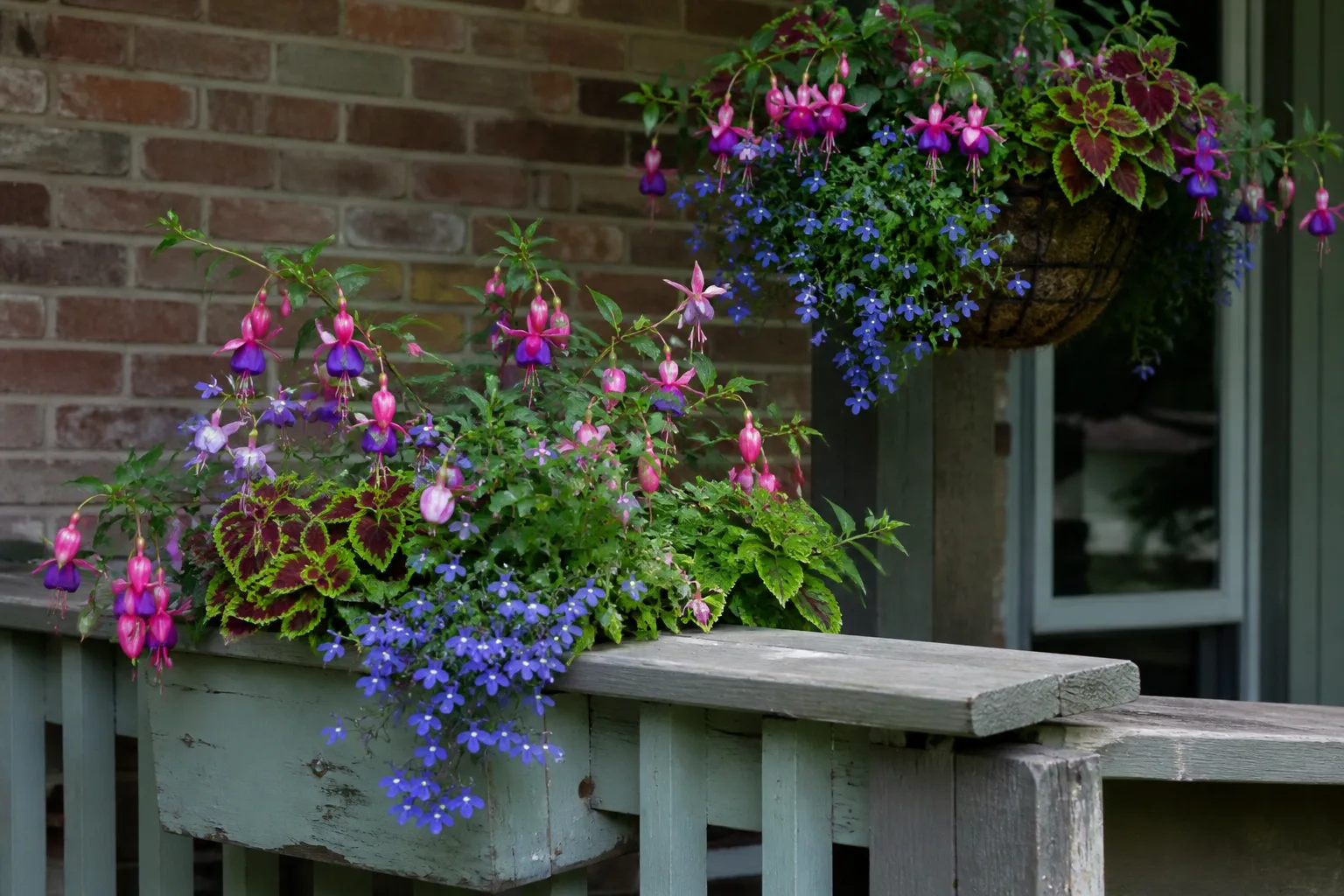
A balcony, doorstep, or patio can support a useful flower display if you match pot size to the plant’s roots and exposure. Choose a container with unobstructed drainage holes and a growing medium made for containers; garden soil can compact in a pot and hold water unevenly. Place tall or top-heavy plants where wind will not tip them, and group pots so watering is easy without crowding foliage.
Use plants with compatible needs in the same container. A drought-tolerant flower and a moisture-loving one may look attractive together at the nursery but become difficult to manage after planting. A large pot holds moisture longer than a small one, while hanging baskets and shallow boxes can dry quickly in sun and wind. Check the root zone more often during hot weather and water until excess drains freely, then empty any standing saucer water.
Troubleshoot leaves, buds, and missing flowers
When a flower fails, change one variable at a time. First confirm the plant is old enough to bloom and that its normal flowering window has arrived. Then check light at the leaves, soil moisture at the roots, and whether a recent cold snap, heat wave, transplant, or hard pruning could explain the change. These checks are more useful than applying fertilizer or pesticide without evidence.
If a plant makes abundant leaves but few flowers, insufficient light, excess nitrogen, immature age, or pruning at the wrong time are common possibilities; the correct cause depends on the species. If buds form but drop, look for sharp swings between dry and waterlogged soil, temperature stress, or pest damage on the buds. If lower leaves yellow while the soil stays wet, improve drainage and pause irrigation until the root zone needs water. If foliage is eaten or spotted, inspect the underside of leaves and stems to identify the pattern before choosing a response.
Use the plant’s name and exact symptom to look up species-specific advice. “Brown leaves” can result from drought, waterlogging, scorching, disease, or normal seasonal dieback, so a broad label is not a diagnosis. If the problem spreads quickly or affects valuable plants, take clear photos and a sample to a local extension service or qualified garden center for identification.
Keep the garden useful for pollinators and bouquets
A flower patch can support wildlife and still look designed. Include a range of bloom shapes and flowering periods, and choose plants adapted to your region; native species are a strong starting point because local insects evolved with local plants, but a native label alone does not guarantee the right growing conditions. Avoid treating a single “pollinator mix” as a complete plan without checking whether the listed species suit your climate and whether any can spread aggressively where you live.
For cutting, harvest in the cool part of the day when stems are hydrated, use clean sharp snips, and remove foliage that would sit below the vase waterline. Cut only what the plant can replace, and leave enough flowers for the border to recover visually and continue providing nectar or seed. Some annuals respond well to regular cutting; other flowers are best left to set seed or are more useful in the garden than in a vase.
If you want to save seed, allow a few healthy flowers to mature fully and keep the seed dry and labeled with both the plant and year. Seedlings from hybrid cultivars may not look like the parent, and not every flower produces viable seed in a home garden. A small record of sowing dates, bloom periods, and the plants that handled your conditions best will make next year’s choices far more accurate than relying on memory. For a first seed-grown bed, easy flowers to grow from seed can help narrow the options.
Conclusion
Choose flowers in this order: define what you want from the space, measure light and drainage, confirm climate fit and mature size, then decide whether seed, bulbs, bare-root stock, or transplants suit your time. Build a sequence of bloomers rather than expecting one plant to carry the whole season, and group plants with similar water needs so the routine stays manageable.
After planting, focus on root establishment before chasing extra blooms. Water according to soil conditions, use fertilizer only when there is a reason, and deadhead or prune only when it benefits that plant or matches your goal. When a flower struggles, diagnose its site and life cycle before changing care; the right flower in the right place is usually the simplest path to a garden that keeps rewarding you.



