How to Grow and Care for Gasteria Indoors
Gasteria care for indoor growers: light, soak-and-dry watering, gritty soil, offset and leaf propagation, winter rest, and fixes for sun stress and black spots.

Gasteria — often sold as ox tongue or cow tongue — is one of the few succulents that genuinely tolerates indoor light without demanding a south-facing greenhouse bench. The thick, often speckled leaves store water like other succulents, but in habitat these plants grow under shrubs, in rock crevices, and on shaded cliff faces in South Africa. That background matters: gasteria care is not “bright desert sun plus weekly neglect.” It is bright indirect or partial sun, gritty drainage, and soak-and-dry watering that tightens in winter.
If you treat gasteria like a sun-hungry echeveria on a blazing sill, leaves bleach yellow or white and scorch marks become permanent. If you treat it like a tropical foliage plant with frequent misting, fungal black spots and root rot follow. The routine below keeps the plant compact, patterned, and slowly multiplying with offsets — the way most indoor growers want it.
For broader succulent fundamentals, see the indoor succulent care guide. For offset technique shared with aloe and haworthia, the succulent propagation guide covers callusing and pup separation in depth.
What gasteria is — and how it differs from aloe and haworthia
Gasteria is a genus of slow-growing, clump-forming succulents in the Asphodelaceae family — the same broad alooid group that includes Aloe, Haworthiopsis, and Gonialoe. Plants are stemless or short-stemmed, with fleshy leaves arranged in rosettes or distichous (two-ranked) rows depending on species and age. Mature clumps send up curved, tubular flowers on long stalks, usually in late winter to spring, in shades of pink, orange, or green-tipped coral.
NC State Extension describes Gasteria gracilis as a small, slow-growing South African succulent suited to pots with several drainage holes, cactus-type medium, bright light indoors, and soil that dries between waterings — with tolerance for some shade unlike many sun-demanding succulents (NC State Extension). That shade tolerance is the main reason gasteria earns shelf space in apartments where echeveria would stretch and fade.
Visually, gasteria is often confused with miniature aloe or haworthia. Useful separators:
- Leaf surface: Gasteria leaves are typically rough, sometimes warty or banded, with white or pale spots — not smooth and plump like many aloes.
- Growth habit: Many gasterias stay low and clumping, spreading by offsets at the base rather than forming a tall stem.
- Flowers: Gasteria blooms are gastric-shaped tubes (the name references a stomach-like flower swell) on tall racemes — different from haworthia’s smaller, less showy inflorescences on many species.
Retail tags may list Gasteria spp. without species ID. Care fundamentals stay similar across common nursery lines; collectors chase named forms such as G. batesiana ‘Little Warty’ or compact G. glomerata.
Quick gasteria care snapshot
| Factor | Indoor target | Common mistake |
|---|---|---|
| Light | Bright indirect; gentle morning sun OK; avoid hot afternoon direct rays | Full south window with midday sun → bleached or scarred leaves |
| Soil | Fast-draining cactus/succulent mix; extra grit in humid homes | Heavy peat mix that stays wet → root rot |
| Water | Soak when dry through the pot in active growth; minimal in winter | Same summer frequency in cool, short days → mushy base |
| Pot | Shallow, wide, drainage holes; terracotta helps dry-down | Deep cache pot with no holes |
| Feed | Dilute cactus fertilizer once in spring if needed | Monthly strong feed → weak, etiolated growth |
| Temperature | Typical room temps; protect from frost | Leaving outdoor pots out after first frost |
| Propagation | Offsets in spring; leaf cuttings possible | Pulling pups with no roots and watering immediately |
Light: bright shade beats harsh sun indoors
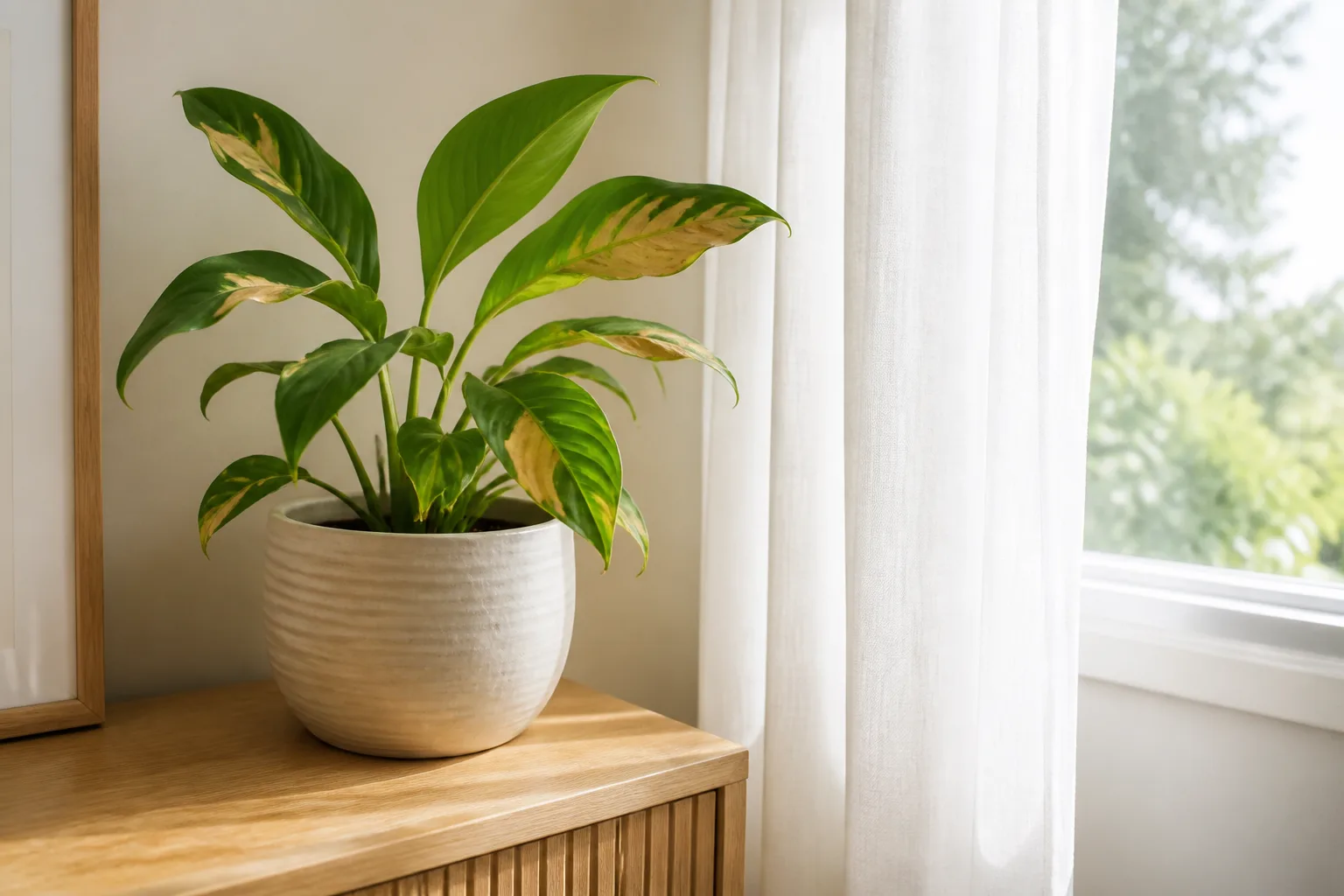
Gasteria wants plenty of light but not harsh, direct sun for long stretches — especially hot afternoon sun through glass, which amplifies UV and heat. Think bright east window, filtered south or west (sheer curtain or a foot back from the pane), or a north window that still reads clearly bright during the day. In the Northern Hemisphere, a spot that gets soft morning sun and bright indirect light the rest of the day is the sweet spot many alooid specialists recommend for indoor gasteria.
Outdoors in summer (Zones 10–11 or potted plants moved outside), place pots in light shade or dappled sun — not open baking rock garden exposure unless you acclimate slowly. NC State notes container plants can go outdoors in summer but need protection from hot afternoon sun (NC State Extension).
Gasteria tolerates lower light than most succulents, which is its superpower indoors. It does not tolerate dark corners. In too little light, leaves lose contrast, stretch (etiolation), and new growth becomes pale and thin. If you cannot provide a bright window, a full-spectrum grow light 6–12 inches above the rosette for 10–12 hours daily is more honest than hoping a hallway shelf works.
Signs your gasteria wants a new window
- Yellow or chalky white patches on leaves facing the glass → usually sun stress; move back or filter light.
- Flattening rosette, long gaps between leaf pairs, downward-arching new leaves → too dim; move closer to the light source or add a lamp.
- Rich green fading to dull olive with no new offset activity over months → often low light plus overwatering combined; fix placement before you increase water.
Soil mix and pots built for fast drainage
Gasteria roots are shallow and sensitive to stagnation. NC State recommends a medium suitable for cacti and succulents in containers with multiple drainage holes (NC State Extension). Missouri Botanical Garden’s general succulent guidance applies: these are plants with fleshy water-storing tissue that need fast drainage and pots that do not hold waterlogged mix (Missouri Botanical Garden).
A practical indoor mix:
- Start with commercial cactus and succulent mix.
- Amend with 25–50% perlite, pumice, or coarse grit if your home is humid or you tend to water generously.
- Optional: A small amount of compost or coco coir (roughly 10%) can mimic the organic matter gasterias see in nature — but never at the cost of drainage.
Avoid straight garden soil, moisture-retaining “moisture control” potting mixes, and decorative pots without drainage holes. If you must use a cover pot, grow in a nursery pot with holes inside it and empty the outer shell after every water.
Why shallow, wide containers suit gasteria roots
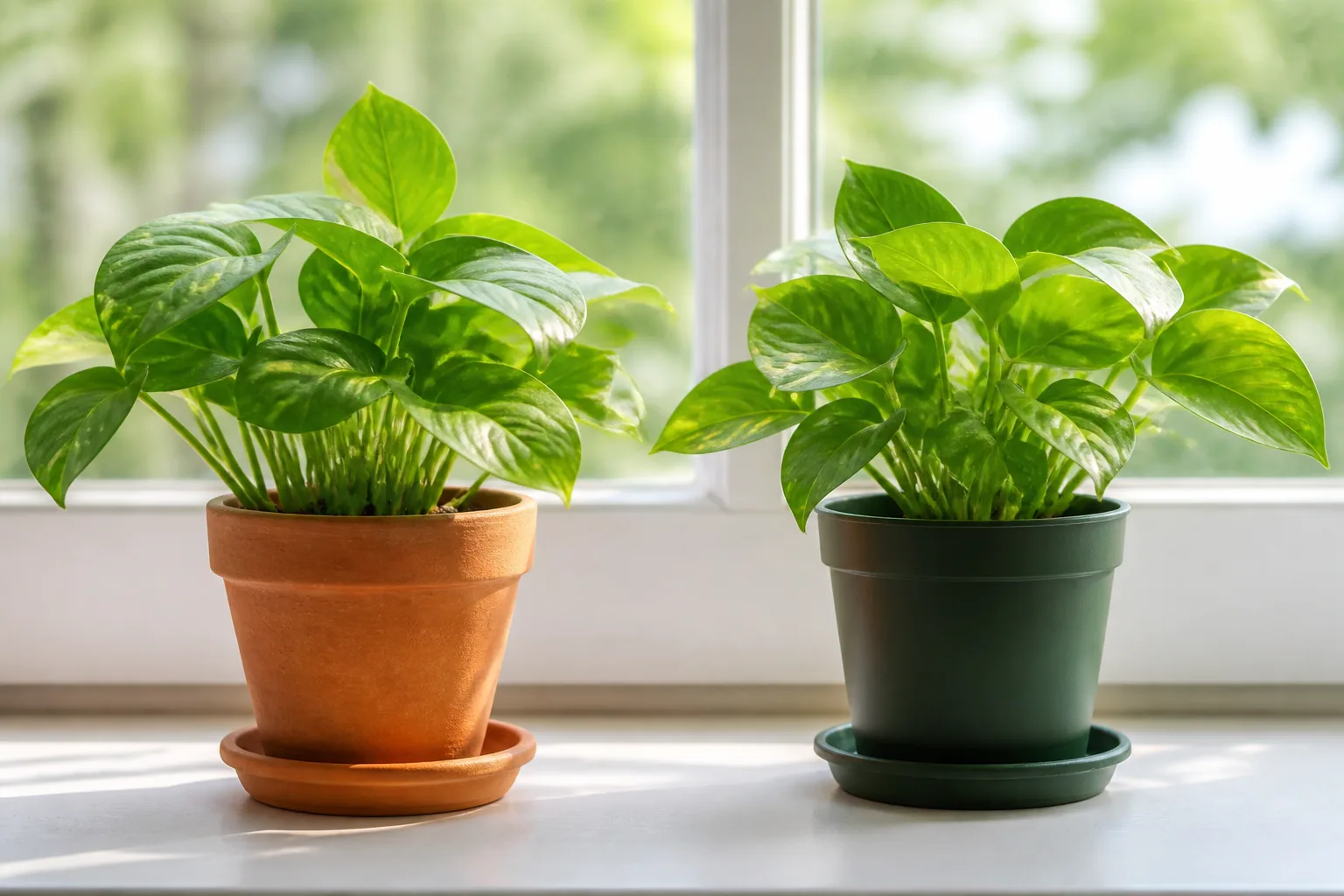
Choose a pot wider than it is deep. Gasteria spreads horizontally with offsets; shallow roots do not need a tall column of wet mix below them. Unglazed terracotta is excellent indoors because it evaporates through the walls, shortening the time soil stays damp after a soak — the same reason many cactus growers prefer it over sealed plastic.
Water on a soak-and-dry schedule — not a calendar
There is no universal “every two weeks” rule. Water when the mix is dry through most of the pot depth in active growth (typically spring through early fall indoors). Then water thoroughly until a little runs from the drainage holes, discard saucer water, and wait again until dry.
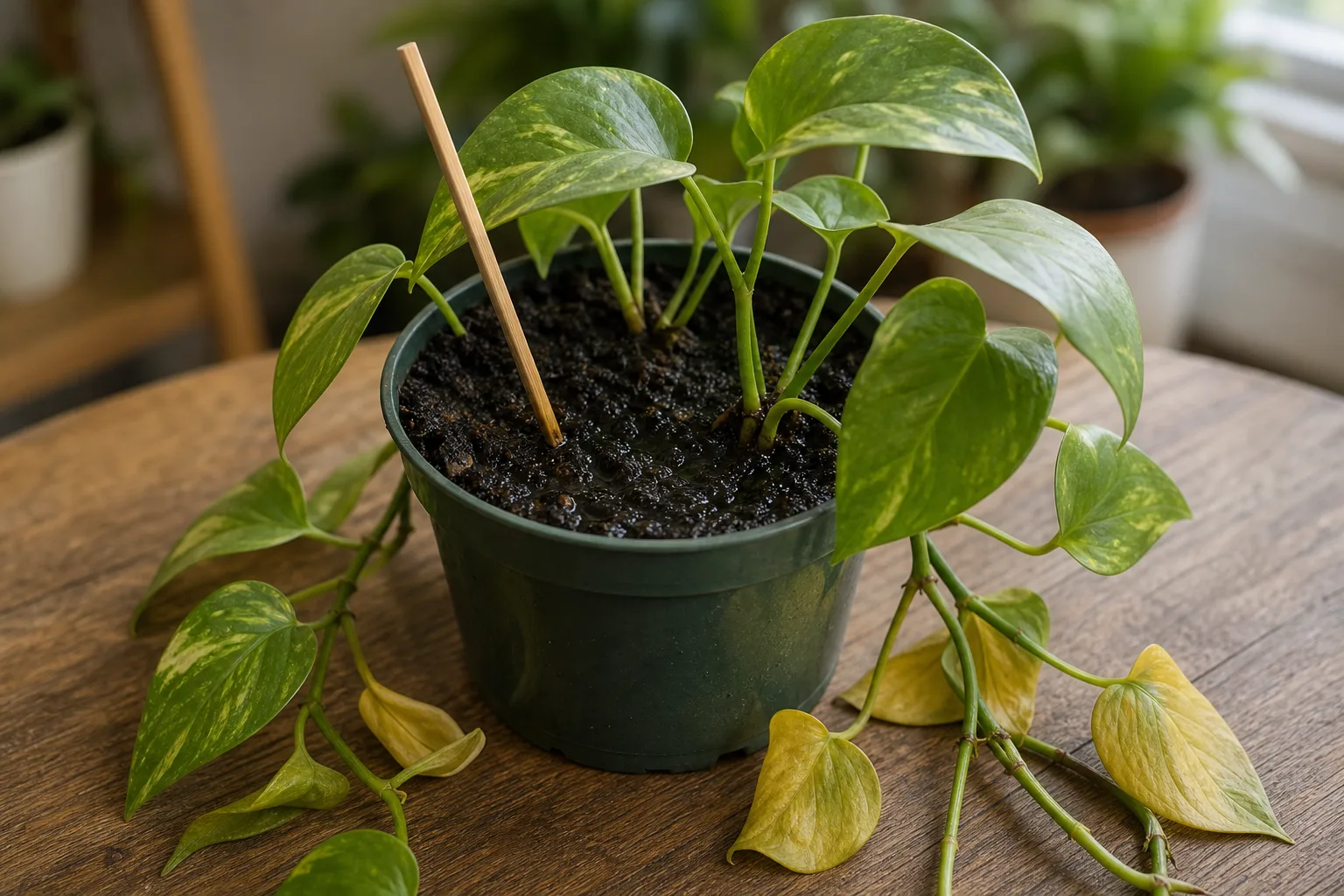
Gasteria stores water in leaves; it forgives underwatering better than overwatering. Slightly wrinkled leaves on an otherwise firm plant with bone-dry mix usually mean time to soak. Mushy, translucent leaves or a soft base with wet mix mean stop watering and inspect roots — not “give it a drink.”
Important gasteria-specific habits:
- Do not mist leaves or overhead-water in humid rooms. These plants do not like water sitting on foliage; it invites fungal spotting.
- In very humid climates, stretch intervals further — ambient humidity supplies some leaf-level moisture; soggy mix is the risk.
- During summer heat, some species slow growth; dry-down may speed up. Let soil dryness, not the calendar, drive frequency.
The Royal Horticultural Society separates active-season watering from reduced winter care for houseplant cacti and succulents (Royal Horticultural Society). Gasteria fits that pattern.
Winter watering when growth slows
In late fall and winter, when daylight shortens and growth pauses, cut watering sharply. Many indoor growers water once every 4–6 weeks or only when leaves show clear wrinkling on dry mix — whichever comes later. A firm, slightly wrinkled plant in cooler room conditions is often resting, not dying.
If leaves wrinkle during winter rest, a small drink can help — but never return to summer frequency while nights are cool and growth is stalled. Warm apartments that stay 70°F+ year-round may see continued slow growth; those plants need occasional light water but still less than peak summer.
Temperature, humidity, and seasonal leaf color
Gasteria prefers warm summers and cooler, bright winters — think 50–85°F (10–29°C) with avoidance of hard frost. NC State lists hardiness in USDA Zones 10a–12b for G. gracilis (NC State Extension). North of Zone 9, treat gasteria as a houseplant or summer patio container brought in before frost.
Average indoor humidity is fine. Gasteria does not want steamy bathroom conditions paired with wet soil. In humid regions, prioritize air movement and dry intervals over misting.
In bright summer light, some plants lighten to a brighter green or show red-orange stress color at leaf tips — often normal if the plant stays firm and continues offsetting. Sudden bleaching on the sun-facing side is different; that is burn, not seasonal blush.
Fertilizer: one light spring feed is enough
Gasteria is not hungry. One dilute application of cactus and succulent fertilizer in early spring as growth resumes is sufficient for most indoor pots. Follow label rates at half strength if the plant sits in a small container with little mix.
Skip fertilizer on recently repotted, winter-resting, or stressed plants. Excess nitrogen in low light produces soft, stretched leaves without improving patterning. A little organic matter in the mix at potting time often matters more than monthly feeding.
Gasteria species and cultivars worth knowing
More than 20 species exist; nursery stock often blends hybrids. Useful reference points:
- Gasteria carinata var. verrucosa: Thick, rough leaves with prominent white warts; classic “ox tongue” look.
- G. maculata: Similar banding without heavy warts; darker green, rough margins.
- G. batesiana ‘Little Warty’: Compact to ~4 inches; mottled, pointed leaves — popular windowsill form.
- G. glomerata: Tiny clumper, gray-green tongue-shaped leaves; stays under a few inches.
Mature, well-lit plants produce tubular flowers on 12–24 inch stalks, often bi-colored, in winter and spring. Blooming indoors requires adequate light and a stable plant that is not constantly repotted or overpotted. No flower is not automatically a care failure — many indoor specimens prioritize offset production over bloom.
Propagate gasteria from offsets or leaf cuttings
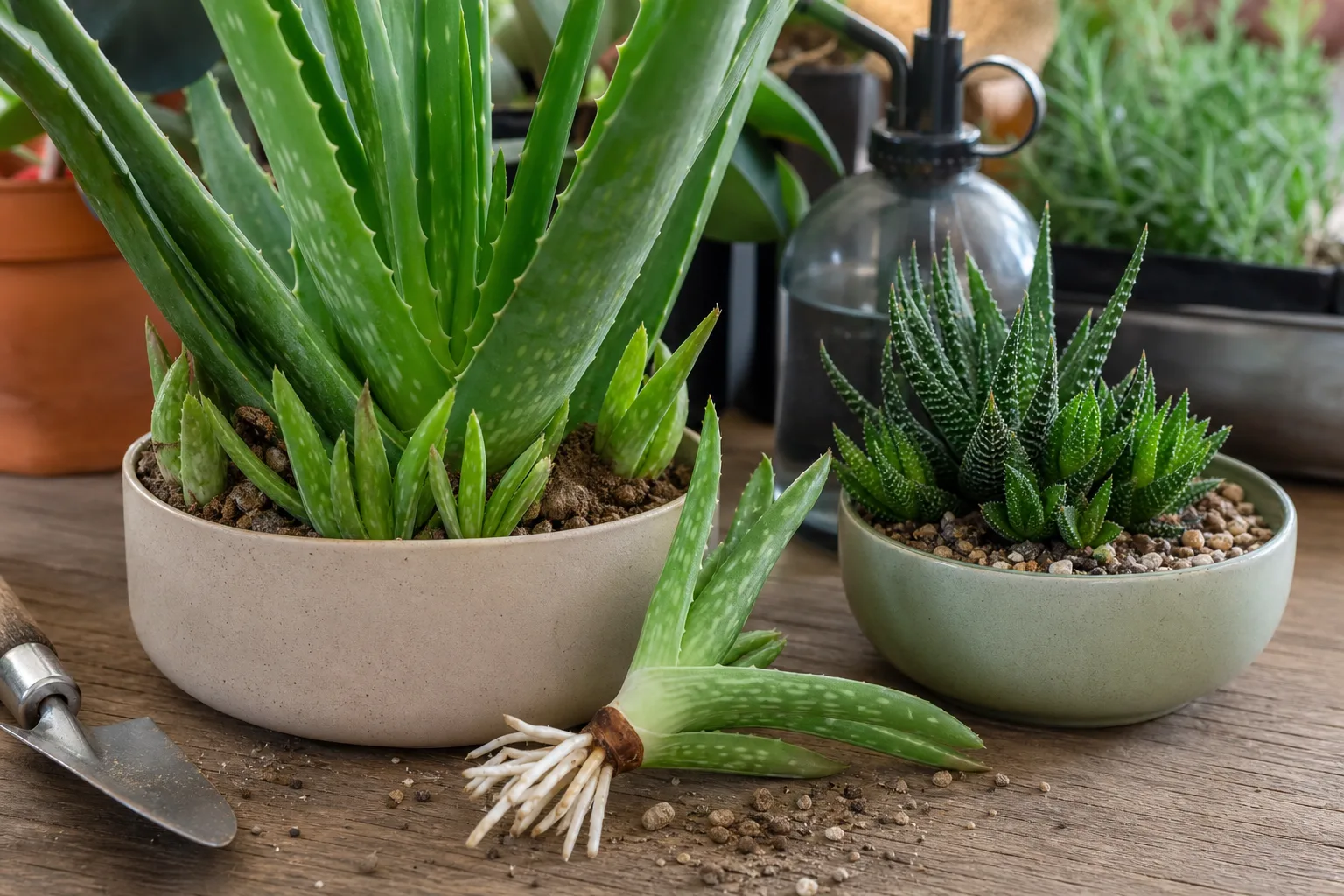
Offsets (pups) are the fastest, most reliable method — the same offset logic used for aloe and haworthia in the succulent propagation guide. Gasteria also roots from leaf cuttings more readily than many aloes, though offsets beat leaves for speed.
Best timing: spring, as active growth starts. You can refresh crowded pots every year or two by removing pups.
Offset division step by step
- Unpot the cluster or wiggle pups when the mix is dry for easier separation.
- Cut or twist offsets with a clean knife, keeping as many roots as possible attached.
- Callus open cuts in dry shade for 24–72 hours (longer in humid air).
- Pot each offset in small containers with the same gritty mix as the parent — shallow pots only.
- Place in bright indirect light. Water lightly once, then wait until dry before the next soak. Even moisture (not sogginess) speeds rooting over the first 3–4 weeks.
- Resume normal soak-and-dry after you feel resistance when tugged gently and see new center growth.
Leaf cuttings when pups are scarce
- Remove a whole healthy leaf at the base with a clean pull or cut — avoid torn tissue.
- Callus the cut end 3–7 days until dry and matte.
- Lay the leaf on slightly moist gritty mix or insert the base just barely into mix — do not bury deep.
- Wait. Roots and a tiny plantlet can emerge from the base over weeks to a few months. Leaf cuttings are slow; offsets are the practical default.
Seed is for collectors: germination can be quick, but cross-pollination between species produces hybrids if multiple gasterias flower together — not predictable true-to-type seedlings.
Repotting without wrecking shallow roots
Gasteria grows slowly and likes slightly snug pots. Repot when:
- Offsets overcrowd the surface and competition shows as weak new leaves,
- Mix no longer drains well (slumped, salty crust, perpetual dampness),
- or roots exit drainage holes and water runs straight through with no retention.
Repot in spring. Move up one pot size only — an oversized pot holds wet mix and delays dry-down. Tease only dead roots; shallow live roots break easily. Let the plant settle one week before resuming normal watering.
Summer outdoors and winter rest indoors
In frost-free months, potted gasteria can live outdoors in bright shade — a covered porch, tree-filtered patio, or east-facing stoop. Acclimate over 7–10 days: start in deeper shade, then move to target light to avoid sudden burn.
Shelter from rain if your climate delivers heavy downpours or leaves stay wet for hours. Gasteria tolerates dry summer warmth better than wet foliage.
Before first frost, move indoors to the brightest stable spot. Check for hitchhiking pests on leaf bases and in soil. Reduce water as described for winter rest.
Pests, black spots, and bruised leaves
NC State lists mealybugs, spider mites, fungal disease, and root rot from overwatering as primary problems (NC State Extension).
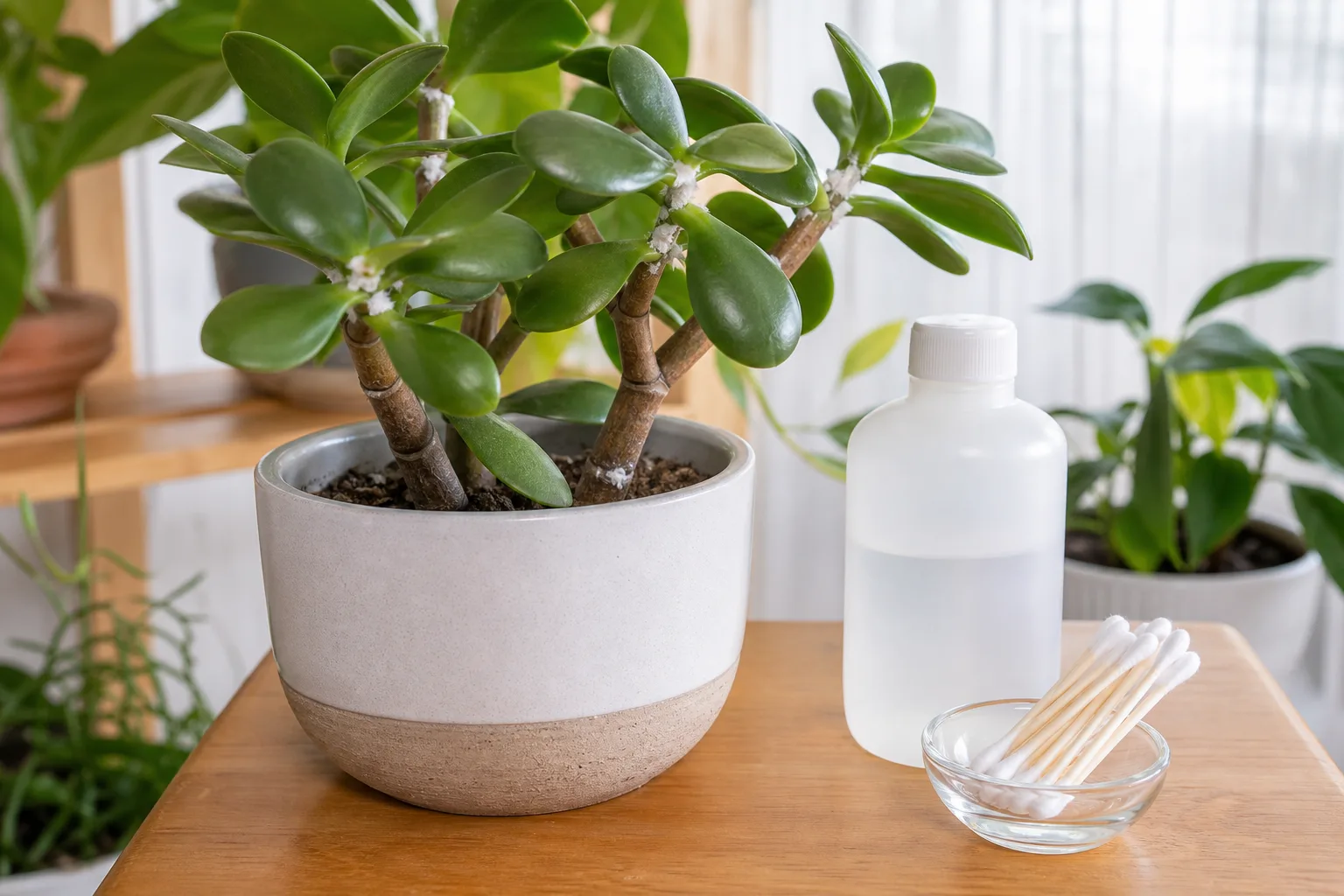
Mealybugs hide in leaf axils and look like cotton tufts. Treat early with isopropyl alcohol on a swab for small outbreaks; isolate the plant and repeat weekly until clear. Severe infestations may need insecticidal soap following label directions for succulents.
Spider mites appear in hot, dry conditions as fine webbing and stippled leaves. Increase airflow, rinse gently (without leaving leaves wet overnight), and treat mites if they persist.
Fungal spots vs handling damage
Black or dark brown spots on gasteria leaves usually mean one of three things:
- Fungal leaf spot from overhead watering, high humidity, or poor airflow — spots may spread slowly. Fix: keep leaves dry, improve ventilation, remove badly affected leaves with a clean cut, and use fungicidal soap only if spots continue on otherwise healthy tissue.
- Physical bruising — gasteria leaves mark easily if bumped, squeezed, or handled during repotting. Bruises are localized, do not spread, and callus over as tan scars.
- Old damage from past sun burn or pest injury — stable, no new spots after conditions improve.
If spots spread or sit on mushy tissue, treat as active rot/fungus and dry the plant out — not as cosmetic history.
Root rot from chronic overwatering shows as base softness, leaf drop, and black, mushy roots when unpotted. Cut rot, callus, repot into dry gritty mix, and wait days before the first cautious soak.
Gasteria vs haworthia: quick ID table
Both are South African Asphodelaceae succulents that tolerate indoor light better than desert echeverias. Retail displays often mix them.
| Trait | Gasteria | Haworthia / Haworthiopsis |
|---|---|---|
| Leaf texture | Often rough, warty, or banded; thick “tongue” feel | Usually smoother, firmer, more translucent “window” species in some taxa |
| Leaf arrangement | Rosette or distichous rows common | Often stemless rosette; some form columns |
| Flowers | Large tubular blooms on long stalks, winter–spring | Smaller, less showy flowers on shorter inflorescences (species-dependent) |
| Offset habit | Basal pups freely in many species | Basal pups common |
| Typical indoor light | Bright indirect; some direct morning sun OK | Bright indirect; avoid strong afternoon sun |
| Care overlap | Soak-and-dry, gritty mix, winter slowdown | Very similar — do not assume identical watering if pot size and light differ |
Same care basics, different stress signals: gasteria bruises more visibly; haworthia windows can scorch if sun suddenly intensifies.
A five-minute weekly gasteria check
- Finger-test mix depth — dry means ready for soak in growth season; damp means wait.
- Rotate the pot a quarter turn for even light if one side faces the window.
- Scan leaf bases for mealies and new black spots.
- Confirm no water sits in the saucer or cover pot.
- Note new offsets — plan spring separation if the pot is crowded.
That routine catches 90% of indoor failures before they become rot emergencies.
Conclusion
Gasteria care rewards a simple bias: bright shade, dry roots, gentle hands. Give these South African clumpers filtered bright light, a shallow gritty pot, and soak-and-dry watering that loosens in winter. Propagate offsets in spring for fuller pots, and treat black spots as either dryness and airflow problems or bruises — not automatically fungus. Compared with sun-hungry succulents, gasteria is one of the most realistic indoor choices if you have a decent window and the discipline to skip water when the mix is still damp.
Get light and drainage right once; the plant does the slow work of pattern, pups, and — when it is happy — tubular winter flowers on its own schedule.