How to Grow and Care for String of Pearls Plant
Learn how to grow and care for string of pearls with practical light, watering, soil, pruning, propagation, overwintering, and troubleshooting advice.
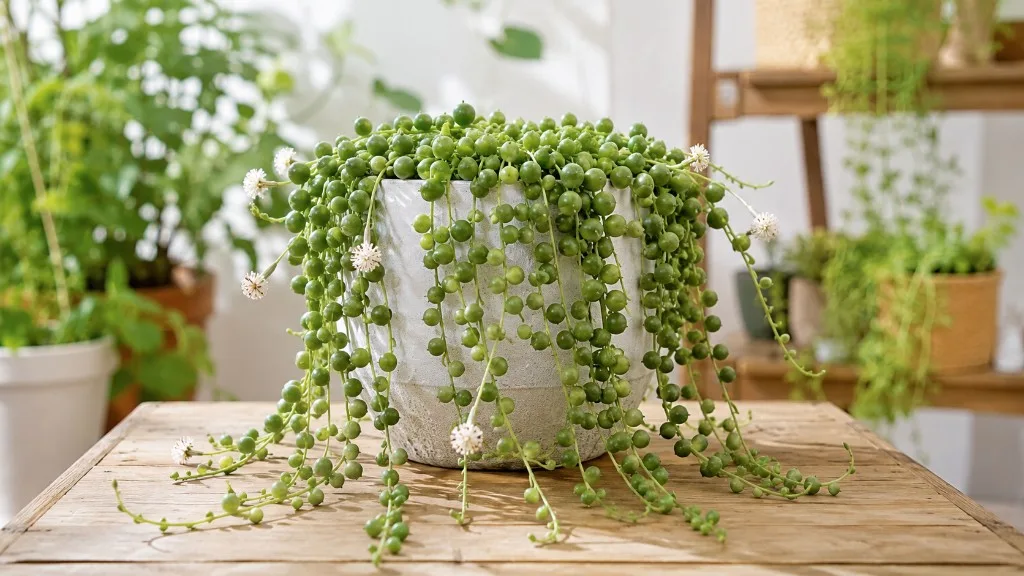
String of pearls looks as if it should be difficult: delicate threads, tiny bead-like leaves, and roots that dislike staying wet. In practice, it becomes predictable when you manage the sequence that matters most—bright usable light, a small airy root zone, then a deep drink only after the mix has dried. Treat it like a thirsty tropical houseplant and it often collapses; treat it like a plant that stores water in every pearl and it can trail beautifully for years.
The plant sold as string of pearls is Curio rowleyanus, formerly known as Senecio rowleyanus. It is a frost-tender succulent vine from dry areas of South Africa, usually grown indoors or in a container. This guide covers the care routine, the recovery decisions that prevent a small problem from becoming stem rot, and the easiest way to keep an aging plant going through propagation.
String of Pearls Care at a Glance
| Need | Practical target | What to watch |
|---|---|---|
| Light | Bright light with gentle morning sun and protection from hot afternoon rays | Stretching means too little usable light; scorched patches mean too much too quickly |
| Soil | Airy cactus or succulent mix amended with pumice or perlite | Water should leave the pot freely, with no saucer standing full |
| Water | Soak thoroughly after the mix dries; check the plant instead of obeying a calendar | Shriveled, firm pearls suggest thirst; soft pearls and wet soil suggest root trouble |
| Pot | Shallow container with a drainage hole | A large, deep pot stays wet around a small root system |
| Temperature | Warm growing conditions; cool and dry in winter | Frost, cold drafts, and wet soil together are especially risky |
| Feeding | Diluted fertilizer during active growth | Salt buildup and lush weak growth follow heavy feeding |
For a broader comparison of gritty mixes, light, and watering across this plant group, see our indoor succulent care guide. The table is a starting point, not a substitute for checking the container: a plant in a small terracotta pot near a bright window may need water far sooner than one in a plastic pot in weak winter light.
Understand the Plant Before You Water It
Those round leaves are not decoration alone. They are water-storage organs, and the spherical form reduces the surface area exposed to dry air. The narrow translucent stripe on each pearl is an epidermal window that lets light reach inner tissue—an adaptation documented by the University of Wisconsin–Madison Division of Extension. That structure explains two common mistakes: pearls can look wrinkled before the plant is in immediate danger, and repeated watering to prevent every wrinkle can leave the roots permanently wet.
The plant also has a different growth habit from a deep-rooted shrub. NC State Extension describes it as a creeping or cascading vine that can root where stems touch the ground, with a mature spread of roughly one to three feet depending on conditions. In a hanging basket, give strands room to fall; in a shallow dish, lay some stems across the surface so they can root and gradually fill the pot.
Older specimens may lose vigor after several years even when the routine is sound. That is not a challenge to water harder. NC State Extension specifically recommends stem propagation as plants begin to die back, so plan to renew the plant from healthy material rather than trying to preserve every old strand.
Choose Light That Builds Compact Growth
Give string of pearls the brightest indoor position you can provide while protecting it from a sudden blast of hot afternoon sun. An east-facing window is often an easy fit: a few hours of gentler morning sun followed by bright ambient light. A south- or west-facing window can work if a sheer curtain, a little distance from the glass, or gradual acclimation softens the strongest rays.
Light controls more than color. When intensity is too low, the plant stretches between pearls, produces thin stems, and uses water slowly. That combination makes the soil stay wet longer while the plant looks thirsty—a misleading pattern that often leads to overwatering. When light is appropriate, new pearls sit closer together, the surface dries more predictably, and the cascade has stronger structure.
If the plant has spent weeks in a dim shop or shaded room, do not put it straight into several hours of summer sun. Move it closer to the window over a week or two, starting with bright filtered light and adding mild morning sun. Brown, dry patches on the sun-facing side are more consistent with scorch than with thirst; remove the worst damaged strand only after you correct the exposure.
Build a Fast-Draining Soil and Pot Setup
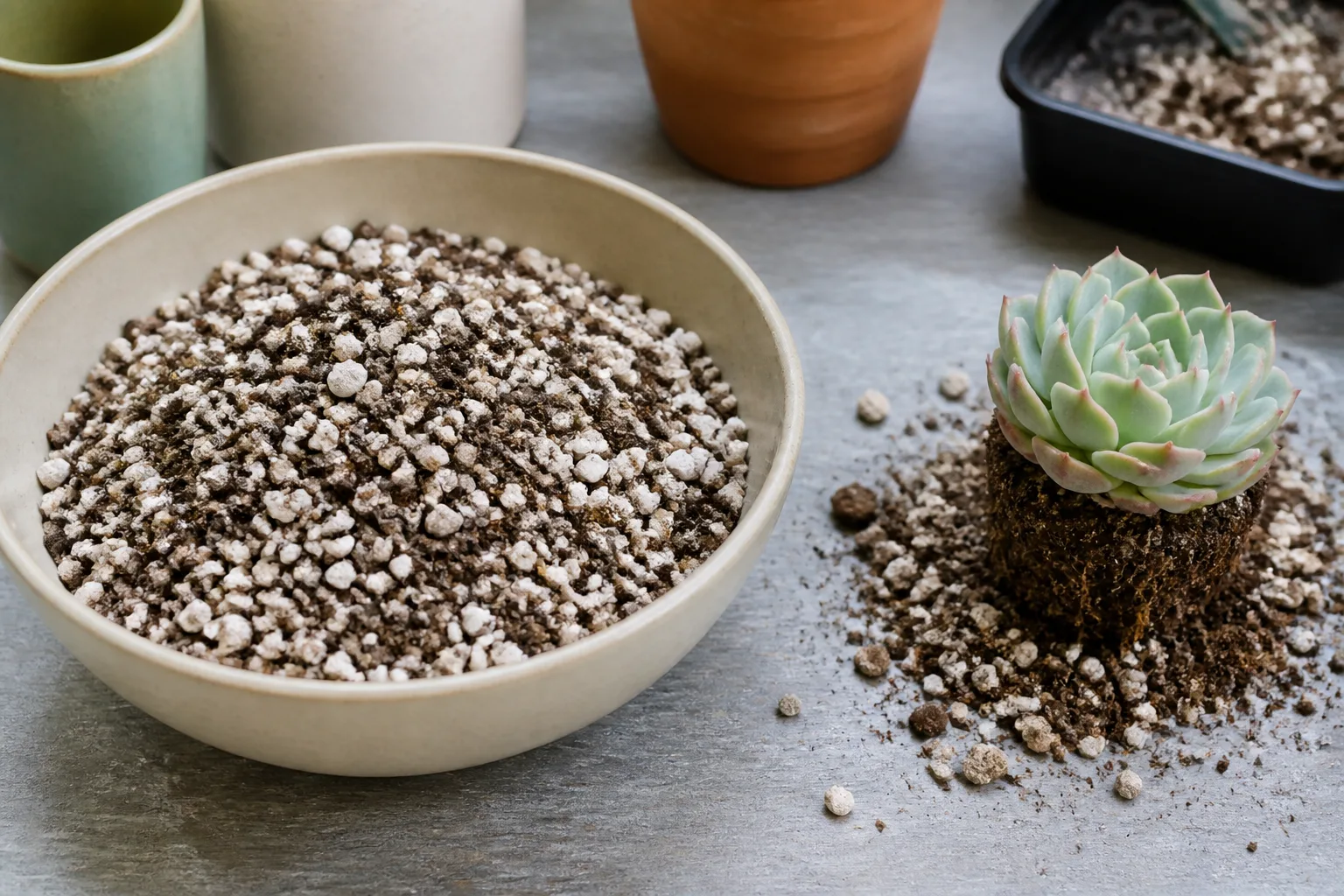
Use a commercial cactus or succulent mix, then improve it if it feels fine-textured, heavy, or slow to drain. A practical home blend is two parts succulent mix to one part pumice or perlite. The goal is not to create a pot full of stones; it is to leave enough air-filled space that the roots can take up water and then access oxygen as the mix dries.
The University of Wisconsin–Madison Extension lists cactus mix and amendments such as pea gravel, sharp sand, poultry grit, or pumice as ways to increase drainage. Avoid relying on a gravel layer at the bottom of an otherwise compact pot. Drainage comes from the texture throughout the root zone and from an open hole at the base, not from a hidden stone reservoir.
Choose a pot only slightly wider than the root mass and preferably shallow. Terracotta can help a careful grower because its porous sides allow faster drying, but a plastic nursery pot with excellent holes is also workable if you monitor moisture more closely. Always empty the saucer after watering; a drainage hole is not useful when the pot sits in a puddle.
Water by Soil and Pearl Signals
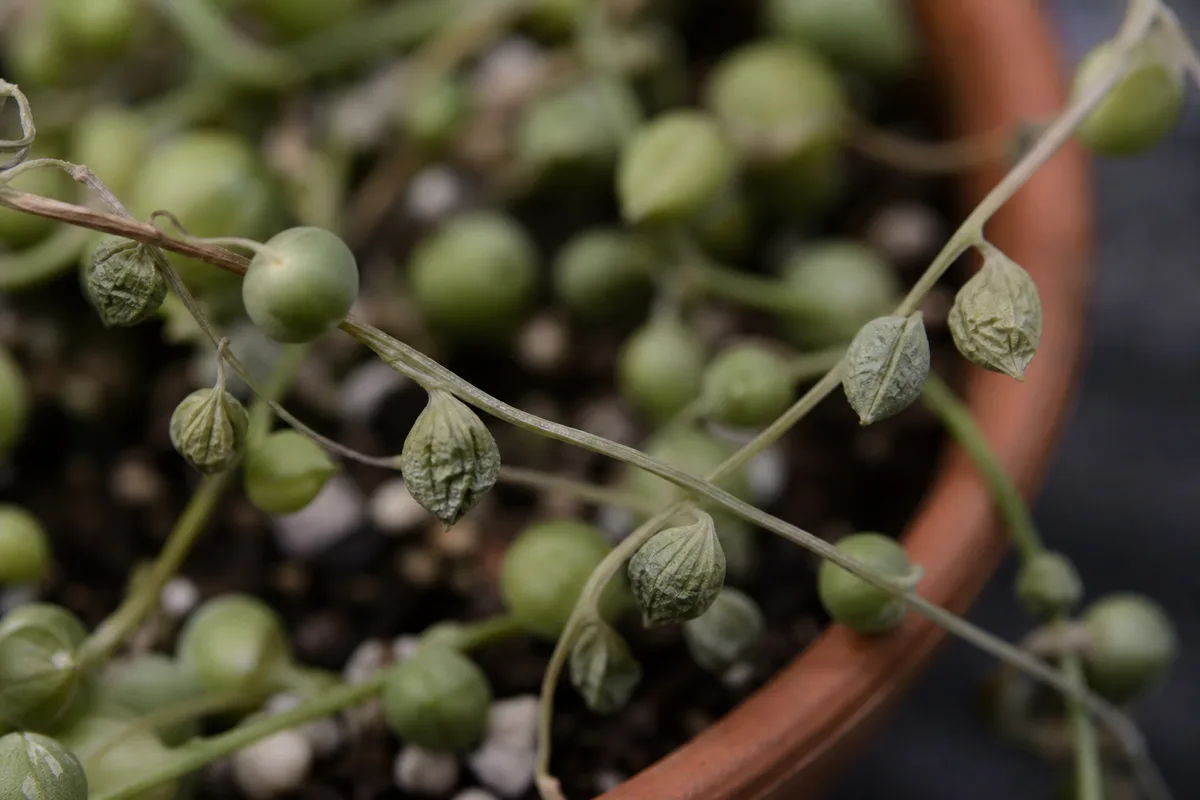
Do not water by “every Sunday” or by the number of days printed on a care tag. Push a finger or wooden skewer into the mix, lift the pot to judge its weight, and look at the pearls. When the soil is dry through most of the pot and the pearls are beginning to lose some plumpness, water thoroughly until it runs from the drainage hole. Let the excess drain completely before returning the pot to its place.
The plant should not be left bone-dry for weeks as a goal. Wisconsin Extension advises allowing the medium to dry between waterings and watering when the leaves begin to look somewhat shriveled. That gives you a useful boundary: dry is part of the cycle; prolonged collapse is not. A wrinkle that disappears after a complete watering is a normal response. A plant that remains wrinkled several days later may have damaged roots, not a need for ever more water.
Adjust the Routine by Season and Container
In bright spring and summer growth, a small pot may dry in about one to two weeks, but warm rooms, airflow, pot material, and root volume can move that interval in either direction. In winter, lower light and cooler temperatures slow water use, so the mix may need to remain dry much longer. Check the soil every week, but water only when the plant and mix agree.
After watering, note how long the pot takes to become dry. If it is still wet after two weeks and the plant is in dim light, solve the light and soil problem before adding water. If the pot dries in two days and pearls keep shrinking, check for a blocked hole, a rootless cutting, extreme heat, or a container that is too small. This simple drying-time record is more reliable than copying someone else’s schedule.
Balance Temperature, Humidity, and Airflow
String of pearls grows best in warm conditions, roughly 70–80°F (21–27°C) during active growth. It can handle a cooler winter rest around 50–60°F (10–16°C) if watering is reduced with the lower light and temperature. Keep it away from frost, cold window glass, heat vents, and abrupt temperature swings.
Low to moderate household humidity is usually enough. The plant is not asking for a steamy bathroom or daily misting; wet foliage and stagnant air can increase the chance of rot, especially when the soil is also slow to dry. Place it where air moves gently and strands are not pressed against a damp wall or crowded between other pots.
Fertilize Lightly During Active Growth
Feed only while the plant is actively producing new growth, normally in spring and summer. Use a balanced liquid or succulent fertilizer at half strength or weaker, applied to already-moist soil. A light feeding every four to six weeks is enough for most container plants; more frequent feeding is only sensible when the mix is very lean, growth is vigorous, and the label supports that use.
Do not fertilize a plant with mushy stems, newly transplanted roots, or bone-dry soil. Fertilizer cannot repair root rot and can injure dehydrated roots. If a pale plant is also stretched and the pot stays wet, improve light and drainage before assuming it needs more nutrients.
Repot Only When the Setup Stops Working
Repot in spring or early summer when the plant is growing and can replace disturbed roots. Move up only one pot size, refresh compacted mix, and keep the new container shallow. A large upgrade creates a large wet volume around a small root system, which is precisely the situation that makes recovery difficult.
Repot sooner if water runs straight down the sides because the mix has become hydrophobic, roots are circling densely, the drainage hole is blocked, or the soil remains wet and sour for an unusually long time. Otherwise, leave a stable plant alone. The Mod and Mint string of pearls care guide also emphasizes shallow roots and drainage rather than a deep container.
When you unpot, check the roots before deciding what the plant needs. Healthy roots are firm and light-colored to tan; dark, collapsing tissue and a sour-smelling mix point toward rot. Cut only dead tissue with clean snips, let wounds dry briefly, and move surviving strands into fresh, dry mix. Do not water immediately just because the plant has been repotted.
For a general step-by-step pot change, use our guide to how to repot succulents, then keep the shallow-container rule for this species.
Prune for a Fuller, Safer Cascade
Pruning controls length, removes damaged sections, and gives you propagation material. Use clean, sharp scissors to cut a healthy strand just below a node, the point where a pearl attaches to the stem. Remove dead, black, or fully shriveled sections first, then shorten a few long bare stretches rather than cutting the entire plant back at once.
To make the pot look fuller, do not simply leave cut ends hanging. Coil healthy cuttings across the soil surface and press several bare nodes into light contact with the mix. New roots can form at those contacts, and rooted strands create more starting points for fresh growth. A shallow dish often produces a fuller-looking mat; a hanging basket emphasizes length.
Wear gloves if your skin is sensitive to plant sap, and keep every trimming off the floor if pets or small children can reach it. Never prune a plant that is already stressed from a recent move, heat wave, or severe root problem unless you are removing tissue that is actively rotting.
Propagate from Healthy Stem Cuttings
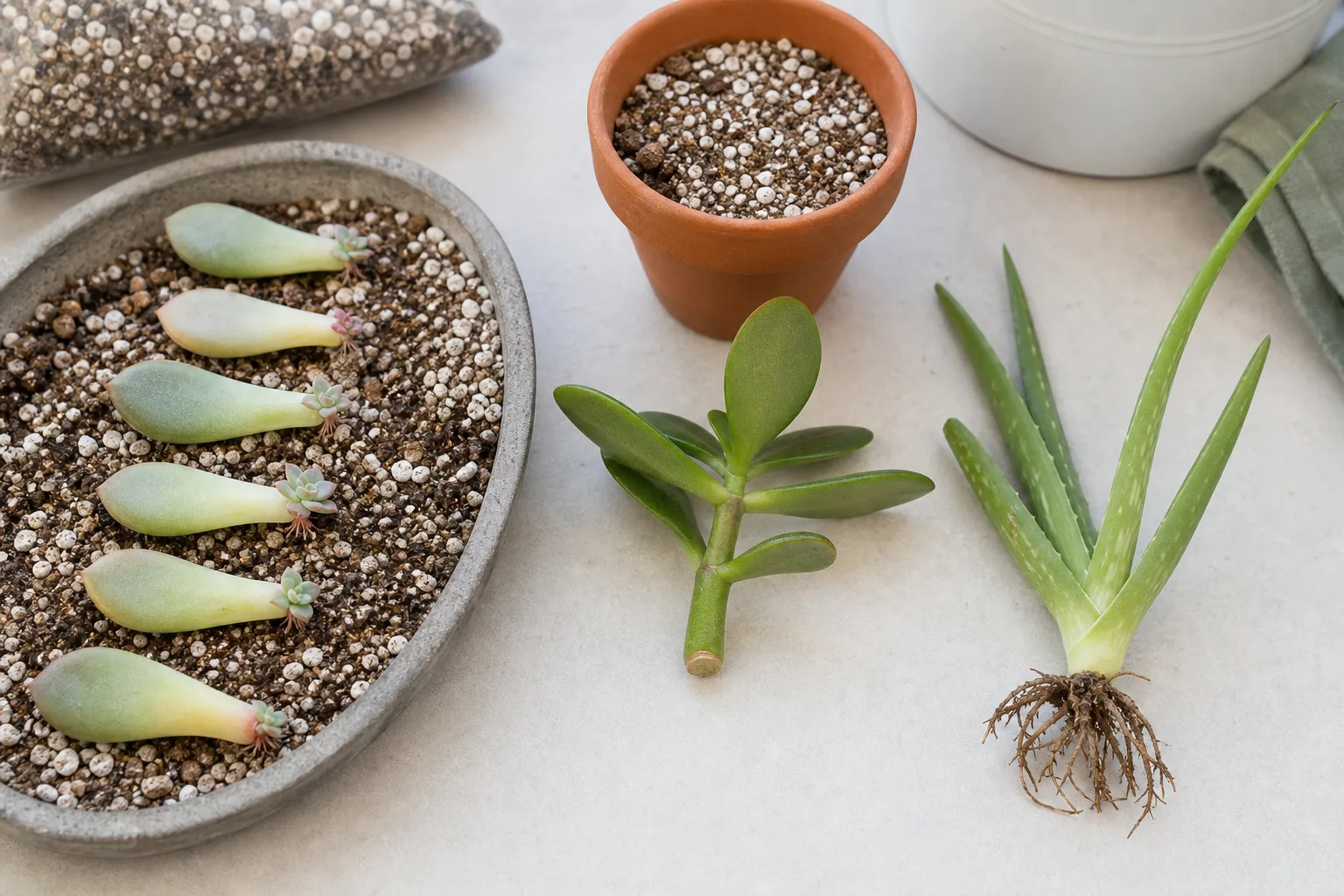
The most dependable way to multiply string of pearls is through stem cuttings. Choose firm, green strands at least three to five inches long, free of pests and soft spots. The Tidy Root propagation guide confirms the key principle: roots form from nodes, not from a pearl lying by itself.
- Sterilize scissors with rubbing alcohol and let them dry.
- Cut below a healthy node and remove two or three pearls from the base so you have a short bare section.
- Let the cut end dry for several hours, especially if the room is cool or humid.
- Use a small shallow pot of airy succulent mix. Lay the cutting across the surface and press bare nodes gently into contact; keep the pearls above the soil.
- Give the pot bright filtered light and only enough moisture to keep the rooting zone from staying dusty-dry. Never keep it soggy.
- After a few weeks, test for anchoring with a very gentle tug. Resistance, fresh growth, and plumper pearls indicate progress; do not keep unpotting the cutting to inspect roots.
Choose Between Soil and Water Propagation
Soil propagation is usually the best long-term choice because new roots develop in the medium where they will remain. Water propagation lets you see roots and can be useful for a small number of cuttings, but only the bare stem should touch the water. Pearls under the waterline often rot.
For water rooting, use a narrow clean jar, keep the lower bare nodes submerged, and place it in bright indirect light. Change the water when it clouds or at least every few days. Transfer the cutting once roots are established rather than leaving a dense tangle in water indefinitely, then keep the new soil slightly more evenly moist for the first week before returning to the mature dry-down rhythm.
One fallen pearl is not a reliable new plant. A piece of stem with a node is the valuable material. If a strand breaks during moving, save it when it is still firm, remove the lowest pearls, and root it rather than treating the break as waste.
Move String of Pearls Outdoors Safely
An outdoor summer can provide stronger light and airflow, but only in a frost-free, protected position. NC State Extension places outdoor cultivation in roughly USDA Zones 9b–11b, so gardeners in colder regions should use the plant as a seasonal patio specimen and bring it inside well before frost.
Acclimate an indoor plant gradually. Start outside in bright shade for several days, add mild morning sun, and protect it from heavy rain. A sudden move from a filtered window to full afternoon sun can scorch pearls; repeated rain can keep the shallow pot wet long enough to trigger rot. Check the pot after storms and move it under cover when the mix cannot dry.
Before autumn nights become cold, inspect for insects, drain the pot, and bring it inside. Quarantine it from your other houseplants for a week or two while you check leaf joints and the soil surface for pests. This transition is a good time to shorten overly long strands and root the best cuttings as insurance.
Encourage Fragrant Summer Flowers
String of pearls produces small white, daisy-like flowers with long stamens and a cinnamon-like fragrance, usually in summer. Indoor flowering is uncommon because the plant needs strong light, mature growth, and a cooler, relatively dry winter rest. A flower is a bonus, not a sign that the plant is failing when it does not appear.
To improve the odds, give the plant bright light during the growing season, avoid feeding heavily, and provide a cooler winter location without keeping the soil wet. Do not force bloom by starving an already weak plant or withholding water until the pearls collapse. A healthy plant with good light has a better chance than one pushed through stress.
Prevent and Identify Common Pests
Aphids, mealybugs, whiteflies, fungus gnats, and ants can appear, especially when a plant is crowded, overwatered, or weakened by poor light. Inspect where pearls join stems, under the pot rim, and around fresh growth. Sticky residue, cottony clusters, fine webbing, or clouds of tiny flies deserve attention before you move the plant near others.
Isolate the pot, remove visible insects with a cotton swab or water rinse that will not saturate the soil, and improve light and airflow. For a larger infestation, use a labeled insecticidal soap or another product according to its current label; do not improvise a concentrated pesticide on a delicate succulent. Our guide to tackling indoor plant pests covers the isolation and follow-up steps.
Diagnose Shriveling, Yellowing, Rot, and Stretch
The same symptom can come from opposite causes. A shriveled pearl does not automatically mean “water now,” and a yellow pearl does not automatically mean “add fertilizer.” Inspect the roots, soil moisture, light, and the location of the damage together.
Act on the Pattern, Not One Damaged Pearl
| Pattern | More likely explanation | First action |
|---|---|---|
| Many pearls wrinkle while the mix is dry and roots are firm | Underwatering or extreme heat | Water thoroughly, then move from hot glass and monitor recovery |
| Pearls wrinkle while mix stays wet | Root damage from poor drainage or overwatering | Stop watering, inspect roots, and repot only if rot is present |
| Pearls are soft, translucent, blackening, or mushy near the soil | Stem or root rot | Cut back to firm tissue and propagate healthy sections |
| Older or lower pearls turn yellow one at a time | Normal aging, shade, or inconsistent care | Remove dead tissue and check light and moisture before feeding |
| Many pearls yellow with wet soil or pest residue | Root stress or sap-feeding insects | Inspect roots and stems; isolate if pests are present |
| Long gaps appear between small pearls | Insufficient light | Increase usable light gradually, then prune leggy sections |
| Dry tan patches face the window | Sun scorch | Filter or reduce the strongest direct light |
When rot is suspected, save the healthy top and side strands before attempting a dramatic rescue. Remove soft tissue with sterilized scissors, let the cuts dry, and root firm pieces in clean mix. If every stem is soft and the roots have collapsed, the original plant may not be recoverable; propagation from any firm green node is the realistic next step.
Yellowing also deserves a close look at the pattern. NC State Extension lists insects, poor light, underwatering, overwatering, and scorching among the problems that can affect this plant. That is why a single diagnosis based on color alone is unreliable.
Keep String of Pearls Away From Pets and Children
String of pearls is not a pet-safe plant. NC State Extension lists it as toxic to humans and pets; ingestion can cause vomiting or diarrhea, and sap can irritate skin or produce a rash. Place hanging baskets where a cat cannot launch into them, keep fallen pearls and pruning waste off the floor, and wash your hands after handling sap.
The ASPCA also cautions that common names can overlap and that “non-toxic” does not mean a plant is suitable to eat. Keep the scientific name, Curio rowleyanus, with your household plant records. If a pet may have chewed the plant, contact a veterinarian or an animal poison-control service promptly rather than waiting for symptoms.
Conclusion
String of pearls thrives when you make its root zone dry between thorough waterings, give it bright usable light, and keep its container small enough to dry predictably. Start with an airy mix and a drainage hole, watch the plant’s pearls alongside the soil, and correct light or drainage before reaching for fertilizer.
The best long-term habit is to prune and propagate before the plant is in crisis. Root firm stem sections at their nodes, coil them across the soil to build fullness, and bring the plant indoors before cold weather. With that rhythm—and a safe location away from pets and children—this unusual succulent becomes a manageable, renewable houseplant rather than a one-season purchase.