How to Grow Rugosa Roses: Planting, Pruning & Care
Grow rugosa roses with a sunny site, measured watering, and light pruning. Choose cultivars for flowers or hips, and check local spread risks before planting.
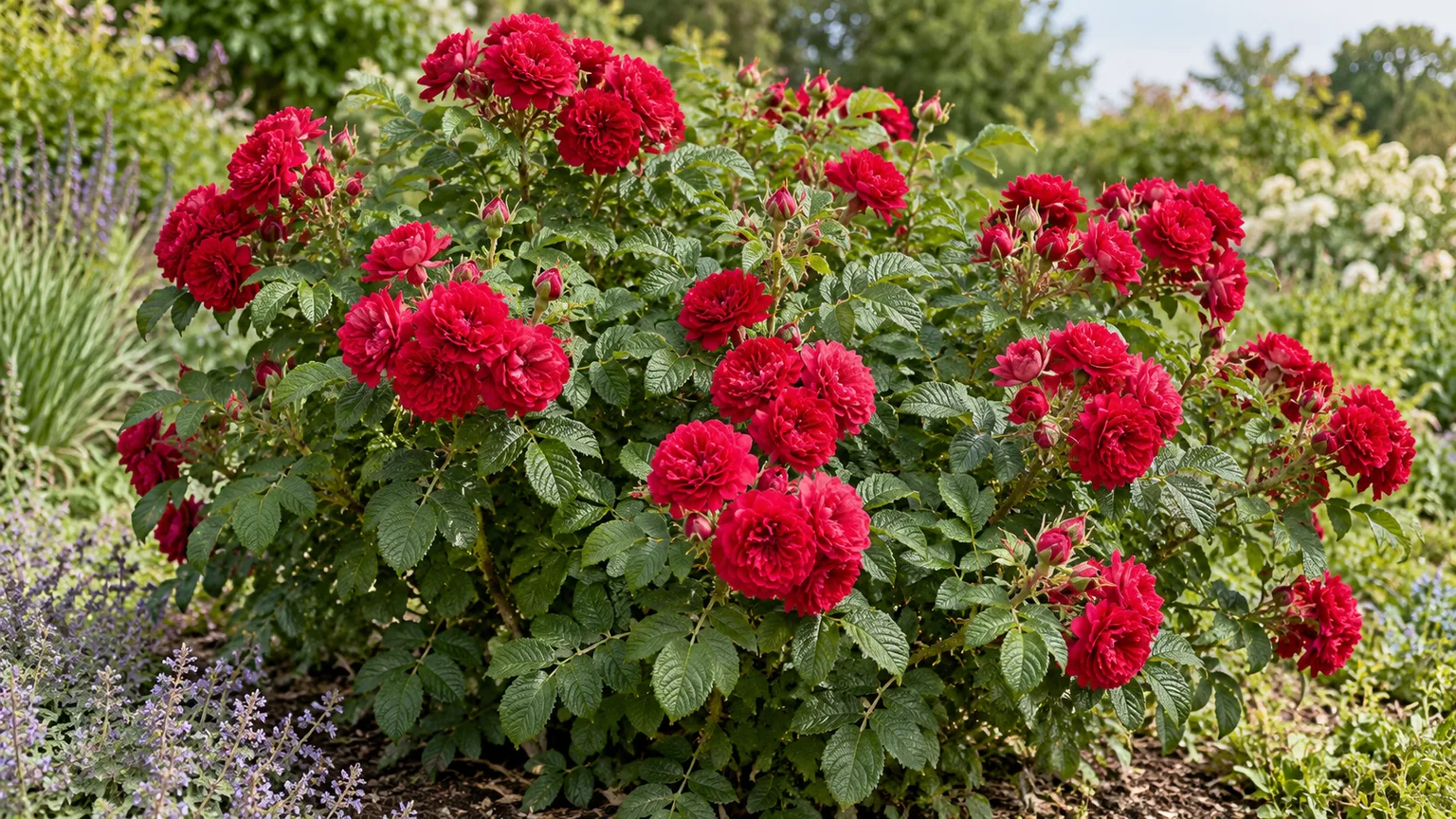
Rugosa roses (Rosa rugosa), also called beach roses or Japanese roses, are tough, suckering shrubs with deeply wrinkled leaves, prickly canes, fragrant flowers, and large red-orange hips. They can thrive in exposed, sandy, salty places where many roses struggle, but that toughness comes with a real trade-off: a plant can spread beyond the neat outline of its original planting.
Before you buy one, check whether rugosa roses are recommended or restricted where you live, especially near dunes, coastal scrub, wetlands, or other natural areas. If local guidance supports planting, choose a cultivar for its mature size and flowers or hips, give it sun and drainage, water it while it establishes, and prune only as much as the shrub needs.
Know the rugosa rose before you plant
A rugosa rose is a deciduous shrub rose native to eastern Asia. Its thick, wrinkled foliage and stout, thorny stems help distinguish it from many garden roses; flowers are commonly pink or white, often fragrant, and followed by rounded, tomato-like hips. Species plants often reach roughly 4 to 6 feet tall and wide, but cultivar size varies. The plant also sends out underground shoots, or suckers, that can create a broad colony over time. North Carolina State Extension describes this combination of a rounded habit, prickles, hips, and thicket-forming growth in its rugosa rose profile.
The shrub’s reputation for toughness is earned, but “tough” does not mean “thrives in every condition.” It tolerates drought once established, salt exposure, wind, and a range of soils better than many roses. It still flowers best in sun, needs drainage, and can struggle in persistently waterlogged ground. Its suckering habit is also part of the plant’s biology, not a sign that the shrub is sick or that a gardener has watered incorrectly.
A rugosa is a poor match for a narrow foundation bed, an entrance, or a frequently used path. Canes can arch outward, and even cultivars with a smaller listed mature size may send up shoots beyond the crown. Think of it as a shrub that may occupy a growing patch, not as a compact rose bush that will stay exactly where its nursery pot was set.
Decide whether its spread fits your location
Rugosa rose has naturalized and is considered invasive in some regions and habitats, but that status is not universal. It is native to eastern Asia and can spread by root suckers and by seeds inside its hips, which may be moved by wildlife. North Carolina State Extension flags the species as invasive particularly in parts of New England, Virginia, coastal areas, and Canada. Massachusetts coastal landscaping guidance warns that it can displace desirable vegetation in some coastal settings, while the Royal Horticultural Society’s rugosa rose guidance notes that the species is listed under Schedule 9 in Great Britain; the relevant legal restrictions apply to England and Wales, not every country or region.
That geographic difference matters. A plant that is common in one town’s ornamental hedges may be an ecological concern or restricted in a nearby coastal habitat. A named cultivar is not automatically safe from spreading simply because it has a different flower color or a smaller advertised size. Nor does growing it in a pot fully remove risk: a container can limit underground shoots, but hips can still form and seeds can still leave the property. University of Maryland Extension makes that distinction in its region-specific answer about rugosa rose.
Check local rules and nearby habitats first
Before purchasing, check your state or provincial invasive-plant list and any local conservation or coastal-landscaping rules. If a public authority or land manager advises against it for your area, choose a locally appropriate alternative instead. Do not assume that salt tolerance makes rugosa a good dune plant; dunes and coastal vegetation can be sensitive habitats, and restoration plans should follow local ecological guidance.
If planting is permitted and appropriate on your site, decide whether you can monitor suckers and remove hips before seeds mature when needed. Those steps reduce some opportunities for spread but are not a guarantee that the shrub will remain contained, particularly beside open natural land. If it is already established in a sensitive area, ask a local extension service or land manager about a site-specific response rather than assuming one cutting or digging will eradicate it.
Choose a cultivar for flowers, hips, or a smaller footprint
Buy by the plant’s traits and mature dimensions rather than by the word “rugosa” alone. Some forms are selected for abundant hips, while others emphasize double flowers or a more compact outline. The following comparisons draw on the cultivar notes from the Morton Arboretum’s rugosa rose profile:
| Cultivar | Useful trait | Consider if… |
|---|---|---|
| ‘Frau Dagmar Hastrup’ | Compact, about 3–4 feet; single light pink flowers and plentiful large hips | You want a smaller shrub and a strong hip display |
| ‘Charles Albanel’ | Compact mound, about 2–3 feet; mauve flowers and orange-red hips | You need a lower-growing option, subject to local spread guidance |
| ‘Hansa’ | About 4–5 feet; fragrant reddish-purple double flowers and showy hips | Fragrance and a fuller flower are priorities |
| ‘Blanc Double de Coubert’ | About 4–5 feet; fragrant semi-double white flowers; fruit is less reliable | You value white flowers more than a heavy crop of hips |
These are planning dimensions, not a promise that a shrub’s entire colony will stay within that width. Site conditions, climate, age, and the plant’s tendency to sucker all affect the footprint. For an exposed or colder garden, confirm the cultivar’s hardiness with a regional nursery or extension office rather than applying one zone range to every hybrid. A rose can be hardy enough to survive winter yet still lose flower buds or suffer wind and salt injury in a particular site.
If hips are important, ask whether the named cultivar reliably produces fruit and whether its flowers are single or double. Flowers with accessible stamens are generally easier for pollinators to use, while some highly double forms may set fewer hips. Treat a nursery description as a starting point and check a botanical garden or arboretum reference for the specific selection.
Find a sunny site with room and good drainage
Choose a site with at least six hours of direct sun on most days if you want a generous display of flowers. Rugosas tolerate some partial shade, but shade often means fewer flowers and slower drying after rain. Good airflow helps keep foliage healthier, so avoid squeezing the shrub between a wall and another dense plant.
The soil can be sandy, loamy, or even somewhat clayey as long as water does not stand around the roots for long periods. Slightly acidic soil is often preferred, but rugosas tolerate a range of soil reactions. If the ground is poor, adding a modest amount of compost can improve its structure; there is usually no need to excavate a huge planting pit and replace the native soil with a rich potting mix. A hole that holds water after rain is a drainage problem, not a cue to add fertilizer.
Salt tolerance makes rugosa rose useful in some exposed seaside gardens and sites that receive road-salt spray. It does not mean that all cultivars perform equally under every level of salt exposure, or that salt-heavy soil can never damage a plant. The Morton Arboretum lists road salt among the shrub’s tolerances, and University of Illinois Extension also identifies the species as very salt tolerant. Use that resilience as one site-selection factor, not as a reason to plant where local conservation guidance says not to.
Allow enough room to work around the mature shrub without brushing against the canes. Keep it well back from gates, walkways, play areas, and spots where people carry things. If you want a hedge, measure the cultivar’s mature width and account for the suckers that can thicken the row; a hedge that is comfortable to walk beside at planting can become an unpleasant barrier later.
Plant a rugosa rose for a steady first season
Plant when the ground is workable and weather is mild—often spring in colder regions or fall where roots can establish before hard freezes. Follow the nursery’s local timing advice for bare-root versus container-grown stock. Before planting, inspect the root ball and remove only damaged or tightly circling roots; keep the plant shaded and moist while you prepare the site.
Dig a hole about as deep as the root system and wide enough to spread the roots naturally. Set the shrub at the same depth it grew in its pot, backfill with the native soil, and water slowly to settle the soil around the roots. Apply a loose layer of organic mulch over the root zone, keeping it a few inches away from the canes so moisture does not collect against the crown.
For a screen or hedge, space plants according to the mature width of the cultivar and the density you want, not the small size of the nursery plant. Tighter spacing closes the visual gap sooner but creates a denser, thornier barrier that is harder to inspect and maintain. If you are unsure, leave more room; you can fill a gap with an appropriate companion plant more easily than you can reverse an overgrown, spreading row.
Water thoroughly after planting and check the soil regularly through the first growing season. The objective is evenly moist root-zone soil while the shrub establishes, not daily shallow sprinkling. As new growth and roots develop, lengthen the time between waterings and respond to rainfall, soil texture, wind, and heat. A plant in sand may dry faster than one in loam, even when both receive the same weather.
Water, mulch, and fertilize only when needed
An established rugosa rose can withstand short dry periods, but prolonged drought may reduce flowering, hip size, or new growth. Water slowly at the base when the root zone has dried rather than following a fixed calendar. Deep watering encourages roots to explore the soil; frequent light splashes can wet only the surface and leave deeper roots dry. During a hot, windy stretch, check more often, especially if the shrub grows in very sandy soil.
Mulch helps moderate soil temperature and slow moisture loss. Keep it in a thin, open layer and refresh it as it breaks down; a deep mound against the stems can hold excess moisture and hide suckers or damage. In winter, a light layer over the root area is usually enough for an established plant in a suitable climate. Young shrubs may benefit from mulch while they establish, but most rugosas do not need elaborate wrapping once they are settled.
Fertilizer is rarely the first solution for a rose that is not blooming. Check sun exposure, drainage, pruning, age, and water stress before feeding. If a soil test identifies a deficiency, use an appropriate fertilizer according to its label and local recommendations. Heavy feeding can push soft leafy growth, does not fix poor drainage, and may increase maintenance without correcting the actual cause of weak flowering. Gardeners’ Path similarly advises a restrained approach to feeding in its practical rugosa growing guide.
Prune lightly—and choose whether to keep the hips
Rugosa roses are shrub roses, so do not automatically apply the hard annual cutback used for some hybrid tea roses. Start by removing dead, diseased, broken, or crossing canes. Then decide whether the plant needs a shape adjustment or renewal of older wood. A tidy specimen may need only a few selective cuts; a crowded, old shrub may benefit from removing some of the oldest canes at ground level over more than one season.
In cold climates, late winter or early spring—when the worst cold has passed and growth is beginning—is a practical time for structural pruning. Regional timing shifts with climate; the University of Maine Cooperative Extension recommends minimal pruning for beach rose and advises removing dead or damaged wood first, then only the growth needed for shape. It also cautions against removing more than about one-third of the healthy plant in one season. Its 2024 pruning answer is a useful conservative baseline, not a universal calendar date.
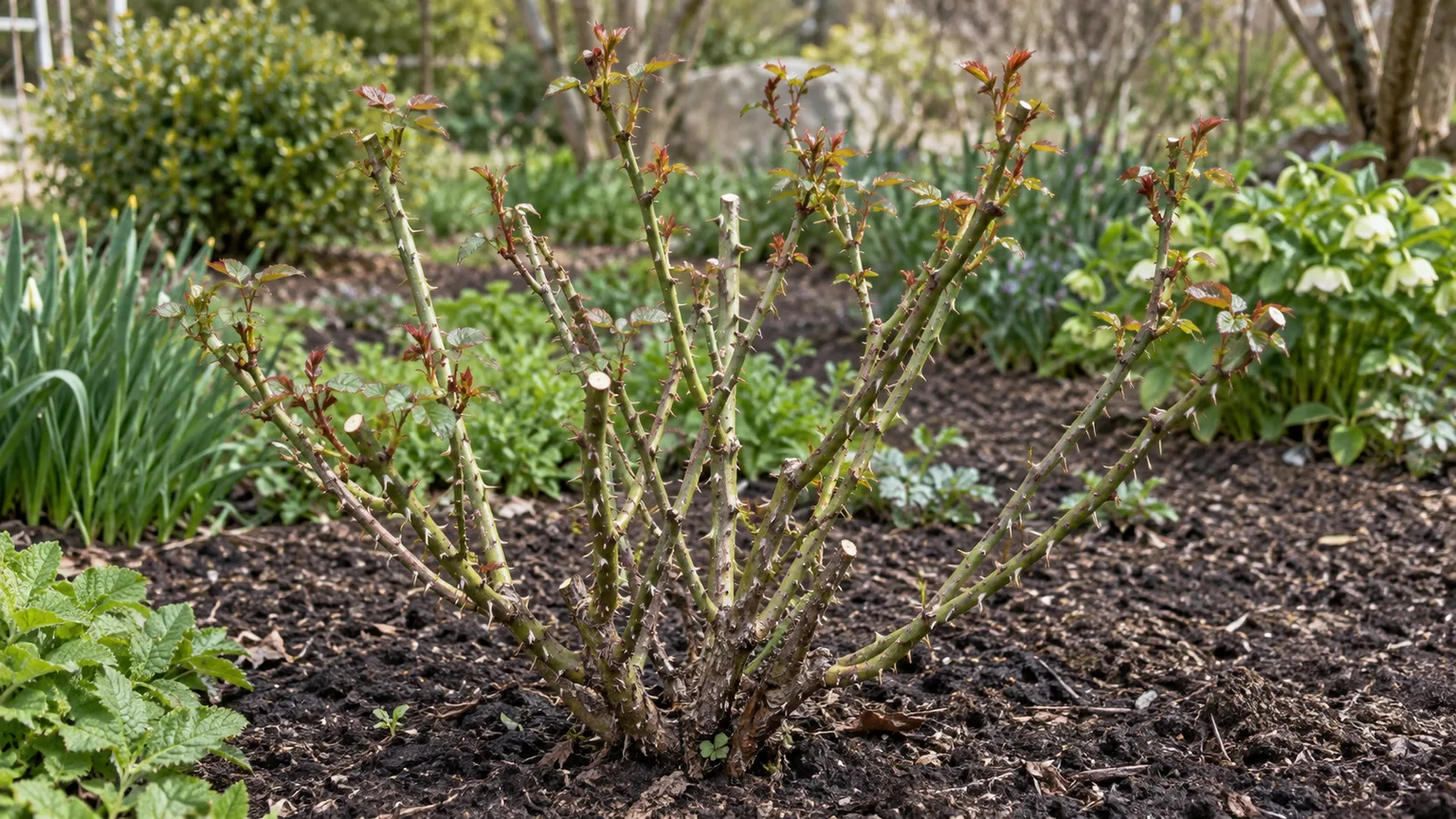
Use the image as a view of exposed cane structure, not as a target for severe annual cutback: established rugosa roses usually need only selective cleanup and renewal.
Wear sturdy gloves, long sleeves, and eye protection when working near the canes. Use sharp bypass pruners for small stems and loppers for thicker ones. Cut back to a healthy outward-facing bud or remove a whole cane cleanly at its base; avoid leaving ragged stubs that catch on clothing. If you have a large shrub, work from the outside in and pause before reaching through the thorny center.
Manage suckers without confusing them with hips
Suckers are new leafy shoots arising from the roots, often some distance from the original crown. Hips are round fruits that form where flowers faded; they are usually red or orange later in the season. If the plant is in a permitted garden and a sucker is outside the intended footprint, trace it back toward the parent and dig out the connection when practical. Cutting a sucker at soil level may make it resprout, so inspect the same spot again rather than assuming a single cut solved it.
A rose that is allowed to make a thicket will continue to send shoots outward. That may suit a wide, managed screen where local guidance permits the plant, but it is a poor fit for a small bed or a boundary beside natural vegetation. Removing suckers and hips can reduce spread; it cannot guarantee containment. If repeated control is not realistic for your site, reconsider planting or seek local guidance about the existing shrub.
Encourage flowers, hips, and wildlife value
Rugosa flowers often arrive in a substantial early-summer flush, with some cultivars producing additional flowers later. Sun, adequate moisture during establishment, and light pruning support flowering better than heavy fertilizer. Once the shrub is mature, a modest flower year can reflect shade, drought, recent pruning, or cultivar traits rather than a need for an aggressive rescue treatment.
Deadheading means removing spent flowers before they turn into hips. If you value fall color, winter structure, or fruit for birds, leave at least some faded blooms in place. If you prefer a tidier look or want to reduce seed production, remove the flowers or immature hips before seeds mature, but inspect the shrub throughout the flowering season. Taking every flower off also removes that season’s hips, and cutting a great deal of foliage to deadhead can weaken a small or recently planted shrub.
Rugosa hips can remain colorful into colder months, although weather, birds, and cultivar differences affect how long they persist. This fruit display is one reason to select a cultivar that produces hips reliably. It also creates a management choice: the same fruit that adds garden interest can provide seeds that may be dispersed beyond a property. In places where spread is a concern, use local advice to decide whether the ornamental and wildlife benefits are appropriate for the site.
Propagate without creating an escape route
The simplest way to make another rugosa is often to transplant a rooted sucker, but doing so is wise only where planting is allowed and the new location is suitable. A rooted sucker carries the parent plant’s traits more reliably than seed. Dig around it carefully, preserve as much of its root system as possible, and move it during mild weather; then water it while it establishes. Do not pass unwanted plants along to someone whose garden or region may be a poor fit.
Seed propagation takes longer and does not preserve a named cultivar reliably. Seeds need a period of moist cold treatment before sowing, and germination can be uneven. Gardener’s Path describes a refrigerator stratification method in its propagation notes, but local climate, seed freshness, and the source plant can affect results. Do not sow rugosa rose near a natural area or in a region where it is restricted merely to experiment with seed-grown plants.
Cuttings may be possible, but a nursery-grown plant or a carefully moved sucker is usually a more predictable route for a home gardener. Propagation is not neutral when a plant spreads readily. First decide whether an additional shrub is wanted and ecologically appropriate; then choose a method.
Troubleshoot the problems rugosa roses can still get
Rugosas are less susceptible than many roses to common fungal problems, partly because their leaves are thick, but they are not immune. North Carolina State Extension lists possible issues including black spot, rust, and powdery mildew, along with insects such as aphids, beetles, scales, leafhoppers, and spider mites. Inspect what is happening before treating: a few insects or a handful of spotted leaves on a vigorous shrub usually do not justify broad spraying.
Give the plant sun and enough spacing for air to move through the foliage. Water at soil level when possible and avoid leaving leaves wet overnight. Remove fallen, badly diseased leaves when practical, and clean pruning tools between plants if you are cutting visibly diseased stems. If a problem is worsening quickly or affects a large area, take clear photos and ask a local extension office or diagnostic clinic to identify it before selecting a control.
Read yellowing, leaf spots, and weak flowering
Yellow leaves are not automatically a disease. Rugosa foliage naturally changes color and drops in autumn; yellowing in summer can also follow drought, standing water, or root disturbance. Check soil moisture several inches below the surface and watch whether yellowing is uniform or concentrated on particular branches. If the ground remains saturated, improve drainage or reconsider the site rather than adding more water.
Dark spots, rust-colored pustules, or a white coating deserve closer inspection, particularly when they spread on new leaves or lead to early defoliation. These symptoms can have different causes and look-alikes, so avoid identifying a pathogen from color alone. Disease resistance lowers the odds of some problems but does not eliminate the need for airflow, sanitation, and diagnosis. A shrub with healthy new growth and a few old blemishes often needs observation, not a preventive fungicide.
If a rugosa produces few flowers, look first at light and recent pruning. Deep shade limits blooms; cutting off many flowering stems just before the growing season can remove buds; drought may reduce flower production. Correct the limiting condition gradually and give the shrub time to respond instead of fertilizing heavily or cutting it back in an attempt to force a flush.
Prepare established shrubs for winter
Most established rugosa roses are cold-hardy and need little winter protection in a suitable climate. After the growing season, stop shaping the plant and allow it to harden naturally. A layer of mulch over the root zone can buffer temperature swings, particularly for a newly planted shrub, but do not bury the canes or mound wet material against the crown.
In very exposed sites, winter injury may come from wind, salt spray, or fluctuating temperatures as much as from cold itself. Check your cultivar’s local hardiness information, especially if it is a hybrid, and keep the plant watered during a dry autumn before the ground freezes. Avoid late-season nitrogen feeding or heavy pruning that encourages tender growth. In spring, wait until you can distinguish dead wood from live stems before cutting, then remove only what failed or is crossing.
Harvest rose hips carefully
Harvest hips only when you can confidently identify the rose and know that it has not been treated with a pesticide or other product not approved for edible plants. Use clean pruners and gloves, since rugosa canes are sharply prickled. Choose firm, well-colored fruit and leave some on the shrub if you want winter display and wildlife food; avoid shriveled, moldy, or damaged hips.
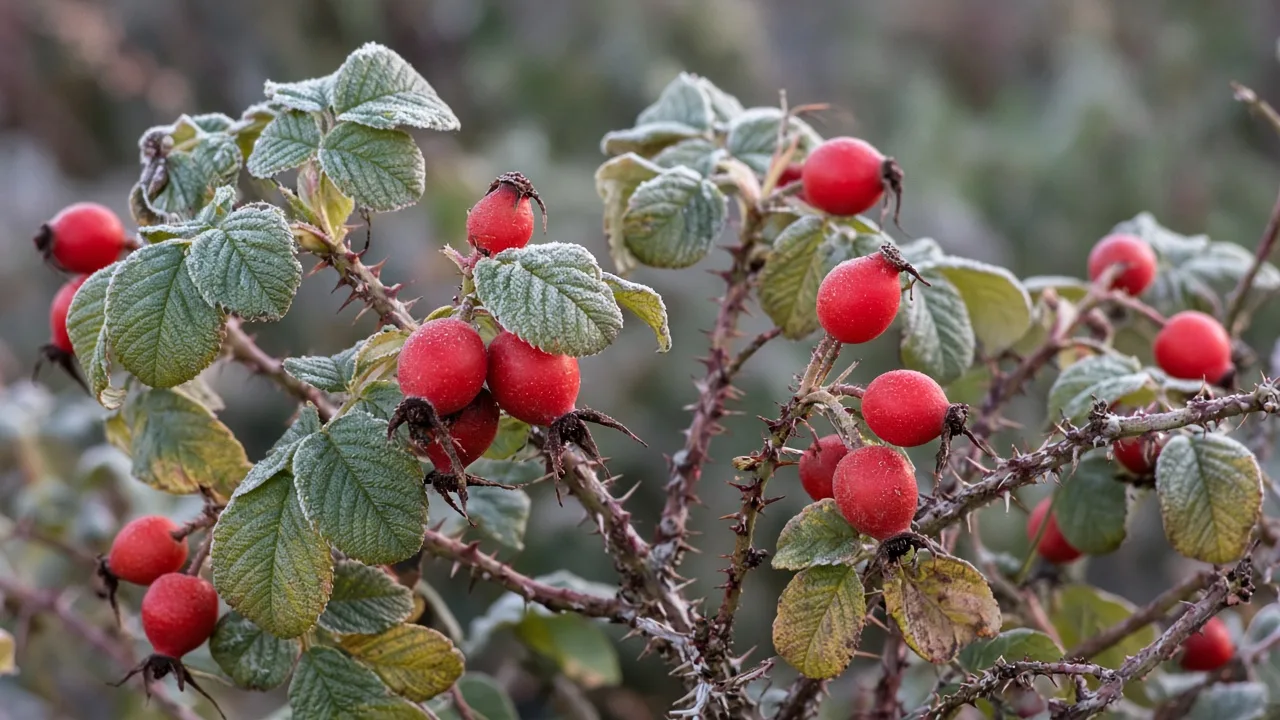
Ripe hips are the fruit that develops after a rose flower fades; the display and harvest depend on leaving some flowers uncut.
Rinse harvested hips and remove the stem and blossom ends. For fresh preparation, split large hips and remove the seeds and the fine hairs around them; those hairs can irritate the mouth and digestive tract. University of Alaska Fairbanks Cooperative Extension’s wild-rose food guidance explains how to prepare hips and advises removing seeds before consumption. If cooking whole hips for a strained preparation, use a fine strainer and make sure the finished pulp is free of hairs.
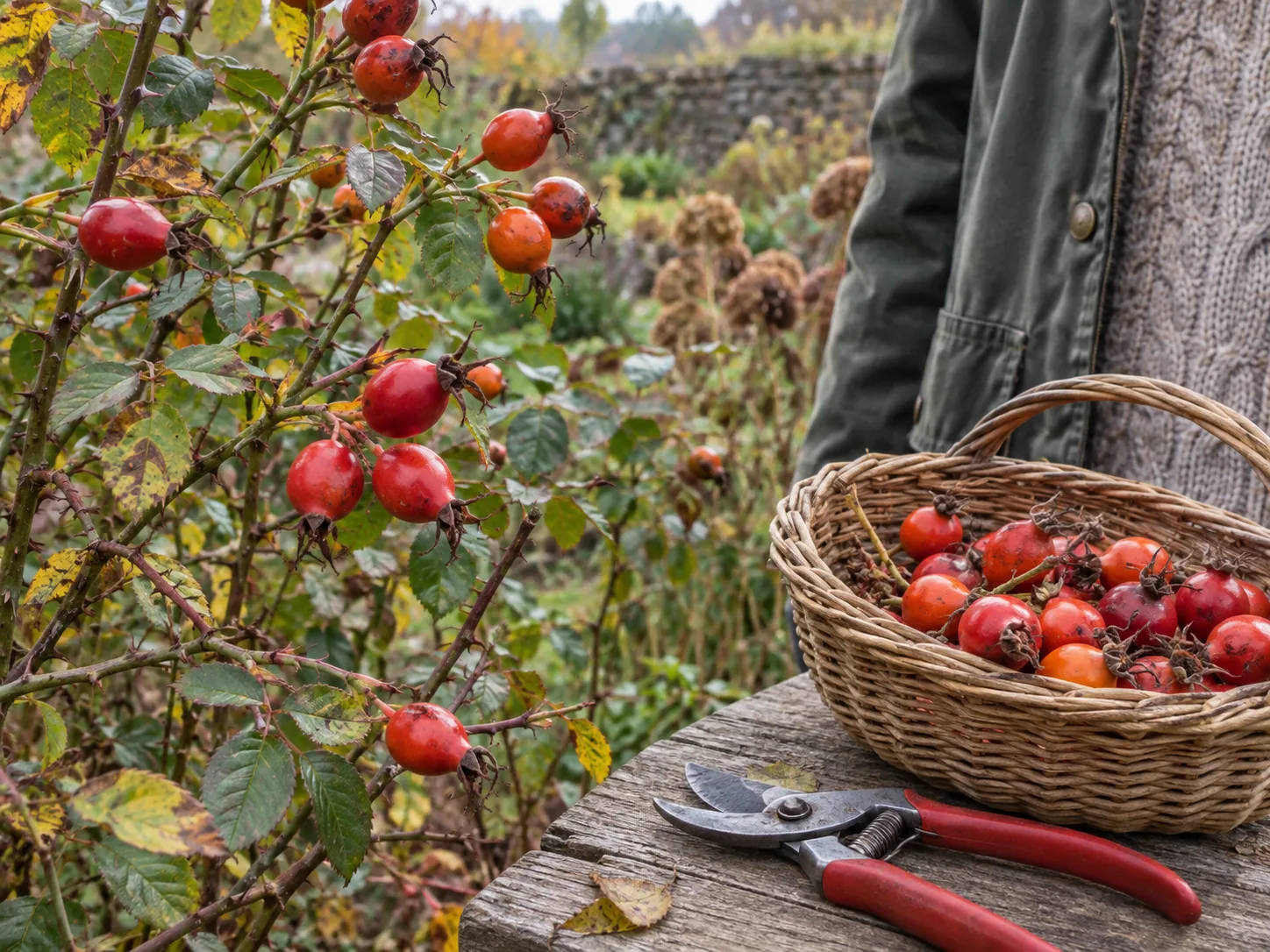
Do not collect fruit from roadsides, treated landscapes, or plants exposed to unknown spray residues. Rose hips are a food ingredient, not a substitute for medical treatment; keep preparation simple and follow a tested food-preservation recipe if you plan to can or store them. If harvesting is not your goal, leaving the hips on the shrub supports the plant’s ornamental value while making seed dispersal something to consider in your local management plan.
Avoid the mistakes that make care harder
The most expensive mistake is planting before checking local spread guidance. A salt-tolerant shrub may look like an ideal solution for a beach or road edge, yet the habitat where it would be planted may be exactly where local authorities want it kept out. The second mistake is treating “disease resistant” as “disease-proof,” then ignoring poor drainage or crowding until the shrub declines.
Other common missteps are pruning it like a hybrid tea, deadheading every flower while expecting a crop of hips, putting it beside a narrow path, and watering on a calendar without checking the soil. Overfertilizing can add leafy growth without improving bloom, while cutting suckers at the surface and never revisiting them can make the colony seem to return overnight. The better sequence is simple: confirm the site, give the roots room and drainage, water during establishment, and observe the shrub before making a corrective cut or treatment.
Conclusion
Rugosa roses are rewarding where their sun, drainage, fragrance, salt tolerance, and hips suit the garden—and where their thorny, suckering growth can be managed responsibly. Check local invasive-plant guidance before buying, choose a cultivar for its actual size and fruiting habit, then give it a sunny, well-drained site and a measured first-season watering routine.
After establishment, resist the urge to overmanage it. Remove dead or crossing canes, renew older growth gradually, and decide whether you want flowers alone or flowers followed by hips. If local conditions make spread a concern or repeated sucker control is unrealistic, choose a different shrub; the best care plan starts with a plant that belongs in the place you intend to grow it.



