How to Grow and Care for Romaine Lettuce
Learn how to grow romaine lettuce from seed or transplants, with practical timing, spacing, watering, bolting, container, harvest, and storage advice.
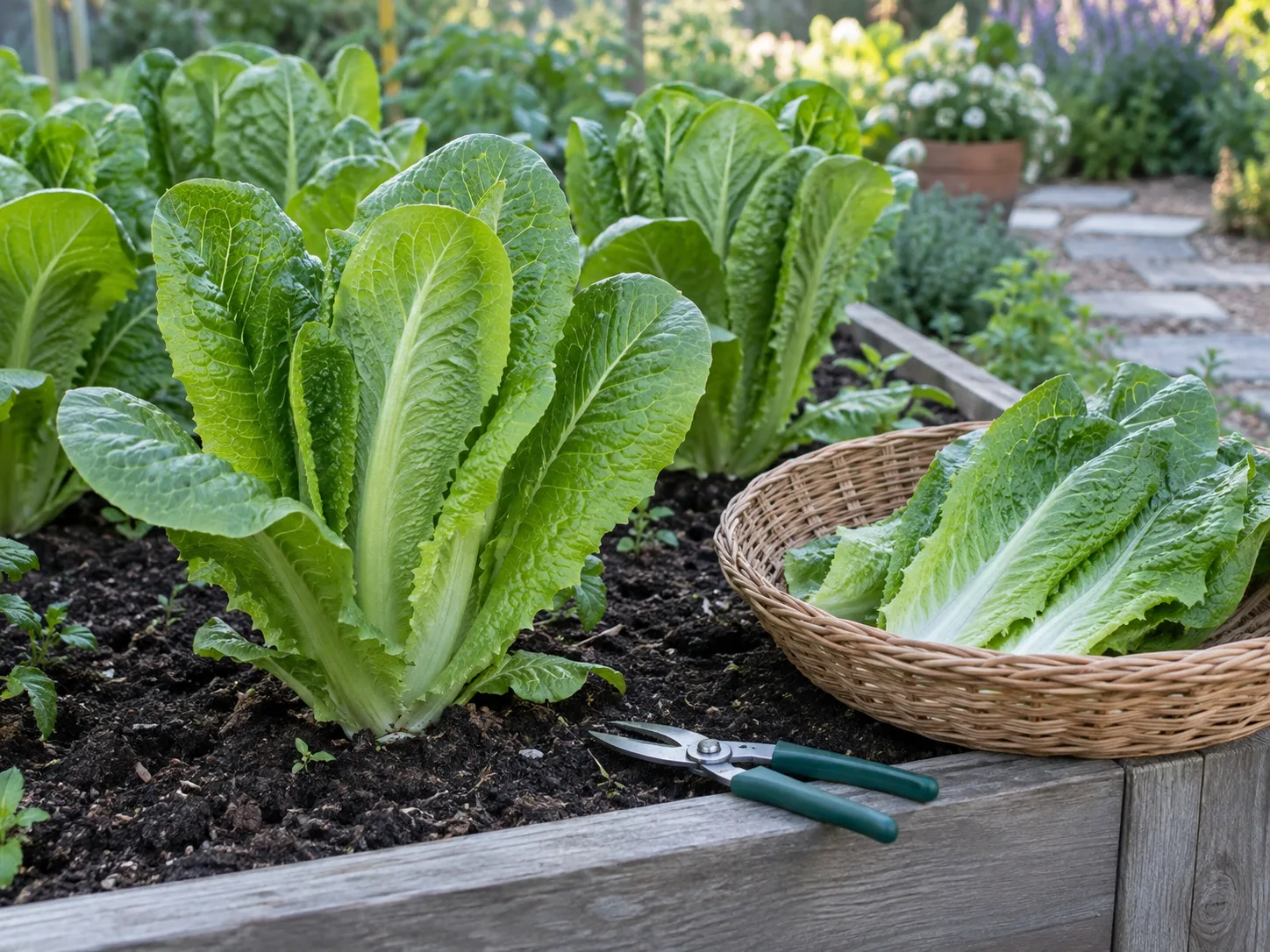
Romaine lettuce is one of the most rewarding cool-season vegetables for a home garden because it gives you two useful crops from the same planting. You can pick a few crisp outer leaves for a sandwich while the center keeps building, or you can cut a full upright head when you want enough for a meal. The key is not a complicated fertilizer schedule; it is getting the crop through its short, cool, steadily growing window before heat, drought, or crowding pushes it toward bitterness.
This guide covers romaine, also called cos lettuce, from seed selection through storage. It uses the plant’s growth habit to make the decisions clearer: grow it quickly, keep its shallow root zone evenly moist, give each head the space it needs, and sow a little more before the previous batch is finished.
Start with the right growing window
Romaine grows best when the weather is cool enough for steady leaf production but not so cold that growth stops. In most climates, that means an early-spring crop and a second crop sown in late summer for fall harvest. The exact calendar depends on your local last frost, first frost, and the date when daytime temperatures begin settling into the upper 70s or warmer.
Use the seed packet’s days to maturity as a planning range, not a promise. A variety that matures in 60 days can take longer in cold, cloudy weather and may become unusable sooner if a heat wave arrives. For a fall planting, count backward from the expected first frost and allow enough time for the cultivar to reach the size you want; the University of Minnesota Extension recommends sowing fall lettuce about three months before average first frost, while the University of Utah Extension advises selecting early cultivars and planting 50–75 days before expected maturity. Those rules are not contradictory—your local temperature and the variety’s maturity window decide which end of the range is useful.
Avoid starting a large spring row all at once. Sow a short row or a small group of containers every 10–14 days while conditions remain favorable. Illinois Extension recommends successive plantings at 10–14-day intervals, and the RHS also recommends small, regular sowings. Succession planting is the simplest way to avoid the frustrating situation where every head is ready during the same hot week.
Build a bed that stays evenly moist
Balance light, drainage, and moisture
Choose a site with at least six hours of direct light when the season is cool. Full sun helps romaine grow quickly and form substantial heads, but a little afternoon shade becomes an advantage when summer temperatures are pressing upward. In a hot climate, morning sun with protection from the strongest afternoon light can produce better leaves than an exposed bed that receives more total brightness but dries out repeatedly.
Good air movement matters too. Leave enough room to weed and inspect the base of each plant, and avoid a low pocket where water stands after rain. Romaine tolerates a light frost better than it tolerates a long spell of hot, dry weather, but cold, wet foliage and crowded heads can invite rot. The best site is bright, reachable with a hose, and easy to cover with a lightweight row cover if a cold night or pest problem calls for it.
Romaine’s roots are not deep enough to rescue a plant from a dry surface layer. University of Minnesota Extension notes that the smaller horizontal roots near the surface absorb most of the crop’s water and nutrients. Prepare a loose bed that holds moisture without staying saturated: mix finished compost into poor soil, break up compacted areas, and remove stones or clods that make a shallow seed furrow uneven.
Drainage and moisture retention are not opposites. Organic matter can help sandy soil hold water and can improve the structure of heavy soil, but compost is not a substitute for drainage. If water sits around the crown after rain, raise the bed or correct the drainage before planting. A soil test is more useful than guessing at pH or fertilizer; romaine can grow across a reasonably broad soil range, and a balanced, fertile bed is more important than chasing a narrowly stated number.
Do not add fresh manure or a thick layer of unfinished compost to a crop that will be eaten soon. Use mature compost, follow a soil-test recommendation when you have one, and keep the planting surface fine enough for small seeds. A thin mulch applied after seedlings are established can slow evaporation, but it should not bury the crown or press against tender stems.
Choose seeds, transplants, or baby romaine
Seeds give you the widest choice of romaine types, including compact mini heads, red-leaved cultivars, and varieties selected for slower bolting. Transplants buy you time when spring is short or when a fall crop must reach harvest before cold weather. Choose the method that matches your season rather than assuming seeds are always better: direct sowing avoids root disturbance, while a healthy transplant can gain several weeks in a narrow weather window.
For a small garden, grow several maturity sizes at once. A mini romaine such as Little Gem can be spaced for quick individual heads, while a full-size cos type can supply larger leaves later. Red romaine can add color, but the important selection details are days to maturity, local heat tolerance, and whether you want baby leaves or a firm full head. Savvy Gardening’s romaine overview describes meaningful variation among cultivars in both size and maturity speed.
The word “baby” describes harvest timing more than a separate botanical type. You can harvest a compact variety young, or take baby leaves from a full-size romaine. If your priority is continuous salads, choose a leafier or smaller type and plant closer. If your priority is classic tall heads, buy enough seed to give each plant full spacing.
Sow and thin romaine for the harvest you want
Plant shallow seeds and protect the seedbed
Sow romaine seeds about 1/4 to 1/2 inch deep in a prepared bed or container. Cover them lightly, press the soil for good seed-to-soil contact, and water gently enough that the furrow does not wash out. University of Utah Extension reports best germination around 55–65°F and warns that temperatures above 80°F reduce germination. If the weather is warm, sow where you can shade the seedbed during the hottest hours and keep the surface consistently damp.
Watering the bed before sowing can be easier than trying to wet the seeds afterward. Once the seedlings appear, use a fine spray or a gentle wand and check the surface every day during dry weather. Lettuce seed is small, and a single missed watering can dry the germinating layer even when the soil below still feels damp.
Space plants by final size, not by guesswork
Spacing controls both the size of the harvest and how quickly the foliage dries after rain. For baby leaves, a dense planting is fine because you will remove plants or leaves early. For mini heads, about 6–8 inches between plants is a practical starting point. For full-size romaine, use roughly 8–12 inches between plants and 12–18 inches between rows, adjusting for the cultivar and your ability to reach the bed; University of Utah Extension gives 8–12 inches in the row and 12–18 inches between rows for head lettuce.
Thin when seedlings have a few true leaves, not when they are already tangled together. Cut unwanted seedlings at soil level with small scissors instead of pulling hard and loosening the plants you are keeping. The removed seedlings can be eaten as microgreens if they are clean, or transplanted while very small if you can preserve their roots. Once thinned, the remaining plants should have a clear path for leaves to expand without resting against their neighbors.
Transplant without stalling the crop
Start seeds indoors only when you can provide strong light and a way to keep the seedlings cool. A sunny windowsill may produce usable leaves, but it can also produce stretched seedlings; a grow light placed close enough to keep growth compact is more reliable. Transplant when the seedlings have a solid root plug and several true leaves, not when roots are circling densely in a small cell.
Harden seedlings for several days before planting them outside. Move them into a sheltered outdoor spot for increasing periods, reduce the abrupt difference in light and wind, and keep the root plug from drying during the transition. University of Minnesota Extension recommends hardening by reducing water and temperature for two to three days before transplanting; in practice, the goal is acclimation, not deliberate wilting.
Set the transplant with the crown at the same level it occupied in its cell. Burying the center can trap moisture and deform new growth, while leaving the root ball exposed allows it to dry. Water the planting hole, firm soil around the roots, and give the seedlings temporary shade if the first days are unusually bright or warm. A transplant may pause briefly, but it should resume new leaf growth once its roots have contacted the surrounding soil.
Water, feed, and mulch for fast growth
Check the soil at the root zone rather than watering by the calendar. Romaine wants an even supply of moisture while it is establishing and forming leaves, but the bed should not remain muddy. University of Minnesota Extension uses about one inch of water per week as a general benchmark and notes that sandy soil may need more frequent watering. Treat that as a starting point: rainfall, wind, sun, soil texture, and container size can change the actual need.
Water at the base in the morning when possible. That wets the shallow roots while giving the foliage time to dry, reducing the long periods of leaf wetness that favor fungal problems. A thin layer of clean, plant-safe mulch helps keep soil from splashing onto leaves and slows evaporation, but pull it back slightly from the crown. If the top inch dries by midday in a small pot, do not wait for leaves to wilt; container roots have less soil volume as a moisture buffer.
Feed the soil before planting with mature compost or a soil-test-based amendment. Romaine is fast-growing, so a modest side-dressing or a diluted balanced fertilizer can help in poor soil after the seedlings are established. More fertilizer is not a shortcut to a bigger head: excess nitrogen can produce soft, lush growth, and fertilizing a drought-stressed plant does not correct the underlying moisture problem. Improve water consistency first, then feed only if growth and soil fertility justify it.
Protect romaine from heat and bolting
Bolting is the shift from leaf production to a flowering stalk. Long days, warm temperatures, drought, and plant age can combine to trigger it, and once the center begins stretching, the crop’s quality window is closing. University of Minnesota Extension explains that bolting stops normal growth and makes leaves tough and bitter.
You cannot make a bolting plant return to its compact stage, but you can often harvest before quality falls too far. Check the center every day during a heat wave. If it is elongating, cut the head, pick usable leaves, and replant when the weather is more favorable rather than waiting for a perfect size that may never arrive.
Use three levers before heat becomes severe: keep the root zone evenly moist, provide afternoon shade, and select cultivars with a shorter maturity window or better local performance. Shade cloth or the shadow of a taller crop can help, but do not create a stagnant, wet pocket around the leaves. Heat protection works best when it reduces the peak stress while the plants still receive useful morning light and air movement.
Grow romaine in containers
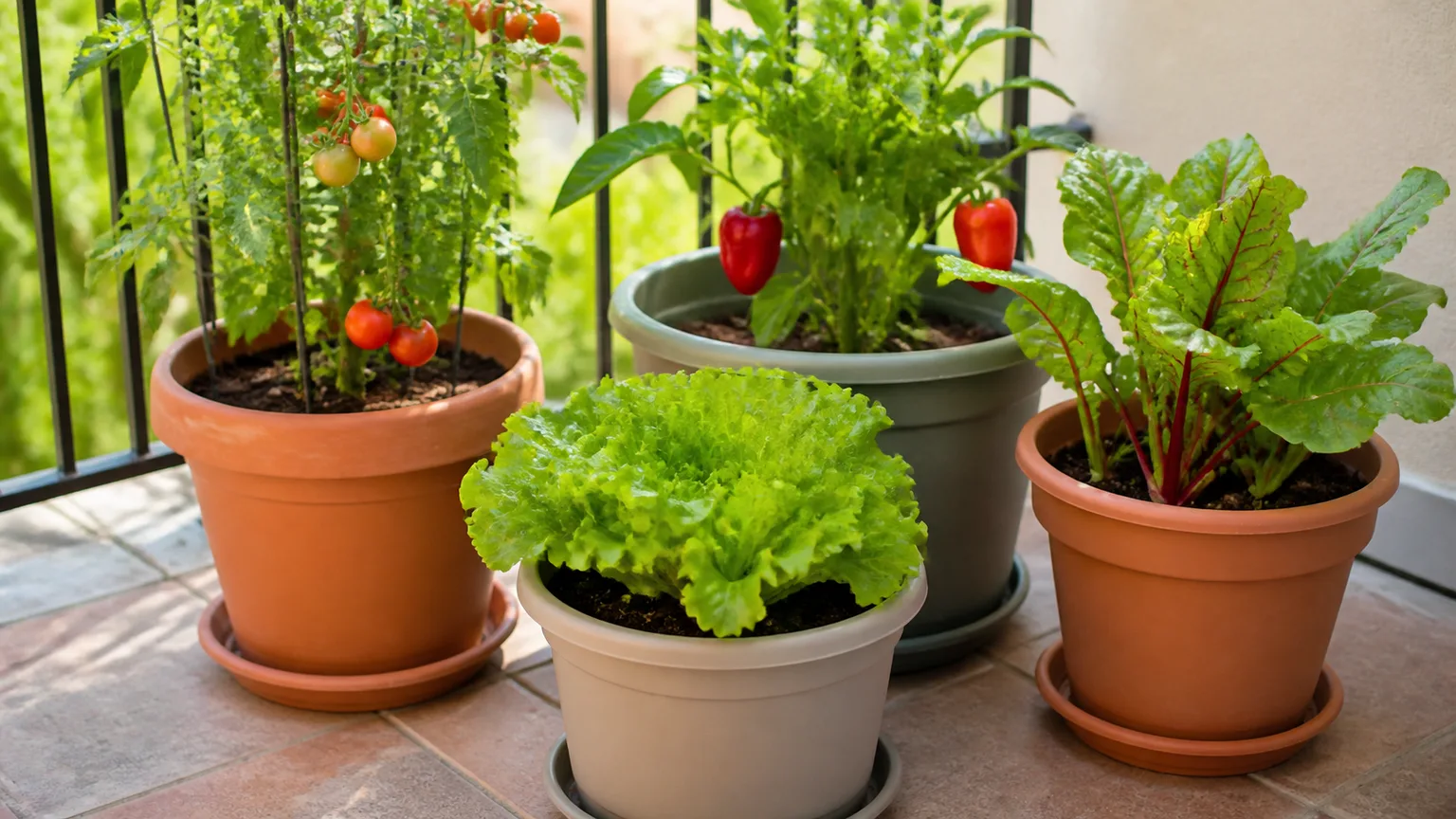
Romaine is well suited to a container, raised bed, grow bag, or balcony planter because its harvest is quick and its roots are relatively compact. Choose a container with drainage holes and enough width for the spacing you want. A full-size head needs roughly 8–12 inches of growing space, while baby-leaf production can be packed more closely if you harvest early and thin as needed.
Use a quality potting mix that drains freely but can hold moisture, and fill the container close to the top so water reaches the entire root zone. A shallow decorative bowl is a poor choice because it dries quickly and may have no drainage. Place the container where it gets strong morning or midday light, but be ready to move it away from a heat-reflecting wall or hot concrete in summer.
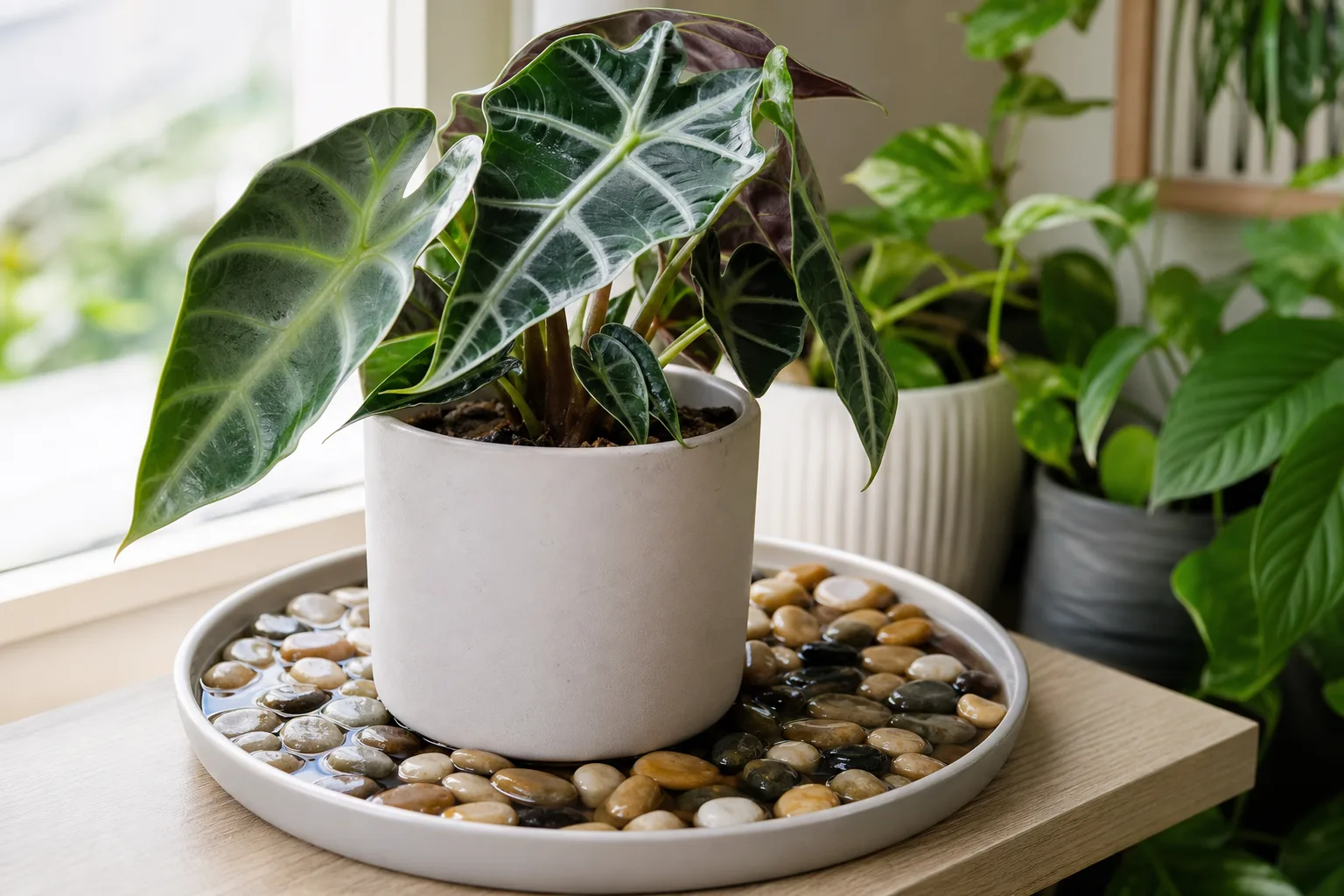
Container romaine needs more frequent inspection than bed-grown romaine. Check below the surface with a finger or moisture probe, lift the pot when you can feel how light it becomes, and water thoroughly when the mix is beginning to dry. Do not leave the pot sitting in a saucer of water after drainage finishes. If a balcony is windy, the leaves may lose water faster than the soil appears to dry, so the plant’s posture and weather matter as much as the calendar.
Diagnose pests, tipburn, rot, and bitter leaves
Read pests and symptoms before treating
Inspect romaine at least twice a week, especially after rain. Slugs and snails chew irregular holes and may hide under mulch; aphids cluster on undersides and new growth; birds can pull up seedlings; and cutworms may sever young stems at the soil line. The RHS lists slugs, snails, aphids, cutworms, birds, and grey mould among common lettuce problems.
Start with physical protection. Use a fine row cover over young plants, keep weeds down, remove hiding places around the bed, and check the soil surface at dusk if slug damage is appearing. A cover is useful only if it is secured at the edges and removed or opened when heat builds. For aphids, a firm water spray can reduce a small colony, but inspect again and use only a product labeled for edible crops if further treatment is needed.
Brown leaf edges do not automatically mean the plant needs more fertilizer. Tipburn is a physiological disorder associated with inconsistent water movement to rapidly expanding leaf margins; Illinois Extension describes it as browning and dieback at the leaf edges and recommends frequent light watering to reduce the problem. Keep moisture steady, avoid a sudden drought followed by flooding, and harvest affected leaves if the interior remains sound.
Soft, slimy tissue near the crown points more toward excess moisture, poor airflow, or rot than simple thirst. Remove damaged leaves, improve drainage, and water the soil rather than the foliage. Pale, tough, increasingly bitter leaves with a rising center suggest heat or bolting; move quickly to harvest rather than treating them as a nutrient deficiency.
If seedlings collapse at the soil line, suspect a damping-off problem or a waterlogged seedbed. Use clean containers, fresh seed-starting mix, gentle watering, and more airflow. Do not reseed directly into the same stagnant pocket until the moisture and drainage issue is corrected.
Harvest baby leaves or full heads
Pick outer leaves for a longer harvest
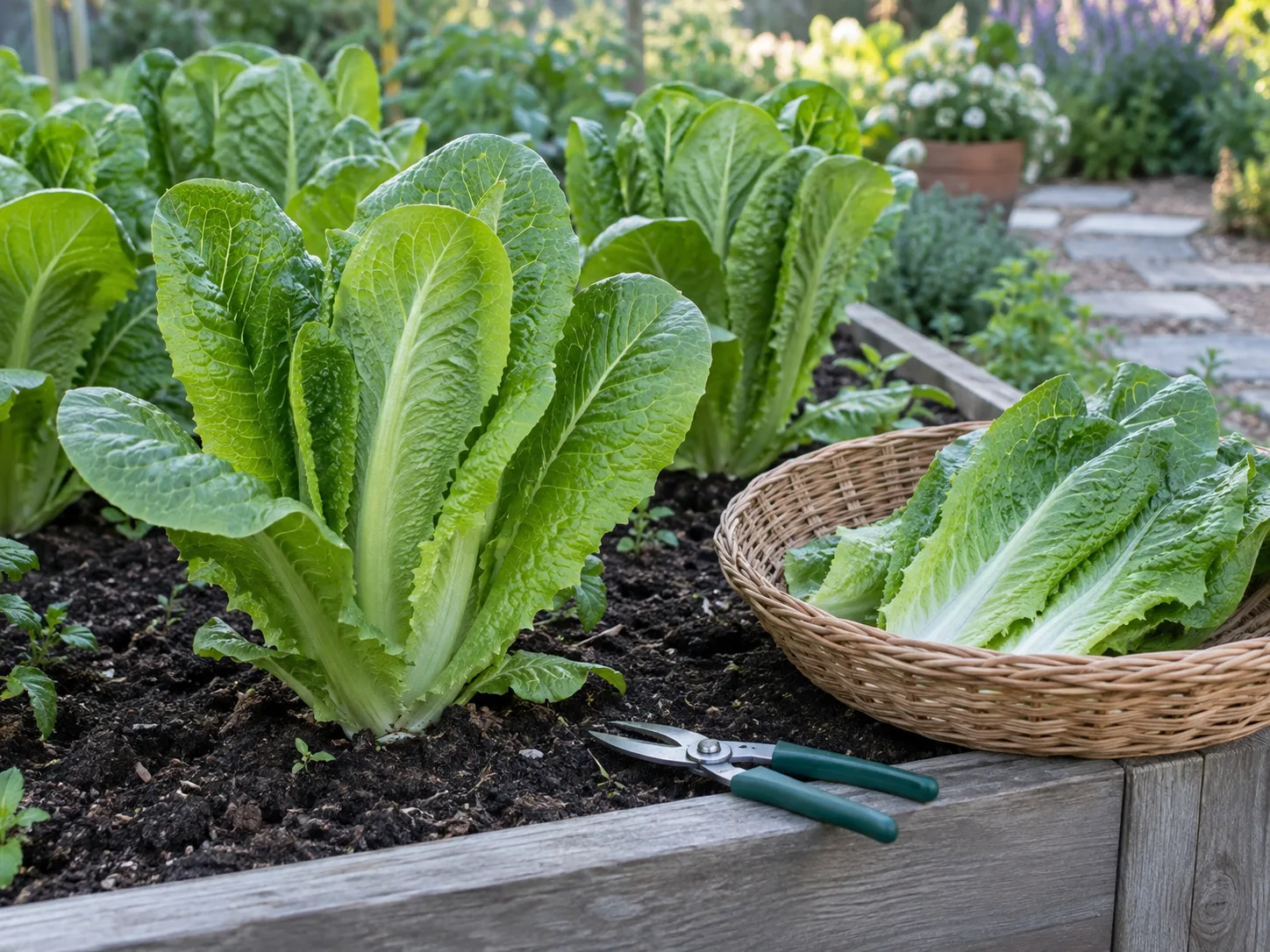
Begin leaf harvest when the outside leaves are large enough to use, even if the plant is nowhere near its final head size. Take the oldest outer leaves first and leave the central cluster intact. Removing a few leaves from several plants is usually gentler than stripping one plant bare, and it gives you a more even supply of salad greens.
Harvest in the morning when leaves are crisp from overnight moisture. Use clean scissors or snips, and avoid dragging wet leaves through soil. If rain or overhead irrigation has just soaked the crop, wait for the surface to dry when weather allows. A plant that still has a healthy center can keep producing, but its pace depends on temperature, light, and how much leaf area remains.
Cut whole heads and decide whether to regrow
For a full head, look for a substantial upright plant with firm ribs, a filled-in center, and the flavor you want. Do not wait for romaine to become a tight ball like iceberg; its natural shape is elongated and more open. Days to maturity help you know when to start checking, but the plant’s texture and the weather decide the final cut.
Use a sharp, clean knife or shears and cut straight across the stem about an inch or two above the soil. Leaving the crown intact gives the plant a chance to send out a smaller flush of leaves. The RHS recommends leaving a short stump after cutting whole lettuce, but regrowth is not guaranteed. It is most likely in cool weather when the plant is healthy and the cut did not damage the growing point.
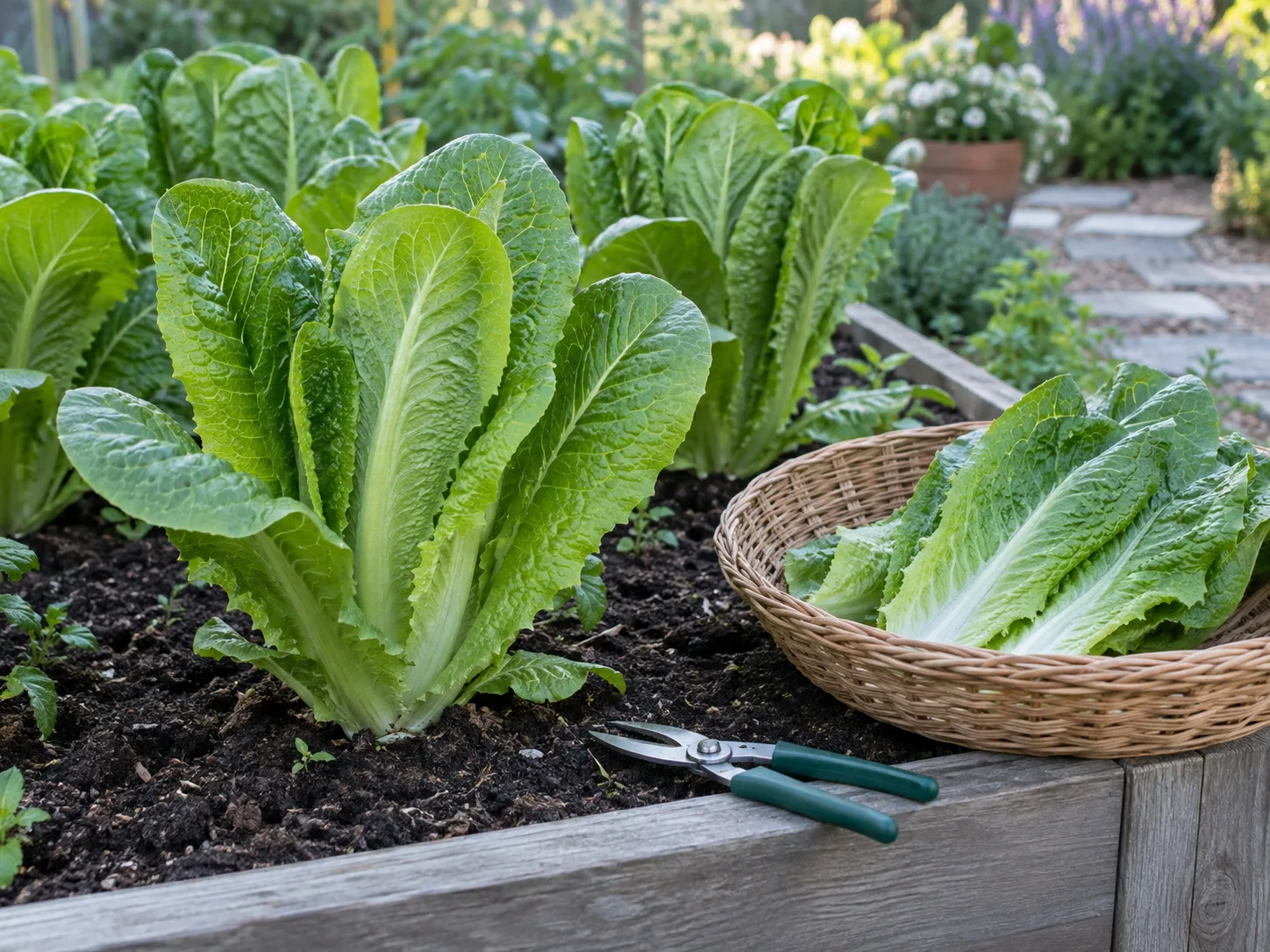
Choose removal instead of regrowth when the plant is bolting, diseased, badly chewed, or needed for another crop. A second harvest is a bonus, not a reason to keep an unhealthy crown in the bed. If you do leave it, keep the soil evenly moist, remove decaying outer tissue, and watch for new leaves at the cut surface over the following weeks.
Store romaine and extend the season
Move harvested romaine into shade as soon as you cut it. Separate damaged leaves, rinse away soil with cool water, and dry the foliage well before refrigeration. Excess water trapped against leaves speeds decay, while a completely dry, unprotected head loses crispness. A breathable bag or container lined with a clean towel works better than sealing wet leaves in an airtight box.
The refrigerator crisper is the right environment for a short holding period, but home-grown lettuce is best used while the ribs are still firm. Illinois Extension recommends cold, humid storage and warns against keeping lettuce near ethylene-producing fruits such as apples, pears, and bananas. Discard leaves that become slimy, smell sour, or develop spreading dark decay rather than trying to rinse the problem away.
Extend the season with row cover, a cold frame, or a sheltered container when frost threatens. A light freeze may pause growth without immediately destroying young plants, but frozen tissue that repeatedly thaws while wet can deteriorate. Fall crops often improve in flavor as temperatures cool; winter crops grow slowly, so harvest baby leaves when they are useful instead of waiting indefinitely for a large head.
Regrow scraps and save seed—with realistic expectations
You can place a 1–2-inch romaine base in a shallow dish with a small amount of water and a bright window. Change the water frequently and harvest the small new leaves when they are usable. Homes & Gardens describes this as a way to produce an extra flush of leaves from scraps, not a dependable method for rebuilding a supermarket-sized head. Once the base stops producing or begins to soften, compost it.
Seed saving is a different project. If you allow a healthy plant to bolt, it will produce a flower stalk and eventually fluffy seed heads. Leave the stalk until the heads dry, collect the seed on a dry day, and store it cool and dry in a labeled envelope. Lettuce varieties can cross, so seed from a mixed planting may not come true to the parent; if preserving a specific cultivar matters, grow one variety for seed or research the isolation distance appropriate to your setup.
Conclusion: plan a sequence, not a single harvest
The most reliable way to grow romaine is to treat it as a fast crop with a narrow quality window. Start with fertile, moisture-retentive soil, sow shallowly during a cool season, thin according to whether you want baby leaves or full heads, and keep a second sowing ready before the first row peaks.
When the weather is mild, let the heads build. When heat or a flowering stalk arrives, harvest promptly and replace the crop. Pick outer leaves when you want continuity, cut above the crown when you want a full head, and regard scrap regrowth as an experiment rather than your main supply. That rhythm produces better lettuce than any single fertilizer, variety, or calendar date.



