This Repotting Hack for Hanging Plants: How It Works
Try the repotting hack that turns a hanging plant into a tabletop display: keep its draining nursery pot, fit it inside a cachepot, and handle runoff safely.
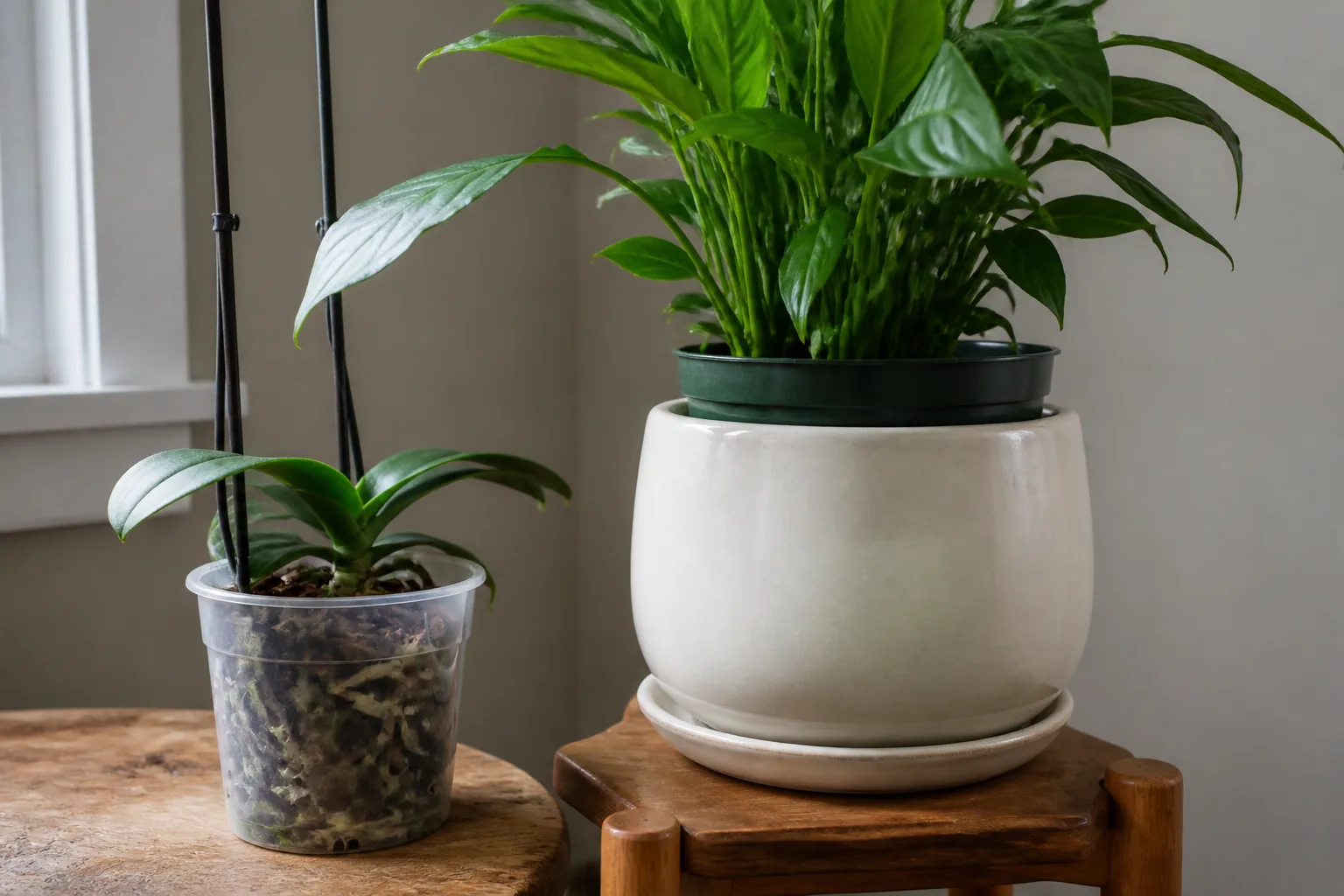
If a hanging plant is healthy but you would rather display it on a table or floor, you may not need to repot it at all. The quick fix is to remove the hanger from the plant’s draining grow pot and slide that pot into a larger decorative container, called a cachepot. The plant stays in the same soil and its roots remain undisturbed; you get a different look without a potting-mix cleanup.
That distinction matters. This shortcut changes the container you see, not the plant’s root space. It is useful when a hanging philodendron or pothos is ready for a new display, but it cannot correct root crowding, depleted mix, or drainage trouble. The reliable version keeps water moving through the inner pot and gives you an easy way to remove any runoff from the outer vessel.
What the repotting hack actually does
The viral-style “repotting” trick is better described as double-potting. A plant remains in its existing nursery or hanging pot, including its drainage holes, and that pot sits inside a second, decorative vessel. Gardeners call the outer pot a cachepot or overpot. Penn State Extension describes cachepots as decorative holders for already-potted houseplants and cautions that they generally are not suitable containers for planting directly because they usually lack drainage.
The advantage is speed: you do not loosen a root ball, change potting mix, or need to wash soil off the floor. It can also be a gentler choice for a healthy plant that does not need more room. A cachepot does not count as a new, larger pot for the plant because its roots still occupy the original grow pot. That is why appearance can change instantly while the plant’s care needs stay essentially the same.
When a pot-in-pot swap is right—and when it is not
Use the shortcut when the plant is growing in a separate, removable plastic or nursery pot with open drainage holes, the roots still fit, and the pot can be lifted out without crushing foliage. Trailing plants such as heartleaf philodendron and pothos often suit the look because their vines soften the rim of a tabletop or floor planter. A standard nursery pot can also make watering easier: you can lift it out, water it at a sink, and return it after excess water drains.
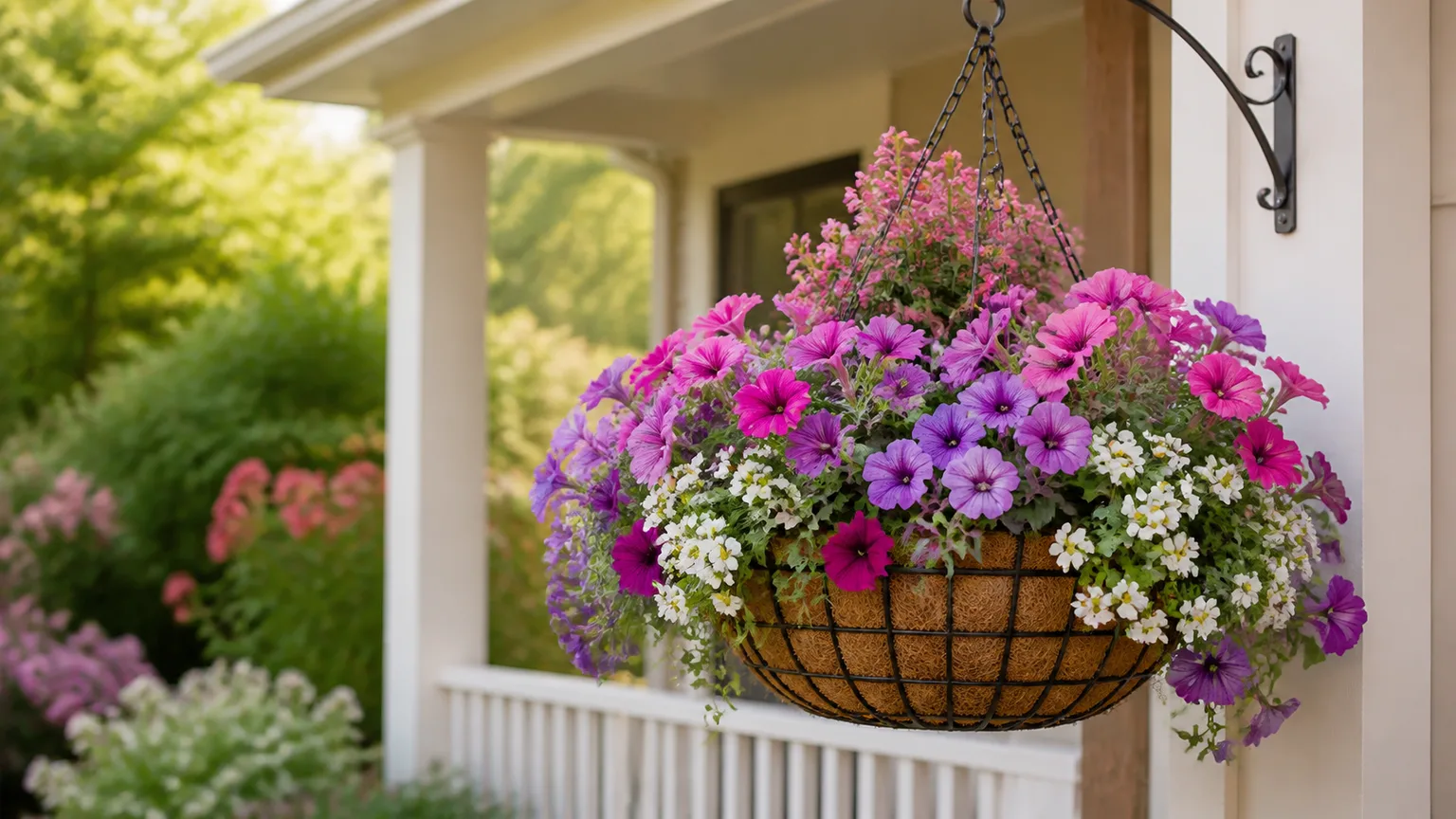
The key is not the plant’s shape; it is the container it is growing in. A hanging basket may be a wire frame lined with coir or moss, or a plastic basket filled directly with potting mix. If the soil is planted straight into the basket, there is no intact inner pot to transfer. Moving that plant into a different container would require handling the roots and becomes a real repot.
Use the shortcut when the inner pot drains and the roots fit
The cachepot method works best when the current pot is sound, the mix drains through its holes, and the plant is not overdue for fresh mix. Penn State Extension lists roots growing through drainage openings, mix drying unusually fast, and slowed growth among clues to investigate pot-binding. A single root peeking from a hole does not prove the plant must move; check the whole root ball before deciding.
If the plant is healthy, the soil is still usable, and you mainly dislike the dangling chains or the plain grow pot, changing the outer container solves the actual problem. It can also help renters or anyone who cannot drill a ceiling hook: the plant no longer needs to hang to make use of a trailing habit. For more on choosing between a growing pot and a decorative planter, see this pot and planter guide.
Skip it if the basket is planted directly or the plant needs a new pot
Do not treat the hack as a rescue for a plant with waterlogged mix, a sour smell, mushy stems, or visibly decaying roots. Keeping a failing plant in the same wet root ball does not fix the underlying problem. Likewise, if the roots are densely circling the inside of the pot or form a tight mat with little mix visible, the plant may need fresh potting mix and more root space, not a larger-looking cover.
Avoid cutting a coir liner or a molded pot simply to make the planter fit. If the plant has no removable grow pot, you can still change containers, but do it as an actual repot: select a pot with drainage, use an appropriate potting mix, and move the root ball carefully. The shortcut also is not ideal outdoors where rain can fill a decorative pot without a drainage hole.
Choose a cachepot that fits the whole hanging pot
Shop with the inner pot’s outside measurements, not the plant’s leaf spread or the advertised capacity of a new planter. The opening must be wide enough for the rim to pass through, and the interior needs enough clearance to lift the grow pot back out. A close fit can wedge the plastic pot in place, while an opening that is too broad may expose the inner rim and make the plant look perched rather than settled.
A cachepot can be wider than the root pot without holding excess soil around the roots, because no additional potting mix is placed in the gap. This is different from planting the root ball directly into a container that is far too large. Apartment Therapy’s practical pot-sizing advice similarly emphasizes that a cachepot must let the nursery pot sit inside with some room to maneuver; the exact decorative size depends on shape and proportions rather than a fixed up-potting increment.
Check the opening, height, stability, and lift-out clearance
Before moving the plant, set its pot inside the empty decorative container and check four things: the grow pot sits level, its drainage holes are not sealed against a puddled bottom, the assembly does not wobble, and you can grip the rim to remove it. Leave enough room beneath the drainage holes for water to escape. If the cachepot is very deep, a clean, sturdy pot riser can lift the inner pot, but it should not block the holes or turn the bottom into a reservoir.
Choose weight with the finished display in mind. A tall trailing plant can tip a light, narrow cachepot when vines pull to one side, especially if a pet or child brushes past it. A broad base is usually steadier. For a plant that needs frequent moving, plastic, resin, or a lightweight basket may be more practical than a heavy ceramic vessel; a saucer beneath the outer pot protects furniture if a few drops escape.
How to convert a hanging pot into a tabletop planter
Inspect before you remove the hanger
Set the plant on a stable surface and identify which part actually holds the soil. Look for a removable plastic pot with drainage holes, not only a metal frame or basket liner. Check the rim for cracks, make sure holes are open, and inspect visible roots for firm, healthy growth rather than relying on the outer foliage alone. If you see pest activity or suspect root problems, isolate and assess the plant before adding a decorative cover that makes inspection harder.
Gather the cachepot, a tray if the outer vessel has a hole, and clean scissors or snips only if the hanger’s cord is detachable and needs trimming. You do not need fresh soil for this display change. Put a towel or tray under the work area, especially if vines are long, and support the pot from underneath instead of lifting by stems or leaves.
Detach hardware without tugging on stems or cutting the pot
If the grow pot sits in a macramé sling, unhook or untie the hanger while supporting the pot. If the basket has separate chains clipped to the rim, release those clips one by one. Only cut a cord or strap when it is clearly separate from the pot and you can keep the blades away from the plant, plastic rim, roots, and any load-bearing part you still need.
There is no horticultural benefit to removing every piece of hardware. If the hanger is integrated into the container, it is safe and tidy to leave it attached and tuck the chain or cord behind the foliage, or choose a wider cachepot that hides it. Never cut through a pot wall or liner to get a cleaner fit; a damaged grow pot can leak soil, lose stability, or expose roots.
Set the pot at the right height
Lower the complete grow pot into the outer vessel and check the display from the side. Keep the root crown at the same height it had before the swap; do not bury the base of the stems under decorative moss or extra potting mix. If the pot sits too low, raise it on a stable, waterproof riser, leaving air and drainage clearance beneath it. Do not pack the gap with soil or rocks, which makes watering and removal harder without improving the actual root zone.
Make sure the leaves and vines are arranged naturally rather than trapped between the two rims. Rotate the outer pot until the plant looks balanced, then gently lift the inner pot once more to confirm it has not snagged. If it takes force to remove, the fit is too tight; use a slightly wider cachepot before watering.
Water the plant while protecting roots and furniture
The inner pot still needs to be watered according to the plant and the moisture in its mix. The decorative planter does not provide drainage merely because a second container surrounds the first. Penn State Extension advises leaving room below the inner pot’s drainage opening and removing excess water from a cachepot after watering. Gardening Know How gives the same practical sequence: lift out the plant, water it, let it drain fully, then return it to the decorative holder.
The least fussy routine is to take the grow pot to a sink or tub, water the mix evenly until excess runs from the holes, and wait until dripping slows before putting it back. If the pot is too large to move, lift it out onto a saucer or waterproof surface, water it there, and empty the saucer before returning the plant. You can water in place only if you can see and reach the bottom of the cachepot afterward; pour out standing water rather than letting the inner pot rest in it.
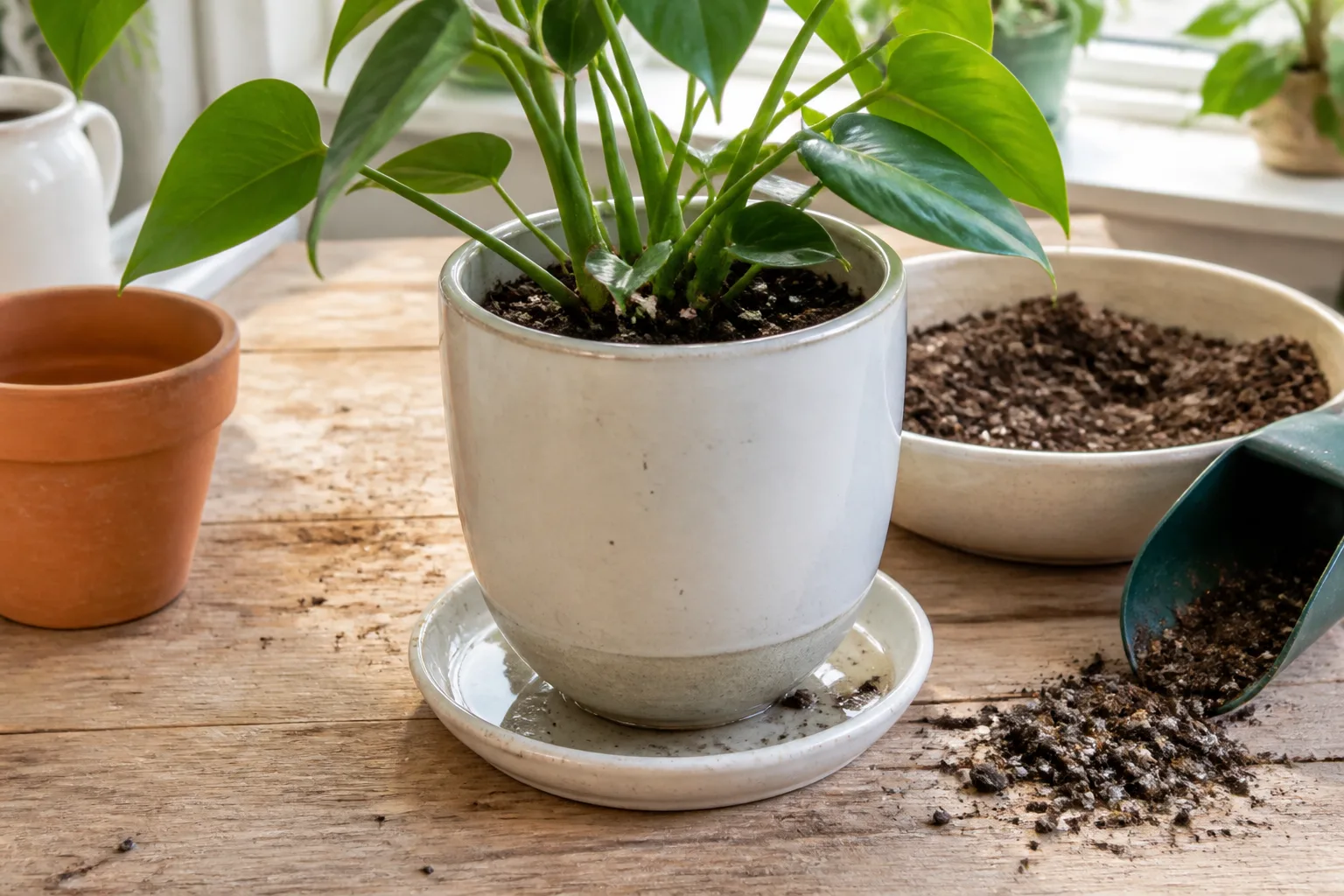
If the cachepot has a drainage hole, add a separate saucer under it to protect the shelf or floor. If it has no hole, keep it empty except for the plant’s inner pot. Water frequency does not become more regular just because the plant now sits in a new outer vessel. Check the mix itself; larger plants, bright windows, heat, and porous grow pots can dry faster than small plants in cool, low-light rooms.
Mistakes that turn the time-saving hack into a plant problem
Leaving the inner pot standing in runoff
The most common failure is watering the grow pot while it remains wedged inside the cachepot, then forgetting the runoff at the bottom. A brief trickle is not the same as a harmless permanent water reserve: if drainage holes stay submerged, water cannot escape and the lower mix can remain saturated. That reduces the air available around roots and creates the conditions that favor root decline. Lift the grow pot after watering, inspect the bottom, and tip out any collected water.
Also watch the fit after a few weeks. Soil can spill into the outer pot during watering, or the inner container can settle onto debris and block a hole. If the base is difficult to see, mark a habit of checking each time you water rather than assuming the bottom is dry. A musty odor, fungus gnats, a persistently heavy pot, or yellowing with damp soil are reasons to inspect moisture and roots instead of simply changing the watering amount by guesswork.
Adding stones instead of fixing drainage
Do not fill the bottom of a holeless cachepot with gravel and assume that creates drainage for the inner plant. Penn State Extension’s review of container myths explains that coarse layers can hinder water movement through potting mix rather than improve it. Stones also take up the clearance you need under the grow pot and make it harder to remove pooled water. Use an intact pot with open holes, keep the cachepot empty, and empty runoff after watering.
Do not seal the gap with moss or decorative filler, either. A light top dressing may hide the plastic rim, but it should not cover the soil surface so densely that you can no longer check moisture or see insects. If you use one, keep it loose and away from the stem base. The trick should make the pot easier to display, not harder to inspect.
Signs it is time for a real repot
Look beyond the outer container and ask whether the root system still has usable mix. Penn State Extension suggests checking for roots emerging from drainage holes, unusually rapid drying, and slowed growth, then sliding the plant out to inspect the root ball. Roots that densely circle the outside or pack the bottom with little visible mix are stronger evidence than one root tip poking through a hole. If the plant is stable and growing, you do not have to repot on a calendar schedule.
Check the root ball before you choose a larger pot
When repotting is needed, choose a pot with drainage that is only modestly larger than the root ball—often about 1 to 2 inches wider for common houseplant sizes—rather than jumping straight into the oversized cachepot. A much larger volume of fresh mix can stay wet longer than the roots can use it. The decorative outer planter can still be used afterward, but now it should surround the new, correctly sized grow pot.
If you are unsure, remove the grow pot and examine its sides and bottom. A loose root ball with plenty of mix may only need a cachepot; a dense, circling mass with poor drainage needs real root-level attention. This distinction keeps a quick styling change quick while making sure it does not postpone the care the plant actually needs. For a full repotting sequence, use our houseplant repotting guide.
Conclusion
The hanging-plant shortcut works when the plant already lives in a removable pot with drainage and the roots do not need more room. Take off only detachable hanging hardware, set the intact pot inside a stable cachepot, and make sure it remains easy to lift out. Water the inner pot, let it drain, and empty the decorative container so the roots never sit in collected runoff.
It is a fast way to move a trailing plant from ceiling to table without turning a simple display change into a messy transplant. Just remember what the hack does not do: it does not refresh old mix, repair damaged roots, or make a root-bound plant less crowded. Use the cachepot for the look; repot when the roots—not the hanger—tell you it is time.



