How to Grow Cilantro (Coriander) from Seed to Harvest
Grow cilantro for leaves or coriander seed with advice on timing, direct sowing, containers, succession planting, harvests, and bolting through spring and fall.
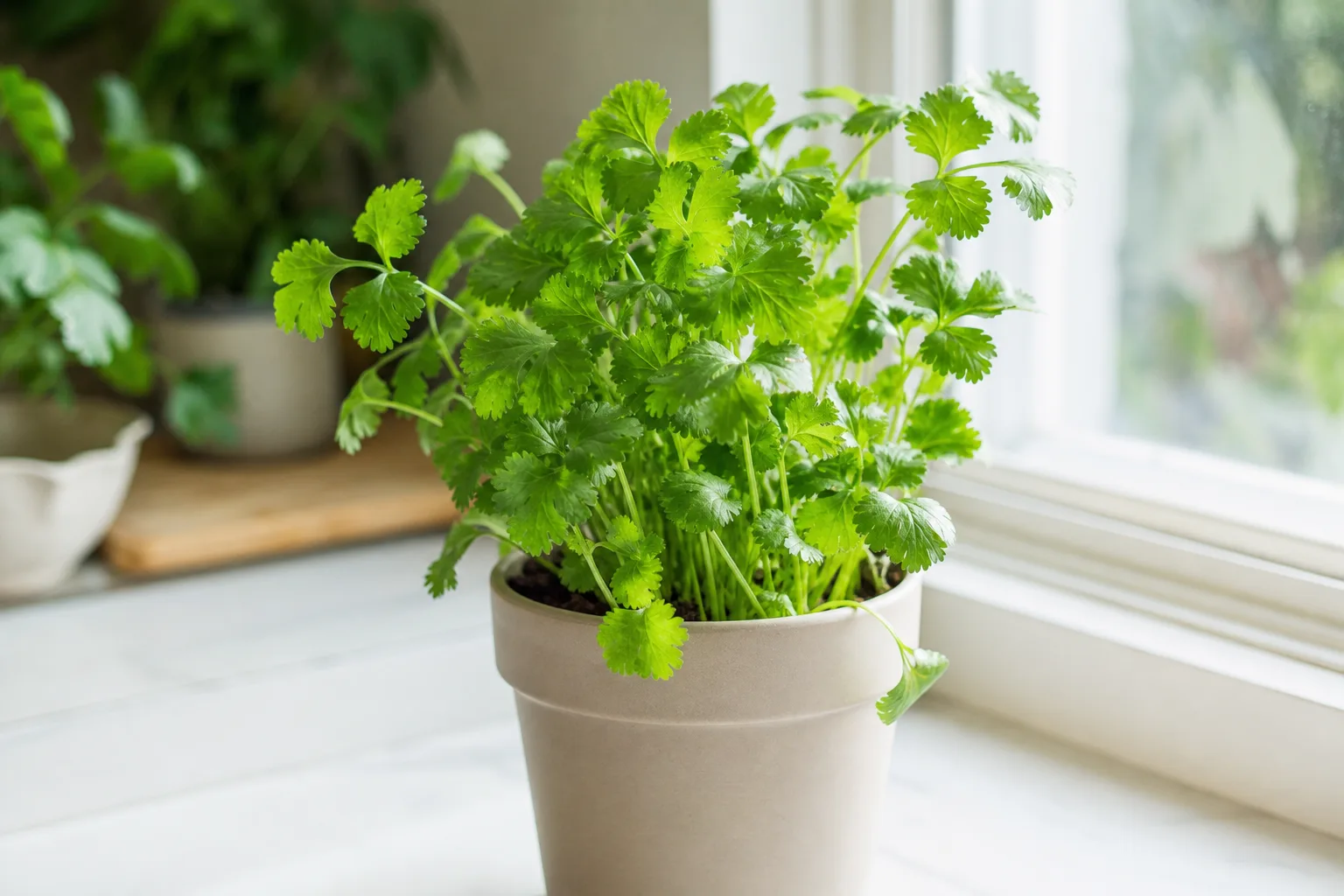
Cilantro is a quick crop when the weather suits it and a frustratingly short one when it does not. The reliable way to get more leaves is to sow a small new patch before the old one flowers, keep roots evenly moist without leaving them in soggy soil, and use shade and timing to blunt summer heat.
The same annual plant can also give you coriander seed. Decide which harvest matters most before you sow: leaf plants stay close together and are picked young, while seed plants need room to flower, dry, and mature. If you want both, designate a few plants for seed and keep harvesting the rest.
Start with the harvest you want
Cilantro grows fast, but each plant has a finite leafy phase. Cool conditions favor leafy growth; as temperatures rise and days lengthen, the plant tends to send up a flower stalk and put its energy into seed. Planning successive sowings is more dependable than expecting one planting to produce fresh leaves for months.
For a kitchen supply, sow modest batches several weeks apart and harvest the outer stems while the center continues growing. For coriander spice or saved seed, let some plants flower and mature rather than pinching every stalk. You can take a few leaves from a seed plant early, but once it shifts into flowering, treat the seed crop as the main harvest.
One plant produces cilantro leaves and coriander seed
Cilantro and coriander are names for different uses of Coriandrum sativum, an annual in the carrot family, Apiaceae. In common U.S. usage, “cilantro” usually means the fresh leaves and stems; “coriander” usually means the dried seeds, although naming varies by region. The plant’s lower leaves are broader, then become finer and more feathery on the flowering stems, so the change in leaf shape is often an early sign that the crop is maturing. NC State Extension and the University of Wisconsin–Madison Extension describe the same plant as both the leafy herb and the seed spice.
The leaf and seed goals need different spacing and harvest decisions. A dense patch gives you more young leaves per square foot, while a widely spaced plant is easier to inspect and dry when its seed heads mature. A mixed planting works well: keep most plants for leaves, then leave one or two strong plants to flower.
Time planting for cool growth
Cilantro is a cool-season crop. It can handle some cool weather, but a hard freeze can damage it; sustained heat and lengthening spring days push it toward flowering. That makes “plant after the last frost” too blunt as a rule: in a warm region, waiting until late spring may mean planting just as the leaf window is closing.
Match spring and fall sowing to local heat
In cold-winter areas, sow outdoors as soon as the soil is workable in early spring, then sow again in late summer for a fall crop. In mild-winter climates, a fall or winter planting may be easier than trying to nurse cilantro through summer. Utah State University Extension recommends spring sowing in cooler parts of its region and fall sowing in warmer areas, a useful reminder to follow local conditions rather than copy one national calendar. Wisconsin Extension likewise recommends an early-spring crop and a late-summer sowing for fall leaves.
If summer is already hot, a new seed packet cannot override the season. Put a small sowing in the coolest available spot, use morning sun with afternoon shade, and accept that it may bolt sooner; otherwise, wait until temperatures ease. Leave enough time for seedlings to establish before a hard freeze, and use a light row cover during an unexpected cold snap rather than planting into frozen or waterlogged soil.
Expect seeds to take about one to three weeks to emerge, depending on soil temperature and moisture. Leaf harvest can begin much sooner on a fast-growing plant than the full seed cycle, but cultivar, weather, and light alter the timetable; judge readiness by plant size and condition as well as the packet’s “days to maturity.” The RHS coriander guide gives a similar one-to-three-week germination range.
Choose a site with drainage and some afternoon shade
Give cilantro a spot with several hours of direct light and loose, fertile soil that drains freely. Full sun works well in cool spring weather; in a hot summer garden, light shade during the hottest part of the day can slow stress without leaving plants in deep shade. NC State Extension describes cilantro as a spring-and-fall herb that prefers medium-moist, well-drained soil in full sun to light shade.
Avoid a low pocket that stays wet after rain and a bed that dries to dust by lunchtime. If the soil is heavy, improve the bed with mature compost and grow in a raised bed or pot if drainage remains poor; do not try to solve a drainage problem by adding a layer of gravel under the planting row. A thin organic mulch can shade the soil surface after seedlings emerge, but keep it loose and away from the stems so the crown does not stay damp.
A small pot is useful because you can move it out of intense afternoon sun, but pots also heat and dry faster than a garden bed. Place the container where it gets bright light and stays cool, and move it before a heat wave rather than waiting until the leaves droop. If your garden is humid or rainy, give plants enough airflow and water the soil instead of routinely wetting the leaves.
Pick a cultivar for the harvest window you have
A slow-bolting cultivar buys time; it does not make cilantro heatproof. The Wisconsin extension guide notes that even types sold as slow bolting will eventually flower under high temperatures and long days. Choose the variety for how you plan to use it, then rely on sowing dates and repeat plantings to cover the rest of the season.
| Cultivar | Useful trait | Best fit |
|---|---|---|
| ‘Santo’ | Widely grown, relatively slow to flower | General leaf harvest |
| ‘Leisure’ | Uniform plants and slower bolting | Succession sowings for leaves |
| ‘Calypso’ | Broad leafy rosettes; slower to flower than some types | A longer leafy window in cool weather |
| ‘Cruiser’ | Upright growth and strong stems | Bunching and easier cutting |
| ‘Confetti’ | Finely divided leaves, best while small | Baby leaves and microgreens |
These descriptions are comparisons, not promises; seed catalogs may use different names or have limited availability. Utah State University Extension lists ‘Leisure’ and ‘Slow Bolting’ among options for leaf production, while Wisconsin Extension describes ‘Calypso,’ ‘Cruiser,’ ‘Santo,’ and ‘Confetti’ by their growth habit and intended use. If you cannot find a named cultivar, a fresh packet of cilantro seed and a cool planting window matter more than the label. Epic Gardening’s growing guide likewise emphasizes afternoon shade and repeat sowing as practical ways to extend the leaf harvest.
Sow cilantro where it will finish growing
Cilantro develops a taproot and dislikes being moved once established. Direct sowing avoids transplant shock and saves you from trying to tease a long root out of a crowded seed tray. GrowVeg also warns that older seedlings are difficult to transplant, so if you buy a nursery start, plant it promptly, handle the root ball gently, and do not loosen or pull the roots apart.
Direct sowing in a bed
Prepare a fine, crumbly seedbed, remove weeds, and water the soil before sowing if it is dry. Place seeds about ¼ to ½ inch deep, cover lightly, and water with a gentle spray so the seed does not wash into a clump. Sow a short row or patch rather than scattering an entire packet; you can plant the next small batch after the first emerges.
Keep the surface evenly moist while the seeds germinate, not saturated. If nothing appears after a week, do not immediately dig up the row: cilantro can take two or three weeks to emerge, especially in cool soil. Check that the top layer has not crusted or dried out, then wait through the normal germination window before resowing a bare section.
Growing in a pot or indoors
Choose a pot at least 8 to 10 inches deep with several drainage holes and fill it with a loose, quality potting mix. Sow directly into the pot, spacing seed according to whether you want a dense leaf patch or a few larger seed plants; a wide container makes repeat sowing easier. Garden soil is usually too dense for a small container and can stay wet around the roots.
A windowsill can work for a short crop if it is bright and reasonably cool, but a warm room and weak winter light often produce pale, stretched plants that bolt early. Put the pot near the brightest suitable window or use a grow light positioned close enough to keep seedlings compact, while keeping the container away from heat vents and hot glass. The RHS notes that coriander can become leggy in low light and bolt when it gets too hot or dry; it also suggests microgreens as a faster indoor option when a full-size windowsill crop is impractical.
Thin plants for leaves or seeds
Once seedlings are large enough to handle, thin them so air can move through the foliage and the roots are not crowded. For a leafy crop, aim for roughly 3 to 6 inches between plants; if you are growing for seed, allow about 8 to 12 inches so each plant has space to branch and dry. Extension recommendations vary slightly, so use the wider end in humid weather or when plants are growing vigorously.
Snip unwanted seedlings at soil level instead of pulling them up beside a plant you want to keep. This avoids disturbing neighboring taproots. You can eat tender thinnings if they are clean and healthy, but very small plants make a better garnish than a full harvest.
Keep soil moist while seedlings establish, then water by need
While seeds are germinating and seedlings are small, do not let the top layer dry completely; repeated drying and soaking can interrupt establishment. Once roots are established, water when the soil is beginning to dry rather than following a fixed daily schedule. In a garden bed that may mean watering during a dry spell; in a pot or hot balcony, check the mix daily because a small container can dry out quickly.
The goal is a root zone that is moist and aerated, not continuously wet. If leaves wilt while the mix is dry, water thoroughly and let excess drain; if they wilt while the soil is wet, adding more water can worsen root stress. Utah State University Extension recommends watering regularly during establishment and sparingly afterward, while the RHS advises extra water during prolonged dry weather and cautions against soggy compost.
Feed lightly and keep the root zone cool
Cilantro is a short-season herb and usually does not need repeated heavy feeding. If the bed is poor, work a modest amount of mature compost into the top layer before sowing; if the soil is already fertile, skip routine fertilizer. Utah State University Extension cautions that excess nitrogen can reduce flavor, so a strong fertilizer dose is a poor fix for plants that are hot, shaded, waterlogged, or crowded.
After seedlings emerge, mulch lightly to reduce weeds and shade the soil, especially in a warm garden. Keep mulch shallow around young plants because a thick, wet layer can smother seedlings or hold moisture against the stems. Pull weeds by hand or cultivate only the surface; chopping deeply near the row can damage the shallow side roots as well as the taproot.
Use succession sowing to extend the leaf season
The most useful way to keep harvesting is to plant a new small patch every two or three weeks while the weather remains favorable. The first sowing supplies leaves; the next is growing behind it; later sowings replace plants as they mature and flower. Wisconsin Extension and the RHS both recommend successive sowing for a longer run of leafy harvests.
Do not sow blindly through the hottest weeks if the forecast is already pushing plants toward flowering. In a hot climate, pause and resume when nights and days begin to cool, or sow a small trial patch in bright afternoon shade to see whether conditions are mild enough. In cooler regions, a late-summer sowing can often provide fall leaves; in mild regions, repeated fall and winter sowings may work better.
Keep a simple note of the sowing date and where each patch is planted. That makes it easier to identify the interval that works in your yard: if a batch bolts before you can pick it, sow later in the season or move the next batch to a cooler spot; if it stays leafy but is too small when you need it, start the next sowing earlier. Succession planting spreads the risk and gives you a fresh planting to rely on instead of asking one plant to last indefinitely.
Harvest leaves without stripping the growing center
Begin picking when plants are about 4 to 6 inches tall and have several established leafy stems. Use clean scissors to remove mature outer stems near the base, leaving the youngest inner leaves and growing center intact. Taking roughly one-third or less from a healthy plant at one time is a conservative way to preserve regrowth; take less from thin, wilted, newly transplanted, or heat-stressed plants.
A whole plant cut about an inch above the soil may produce another flush in favorable conditions, but it is less predictable than selective picking and does not reset the plant’s life cycle. For a steady kitchen supply, cut a few outer stems from several plants, then let each patch recover while the next sowing grows. Harvest promptly when a central flower stalk begins to rise; removing the first flower stem may buy a little time, but repeated pruning cannot turn a mature plant back into a young one.
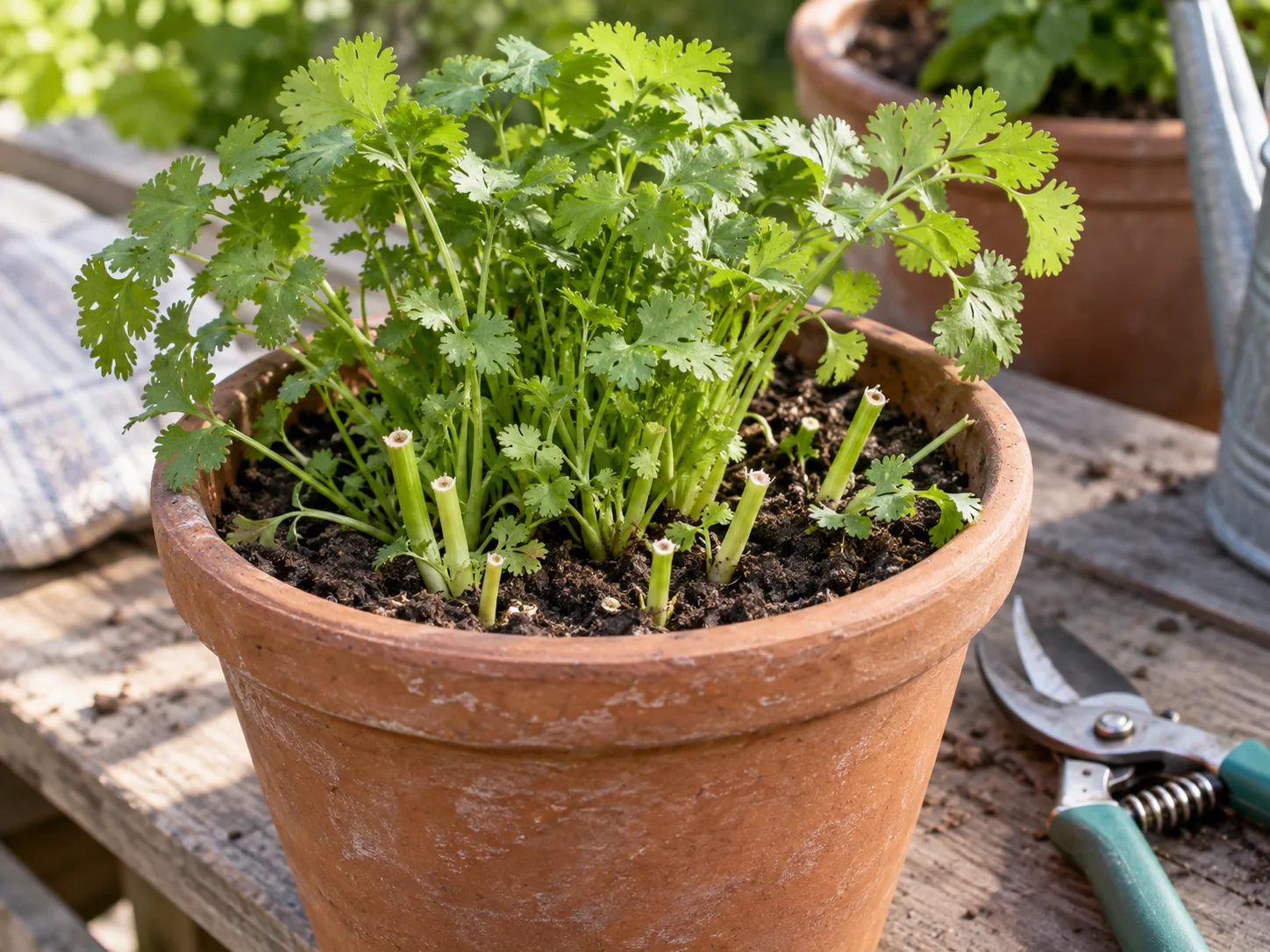
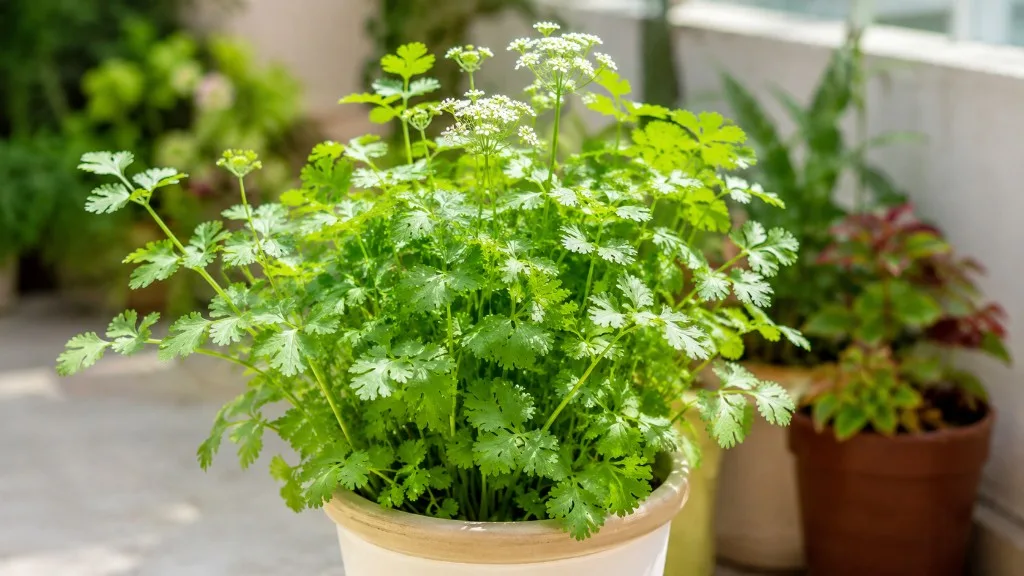
Once the flowering stalk lengthens, the foliage becomes finer and the plant’s energy shifts to blooms and seed. The leaves remain usable if you like their flavor, but they may become less tender or taste different. Do not keep cutting a seed plant just to force more leafy growth; leave it intact and start another batch for leaves.
Store leaves while they are fresh
Cilantro is most aromatic fresh, and drying tends to mute its flavor. Shake or rinse off grit, dry the leaves thoroughly, and use them soon; for short storage, stand the stems in a little water in the refrigerator or wrap the leaves loosely in a clean, slightly damp towel inside a container. Replace the water or towel if it becomes cloudy or soggy.
For longer storage, chop the leaves and freeze them in small portions with water or cooking liquid. Frozen cilantro is useful in soups, curries, sauces, and cooked dishes, but its texture softens, so it is not a substitute for crisp fresh leaves as a garnish. The Wisconsin extension guide also recommends fresh use and notes that drying costs the leaves much of their flavor.
Let selected plants flower and harvest coriander seed
If you want coriander, stop harvesting a few healthy plants and let their flower stalks develop. The small white or pale pink flowers grow in umbels and can attract beneficial insects; after bloom, the round seed fruits begin green, then turn tan or brown as they dry. The plant may look untidy at this stage, but that is the normal path to the seed harvest.
Cut seed stems when most heads are dry and the seeds are changing to a light brown, before the heads shatter widely. Place stems upside down in a paper bag or over a clean cloth in a warm, airy place; let them finish drying, then rub or shake the heads so the seeds fall free. Wisconsin Extension describes harvest a few weeks after flowering, once the plant and seed heads have dried; the RHS also recommends bagging ripe stems to catch seeds.
Store completely dry seed in a labeled, airtight container away from heat and light. For planting, keep the whole dry seed fruits intact until sowing; for cooking, crush or grind only what you need because whole seeds retain aroma longer. Some gardeners allow a few seeds to fall and self-sow, but remove volunteer plants where they are unwanted—NC State Extension notes that cilantro can escape cultivation and become weedy.
Troubleshoot germination, bolting, and common plant problems
Look at the whole plant and the soil before choosing a fix. The same symptom can have more than one cause, and adding water or fertilizer without checking conditions often makes the wrong problem worse.
| What you see | Likely cause to check | First useful response |
|---|---|---|
| No seedlings after a week | Germination may still be underway; soil may be too dry, crusted, or waterlogged | Keep the seedbed lightly moist and wait up to about three weeks before resowing |
| Tall central stem with finer leaves | Normal bolting from plant maturity, heat, or lengthening days | Harvest any good leaves, leave the plant for seed if desired, and sow a new leafy batch in cooler conditions |
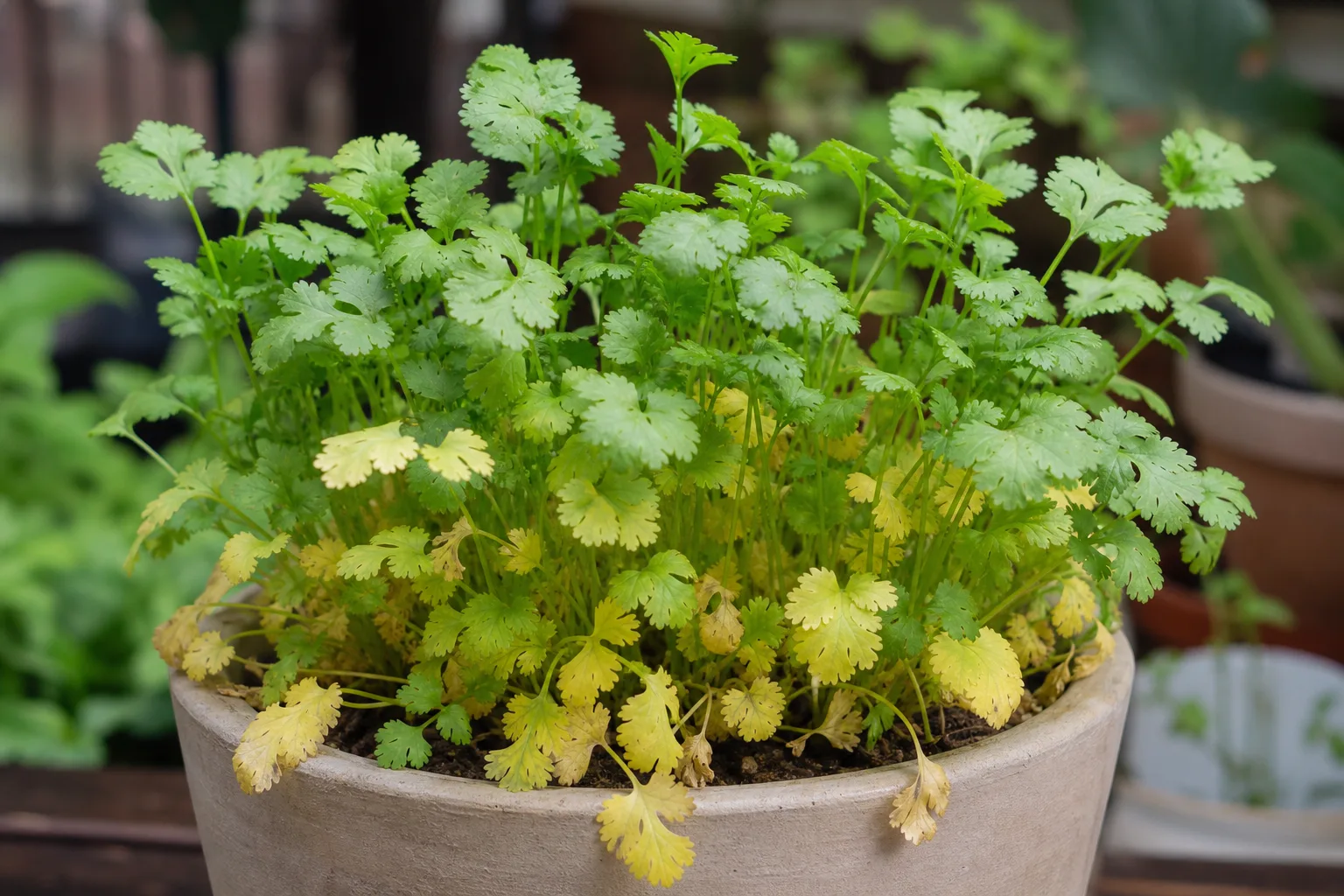
| Yellowing with persistently wet soil | Poor drainage or roots staying too wet | Let the surface dry slightly, clear blocked drainage holes, and reduce watering frequency |
| Limp leaves and dry mix | A dry root zone, especially in a small pot | Water thoroughly, let the pot drain, and check it more often during warm weather |
| Pale, stretched growth indoors | Too little light, excess warmth, or both | Move to brighter light, away from a heater or hot window, and sow a new batch if stems are already weak |
| Sticky new growth or clustered insects | Aphids or other sap-feeding pests | Inspect leaf undersides, remove a small infestation with a gentle water spray, and keep the foliage dry afterward |
A tall flower stalk is not a disease and cannot be pruned away permanently; it is the plant’s reproductive stage. Slow-bolting varieties, afternoon shade, regular moisture, and timely sowing can extend the leafy period, but none can guarantee that a plant will stay vegetative through hot weather and long days. The practical response is to use the remaining leaves, allow seed if useful, and replace the leafy crop with a fresh sowing when the season permits.
If seedlings collapse at the soil line, inspect the drainage and moisture rather than feeding them. If leaf spots spread after overhead watering, remove badly affected leaves, avoid handling wet foliage, and water at soil level; for any treatment on edible plants, follow the product label and its harvest interval. Most home growers can prevent more trouble by starting with clean seed and potting mix, giving plants airflow, and avoiding a constantly damp root zone.
Conclusion
For a dependable cilantro harvest, sow directly into loose, draining soil during a cool window, keep young seedlings lightly moist, and harvest only what an established plant can replace. Grow several small batches a few weeks apart, give summer plants afternoon shade where possible, and treat bolting as a signal to shift the crop rather than a problem you can prune away.
If coriander seed is part of the plan, leave one or two plants to flower and collect the heads as they dry before they scatter. That simple split—most plants for leaves, a few for seed—turns cilantro’s short season into two useful harvests.