Roses Wilting in Heat: What to Do and Why
See what to do when roses wilt in summer heat—even after watering. Use a root-zone check, slow soaking, mulch, shade, and signs that point to another cause.
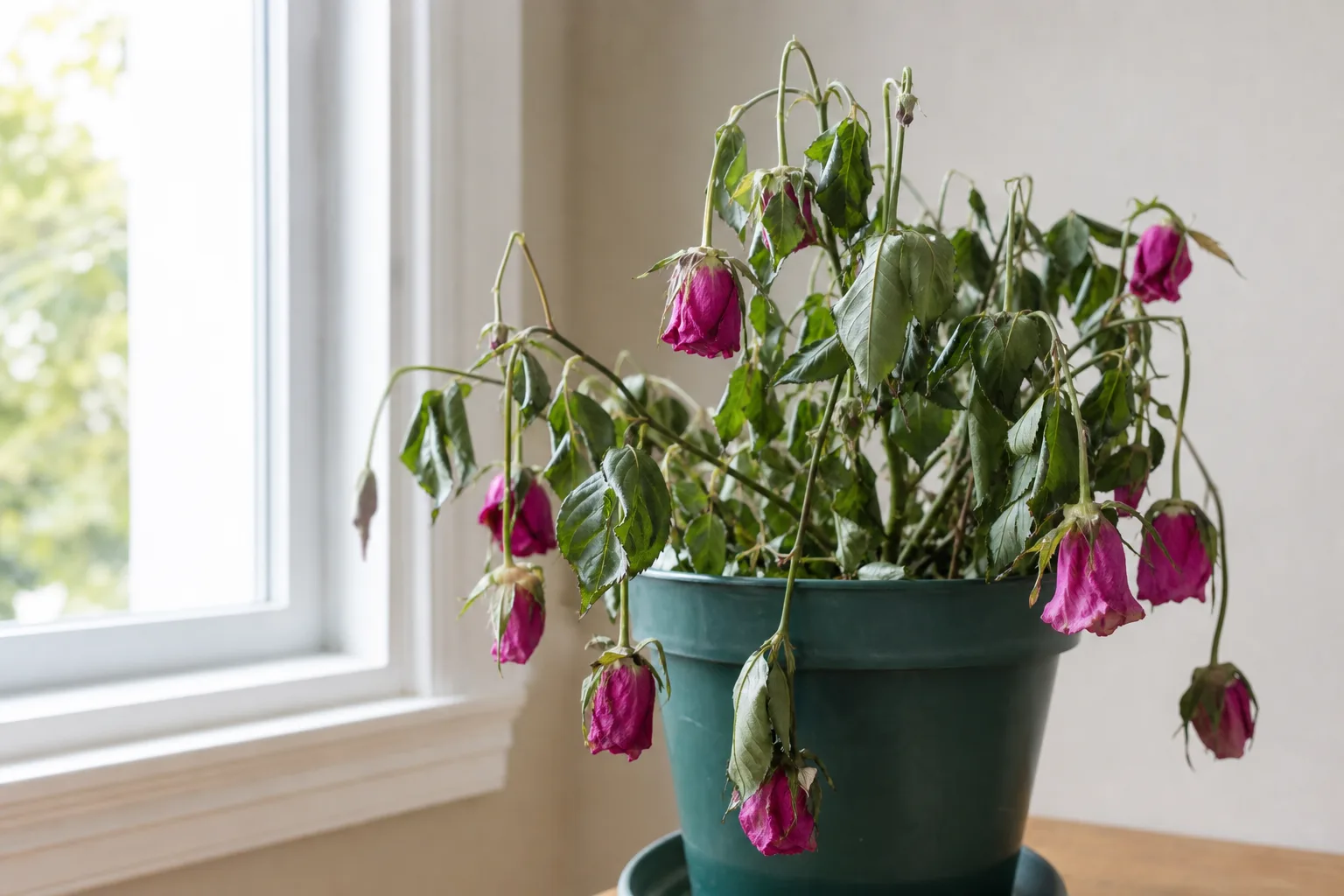
If your roses droop every afternoon while the soil still feels damp, resist the urge to flood them again. Hot weather can make leaves lose water faster than the roots can replace it, so a rose may wilt temporarily even when moisture is available below the surface. More water helps only when the root zone is genuinely dry; on wet soil, it can reduce oxygen around the roots and push the plant toward root disease.
The safest response is a quick diagnosis followed by a measured rescue: check moisture at depth, lower the heat load, soak dry soil slowly at the base, then protect the root zone with mulch. That sequence works for a shrub rose in a border, a newly planted rose, and a container rose, but the timing and amount will differ. Use the plant’s overnight recovery and the condition of the soil to decide what happens next.
Start With a Root-Zone Check, Not Another Watering
Wilt is a symptom, not a watering instruction. A rose’s leaves may be limp because the plant is thirsty, because heat temporarily outruns water uptake, or because damaged roots cannot absorb water from soil that is already too wet. Those situations look similar from the patio, but the correct treatments are opposites.
Push a finger, wooden skewer, or narrow trowel into the soil a few inches away from the canes. Check at least 2 to 3 inches below the surface, and test more than one spot near the outer edge of the canopy if the bed is large. The surface can dry to a crust in a single hot afternoon while the deeper root zone remains moist, especially under mulch. Conversely, a quick shower may wet only the top layer or run away from a compacted bed.
The three wilt patterns to compare
Heat wilt usually appears during the hottest, brightest part of the day. The soil is cool or moist at depth, leaves may recover in the evening, and the plant looks better the following morning. This is a stress response caused by a mismatch between leaf-level water loss and root uptake, not proof that the rose needs another soaking.
Drought wilt is more persistent. Soil feels dry several inches down, flowers collapse early, leaves become dull or crispy, and the rose is still limp in the morning. A newly planted rose or a small pot can reach this stage quickly because its roots occupy a limited volume of soil.
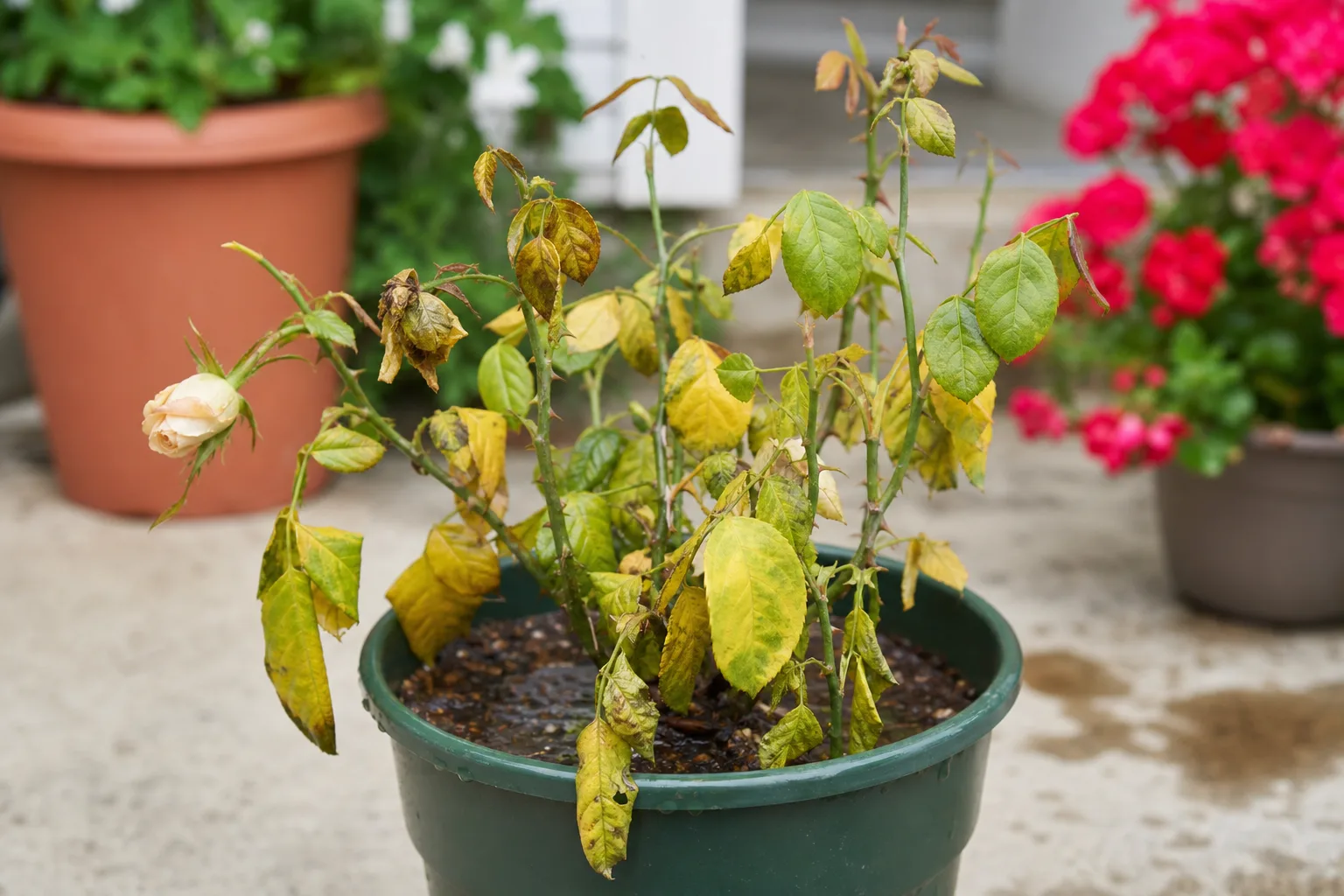
Wet wilt is the trap that follows panic watering. The soil remains saturated, water sits on the surface, leaves may yellow and feel soft rather than crisp, and there may be a sour or swampy smell. A rose with damaged roots cannot use all that water, so it can continue to droop while receiving more than enough of it.
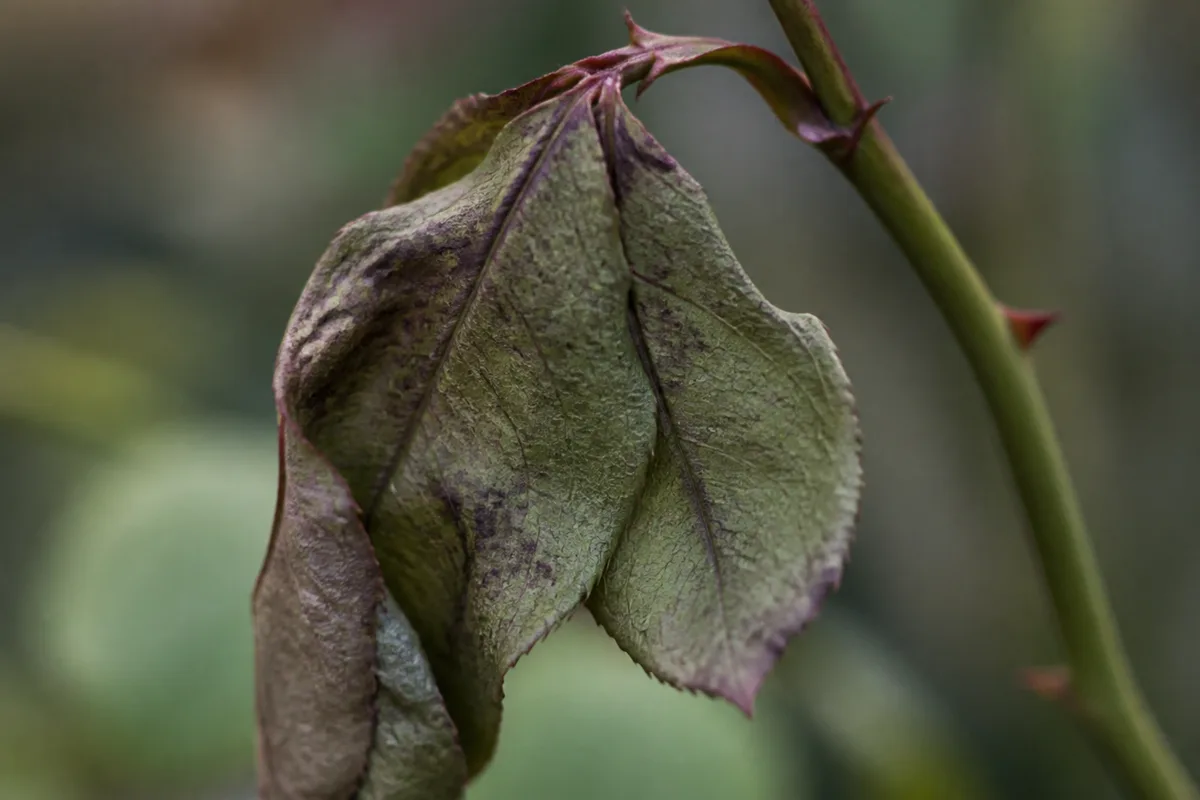
The table below is a useful field rule, not a substitute for a diagnosis from a local extension service when the plant keeps declining.
| What you see | Soil a few inches down | Overnight response | First move |
|---|---|---|---|
| Midday droop, otherwise green | Moist | Perks up after sunset | Give temporary shade and wait before watering |
| Limp in the morning, crisp edges | Dry | Little recovery | Water slowly and deeply at the base |
| Droop plus yellow, soft foliage | Wet or poorly drained | Stays limp | Stop watering and investigate the roots and drainage |
Why roses wilt while soil is still moist
Roses lose water through transpiration, the movement of water from roots through stems and out of tiny openings in leaves. Sun, wind, low humidity, and hot surfaces all increase the demand. When that demand briefly exceeds the rate at which roots can supply water, leaves lose turgor pressure and droop as a way to reduce water loss.
This is why a rose can look defeated at 3 p.m. and look acceptable again after a cooler night. The UC Statewide IPM Program’s rose guidance describes roses as performing best with consistent irrigation in full sun to light shade, but consistent does not mean constantly wet. The goal is a root zone that holds usable moisture and drains excess water, not a permanently soggy surface.
Rescue a Rose Wilted by Heat in the Next 30 Minutes
When a rose is collapsing during a heat spike, do these steps in order. The first two reduce stress whether the plant needs water or not; the third is reserved for soil that proves dry.
- Check soil moisture at depth.
- Move a container or add temporary afternoon protection.
- Water dry soil slowly at the base until the root zone is thoroughly moistened.
- Let runoff absorb before adding more water.
- Mulch the soil and pause fertilizer and hard pruning.
Move the leaf canopy out of the hottest exposure
For a potted rose, move the container off black pavement, a south- or west-facing wall, or a metal balcony that radiates heat after sunset. A spot with bright morning sun and afternoon shade is a good emergency location. Keep the rose outdoors with plenty of air movement rather than pushing it into a dark room; the aim is to lower the peak heat load for a few days, not to change its growing conditions permanently.
For an in-ground rose, use shade cloth on a frame, a patio umbrella positioned so it does not scrape the leaves, or a lightweight fabric supported above the canopy. Leave open sides so hot air can escape. Do not drape a heavy sheet directly over foliage, and do not leave dense cover in place once the heat wave passes. Roses still need strong light and airflow for healthy growth and disease management.
Temporary shade is especially useful when the plant wilts only between noon and late afternoon but firms overnight. In that case, shading can correct the mismatch between demand and uptake without adding water that the roots do not need. If the soil is dry at depth, combine shade with a proper soak rather than treating shade as a replacement for irrigation.
Re-wet dry soil slowly, then soak the root zone
Dry soil can become difficult to wet evenly, particularly in a container where the mix has pulled away from the pot wall. Start with a small amount of water at the base to soften the surface. Wait several minutes, then water again in a slow ring around the root ball. This staged approach is more effective than blasting one puddle beside the stem while the rest of the pot remains dry.
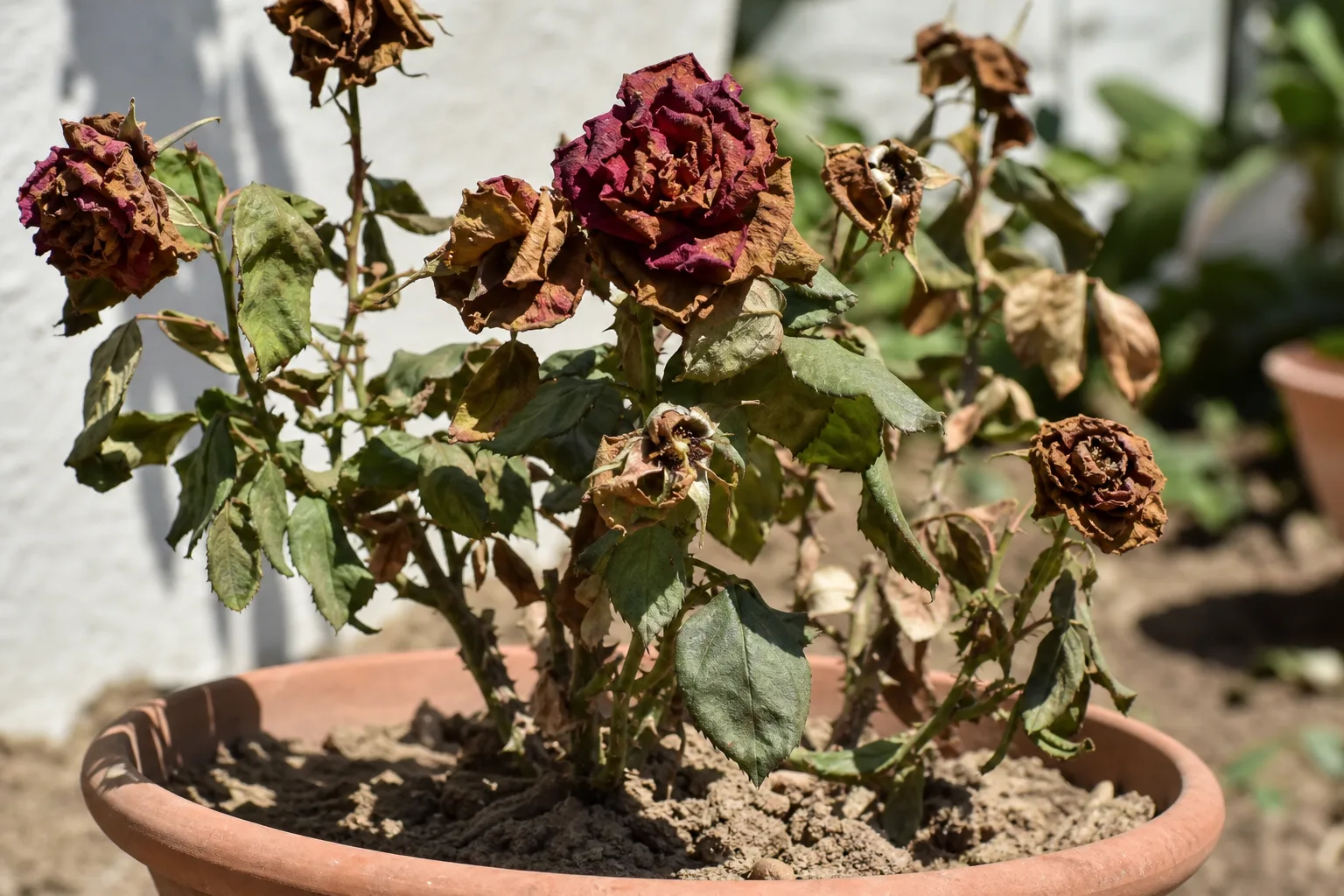
For a bed rose, place the hose or wand at soil level and use a gentle flow. Water around the root zone and toward the drip line rather than directly against the crown. If the surface begins to shed water, stop, let it infiltrate, and resume. A shallow soil well around the plant can keep water from escaping on sloped or compacted ground, but leave the canes themselves above the basin.
The Epic Gardening rose-watering guide gives 2 to 5 gallons per rose per week, or roughly 1 to 3 inches of water, as a moderate-climate starting point and notes that hot, dry, windy conditions and sandy soil can require more frequent sessions. Treat that range as a planning reference, not a prescription for every cultivar and soil. A large climber in fast-draining sand and a compact shrub in heavy clay should not receive the same schedule simply because they are both roses.
Drip tubing and a soaker hose make slow delivery easier, but hand watering is fine if you stay at the base and give the water time to enter the soil. The UF/IFAS rose trial used drip irrigation to keep foliage dry and watered its test plants with one gallon twice a week. That is valuable regional context, not a universal rule: a Florida trial bed, a dry inland garden, and a shaded clay border have different evaporation and drainage rates.
Mulch after watering, not instead of watering
Once dry soil has been soaked, apply about 2 to 4 inches of loose organic mulch such as shredded bark, leaf mold, or well-aged compost over the root zone. Mulch shades the soil, slows evaporation, moderates temperature swings, and reduces competition from weeds. The UC IPM cultural-practices guide specifically notes that mulch reduces evaporation and that 2 to 4 inches also helps manage weeds around roses.
Leave a bare ring around the canes and graft union. Mulch touching the wood can hold moisture against the plant and create a rot-friendly pocket, especially in humid weather. Do not dig mulch into the bed during the heat wave; roses can have shallow roots, and root disturbance creates another stress at the moment the plant is trying to balance water loss.
Do not lay a thick mat of fresh, wet grass clippings against the rose. They can compact, heat, and exclude air as they decompose. If you use grass, let it dry first and apply a thin layer, or choose a coarse material that remains porous. Mulch is a buffer that buys time between watering checks, not permission to stop checking.
Use a Watering Method That Prevents Repeat Wilting
The best summer watering routine is based on soil depletion, not a timer that runs unchanged through rain, cool weather, and heat waves. The UC IPM rose practices explain that frequency and duration depend on weather and soil texture and recommend checking moisture to see how quickly water is being used. That is more reliable than treating “twice a week” or “every day” as a rule for every garden.
How often to check established in-ground roses
During normal summer weather, inspect the soil every few days while you learn how quickly the bed dries. During a heat wave, check daily in sandy soil, raised beds, exposed slopes, or beds beside pavement and walls. You may not water every day; you are checking because the drying rate has changed.
Established roses in a well-mulched, moisture-holding bed often do better with a thorough soak followed by a drying period than with a daily surface sprinkle. In a cooler or heavier soil, the interval can be longer. In hot, dry weather, the same plant may need an extra session. If the root zone is still moist and the rose perks up at night, skip the extra water and reduce heat exposure instead.
Use a rain gauge when storms are part of the forecast, but do not assume rainfall reached the roots. A short shower can wet leaves and the topsoil while leaving a dry pocket beneath a broad canopy or beside a wall. Check the soil after rain, then make up only the missing moisture. If water runs down a slope or across a compacted surface, reshape the basin or improve infiltration when the weather is suitable rather than repeating shallow irrigation.
Why container roses need a different schedule
Containers dry from the top and through their sides, and the potting mix can become much hotter than surrounding ground. A small rose pot on a sunny balcony may need a daily moisture check and, during a severe heat spell, more than one check. That does not mean automatic daily watering: saturating a pot that is still damp can remove the air roots need.
Lift the pot when it is dry and again after watering so you learn the weight difference. Check the mix below the surface, and confirm that drainage holes are open. A saucer that stays full after watering can keep the root ball wet; empty it after the excess drains. If the mix has become completely hydrophobic, use two or three gentle passes rather than one flood.
Container color and placement matter. Dark pots absorb more heat than pale ones, terracotta loses moisture faster than glazed or synthetic containers, and a rose against a hot wall receives both direct and reflected heat. Grouping pots, placing them on a cooler surface, shielding the sunny side, or setting a small pot inside a larger insulating planter can lengthen the interval without changing the plant’s light completely.
The David Austin heatwave watering guidance recommends checking container roses daily and watering thoroughly until drainage appears during very hot weather. Its practical warning is important: peat-free or very dry mixes can be hard to re-wet, so a slow, complete soak is better than a quick splash over the surface.
Use runoff and soil depth to judge a deep soak
A deep soak is not measured by minutes at the hose or by how large a puddle looks. It is measured by moisture reaching the root zone without creating standing water. After watering, probe the soil in two or three locations. If only the top inch is damp, continue slowly. If water is pooling or escaping sideways, pause and let it absorb before continuing.
For a broad, established rose, check beneath the canopy and farther toward the drip line because roots are not confined to the stem base. For a newly planted rose, test around the original root ball and the surrounding soil; the original nursery mix can dry at a different rate from the bed. For a container, water until a little drains from the bottom, then discard collected water rather than leaving the pot standing in it.
Water at the base in the morning whenever practical. Morning gives leaves time to dry if they are accidentally splashed and supplies moisture before the hottest part of the day. Routine overhead watering is less efficient and keeps foliage wet, which can increase disease pressure. Water droplets do not magnify sunlight into a special leaf-burning lens; the stronger reasons to avoid wet foliage are evaporation and the longer wetness that favors some fungal problems. If a rose is truly dry and collapsing, water it when you can rather than leaving it thirsty until a perfect clock time, but direct the water to soil.
Use Shade Without Sacrificing Blooms or Airflow
Roses generally need a good amount of direct light, and moving a permanently sun-loving rose into deep shade can reduce flowering and create a weak, stretched canopy. Heat protection is a temporary adjustment or a site-design decision, not a reason to eliminate light all summer.
In regions with intense afternoon sun, morning sun and afternoon shade can be a sensible compromise, particularly for containers, newly planted roses, and varieties that repeatedly scorch beside masonry. Shade the plant during the hottest window rather than from dawn to dusk. A 30 to 50 percent shade cloth on a frame, a high umbrella, or the shadow of a taller plant can lower the peak load while preserving useful light.
Airflow matters just as much as shade. Keep fabric off the leaves, leave gaps at the sides, and avoid crowding pots tightly against a wall. The UF/IFAS research on Florida roses highlights how heat, humidity, and rainfall can amplify leaf-spot pressure, while drip irrigation keeps water off foliage. A cooler rose that stays wet and stagnant is not necessarily a healthier rose.
Long term, correct the site when temperatures are moderate: move a container, screen a west-facing wall, add irrigation that targets soil, or replace a chronically struggling rose with a cultivar tested for your climate. Do not transplant a distressed rose in the middle of a heat wave unless the current location is an immediate hazard such as a sealed hot surface or a broken drainage situation.
What to Pause During a Heat Wave
Heat rescue is partly a list of actions to delay. Fertilizer is the first one. A wilted rose has trouble balancing water movement; fertilizer salts in dry soil can draw water away from roots, and a flush of soft new growth adds demand. Wait until temperatures moderate and the rose has shown steady recovery before feeding. Resume according to the product label and the plant’s normal seasonal needs rather than compensating for lost blooms with a heavy dose.
Hold off on hard pruning, thinning, and stripping scorched leaves. Brown tissue is unattractive, but living leaves can still shade canes and support recovery. Once the heat breaks, remove clearly dead wood back to healthy tissue with clean tools. During the spike, it is fine to remove a truly spent flower if it comes away with a small, conservative cut, but do not reshape the bush or remove a large portion of its canopy to make it look tidier.
Delay planting, repotting, root pruning, and major soil work. A rose that is already losing water through its leaves has less capacity to recover from root disturbance. If a new container rose must be planted, shade it, keep the root ball evenly moist, and choose a cool period of the day; postpone nonessential work until the forecast improves.
Be cautious with pesticides and foliar sprays. Inspect the undersides of leaves for fine stippling or webbing, and use a firm jet of plain water in the morning to dislodge small pests when appropriate. Do not apply horticultural oils or other products to heat-stressed foliage unless the current label permits that temperature and application; many treatments can burn leaves under hot conditions. The goal is to reduce the stressor you can confirm, not to spray every possible cause at once.
Know When Wilt Is Not Heat Stress
If the rose still droops in the morning after several days of moderate weather, or if the root zone stays wet while the canopy declines, widen the diagnosis. Heat can be the trigger that reveals a preexisting problem, but it is not the explanation for every wilted rose.
Signs of overwatering and root damage
Overwatered roses often have soil that stays wet for too long, yellowing leaves that are soft rather than crisp, slow growth, and a decline that continues despite repeated watering. Poor drainage can starve roots of oxygen and encourage root or crown diseases. A musty smell, a dark or mushy stem base, or water that remains pooled long after irrigation is a reason to stop watering and investigate rather than add mulch on top.
Move a container to a protected, airy location, confirm that drainage holes are open, and let excess water drain. For an in-ground rose, do not dig aggressively around the crown during extreme heat. Correct runoff, compaction, or an irrigation leak when conditions allow, and seek a local extension diagnosis if roots or the crown show decay. The UC IPM rose resource lists water deficit and excess, root and crown rots, and other environmental disorders among the issues that can resemble general decline.
Pests, disease, and physical site stress
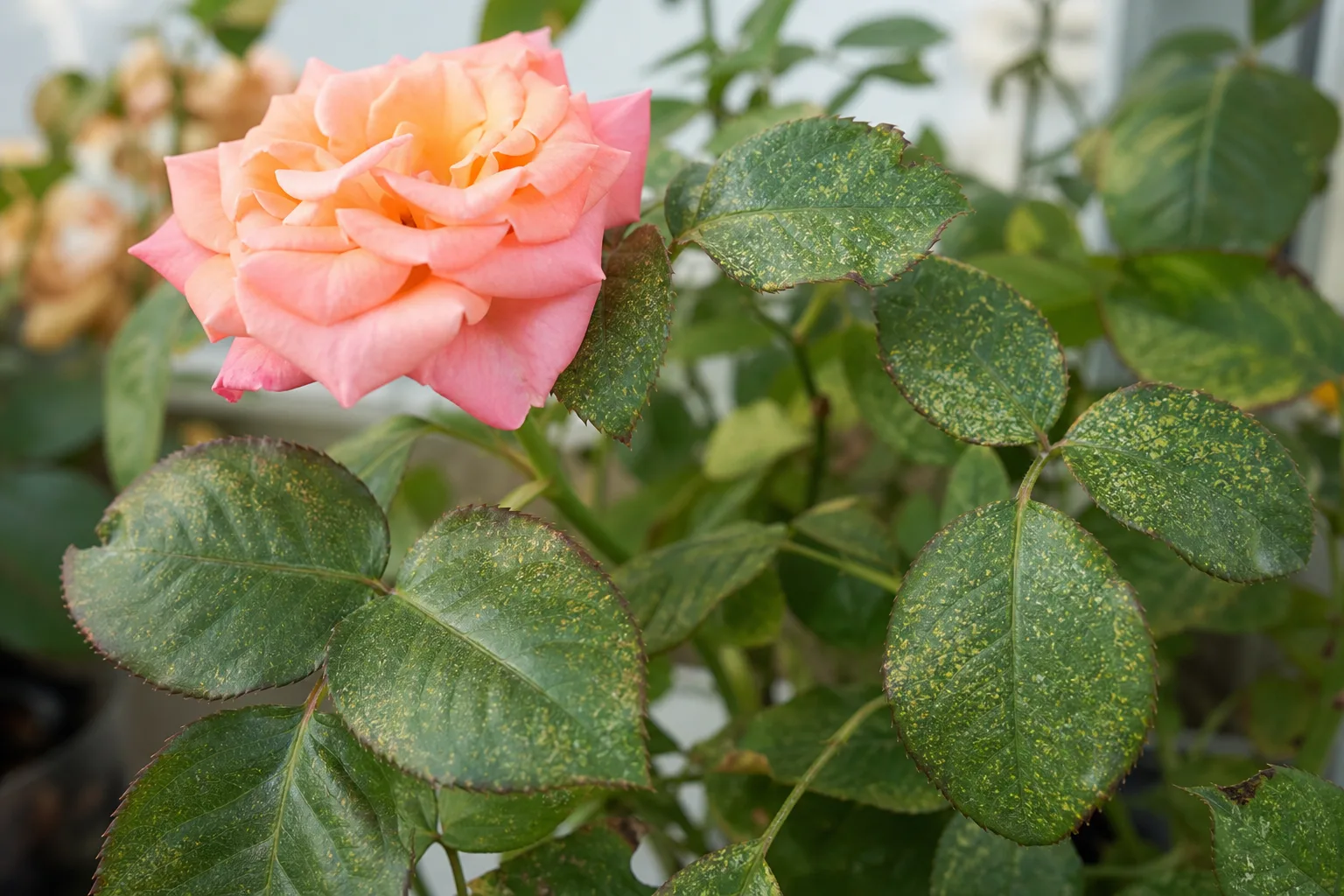
Spider mites are more likely to build in hot, dry conditions. Fine pale speckling, dull gray-green leaves, thin webbing, and damage concentrated on the undersides point away from simple heat wilt. Aphids cluster on tender growth, while thrips can distort flowers and new leaves. A morning rinse can help with a light infestation, but repeat observations matter more than one dramatic spray.
Black spot and other leaf diseases can cause yellowing and premature leaf drop, which makes the whole bush look drought-stricken. Look for spots, halos, powdery growth, or a pattern that spreads from older leaves rather than a uniform afternoon droop. Keep fallen diseased leaves out of the bed, water the soil, and use local extension or a horticulture clinic for a treatment decision when the diagnosis is uncertain.
Physical site stress is easy to miss. A rose beside a pale wall may receive reflected heat; a rose beneath an eave may receive less rainfall than the rest of the bed; a climbing rose against masonry may have a dry root zone even after a storm. Wind can increase water loss, while compacted soil can send water sideways instead of down. Check the entire site, not just the leaves, before changing the watering schedule.
The UC IPM cultural guidance also warns that drought stress can lead to defoliation and cane sunburn, while overwatering or poorly drained soil can contribute to root disease and nutritional deficiencies. That overlap explains why a photo alone cannot always identify the cause. Use timing, soil condition, and the direction of change together.
Choose and Prepare Roses for Hot Summers
Prevention starts before the forecast turns severe. Select a rose that has performed well in your local climate, give it enough room for air movement, and build the root zone so water can enter and drain. “Heat tolerant” is not a guarantee: a rose adapted to humid Florida may not be the best choice for a dry desert, and a disease-resistant shrub rose may outperform a high-maintenance hybrid tea in a rainy summer even if both receive the same sun.
Regional trials are useful. In its Florida study, UF/IFAS identified ‘Mrs. B. R. Cant,’ ‘Spice,’ ‘Louis Philippe,’ and Knock Out® as strong performers under that state’s hot, humid, disease-prone conditions. Those names are examples of how to shop, not a universal ranking. Ask a local nursery, rose society, or extension service which cultivars handle your heat, humidity, winter, soil, and common diseases.
Plant in a location with several hours of direct sun, but account for the intensity and timing of that sun. Morning light with relief from the harshest afternoon exposure can be better than an all-day furnace beside concrete. Keep the rose away from chronic reflected heat, and avoid planting where roof runoff or irrigation creates a permanently soggy pocket.
Improve soil structure and drainage before planting or during the cool season. Do not bury a large pocket of rich compost in a heavy planting hole and assume it will solve drainage; a pocket with different texture can hold water around roots. Work amendments broadly and follow local soil-test advice. Install drip or a soaker hose, add organic mulch before the first heat wave, and mark a simple check point so you can probe the same depth each time.
A small preparation kit saves panic: a hand trowel, a hose wand with a gentle setting, a rain gauge, loose mulch, temporary shade material, and a pot saucer that drains freely. With those tools ready, the response to a wilted rose becomes observation and adjustment rather than a cycle of watering, fertilizing, pruning, and hoping.
Conclusion: A Dry-Soil Check Beats a Panic Watering
When roses wilt in summer heat, begin at the roots. If soil is moist and the plant droops only in the afternoon, lower the heat load and wait for the cooler hours. If the root zone is dry, water slowly and deeply at the base, let runoff absorb, and cover the soil with a loose mulch layer. If the soil is wet and the rose stays limp, stop watering and investigate drainage, root damage, pests, or disease.
That check-then-soak habit is more valuable than any fixed gallon amount or watering calendar. Established roses, new plantings, raised beds, and containers all dry at different speeds, but they can all be managed by watching moisture at depth, protecting roots from reflected heat, keeping foliage as dry as practical, and pausing stressful tasks until the weather eases. A rose that recovers overnight usually needs better heat management; a rose that declines in wet soil needs a different kind of rescue.