How to Make a Terrace Garden That Lasts for Years
Learn how to make a terrace garden with a smart site audit, safe containers, the right plants, drainage, irrigation, privacy, and easy maintenance.
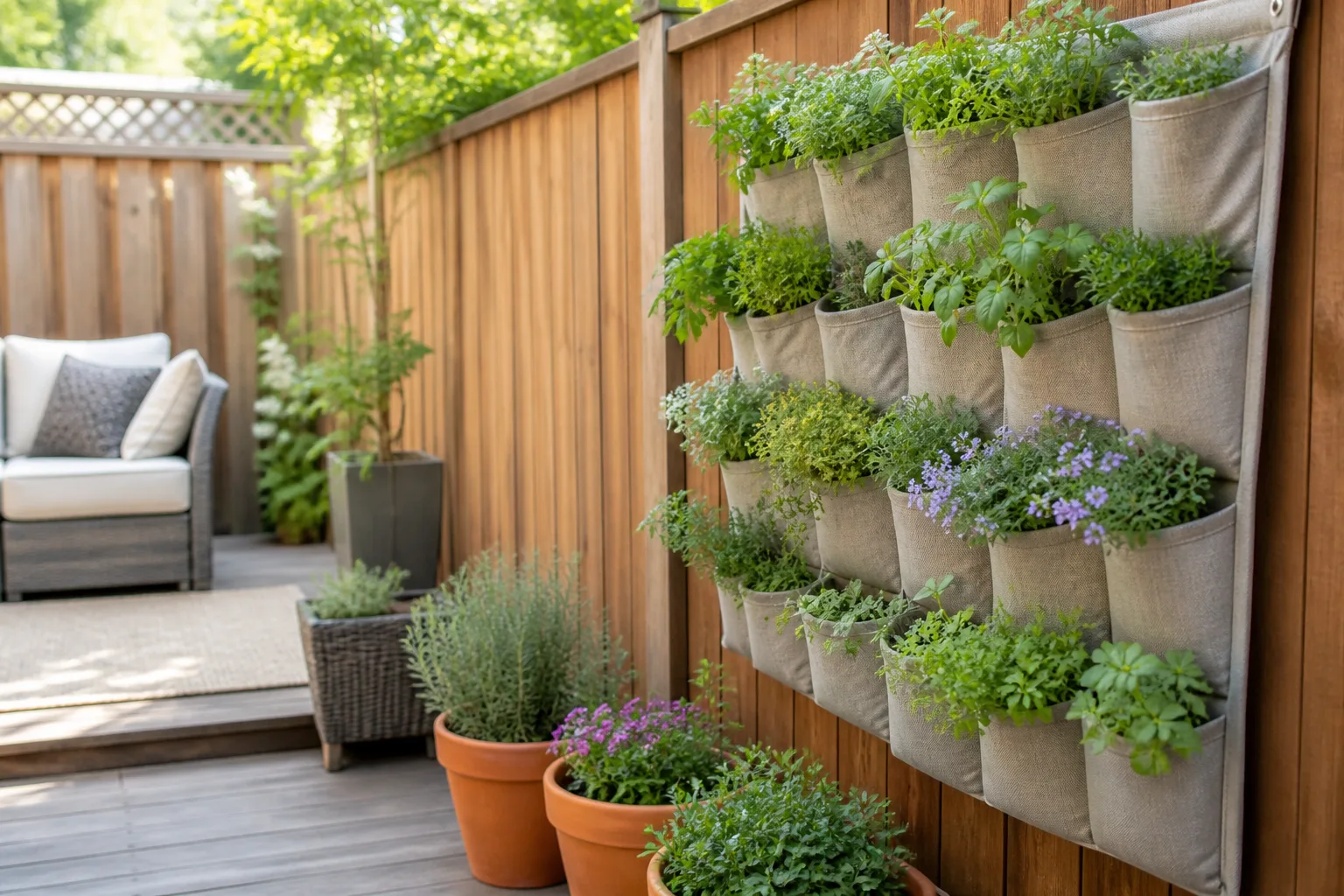
A terrace garden is not just a collection of pretty pots. It is a small outdoor system where hard paving, wind, reflected heat, limited root space, water runoff, furniture, and the way you use the space all affect whether plants thrive.
The most reliable approach is to build the garden around the site rather than forcing the site to match a picture. Audit the surface first, decide what you want to do there, choose a growing system that fits the structure, and only then buy plants and décor.
What counts as a terrace garden
A terrace garden is a garden arranged on a level or gently raised outdoor surface such as a paved patio, tiled terrace, deck, courtyard, or rooftop. It can use containers, raised planters, trellises, or a professionally designed green-roof system; it does not require a lawn or a traditional in-ground bed.
That definition matters because a ground-level terrace and a rooftop terrace may look similar but have very different limits. A patio beside a house may let you add a substantial planter bed, while a roof may require lightweight containers, approved anchoring, protected drains, and a structural review before you add even one large planter.
Audit the site before buying plants
Map sun, wind, heat, and access
Spend a full day observing the terrace, then repeat the check in the morning, around midday, and late afternoon. Note where the sun actually reaches the floor, which walls reflect heat, where wind accelerates around corners, and whether a railing or neighboring building creates a shade pocket.
Mark the places you can comfortably reach with a hose or watering can. A beautiful far corner that requires carrying water through the home every day is not a low-maintenance feature; it is a future reason to abandon the garden.
Measure the usable footprint after allowing a clear route around doors, stairs, drains, HVAC equipment, and furniture. On a small terrace, circulation is part of the design. If you cannot walk, sit, open a door, and service the plants without moving half the garden, the layout is too full.
Before buying anything, make a temporary floor plan with cardboard boxes or folded blankets standing in for pots and furniture. Live with that arrangement for a day, photograph it from the doorway and seating position, and notice whether the proposed privacy screen steals the best light or whether a large pot creates an awkward bottleneck.
Check structure, permissions, and drainage
For a rooftop, begin with the building manager, owner, HOA, or condo board. Ask about roof access, water connections, roof-warranty rules, railing loads, permitted anchors, and who is responsible for damage; then have a licensed structural professional confirm what the roof can support.
Do not estimate safety from the size of a pot. Wet potting mix, saturated saucers, large ceramic or concrete planters, furniture, people, and accumulated rain all add weight. A rooftop garden article from Gardening Know How makes the same crucial distinction: structural capacity should be checked before choosing the rooftop design, and extensive green roofs require qualified help.
Inspect every drain and overflow before placing anything. Keep outlets visible and reachable, raise containers on stable pot feet when appropriate, and make sure water cannot collect against a wall, door threshold, roof membrane, or a neighbor’s property. At ground level, correct low spots and runoff paths before installing a bed; at roof level, do not drill, seal, or redirect water without an approved detail.
Design around one clear use
Start with the reason you want the terrace garden. You might want a quiet breakfast corner, a productive herb and salad garden, a privacy screen, a pollinator patch, or a flexible entertaining space. You can combine uses, but choose one primary use so the plants, furniture, and maintenance support one another.
Create living, growing, and service zones
Divide the terrace into three simple zones. The living zone holds a chair, dining surface, or lounge furniture. The growing zone gets the best light and contains the plants. The service zone holds a hose connection, watering can, hand tools, potting bench, compost, and space to inspect or repot.
This layout is more useful than scattering pots evenly around the perimeter. Group plants with similar water and light needs, leave the service zone close to the entrance, and use furniture that can move without crushing leaves or blocking a drain.
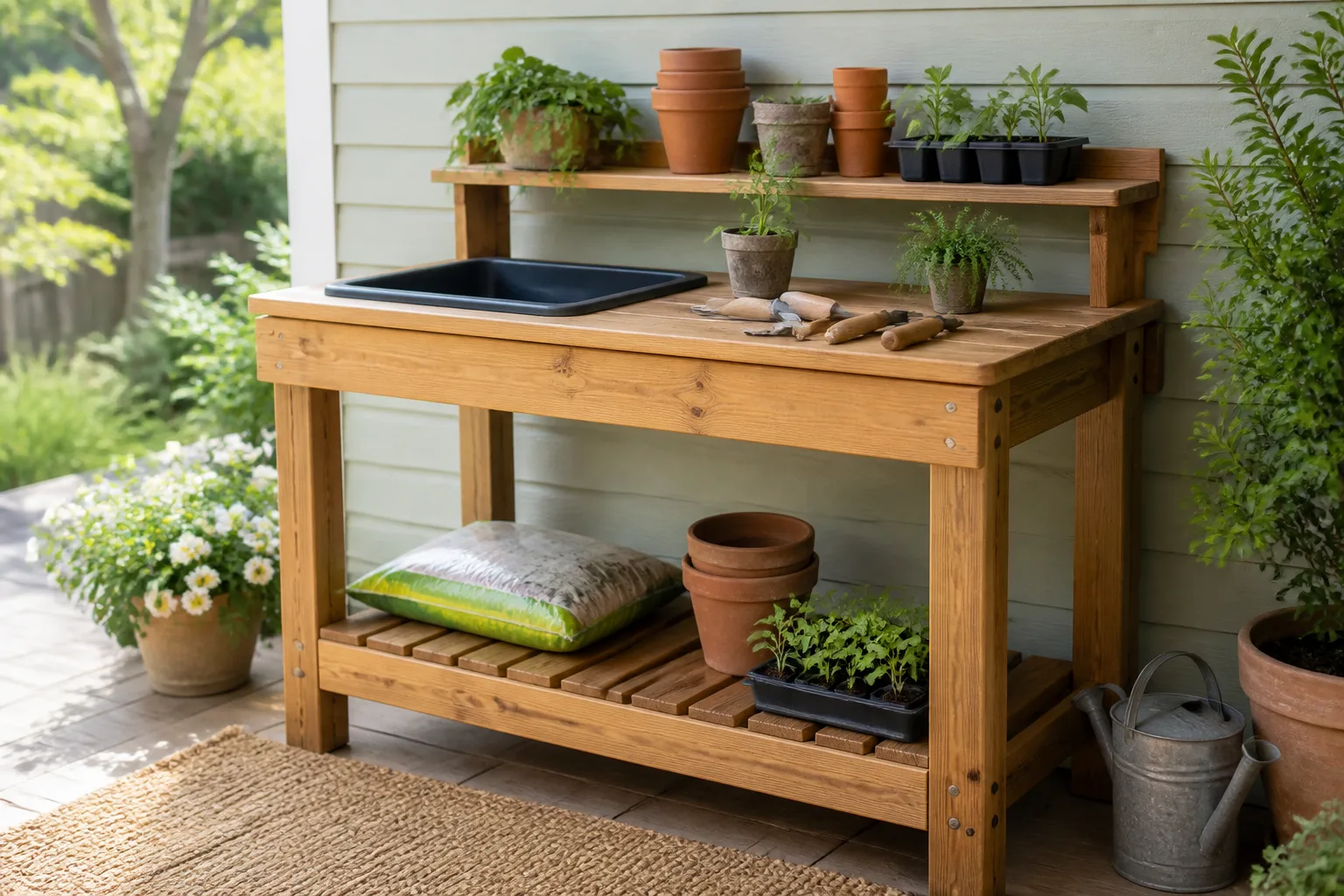
Design features should earn their footprint. A pergola can frame a sitting area and support a vine, but it does not automatically provide deep shade. A water feature can add sound at ground level, while a rooftop version may introduce weight, splash, plumbing, and freeze concerns. A potting bench is valuable if you regularly grow from seed or refresh containers; otherwise, a narrow shelf may do the same job with less bulk.
Choose the growing system
Containers or raised beds
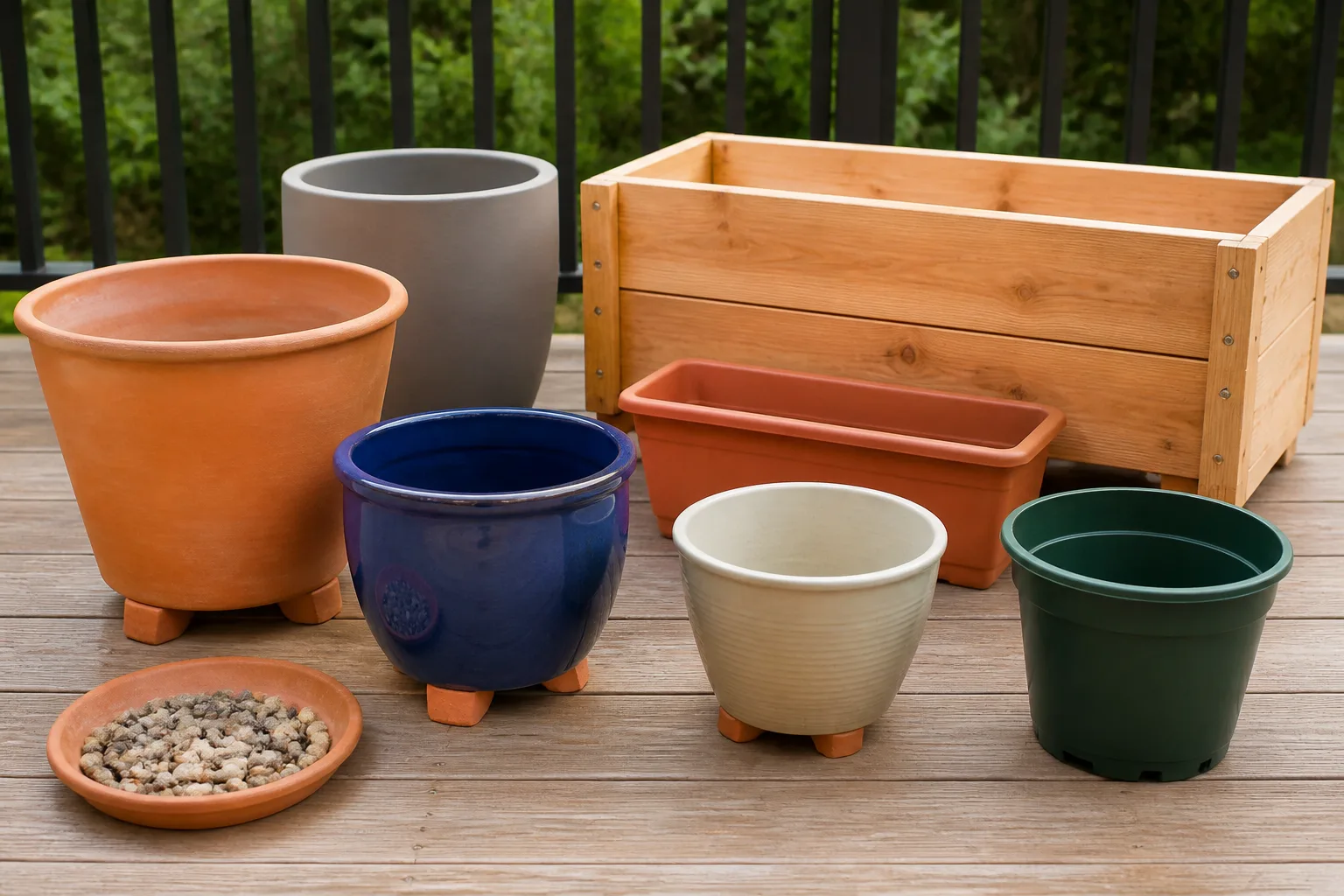
Containers are the safest starting point for renters, small terraces, and uncertain sites. They are portable, easy to rearrange as the sun changes, and allow you to separate plants by soil and water needs. Lightweight fiberglass, resin, or double-wall plastic planters reduce handling strain, but tall plants still need a stable base and protection from wind.
Raised beds give roots more volume and can make edible gardening easier, but they hold more wet media and become a more permanent part of the site. Use them freely on suitable ground-level surfaces only after confirming that the slab, deck, or terrace can carry them and that the base will not trap water. On a roof, treat a raised bed as an engineered installation, not as a casual upgrade from a few pots.
A small terrace often works best with a mix: one or two large anchor containers, a few medium edible or flowering pots, and smaller movable pots for seasonal color. This gives the garden structure without making every decision permanent.
Build in phases if the budget or the site is uncertain. Start with the seating position, hose route, one anchor plant, and a few containers; observe the terrace through a hot spell and a rainy week before adding a permanent screen, raised bed, or expensive furniture. This slower sequence also reveals which plants genuinely earn space.
Know when a green roof is a professional project
A green roof is not the same as putting containers on a roof. It is a layered roof assembly that normally includes waterproofing and root protection, drainage, a filter layer, engineered growing media, and plants. The layers, irrigation, access, fire requirements, and overflow design must work with the existing roof.
If your goal is an extensive planted roof rather than a container garden, hire qualified professionals who can coordinate the roof contractor, structural review, waterproofing, and local requirements. A container terrace can be a manageable garden project; changing the roof assembly is construction.
Build a healthy growing base
Every container needs an unobstructed drainage hole. Colorado State University Extension identifies drainage as the most important container choice because waterlogged media loses oxygen around roots; its container-garden guidance also recommends a porous commercial potting mix rather than native soil, which can compact in a pot.
Choose a mix that holds moisture while leaving air space. A quality potting mix with ingredients such as bark, peat or a peat alternative, perlite, vermiculite, and compost can be adjusted for the crop, but do not turn a pot into a miniature field by filling it with heavy garden soil.
Do not use a layer of gravel at the bottom as a substitute for a drainage hole or suitable media. Water still has to move through the upper mix, and a sharp change between layers can leave the root zone wetter than expected. Use the container’s drainage design, a well-structured mix, and a clear path for runoff instead.
Size containers for the mature plant and the weather. Small pots dry quickly and need more frequent checks; larger pots hold moisture longer but become difficult to move when saturated. CSU Extension lists five-gallon containers as a minimum for many tomatoes, peppers, eggplants, cucumbers, cabbage, and beans, while smaller root crops and herbs can use less volume; use the plant label and expected root size as the final guide.
For decorative cachepots without holes, use a removable inner pot with drainage and keep a gap beneath it so water can escape. Place saucers where runoff could stain paving, but empty them when they hold water for long periods. In regions with salty irrigation water or heavy fertilizer use, occasional thorough watering that produces some drainage can help move salts out of the mix; do not let the drained water sit against the pot or surface.
Match plants to the microclimate
Treat the terrace as several small climates, not one planting bed. A container beside a pale wall may be hotter than one in the center; the top of a railing may be windier; a corner may be shaded for half the day; and a dark paved surface can keep radiating heat after sunset.
Group plants by similar light and moisture needs. Mixing a drought-tolerant succulent with a thirsty leafy crop in one pot creates a compromise that usually satisfies neither plant. Grouping also makes irrigation, feeding, pruning, and seasonal moves much easier.
Full sun, heat, and reflected light
As a useful starting point, Colorado State University Extension notes that flowering plants and fruiting vegetables often need about eight hours of full sun, root vegetables about six hours, and leafy vegetables and many herbs about four hours. Read the label for your variety and watch the actual terrace, because reflected light can cause scorching even when the direct-sun estimate looks right.
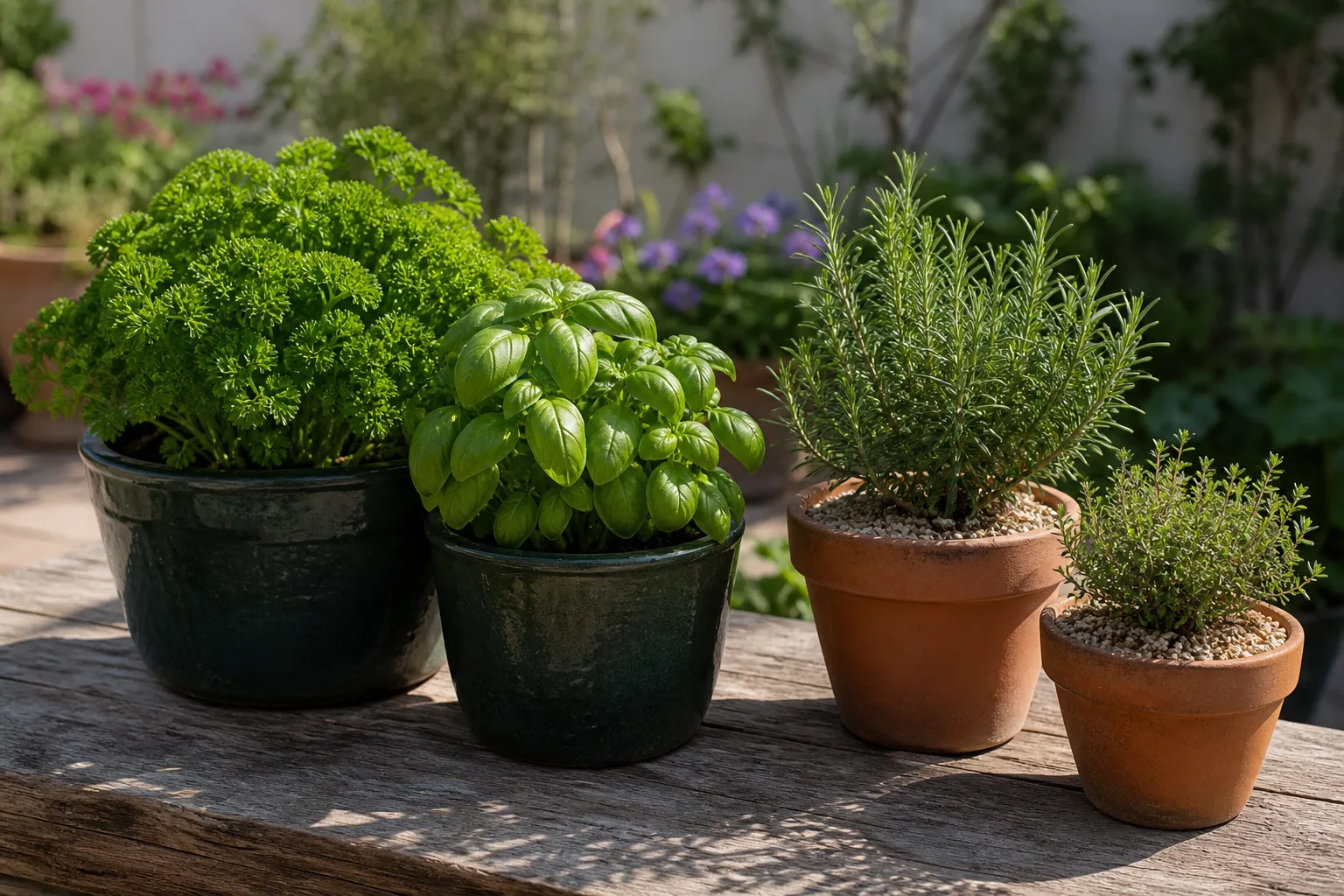
For a sunny terrace, consider compact tomatoes, peppers, lettuce in the cooler season, basil, thyme, oregano, rosemary, lavender, marigolds, salvias, lantana, sedums, and ornamental grasses where they fit your climate. Compact or patio varieties are usually better than full-size crops because they use the available root volume and need less structural support.
Do not assume a plant that tolerates summer in the ground will tolerate a black pot on a west-facing terrace. Use light-colored or insulated containers in extreme heat, mulch the surface of the mix, and move heat-sensitive plants away from reflected walls. If leaves bleach on the exposed side while the mix remains moist, reduce reflected heat before increasing water.
For a dependable first palette, choose one structural plant, two or three supporting plants with the same light and moisture needs, and one trailing or edible accent. Repeat that recipe in another container rather than putting a different plant in every pot; repetition makes a small terrace feel designed and makes care much easier to remember.
Wind, shade, and winter exposure
Wind increases water loss, bends stems, and can topple a top-heavy pot. Choose compact plants for exposed edges, put tall plants in stable containers, group pots so they shelter one another, and use a trellis only when it is securely supported by an approved system.
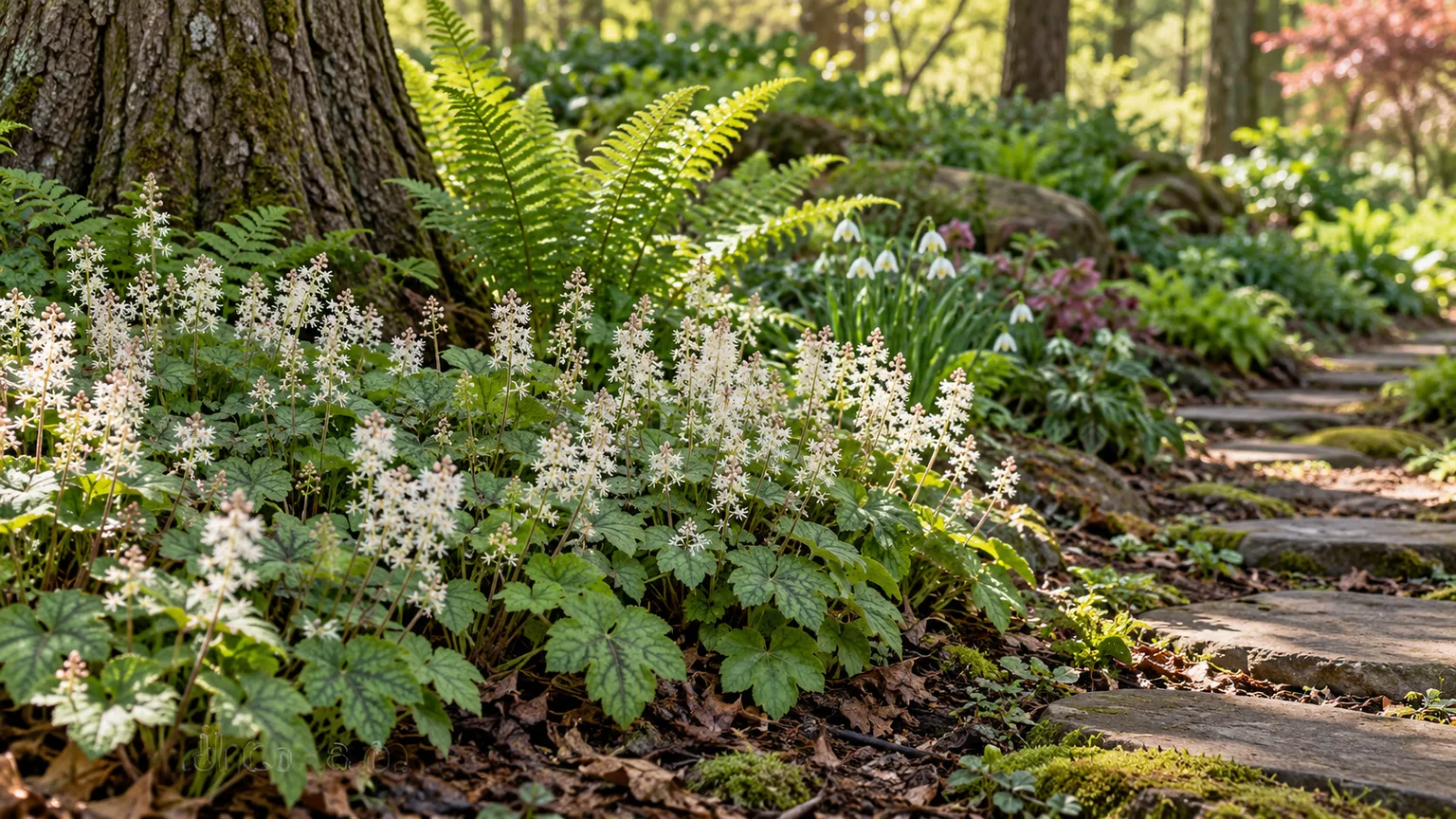
Shade is not a failure; it is a plant-selection prompt. Ferns, hostas, heucheras, many leafy greens, mint in its own pot, and shade-tolerant annuals can make a dim terrace useful. Avoid placing sun-loving vegetables in the same shade pocket just because the group looks attractive at the garden center.
Winter is a separate stress test. Container roots are more exposed to freezing and drying than roots in the ground, and porous pots can crack through repeated freeze-thaw cycles. Move tender plants when necessary, protect suitable containers, reduce watering when growth slows without allowing evergreen plants to desiccate, and follow local frost guidance rather than a generic calendar.
Create privacy and vertical layers safely
Build height in stages: a low ground layer, a middle layer of full containers, and one or two taller accents. Colorado State’s container-design guidance suggests choosing plant scale carefully and using a tall or upright plant with a trailing plant to avoid a flat composition; repeat one foliage or flower color to make different pots feel intentional.
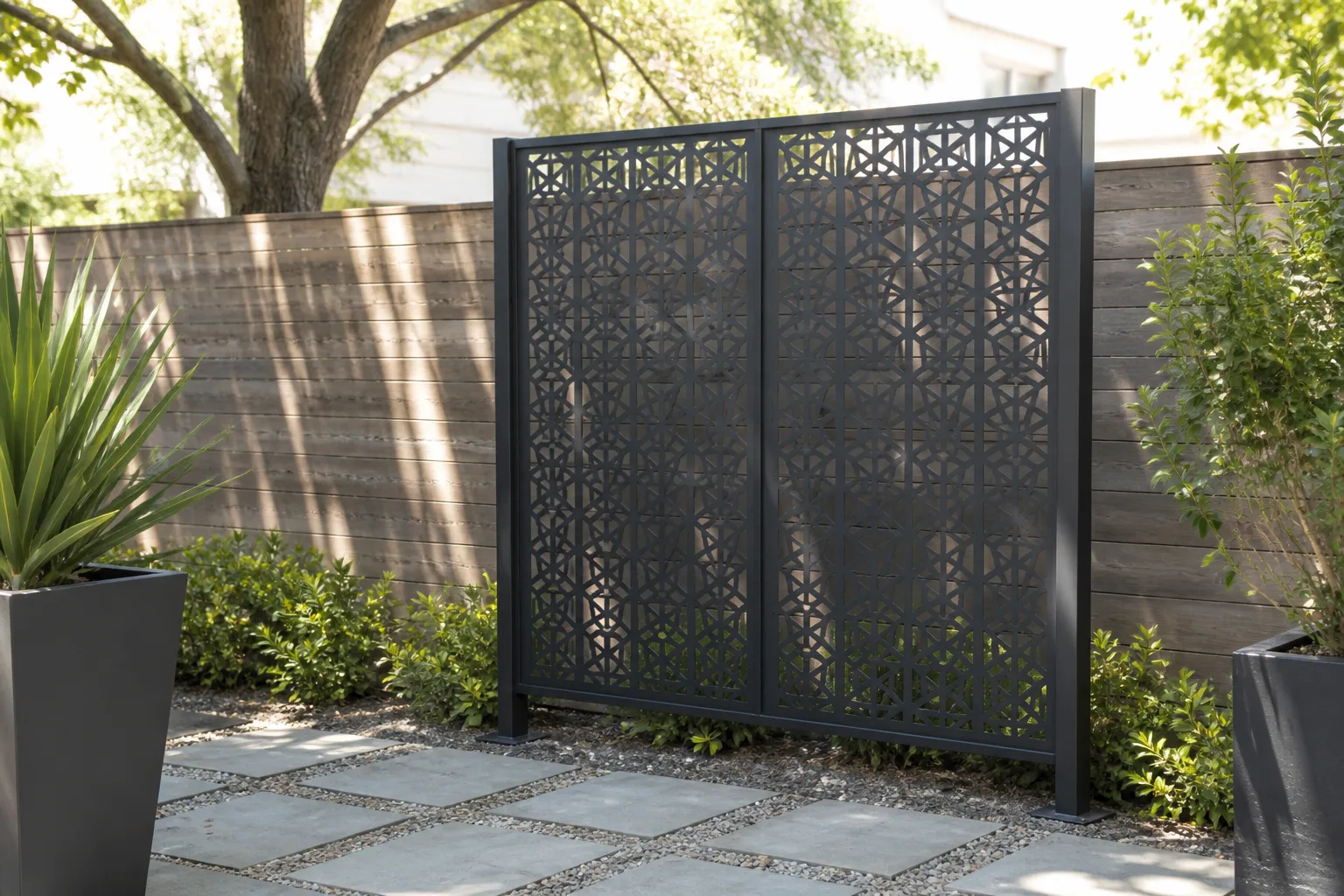
For privacy, use a trellis with a well-behaved vine, a row of compact shrubs, or a screen that can be removed for storms and maintenance. Native plants are worth considering for their fit with local conditions and wildlife, but a native plant in a container still needs regular water because its roots cannot reach the surrounding soil. Penn State Extension’s downspout-planter guidance recommends choosing a mix of plants native to the area when designing planted stormwater containers; adapt that principle to your local nursery and climate.
Keep privacy structures porous enough to let wind pass and low enough to avoid becoming a sail. Never attach a screen, pergola, or trellis to a roof membrane or railing without an approved detail. The best privacy feature is one you can secure, inspect, prune, and remove without compromising the building.
Irrigate so busy weeks do not kill plants
Terrace containers usually dry faster than in-ground beds because exposed sides lose moisture and the root volume is limited. Unglazed clay can dry faster than plastic or glazed pots, while a large healthy plant may use water faster than the same pot did at planting.
Check moisture at root depth rather than watering by the calendar. Push a finger into the mix, lift a small pot to feel its weight, or use a moisture meter as one clue rather than an absolute verdict. When it is time to water, soak the mix thoroughly until a little drains from the bottom, then adjust the frequency after observing how quickly each group dries.
Drip irrigation is useful when it is treated as a delivery system, not a set-and-forget promise. A practical setup includes a timer, filter, pressure regulation, one or more emitters sized for the plant and pot, tubing secured out of walkways, and a test run long enough to reveal leaks or runoff.
Check emitters weekly and after moving pots. A timer can keep watering a dead plant, spray a wall, or send water toward a blocked drain. BBC Gardeners’ World Magazine recommends grouping pots with similar needs, using saucers in hot spots, watering thoroughly in dry spells, and using more portable plastic pots for larger plants; those are sensible ways to make a terrace irrigation system easier to manage.
For vacations, do not simply double the timer. Group plants by need, move tender pots out of the harshest exposure, test the irrigation for several days, and ask someone to check the system if a heat wave or storm is possible. Self-watering containers can reduce the number of checks for some crops, but they are not suitable for every dry-loving plant and still need inspection.
Keep the terrace beautiful with low weekly maintenance
Set aside ten to fifteen minutes once a week for a complete circuit. Check moisture, clogged emitters, standing water, wind damage, pests, dead flowers, ripe vegetables, and any container that has shifted over a drain or walkway.
Harvest herbs and vegetables promptly, remove damaged leaves, and deadhead flowering plants when the variety benefits from it. Turn movable pots occasionally so growth stays balanced, but do not rotate a sun-sensitive plant into a suddenly harsher exposure in one day.
Feed according to the crop and label. Containers have a small reservoir of nutrients, and frequent watering can carry soluble fertilizer out of the mix, but overfeeding raises salt levels and can burn roots. A controlled-release product at planting may be useful for some plants, with supplemental feeding only when the label and crop call for it.
At the start of each season, refresh the top layer or repot root-bound plants, inspect saucers and pot feet, clean drains, tighten approved anchors, and reassess the light. At the end of the season, compost healthy annuals, isolate diseased material, bring in tender plants, and store vulnerable pots where local winter conditions require it.
Avoid common terrace-garden failures
The fastest way to diagnose a struggling terrace garden is to check the physical system before blaming the plant. Use this sequence:
| What you see | First checks | Better correction |
|---|---|---|
| Wilted plants with dry, shrunken mix | Pot size, emitter flow, wind, and heat | Water deeply, repair delivery, add surface mulch, and move the pot from reflected heat. |
| Yellowing leaves in wet mix | Drainage holes, blocked saucer, watering frequency, and root smell | Stop watering, clear the path, replace collapsed mix, and repot only if roots are damaged. |
| Brown leaf edges | Moisture swings, salt buildup, hot reflected light, or fertilizer | Check the roots and emitters, flush salts when appropriate, and reduce heat exposure. |
| Pots tip or screens shake | Top-heavy growth, loose structures, and exposed edges | Lower the planting height, use a wider stable base, group pots, and install only approved anchors. |
| Water stains or puddles appear | Blocked drain, pot sitting flat, or misplaced overflow | Clear and retest the outlet, raise the container, and keep runoff away from doors and walls. |
| Spring display collapses in midsummer | Wrong light, undersized pots, incompatible water needs | Replace with climate-fit plants, larger root volume, and grouped irrigation zones. |
Avoid five tempting shortcuts: filling a roof with soil before a structural check, using garden soil in pots, placing tall plants on the windward edge, hiding drainage outlets under décor, and choosing a dramatic plant before measuring light. Each shortcut creates a problem that is more expensive to fix after the garden is established.
Conclusion
The terrace garden you enjoy for years will probably begin with fewer plants than you expect. Start with a clear use, map the site, protect the drainage and structure, choose containers or beds that suit the surface, and match plants to the real microclimate rather than the nursery label alone.
Then make care easy to repeat: group compatible plants, keep water within reach, test drip irrigation, leave service space, and use weekly checks to catch small failures early. A terrace becomes an outdoor room when the plants are healthy, the paths stay clear, the water has somewhere safe to go, and the design still works on an ordinary busy day.