Sunburnt Plants: How to Spot, Save, and Protect Them
Think your plant is sunburnt? Learn how to tell sunburn from drought, what to do first, and how to protect leaves, fruit, and bark.
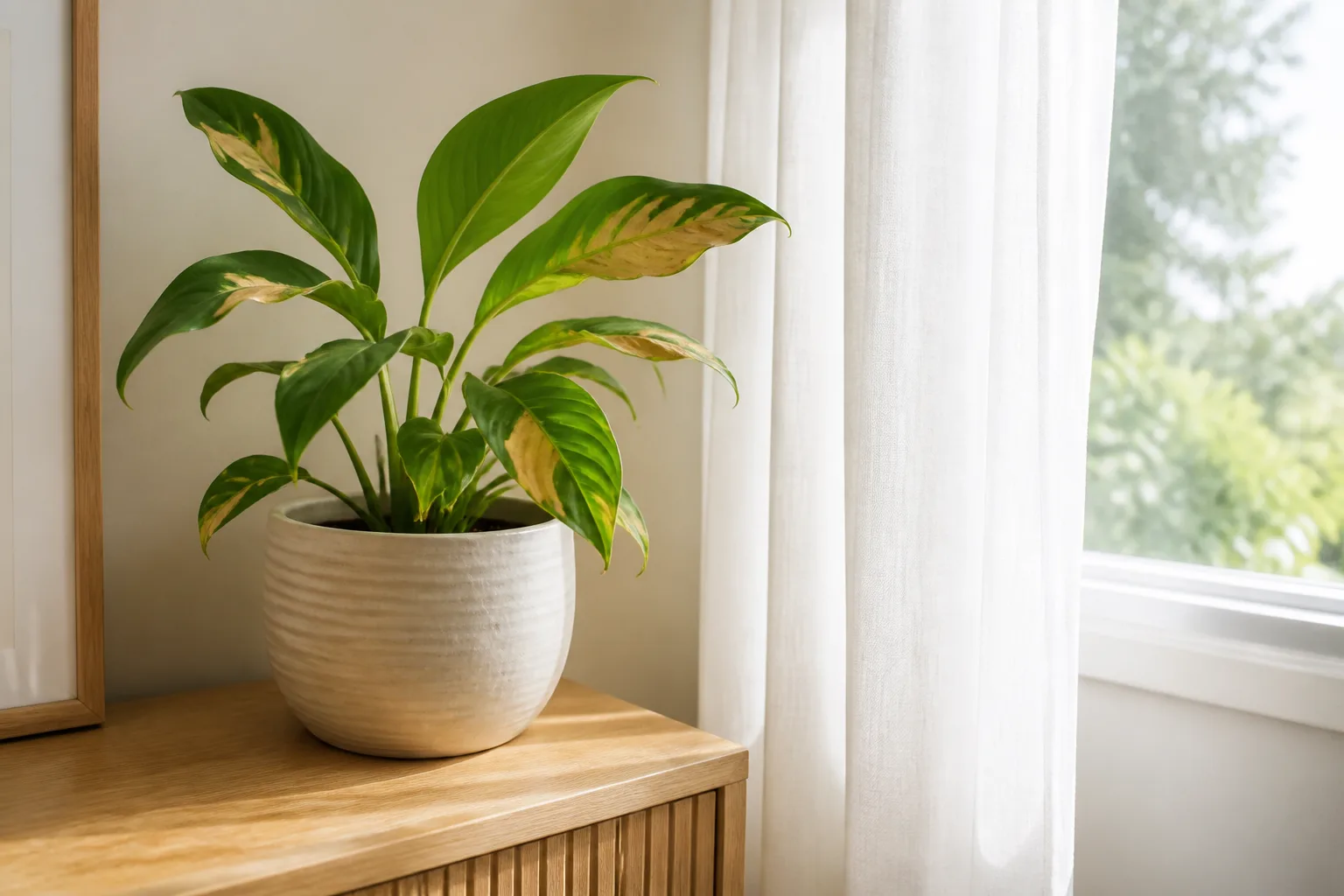
The first response to sunburnt plants is not a bigger dose of fertilizer or a frantic haircut. Move or shade the plant, check the root-zone moisture, and stop the exposure that is still creating new damage. A brown patch cannot turn green again, but the living parts of the plant can often keep growing once the heat, light, wind, and water imbalance are corrected.
The useful distinction is between sunscald, where intense light and heat injure exposed tissue directly, and leaf scorch, where leaves lose water faster than the roots and vascular system can replace it. The two can happen together, and both can look dramatic, but the first-hour response is similar: reduce exposure, restore sensible moisture, and avoid removing tissue that is still helping the plant.
The fastest way to triage a sunburnt plant
Use this order when a plant suddenly looks bleached, crispy, or wilted after a hot bright day:
- Reduce the light and heat. Move a container to bright shade, pull a sheer curtain across harsh window sun, or erect temporary shade over a bed. Do not place a tropical houseplant in a dark closet for days; it needs lower intensity, not zero light.
- Feel the soil several inches down. If the root zone is dry, water it slowly at the base. If it is already wet or smells sour, do not add more water just because the leaves are limp.
- Leave partly green leaves attached. They still photosynthesize and may shade younger leaves and fruit. Remove only tissue that is fully dead, diseased, or interfering with a necessary inspection.
- Pause extra stress. Skip fertilizer, foliar sprays, oil treatments, repotting, and major pruning while the plant is hot and unstable.
- Photograph the damage and reassess tomorrow. Sun injury should stop expanding after exposure is corrected. New spots, spreading lesions, insects, or a worsening wilt point to another problem as well.
This sequence matters because the visible damage is often delayed. A leaf can continue to dry and turn tan after it has been moved, while a plant that looks limp in afternoon heat may recover by evening. Extension guidance from NC State notes that damaged tissue remains damaged, but unaffected tissues can recover and the plant can continue growing.
What plant sunburn is—and why it happens
Plant sunburn is an injury to leaf, fruit, stem, or bark tissue that was exposed to more light and heat than it could safely manage. It is especially common when a plant moves abruptly from filtered greenhouse light, an indoor room, or a shaded nursery bench into strong outdoor sun. A long heatwave can also burn an established plant that normally handles its location.
Water movement is the other half of the story. Leaves lose water through tiny pores in a process connected to transpiration and evapotranspiration; roots must keep supplying water fast enough to prevent tissues from overheating and dehydrating. Hot, dry wind, compacted or damaged roots, a small drying container, salt-heavy soil, and a recent loss of protective foliage can all tip that balance even when the plant is technically growing in “full sun.”
That is why a plant can scorch in partial shade. NC State Extension describes leaf scorch as a hot, dry-period disorder in which the plant cannot balance the water demand of cooling its leaf surfaces. Epic Gardening makes the same practical point: drying wind and low moisture can produce scorch even when direct sunlight is not the only trigger.
Sun exposure also changes with the season. A window that provided gentle winter light can become a hot lens for a houseplant in late spring. A tree that was shaded by a neighboring canopy, fence, or dense branch structure can become vulnerable after that shade is removed. A tomato or pepper fruit that was protected by healthy leaves can sunscald after pests, disease, hail, or aggressive pruning opens the canopy.
What sunburn looks like on leaves, fruit, and bark
Sun injury usually follows exposure rather than appearing evenly across the whole plant. Look first at the side facing the strongest afternoon light, a window, reflective wall, or hot pavement, then compare it with the shaded side and the newest leaves.
Leaf scorch versus true sunscald
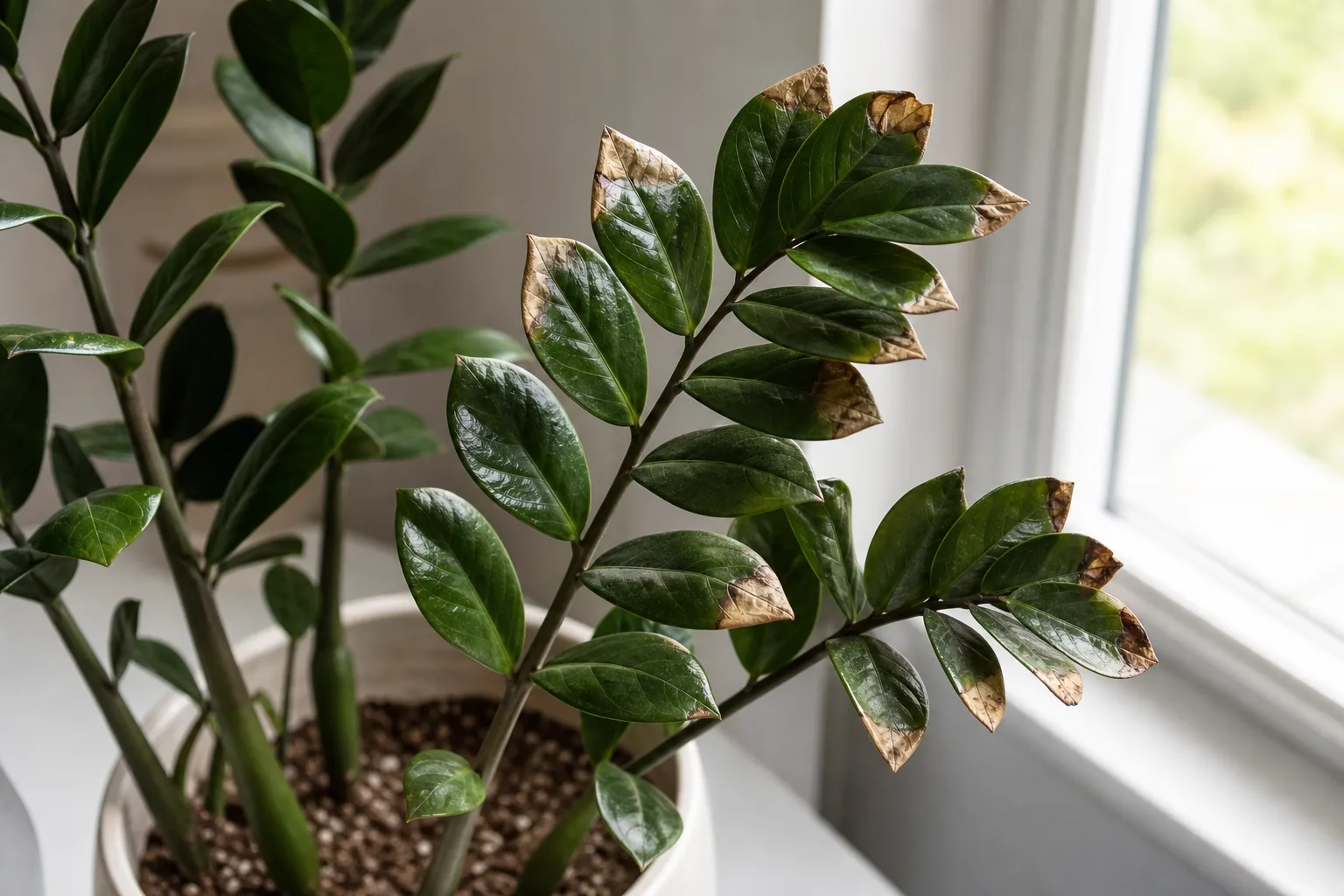
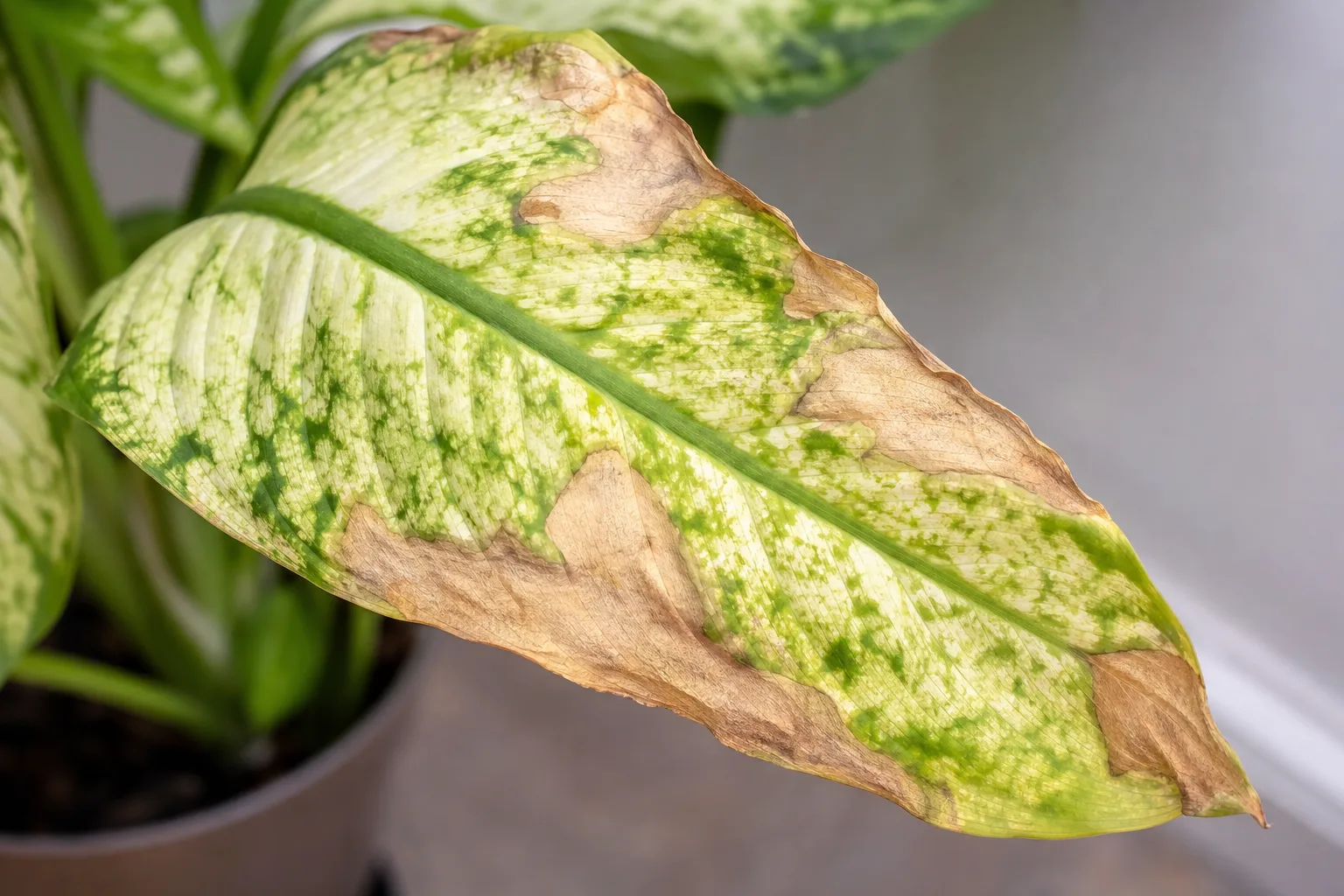
Sunscald or plant sunburn often begins as a pale, bleached, translucent, tan, or white patch on the most exposed part of a leaf. The patch may feel papery or crisp as the cells die, and its boundary may follow the angle of the light rather than the leaf’s natural edge. Tender new leaves and foliage that was suddenly exposed are common first casualties.
Leaf scorch more often starts at leaf margins and tips or between veins, especially after hot wind or a dry root zone. It can occur on both sides of the plant and even in shade if the weather is unusually hot and dry. The Colorado State University Extension guide to environmental disorders describes drought injury in woody plants as tan-to-brown tissue along margins or between veins, often strongest on the side exposed to the contributing wind or heat.
Neither pattern is a perfect diagnosis by itself. A sunburnt houseplant may have a brown margin, and a drought-stressed plant may be worse on its sunny side. Use the pattern, the recent light change, the weather, and the soil together rather than diagnosing from color alone.
Fruit sunscald and exposed stems
Fruit sunscald appears on the side of a tomato, pepper, squash, cucumber, apple, or other developing fruit that faces intense light. The area may be pale yellow, white, tan, light brown, leathery, sunken, or sharply different from the shaded skin. UC Integrated Pest Management recommends maintaining sufficient leaf cover because exposed fruit is more likely to develop these damaged areas.
The trigger is often not “too much sun” in isolation but a sudden loss of shade. Remove a large number of leaves, allow a pest or disease to defoliate a plant, or expose a fruit by staking and tying it differently, and tissue that was adapted to shade can heat rapidly. Damaged fruit can then become a weak point for rot, so the question is whether to harvest it promptly or remove it rather than waiting for it to deteriorate on the plant.
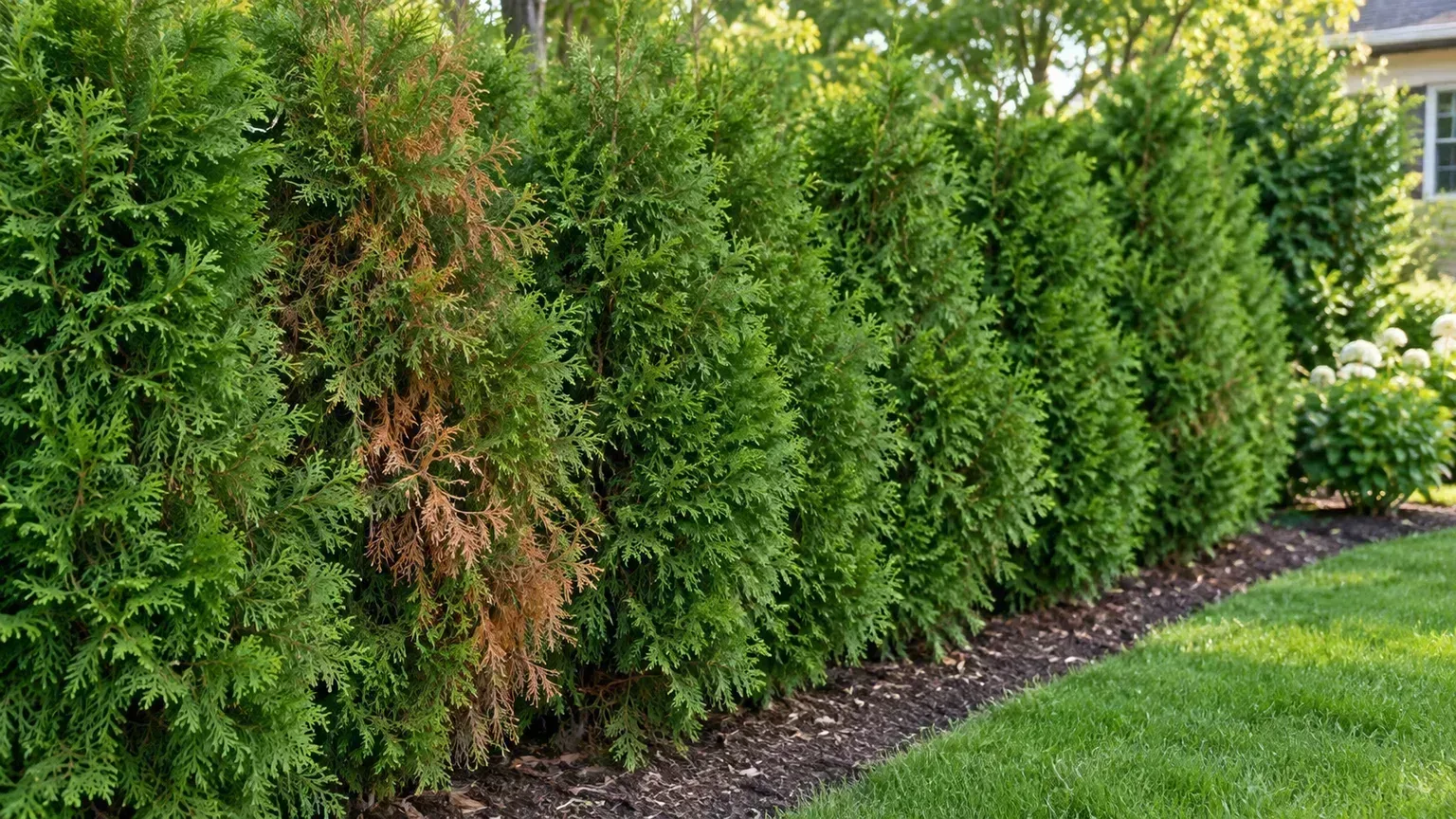
Bark sunscald is a different-looking problem. On a young tree, inspect the south or southwest side for discolored, sunken, cracked, peeling, or dead bark. Winter injury may combine warm daytime bark with freezing nights, while summer injury follows extreme heat, drought, canopy removal, or sudden exposure. Do not treat a trunk wound the same way you would a crispy leaf.
Sunburn or another problem? Use the pattern to decide
Sunburn is easy to overdiagnose because many stresses end in brown tissue. Before you water again or reach for a spray, make a quick comparison:
| Clue | More consistent with sunburn or scorch | More suspicious for another problem |
|---|---|---|
| Location | Exposed upper or window-facing leaves; sun-facing fruit; windward side | Damage evenly distributed, concentrated at the plant interior, or limited to one unrelated branch |
| Color and texture | Bleached, translucent, tan, or dry brown patches; crisp edges | Water-soaked lesions, dark expanding spots, fuzzy growth, sticky residue, or blackened stems |
| Timing | Follows a move outdoors, heatwave, canopy loss, hot window, or sudden pruning | Appears without a light/weather change or continues in cool, shaded conditions |
| Soil | Dry or rapidly drying soil can support scorch | Persistently wet soil, foul odor, or roots that are brown and mushy suggest root trouble |
| Progression | Existing patches remain, but new damage slows after shade and moisture are corrected | New lesions keep spreading, insects appear, or whole branches decline despite stable moisture |
Check the soil and the pattern together
A drooping plant is not automatically thirsty. Push a finger or wooden skewer into a container, or use a hand trowel to inspect garden soil below the surface. Dry soil plus crispy exposed margins supports a water-and-heat diagnosis; wet soil plus wilt suggests poor drainage, damaged roots, or a plant that cannot take up water.
Do not use a moisture meter as the only evidence. Container mix can be wet in the middle and dry against the pot wall, while a dense root ball can repel a quick splash and leave the center dry. Check the plant, pot weight, drainage holes, saucer, and soil texture together. If water runs immediately down the side of a bone-dry container, wet it in several slow passes rather than flooding it once.
Look for salt or fertilizer clues too. A crust on the soil or pot rim, browning that began soon after feeding, and damage on several leaves without a clear light-facing pattern can point to fertilizer or salt stress. A nutrient deficiency usually follows a more consistent age or vein pattern than a single sun-facing patch, so do not “correct” an uncertain diagnosis with fertilizer during a heat event.
The first 24 hours: a rescue sequence
The goal is not to reverse a dead patch. The goal is to prevent the next patch, keep the roots functional, and preserve enough healthy canopy for the plant to rebuild.
Move containers and shade beds without trapping heat
Move a potted plant out of direct afternoon sun to a bright, airy location. A few feet back from a hot south- or west-facing window, behind a sheer curtain, or beneath a tree’s open shade can be enough. Keep it away from a blast of air conditioning or a hot wall, and do not place a newly shaded plant against a cold, dark, damp surface where airflow stops.
For garden beds, use shade cloth, a floating row cover supported on hoops, an umbrella, or a temporary canopy. Secure the material so it cannot rub leaves, and leave air space between the fabric and foliage. Shade should reduce the hottest exposure while still allowing air movement; a tightly draped dark fabric can turn a rescue cover into a heat trap.
Match the protection to the plant. A full-sun tomato that needs a break during a heatwave may only need afternoon screening, while a tender seedling or shade plant may need stronger protection. Once the weather moderates, do not leave heavy shade in place indefinitely; too little light can produce weak new growth and delay flowering or fruiting.
Rehydrate the root zone slowly
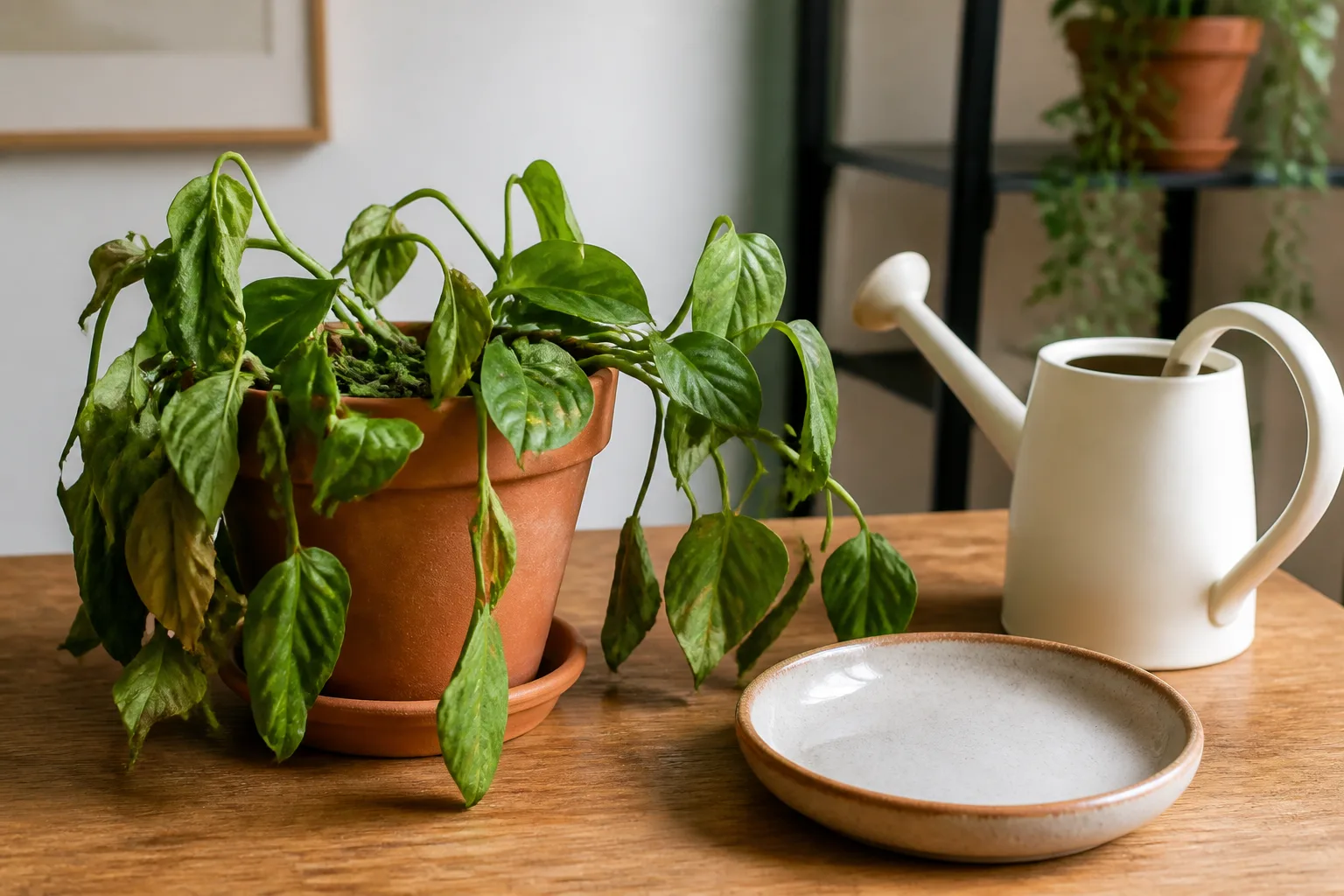
If the soil is dry, water at the base until the root zone is evenly moist and excess drains freely. For a container, empty the saucer after the pot has finished draining. For a garden bed, apply water slowly enough that it soaks in instead of running off, then check several inches down before deciding whether another pass is needed.
Avoid cold shock myths and foliar rescue sprays. The plant needs usable water at its roots, not a leaf shower that evaporates quickly or leaves foliage wet overnight. Wet leaves in still, humid conditions can also create a better environment for disease, while oil or soap sprays on hot leaves can add chemical injury to sun injury.
If the soil is already saturated, improve drainage and airflow instead of adding more water. Colorado State University Extension warns that overwatering and plastic barriers can contribute to oxygen starvation in roots. A wet plant can wilt because damaged roots are not functioning, which is exactly why “water generously” is not a safe diagnosis-free instruction.
What to prune, what to leave, and what to remove
Sunburn makes gardeners want to restore a clean appearance immediately, but a plant is not helped by losing every leaf that looks imperfect. Pruning is a health decision here, not a cosmetic reset.
Keep partly green leaves; remove dead or diseased tissue
Keep a leaf when it still has meaningful green tissue and is not showing a separate sign of infection. Green areas can continue photosynthesis, and the leaf can shade the canopy below it. Epic Gardening’s recovery guidance likewise recommends leaving partly green burned leaves in place because removing them can expose younger leaves and fruit to more heat.
Remove a leaf when it is fully brown, dry, and no longer contributing, or when it has dark spreading lesions, a powdery coating, ooze, or obvious pest activity. Use clean, sharp snips, cut at the leaf stalk rather than tearing, and sanitize the blades between plants when disease is possible. If only the edge is dead, you can leave it or trim the outline for appearance after the plant has cooled; neither choice will restore the brown tissue.
Do not make a major canopy reduction during peak heat. Leaves are part of the protection system, and sudden pruning can expose stems, developing fruit, and previously shaded inner foliage. Wait for cooler conditions and a clear reason to cut, unless a dead or diseased section must be removed promptly.
Treat sunscalded fruit as a harvest decision
Harvest fruit that is ripe or nearly ripe before a sunscalded patch turns soft or begins to rot. A small, dry area on otherwise sound fruit may be a quality issue rather than an immediate safety issue, but fruit with mold, active decay, leaking tissue, or an unpleasant odor should not be eaten.
Remove badly damaged or immature fruit when it is unlikely to finish well. This reduces a source of decay and lets the plant direct resources toward roots, new leaves, flowers, and fruit that is still protected. Do not strip healthy leaves to “expose” fruit to ripen; leaf cover is one of the plant’s best defenses against another sunscald event.
Recovery over the next two weeks
Recovery starts when the damage stops advancing, not when the old brown patch disappears. Dead tissue will remain a scar, so judge progress by the condition of new growth, the firmness of stems, evening recovery from heat wilt, and whether fresh discoloration is still appearing.
Reintroduce stronger light gradually
If the plant was moved from full sun to bright shade, keep it protected until the weather is less extreme and the plant is no longer producing fresh damage. Then increase exposure in small steps, starting with gentle morning light and adding stronger afternoon exposure only after the new leaves remain firm and unmarked.
Plants coming from a greenhouse, indoor room, or shaded nursery need hardening off. Gardening Know How describes gradual acclimation as essential for developing more sun-resistant foliage and notes that the transition commonly takes about two weeks. Use the same principle after an injury: increase exposure over days rather than placing a tender plant straight back into the light that caused the problem.
Watch the angle of the light, not just the number of hours. A plant may tolerate six hours of mild morning sun but scorch under two hours of reflected late-afternoon heat beside a white wall or glass door. If a plant repeatedly burns in one location after careful acclimation, the site is probably a poor fit; choose a permanent spot with morning light, filtered afternoon light, or a more suitable species.
Stabilize roots, moisture, and new growth
For the next several waterings, use the soil and weather as your schedule. Keep the root zone from swinging between bone-dry and saturated, make sure containers drain, and use mulch around outdoor plants to reduce evaporation and soil-temperature swings. Keep mulch away from stems and trunks so the crown stays dry and visible.
Do not fertilize a severely stressed plant simply because it has yellow or pale leaves. Wait until it is hydrated, the weather has moderated, and new growth has resumed; then follow the plant’s normal feeding schedule and label directions. Epic Gardening cautions that excess nitrogen can create fast, weak growth that is more vulnerable to sunburn, pests, and disease.
Inspect the plant once a day for the first few days, then several times a week. Check leaf undersides, stems, fruit, and the soil surface for insects, fungal growth, or a smell that suggests root trouble. If damage continues despite corrected exposure and reasonable moisture, contact a local Cooperative Extension service or plant clinic with clear photos, the plant’s recent history, and a description of the soil and weather.
Prevent the next scorch event
Prevention is mostly about reducing abrupt changes. Choose a site that fits the plant’s mature light and water needs, protect the root zone from rapid drying, preserve enough canopy to shade fruit and stems, and treat every move from low light to high light as an acclimation project.
For containers, rotate the pot gradually instead of moving it from a dim room to a hot balcony in one afternoon. Check whether a dark pot is heating the root ball, whether a decorative cachepot blocks drainage, and whether wind is drying the mix faster than the plant can use it. A plant that is healthy at the nursery may still need a transition period because its previous light, humidity, and watering rhythm were different.
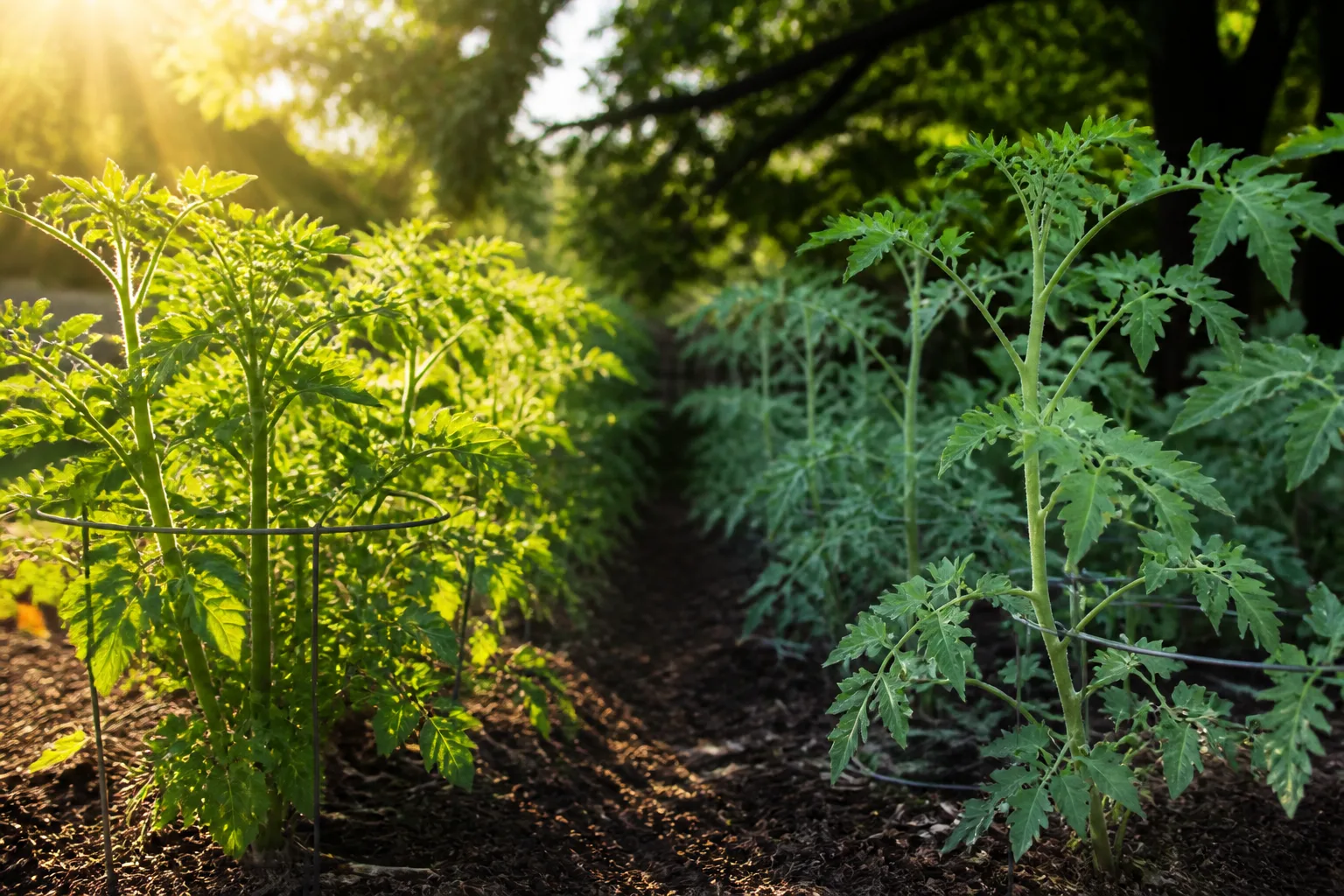
For outdoor beds, use a frame-mounted shade cloth during the hottest part of a heatwave, mulch the root zone, and repair drip lines or compacted soil that leave roots dry. Avoid black plastic laid over the soil in intense heat; NC State notes that some plastic mulches and landscape fabrics can raise a plant’s water demand. Keep an eye on pest and disease pressure too, because defoliation removes the leaf cover that protects fruit.
Do not prune away a plant’s protective canopy just before a hot spell unless safety or disease requires it. If a tree or shrub must be reduced, time the work for the plant and climate, and make selective cuts rather than exposing large sections of bark and inner branches at once. Grow Organic’s sunscald guidance also emphasizes matching shade, moisture, canopy management, and gradual exposure to the site rather than relying on one universal fix.
Protect young trees from seasonal sunscald
Young, thin-barked fruit and ornamental trees need a separate winter plan. Winter sunscald often affects the south or west side when daytime sun warms bark and a freezing night rapidly cools it; the injury can crack, peel, or expose dead tissue. The University of Connecticut explains that young and thin-barked trees are especially vulnerable and that frost cracks can allow disease organisms and canker pathogens to enter.
Apply a light-colored tree wrap in fall before freezing weather, follow the product’s instructions, and inspect it rather than treating it as a set-and-forget bandage. Remove the wrap in spring once freezing nights have passed. Leaving it on through warm weather can keep bark damp, hide insects, or constrict growth; UConn and Colorado State Extension both recommend seasonal removal rather than year-round wrapping.
Do not paint over or seal an existing frost crack or sunscald wound without specific local guidance. Let the tree show you the boundary between living and dead tissue, and call a qualified arborist for a deep trunk crack, extensive peeling bark, a large newly exposed wound, or a tree that threatens a target. A wrap can reduce future exposure; it cannot make dead bark alive again.
Conclusion
Sunburnt plants are not automatically lost, but they do need the right order of care. Shade or move them first, check whether the roots are dry or drowning, water only when the soil calls for it, and leave partly green leaves in place while you prevent another exposure.
The damaged patch will not heal, so measure recovery by what happens next: no new scorch, stable stems, healthy roots, and fresh growth that is acclimated to its light. With steady moisture, protective leaf cover, gradual reintroduction to sun, and seasonal attention to young tree trunks, most plants have a much better chance of growing past one bad day.