Hoya Plant Care: Light, Water, Soil, and Blooms
Keep a hoya healthy and flowering with a simple care routine, troubleshooting table, propagation steps, and seasonal advice.
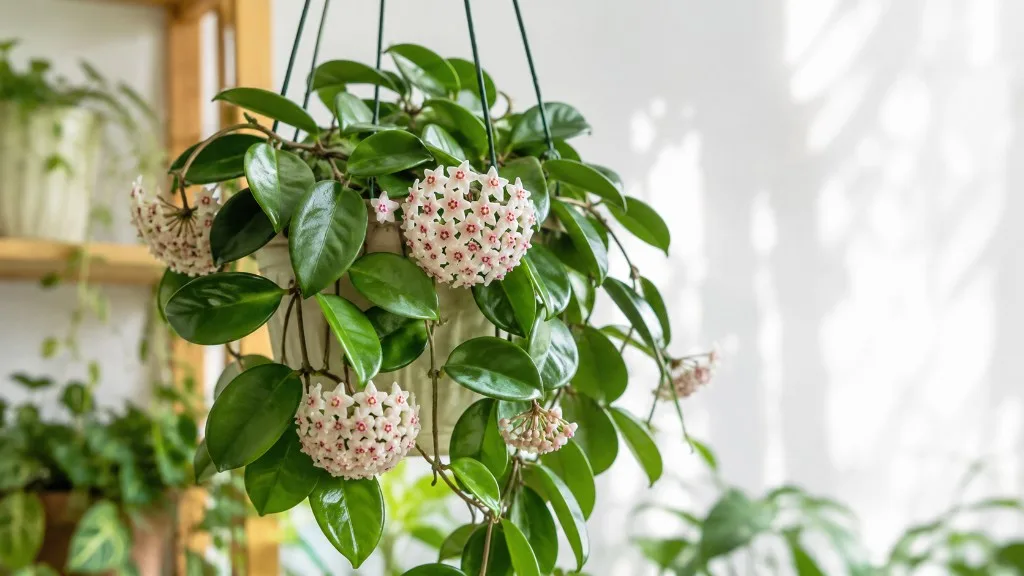
Hoya is a forgiving houseplant with one important condition: its roots need air between waterings. Give it bright filtered light, a chunky mix that drains quickly, and enough time to dry before the next thorough watering, and it can make handsome vines for years. Keep it in a dim corner with a heavy pot of wet soil and the decline may be slow, but the cause is usually clear once you inspect the root zone.
The name covers many plants, from the familiar wax plant (Hoya carnosa) to heart-leaf Hoya kerrii, curly Hoya compacta, and narrow-leaved Hoya pubicalyx. Their needs overlap, but leaf thickness, pot size, light, and indoor humidity change how quickly each plant uses water. The useful approach is to make decisions from the plant and its pot instead of following a rigid weekly schedule.
Start With the Hoya You Have
Most hoyas are evergreen tropical or subtropical vines and epiphytes. In nature, many grow with roots in pockets of organic debris rather than deep, constantly wet ground. That explains why an oxygen-rich medium matters and why a slightly snug pot is often safer than an oversized container full of slow-drying soil.
Hoya carnosa is a sturdy beginner choice with thick oval leaves and vigorous trailing or climbing stems. Hoya pubicalyx is often faster and tolerates brighter light. Hoya kerrii has thick heart-shaped leaves and can be extremely slow as a single-leaf cutting, while Hoya compacta has folded leaves that make pests and dry pockets harder to inspect. Treat the plant in front of you as an individual, not as a label that dictates an exact schedule.
Choose Bright, Usable Light
Place a hoya near a bright east- or west-facing window, or a little back from a strong south-facing window behind a sheer curtain. Several hours of bright indirect light is a useful baseline. Gentle morning sun can deepen leaf color and support flowering; harsh afternoon sun through glass can bleach or scorch thin leaves, especially after a sudden move from a dim store shelf.
Use the plant’s response as your light meter. Long gaps between leaves, small new leaves, and a vine reaching in one direction suggest insufficient light. Pale patches, crisp tan areas, or a hot leaf surface suggest too much direct exposure or an abrupt transition. Move in stages over a week rather than taking a low-light hoya straight into intense sun.
A grow light works well in a dark room. Keep it above and slightly to the side of the plant on a consistent timer, following the fixture’s distance guidance. A lamp cannot compensate for waterlogged roots, but it can provide the energy needed to make sturdy growth and eventually form flowers.
Build an Airy Soil and Pot Setup
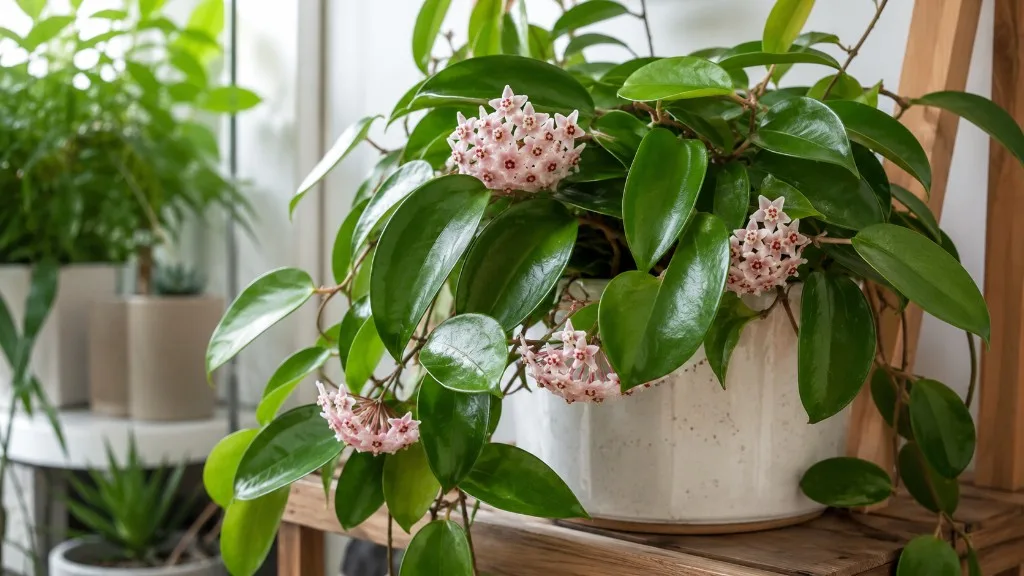
Choose a pot with an open drainage hole and a mix that drains within seconds when watered. A practical blend is roughly two parts quality indoor potting mix or coco coir, one part orchid bark, and one part perlite or pumice. The exact recipe is less important than the result: roots should be held securely while excess water can escape and air can return to the pore spaces.
Avoid garden soil in indoor containers. It compacts, drains unpredictably, and can carry pests. A cachepot is fine, but empty the decorative outer pot after watering so the nursery pot never sits in a reservoir. Terracotta dries quickly; plastic dries slowly. Choose based on your room and habits, not on a claim that one material is universally best.
Water by Root-Zone Dryness
Water thoroughly when the upper portion of the mix is dry and the pot feels noticeably lighter. Pour slowly until water exits the drainage hole, let the pot finish draining, and return it to its saucer. This wets the entire root ball instead of creating a damp ring near the surface.
The interval may be every 7 to 14 days during active growth, but light, pot size, bark content, temperature, and season can shift it substantially. A small hoya in bright light may dry quickly; a large one in a cool room may still be wet after two weeks. Check with a finger or wooden skewer near the center of the root ball rather than watering because a calendar says it is time.
Wrinkled leaves can mean the plant is too dry, but they can also appear when damaged roots cannot take up water. If the mix is wet and the leaves are wrinkled, do not keep adding water. Inspect drainage and roots instead. Healthy roots are generally firm; dark, mushy roots and a sour smell point toward rot and require a reset into fresh, airy mix.
Manage Temperature and Humidity
Normal indoor temperatures suit most hoyas when they are stable and away from drafts. Protect them from cold glass, heating vents, air-conditioning blasts, and sudden temperature swings. A cold, wet pot is much riskier than a slightly dry pot because roots use less water while growth slows.
Moderate humidity helps new leaves unfurl, yet a humidifier is not mandatory in every home. Grouping plants, using a well-ventilated bathroom with good light, or placing a humidifier nearby can help during dry winter air. Keep leaves from staying constantly damp and leave space for air movement; crowded foliage encourages fungal spotting and pests.
In winter, reduce watering frequency as light and growth decline. Do not automatically reduce every watering to a fixed fraction. Check the soil first, then water fully when the plant has reached its new dryness point. Resume regular feeding and more frequent checks when brighter light returns and fresh growth begins.
Feed Without Burning Roots
Hoyas are not heavy feeders, but active vines and flowering plants benefit from regular, diluted nutrition. Use a balanced liquid houseplant fertilizer at half the label strength during spring and summer, usually every three or four waterings. Apply it to already moist soil so concentrated salts do not hit dry roots.
If the plant is newly repotted, severely stressed, or sitting in low light, wait before feeding. Fertilizer cannot repair root rot and can worsen salt buildup when the plant is not growing. Brown tips, a white crust on the mix, or stalled roots after repeated feeding are reasons to flush the pot with plain water and pause fertilizer while you correct light and drainage.
A bloom fertilizer is not a shortcut to flowers. Light, plant maturity, a stable root system, and a natural seasonal rhythm matter more than pushing a high-phosphorus product. Feed for healthy growth first; flowers follow when the plant has enough stored energy and conditions are consistent.
Repot Only When the Plant Needs It
Repot when roots circle densely, water runs straight through because the mix has collapsed, roots emerge from every drainage hole, or the plant dries far too quickly despite reasonable conditions. Move up only one pot size. A giant container adds wet soil around a small root ball and often slows recovery.
If the mix is still open and the plant is growing, leave it alone. Hoyas can flower well when slightly snug, and unnecessary repotting breaks roots and resets the plant’s adjustment period. Refresh the top layer or replace a few inches of depleted mix if the root ball is healthy and the pot is otherwise suitable.
Train and Prune Without Losing Spurs
Trailing hoyas look natural in a hanging basket, while climbing types can be wrapped around a small hoop, ladder, or trellis. Attach vines loosely with soft ties; tight wire cuts into expanding stems. Turn the pot periodically so new growth receives even light and does not become a one-sided curtain.
Prune to control length, remove damaged growth, or encourage branching at a node. Do not cut off short, bare-looking flower spurs after blooms fade. Those persistent peduncles can produce new umbels in later seasons. Removing them may eliminate a future flowering point even when the rest of the plant is healthy.
Propagate From Stem Cuttings
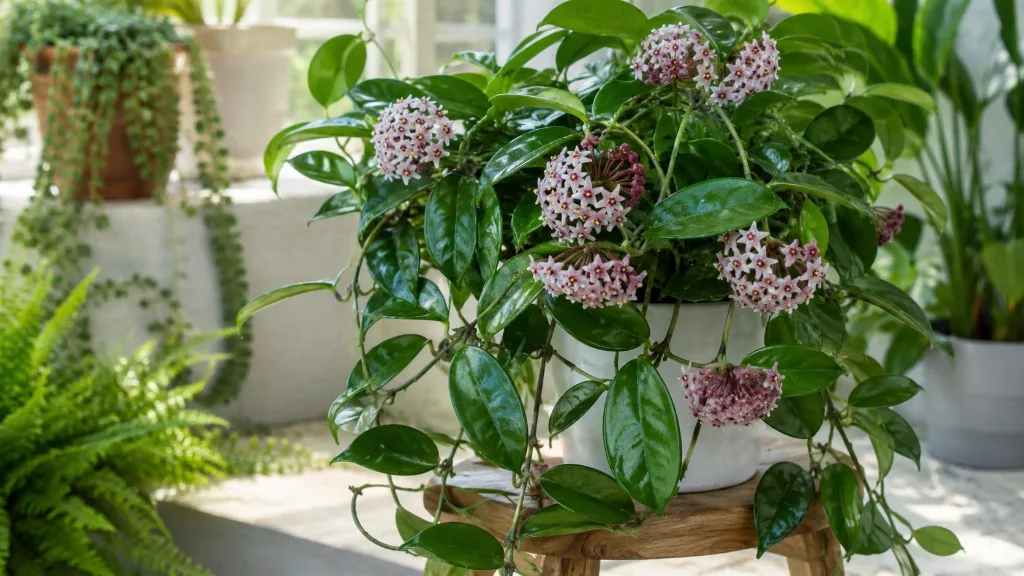
Choose a healthy stem with at least two nodes and one or two leaves. Make a clean cut just below a node, remove a lower leaf if needed, and let the cut surface air-dry briefly while you prepare the medium.
Root the cutting in lightly moist perlite, sphagnum, or a small airy potting mix. Keep it warm in bright indirect light and cover it only if you can ventilate it; a sealed, soggy enclosure invites rot. Water when the medium is nearly dry rather than keeping it saturated. New roots may form in several weeks, while visible top growth can take longer.
Water propagation also works for many hoyas. Keep a node under water and the leaves above it, changing the water when it becomes cloudy. Transfer the cutting when roots are a few centimeters long, taking care to keep the new mix evenly but lightly moist during the transition. A cutting that stalls is not necessarily dead; warmth and stable light matter more than constant disturbance.
Encourage Reliable Flowering
Flowering depends on maturity and conditions, not on a single fertilizer trick. Give a mature plant bright light, allow a sensible drying cycle, avoid repeated moves, and keep the flower spurs intact. Some hoyas bloom young; others need several seasons of steady growth before they have enough energy to set umbels.
If a plant produces leaves but no flowers, first increase usable light gradually. Next, confirm that the roots are not staying wet and that the plant is not receiving excessive nitrogen. A mild seasonal difference in temperature can help some plants recognize a rest period, but do not expose a warm tropical hoya to cold drafts as a forced bloom treatment.
Hoyas may drop buds after a sudden move, drought, root disturbance, or abrupt temperature change. Stabilize the environment instead of changing three variables at once. Once buds form, avoid rotating the plant dramatically or letting the pot swing between bone-dry and soaked.
Handle Pests and Root Rot
Inspect new hoyas before placing them beside a collection. Mealybugs hide at nodes and leaf joints; scale insects appear as fixed bumps; spider mites cause fine stippling and webbing in dry conditions. A weekly look at leaf undersides and stem joints catches most infestations before they become a whole-room problem.
For a small infestation, isolate the plant and remove visible insects with a cotton swab or gentle water spray. Insecticidal soap can help when applied exactly as its label directs, including coverage of leaf undersides. Test a small area first, keep treated foliage out of harsh sun, and repeat only at the recommended interval. Avoid homemade detergent mixtures that can burn leaves.
Root rot is usually a moisture-and-air problem. Remove the plant, cut away soft roots with clean tools, and repot into fresh dry mix in a clean pot. Do not water on a schedule while the plant recovers; wait until the new mix has dried appropriately and the remaining roots begin to function again.
Diagnose Yellow Leaves and Wrinkles
Use symptoms with soil moisture and recent history. One old yellow leaf can be normal aging, while several yellow leaves from the base upward often signal wet roots, poor light, or a major change in temperature. A soft stem base is urgent; a firm stem with a few yellow leaves is a slower correction problem.
| Symptom | More likely cause | First action |
|---|---|---|
| Yellow leaves with wet mix | Overwatering or poor drainage | Pause watering and inspect roots |
| Wrinkled leaves with dry mix | Underwatering or a small root ball | Water deeply, then shorten the dry interval |
| Wrinkled leaves with wet mix | Root damage | Unpot and inspect for rot |
| Long gaps between leaves | Insufficient light | Move brighter gradually |
| Brown bleached patches | Sudden intense sun | Filter light and reduce heat |
| Sticky residue or white clusters | Sap-sucking pests | Isolate and inspect nodes |
| Buds falling after relocation | Environmental shock | Stabilize light, water, and temperature |
Bare vines are not automatically a reason to cut the plant back hard. If the stems are alive, improve light and care, then prune selectively at nodes to shape new growth. If a vine is dry and brittle from tip to base, remove it with clean shears and focus on living sections.
Move Hoya Outdoors Safely
In warm, frost-free climates, hoyas can spend the growing season outdoors in bright shade or gentle morning sun. Acclimate over 7 to 14 days, beginning in deep shade and adding brighter exposure gradually. Keep pots above ground and away from standing water, and check for insects before bringing them inside.
In cooler climates, bring hoyas indoors before nights become cold. Outdoor rain may have changed the watering rhythm, and the plant may carry hitchhiking pests. Rinse foliage gently, inspect every node, quarantine the plant from your indoor collection, and give it a stable bright location while it readjusts.
Seasonal Care Checklist
In spring, refresh the light position, inspect the mix, and begin feeding only after new growth appears. In summer, check containers more often because heat and bright light increase water use, but shade plants that show bleaching or leaf scorch. In autumn, reduce fertilizer as growth slows and inspect for pests before heating systems dry the room. In winter, protect roots from cold windows and water according to actual dryness rather than habit.
The best routine is simple: check light, lift the pot, inspect the leaves, and change one variable at a time. That sequence prevents the common mistake of treating every yellow leaf as thirst or every stalled vine as a fertilizer problem.
Conclusion
The reliable way to grow hoya is to manage the root zone first. Use a porous mix and a draining pot, provide bright filtered light, water thoroughly only after the mix has partly dried, and adjust the interval as seasons and room conditions change. Feed lightly during active growth, protect flower spurs, and treat pests early rather than waiting for vines to weaken.
Once you stop asking for a universal watering calendar and start reading the plant, hoya care becomes much simpler. A healthy hoya may grow slowly, pause in winter, or take time to flower, but consistent conditions give it the best chance to become the long-lived, trailing or climbing houseplant it can be.