Epsom Salt for Plants: When It Actually Helps
Epsom salt can help a confirmed magnesium deficiency, but it is not a complete fertilizer. See the test-first method, risks, and better fixes for your garden.
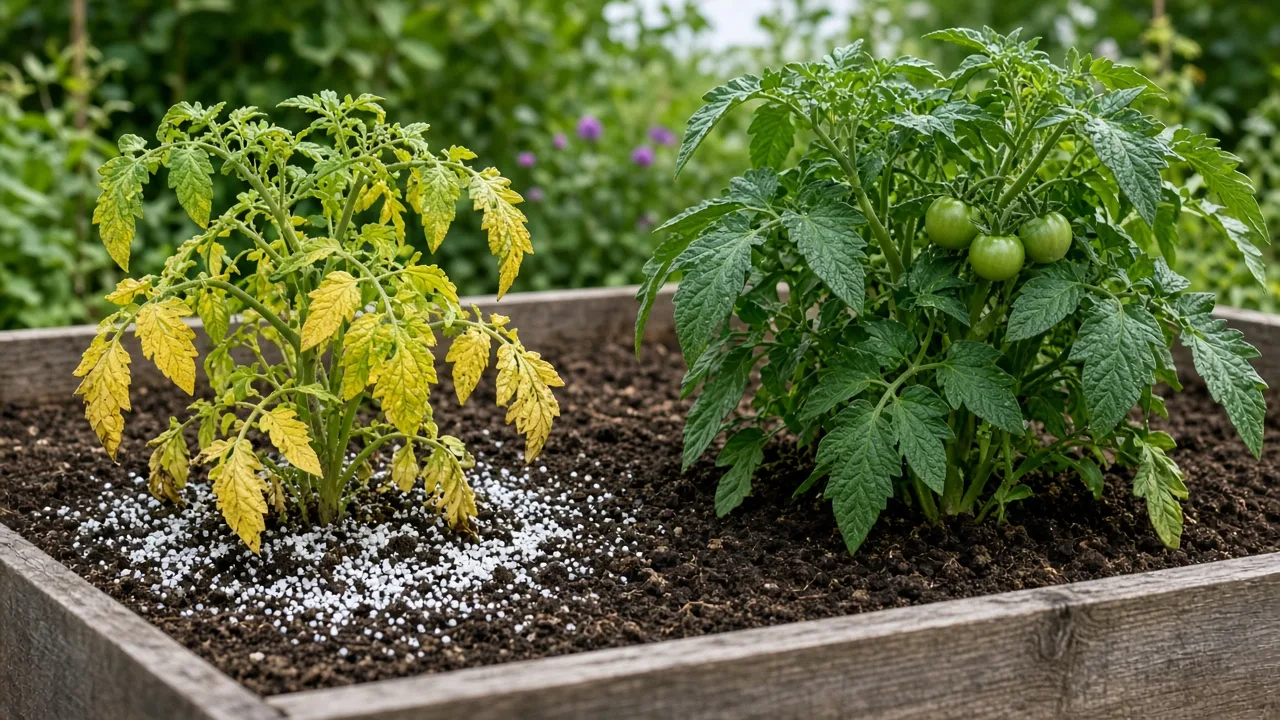
Epsom salt has a compelling story: dissolve a cheap white crystal, water it around a struggling plant, and watch the leaves green up. The problem is that the story skips the most important question: does the plant actually lack magnesium?
For most home gardens, the sensible answer is to hold off. Epsom salt is magnesium sulfate, so it can supply magnesium and sulfur when a soil test or a well-supported diagnosis shows that one of those nutrients is short. It is not a complete fertilizer, it does not cure pests, and it is not a reliable treatment for every yellow leaf, weak bloom, or damaged tomato.
That conditional answer matters because a soluble amendment is not automatically harmless. If your soil already has enough magnesium, adding more can disturb the balance of other nutrients, increase salt levels around roots, and wash beyond the bed. This guide gives you a way to decide what to do before you reach for the carton.
The short answer: use it only for a confirmed need
Epsom salt can be good for plants when the root zone is genuinely deficient in magnesium and the application is matched to the soil, crop, and test recommendation. If you have not established a deficiency, it is usually a poor first move; improve watering, drainage, light, organic matter, or ordinary fertilization according to the actual problem instead.
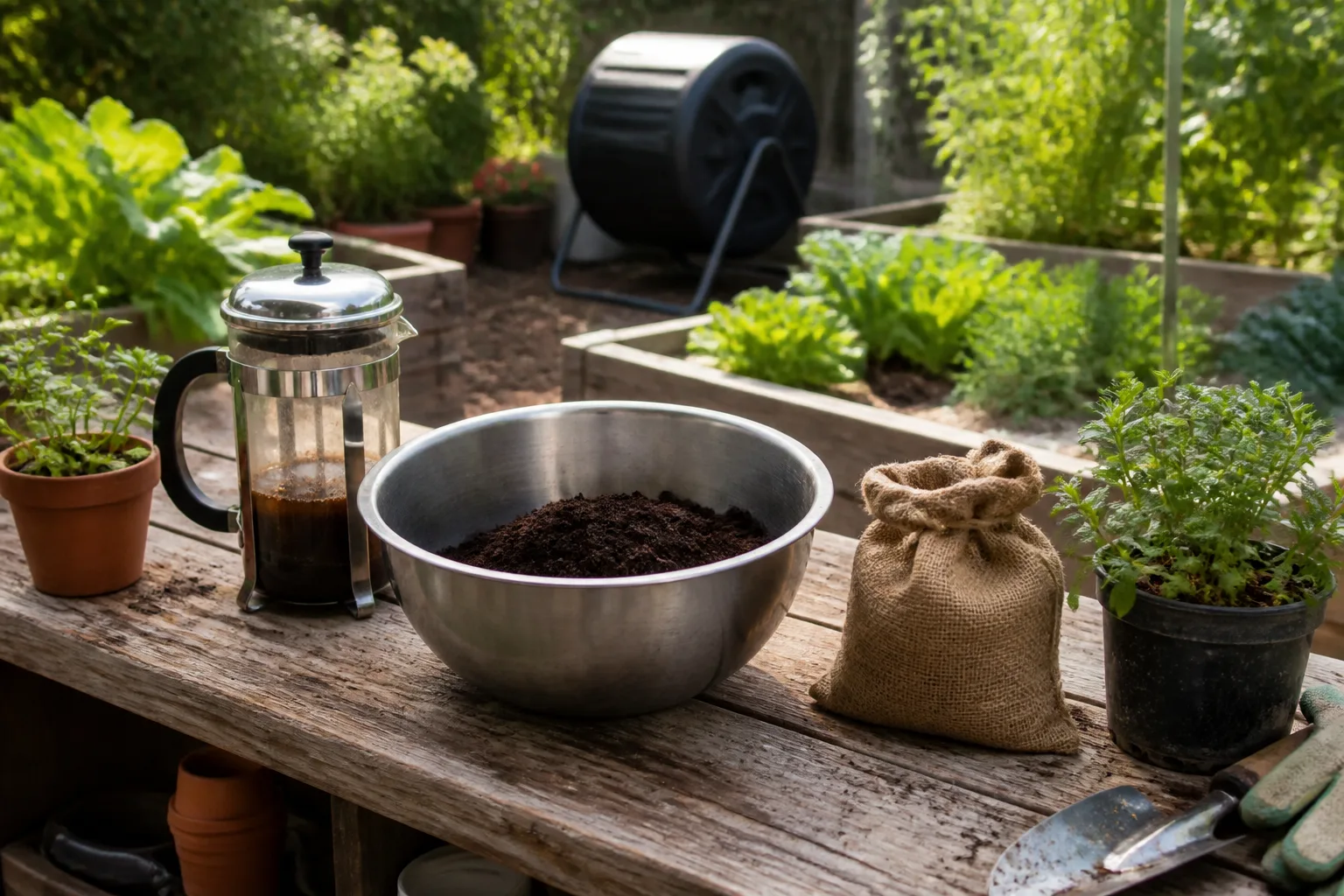
The quickest decision rule is simple:
- Do not treat a symptom with Epsom salt by default. Yellowing is a clue, not a diagnosis.
- Check the growing conditions. Roots cannot use nutrients well in waterlogged, bone-dry, compacted, or poorly lit conditions.
- Test the soil when the answer will change your action. Ask for magnesium, pH, and soluble salts, and tell the lab what you are growing.
- Use the recommended amendment, rate, and timing from the report or local extension guidance. A recipe copied from a different crop or region is still guesswork.
This test-first approach is also the guidance from the University of Saskatchewan’s gardening program, which says Epsom salts are not recommended unless a soil test identifies magnesium deficiency. Its advice is especially relevant to tomatoes: adding magnesium when it is not needed can make a calcium-uptake problem worse rather than prevent it. See Epsom Salts are Not Recommended for the extension team’s explanation.
What Epsom salt actually adds to soil
Epsom salt is magnesium sulfate, commonly written as MgSO4. It dissolves readily in water and separates into magnesium and sulfate ions that can enter the soil solution. That explains why it can act quickly when the right nutrient is missing—and why careless repeat applications can move quickly through or accumulate in the root zone.
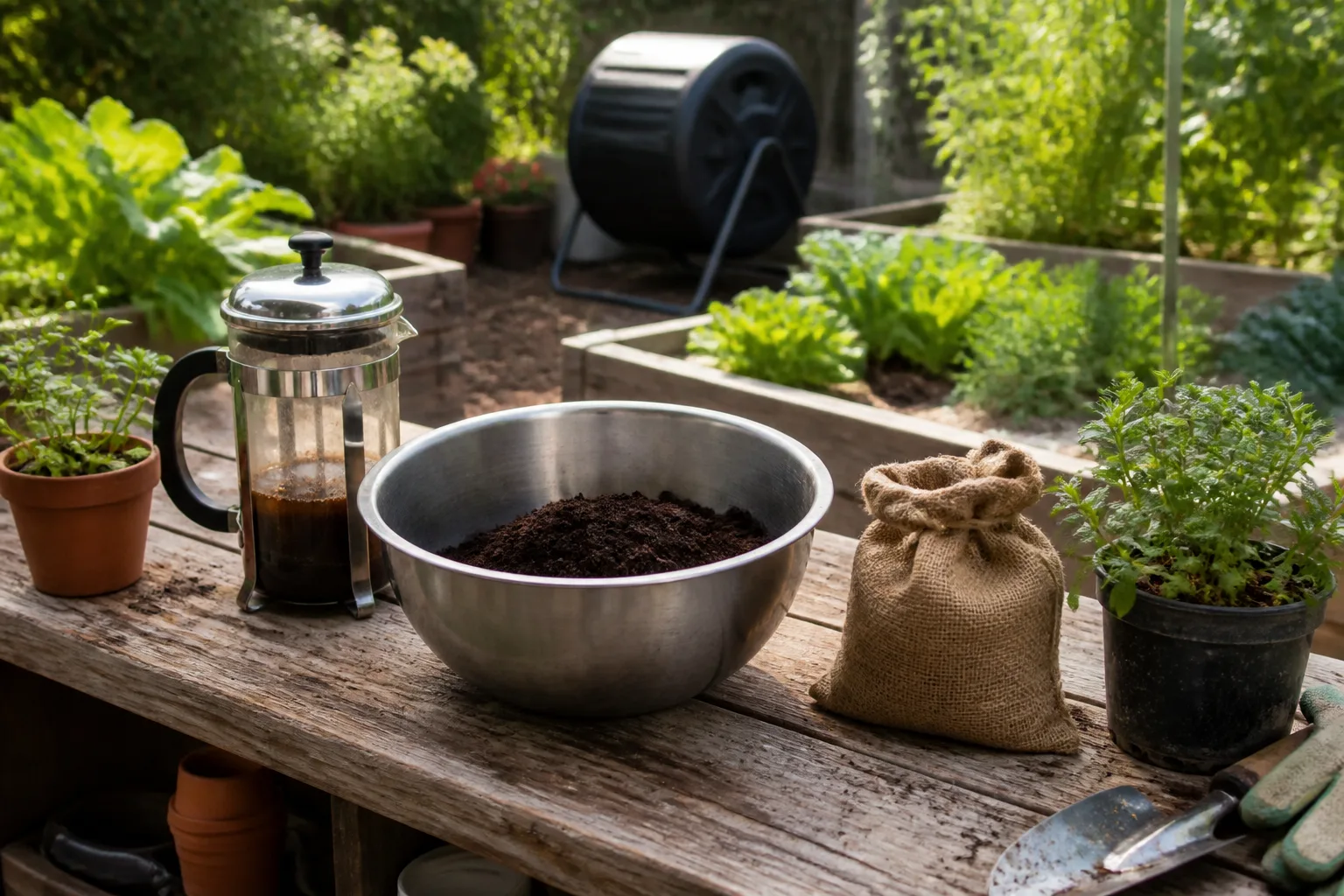
Magnesium has a specific job inside the plant
Magnesium is a secondary macronutrient, not a decorative extra. A magnesium atom sits at the center of each chlorophyll molecule, so the nutrient is closely tied to the plant’s ability to capture light and make sugars through photosynthesis. It also participates in enzyme activity and the movement of energy within the plant.
The useful practical translation is not “more magnesium means more growth.” It is “a plant that lacks magnesium may struggle to keep older leaves green and productive.” Once the plant has enough, extra magnesium does not keep improving photosynthesis in a straight line. Nutrient management is about sufficiency, not a race to add more.
Plants take up magnesium as an ion from the soil solution, and availability depends on more than the total amount present. Soil pH, moisture, texture, root health, and the balance of other cations all shape whether roots can access it. A lab report that shows magnesium is present is therefore not the same as proof that your plant is experiencing a magnesium deficiency; the report has to be interpreted alongside crop and soil conditions.
Sulfur is useful, but Epsom salt is not a complete fertilizer
Sulfur helps plants build certain amino acids and proteins, but Epsom salt supplies no nitrogen, phosphorus, or potassium. Those three nutrients are the headline numbers on a complete fertilizer because plants need them in larger amounts for leaf growth, roots, flowering, fruiting, and general metabolism.
| Product or amendment | What it mainly supplies | What it cannot replace |
|---|---|---|
| Epsom salt | Magnesium and sulfur | A complete N-P-K fertilizer, compost, or a crop-specific correction |
| Complete fertilizer | Nitrogen, phosphorus, potassium, sometimes secondary and micronutrients | A soil test, good drainage, or correct watering |
| Finished compost | Organic matter plus a variable, broad nutrient contribution | A precise treatment for a measured magnesium shortage |
| Dolomitic limestone | Calcium and magnesium while raising pH | A neutral magnesium source for acid-loving plants |
That distinction is why adding Epsom salt to a hungry container plant often disappoints. If the plant needs nitrogen or potassium, magnesium sulfate does not supply those nutrients. If the potting mix is depleted, use a fertilizer formulated for containers and follow its label rather than trying to assemble a complete feeding program from bath salts.
Why yellow leaves are not proof of magnesium deficiency
Gardeners often notice yellowing, remember that magnesium is tied to chlorophyll, and connect the two. Sometimes that connection is correct. Just as often, the plant is reacting to excess water, drought, poor light, root damage, cold soil, high pH, a different nutrient shortage, or ordinary aging.
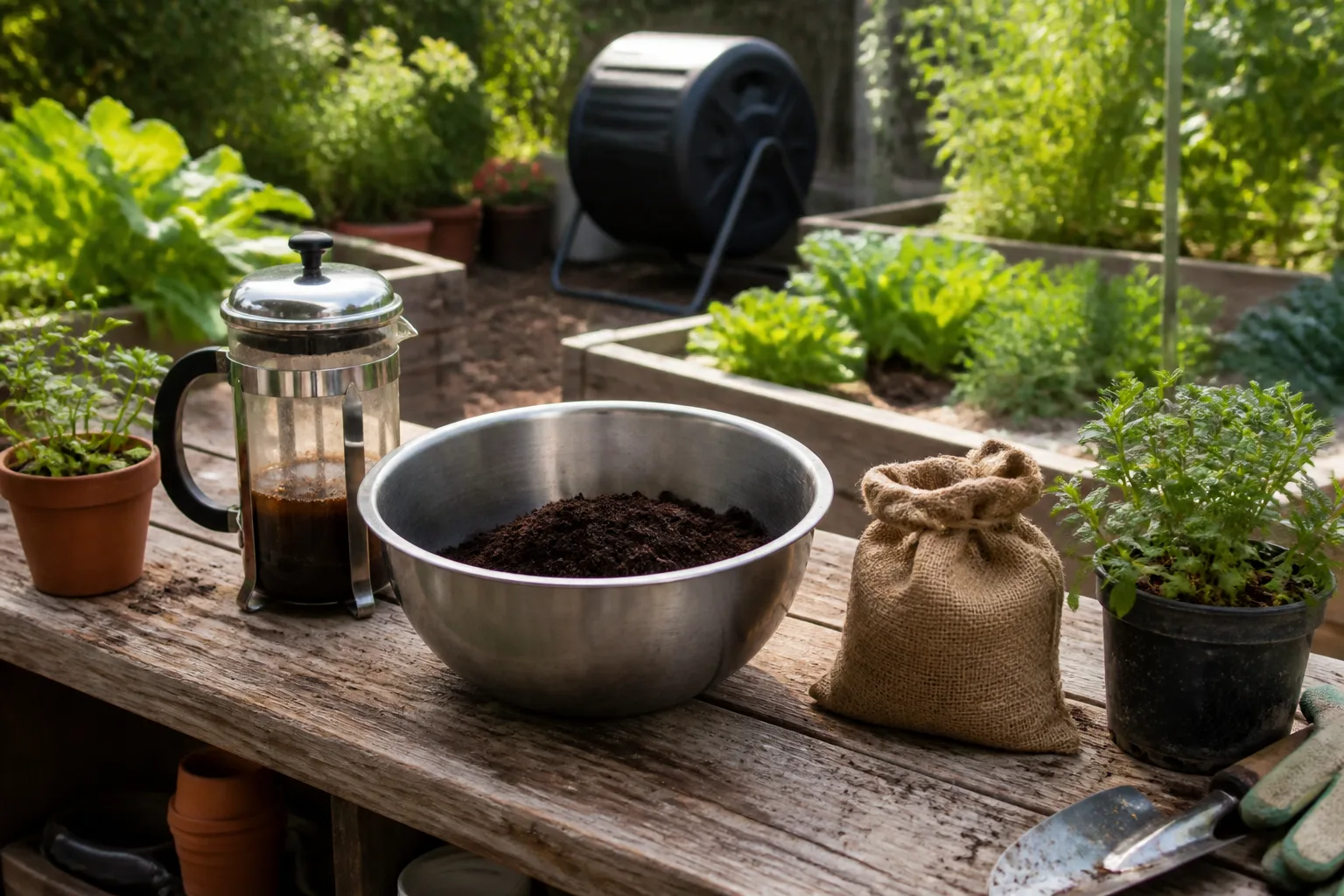
Read the pattern before reaching for amendments
Classic magnesium deficiency often starts on older, lower leaves because magnesium is mobile inside the plant. The plant can move some of the nutrient from older tissue toward new growth, leaving older leaves pale between the veins while the veins remain comparatively green. In more advanced cases, leaves may develop reddish or brown tints, dead patches, or drop early.
The Royal Horticultural Society’s nutrient-deficiency guide describes this interveinal yellowing pattern and notes that magnesium deficiency is more common in light, sandy soils and can be triggered by overuse of high-potassium feeds. That is a more useful clue than the vague instruction to “add Epsom salt when leaves turn yellow.”
Use the pattern as a reason to investigate, not as permission to dose. Ask yourself whether the yellowing is on old leaves or new leaves, whether the veins remain green, whether the leaf edges are scorched, whether the soil stays wet, and whether the whole plant is pale. A plant with uniformly pale new growth points you toward a different set of possibilities than an older leaf with a green network of veins.
Rule out water, roots, light, and pH first
Nutrient symptoms are easiest to misread when roots are stressed. In a saturated bed or pot, roots have too little oxygen and may not absorb nutrients normally. In a very dry root ball, the plant may have nutrients in the soil but no water movement to carry them into the root system. Compaction, root rot, and a pot with blocked drainage can create the same “the plant needs fertilizer” impression.
Light is part of the diagnosis too. A plant kept far from a window or shaded by taller crops may produce pale, weak growth even when the soil chemistry is fine. Cold roots can also slow uptake, while heat and irregular watering can cause premature leaf drop or fruit disorders that resemble deficiency.
Soil pH changes nutrient availability. Extremely acidic or alkaline conditions can lock up nutrients, and adding magnesium does not solve a pH problem. The RHS notes that plants in very acidic, alkaline, and sandy soils are more likely to show deficiency symptoms, while issues such as drought and waterlogging can mimic those symptoms. Correct the growing environment before stacking amendments on top of a mystery.
When Epsom salt can make sense
There is a legitimate, narrower use for magnesium sulfate: a confirmed magnesium deficiency in a soil or production system where magnesium sulfate is an appropriate source. This can occur in intensively cropped soil, very light soil where nutrients leach readily, or a container and greenhouse setting with a documented imbalance. It is a correction tool, not a routine tonic.
A confirmed deficiency in the right growing context
The strongest case has three parts. First, the soil or plant analysis points to inadequate magnesium or a nutrient-balance problem consistent with it. Second, the crop and the growing conditions make the interpretation plausible. Third, the application is based on the report, product label, or local extension recommendation rather than a universal tablespoon schedule.
The RHS gives one example for long-term correction on light, free-draining soils: 30 grams of magnesium sulfate per square meter for a confirmed deficiency. It also describes a dilute foliar option for short-term correction. Those are examples from a specific advisory context, not a blank check for every garden, plant, climate, or product. A U.S. vegetable bed, an acidic shrub border, and a small indoor pot do not share the same root volume or chemistry.
Soil type changes the risk. Sandy soil has larger pores and can lose soluble nutrients through leaching, but that does not mean it needs a standing supply of Epsom salt. Clay or poorly drained soil may hold salts and nutrients differently. An acid-loving plant may need a magnesium source that does not push pH upward, while dolomitic limestone could be the wrong choice even if it contains magnesium.
High-potassium feeding is another important edge case. Potassium and magnesium can compete for uptake, so repeated use of a high-potassium fertilizer may contribute to magnesium deficiency in some situations. The answer is not automatically “add both”; it may be to stop overfeeding potassium, test the soil, and correct the imbalance with the smallest effective change.
How to test before you treat
A soil test is not overkill for an amendment decision. It is the fastest way to replace a symptom-based guess with information about pH, nutrients, and sometimes soluble salts. A home test strip may help with a rough pH check, but it rarely gives you the full picture needed to decide whether magnesium sulfate belongs in the bed.
Take a representative soil sample
Start by separating areas that are managed differently. Sample a tomato bed separately from a lawn, a rose border, or soil beside a driveway where de-icing salt may have accumulated. Do not include surface mulch, fertilizer granules, manure, roots, or a single unusual patch in the sample.
Use a clean trowel and take several small cores from the active root zone across the area. Mix those subsamples in a clean plastic bucket, remove stones and plant debris, and send the amount requested by your local university or regional laboratory. If the bed contains a visibly different section—wet corner, raised bed, sandy fill—send separate samples rather than averaging unlike soils together.
When you submit the sample, name the crop or plants you are growing and describe the symptom, irrigation pattern, and recent fertilizer use. The same nutrient number can mean different things in a vegetable crop, a lawn, an ornamental shrub, or a potting mix. Ask the lab whether its standard panel includes magnesium and soluble salts, and whether it reports the units and interpretation range clearly.
Read the report as a set of decisions. If magnesium is adequate, Epsom salt is not the answer; investigate water, roots, pH, light, or another nutrient. If magnesium is low, follow the recommended source and rate. If the report shows high salts or an unusual potassium/calcium balance, adding another soluble salt without guidance can deepen the problem.
Better fixes for common garden goals
Many Epsom-salt questions are really questions about a desired result: bigger tomatoes, greener roses, more flowers, or a houseplant that has stopped growing. Start with the goal and address the limiting factor instead of treating the product as the goal.
For tomatoes and peppers, fix the root zone first
Epsom salt is frequently sold as a tomato booster and a defense against blossom-end rot. The second claim is especially misleading. Blossom-end rot is a calcium-distribution problem in developing fruit, and inconsistent water supply is a common trigger; a soil can contain calcium while the plant fails to move enough of it to fast-growing fruit.
The University of Saskatchewan guidance warns that Epsom salt does not prevent blossom-end rot and could make the situation worse by adding magnesium where calcium uptake is already the issue. For tomatoes and peppers, use a sequence that protects the root zone: mulch the soil surface, water deeply and consistently, avoid letting containers swing from bone-dry to saturated, and do not overfertilize with nitrogen or potassium.
If a soil report shows a real calcium or magnesium issue, correct the documented issue. Do not add lime, gypsum, Epsom salt, or a “blossom booster” simply because fruit has a dark patch. Each amendment changes the chemistry differently, and a moisture problem will continue even after the chemistry is adjusted.
For roses and ornamentals, match the remedy to the soil
Roses, gardenias, rhododendrons, and other ornamentals are common targets for Epsom-salt advice because yellow leaves are visually dramatic. But the same yellowing can come from winter damage, root stress, iron availability, high pH, drought, or normal seasonal change. GardenDrum’s discussion of gardenias is a useful reminder that a familiar symptom can be interpreted differently by experienced growers in different climates; see its case discussion for the practical context.
Give an ornamental what it is missing. Acid-loving plants need a suitable pH and an appropriate fertilizer, not a random dose of dolomitic lime. A rose in compacted soil needs better root conditions, organic matter, and consistent moisture more than it needs a soluble crystal. Pruning, light, temperature, and disease pressure may be more important than any micronutrient.
If an analysis confirms magnesium deficiency, use a measured correction and observe new growth rather than expecting damaged old leaves to become perfect again. A successful treatment should show up as healthier emerging foliage and improved growth over time, not an overnight transformation that encourages repeated spraying.
For containers and houseplants, use a real container fertilizer
Containers are a special case because the root zone is small and the mix may have little nutrient reserve. A potted plant with pale leaves can genuinely need feeding, but Epsom salt supplies only two nutrients and can add soluble salts without addressing nitrogen, phosphorus, potassium, or micronutrients.
Use a fertilizer labeled for houseplants or the crop, dilute it according to the package, and apply it only when the plant is actively growing and the mix is appropriately moist. If the pot has a crusty white deposit on the surface or rim, pause feeding and assess water quality, fertilizer buildup, drainage, and root health. Repeatedly adding Epsom salt is not a substitute for flushing or repotting when salts have accumulated.
Containers also magnify dosing errors. One spoonful in a large outdoor bed is not equivalent to one spoonful in a six-inch pot. The smaller the root volume, the more important it is to use a product intended for that setting and to measure rather than improvise.
If a test shows magnesium deficiency
Once the test confirms a shortage, treat the result as a small soil-management project. Note the crop, soil texture, pH, recent fertilizer history, and drainage before choosing the product. Your goal is to correct the deficiency without creating a new imbalance.
For an in-ground bed, incorporate only the recommended source and amount at the recommended time. Water normally afterward; do not saturate the area in an attempt to force the amendment downward, because soluble nutrients can move into drainage water. Keep a simple record of what you applied and when so a later soil test is meaningful.
For a foliar application, be more cautious. Leaves can absorb nutrients, but concentration, weather, leaf tenderness, and spray coverage affect the risk of spotting or burn. Avoid spraying in strong sun, heat, drought stress, or on a plant with damaged foliage, and do not assume a foliar spray replaces the root-zone correction. If the label or extension recommendation does not clearly support foliar use for your plant, choose the soil-directed route or ask a local extension professional.
Then watch the new growth. Old chlorotic leaves may not recover, so judging the treatment by a damaged leaf can lead to unnecessary repeat applications. If new leaves remain affected, the diagnosis may be wrong, the pH may still limit availability, the roots may be stressed, or another nutrient may be involved.
Epsom salt mistakes and environmental costs
The most common mistake is using Epsom salt as insurance. A healthy plant does not become more complete, more fertile, or more pest-resistant just because magnesium was added. The second mistake is repeating the treatment on a schedule copied from a social post or a product page without testing the soil or considering the crop.
Other avoidable errors include:
- putting dry crystals directly against a stem or into a small planting hole;
- using Epsom salt as a weed killer, insecticide, or disease treatment;
- confusing blossom-end rot with magnesium deficiency;
- spraying leaves in hot weather or at a strong concentration;
- adding dolomitic lime to an acid-loving plant because it contains magnesium;
- feeding an already stressed, waterlogged, or rootbound plant before fixing the roots;
- adding magnesium after a high-potassium fertilizer without checking whether potassium is the real imbalance.
Epsom salt is highly soluble, so excess does not stay neatly where you intended. It can contribute to salt buildup in poorly drained beds and containers, compete with other nutrients, or move with irrigation and rain. Fine Gardening’s soil-care guidance explains the broader principle: salts in a root zone can be reduced by deliberate flushing only when drainage is good, while mulch and better soil structure help protect roots and soil life. Flushing a poorly drained bed can simply move the problem elsewhere.
Empress of Dirt also makes the important environmental point in its Epsom-salt myth review: a product can be inexpensive and familiar while still being unnecessary, and repeated soluble applications can reach waterways. One gardener’s small dose is not a catastrophe, but “it probably cannot hurt” is a weak standard when the plant may not benefit at all.
A practical decision tree for this weekend
If you are standing beside a yellow plant with a carton of Epsom salt, use this sequence:
First, inspect the root zone. Is the soil wet for days, bone-dry, compacted, or poorly drained? Is the plant rootbound? Fix the obvious water or root problem before feeding.
Next, read the symptom. Older leaves with green veins and interveinal yellowing make magnesium worth investigating. Yellow new leaves, brown edges, wilt, spots, or whole-plant pallor point to other possibilities as well. Take a photo and note whether the symptom is spreading.
Then check what has already gone into the soil. Record fertilizer products, compost, lime, manure, tap water, and any previous Epsom salt. A nutrient problem can come from excess as easily as from shortage.
Test if the result will change your action. For a garden bed, send a representative soil sample. For a houseplant, start with the care history, drainage, light, water quality, and a measured container fertilizer; if the issue persists, seek a local diagnostic service rather than repeatedly adding salts.
Apply only a supported correction. If magnesium is adequate, do not use Epsom salt. If it is low, follow the test report or local extension recommendation, make one change, and observe new growth before making another.
Keep the basics working. Healthy roots, suitable light, consistent moisture, good drainage, organic matter, and a complete fertilizer when needed will solve far more plant problems than a pantry shortcut.
Conclusion
Epsom salt is neither a miracle plant food nor useless in every circumstance. It is a soluble source of magnesium and sulfur that can help a plant with a documented magnesium deficiency, but it cannot replace a complete fertilizer or correct poor watering, bad drainage, unsuitable pH, weak light, root damage, or blossom-end rot caused by moisture stress.
For an untested garden, the best first move is to wait, inspect the root zone, and order a soil test when the answer matters. For tomatoes, roses, and houseplants, focus on the actual limiting condition; for confirmed deficiency, use a measured, context-specific correction and watch new growth. That is how you get the possible benefit of magnesium without turning a popular home remedy into an avoidable soil problem.



