Fata Morgana Scabiosa: How to Grow It
Learn how to grow Fata Morgana scabiosa with the right sowing date, sun, water, support, deadheading, and cutting tips for creamy summer blooms.

Joanna Gaines’s summer-garden standout is not a rare botanical mystery. It is Fata Morgana scabiosa, a named pincushion-flower cultivar with soft creamy-apricot blooms, tall wiry stems, and the kind of movement that makes a planting feel relaxed rather than arranged. In her original Magnolia garden essay, Gaines describes discovering it after another scabiosa she expected to grow failed to bloom.
That surprise is part of the appeal, but it is not the whole growing story. Fata Morgana is easy to enjoy when it has sun, drainage, steady moisture, and timely cutting; it is also tall enough to lean, sensitive enough to resent saturated soil, and often confused with perennial scabiosas that have different habits. The useful lesson is to borrow Gaines’s observation—grow it as a generous, slightly wild cut flower—while giving the plant a more deliberate start and support plan.
Why Fata Morgana Scabiosa Stands Out
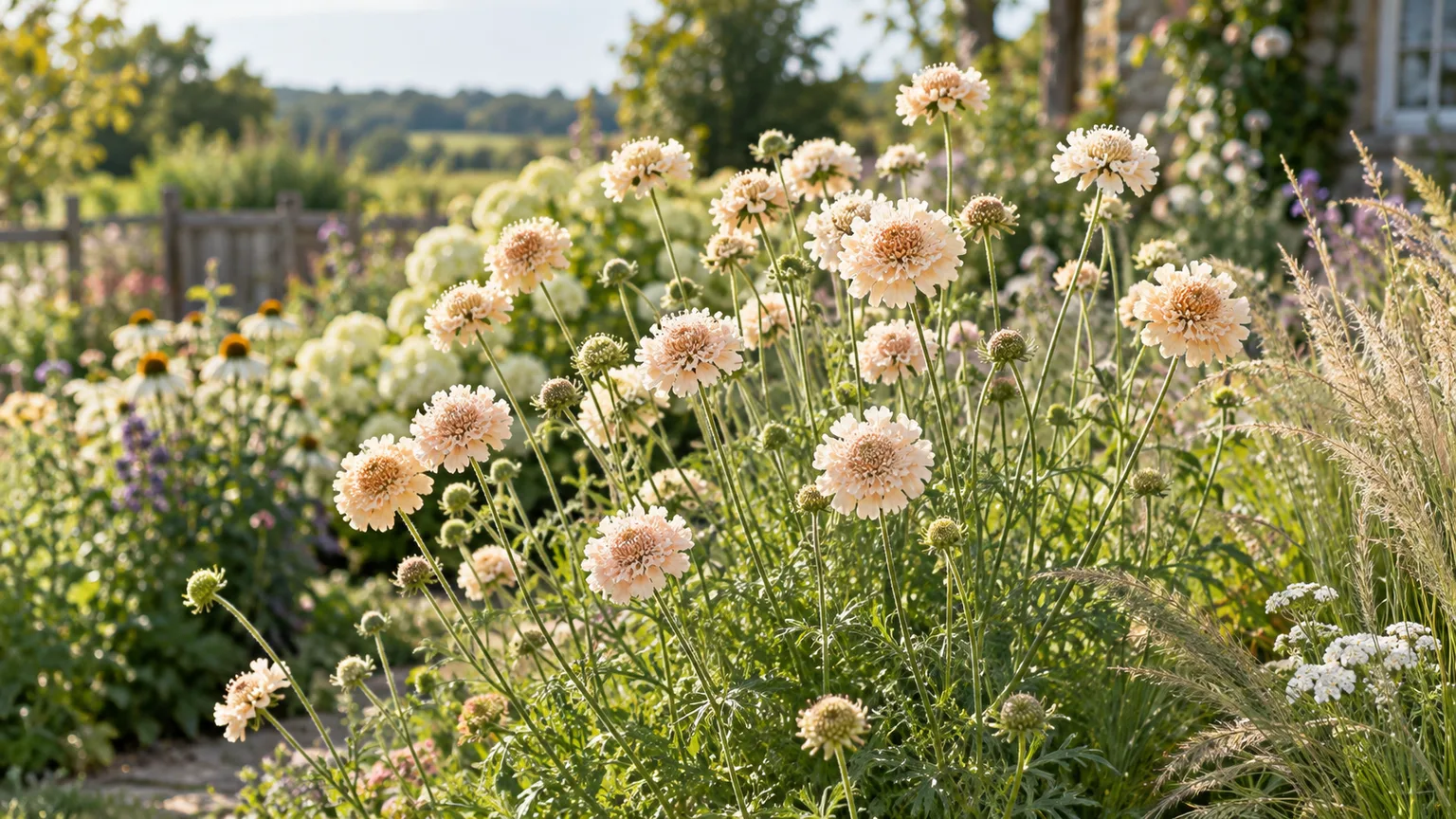
Fata Morgana has a color that bridges a formal border and a cottage garden. The flower heads are generally about 1 1/2 to 2 1/2 inches across, with creamy apricot tones that can read as buttercream, blush, or faded peach depending on the light. Set above thin stems and airy foliage, the blooms do not form a heavy wall of color; they bob, weave, and fill gaps between bulkier plants.
The cultivar also earns its place in a cutting garden. Johnny’s Selected Seeds describes Fata Morgana as an open-pollinated annual with 24- to 36-inch stems, a 90- to 100-day window, and flowers suited to bouquets. That combination explains why a few plants can feel more generous than their footprint suggests: each plant contributes vertical stems, pollinator activity, and a succession of flowers rather than one short flush.
Gaines’s own method was simple: full sun, evenly moist soil, compost tea every other week, and continual cutting of mature flowers. She also noticed the cost of that exuberance—plants can become top-heavy—and considered a trellis, fence ties, nearby shrubs, or bamboo for the following season. Those observations are a good baseline, but your climate, soil, and planting date will determine whether Fata Morgana looks upright and abundant or tall and tangled.
What Fata Morgana Actually Is
The plant’s full botanical name is Scabiosa atropurpurea ‘Fata Morgana’. It is commonly sold as pincushion flower and sometimes grouped with the older common name mourning bride. The rounded flower head is made of many small florets, with a pin-like center that gives the plant its familiar name.
The word scabiosa covers more than one garden behavior. The genus includes annuals, biennials, and perennial species, and a perennial such as Scabiosa caucasica should not be used as a care template for a tall annual cultivar. The Royal Horticultural Society’s profile for ‘Fata Morgana’ confirms the accepted cultivar name, while the cultivar-specific growing information from Johnny’s lists it as an annual.
Annual or Perennial? Read the Label Carefully
For planning purposes, treat Fata Morgana as a one-season annual. The original Magnolia essay calls it a perennial, but a current seed listing for this specific S. atropurpurea cultivar identifies it as annual; the broader genus is where the perennial confusion comes from. In a mild garden it may self-sow, and an unusually gentle winter may let a plant linger, but neither outcome is reliable enough to replace a fresh sowing.
This distinction changes what you do at the end of the season. If you want maximum flowers, remove most spent heads before they fully dry. If you want to test whether it will reseed, leave a few late heads in one contained part of the bed and mark the spot. Treat volunteers as a bonus, not as proof that every plant will return or remain true to the color you bought.
Site the Plant for Sun, Air, and Drainage
Choose the brightest practical location you have: at least six hours of direct sun is a strong starting point for flower production and sturdier stems. A spot with morning sun and bright afternoon light can work, but deep shade or reflected light alone will usually give you more leaf and lankier stems than flowers. Annie’s Annuals recommends full sun and notes that a little afternoon shade can help in very hot climates.
Heat is the important exception to a simplistic “more sun is always better” rule. In a hot, humid garden, give the plant morning-to-midday sun and some protection from the harshest late-afternoon exposure if it repeatedly wilts even when soil moisture is adequate. Do not solve heat stress by keeping the bed constantly wet; the same combination of heat, humidity, and stagnant moisture encourages disease.
Leave enough room for air to move around the foliage and for you to reach the stems with a pair of snips. Johnny’s lists 9–15 inches as the cultivar’s spacing range; use the tighter end for a cut-flower block where support is installed, and the wider end in humid conditions or a mixed border. Crowding saves space on planting day but costs you inspection access later.
Soil That Drains Without Starving the Plant
Fata Morgana wants fertile soil, but fertility is not an excuse for poor drainage. Work mature compost into a compacted bed, loosen the planting area, and build a low mound or use a raised bed if water sits after rain. A healthy root zone should hold moisture after irrigation without forming a puddle that remains into the next day.
Avoid filling a container or heavy clay pocket with a mix that stays slick and waterlogged. Epic Gardening’s scabiosa guide emphasizes loose, well-drained soil and the risk of root problems when excess water lingers. If the bed drains slowly, fix the site before increasing fertilizer; a nutrient boost cannot compensate for oxygen-starved roots.
Start Fata Morgana From Seed at the Right Time
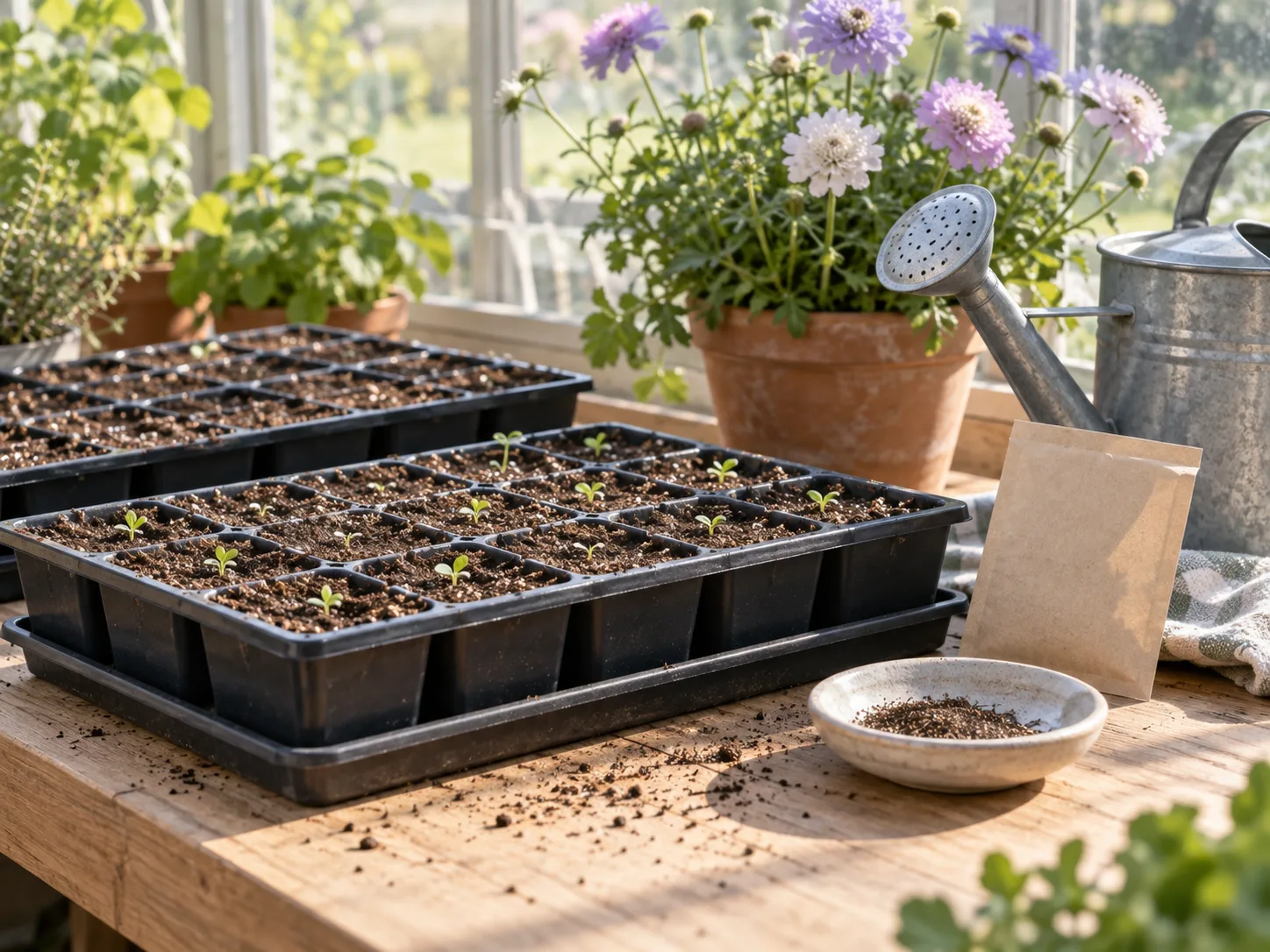
Seed is the most predictable way to grow this cultivar because it is commonly sold as seed and takes time to reach flowering size. The number to plan around is 90 to 100 days to harvest, not a guaranteed calendar date. Count backward from the weather window when you want your first usable flowers, then adjust for your local frost date and summer heat.
Indoor Sowing: Use Light and a Thin Cover
For the cultivar itself, Johnny’s recommends sowing 4–6 weeks before planting out, with germination in roughly 10–12 days at 65–70°F. In a short-season garden, you can start toward the earlier end of that window, but the seedlings still need strong light so they do not stretch before they reach the garden. Farmhouse & Blooms, writing from a short-season zone 5b garden, starts scabiosa indoors earlier when a longer runway is needed.
Use a clean cell tray and a fine, free-draining seed-starting mix. Place one seed on the surface or in a very shallow depression, then cover it only lightly; Johnny’s growing instructions explain that light aids germination. Water from below or with a gentle mist so the seed is not washed into a deep pocket. Keep the mix consistently damp during germination, then let excess water drain fully.
The most common indoor mistake is confusing “keep moist” with “keep saturated.” If the tray smells sour, stays glossy with water, or develops algae before seedlings emerge, the mix is too wet or the surface lacks airflow. Once seedlings appear, move them close to a grow light, give them room to develop, and water when the surface begins to lose its sheen rather than on an automatic schedule.
Direct Sowing and Succession Crops
Direct sowing is practical where spring arrives early and the summer heat does not shut down flowering immediately. Sow after the soil can be worked, barely cover the seed, keep the row evenly moist, and thin seedlings to their final spacing. The trade-off is timing: direct-sown plants usually flower later than a healthy transplant.
For a longer supply of stems, do not put every seed in the ground on one day. Johnny’s recommends successive plantings every 2–3 weeks until late spring, and Farmhouse & Blooms uses the same succession principle for cut flowers. In a hot climate, stop sowing before the period when young plants would face peak heat; in a cool climate, later sowings may extend the season toward fall.
Transplant Without Stunting the Roots
Harden off indoor seedlings over about a week, gradually increasing their exposure to outdoor light and wind. Plant them out after the danger of a hard frost has passed unless your local growing advice specifically supports hardy-annual timing. A seedling that looks delicate on a windowsill often becomes sturdy quickly once it has full light and moving air, but an abrupt move from sheltered conditions can still scorch or stall it.
Set the transplant at the same depth it occupied in its cell. Firm the soil gently, water the root zone, and install the first support before the stems become tall enough to lean. A 12–15-inch spacing is a useful middle ground for most home beds; widen it where humidity is high or neighboring plants already create a dense canopy.
Avoid repeated root disturbance after planting. Scabiosa is not a plant that benefits from being moved around to chase the sun, and a late rescue transplant often costs more flowering time than it saves. Choose the site carefully, then manage water, airflow, and support in place.
Water and Feed for Flowers, Not Just Foliage
The goal is even moisture while the plant establishes, followed by deep watering when the root zone begins to dry. “Evenly moist” does not mean a permanently wet crown. Check the soil a couple of inches down during dry weather, water slowly at the base, and allow the bed to drain before watering again.
Rain may provide all the water a mature planting needs for stretches of spring. During a dry spell, a thorough soak is more useful than a daily splash that wets the surface and encourages shallow roots. Drip irrigation or a soaker hose also keeps foliage drier than overhead watering, which matters in humid weather.
Fata Morgana does not need an aggressive feeding program. Gaines used compost tea every other week in her garden, but that is a personal routine shaped by her soil and broader planting system, not a universal requirement. Start with compost in the bed; if a soil test or visibly poor growth suggests a need for more nutrition, use a modest, balanced fertilizer according to its label rather than assuming more nitrogen will create more flowers.
Too much fertilizer can produce impressive leaves and disappointing blooms. If plants are dark green, soft-stemmed, and leafy but reluctant to flower, reassess light and feeding before adding another product. Annie’s Annuals cautions that heavy fertilizing can favor foliage over flowers, which is exactly the imbalance a tall cut flower does not need.
Support Top-Heavy Stems Before They Flop
The support lesson is one of the most useful details in Gaines’s account. Fata Morgana can reach 24–36 inches, and slender stems carrying rounded flower heads are vulnerable to wind, rain, and the extra weight of multiple blooms. If you wait until the plant is already sprawled, tying it upright often creates a bundle of bent stems instead of a graceful plant.
Install a horizontal layer of netting or a low, open trellis when the plants are still short. As stems rise, they grow through the grid and hold themselves without looking visibly staked. Johnny’s specifically lists plant supports as required and names horizontal Hortonova-style netting as one option; Farmhouse & Blooms also reports straighter cut stems when support is used.
For a small border, place a slim bamboo stake near the plant and use soft ties loosely around the stems. You can also position Fata Morgana between sturdy shrubs or beside a fence, as Gaines plans to do, but do not bury the plant in shade or wedge it where air cannot circulate. Support should give the stems a framework, not turn the bed into a damp wall.
Deadhead and Harvest for a Longer Flower Season
Every mature bloom is both a bouquet opportunity and a potential seed head. Repeated cutting keeps the plant in production because it removes finished stems before the plant invests heavily in seed. If you are growing for garden color rather than cutting, snip spent flowers just above a healthy leaf node and remove any stem that has finished blooming.
Do not deadhead mechanically if you want seed. Leave a few late flowers on one or two plants, let the heads dry, and collect or drop them in a clearly chosen spot. This gives you a reseeding experiment without turning the entire bed into an unknown patch of volunteers.
Cut Flowers at the Right Stage
Harvest Fata Morgana when the flower head is almost fully open, the stem is firm, and the plant is well hydrated. Cutting in the cool part of the morning reduces the chance of working with wilted stems, while a clean, sharp snip just above a branching point leaves the plant ready to send energy into the remaining buds.
For a household bouquet, remove foliage that would sit below the water line and place the stems in a clean vase promptly. The exact number of flowers you cut each week will depend on the plant’s size and weather, but regular harvesting is usually more productive than waiting for every head to reach peak display at once. That is why Fata Morgana works so well in a cutting row: the plant can be both the garden’s soft focal point and a source of small, useful harvests.
Design the Wild but Edited Look
The phrase “wild” works best when the gardener quietly edits the structure underneath it. Plant Fata Morgana in a group rather than scattering one plant wherever a gap appears, then repeat its cream-apricot color near a heavier form such as salvia, catmint, yarrow, or an ornamental grass. The airy stems soften those companions without competing with them for visual mass.
In a mixed border, keep it where the 24–36-inch stems can be seen rather than hiding it behind taller plants. A group of three to five plants creates a more convincing drift than a single stem, while the 9–15-inch spacing still leaves room for support and airflow. If your bed is small, one supported cluster near a path can deliver more impact than several isolated plants that are difficult to water and harvest.
Containers are possible, especially for a patio or cutting corner, but they are less forgiving than a bed. Use a pot with a drainage hole, choose a stable container that will not tip when stems rise, and expect to water more often in hot weather. Homes & Gardens’ expert coverage notes that scabiosa can work in containers, while also warning that flowering may become less impressive as the season goes on; a pot is a good way to enjoy the form, not a guarantee of an all-summer bouquet factory.
What to Do When Growth Disappoints
Start with the growing conditions before blaming the seed. Fata Morgana may flower poorly because it was started too late, planted in shade, overfed, stressed by heat, or kept so wet that the roots cannot function. It may also be flowering normally for its age while the gardener is expecting a perennial’s second-year performance.
If flowers are scarce but foliage is lush, check light and nitrogen first. If stems are tall and green but weak, check light, spacing, and support. If plants stop after a heat wave, provide deep root-zone water in the morning and some afternoon relief, then wait to see whether new buds develop instead of immediately increasing fertilizer.
Diagnose Leaves, Stems, and Flowers
Use the symptom pattern to choose the first correction:
- Leaning stems with healthy leaves: add netting, a stake, or a nearby structure; this is usually a support problem, not a reason to water more.
- Dry, crisp foliage and unopened buds: check soil moisture, recent wind, container size, and heat exposure before pruning.
- Yellow leaves with a soft base or persistently wet soil: improve drainage and stop watering until the root zone begins to dry; root or crown rot is more likely than hunger.
- White powder on leaves: increase spacing and airflow, keep irrigation off the foliage, and remove the worst affected material. Powdery mildew is more likely when humidity and stagnant air stay high.
- Fine webbing or pale stippling in hot, dry weather: inspect leaf undersides for spider mites. A strong, gentle rinse can dislodge a light population; repeat observation matters more than one treatment.
- Gray-brown damaged tissue after wet weather: remove affected material with clean snips and reduce leaf wetness and crowding, since botrytis-like problems spread more easily in damp, still conditions.
Epic Gardening’s scabiosa overview covers common pests and moisture-related diseases, including aphids, spider mites, powdery mildew, botrytis, and root rot. If a problem continues after correcting light, water, and airflow, take a sample or clear photograph to a local extension service or experienced nursery rather than stacking unneeded products on a stressed plant.
Could It Reseed or Return Next Year?
Fata Morgana is best managed as an annual, but it can still give you a second appearance through dropped seed. Leave a few heads to mature, let them dry on the plant, and avoid disturbing that small patch until spring. This approach is most useful in a contained bed where you can recognize seedlings and remove extras before they crowd the original planting area.
Do not assume a volunteer will have exactly the same color, height, or bloom timing as the packet cultivar. Open-pollinated seed is useful and often rewarding, but garden pollination can produce variation. If the buttercream tone and predictable cut-flower schedule are the point, buy fresh Fata Morgana seed each year and treat self-sown plants as an experiment.
At the end of the season, remove diseased foliage and clear the bed enough to inspect the soil and support. Pulling an exhausted annual is not a failure; it makes room for a better-timed succession sowing next season and prevents the garden from becoming a tangle of untracked stems.
Conclusion
Fata Morgana scabiosa deserves its summer-star status because it combines a rare, soft color with long stems, pollinator value, and real usefulness in a vase. The best way to grow it is not to chase a celebrity garden result but to recreate the conditions that made the plant successful: strong light, free-draining soil, steady moisture, modest feeding, repeated cutting, and support installed before the stems become top-heavy.
Buy or save seed with the cultivar’s annual habit in mind, sow it shallowly with light, transplant it carefully, and use succession plantings if you want flowers beyond one flush. Then let the plant move in the breeze—but give it a net, stake, fence, or shrub to lean on when its buttercream pincushions start reaching higher than their stems can comfortably carry.