How to Grow Lilac Bushes for Fragrant Spring Blooms
Learn how to grow lilac bushes with the right sun, soil, watering, pruning, cultivar choice, propagation, and fixes for poor flowering or disease.

Lilacs are at their best when you treat them as short-season flowering shrubs with specific site requirements, not as generic low-maintenance bushes. Give the right cultivar enough sun, free-draining soil, room for its mature size, and the correct pruning window, and it can become a dependable spring focal point for decades. Put a large common lilac in a damp, shaded corner or a mild-winter climate, though, and it may survive while producing very little fragrance or bloom.
The genus Syringa includes everything from compact lilacs that fit a small border to tree-form plants that need the room of a small tree. The Royal Horticultural Society describes lilacs as hardy deciduous plants that generally prefer sunny positions, good drainage, and neutral to alkaline soil; it also notes that cultivars vary widely in size and flowering season. That variation is the key to successful care, so start with the plant rather than a one-size-fits-all schedule. RHS growing guide
Start with a lilac that fits your climate and garden
The most expensive lilac mistake is choosing by bloom color alone. Before you compare purple, pink, white, or double flowers, check the cultivar’s hardiness, mature dimensions, expected bloom window, and performance in your local climate. A plant that naturally fits the space will need less corrective pruning and will flower more reliably than a large shrub repeatedly cut down to fit a narrow bed.
Common lilacs, including many Syringa vulgaris cultivars, are the classic fragrant spring shrubs. They often grow into substantial multi-stemmed plants, while dwarf or compact types may stay closer to 2 to 5 feet tall and wide. Japanese tree lilacs and related tree forms can become much taller and are better treated as small trees with a canopy, trunk space, and long-term root zone. Use the label’s mature size, not the nursery plant’s current height, when planning.
Match the cultivar to winter chill and summer heat
Many traditional lilacs need a real winter dormancy and a period of cold to set flower buds. They are associated with northern gardens because they tolerate cold well and often struggle more with mild winters and hot, humid summers than with freezing temperatures. A lilac can look leafy and vigorous yet bloom sparsely when its genetics are a poor match for the local winter.
That does not mean gardeners in warmer regions have no options. Some hybrids and reblooming selections have lower chilling requirements or better regional performance than old-fashioned common lilacs. Ask a reputable local nursery which Syringa cultivars have flowered consistently nearby. Proven Winners similarly cautions that many lilacs need winter chilling and that hot areas may produce foliage without dependable flowers. Proven Winners lilac guide
Treat a mature, healthy, well-lit shrub that never blooms as a possible climate-and-cultivar problem before adding fertilizer. No amount of nitrogen can substitute for the winter conditions a particular plant needs.
Pick mature size and bloom timing before flower color
For a small yard, patio, or foundation bed, look for naturally compact types such as ‘Palibin,’ ‘Miss Kim,’ Baby Kim, or dwarf reblooming selections. A compact lilac is not merely a large lilac kept short; it has different genetics and a more realistic relationship with the available root and canopy space. Large common lilacs are better for a shrub border, hedge, open lawn, or spacious mixed planting.
Bloom timing can also be designed. Early-flowering hybrids can open before common lilacs, traditional Syringa vulgaris cultivars create the main fragrant display, and Preston or Japanese tree lilacs can carry flowers later. Reblooming cultivars may offer a lighter second flush, but they should be treated as an extension rather than a guarantee of continuous summer bloom. Gardenia’s practical selection rule is useful here: choose by climate first, mature size second, bloom window third, and flower details last. Gardenia lilac growing guide
Choose a sunny site with dependable drainage
Aim for at least six hours of direct sunlight on most days. Lilacs tolerate some light shade, but flowering usually drops as shade increases. Watch the site rather than guessing from a springtime snapshot: a nearby tree may leaf out later and turn a once-sunny lilac into a leafy, flower-poor shrub. Open spacing also helps air move through the canopy after rain.
Drainage is more important than having a perfect soil texture. Lilacs can grow in clay when the soil does not stay saturated, but a low spot that holds water around the roots is a poor site even if it is rich. Persistently wet soil deprives roots of oxygen and can lead to weak growth, root decline, and disappointing bloom. If winter waterlogging is unavoidable, plant on a broad raised mound rather than digging a deep hole that becomes a bowl.
Test soil before changing pH
Many lilacs prefer neutral to mildly alkaline soil, but that is not a reason to scatter lime without testing. Soil pH varies across the yard, cultivars are not identical, and an unnecessary amendment can create a new nutrient problem. A basic soil test is more useful than trying to diagnose the soil by leaf color alone.
Improve compacted ground with organic matter worked through the planting area, but do not replace the native soil with a pocket of rich compost. A sharp boundary between amended soil and heavy surrounding soil can hold water around the root ball. Build a broad, well-drained root zone instead, and keep the plant’s root flare near the finished soil level.
Plant lilac bushes for strong establishment
Fall through early spring is usually the easiest planting window for a dormant bare-root or container-grown lilac, provided the ground is workable and not waterlogged. Spring planting is useful in colder areas where a young shrub needs a full growing season before severe winter. A container plant can be planted at other times, but a leafy shrub going into summer heat will need closer watering.
Dig a hole wider than the root ball and only as deep as the roots need. Tease out tightly circling roots, set the shrub so the upper roots sit at their original level, and backfill with the soil you removed. Water slowly and deeply after planting so air pockets settle, then apply a 2- to 3-inch layer of organic mulch across the root zone. Keep the mulch a few inches away from the stems; a wet mulch collar invites stem problems and hides the plant’s actual soil level.
Give a large cultivar enough room from buildings, paths, power lines, and neighboring shrubs. Spacing recommendations vary by mature size, but the reliable rule is to allow the plant to reach its natural width without constant shearing. A crowded lilac may still flower, but its interior becomes congested, airflow falls, and maintenance becomes a yearly battle.
Water and mulch by root age, not by habit
Newly planted lilacs need dependable moisture while roots expand into the surrounding soil. Check the root zone with your finger or a trowel rather than watering on a fixed calendar. When the upper soil begins to dry, soak the area deeply and allow excess water to drain; frequent shallow sprinkles encourage a small surface root system and keep foliage wet.
For the first growing season, many gardeners will water about once or twice a week during dry weather, adjusting for rainfall, soil type, temperature, and plant size. A young shrub in sandy soil may need attention sooner than one in moisture-retentive loam. In the second year, reduce the frequency as roots explore farther, but continue to water during prolonged drought, especially before and during flower-bud development.
Established lilacs are more forgiving. They often need little supplemental water except during extended dry spells, but “drought tolerant” does not mean “never water.” A deep soak around the outer root zone is more useful than daily splashing at the trunk. A 2- to 3-inch organic mulch layer slows evaporation, moderates soil temperature, and reduces grass competition without turning the base of the shrub into a wet volcano.
Fertilize lightly and only for a reason
Do not make fertilizer the default response to a lilac with few flowers. A mature shrub growing in reasonably fertile soil may need no routine feeding. Excess nitrogen, including runoff from a regularly fertilized lawn, can produce long leafy shoots at the expense of flower production. It can also create soft new growth that is more vulnerable to some diseases.
If the plant is weak, test the soil before choosing a product. A thin layer of compost can improve structure and add modest fertility, while a low-dose, balanced woody-plant fertilizer may be appropriate when a soil test or clear deficiency supports it. Apply according to the label and avoid late-season heavy feeding that pushes tender growth toward winter. The RHS recommends feeding established lilacs only when there is evidence of need, and its blight guidance specifically warns against excess nitrogen. RHS lilac blight guidance
Prune lilacs immediately after flowering
Most familiar spring-flowering lilacs set next year’s flower buds on growth made after the current spring bloom. That makes the timing of pruning more important than the amount: prune immediately after flowers fade, not in late summer, fall, winter, or early spring if you want to preserve the next display. Late pruning can remove the very buds you are waiting for.
Start by removing dead, broken, diseased, or rubbing wood. Then thin selected crowded stems at ground level or back to a strong outward-facing branch. Do not shear the outside into a box; that cuts the branch tips where flowers are forming and leaves a dense shell with poor interior airflow. Use clean, sharp bypass pruners for small stems and a pruning saw for larger ones.
Use light thinning for routine care
Routine pruning is a maintenance job, not an annual reset. On a young or well-shaped lilac, remove only the stems that are damaged, crossing, weak, or badly placed. If height is slightly out of bounds, shorten a few tall stems to a lateral branch rather than cutting every branch to the same level.
Deadheading is optional. Removing spent flower clusters can tidy a small shrub and prevent seed production, but it is not essential to the health of a large lilac. If you deadhead, cut just below the spent cluster without shortening the new shoots beneath it. Those new shoots are the framework for next year’s flowers.
Rejuvenate old shrubs in stages
An old lilac often shows a distinctive pattern: flowering moves to the top, the interior becomes a thicket of thick old stems, and the base turns bare while young shoots crowd around it. That calls for renewal, not a haircut. After flowering, remove roughly one-third of the oldest stems close to the ground, keeping vigorous younger stems that are well positioned to replace them. Repeat over two or three seasons.
Gradual rejuvenation trades a little short-term tidiness for a steady supply of younger flowering wood. A severely neglected shrub can be cut back much harder, but that is renovation: it may sacrifice one or more seasons of flowers while replacement stems develop. If the plant is grafted, identify the graft before removing basal shoots; growth below the graft may be rootstock rather than the named lilac.
Propagate lilacs from the right kind of sucker or cutting
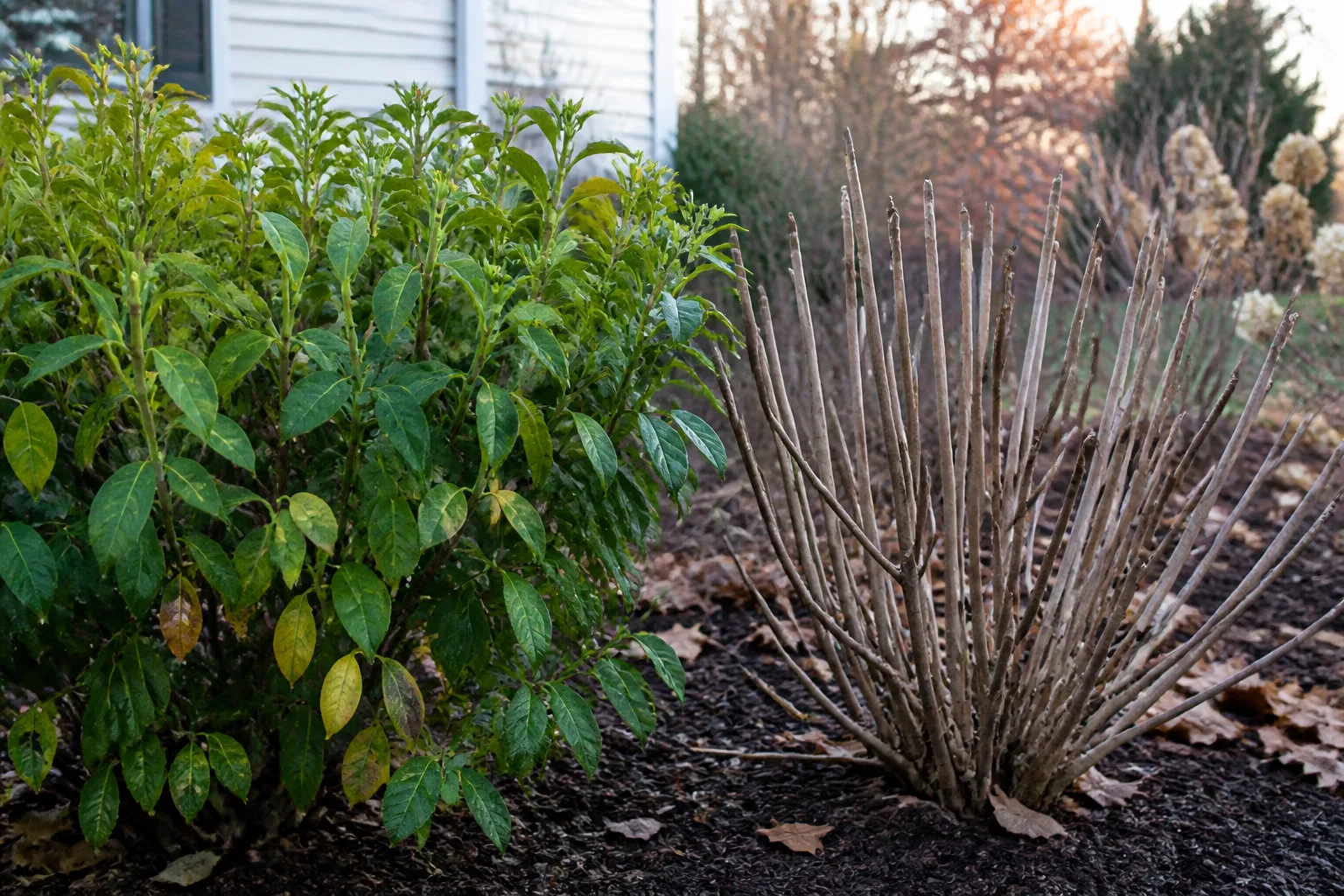
The easiest home propagation method depends on how the parent plant was grown. An own-root lilac may send up a rooted sucker that is genetically the same as the parent. Dig around the sucker in spring or early summer, follow it down to its roots, sever it cleanly from the parent, and replant it at the same depth. Keep the new plant evenly moist while it establishes.
Do not automatically keep every sucker. A well-placed shoot can become a replacement stem in an aging own-root clump, while an unwanted shoot can turn a small bed into a thicket. On a grafted lilac, a sucker from below the graft may produce the rootstock’s flowers instead of the cultivar you bought. Remove those shoots unless you specifically want the rootstock.
Layering is another dependable option: bend a low flexible branch to the ground, wound or pin a section under the soil, and leave it attached until roots form. Softwood or semi-ripe cuttings are possible, but they can be slow and inconsistent for home gardeners. Seed is mainly useful for species work and breeding because seedlings from named cultivars do not reliably reproduce the parent’s flower color, form, or fragrance. The RHS lists suckers, layering, and cuttings as the main propagation paths and warns that some named plants are protected from commercial propagation. RHS propagation and care guidance
Get more flowers by diagnosing the real bottleneck
When a lilac grows leaves but produces few flowers, check the plant in this order:
- Climate: Is the cultivar suited to the local winter chill and summer conditions?
- Sun: Does the shrub still receive about six hours of direct light, or has a tree grown over it?
- Pruning: Was it cut after buds formed, removing next year’s flower wood?
- Nitrogen: Is lawn fertilizer or a heavy feeding producing lush foliage without flowers?
- Drainage: Are roots stressed by a low, wet planting site?
- Age: Is a young plant still establishing, or is an old shrub congested and top-heavy?
This sequence prevents two common mistakes: feeding a shrub that needs more sun, and hard-pruning a young shrub that simply needs time. Healthy leaves with few flowers point toward light, climate, pruning, nitrogen, or maturity. Yellowing leaves, wilting, dieback, soft stems, or widespread spots indicate a plant-health problem that needs a different diagnosis.
Bloom timing is naturally brief for many lilacs, often concentrated in mid- to late spring. To extend the season, plant cultivars with different bloom windows rather than expecting one shrub to flower continuously. Reblooming lilacs can add later color, but their second display varies with cultivar and growing conditions.
Recognize common lilac pests and diseases
Powdery mildew appears as a white or gray coating on leaves, often later in summer when air is humid and the canopy is crowded. On a vigorous established plant it is frequently more cosmetic than fatal. Improve sunlight and airflow, avoid wetting the foliage, and thin congested growth at the correct post-bloom time. Do not confuse a late-season white coating with bacterial blight.
Bacterial blight is more urgent in appearance. The RHS identifies Pseudomonas syringae pv. syringae as the cause and describes angular brown spots, blackened leaves and buds, brown or shriveled flower clusters, cankers, and young shoots that wilt or curl into a shepherd’s crook. Frost injury can look similar, so consider the weather and the pattern across the plant. RHS lilac blight symptoms and control
If blight is suspected, do not prune while leaves are wet. Cut affected twigs at least 6 to 8 inches below the visible infection into healthy wood, disinfect the tool between cuts, and remove fallen diseased debris. Avoid overhead watering in spring and keep the shrub vigorous without pushing soft growth with excess nitrogen. Penn State Extension’s disease table likewise distinguishes blackened leaves and buds from powdery mildew and recommends pruning below infected tissue and disinfecting shears. Penn State Extension lilac diseases
Borers tunnel through woody stems and may leave holes, sawdust-like material, sap, or a branch that wilts while the rest of the shrub looks normal. Scale, thrips, and leaf-mining moths can mark stems or foliage, but their damage can resemble drought or disease. Inspect the stem and undersides of leaves before treating. If damage is extensive, recurring, or difficult to identify, take clear photos and a sample to a local extension service or qualified nursery rather than applying a broad insecticide by guesswork.
Grow compact lilacs in containers
Lilacs can grow in containers when the cultivar is naturally compact. Baby Kim, dwarf reblooming selections, and other small Syringa are far more practical in a pot than a common lilac that wants to become a 10-foot shrub. Choose a substantial container with drainage holes, a freely draining potting mix, and a position that receives full sun.
Container roots experience faster drying in summer and more severe freezing in winter than roots in the ground. Check moisture more often during heat, but never compensate for a blocked drainage hole by watering on a schedule. In cold regions, use a frost-resistant container and shelter or insulate it during the coldest weather while still allowing the plant its required dormancy. Repot when roots have filled the container, preferably in spring as growth resumes.
Follow a simple seasonal care calendar
Spring: Watch new shoots and flower buds for blackening, frost injury, or unusual spots. Water new plantings as the soil begins to dry, and enjoy the bloom before deciding whether the shrub needs intervention. Do not prune a spring-flowering lilac just because winter is ending.
Immediately after flowering: Deadhead if you want a tidier look, then complete routine pruning, remove selected old stems, and thin congested growth. This is the main annual maintenance window because the shrub has finished its current display and is beginning to build the wood that will carry the next one.
Summer: Let new flowering wood mature. Water during prolonged drought, watch for powdery mildew and stem pests, and remove unwanted suckers once you know whether the shrub is own-root or grafted. Avoid heavy nitrogen feeding late in the season.
Fall and winter: Plant dormant shrubs when the soil is workable and drainage is good. Mulch the root zone without burying the stems, but avoid routine pruning of a spring-flowering lilac after the post-bloom window. Use winter to evaluate an old shrub’s framework and plan gradual rejuvenation rather than making an impulsive hard cut.
Conclusion
The best lilac care is mostly about timing and fit. Choose a cultivar that suits your winter chill, summer conditions, available space, and preferred bloom window; plant it in full sun with drainage; water consistently while it establishes; and keep fertilizer modest. Then prune immediately after flowering so you shape the shrub without cutting away next year’s buds.
If flowering disappoints, inspect climate, light, pruning history, nitrogen, drainage, and plant age before reaching for a stronger product. If leaves and shoots are blackening, separate frost injury from bacterial blight and work with dry tools and good sanitation. A lilac that starts in the right place and receives selective, well-timed care will usually reward you with the fragrance and spring color that made it worth planting.