How to Grow Lemongrass: Planting, Care, and Uses
Grow lemongrass in beds or pots with a clear plan for rooting stalks, feeding, harvesting tender bases, saving the plant through winter, and troubleshooting.
The quick answer: choose sun, warmth, and a movable pot
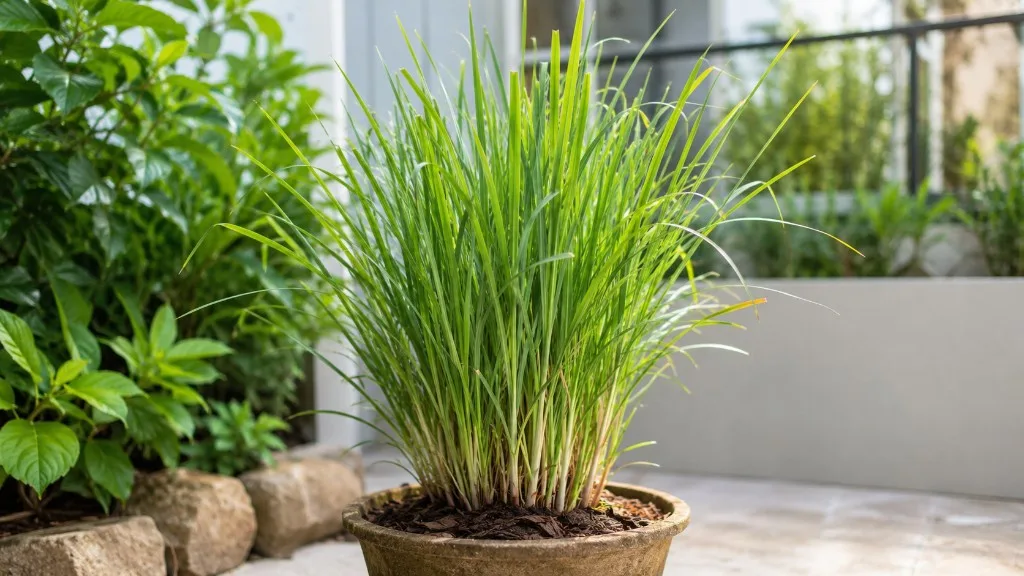
Lemongrass grows best when you give it the conditions of a warm, bright summer: full sun, steady moisture, fertile soil, and excellent drainage. Plant it outdoors after frost danger has passed, or grow it in a sturdy container that can move under cover when nights turn cold. In a warm, frost-free climate, it can remain a perennial clump; elsewhere, treat it as a fast-growing annual or overwinter a container plant.
The easiest starting point is a nursery plant or a fresh grocery stalk with a firm, intact base. Rooting a stalk is inexpensive, but it is not magic: the basal root plate must still be present, and a refrigerated or heavily trimmed stalk may never respond. Once established, harvest the swollen outer stalks at soil level, leaving the younger center shoots in place so the clump keeps producing.
Know the lemongrass you are growing
The culinary plant most people mean by lemongrass is Cymbopogon citratus, a clump-forming grass in the Poaceae family. Its layered lower stalks have a lemony aroma and are used in soups, curries, marinades, sauces, stir-fries, and tea. The University of Wisconsin–Madison Extension describes West Indian lemongrass (C. citratus) as the form most commonly used for cooking, while East Indian lemongrass (C. flexuosus) is also grown for fragrance and oil. (Wisconsin Horticulture’s lemongrass profile gives the useful distinction.)
Do not confuse culinary lemongrass with citronella grass, Cymbopogon nardus. They are related, but a plant sold or labeled for citronella oil is not a culinary substitute. If the label matters to you, buy C. citratus from a nursery or use a food stalk whose identity is clear rather than assuming every citrus-scented grass belongs in the kitchen.
This is also a plant with a misleading winter reputation. Lemongrass is perennial by habit, but not necessarily perennial in your garden. NC State Extension lists it as a culinary, container-friendly plant and notes that it should be overwintered as a container plant without allowing it to dry out. (NC State Extension’s plant toolbox entry is a helpful identity and safety reference.) A frost-free garden can keep a clump year after year; a cold garden needs a plan before the first freeze, not after the leaves collapse.
Choose in-ground or container growing
Use an in-ground bed when you have a long, warm growing season and enough room for a large clump. A sunny bed gives roots a generous moisture reservoir, and the plant can grow into a dramatic vertical accent among other heat-loving herbs. The trade-off is winter flexibility: lifting an established clump is much harder than moving a pot, and a frost can damage the crown before you have time to save it.
A container is the better default for cool or changeable climates. Choose a heavy pot with drainage holes, ideally at least 12 to 14 inches wide and deep for a young plant and about 5 gallons or larger as the clump expands. A tall grass becomes top-heavy, so a light nursery pot on an exposed patio can tip even when the roots are healthy. HGTV’s practical growing guide also recommends a 5-gallon or larger container and a sheltered position for mature plants. (HGTV’s lemongrass growing guide covers container size, feeding, winter care, and harvest.)
Containers dry faster than garden soil, especially beside a warm wall or on a windy balcony. They also make it easier to isolate a plant with spider mites, bring it inside before frost, and restart a dormant clump in spring. If your main goal is a dependable kitchen harvest rather than a permanent landscape planting, that control is usually worth the extra watering.
Propagate lemongrass from grocery stalks
Fresh stalks can root because the thick base contains the growing tissue that develops into new roots and shoots. Select stalks that feel firm and moist at the bottom, with a pale, intact base rather than a flat slice that has removed the root plate. Keep two or three candidates; propagation is low-cost, and not every grocery stalk is equally viable.
If you want predictable results, buy a young plant or start seed from a reputable supplier. The Royal Horticultural Society advises that supermarket stems can carry biosecurity risks and recommends young plants or seed for a cleaner start. (The RHS guide to growing lemongrass compares seed, young plants, containers, and stem propagation.) Home propagation can work, but it should not be treated as guaranteed or as a reason to ignore plant hygiene.
How to root a stalk in water
- Choose the base. Pick a fresh stalk with an intact, bulb-like root plate. Remove slimy or dry outer layers, but do not shave away the bottom.
- Trim the leaves. Cut off most of the long upper leaves, leaving a manageable stalk. This reduces water loss while roots are forming and keeps the jar from becoming top-heavy.
- Set it in shallow water. Stand the stalk base-down in a clean glass with about 1 inch of water. The base should be wet; the upper green portion should stay above the waterline.
- Give it warmth and bright light. A warm, bright window works. Avoid an intensely hot pane that cooks the stalk or heats the water, and change the water every few days if it becomes cloudy.
- Wait for two signals. Look for white roots and a new green shoot emerging from the center. Wisconsin Extension notes that roots commonly form within two or three weeks if the stalk is going to root. (Its propagation and harvest notes are a useful reality check on timing.)
Do not plant a stalk merely because a few roots have appeared as a thin white fringe. Give it enough root length to hold the potting mix—roughly 1 to 2 inches is a practical target—and wait for visible new growth when possible. A base that turns brown, soft, or foul-smelling is more likely to rot than to recover; discard it rather than moving the problem into a pot.
When to pot up rooted stalks
Use a small pot with fresh, free-draining potting mix for the first transplant. Set the rooted base so the crown sits at the soil surface or just slightly above it; burying the swollen base deeply can keep it wet and deprive it of air. Water thoroughly once, let the excess drain, and place the pot in bright light while new roots adjust.
For the first week, keep the mix evenly moist but do not leave the pot standing in water. New roots formed in a glass are tender and can fail when the surrounding mix swings from saturated to bone-dry. After you see new leaves, begin acclimating the plant to stronger outdoor light if you are moving it outside.
Plant lemongrass at the right time
Plant outdoors only after frost danger has passed and the soil is warming. A cold night may not kill a well-established plant immediately, but it can stall a young transplant, and a freeze can severely damage or kill the crown. In practice, the right planting date is determined more by overnight temperatures and your local frost pattern than by a universal calendar date.
Prepare the site
Choose the sunniest workable position, with at least six hours of direct light and shelter from the strongest wind. Full sun helps the grass build dense foliage and sturdy bases; shade produces a thinner clump that takes longer to bulk up. The site should be close enough to a hose or watering can that regular irrigation is realistic during hot weather.
Lemongrass likes soil that holds moisture without remaining saturated. In a heavy clay bed, work compost or other well-rotted organic matter into the planting area and consider a raised bed if water stands after rain. In sandy soil, organic matter improves the root zone’s ability to hold a reserve between waterings. Do not create a rich, waterlogged pocket by filling a small hole with compost alone; blend the amendment through the surrounding soil so drainage remains continuous.
For a container, use a quality potting mix rather than garden soil. Garden soil compacts in a pot, reducing air around roots and making the plant harder to water consistently. The mix should drain from the bottom within a reasonable time while still holding enough moisture for a thirsty grass.
Set spacing and planting depth
Give in-ground plants roughly 18 to 24 inches of space unless you are intentionally creating a tighter mass and have a long season. Lemongrass can become a broad, fountain-shaped clump, and its leaves can arch into paths. The RHS recommends at least 30 centimeters between plants, while HGTV allows 18 to 24 inches in a landscape; use the wider end when airflow, harvesting access, or winter lifting matters.
Dig a hole no deeper than the root ball and set the plant at the same level it was growing before. Backfill, firm the soil gently, and water around the root zone. Keep mulch a little away from the crown so the base is not held in a constantly damp collar.
Give lemongrass the care that makes thick stalks
The plant’s growth rate can make watering feel inconsistent: a small clump may be easy for several weeks, then suddenly require attention every day in a hot container. Monitor the root zone rather than following a fixed weekly schedule. A plant that is growing quickly and exposed to wind loses water much faster than one in a cool, sheltered bed.
Light, water, and soil moisture
Aim for full sun, but judge the result by the plant. Strong, upright new growth and thickening bases indicate that light is adequate. Long, floppy leaves, slow expansion, and a plant that leans toward one direction suggest that the location is too dim or the container is being crowded by a wall or neighboring plant.
Water deeply whenever the top inch of soil is beginning to dry, then let excess water escape. In the ground, a mulch layer can slow evaporation; in a pot, lift the container or check the mix with a finger because the surface can dry while the lower root zone remains wet. During a hot spell, a large outdoor pot may need daily watering, but daily watering is only correct if the mix is actually drying and the pot drains freely.
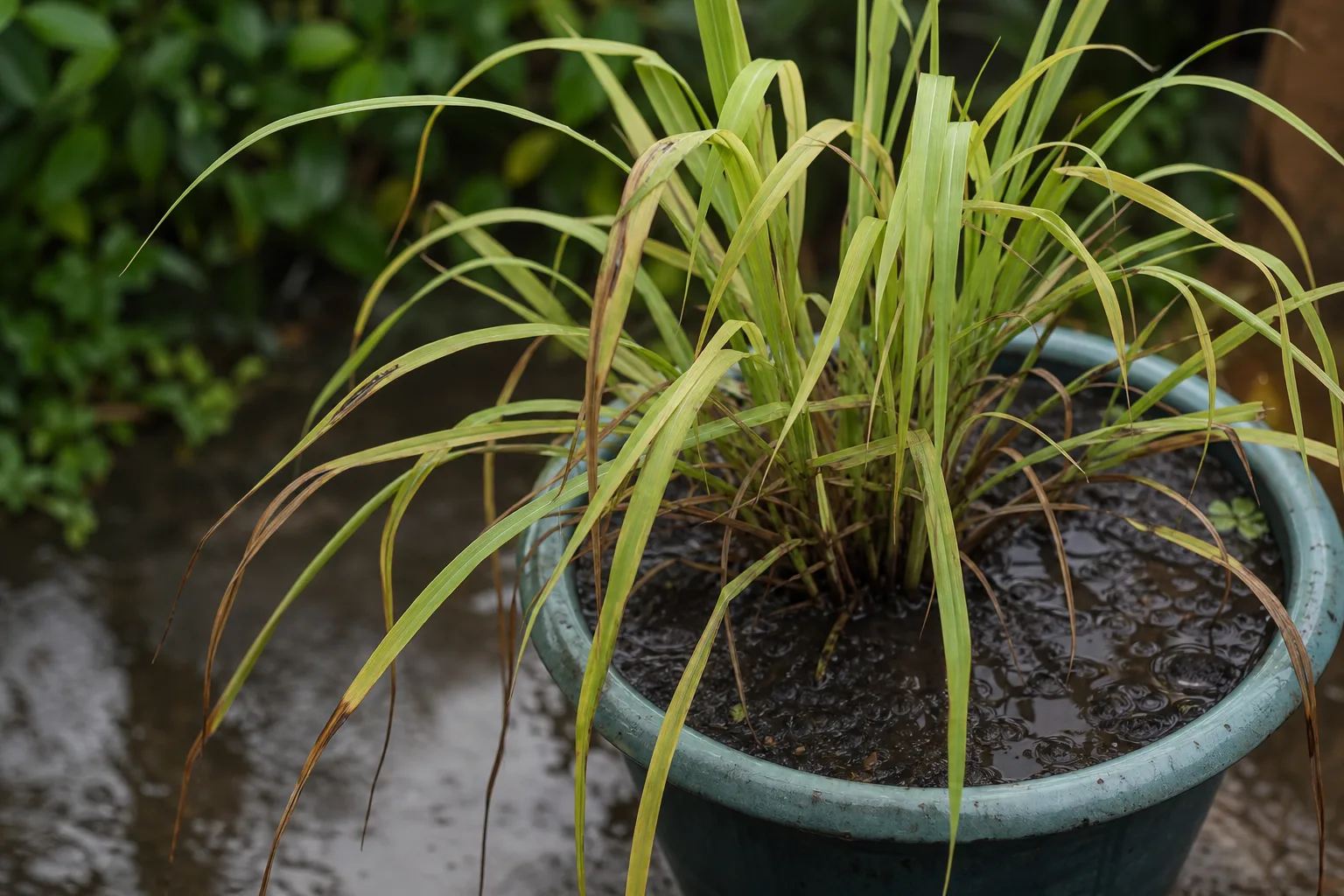
Both extremes cause trouble. Repeated wilting gives you brown tips, stalled growth, and a smaller harvest. Constantly soggy soil deprives the roots of air and can lead to yellowing, sour-smelling mix, or crown rot. If a pot stays wet for days, move it to brighter airflow and repot into a more open mix rather than simply watering less often forever.
Feeding without forcing weak growth
Lemongrass is a vigorous grass, so it responds to fertility during active growth. Start with compost or a quality potting mix, then use a balanced general-purpose fertilizer or a gentle liquid feed according to the product label. For container plants, a monthly feed through the warm growing season is a reasonable starting point; reduce or stop feeding as growth slows in fall and winter.
More fertilizer is not the same as more usable stalks. Excess nitrogen can produce a flush of soft leaves, salt buildup in a pot, and a plant that wilts quickly between waterings. Water thoroughly enough to flush excess salts from a container occasionally, and do not fertilize a severely drought-stressed, freshly repotted, or dormant plant until its roots are functioning again.
Harvest stalks without weakening the clump
Harvest when the outer stalk bases are swollen and about one-half inch thick, not merely because the leaves look tall. Start at the outside of the clump, where the largest mature stalks are easiest to reach. Removing the edge shoots opens access without tearing through the younger center growth that will supply later harvests.
Cut a stalk at soil level with a clean, sharp knife, or twist it outward and pull only if it releases cleanly. Cutting is gentler when the clump is tight or the stalk is resisting. Avoid gouging the crown and do not strip every stalk at once unless you are harvesting the entire plant before a hard freeze. Wisconsin Extension recommends cutting or removing stems near the ground once they reach about one-half inch thick. (Its harvest guidance explains which parts to discard and how to protect the clump.)
After harvest, peel away the tough outer layers and trim the green leaves from the lower edible base. The green parts are fibrous, but they still carry aroma and can be bruised and simmered in stock, soup, or tea before being removed. Wear gloves when handling a mature clump: the leaf edges can act like paper cuts, a warning also highlighted by the RHS and HGTV.
Use and store the edible parts
The tender lower base is the part to mince, slice, pound, or add whole to a simmering dish. Bruising a trimmed stalk releases its oils into soup, curry, sauce, marinade, or tea; remove large pieces before serving if the texture is too fibrous. The inner pale layers are softer than the green upper leaves, but even the tender base is often chopped finely rather than eaten as a whole stalk.
For short storage, wrap fresh stalks loosely and refrigerate them. For longer storage, freeze whole or trimmed pieces in a single layer first so they do not freeze into one solid block. You can also mince or purée the edible base and freeze it in small portions. Dry the leaves for tea or infusions, but keep whole leaves in the pot only long enough to flavor the liquid and remove them before drinking.
Do not use a planted lemongrass clump as a reason to make unsupported health claims about tea or essential oil. Culinary use and traditional use are different from a proven treatment, and concentrated oils are not interchangeable with a few slices of stalk. Keep preparations simple and identify the plant correctly.
Overwinter lemongrass in cold climates
The safest winter plan is to grow lemongrass in a container and move it before frost. The RHS advises bringing plants indoors before overnight temperatures fall below about 45°F, while Wisconsin Extension warns that frost can kill or severely damage the plant. Use that conservative cue rather than waiting for the forecast to show a freeze.
You have two indoor options:
- Keep it growing. Cut back damaged leaves, place the pot in the brightest window available, and water when the surface begins to dry. Growth may be slower and paler in winter; a grow light can help if the plant is stretching.
- Let it rest. Cut the foliage back to several inches, move the pot to a cool, frost-free place, and water sparingly—just enough to keep the root ball from turning completely dry. Do not fertilize while the plant is dormant.
In spring, bring a dormant plant into brighter conditions gradually. Water more deeply when new shoots appear, then resume feeding after active growth is underway. If a plant was grown in the ground, you can lift a portion of the clump before cold weather, pot it, and leave the remainder as an annual harvest; this is usually easier than trying to dig the whole mass.
Troubleshoot brown tips, slow growth, and pests
Brown or crispy tips usually point first to drought stress, wind, dry indoor air, salt buildup, or old foliage—not a single universal cause. Check the soil depth, pot drainage, recent fertilizer use, and the plant’s light exposure. Watering more frequently will not solve brown tips if the root zone is already saturated; correct the underlying moisture pattern and trim only the damaged ends.
Slow growth is most often a temperature, light, root-space, or moisture problem. A newly rooted stalk may spend weeks building roots before it makes a dramatic clump. If an established plant is still stalled, move through the checklist in order: warm the root zone, increase direct light, check whether the pot is packed with roots, then adjust water and feeding. Fertilizer cannot compensate for cold, dark, waterlogged roots.
Yellow leaves and a sour pot suggest overwatering or poor drainage. Slide the plant from its container if the decline is rapid, inspect for dark mushy roots, and remove only tissue that is clearly dead before repotting into fresh, airy mix. Do not keep a recovering plant in a saucer of standing water.
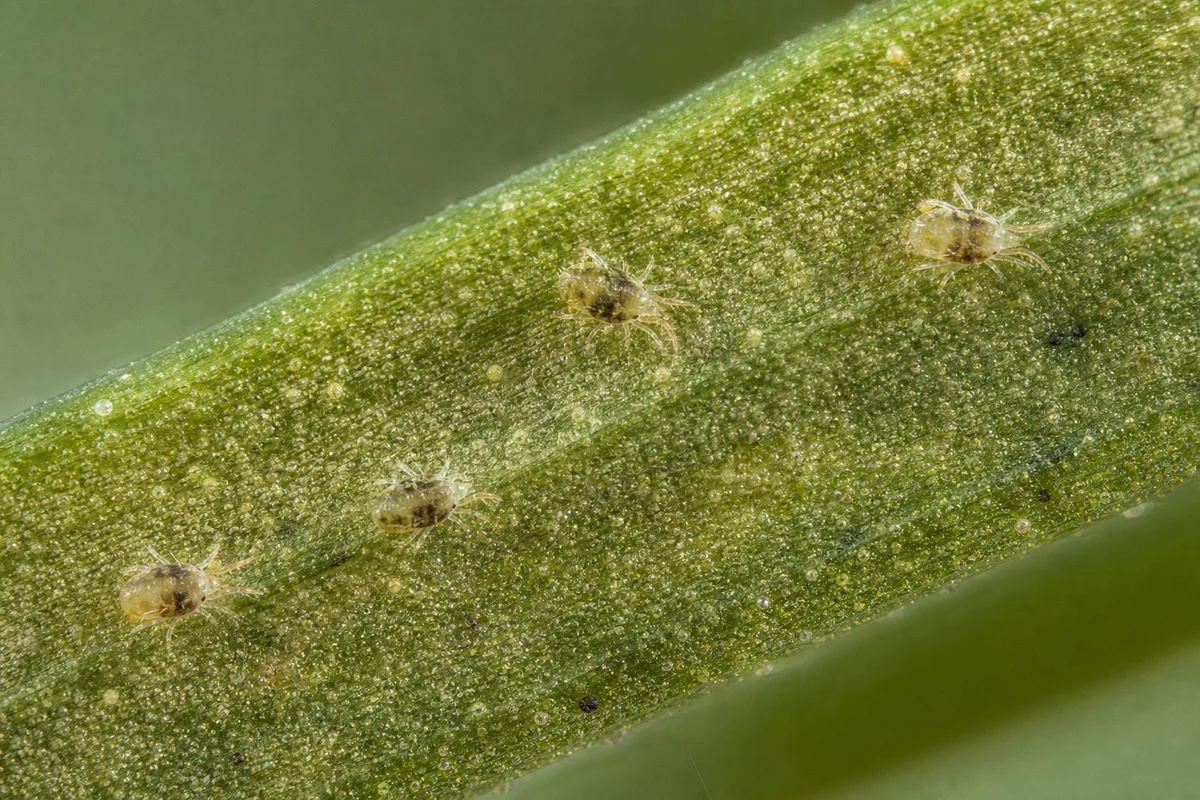
Spider mites, aphids, or whiteflies are more likely when a plant is stressed or overwintering indoors. Inspect leaf undersides and the tight center of the clump, isolate a suspect pot, and start with a strong water rinse where practical. If you use insecticidal soap or another labeled product, follow the label and rinse edible leaves as directed; do not improvise concentrations on a food crop. Rust can also appear as orange-brown flecks or streaks. Improve airflow, water at the soil surface, and remove badly affected leaves rather than keeping foliage constantly wet.
Lemongrass is sometimes sold as a mosquito-repelling plant, but a living clump is not a dependable barrier. Citronella oil comes from related grasses, and even editorial gardening guidance notes that plant-based repellents can be limited and require frequent reapplication. (HGTV’s discussion of lemongrass and mosquitoes is a useful caution against treating a pot of grass as equivalent to a tested repellent.)
Finally, plan placement around pets. ASPCA lists Cymbopogon citratus as toxic to dogs, cats, and horses, with essential oils and cyanogenic glycosides identified as toxic principles and stomach upset among reported signs for dogs and cats. (ASPCA’s lemon grass safety entry advises contacting a veterinarian or poison control after suspected ingestion.) Keep the plant and trimmed leaves away from animals that chew foliage.
Divide, refresh, and replant mature clumps
An established clump eventually becomes tight enough that harvest is difficult and the center is crowded. Divide it in spring as new growth begins, or when you are lifting a tender plant to move it into a winter container. Water the plant first if the root ball is dry, then lift it and separate sections with a sharp spade or knife.
Each division should have several healthy stalks and a solid portion of roots. Replant divisions at their original depth, water them in, and give them a few weeks to recover before heavy harvest. Division is also a chance to refresh compacted potting mix, move an overgrown plant into a heavier container, and remove dead outer material.
If your clump is only one season old, do not divide it just because the center looks dense. Lemongrass is supposed to form a tight crown. Divide when the plant is genuinely crowded, too large for its container, or ready to supply multiple pots—not as routine pruning.
Conclusion
To grow lemongrass successfully, build the plan around warmth and control. Give Cymbopogon citratus full sun, rich but free-draining soil, steady moisture, room to clump, and a container if winter cold is a risk. Root grocery stalks only when the base is intact, pot them up after roots and new growth appear, and harvest mature outer stalks at ground level so the crown can keep producing.
The best harvest is not the result of constant feeding or watering by calendar. It comes from reading the plant: dry soil rather than a fixed schedule, swollen stalk bases rather than leaf height alone, and night temperatures rather than a last-minute frost warning. Keep the edible plant separate from citronella grass, handle the sharp leaves carefully, and place it where pets cannot chew it. With those decisions made early, lemongrass is one of the more rewarding warm-season herbs to grow in a bed, on a patio, or beside a sunny kitchen window.