Lipstick Palm Care: How to Grow This Tropical Palm
Lipstick palms need warmth and steady moisture. Learn where to grow one, water without saturating roots, and when to repot or divide offsets for better growth.
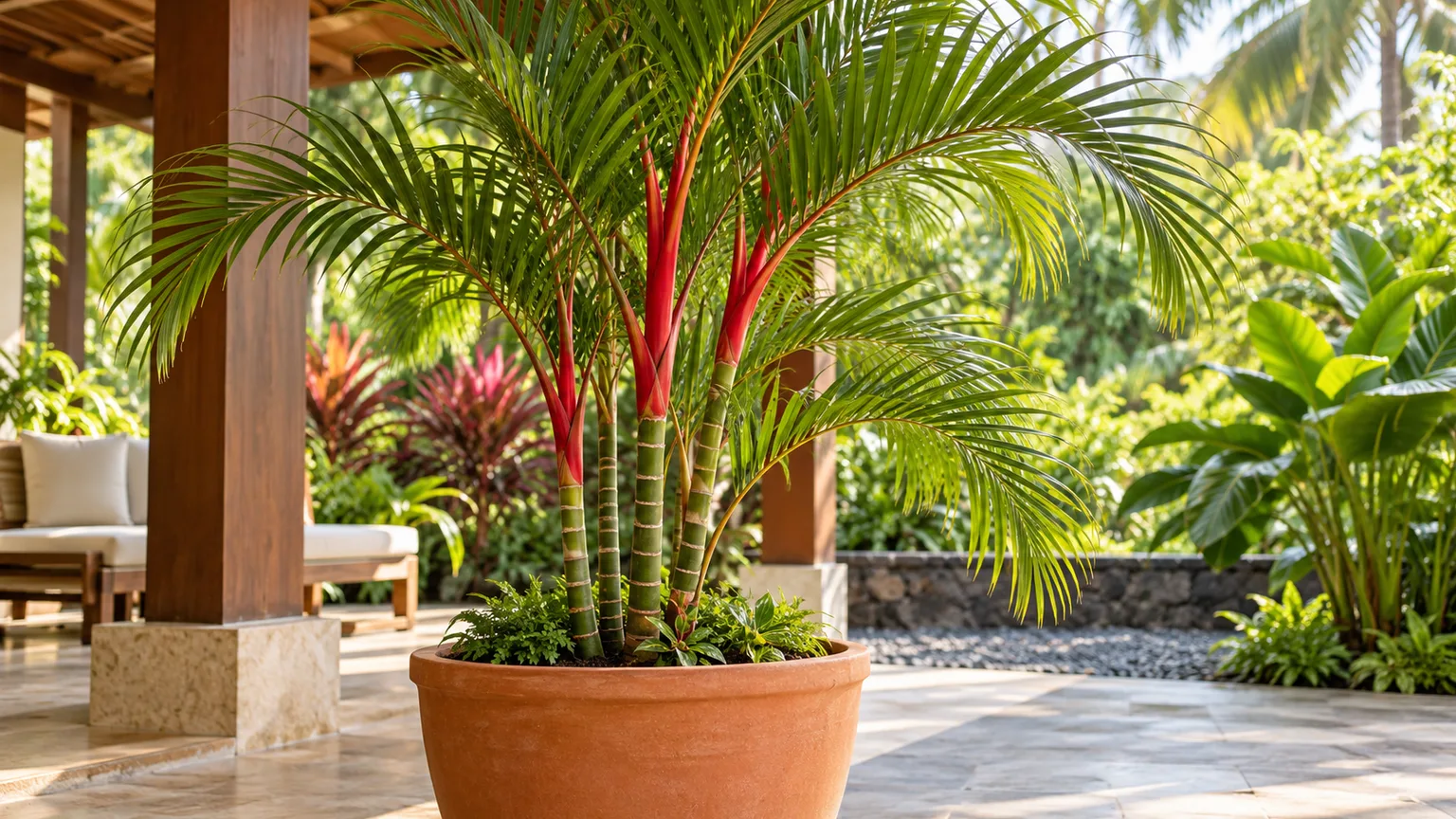
The lipstick palm (Cyrtostachys renda) is a warm, wet-tropical clumping palm, not the trailing lipstick plant sometimes sold as a houseplant. Its signature color is the scarlet crownshaft—the tubular leaf sheath at the top of each stem—not the green, ringed trunk below. That distinction helps you recognize a healthy plant and avoid expecting every new section of trunk to turn red. (Plants of the World Online, Royal Botanic Gardens, Kew)
You can grow one in a container outside the tropics, but it is a demanding specimen rather than an easy indoor palm. It needs a warm location, bright light, high humidity, and soil that stays evenly moist while still letting excess water escape. If you cannot keep the room warm through winter or provide a bright protected spot, choose a palm better adapted to ordinary indoor conditions.
What makes a lipstick palm different?
Kew lists Cyrtostachys renda as an accepted species native from the Malay Peninsula and southern Thailand into western Malesia, where it grows in the wet tropical biome. A monograph summarized in Kew’s species account describes the palm in lowland peat-swamp forest, often in coastal areas. That ecology explains why it resists drying more poorly than many familiar indoor palms, but it does not mean a potted plant should sit in a tray of stagnant water. (Plants of the World Online, Royal Botanic Gardens, Kew)
The palm grows as a clump of slender stems, each topped by long, feather-shaped leaves. Its green trunks carry visible rings from old leaves; vivid red develops on the crownshaft and leaf stalks. The color is a species or cultivar trait, not something you can create by adding fertilizer or exposing the leaves to stronger sun. A mature clump needs room for spreading foliage and additional shoots, so plan for width as well as height.
This is also not Aeschynanthus, the unrelated “lipstick plant” with trailing stems and tubular flowers. If a label uses only a common name, check the botanical name before choosing a site or following care advice. A Cyrtostachys renda label means a tropical palm with a single growing point at the tip of each stem, not a vine that can be pinched to branch.
Is a lipstick palm realistic for your climate and home?
The easiest place to grow this palm is a frost-free tropical garden with warmth, humidity, moisture, and shelter from wind. Kew’s wet-tropical range is a better guide than a generic hardiness-zone promise: repeated cool nights can set back a plant that otherwise receives good care. Do not treat a seller’s zone number as a guarantee for an exposed yard.
In a cooler region, use a pot only if you can move the plant before cold weather and keep it in a warm, bright, humid room or greenhouse. A typical heated home often supplies warmth but not enough light or humidity, especially in winter. A bright sunroom with a humidifier is a more realistic indoor setup than a dim living-room corner; a greenhouse is better still if you already manage tropical plants. General palm guidance likewise stresses that care varies by species and whether a palm grows indoors or out, so do not apply a generic low-light routine to this wet-tropical species. (Epic Gardening, How to Care for Palm Trees Indoors & Outdoors)
Think of indoor growth as a seasonal accommodation, not proof that this is a low-maintenance houseplant. The canopy can look fine while roots decline in cool or persistently wet mix. If stable conditions are unavailable, a conservatory or tropical garden is a better home than a dim room through winter.
Choose the right growing setup before you buy
Before buying, check the coldest temperatures it will face, the brightest protected location available, how you will maintain humidity, and whether you can water consistently. Change the setup first if any one is a problem: summer outdoors with warm greenhouse winters is a different project from a year-round north-facing window.
| Growing situation | What makes it workable | Main risk to manage |
|---|---|---|
| Tropical garden | Warm year-round weather, sheltered bright shade, evenly moist soil | Wind, dry spells, and cool snaps |
| Greenhouse or conservatory | Stable warmth, bright filtered light, and managed humidity | Overheating, stale air, and salt buildup from frequent watering |
| Seasonal outdoor container | A bright, sheltered summer location and a warm indoor winter site | Sudden sun exposure outdoors and cold during the move |
| Ordinary indoor room | Bright window, warm air, and humidifier support | Low winter light, dry air, and overwatering a cool rootball |
When buying, look for a firm central spear and evenly green older fronds rather than judging only by red color. Check the undersides of leaves and the stem bases for scale, mealybugs, webbing, or sticky residue, and make sure the rootball smells fresh rather than sour. A healthy but modest plant that can adjust to your conditions is a safer purchase than a large, stressed specimen that has already been forced through transport or a cold display area.
Give it bright, filtered light
Set a young lipstick palm in bright, filtered light or dappled shade. A position under a light canopy or behind a sheer curtain gives the fronds sustained brightness without the sudden heat of strong midday sun. Outdoors, a newly purchased or recently moved plant should stay protected while it adjusts; abrupt exposure to stronger sun can scorch leaves formed in shade.
Mature palms in consistently warm, humid tropical settings can acclimate to more direct light, but that does not make an indoor palm ready for intense patio sun. Increase outdoor exposure gradually over a couple of weeks, beginning in shade and moving it toward brighter conditions only if the foliage stays unmarked. If tan patches develop on the sun-facing side, move it back to filtered light rather than compensating with extra water.
Indoors, put the palm near the brightest window that does not bake the leaves through hot glass. East or bright south-facing exposures with filtered afternoon light are often easier to manage than a deep interior corner. If the plant keeps producing smaller, stretched, or sparse new leaves, assess light first; fertilizer cannot replace the energy a dim room fails to provide.
Keep warmth, humidity, and airflow in balance
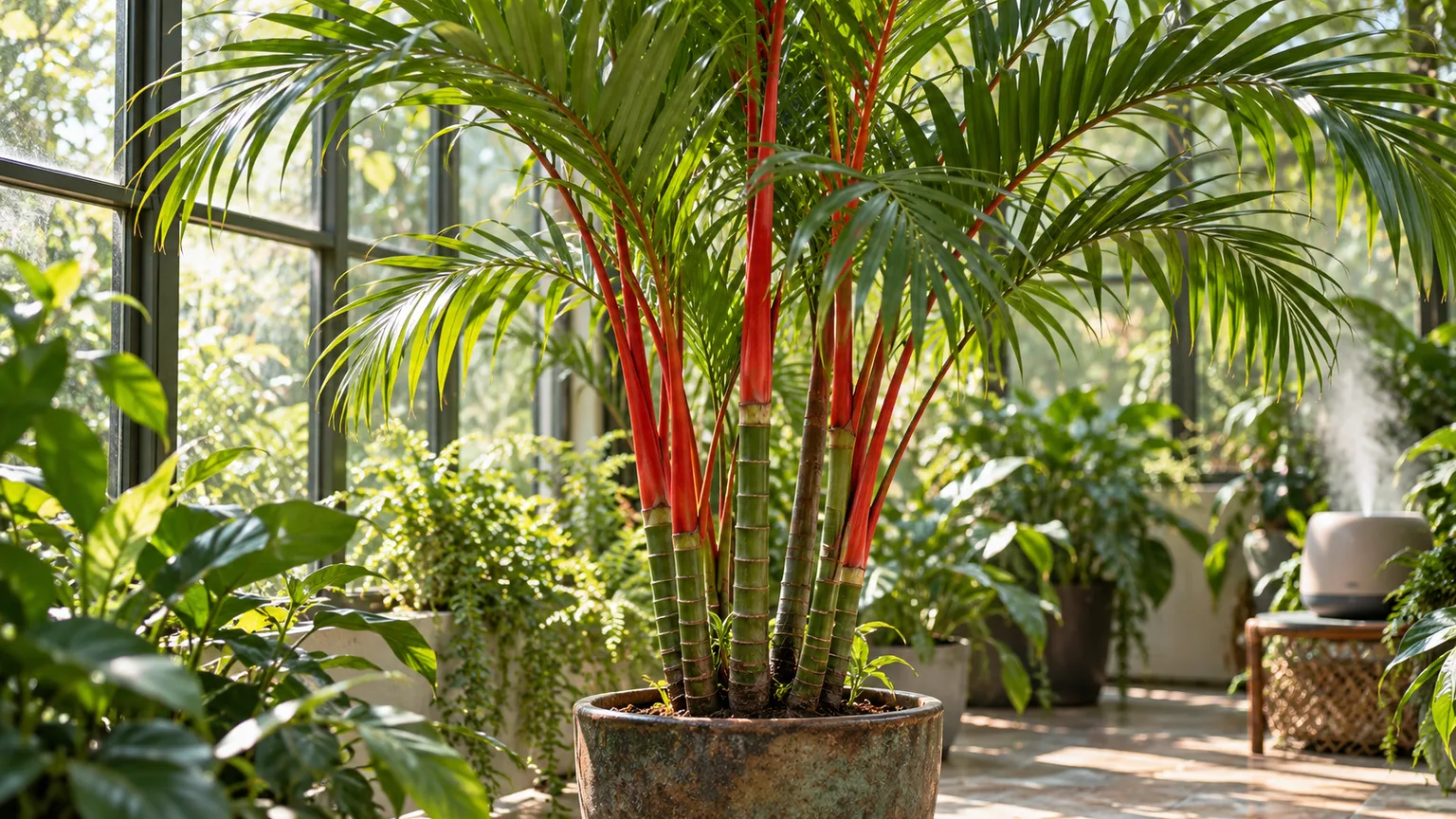
A lipstick palm needs warm conditions year-round and dislikes chilly drafts. Keep it away from exterior doors, air-conditioning outlets, and cold window glass in winter. If you use the plant outdoors in summer, bring it inside before nights begin approaching the mid-50s Fahrenheit; treat that as a cautious move-in cue, not a precise biological damage threshold. When nights are still cool, move it gradually between locations instead of leaving it exposed to a sudden cold front.
High humidity matters because the palm evolved in a wet tropical environment. In a dry heated home, use a room humidifier near the foliage and monitor conditions with a hygrometer; a pebble tray below a pot can provide a small local effect, but it will not humidify an entire room. Grouping plants can help slightly when the room already has reasonable humidity. Frequent misting is a poor substitute: it briefly wets leaf surfaces without reliably raising humidity for the rest of the day, and persistently wet foliage in still air can invite leaf problems.
Humidity should not come at the cost of stagnant air. Give leaves space, avoid pressing them against glass, and keep the humidifier clean according to its instructions. If condensation stays on windows or leaves for long periods, reduce the moisture output or improve gentle air circulation; the target is moist air around a healthy plant, not a perpetually damp room.
Build a moist but airy root zone
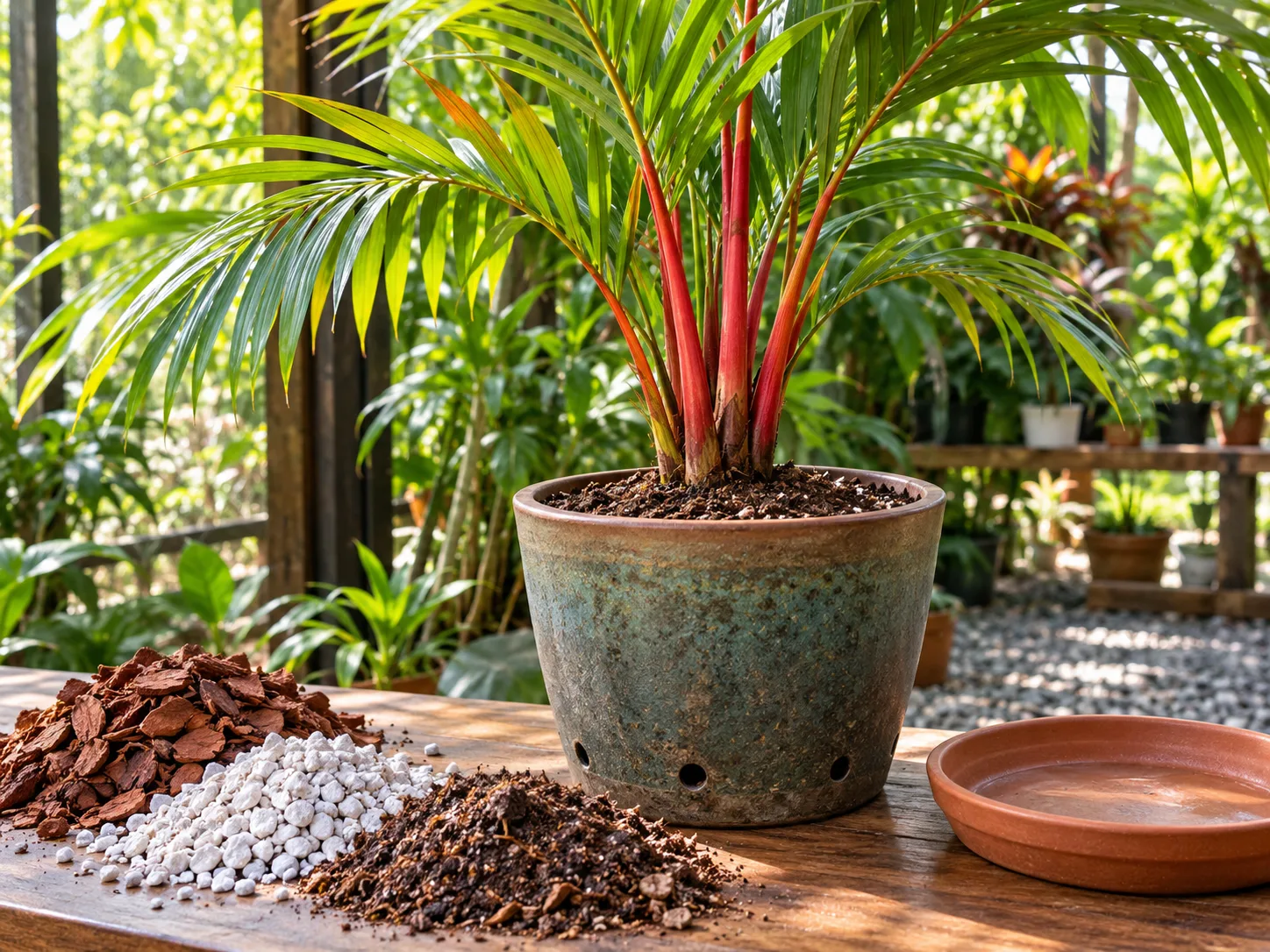
For a container, choose a loose, moisture-retentive palm or tropical mix with enough coarse structure—such as bark or perlite—to keep pores open. The top priority is that the rootball can hold water between checks and still drain freely after irrigation. A dense garden soil or potting mix that collapses into a wet mass is a poor choice, even though the species naturally grows in swampy places.
Kew’s lowland peat-swamp description explains the palm’s preference for persistent moisture; container advice has to account for the small, enclosed root zone. A garden swamp has moving water, broad soil volume, and different oxygen exchange from a plastic pot with a blocked drain hole. Soak the rootball thoroughly when it needs water, then let surplus drain away. Do not keep the nursery pot inside a decorative cachepot full of water.
Use a container with several working drainage holes. A heavy pot helps stabilize a top-heavy crown, but it should not be so oversized that a large band of unused mix stays wet around the roots. For planting in the ground, favor rich, moisture-holding soil that does not remain anaerobic for long periods; a low spot that floods repeatedly is not automatically a good palm site simply because the plant is tropical. UF/IFAS likewise emphasizes planting palms at their previous depth and establishing them with thorough irrigation, rather than burying the root ball. (UF/IFAS Extension, Florida Palms)
Water often enough without leaving roots stagnant
Keep the rootball evenly moist during active growth. Water when the upper layer has just begun to lose moisture, then apply enough water to wet the mix through and let the excess run out of the pot. The correct interval depends on pot size, mix, warmth, light, wind, and whether the palm is growing indoors or outdoors; a small pot in a hot greenhouse may need a check every day, while a larger pot in a cooler room may stay moist longer.
Do not solve every brown tip by watering more. If the soil is already wet, the pot is heavy, or it stays damp for days, adding water can further limit oxygen around the roots. Better Homes & Gardens, quoting a U.S. Botanic Garden gardener, distinguishes dry mix from a waterlogged root zone as different causes of palm leaf damage. For this moisture-loving species, the goal is a moist rootball that drains—not a constant puddle beneath it. (Better Homes & Gardens, 7 Essential Indoor Palm Plant Care Tips)
Container palms need frequent checks because pots heat and dry quickly. Check below the surface with a finger or wooden skewer rather than judging by the top alone. In winter, keep the rootball from drying completely, but water less often if growth and evaporation slow.
Use the pot, not the calendar, to time watering
A quick routine prevents both drought and waterlogging. First, feel the mix about an inch below the surface and lift the container if you know its usual watered weight. If the mix is still cool and moist and the pot feels heavy, wait and check again soon; if the surface layer has begun drying and the pot is lighter, water thoroughly until a little drains through.
Empty the saucer after the water has finished draining. If runoff is very fast but the rootball remains dry, the mix may have shrunk from the pot sides or become water-repellent; rewet it slowly in a few passes rather than flooding the top once. If water barely drains, inspect the holes and replace compacted mix at the next safe opportunity.
Frequent watering can also leave fertilizer and mineral salts behind. When the mix drains well and the plant is actively growing, occasionally flush the container with clean water and discard the runoff; do not do this when a cold, poorly draining rootball is already saturated. If your tap water leaves visible crusts or the leaf tips brown despite stable moisture, try rainwater or another low-mineral source for a period and monitor new growth rather than expecting damaged tips to turn green again.
Fertilize lightly during active growth
Feed a potted lipstick palm only when it is warm and producing growth. Use a slow-release product formulated for palms, follow the container label, and choose a rate intended for pots rather than applying a landscape dose. Frequent irrigation can wash nutrients through the root zone, but repeating fertilizer every time you water is an easy way to burn roots or build up salts.
Palms have different nutritional needs from many foliage plants. UF/IFAS gives Florida landscape palms a specialized fertilizer ratio and micronutrient guidance, but those field rates should not be transferred directly to a houseplant container. For a pot, use a measured, conservative label rate, avoid piling granules against the stem, and skip feeding while the plant is cold, recently repotted, or showing active root damage. (UF/IFAS Extension, Florida Palms; Better Homes & Gardens)
Pale new growth or slow growth does not automatically mean the palm needs more fertilizer. First check warmth, light, root moisture, and drainage; a root system struggling in cold saturated mix cannot use added nutrients well. If you have hard water or see a white crust on the soil, flush salts only after confirming the pot drains freely, then resume a modest feeding schedule during active growth.
Pot and repot without damaging the palm
A lipstick palm can stay in the same pot for several seasons if water moves through the mix and the rootball has room to function. Repot when roots circle tightly, emerge densely from drainage holes, or the mix has broken down and become difficult to wet evenly. Do not repot simply because the palm has reached a particular month or because you want it to grow faster; unnecessary root disturbance can set back a slow-growing specimen.
When repotting is needed, choose a stable container just modestly wider than the old one, with drainage holes. Support the base, disturb roots as little as possible, and set the palm at its previous depth in fresh porous mix. Keep it warm while it adjusts. BHG and Get Busy Gardening likewise advise against frequent repotting; for this moisture-loving palm, drainage does not mean drying the whole rootball. (Better Homes & Gardens; Get Busy Gardening, Indoor Palm Plant Care)
Avoid splitting a healthy clump during routine repotting. Its stems share a limited root area, and separating them can remove too much of the root system from one or both parts. If the palm has simply outgrown its pot, move the intact rootball to a larger container rather than turning repotting into propagation.
Plant it outdoors only in a suitable tropical garden
In a reliably warm, humid climate, plant the palm where it receives bright light with some protection from harsh midday sun and strong wind. Leave enough room for the clump to widen and for long fronds to arch without rubbing walls, paths, or neighboring plants. A sheltered pondside or courtyard position may help retain moisture, but do not assume salty coastal spray is harmless simply because a palm tolerates wet soil.
Set the palm at its nursery depth. Backfill a broad hole with native soil, water to settle it, and mulch the root zone without piling mulch against the stems. UF/IFAS also recommends planting palms at their established depth and watering through establishment; local climate still determines whether an outdoor site suits this species. (UF/IFAS Extension, Florida Palms)
During the establishment period, check soil moisture more often than you will once the palm is rooted into the surrounding ground. Keep soil from drying deeply, especially during hot or windy weather, but reduce irrigation if a heavy rain leaves the site saturated. Wind can tear or desiccate long fronds; shelter is more helpful than staking a small plant tightly or pruning away healthy leaves to make it fit.
Move a container palm indoors before cold weather
If the palm spends summer outside, bring it in while nights are still comfortably warm rather than waiting for the first cold warning. Before the move, inspect the leaf undersides, crownshaft bases, and pot rim for pests, then rinse the foliage and let the container drain. This reduces the chance that an outdoor pest population will spread to other houseplants and avoids carrying a wet pot into a cool room.
Acclimate it over several days if possible: move from outdoor filtered shade to a bright protected porch, then indoors near a bright window. Once inside, keep it away from heaters and cold drafts, increase humidity if the room is dry, and expect slower growth as winter light declines. Do not respond to slow winter growth by increasing fertilizer or keeping the rootball constantly saturated; warmth and useful light matter more than forcing new leaves.
Return it outdoors after cold nights have passed. Start in bright shade, then increase exposure gradually; a jump from a dim room to full sun can scorch leaves even in warm weather. BHG likewise emphasizes matching a palm to the available light and avoiding drafts. (Better Homes & Gardens)
Propagate lipstick palm from offsets or seed
A clumping palm can produce shoots at its base, which offers a chance to divide it, while seed is possible but slow and less predictable. Neither method is a quick route to a large palm. If the parent plant is valuable or already struggling, preserve its existing clump instead of experimenting with separation.
Separate only a well-rooted offset
Wait until a basal shoot is large enough to have its own roots and several leaves. Remove the palm from its pot only when conditions are warm and the plant is actively growing; tease apart or cut the connection with a clean tool while preserving as much root mass as possible. A shoot that has no roots of its own is not ready to live independently, and removing it may create a wound without producing a viable new plant.
Pot the rooted division in a small container with drainage and a moist, airy mix. Keep it warm, humid, and in filtered light while it establishes, but do not seal it in a stagnant enclosure or leave water pooled around the roots. A division may pause before producing a new leaf; judge it by whether the stem remains firm and the existing foliage holds, not by expecting immediate growth.
Grow from fresh seed if you can wait
Kew’s species profile describes the fruit as ellipsoid and light green before turning black when ripe. If you can obtain fresh, correctly identified seed, clean away the fruit pulp and sow it promptly in a warm, moist, airy medium; old or dried seed may be less dependable. Keep the medium evenly moist, not waterlogged, and provide steady warmth. Germination timing varies, so avoid discarding a viable seed just because it has not appeared within a few weeks. (Plants of the World Online, Royal Botanic Gardens, Kew)
Do not try to propagate a palm by cutting off the top of a stem or rooting a trunk section. Each stem grows from its terminal bud; a cut stem does not branch back into a new clump. If seed or offsets are unavailable, purchasing a nursery-grown young palm is more predictable than attempting stem cuttings.
Prune for health, not height
Remove only fully dead or broken fronds, cutting with clean, sharp tools and staying clear of the stem’s crownshaft and central spear. A frond that is partly green is still contributing to the plant; trimming it because the tips are brown sacrifices useful leaf area while leaving the cause untouched. Older lower fronds may yellow and die naturally as the clump grows.
Never shear the top to control height. The central growing point is the stem’s only active growing point, and damage can kill that stem. The clump may continue from other shoots, but a solitary or young plant without offsets has no backup stem; give it enough space instead of trying to prune its shape into a smaller form.
Troubleshoot common lipstick palm problems
Read leaf symptoms together with soil moisture, temperature, and recent changes. A single brown tip is not a diagnosis, and treating it with more water, fertilizer, and misting all at once makes it harder to find the cause. Check one factor at a time and look for improvement in the next leaf rather than expecting old damaged tissue to recover.
| What you notice | Check first | What to do |
|---|---|---|
| Brown tips or edges, mix drying quickly | Dry air, missed watering, hot sun, or mineral salts | Check moisture below the surface, move from harsh sun, and review water quality and feeding |
| Yellowing lower fronds, heavy wet pot | Slow drainage or root stress | Empty standing water, inspect drain holes, and let the mix move toward moist rather than saturated |
| Pale, stretched new leaves | Inadequate light or cool growth conditions | Move to brighter filtered light and stabilize warmth before feeding |
| Bleached or tan patches on one side | Sudden direct sun or hot glass | Return to dappled light and acclimate gradually |
| Fine stippling, webbing, sticky residue, or fixed bumps | Spider mites, mealybugs, or scale | Isolate the plant, inspect leaf undersides and stem joints, and wash or remove pests before considering a labeled treatment |
| A soft or collapsing central spear | Severe cold, waterlogging, or crown damage | Keep the plant isolated, stop wetting the crown, and assess the stem and root zone promptly |
If the mix is wet and the palm is declining, check drainage before watering again. When a container smells sour or roots are dark and mushy, remove only clearly rotted material, replace collapsed mix, and repot at the original depth in a clean, draining container; do not strip healthy roots as a routine rescue. If the crownshaft or central spear is damaged, avoid cutting into the growing point, since a palm cannot replace a destroyed stem tip the way many branching houseplants replace a pruned shoot.
Indoor palms can attract spider mites, mealybugs, and scale, especially when stressed or crowded. BHG’s horticultural source recommends inspecting new palms and watching for common houseplant pests; repeat the inspection after isolation rather than assuming one rinse solved the problem. If you use a pesticide, select one labeled for the specific pest and plant, follow its directions, and test it on a small area first; avoid improvised concentrations or spraying in a poorly ventilated room. (Better Homes & Gardens)
A lipstick palm is a good fit when you can provide a warm tropical microclimate and are comfortable managing moisture precisely. Choose a bright, humid, sheltered place, keep the roots consistently moist but aerated, and move container plants indoors before cold weather. If those conditions are not realistic, a more adaptable palm will give you a better chance of healthy growth with less work.
Conclusion
Grow lipstick palm as the tropical palm it is: warm, humid, bright but protected, and consistently moist without stagnant water. That balance is achievable in a suitable tropical garden or managed greenhouse, and possible in a container when you can protect it from cold and provide enough light and humidity. Start with the right setting, let the mix—not a calendar—guide watering, and make changes one at a time when the leaves signal stress.



