How to Prevent Aphids From Returning Next Year
Prevent aphids next year with a fall inspection, targeted cleanup, natural predator support, and safer treatment steps for gardens, shrubs, and containers.
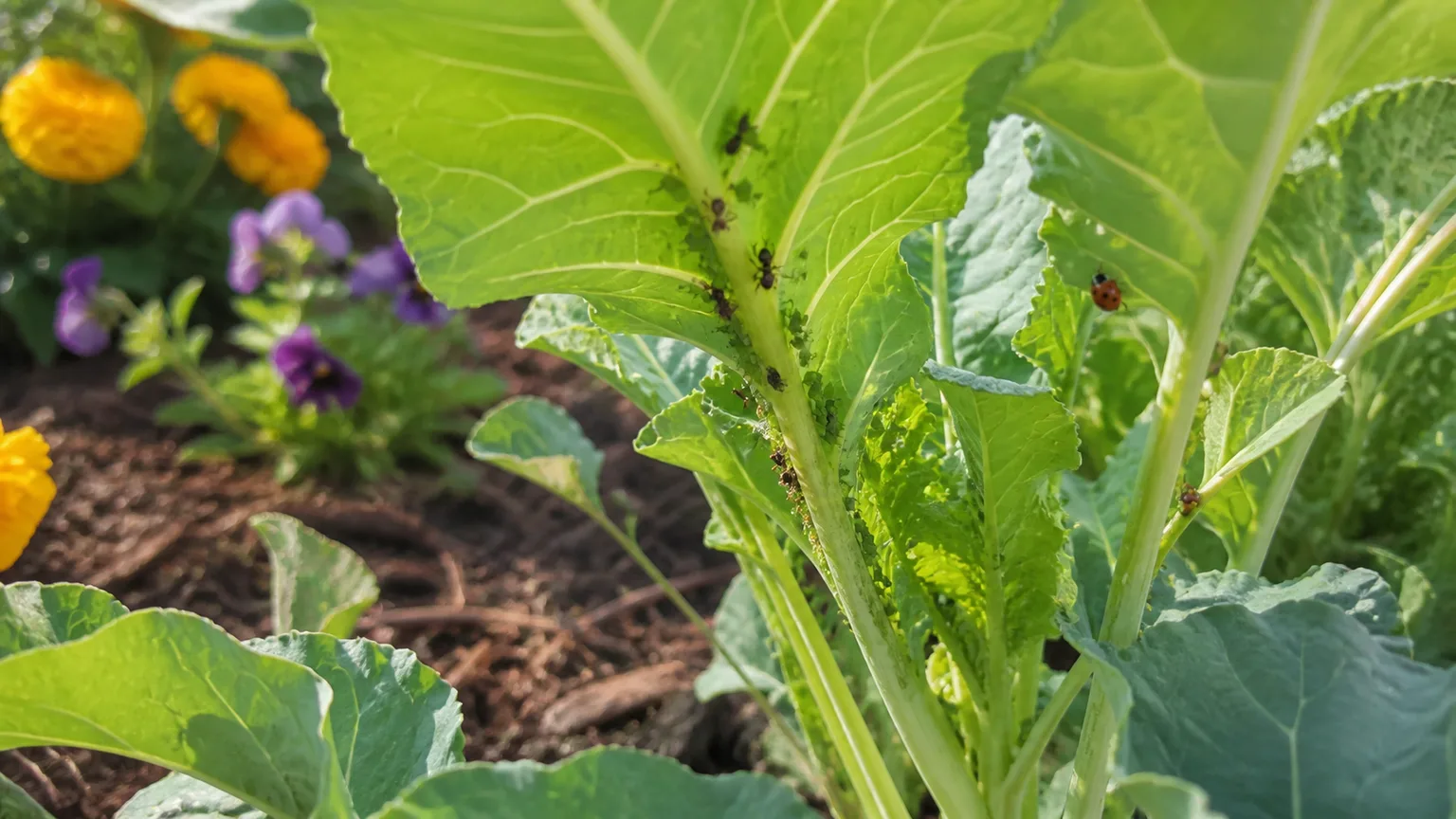
If you do only one aphid-prevention job this fall, make it a slow inspection followed by physical removal of every live colony you can find. Turn over leaves, examine shoot tips and buds, check stems and bark, then wash or wipe off the aphids before you start broad garden cleanup. That sequence lowers the number of insects available to reproduce while the weather is still mild enough for them to be active.
This is more useful than treating “fall” as a single spray date. Aphids do not all overwinter in the same form, and a clean-looking bed does not prove that a shrub, perennial crown, container, or row cover is pest-free. In many temperate gardens, eggs laid on a host plant help restart the population in spring, while some species remain active through mild winters or on plants kept indoors. The realistic goal is to reduce the starting population and catch the first spring colonies early—not to promise that a winged aphid can never fly in from somewhere else.
The One Fall Action That Actually Breaks the Aphid Cycle
Think of the first fall pass as a host-plant audit, not a whole-yard pesticide treatment. Walk the garden with a small bucket of water, a soft cloth, pruners, a hand lens if you have one, and a bag for infested cuttings. For each plant, ask three questions: Are aphids present now? Is the plant a likely place for eggs or protected colonies? Is the affected growth worth saving, or is removal the least disruptive option?
The order matters. If you begin by cutting everything back or blowing leaves around the bed, you can move insects and miss colonies hidden in the parts you remove later. If you begin with a targeted inspection, you can wash live aphids from healthy growth, bag a few infested leaves, and preserve the stems, seed heads, and leaf litter that support other garden life where they are not carrying an active problem.
Why Fall Timing Matters More Than a Calendar Date
Do this while plants still have accessible foliage and before a hard freeze makes inspection impractical. A warm October afternoon may be the right time in one garden; in another, an earlier cool spell or a mild winter means the useful window is different. Temperature, plant condition, and local aphid activity matter more than the name of the month.
The biology explains why. University of Nevada, Reno Extension notes that many aphids overwinter as eggs, hatch as temperatures rise, and then reproduce rapidly during the growing season. The RHS aphid guide adds an important qualification: many species use a woody plant for the overwintering part of the cycle and move to a softer summer host, while some species stay on one host and some remain active in mild winters or indoors.
That means washing a leafy vegetable in late fall can reduce the live colony you see today, but it may not reach eggs tucked into bark crevices on a tree. Conversely, scrubbing the bark of every tree in the yard is usually unnecessary and can damage the plant. Match the action to the host and the evidence in front of you.
Identify Whether Aphids Are Still Active Before You Clean Up
Aphids are small, soft-bodied, pear-shaped insects that may be green, black, yellow, pink, gray, or nearly white. Color is a poor identification shortcut. Look for clusters of tiny insects on tender growth, pale cast skins, sticky honeydew, or a black coating of sooty mold on leaves below an infestation. A line of ants moving up a stem is another clue, because ants may collect honeydew and defend aphid colonies from predators.
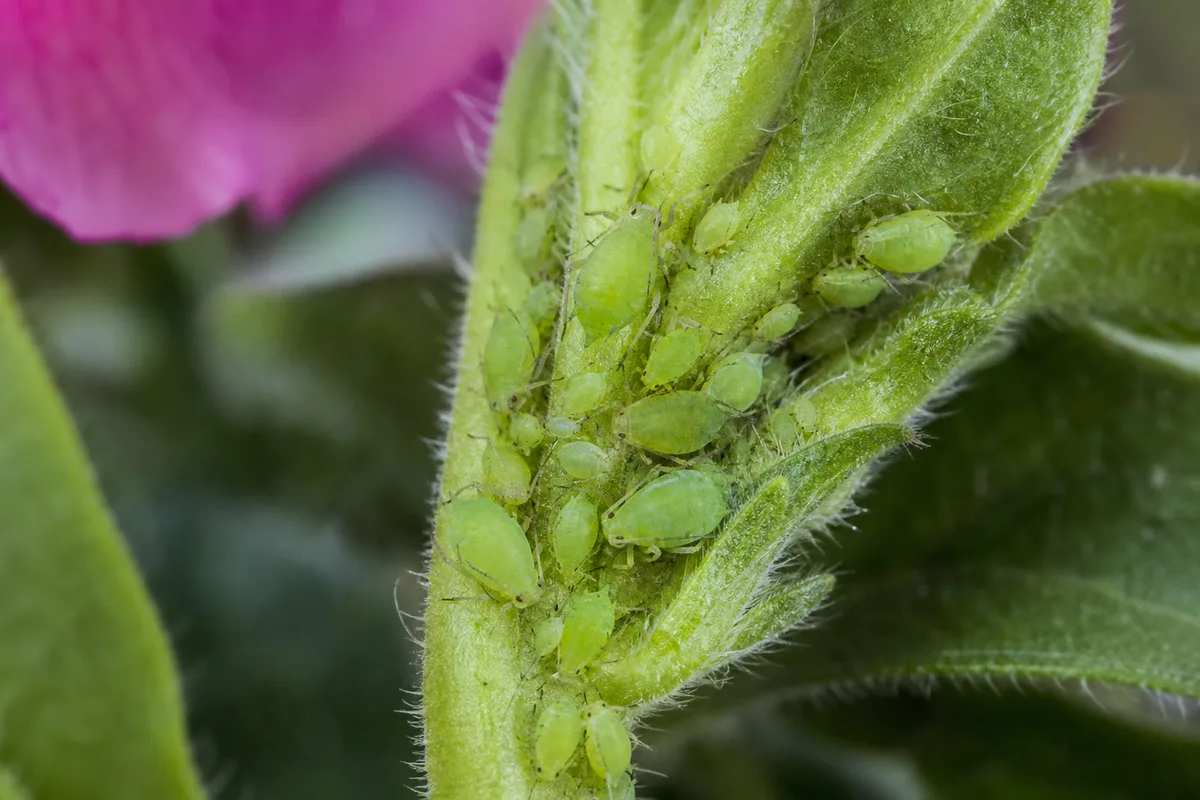
Do not automatically treat every curled or yellow leaf as an aphid problem. Drought, disease, nutrient stress, frost, and normal autumn senescence can look similar. Confirm the insect before applying anything: gently unfold a curled leaf, inspect the underside, and look around the newest growth. The University of Nevada, Reno Extension guidance describes aphids as especially common on shoot tips, leaf undersides, swelling buds, and succulent new growth, which are the places most likely to give you a useful answer quickly.
Use this simple triage while you walk:
| What you find | Best next move |
|---|---|
| A few aphids on firm, healthy growth | Squash or wipe them off, then recheck in several days. |
| A colony on a leaf, shoot tip, or soft stem | Wash the plant with a firm water stream or remove that localized growth. |
| Aphids plus ants, honeydew, or sooty mold | Remove the aphids and investigate how ants are reaching the plant. |
| Aphids hidden in severe leaf curl | Remove and bag the worst leaves; a surface spray may not reach the insects. |
| No insects but old damage | Do not spray based on symptoms alone; monitor new growth instead. |
Where to Look First
Start at the top of each plant and work downward. Examine the newest leaves, flower buds, leaf joints, stem forks, and the undersides of leaves. Aphids prefer young, succulent tissue and sheltered surfaces, so a quick glance at the upper leaf surface is not a complete inspection.
Next, look at the parts that gardeners often skip: the bases of stems, the undersides of branches, the bark around dormant buds, and the soil line of plants with dense crowns. You may not be able to identify an egg confidently without magnification, and species differ in where they lay eggs. Your practical objective is not to find every microscopic egg; it is to find live colonies, visibly infested tissue, and the host plants that deserve a closer spring watch.
Use a 20-Minute Inspection Routine
Divide the job into four short passes instead of trying to inspect every leaf on every plant. Start with plants that had aphids this year, then plants with soft new growth, then plants that touch or shelter other plants. Record the names of repeat problem plants in a note on your phone. Repeated trouble on the same rose, plum, vegetable bed, or ornamental shrub tells you more than one random sighting on a plant that rarely hosts aphids.
Start With Woody Plants and Perennial Crowns
Inspect roses, stone fruits, apples, currants, shrubs, vines, and any plant where the stems remain through winter. Check the newest branch growth, bud scales, pruning cuts, and tight branch junctions. On a perennial, look at the crown and the lower stems before cutting it back, especially if the plant had distorted growth or sticky leaves earlier in the season.
The NC State Extension example of the elm-grass root aphid shows why aphid life cycles can be more complicated than a single “spray the leaves” rule: one species alternates between elm and grass hosts, with eggs overwintering on elm bark. That is a species-specific example, not a rule for every aphid in your garden. It is still a useful reminder to identify the affected plant and avoid assuming that the visible summer host is where the next generation must spend winter.
For a woody plant with a few live clusters, wipe or wash accessible insects and remove only the affected tip if it is expendable. If the whole shrub is covered, pause before reaching for a broad treatment. The plant’s size, its value, whether it is edible, and the product label’s allowed timing all matter.
Check Containers, Stakes, and Row Covers
Potted plants and garden structures create protected pockets where aphids can keep feeding after outdoor temperatures drop. Inspect pot rims, saucers, plant labels, trellises, stakes, undersides of leaves, and the folds of row covers. Lift covers on a mild day and check the plants underneath; do not assume a barrier eliminates the need for scouting.
This is one place where a mistake can multiply. In her fall garden aphid checklist, Epic Gardening’s Briana Yablonski describes finding a heavy infestation after row covers were left over crops for weeks without inspection. Covers can protect plants from cold and some pests, but the warm, sheltered space can also let aphids build before you notice them. Vent and inspect whenever weather allows, following the cover manufacturer’s guidance for crop protection.
If you plan to move a tender container indoors, treat it as a separate inspection project. A plant that looks clear from across the patio may still have aphids tucked into a new leaf, node, or flower bud. Clean the pot and saucer, remove dead leaves, and set the plant apart from your indoor collection until it has passed repeated checks.
Wash and Knock Down Live Aphids
For a manageable outdoor colony, plain water is a strong first move. Use a hose with a firm but controlled stream and aim at the undersides of leaves, shoot tips, and stem joints. The goal is to dislodge the insects without stripping foliage, breaking stems, eroding soil, or blasting flowers apart.
The BBC Gardeners’ World Magazine aphid guidance recommends washing aphids from plants with a hose and hand-squashing small infestations, while University of Nevada, Reno Extension describes repeated water washing as an effective way to keep populations at acceptable levels. Water works because aphids are soft-bodied and often cling less strongly than the plant tissue they occupy. Many fall off, are injured, or fail to return to the same shoot.
Water has limits. It is not a dependable way to remove every egg hidden on bark, and it will not solve a colony protected inside a tightly curled leaf. It also does not correct the condition that made the plant attractive, such as excessive nitrogen-driven soft growth, a protected row-cover pocket, or ants defending the colony. Recheck the plant after a few days while it is still warm, and repeat the wash if live aphids are building again.
Use this sequence for a careful wash:
- Water the root zone first if the plant is already dry, so the foliage is not the only part receiving attention.
- Choose a calm, mild part of the day and avoid soaking plants just before a cold night.
- Support fragile stems with your free hand or use a lower-pressure setting; do not turn “firm stream” into a damaging jet.
- Spray from several angles, especially under leaves and into leaf joints.
- Let the foliage dry with good air movement, then inspect the plant again rather than assuming the job is finished.
If you are washing edible crops, keep soil from splashing onto harvestable leaves and follow normal produce-washing practice before eating. If the plant is flowering, avoid knocking off pollinators or spraying anything that is not necessary. Physical removal is selective only when you direct it at the infested tissue.
Prune Only What Is Heavily Infested
Pruning can be the cleanest solution when aphids cover one shoot, a few curled leaves, or a small branch. Seal the cuttings in a bag and remove them from the growing area rather than dropping them beside the plant. Clean pruners between plants when you move from one known infestation to another, especially if the plant also has suspicious virus-like symptoms.
Do not use aphids as an excuse for a severe late-season haircut. Removing healthy branches can trigger tender regrowth, reduce winter structure, eliminate next year’s flower buds, or weaken a plant before cold weather. The University of Nevada, Reno Extension notes that moderate pruning and leaf picking can reduce aphid numbers, but also warns that severe or poorly timed pruning can produce soft “water sprouts” that are attractive to aphids.
The decision is straightforward when the affected piece is already damaged and disposable. It is harder when the insects are on a valuable woody plant or on growth that carries next year’s flowers. In that case, wash accessible colonies, monitor the remaining plant, and ask a local extension office or a qualified arborist about species-specific dormant-season options instead of guessing at a whole-plant treatment.
Clean Up Crop Residue Without Stripping Useful Habitat
Remove finished annual vegetables, fallen fruit, weeds that are visibly carrying aphids, and plant debris that is clearly connected to an active infestation. Pull or cut the material carefully, bag heavily infested pieces, and avoid dragging them across clean beds. Cleaning up the old crop removes places where live aphids can continue feeding and prevents a forgotten plant from becoming a bridge to spring seedlings.
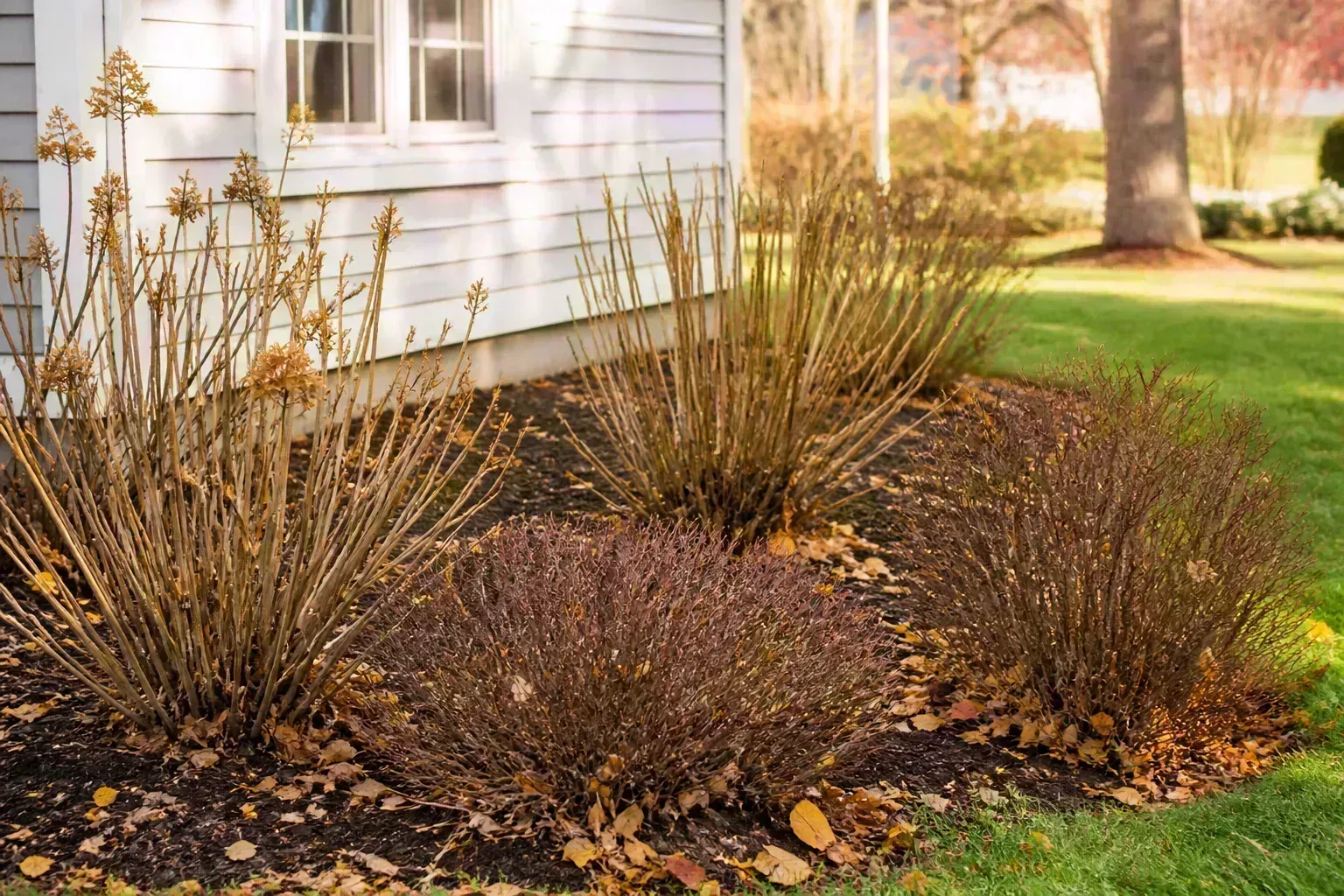
Be more selective with leaf litter and perennial stems. Aphids are part of a larger food web, and the RHS advice on aphids emphasizes that they support many predators and are rarely a reason to sterilize an entire garden. A tidy garden is not automatically a healthier garden if “tidy” means removing every overwintering shelter for lady beetles, lacewings, ground beetles, and other useful wildlife.
Use a boundary: remove material that is infested, diseased, collapsing onto a crown, or likely to spread insects to a plant you need to protect. Leave healthy stems and some clean leaf litter in an appropriate part of the garden if they provide winter habitat. Keep that habitat away from a known aphid colony or a greenhouse entrance, and follow local guidance for disposing of diseased or regulated plant material.
Follow the Ant Trail
Ants do not create aphids, but they can make an infestation harder for natural enemies to control. Aphids excrete honeydew, and some ants collect it while defending the insects from lady beetles, hoverfly larvae, lacewings, and parasitoid wasps. If you see ants traveling up a shrub or tree, inspect the leaves and shoots above the trail before you decide the plant has a mysterious disease.
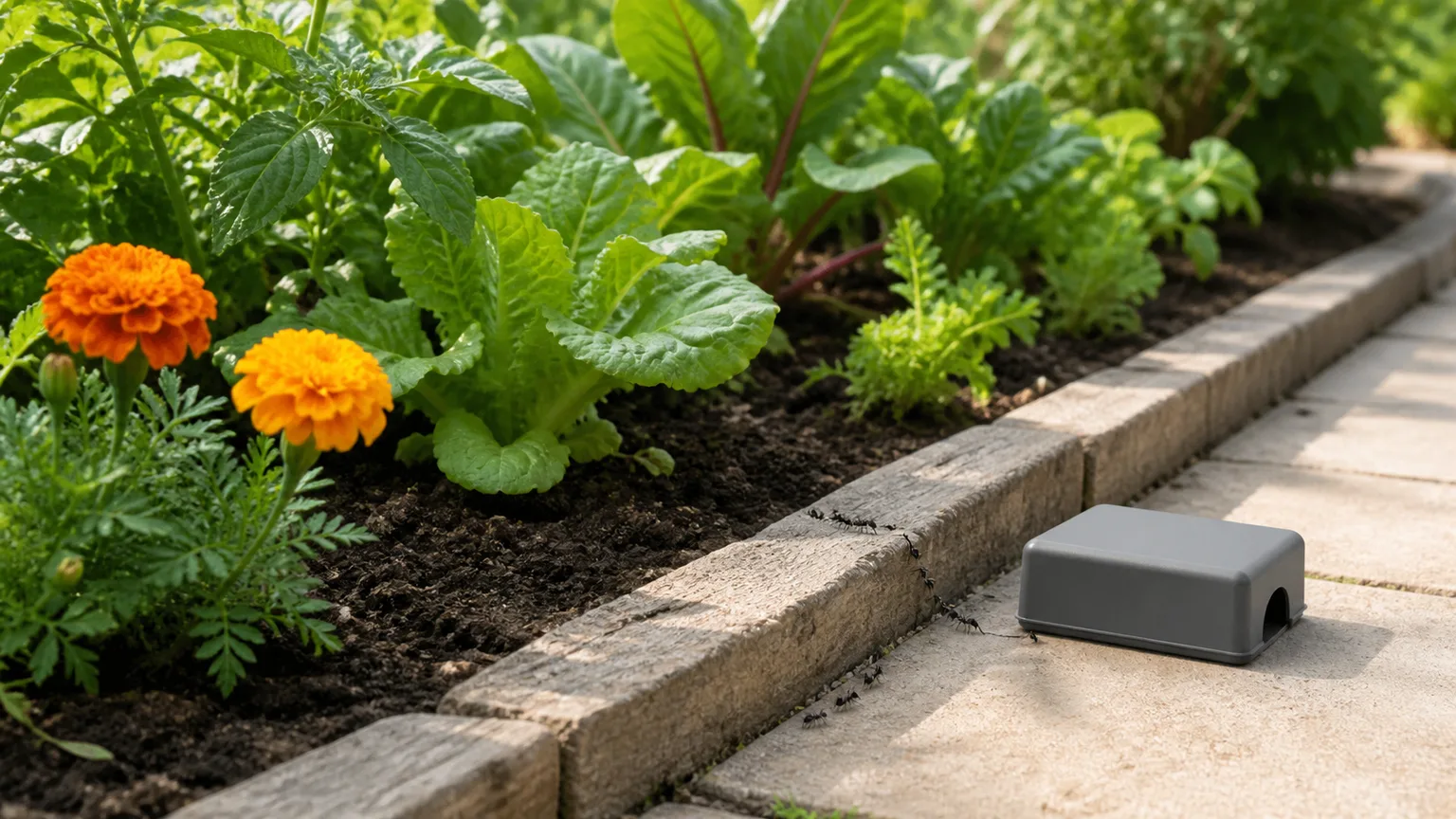
Treat the ant trail as information. Find out whether it leads to an aphid colony, a crack in a raised bed, a nearby nest, or a sugary spill. Remove the aphids first where possible, then reduce the ant route with the least disruptive option for your site. Do not smear a sticky product directly on a trunk without checking its instructions; barriers can injure bark or trap non-target insects, and they need maintenance when dust or debris coats them.
The goal is not to kill every ant in the garden. It is to stop active tending of a colony that is causing plant damage, especially on a single-stemmed shrub or a young tree where the trail is obvious. Once the ants are no longer protecting the aphids, predators have a better chance of finding the remaining insects.
Protect Aphid Predators Through Fall and Winter
Aphid control is easier when your garden contains the insects that already hunt them. Lady beetles, lacewings, hoverflies, syrphid larvae, parasitoid wasps, earwigs, and some birds all contribute to keeping colonies in check. The RHS guidance specifically recommends tolerating aphids where possible and encouraging natural enemies rather than treating every sighting as an emergency.
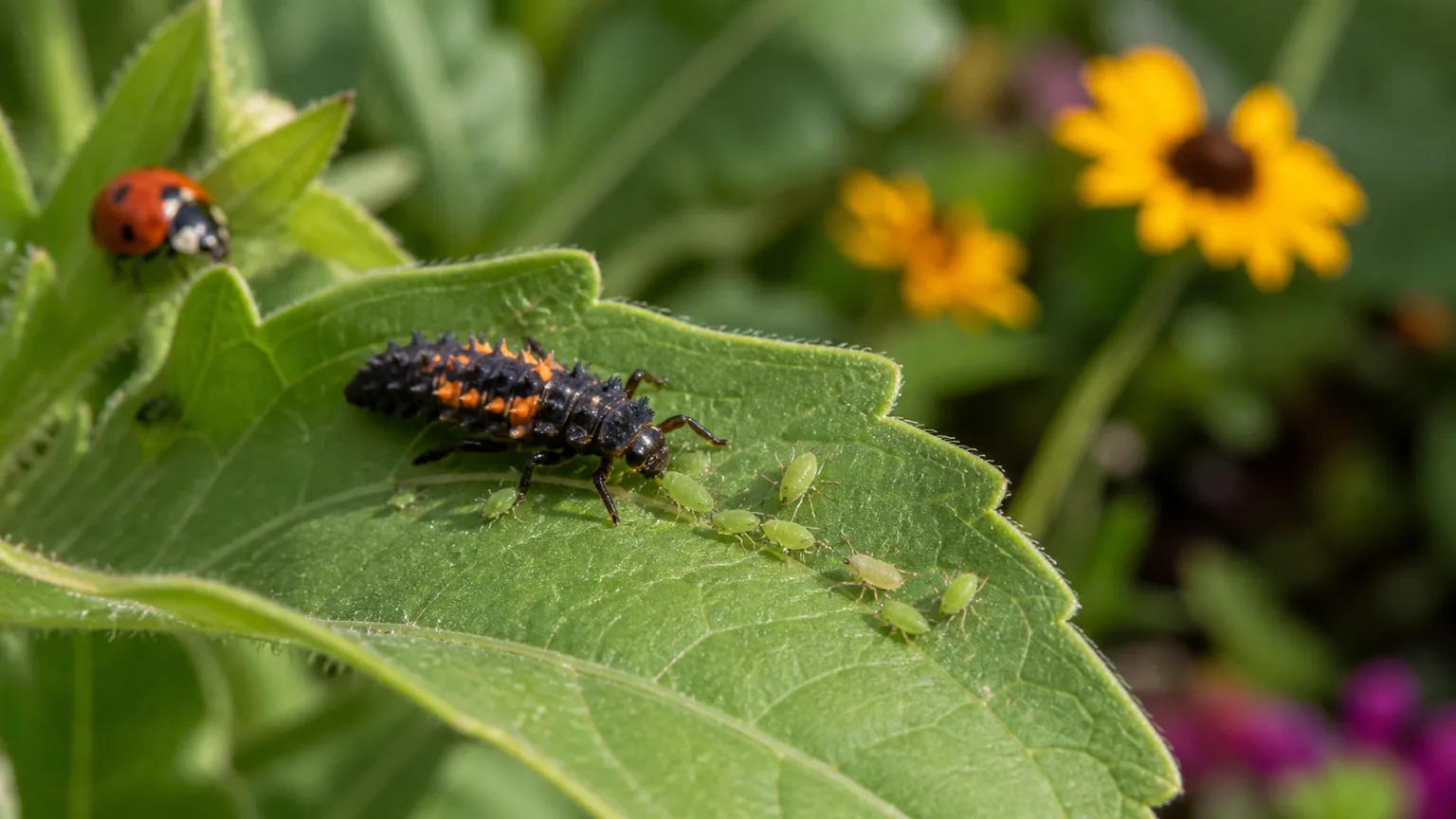
That does not mean you must preserve a damaging colony as wildlife food. It means you should choose a proportional response. Squash a few aphids, wash a localized cluster, and avoid spraying a whole bed when predators are already working nearby. Pale, hollow-looking aphid “mummies” or a lady beetle larva among the colony are evidence that biological control is happening; do not confuse a spiky dark larva with a pest and remove it by mistake.
Keep some pesticide-free flowering plants and sheltered areas where appropriate, and avoid broad-spectrum applications that remove predators along with aphids. In spring, predator numbers can lag behind aphid numbers, so early monitoring is still necessary. A garden that supports predators is not a garden that never sees aphids; it is a garden that can often absorb small outbreaks without a chemical reset.
Skip the Marigold Shortcut
Marigolds are useful garden plants, but planting them beside a crop is not a reliable aphid barrier. They will not remove eggs from a shrub, prevent a winged aphid from landing, or compensate for a neglected colony under a row cover. Companion planting can add habitat and diversity, yet it should support a prevention plan rather than replace inspection.
If you like marigolds, grow them because they suit your light, soil, and garden design. Pair them with a practical scouting habit: check susceptible plants twice a week during active growth, turn over leaves, and respond while colonies are small. The same principle applies to garlic, onions, herbs, and other strongly scented plants often presented as universal repellents. A plant can be a good neighbor without being a force field.
Decide When Soap or Horticultural Oil Is Justified
Use a spray only after you have confirmed that aphids are present and decided that water, wiping, pruning, and predator support are not enough. Insecticidal soap and horticultural oil are contact products: they must reach the aphids to work. They are not magical coatings that protect new leaves forever, and a single pass may miss insects under foliage or inside curled leaves.
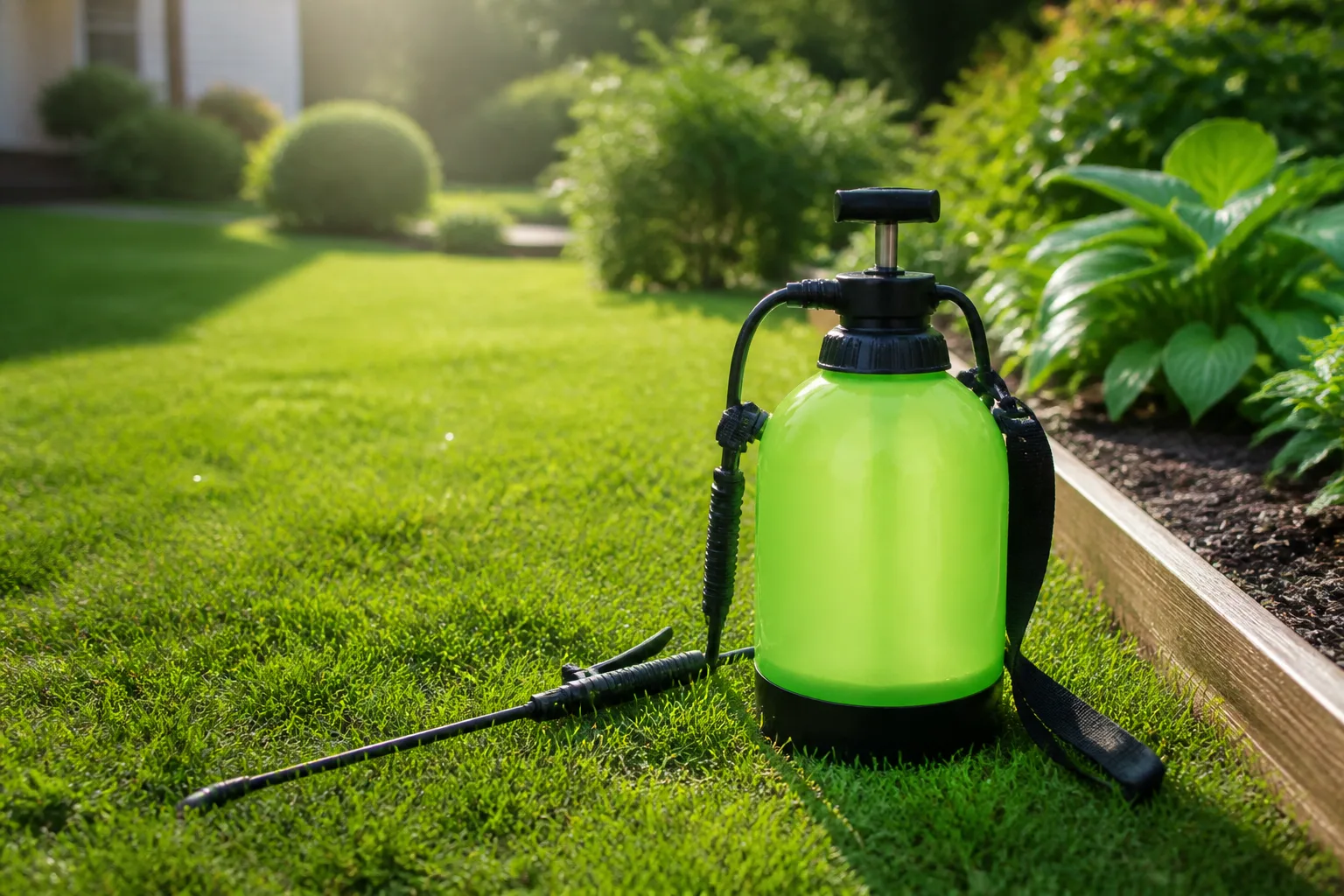
Choose a product registered for the crop or ornamental and follow its label for dilution, temperature, weather, protective equipment, reapplication interval, edible-crop restrictions, and plant-sensitivity warnings. Do not substitute dish detergent for a labeled insecticidal soap. Household detergents can strip the leaf’s protective surface and cause injury, and a stronger mixture is not automatically more effective.
Oil can be useful in a dormant-season program for certain woody plants because some extension guidance recognizes appropriately timed horticultural oil as a way to target overwintering aphid eggs. Timing is the safety issue: “dormant” or “delayed dormant” applications depend on the plant, bud stage, temperature, weather, and exact product label. Never spray an oil product during conditions the label excludes, and do not assume a recipe intended for one tree species is safe on every shrub, vegetable, evergreen, or tender plant.
Broad-spectrum insecticides deserve extra caution. They can kill aphids, but they can also remove the predators that would have controlled the next generation. The RHS recommends non-chemical control where possible because even organic pesticides can affect biodiversity. If a severe recurring infestation threatens a valued plant, use the narrowest legal, label-compliant option and consider getting local extension advice before treating the whole landscape.
Bring Outdoor Plants Indoors Without Bringing Aphids With Them
Plants that move inside for winter need their own pest checkpoint. Before carrying them through the door, inspect the undersides of leaves, new growth, pot rims, drainage holes, saucers, stakes, and the spaces where leaves touch one another. Remove dead foliage and weeds from the container, rinse the plant if its species tolerates it, and wash the pot exterior.
Keep incoming plants apart from established houseplants while you monitor them. Check them repeatedly over the next couple of weeks and again after a flush of new growth; a plant can look clear immediately after a rinse and still reveal a hidden colony later. If aphids appear, move that plant away from the collection and use the least disruptive treatment that is appropriate for the species and indoor setting.
This step matters even if your outdoor garden freezes. Aphids can remain active year-round on indoor plants, where natural predators are scarce. The RHS aphid guide and BBC Gardeners’ World Magazine both distinguish indoor conditions from the seasonal limits of outdoor colonies. A clean patio is not a substitute for inspecting the begonia, pepper, herb, or tropical plant you just placed beside the brightest window.
Follow a Fall-to-Spring Prevention Calendar
Use a short repeatable schedule instead of one dramatic cleanup day:
- Now, while aphids are active: inspect repeat host plants, row covers, containers, and soft new growth. Wash, wipe, or selectively prune live colonies.
- During the next mild spell: repeat the inspection, follow ant trails, and check whether new aphids are appearing after the first wash. Photograph an unfamiliar problem before removing all evidence.
- After annual crops finish: remove visibly infested crop residue and weeds. Keep clean stems and habitat where they do not shelter a known colony.
- Before moving plants indoors: quarantine, rinse when appropriate, clean containers, and inspect again rather than trusting the first look.
- During winter: check indoor plants monthly and outdoor woody plants during occasional mild weather. Avoid unnecessary pruning or spraying while plants are dormant.
- At spring bud break: inspect overwintering hosts before new growth expands. The first small colony is much easier to wash away than the population that follows several warm weeks of unchecked reproduction.
The schedule is intentionally modest. A twice-weekly check during active growth, a careful fall pass, and an early spring look can outperform an occasional heavy spray because each action happens close to the point where it changes the outcome.
If Aphids Return Anyway, Change the Sequence
Aphids may return even after a careful fall cleanup. Winged forms can arrive from neighboring plants, an alternate host may be nearby, a mild winter may preserve active insects, or the original host may be a repeat favorite. Returning aphids are not proof that your fall work failed; they are a signal to find the missing link.
Start with diagnosis. Are the insects on new growth because nitrogen fertilizer pushed a flush? Are ants defending them? Did a row cover create a warm pocket? Did you spray only the top of the leaves? Did you bring an infested container indoors? Did a spray kill predators while missing the colony inside curled foliage? Answering one of those questions is more valuable than automatically switching to a stronger product.
Then reset the sequence: isolate or mark the affected plant, wash accessible colonies, remove the worst tissue, protect predators, and recheck on a defined interval. For severe damage, recurring infestations on a valuable tree, or signs that aphids may be transmitting a plant virus, contact your local Cooperative Extension office or a qualified plant professional. Some virus symptoms remain after the aphids are gone, so treating the insect will not reverse already distorted or mottled growth.
Conclusion
The best thing to do right now is simple but specific: inspect your garden’s likely host plants and physically remove live aphid colonies before winter. Wash accessible insects from healthy growth, bag heavily infested cuttings, and check row covers and containers before they become protected winter nurseries.
After that first pass, clean up infested crop residue without stripping every piece of wildlife habitat, follow ant trails, protect lady beetles and other predators, and reserve soap, oil, or other pesticides for a confirmed need and a label-approved use. Most importantly, look again at spring bud break. You cannot keep every aphid from arriving, but you can make next year’s population start smaller, discover it earlier, and manage it without turning the whole garden into a treatment zone.



