Monstera vs Philodendron: Split Leaves and Heart Vines
Monstera vs philodendron compared by leaf shape, fenestration, genus ID, space needs, and care so you stop buying the wrong split-leaf plant.
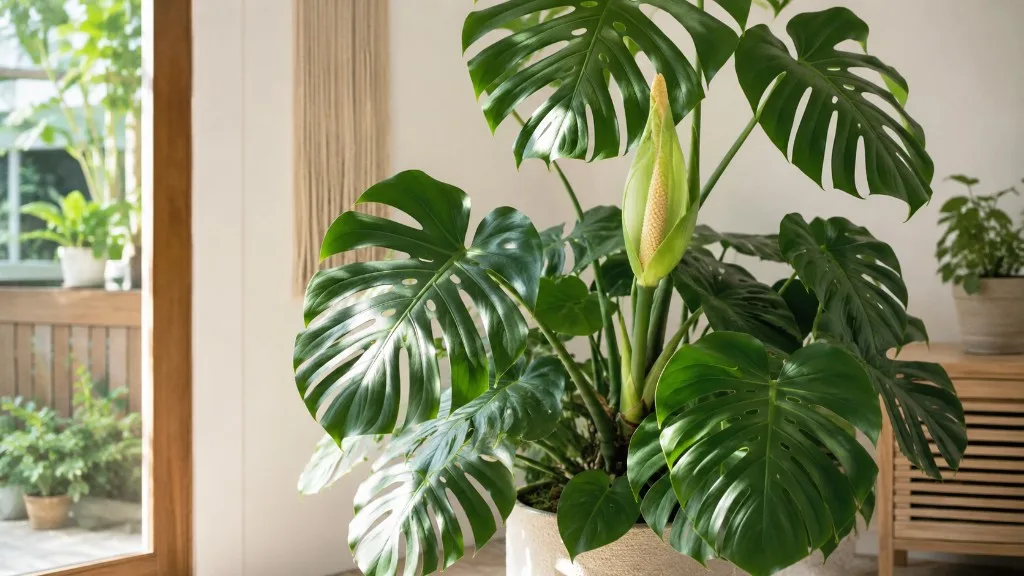
Monstera and philodendron share the tropical houseplant aisle and the “split-leaf” marketing trap — but they are different genera with different space appetites. Monstera deliciosa is the Swiss cheese floor plant. Heartleaf philodendron is the soft trailing vine. Tags that say “split-leaf philodendron” usually mean Monstera.
We have bought a “split-leaf philodendron” that was Monstera deliciosa — and a heartleaf philodendron that a friend swore was Monstera because the leaves were heart-shaped. Juvenile Monstera looks like philodendron for months before fenestration kicks in. That gap is where Pinterest expectations crash into apartment reality.
For trailing pothos confusion, see pothos vs philodendron. For species care, use the Monstera deliciosa hub and philodendron hub.
Why “split-leaf philodendron” is usually Monstera
Clemson HGIC groups philodendrons, pothos, and monsteras as commonly confused aroids — same family, different genera.
Monstera deliciosa develops splits and holes (fenestration) on mature leaves with thick climbing stems and long aerial roots. NC State notes aerial roots and bright indirect light for best growth. RHS on Monstera deliciosa describes mature leaf splits and support needs.
Philodendron hederaceum (heartleaf) keeps heart-shaped leaves without Monstera-scale fenestration indoors. NC State highlights free stipules on new growth, low-light tolerance, and evenly moist soil.
The retail name “split-leaf philodendron” is a historical mislabel — check the tag for genus before you buy a moss pole for the wrong plant.
Bench ID: thickness, stipules, and fenestration
Run these checks before checkout — especially on young plants without holes yet.
Stem thickness and aerial roots
Monstera: thick stems, prominent aerial roots even on medium plants. Leaves get large — dinner-plate scale at maturity.
Heartleaf philodendron: thin trailing vines, small heart leaves, no aerial roots like Monstera. Fits a 6-inch basket for years.
Free stipule test on new growth
NC State on heartleaf notes free stipules — papery sheaths on new leaves that peel away. Monstera new growth does not show this philodendron signature.
Peel back a new leaf sheath. Stipule wrapping the stem → philodendron. Thick node with aerial root nub → Monstera.
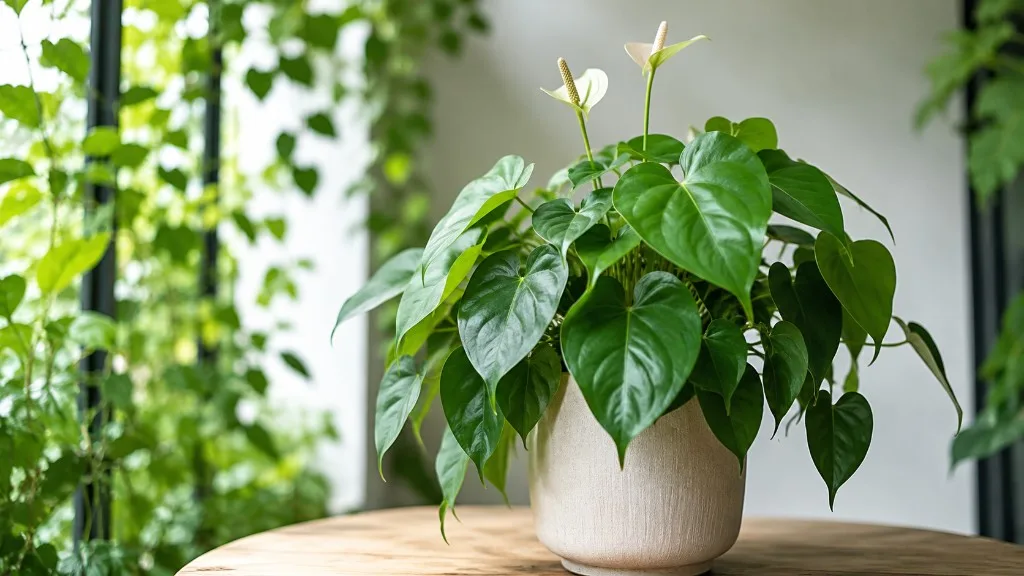
Juvenile Monstera trap
Young M. deliciosa has whole heart-shaped leaves — no splits yet. Buyers expect instant Swiss cheese. Without bright indirect light, fenestration can take years. Heartleaf never fenestrates — if you want holes without deliciosa bulk, consider Monstera adansonii — see Monstera deliciosa vs adansonii.
Light and leaf expectations
Monstera without enough light stays juvenile — whole heart-shaped leaves, no holes. That frustrates buyers expecting instant fenestration. Move to brighter indirect light or accept plain leaves for years.
Heartleaf philodendron thrives in lower light per Clemson and NC State — survival and soft trailing growth without fenestration pressure.
Compare Monstera deliciosa light with philodendron light.
Rule of thumb: if your brightest spot is across the room from a window, heartleaf wins. If you have a floor spot within a few feet of east or south glass, Monstera can earn its splits.
Watering and pot size
Large Monstera pots hold moisture longer — let top inches dry before soaking. Heartleaf in small baskets dries faster; keep mix moist but never waterlogged per NC State guidance.
Overwatering Monstera in oversized pots is a common root-rot path — the plant looks fine while roots suffocate. Heartleaf fails when saucers stay full in dim rooms with slow evaporation.
UF/IFAS on heartleaf notes trailing and climbing habits — smaller root mass, faster dry-down cycles.
Habit, support, and space planning
Monstera wants a moss pole for the look people buy it for — aerial roots attach, leaves grow larger with support. Plan for a floor pot within a year if the plant is happy.
Heartleaf trails gracefully from a basket or climbs a slim support — apartment-scale indefinitely.
Upright philodendrons (Birkin, Congo types) are not part of this trailing comparison — match care to the plant you actually bought.
For support choices, see moss pole vs trellis.
Pet safety: both toxic
ASPCA lists Swiss cheese plant (Monstera deliciosa) as toxic to cats and dogs via insoluble calcium oxalates.
ASPCA lists heartleaf philodendron as toxic with the same crystal class.
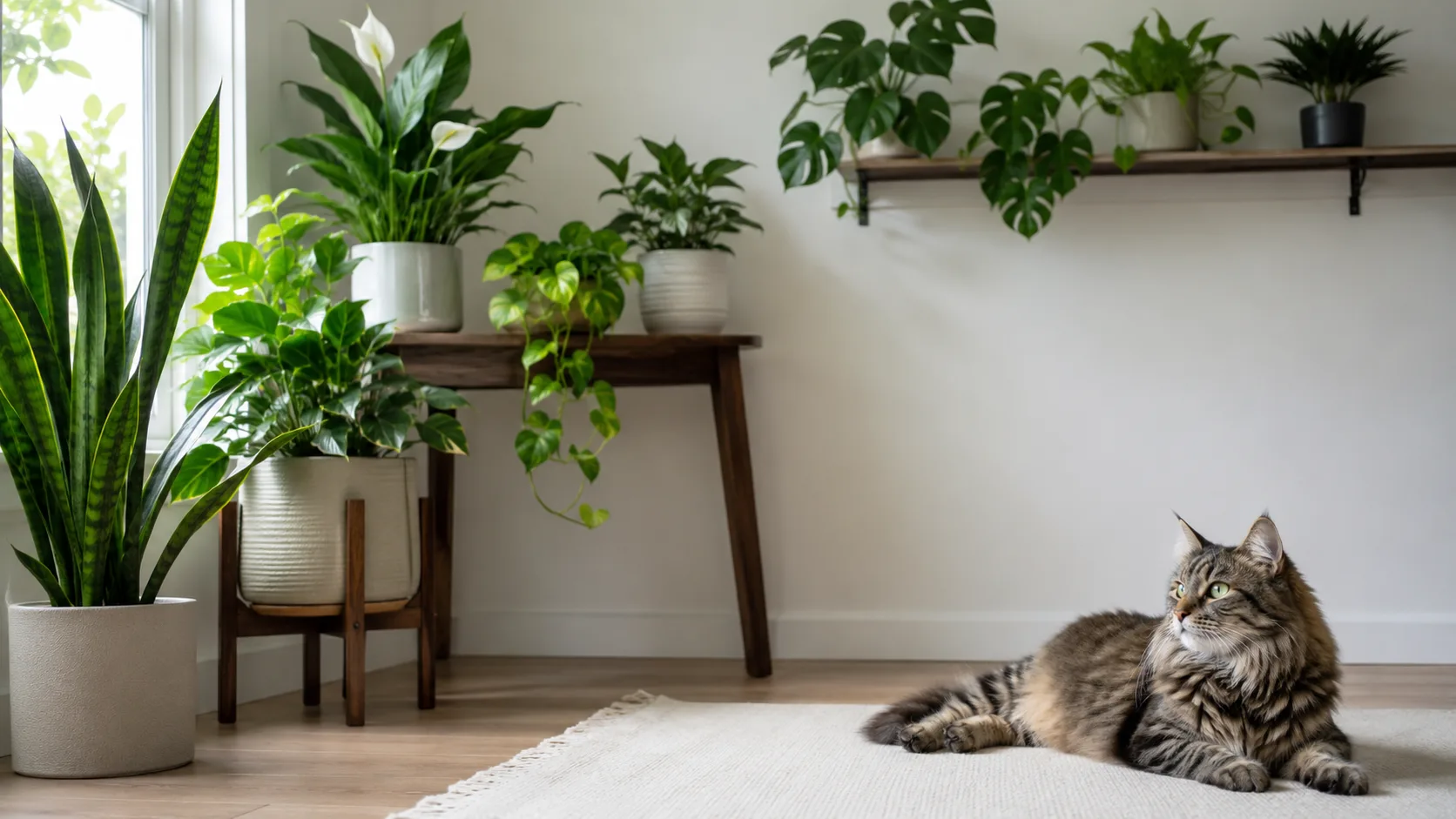
Neither belongs within chew range. Trailing philodendron on a low shelf is a cat magnet. Monstera aerial roots invite climbing. Browse pet-safe houseplants if toxicity is non-negotiable.
Side-by-side comparison
| Factor | Monstera (M. deliciosa) | Heartleaf philodendron (P. hederaceum) |
|---|---|---|
| Mature leaf | Large splits + holes | Heart-shaped; no Swiss cheese |
| Stem | Thick; long aerial roots | Thin trailing vine |
| Light | Bright indirect for fenestration | Low to medium; very shade tolerant |
| Water | Partial dry-down in big pots | Evenly moist, not soggy |
| Space | Floor + pole | Basket, shelf, pole |
| New growth ID | No free stipules like heartleaf | Free stipules on new leaves |
| Toxicity | Toxic | Toxic |
Which plant to choose
Statement split leaves + floor space: Monstera deliciosa.
Low-light trailing vine: heartleaf philodendron.
Small apartment basket: philodendron, or Monstera adansonii if you want holes without deliciosa bulk.
Pet household: neither.
Tag says split-leaf philodendron: verify genus — likely Monstera.
Third vine in the confusion set: see pothos vs philodendron for grooved petiole ID.
Repotting and growth timeline
Heartleaf philodendron can stay in a 6-inch basket for years — repot when water runs through instantly or roots block drainage holes. Growth is steady but not explosive in moderate light.
Monstera deliciosa outgrows pots fast in bright conditions. Plan to upsize every 12–18 months when happy — from tabletop to floor pot within two seasons is normal. A moss pole at repot time trains aerial roots upward and encourages larger fenestrated leaves per RHS guidance.
Budget reality: Monstera is a floor-plant commitment — larger pots, more soil, pole hardware, and eventually ceiling clearance. Heartleaf is a shelf plant indefinitely.
Cultivar confusion beyond deliciosa
Not every holey plant is M. deliciosa. Monstera adansonii has smaller leaves with oval holes — trailing, not floor-tree scale. Upright philodendrons like Birkin have white pinstripes, no fenestration — a third shopping category.
If the tag says “split-leaf” but the plant trails with small holey leaves, you may have adansonii, not deliciosa. If it is upright with stripes, it is not Monstera at all.
Common mistakes we see in real homes
Buying Monstera for a north-facing bedroom and wondering why leaves stay juvenile for years — move it or accept plain hearts.
Watering heartleaf like a succulent because it is “easy” — it wants moist mix, not desert dry-down.
Pruning Monstera aerial roots for aesthetics — those roots feed the plant on the pole. Redirect onto moss, do not chop unless diseased.
Assuming split-leaf philodendron tag means Philodendron genus — verify before buying support hardware sized for a floor tree.
Related: Monstera deliciosa hub, philodendron hub.
Conclusion
ID: big splits + thick stems → Monstera. Soft heart vine + stipules → philodendron. “Split-leaf philodendron” tag → usually Monstera.
Choose: floor fenestration → Monstera. Dim trailing vine → heartleaf philodendron.
Safety: both toxic to pets.
Follow the Monstera deliciosa hub or philodendron hub — not a generic split-leaf schedule.