Moonbeam Coreopsis: Planting, Care, and Bloom Tips
Learn how to plant and care for Moonbeam coreopsis, encourage rebloom, manage rhizomes, and avoid the wet soil and excess fertilizer that can weaken stems.
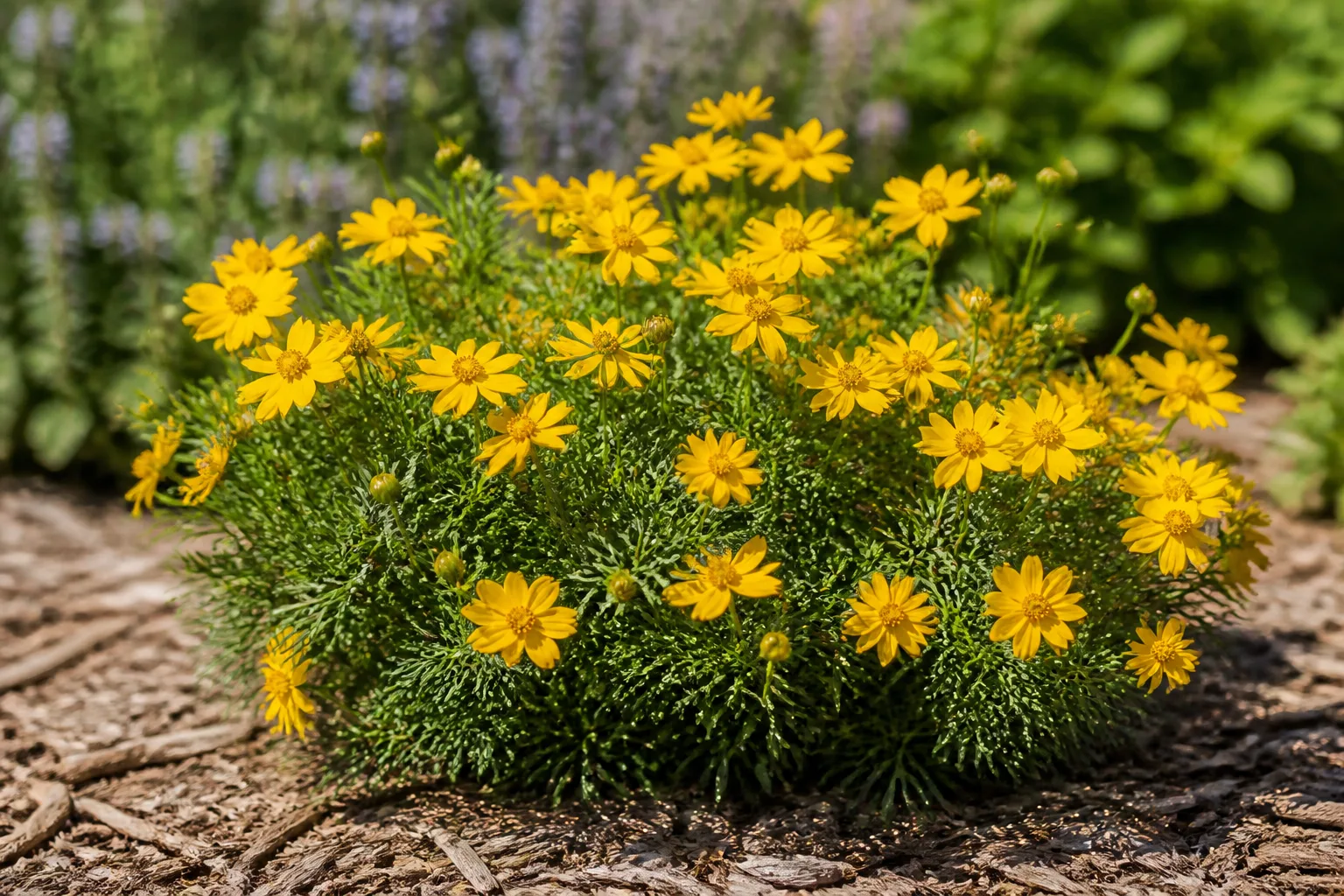
Moonbeam coreopsis is easiest to grow when its two preferences work together: plenty of sun and soil that drains freely. Give this fine-leaved perennial a bright place, water a new planting while its roots settle, and resist the urge to feed or irrigate it on a rigid schedule. Too much shade, fertilizer, or winter moisture is more likely to cause trouble than ordinary summer dry spells.
The plant sold as Coreopsis verticillata ‘Moonbeam’ is a threadleaf tickseed with airy, whorled foliage and soft yellow, daisy-like flowers. It is a cultivar, not a species, and its seeds are typically sterile; the clump can still spread sideways through rhizomes. Those details change how you propagate it, how much space to leave, and what to expect from a mature planting.
Moonbeam coreopsis at a glance
| Need | What to provide |
|---|---|
| Light | Full sun, ideally six or more hours; light afternoon shade can help in very hot regions |
| Soil | Well-drained soil; average or lean soil is usually better than rich, heavily fed soil |
| Water | Regular water as a new plant; after establishment, water during prolonged dry weather |
| Mature size | Commonly about 1 to 2 feet tall and wide, though references allow a broader range |
| Bloom | Summer into early fall, with timing varying by climate and growing conditions |
| Spread | A clump that expands by rhizomes; the cultivar’s seed is considered sterile |
| Maintenance | Low; deadhead or shear for tidiness and possible rebloom, divide if the center thins |
North Carolina State Extension lists the plant under Anacis verticillata ‘Moonbeam’ and notes that Coreopsis verticillata ‘Moonbeam’ is its previous name. Many nursery labels and gardening references still use Coreopsis, so either name may appear when you shop. The same profile describes light-yellow flowers, fine threadlike leaves, a mounding perennial habit, and sterile seed with rhizomatous spread; those cultivar-specific traits are more useful than general advice for the whole coreopsis genus. See the NC State Extension Plant Toolbox profile.
Is Moonbeam a fit for your garden?
Choose Moonbeam if you want a pale, long-blooming accent that softens the edge of a sunny border without needing rich soil or constant grooming. Its fine leaves give it a light, hazy texture among sturdier plants such as salvia, ornamental grasses, or coneflowers, and its flowers can draw bees and butterflies. It also works in a rock garden or a large container, provided excess water can drain away.
It is a poor choice for a permanently soggy low spot, deep shade, or a bed where you need a perfectly stationary plant. It will not usually reseed itself from its own sterile seed, but the underground rhizomes can make the clump wider over time. Plan for that steady sideways growth instead of treating it like a groundcover that will stay inside a strict outline.
Know its size, color, and spread
Expect a rounded mound with fine, green foliage and single flowers in pale lemon to light yellow. Reference profiles vary on mature dimensions: some describe a plant around 1 to 2 feet tall and wide, while North Carolina State gives a broader possible range of 1 to 3 feet. Use the lower figure as a common garden expectation, then leave about 18 to 24 inches between plants if you want separate mounds with room for airflow.
The cultivar’s sterile seed and its rhizomes are not contradictory. It generally does not produce viable seedlings, but a settled plant may send shoots outward from its root system; if that reaches a path or neighboring perennial, remove the outer shoots or divide and replant the clump. Missouri Botanical Garden also notes that threadleaf coreopsis can spread through rhizomes and that good siting and periodic editing matter in naturalized plantings.
Plan the space before nearby plants fill in
Use Moonbeam as a medium-height mound rather than a groundcover that will close every gap quickly. In a mixed border, set it in front of taller perennials but give it enough elbow room that the fine foliage does not disappear under a fast-growing neighbor. The open shape looks more intentional when repeated in a small drift than when one lonely plant is expected to fill a broad stretch of bare soil in its first season.
Choose companions with a similar appetite for sun and free drainage, so you do not have to keep one plant constantly wet for the sake of another. Blue or purple salvias provide color contrast; upright grasses can echo its narrow leaves while making the yellow blooms easier to see. For a more restrained bed, use a single plant as a soft edge near stone or gravel. Fine Gardening recommends using the cultivar in drifts and pairing it with plants that contrast in foliage.
When space is tight, make the decision before planting: keep the crown away from a narrow path edge, a small alpine plant, or a slow-growing perennial that cannot compete with its rhizomes. Check the edge each spring and remove shoots while they are still easy to lift. That simple edit is more predictable than waiting until the coreopsis has woven through the roots of several neighbors.
Give it sun and fast-draining soil
Give Moonbeam a place with at least six hours of direct sun for the strongest flowering and a compact mound. It can tolerate light shade, particularly where afternoon heat is intense, but a shaded plant may carry fewer flowers and stretch toward the light. If a bed gets baking afternoon sun in a hot climate, morning and midday sun with a little late shade is a reasonable compromise.

Drainage is the more important soil quality. Moonbeam can grow in lean, sandy, rocky, or otherwise ordinary garden soil, but a root zone that stays wet after rain can weaken the crown and encourage rot. A heavy clay soil is not automatically disqualifying if the bed slopes or drains well; if water puddles for hours or the ground remains saturated through winter, plant on a raised area or choose another perennial.
Skip routine soil amendments unless you have a specific reason. The goal is not a fluffy, highly enriched planting pocket surrounded by compact clay, which can hold water like a basin. Loosen a broad area, remove perennial weeds, and improve drainage across the bed rather than filling one small hole with potting mix or gravel.
Plant Moonbeam coreopsis in spring or fall
Plant nursery-grown Moonbeam in spring after the soil is workable, or in early fall while roots have time to settle before the ground freezes. Spring planting is the simplest option in colder areas; fall planting can work where autumn stays mild for several weeks. Avoid planting during a heat wave or into saturated soil, because the roots will struggle to establish.
Set plants about 18 to 24 inches apart for a linked border that can fill in, or farther apart if you want each mound to read as an individual accent. The exact spacing depends on the nursery plant, your soil, and whether neighboring plants will fill the gaps; the point is to avoid crowding crowns together where air cannot move through the foliage. The Royal Horticultural Society’s Moonbeam profile also lists it for borders, wildlife gardens, prairie-style planting, patios, and containers.
Step by step: settle the root ball
Water the nursery pot before planting if the mix is dry, then ease the plant out without pulling on its stems. If roots circle tightly around the bottom, tease the outer layer loose with your fingers so they can grow into the bed; do not tear apart the entire root ball.
Dig a hole no deeper than the root ball and about twice as wide, then set the crown level with the surrounding soil. Backfill with the excavated soil, firm it gently, and water slowly until the root zone is moist. If the plant sinks below grade as you water, lift it and reset it; burying the crown in a wet planting pocket increases the chance of decline.
Water deeply while it establishes
For a new planting, water slowly enough to moisten the root ball and the nearby soil, then check the bed before watering again. Rainfall, wind, soil texture, and temperature all change how quickly the planting dries, so “once a week” is a starting reminder at most, not a rule. During a dry spell, feel the soil a few inches below the surface; water when it is drying out, and let excess drain before repeating.
After the plant has rooted into the bed, Moonbeam is drought tolerant and generally needs supplemental water only during extended hot, dry weather. A deep watering is more useful than frequent surface sprinkles because it reaches the root zone and encourages deeper rooting. If the foliage wilts in wet soil, do not add more water just because it looks thirsty; check drainage and roots first.
Containers dry faster than garden beds. Check a pot every few days in warm weather, and water when the mix is beginning to dry rather than waiting for the whole root ball to pull away from the pot. A simple rule is to water thoroughly, let the pot drain, then empty any saucer so the roots are not left sitting in water.
Feed lightly, if at all
Do not fertilize Moonbeam automatically each spring. It is adapted to average or lean soil, and excess fertility—especially a heavy nitrogen boost—can produce lush stems that flop instead of a sturdy mound. If nearby plants are growing well and Moonbeam is flowering, fertilizer is unlikely to improve the display.
If a soil test identifies a deficiency or the bed is genuinely depleted, follow the test recommendation rather than reaching for a high-dose all-purpose feed. A thin layer of compost spread over the bed can improve soil structure, but keep it off the crown and avoid repeatedly enriching a spot where stems already grow soft. Illinois Extension cautions that overfertilizing threadleaf coreopsis can make it floppy.
Keep the bloom going without busywork
Moonbeam usually flowers from early summer into late summer or early fall, though weather and region shift the calendar. Its pale blossoms are small enough that removing every spent flower one by one can become tedious in a large clump. You can leave the plant alone and accept a less tidy finish, clip a few visible stems near the front of a border, or shear the mound after its first major flush.
Deadheading is mainly a choice about appearance and rebloom, not seed control for this sterile cultivar. A light trim may prompt fresh stems and flowers when enough growing season remains, but the response is not guaranteed in severe heat or late autumn. Missouri Extension describes a one-third to one-half shear for Moonbeam as a way to encourage compact growth and another flush; the Missouri Extension deadheading guide gives that cultivar-specific recommendation.
Deadhead individual flowers or shear?
For one plant, snip faded flowers just above a leafy side shoot or the next set of leaves. For a wider planting, use clean shears to remove about one-third of the plant after the main flush fades, shaping it into a low mound rather than cutting to the ground. The quick shear saves time and removes tired foliage, but it temporarily takes away much of the flower display.
Do the cut while the season is still warm enough for new growth and before the plant looks severely spent. If buds are still opening or you want to keep flowers for pollinators, trim only the brownest stems or wait. If the plant is already flowering strongly into fall, skip the shear; there is little benefit in forcing late growth that has no time to mature.
Cut stems back at the right time
Moonbeam is a herbaceous perennial, so its aboveground stems die back in cold weather. You can leave the stems standing through winter for a little structure and to mark the crown, then remove them in early spring before new growth gets tall. Cut the dead stems a few inches above the ground, taking care not to slice new shoots as they emerge.
In a mild climate, or where the winter bed stays damp, clearing dead material after the season can improve airflow around the crown; in colder regions, leaving the stems until spring can help gardeners avoid disturbing the plant and gives a visible marker for where it returns. Do not mistake dry winter foliage for a dead plant. Wait for spring growth before digging up a crown that survived the previous season.
Divide the clump when bloom thins
Divide Moonbeam when a mature planting grows outward, becomes crowded, or leaves a bare center surrounded by a flowering ring. This is a better cue than treating an exact lifespan as a deadline: drainage and growing conditions differ, and well-sited threadleaf coreopsis can remain useful for years. Mt. Cuba Center’s coreopsis trial recommends dividing Coreopsis verticillata and its cultivars about every three years as needed to renew plantings.
Early spring, just as growth resumes, is a practical time to divide because you can see the crown and give the pieces a full growing season to establish. Division is also the reliable way to keep the named cultivar true. Because Moonbeam’s seeds are considered sterile, seed packets or collected seed may not reproduce this cultivar; buy a labeled plant or divide the clump instead. The RHS lists early-spring division and spring basal cuttings as propagation options.
Divide a mature clump step by step
Water the plant the day before if the ground is dry, then use a sharp spade to cut around the clump and lift it with as much root as you can. Shake or brush away enough soil to see the crown, and use a clean knife or spade to separate it into sections with healthy roots and several live shoots or buds. Discard the woody, dead center rather than planting a division that has no vigorous growing points.

Replant each section promptly at the same depth it grew before, spacing it to fit its mature width. Water thoroughly, keep the soil lightly moist while new roots settle, and avoid adding fertilizer to compensate for the move. If you do not need every division, share extras rather than squeezing all of them back into the same hole.
Grow Moonbeam in a container
A container is useful for a sunny patio, a small courtyard, or a site where you want to keep the rhizomes contained. Choose a pot with drainage holes that is wide enough for the plant’s eventual mound, not just its nursery root ball; a container around 12 to 16 inches across is a practical starting size for one young plant. Use a free-draining potting mix rather than dense garden soil.
Place the pot where it receives several hours of direct sun, and expect to check moisture more often than you would in a border. Water thoroughly when the mix is drying, then let the pot drain; do not leave it in a full saucer. A container plant may need dividing or a larger pot when the root mass fills the mix and water runs straight through, but repot in spring rather than disturbing the plant during flowering.
Aboveground roots experience colder and faster temperature swings than roots in the ground. In cold-winter areas, move the pot to a sheltered unheated spot or protect the container from repeated freeze-thaw cycles while keeping drainage clear. Do not bring it into a warm living room for winter; Moonbeam is a perennial that needs its outdoor seasonal cycle.
Diagnose flopping, weak bloom, and leaf damage
Start with the site and recent care before assuming an insect or disease caused a decline. Compare the symptoms with the plant’s recent moisture, light, and growth: a crown that is wet for weeks points to a different problem than a healthy clump that grows tall and flowers sparsely. Coreopsis is generally low-maintenance, but the wrong site can make it look unhealthy even when no treatment is needed.
Tall, floppy stems or few flowers
If the stems lean outward and flowering is sparse, check for too little direct sun first. A plant in a bright but shaded bed may stay alive while stretching and blooming less; moving it to a sunnier spot is more effective than staking it indefinitely. Also ask whether you have fed it heavily, because excess fertilizer can produce soft, leafy growth.
If the entire clump opens in the middle, crowding or age may be the cause; divide it in early spring and replant healthy sections. If the stems wilt while the soil stays wet, stop watering and investigate drainage rather than adding more fertilizer or pruning away healthy growth. Correcting the conditions gives new shoots a better chance than a quick cosmetic trim alone.
Leaf spots, mildew, and deformed blooms
Persistent humidity, crowded foliage, and overhead watering can leave leaves with spots or a powdery coating. Remove badly affected stems, water near the soil instead of wetting foliage late in the day, and improve spacing and airflow; avoid spraying a product until you have identified the problem and checked its label for the intended plant and disease. Fine Gardening lists powdery mildew, downy mildew, leaf spots, Botrytis, and aster yellows among possible issues, while NC State Extension reports no significant routine pest or disease problems for the cultivar.
Green, distorted flower parts combined with stunted growth are different from ordinary faded blooms and may indicate aster yellows, a phytoplasma spread by leafhoppers. Remove a plant with convincing whole-plant symptoms rather than trying to cure it with a fungicide; aster yellows is not a fungal disease. Illinois Extension explains the disease cycle and symptoms in its aster yellows guidance. A few damaged petals on an otherwise vigorous plant are not enough to diagnose it.
Conclusion
Plant Moonbeam coreopsis in a sunny, well-drained spot, water it while it establishes, and let rainfall do most of the work once the clump is rooted. Avoid routine feeding and watch for wet soil, because rich or waterlogged conditions undermine the sturdy, compact growth that makes this perennial dependable.
Trim faded growth only when you want a tidier mound or a chance at another flush, leave stems until spring if that suits your winter garden, and divide the clump when its center thins or its rhizomes outgrow their space. Knowing that Moonbeam spreads underground but usually does not set viable seed makes it easier to keep this soft-yellow threadleaf perennial where you want it.



