Pearls and Jade Pothos Care: Complete Indoor Growing Guide
Give Pearls and Jade pothos bright, filtered light and a free-draining mix. Learn when to water, how to keep variegation crisp, and how to grow fuller vines.
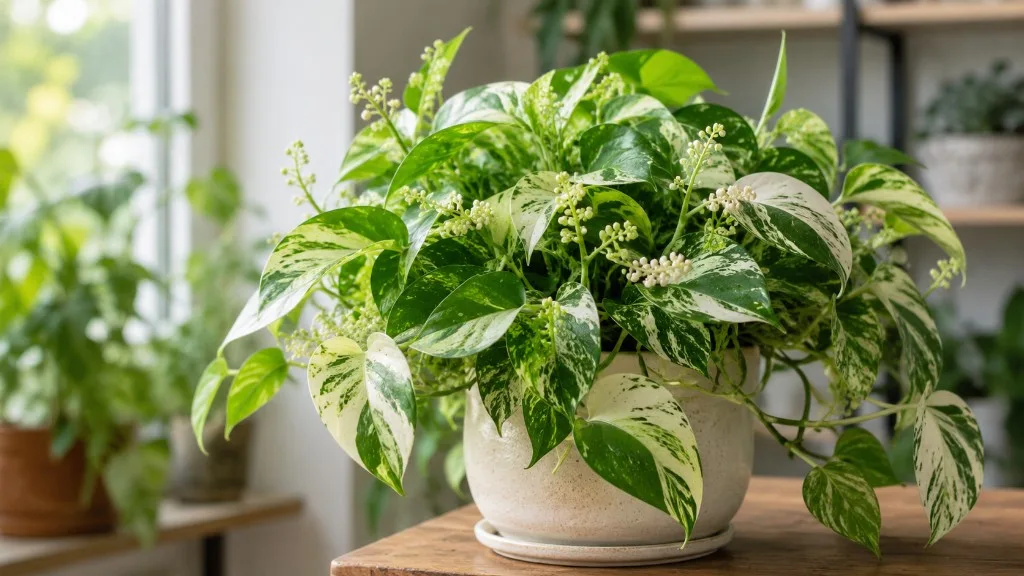
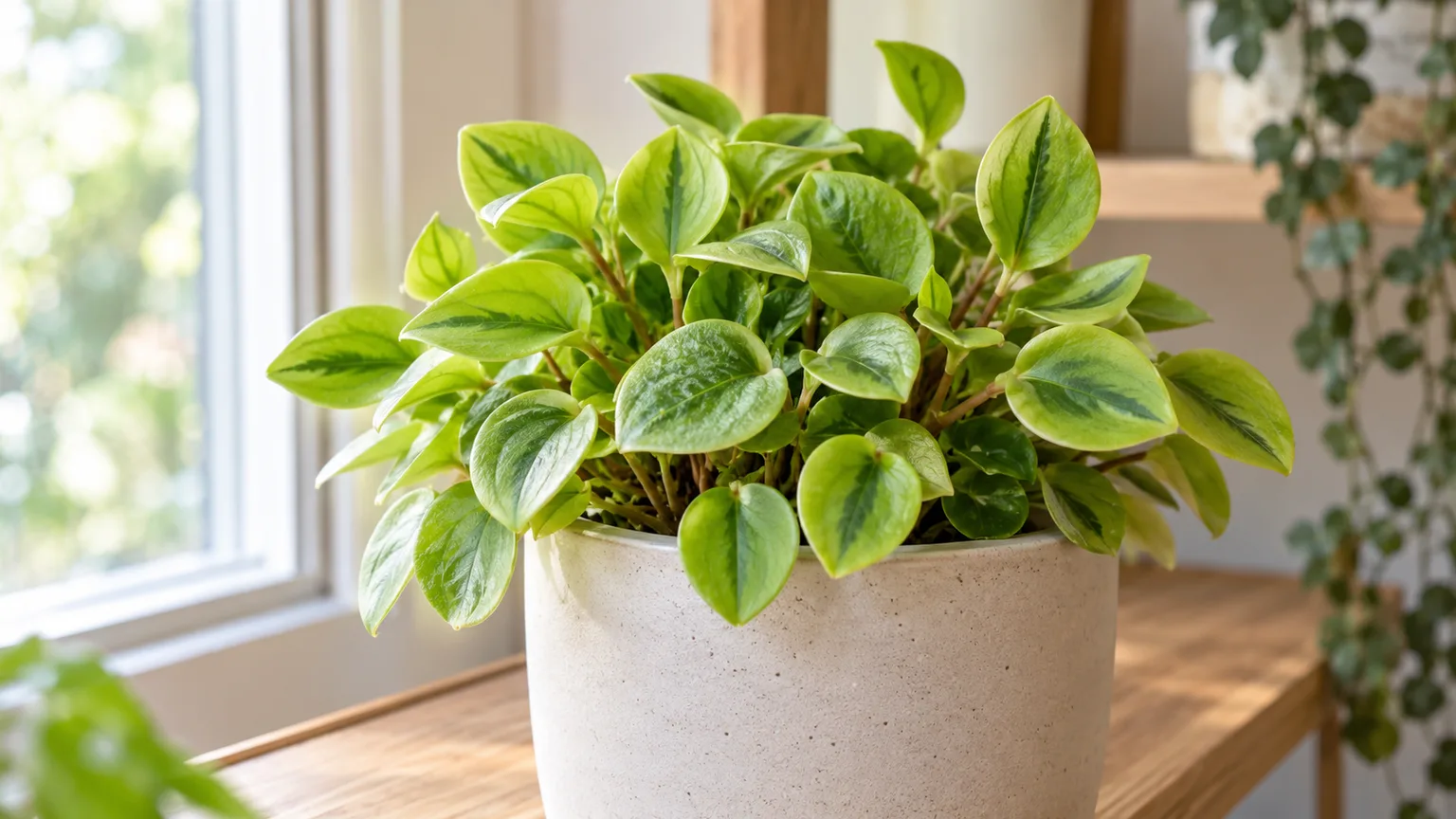
Pearls and Jade pothos is a compact, variegated cultivar of Epipremnum aureum. Its white, gray-green, and darker green markings can make each leaf look slightly different, but the plant is not difficult if you treat it as a bright-light, slow-growing pothos rather than expecting it to behave like a vigorous solid-green vine. The central routine is simple: give it bright filtered light, let the upper potting mix dry between thorough waterings, and use a pot that drains freely.
The tricky part is interpreting signs that can point in more than one direction. A yellow leaf can follow natural aging or wet roots; brown patches can come from dry soil, direct sun, or a combination. The checks below help you narrow down a cause before changing several conditions at once.
Pearls and Jade Pothos at a Glance
| Need | Practical starting point |
|---|---|
| Botanical identity | Epipremnum aureum ‘Pearls and Jade’ |
| Light | Bright, indirect light; avoid long exposure to hot direct sun |
| Water | Water thoroughly after the upper 1 to 2 inches of mix dry |
| Potting mix | Airy, moisture-retentive, and quick to drain |
| Temperature | Comfortable indoor warmth; protect it from cold drafts |
| Growth | A relatively slow, trailing vine with small leaves |
| Propagation | Stem cuttings with at least one node |
| Pet safety | Keep out of reach; pothos contains insoluble calcium oxalates |
This is a tropical evergreen vine that is usually grown as a houseplant. The cultivar name belongs to the species Epipremnum aureum, not to a separate botanical species; Clemson Cooperative Extension lists Pearls and Jade among its cultivated forms and describes its mix of white spots with light- and dark-green speckling. Clemson Cooperative Extension
Expect steady but modest growth indoors, especially compared with golden pothos. A slower pace is normal for a highly variegated plant and is not, by itself, a reason to fertilize more or move it into a much larger pot.
How to Identify Pearls and Jade Pothos
Look across several leaves rather than trying to identify the plant from one unusually pale or unusually green leaf. Pearls and Jade typically has small, slightly textured leaves with irregular white or creamy areas, silvery gray-green marks, and patches of darker green. The exact balance shifts from leaf to leaf, so the mottled pattern matters more than a single color boundary.
That pattern also explains why the plant is often sold under a similar-looking cultivar name. Labels are useful clues, but growing conditions and natural variation can change how strongly a leaf displays its markings. If you are choosing a plant in person, inspect several growing tips and check that the stems are firm and the foliage has no obvious pest clusters or widespread yellowing.
Pearls and Jade vs. N’Joy and Glacier
These cultivars share a family resemblance, so compare the foliage pattern as well as leaf shape. Pearls and Jade usually mixes green speckles into pale areas; N’Joy tends to show cleaner, sharper blocks of white and green, while Glacier has a cooler, more silvery cast. Clemson Cooperative Extension and Epic Gardening both describe Pearls and Jade’s distinctive small leaves and irregularly mixed markings. Epic Gardening’s cultivar profile
| Cultivar | A useful visual clue |
|---|---|
| Pearls and Jade | White or cream patches mixed with gray, light-green, and dark-green speckling |
| N’Joy | More defined white and green sections, usually with less green mottling in the pale areas |
| Glacier | A cooler silver-green appearance and compact, rounded leaves |
Use this as a quick comparison, not a rigid test. Individual leaves can vary, and a young plant may not show its pattern as clearly as a mature one. If a label seems doubtful, identify the broader E. aureum group first and care for the vine according to its actual response to light and water.
Light: Protect the Leaves While Preserving Variegation
Give Pearls and Jade a bright room with filtered or indirect daylight. A spot near an east-facing window is often a useful starting point; in a stronger south- or west-facing exposure, set the plant farther back or soften the light with a sheer curtain. Window direction is only a rough guide because latitude, season, nearby buildings, and glass all affect the intensity that reaches a leaf.
Variegated tissue contains less chlorophyll than solid-green areas, so this cultivar generally needs brighter conditions than a green pothos to grow well and hold a strong pattern. Clemson Extension notes that lower light can reduce variegation in pothos; the cultivar-specific guidance from Epic Gardening likewise recommends bright indirect light and warns that the thin leaves can scorch in direct sun. Clemson Cooperative Extension Epic Gardening
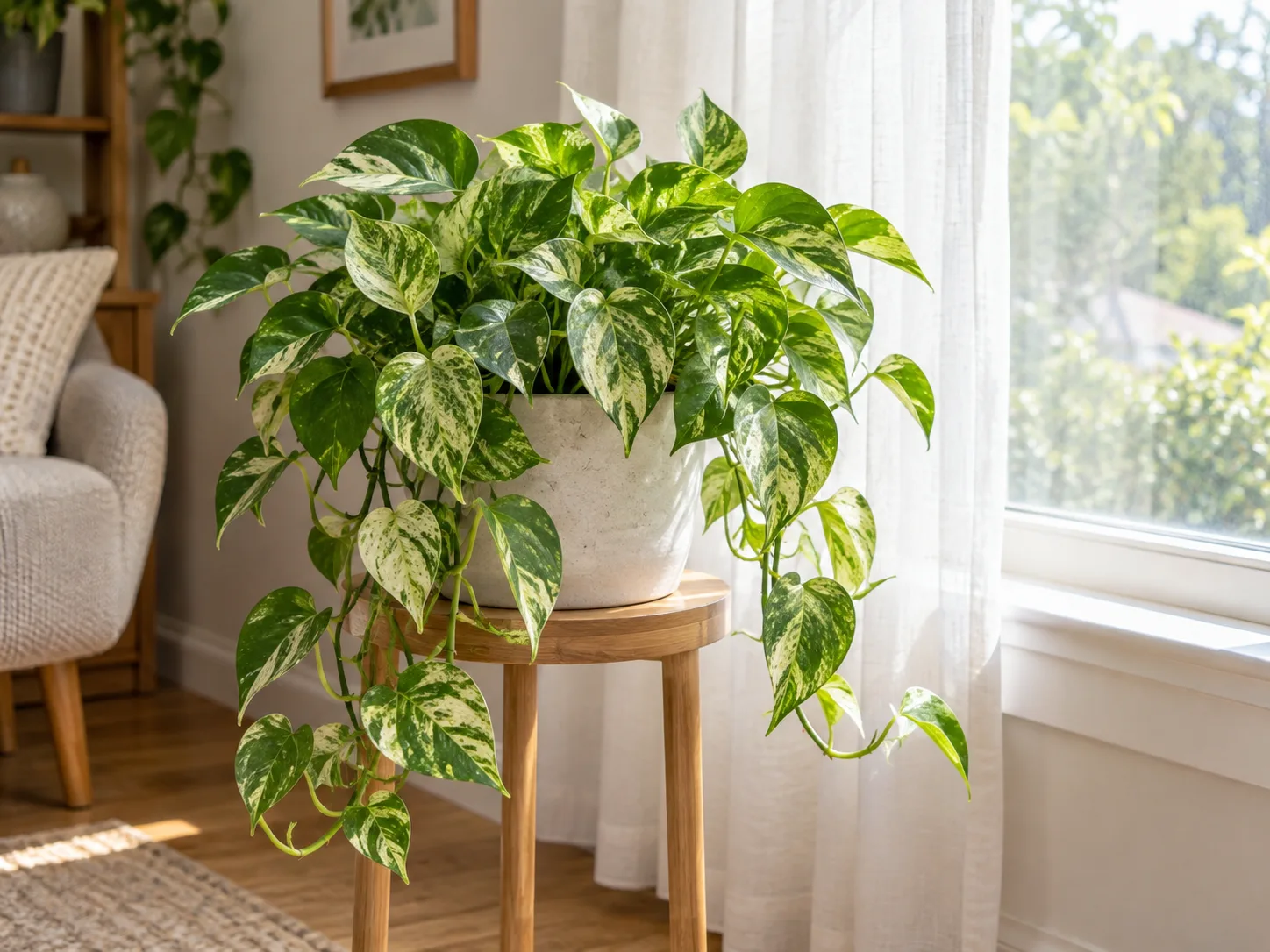
Use the plant’s new growth to judge the position. If new leaves are smaller, more widely spaced, or noticeably greener than older leaves, try moving the pot a little closer to a bright window and watch the next few leaves. If a sun-facing side develops dry, tan patches, move it back or filter the light; damaged tissue will not turn green again.
Avoid a sudden move from a dim shelf into direct midday sun. Increase light gradually over a week or two, particularly after bringing home a plant that has been grown under shade cloth or indoor nursery lights. If you use a grow light, follow the fixture’s distance and timing guidance rather than placing it close enough to heat the leaves.
Watering: Use the Soil, Not the Calendar
Water when the upper layer of potting mix has dried, then soak the whole root ball and let all excess drain. For a typical small-to-medium indoor pot, start by checking the top inch or two; a very small pot dries faster, while a deeper or larger container may need a little more time before it is ready. This approach matches the plant’s need for moisture while protecting its roots from staying saturated.
Do not follow a weekly schedule without checking the pot. Light, room temperature, season, pot size, and mix all change how quickly it dries. Epic Gardening recommends judging pothos watering by soil moisture rather than relying on a set interval; Clemson Extension also advises allowing the mix to dry between waterings. Epic Gardening Clemson Cooperative Extension
When it is time to water, pour slowly over the soil until water exits the drainage holes. Empty the saucer or decorative cachepot so the plant does not sit in runoff. A small splash every few days wets only part of the root ball and can leave salts behind; a full watering followed by a sensible dry-down gives you a clearer cycle.
A simple test for when to water
Use more than one clue if you are unsure:
- Press a finger into the mix. If the surface is dry but the soil just below it feels cool and damp, wait and check again in a day or two.
- Lift the pot after watering, then lift it again as it dries. A noticeably lighter pot is a useful cue, especially once you learn the weight of your container.
- If the soil is dry down to the first knuckle and the pot feels light, water fully and let it drain.
- If the pot remains heavy and wet for many days, pause watering and check whether the mix or container drains poorly.
Drooping leaves are a late and ambiguous signal, not a routine watering cue. A dry plant may wilt, but roots damaged by persistent wetness can also fail to supply water to the foliage. Check the mix first so you do not add water to an already saturated root ball.
Soil and Pot: Give Fine Roots Air and Drainage
Use a loose indoor potting mix that holds some moisture without packing tightly around the roots. A practical homemade starting blend is two parts general houseplant mix, one part perlite or pumice, and one part fine orchid bark. Adjust the blend to your home: if it stays wet for too long, add more airy material; if it dries rapidly in a warm, bright room, use a little more base mix.
The exact recipe matters less than two requirements: the mix should not collapse into dense mud after repeated waterings, and water should be able to exit through the bottom of the pot. A drainage hole is more reliable than a layer of stones under the soil, which does not fix a container that traps water. A nursery pot set inside a decorative cachepot keeps the plant attractive while letting you remove it to drain after watering.
Do not put this pothos into a huge pot to encourage faster growth. A container with much more soil than roots takes longer to dry, increasing the chance that the root ball remains wet while the plant is using little water. Choose a pot that comfortably holds the roots with only a modest amount of extra room.
Temperature and Humidity for an Ordinary Home
Normal indoor temperatures suit Pearls and Jade, provided the plant is away from sudden chills and heat blasts. Keep it clear of winter-drafty glass, exterior doors, air-conditioning vents, and radiators; these spots can change leaf temperature or dry the mix unevenly. Clemson Extension gives a warm indoor range for pothos, and The Sill’s general pothos guidance also recommends avoiding temperatures below about 60°F. Clemson Cooperative Extension The Sill
You do not need to turn a comfortable room into a greenhouse. Average home humidity is usually workable; very dry air can contribute to crispy edges, but check watering and sun exposure before assuming humidity is the cause. A clean humidifier can help if the room is consistently dry and several tropical plants would benefit, but misting leaves is temporary and does not correct dry soil or scorched foliage.
Keep the leaves away from cold glass in winter and do not move the plant outdoors until night temperatures are reliably mild. A sheltered, bright-shade patio can work during warm weather, but acclimate it gradually and bring it inside before cold nights return. Sudden direct sun outdoors can burn foliage that was protected by window glass.
Fertilizer and Growth: Set a Slow, Steady Pace
Feed only when the plant is actively producing growth, usually during brighter spring and summer months. A balanced liquid houseplant fertilizer, applied according to its label, is enough; if the label gives a range, start at the lower end for a slow-growing indoor plant. Skip feeding when growth has paused in winter or when the plant is stressed by soggy roots, cold, or a recent move.
Fertilizer is not a shortcut for insufficient light. If the vines have long gaps between leaves or produce little new growth, check the window position first, then inspect the roots and watering pattern. Excess fertilizer can leave soluble salts in the mix and injure roots, so do not increase the dose because one old leaf has yellowed.
Allow realistic expectations for this cultivar. Its variegated leaves have less green tissue than a fully green pothos leaf, and the cultivar is commonly slower than vigorous green forms. Strong indirect light, healthy roots, and a stable routine can improve its growth, but they cannot make it grow at the same pace as every other pothos.
Pruning and Training the Vines
Prune when a vine is too long, bare near the pot, damaged, or growing in a direction you do not want. Use clean, sharp scissors and cut just above a node, the joint where a leaf and aerial root emerge from the stem. A new shoot may develop from a nearby node, but a cut does not guarantee several new branches.
For a fuller pot, use the cuttings rather than relying on pruning alone. Root healthy stem pieces and plant several rooted cuttings back into the same container, spacing them around the surface so new growth can fill gaps. Because Pearls and Jade grows slowly, shaping it in stages is less frustrating than removing many healthy vines at once.
You can leave the plant trailing from a shelf or hanging basket, or guide it along a small trellis or support. Pothos climb with aerial roots, but a support is optional for a houseplant kept for its cascading foliage. Wipe dust from the leaves occasionally so the light-colored areas stay easy to inspect for new growth or pests.
How to Propagate Pearls and Jade Pothos
Propagate from a healthy stem cutting that includes at least one node. A node is the slightly raised joint on the vine where a leaf attaches; a leaf by itself cannot make a new vine without that growth point. Clemson Extension notes that pothos cuttings can root in water or soil when a node is present, and Epic Gardening’s cultivar guide recommends clean tools and keeping leaves above the waterline. Clemson Cooperative Extension Epic Gardening
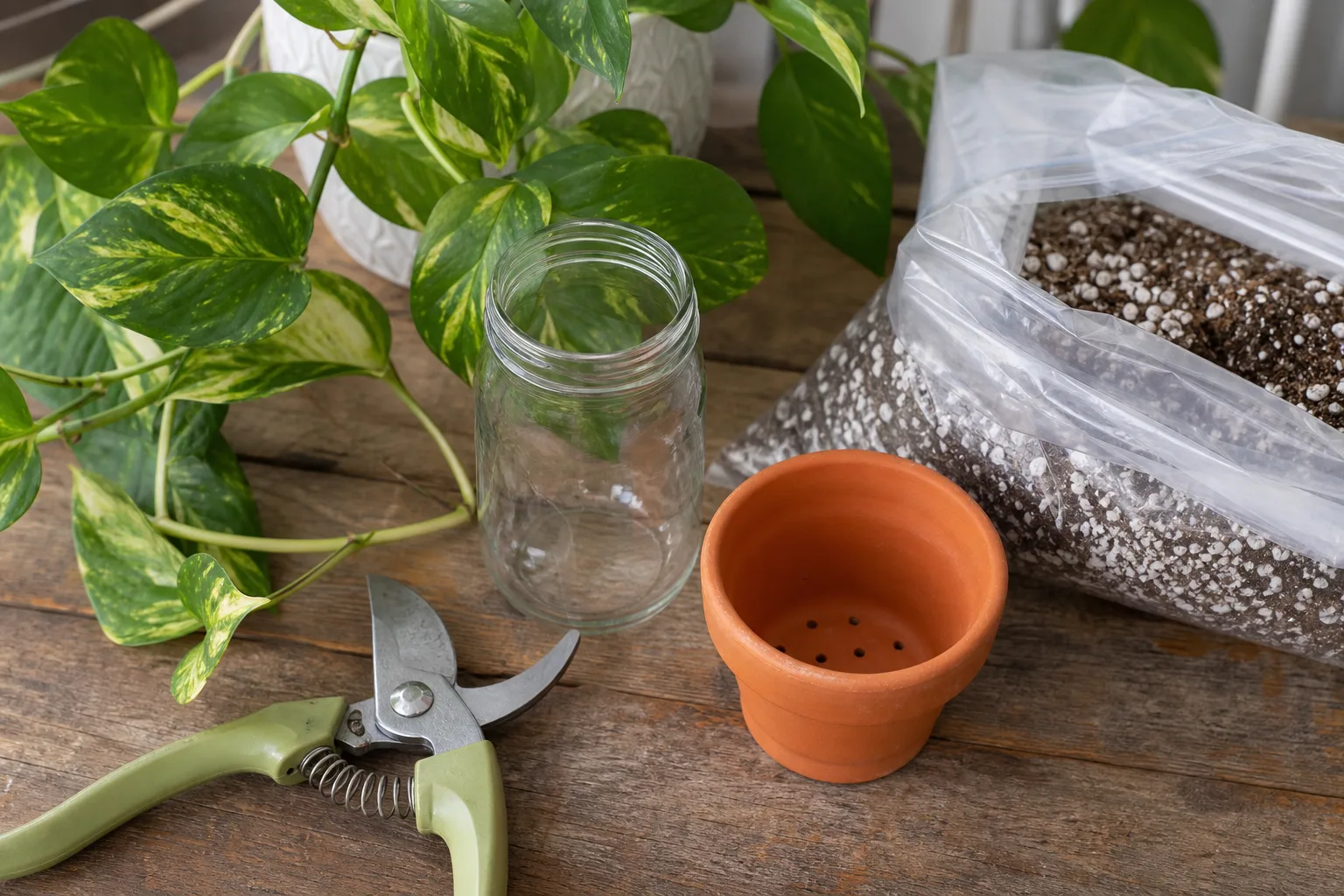
Choose a firm, healthy vine with a few leaves. Cut just below a node, then remove the leaf nearest the cut if it would be submerged or buried. For a longer piece, divide the vine into shorter cuttings, each with at least one node and one leaf. Keep the orientation clear so the end that was closest to the parent plant goes into the rooting medium.
For water propagation, place the exposed node in a clean glass of water and leave the leaf above the surface. Set the glass in bright indirect light, refresh the water when it becomes cloudy, and watch for roots. For soil propagation, insert the node into a lightly moist, airy mix; keep the mix evenly damp but not soaked while the cutting establishes. In either method, warmth and steady light matter more than a promised rooting date.
Once a water-rooted cutting has a small but branching set of roots, pot it into a small draining container rather than waiting until the roots are long and tangled. Keep the mix lightly moist while the cutting adjusts, then return to the normal dry-down routine. A few rooted cuttings planted together can fill a pot faster than waiting for one pruned vine to branch.
Water or soil: choose by the result you want
Water lets you see roots develop and makes it easy to tell whether the cutting is still alive, but a water-rooted cutting must adjust when moved into soil. Soil propagation skips that change of medium, though it is harder to inspect the roots and easier to overwater a cutting that has little root mass. Either method can work; choose the one you can keep clean and consistently moist without leaving the cutting in stagnant, soggy conditions.
If you want to keep a pothos in water long term, treat it as a water-grown plant rather than a cutting in a jar. It needs bright light, clean water, and an appropriate dilute nutrient source because plain water does not provide a complete nutrient supply indefinitely. A rooted cutting is usually simpler to maintain in a draining mix, while water culture suits someone willing to monitor the container and nutrients. Epic Gardening’s guide to growing pothos in water
When to Repot and How to Avoid an Oversized Pot
Repot when roots are circling densely, emerging from drainage holes, or holding the root ball so tightly that the mix dries unusually fast. A plant that has simply slowed down may need brighter light or a better watering pattern instead; do not repot by the calendar alone. Clemson Extension and The Sill both describe repotting in response to root crowding and recommend moving only one pot size up. Clemson Cooperative Extension The Sill
Spring or early summer is convenient because the plant is more likely to resume growth, but a root-rot rescue cannot always wait for a preferred season. Slide the root ball out carefully, loosen only the outer roots that are tightly circling, and remove clearly soft, damaged roots with clean scissors. Place it at the same depth in a container with drainage, using fresh mix around the root ball.
Choose a pot roughly 1 to 2 inches wider than the current one, not several sizes larger. Water the newly potted plant enough to settle the mix, drain it thoroughly, and keep it in the same bright location while it recovers. A brief pause in growth after repotting is less concerning than a container that stays wet for weeks.
Troubleshooting Common Pearls and Jade Pothos Problems
Start with the pattern, not just the color. Note which leaves are changing, how quickly it is happening, whether the mix is wet or dry, and whether the affected side faces a window. One old leaf can be normal; several new leaves changing together suggest that something in the setup deserves a closer look.
Change one likely cause at a time and give new growth a chance to respond. Existing yellow or scorched tissue will not turn green again, so judge a fix by whether damage stops spreading and whether new leaves look healthier. For broader diagnosis, compare symptoms with the pothos yellow-leaf guide.
Yellow leaves
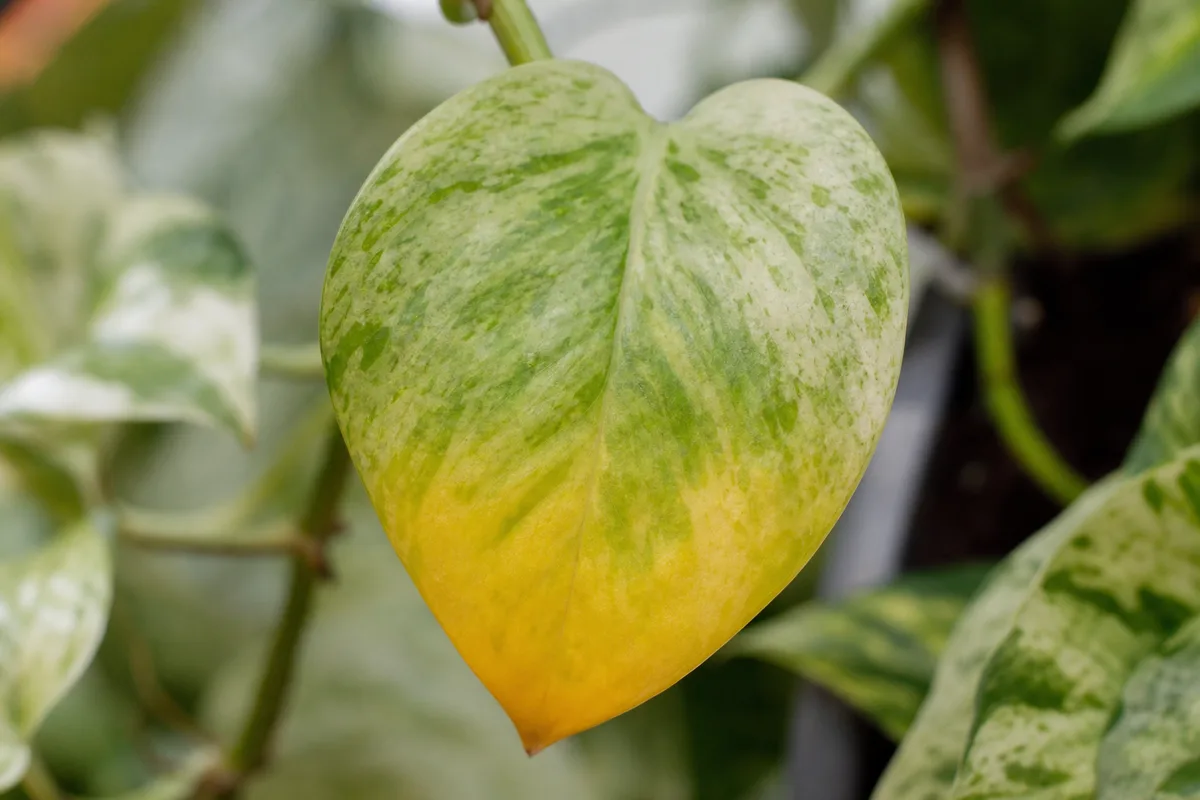
An occasional older leaf at the base may yellow and drop as the vine grows; if the rest of the plant is firm and producing healthy leaves, remove it and continue normal care. If several leaves yellow over a short period, check the soil before changing the watering routine. Wet mix that remains heavy, a pot without drainage, or soft stems points toward overwatering or root trouble; bone-dry mix and a very light pot point toward a missed watering.
When the mix is wet for too long, let it dry and check the roots if the decline continues. Healthy roots are generally firm; soft, mushy roots and a sour smell are warning signs that decay may be underway. Trim only damaged roots, replace saturated or compacted mix, and use a smaller draining pot if the remaining root system is much reduced. Do not feed the plant while it is recovering.
If the mix is drying normally, look at light next. A plant in a dim spot may shed older leaves while producing few new ones. Move it closer to bright indirect light gradually and monitor the next growth rather than expecting the yellow leaves to recover.
Brown edges, spots, or crispy patches
Brown edges and tips often follow repeated dry-outs, low humidity, or excess salts, while isolated bleached or tan patches on the window-facing side suggest direct sun scorch. Check whether the pot is drying too far between waterings and whether the plant sits beside a heater or draft. Correct that pattern first; trimming a brown edge is cosmetic and does not address the cause.
If the soil is evenly moist and the damage is concentrated on the brightest-facing leaves, soften the light or move the pot back. If the soil dries completely and the leaves feel thin or curled, water more thoroughly when the upper mix dries, rather than adding small amounts every day. Clemson Extension identifies intense light and low humidity as possible causes of leaf scorch and tip dieback in pothos, while cultivar-specific guidance also flags direct sun as a source of brown patches. Clemson Cooperative Extension Epic Gardening
Do not assume tap-water minerals are the cause of every brown tip. Watering consistency, root health, direct sun, and fertilizer buildup are more useful first checks; if mineral crust is visible on the soil or pot rim, flush the mix with plain water and let it drain.
Drooping, stalled growth, or greener new leaves
For a drooping plant, check the mix and pot weight before watering. A dry root ball needs a thorough drink; a wet, heavy root ball needs time to drain and may need a root inspection if the stems are soft. If the soil is moist but the leaves remain limp, inspect for root damage rather than repeatedly adding water.
Slow growth can be normal in winter or in a dim room, and Pearls and Jade is not as vigorous as a solid-green pothos. If spring brings no new leaves, first improve light, then check that the pot drains and the roots have room. Fertilize only after the plant is growing and the root system is healthy.
If new leaves are much greener than older ones, improve indirect light so future growth has enough energy to maintain a stronger pattern. A whole vine that continues to produce entirely green leaves may be a stable green reversion; pruning it back to a node with the preferred variegation can keep that shoot from dominating the pot. More light can improve new growth, but it will not recolor leaves already formed.
Pests, Root Rot, and Pet Safety
Inspect the undersides of leaves and the joints along the vines when watering. Fine webbing and stippling can point to spider mites; cottony clusters suggest mealybugs; small brown bumps may be scale. Isolate an affected plant from nearby houseplants, wipe or rinse the foliage, and identify the pest before choosing a treatment. For any pesticide or insecticidal soap, follow the product label for indoor use and test a small area first because thin variegated leaves can be sensitive.
Root rot is more often a care-condition problem than a contagious disease: saturated mix and poor drainage leave roots short of air. If the plant declines while the mix stays wet, remove it from the pot, trim roots that are clearly soft and decayed, and repot into fresh airy mix in a draining container. A light surface mold alone does not prove that the roots are rotten, so check the root ball before discarding a plant.
Keep Pearls and Jade away from pets and young children who might chew it. The ASPCA lists golden pothos, Epipremnum aureum, as toxic to cats and dogs because it contains insoluble calcium oxalates; chewing can cause oral irritation, intense burning in the mouth, drooling, vomiting, or difficulty swallowing. If a pet eats any part of the plant, contact a veterinarian or animal poison-control service promptly rather than waiting for symptoms to worsen. ASPCA Animal Poison Control
Conclusion
Pearls and Jade pothos rewards steady care more than frequent attention. Put it in bright, indirect light, water when the upper mix has dried, and use an airy potting mix in a container with drainage. Those basics protect the roots while giving the variegated leaves enough light to grow well.
When something looks wrong, use the plant’s pattern of change to choose the next step: inspect wet roots before watering again, soften direct sun if damage faces the window, and prune a green-only vine if it keeps producing unvariegated growth. Be patient with its pace, and use node-bearing cuttings to make the pot fuller without asking one slow vine to do all the work.