How to Grow and Care for Flowering Tobacco
Grow flowering tobacco from seed to frost with practical light, watering, spacing, container, bloom, pest, and safety advice for Nicotiana alata.

Flowering tobacco is worth planting where you can enjoy it at close range: the true jasmine tobacco opens fragrant trumpet flowers in the evening, then keeps producing new blooms through warm weather. The main growing challenge is not complicated pruning or special soil; it is getting the seed started without burying it, then keeping the plant watered through summer heat.
Before buying seed or a nursery pot, check the label. “Flowering tobacco” can mean true Nicotiana alata or a compact hybrid with different height, bloom timing, and fragrance. That distinction changes where the plant works best and whether it delivers the night scent many gardeners expect.
Identify the plant before you buy it
True Nicotiana alata, also called jasmine or sweet tobacco, is a tender perennial often grown as a summer annual in places with frost. North Carolina State Extension describes the species as a 3- to 5-foot plant with large leaves, long tubular flowers, and a fragrance that draws nighttime moths. By contrast, many nursery plants sold broadly as flowering tobacco are compact hybrids, often under the name Nicotiana × sanderae; those tend to stay shorter, flower in daylight, and may have little or no perfume. The differences are summarized in the NC State Extension profile.
| What you want | What to look for on the label | What to expect |
|---|---|---|
| Night fragrance and tall, airy stems | Nicotiana alata, jasmine tobacco, or a named fragrant strain | Often taller; flowers are most noticeable after dusk |
| Compact color for a pot or front border | A compact series or hybrid, such as N. × sanderae | Usually shorter; flowers may open during the day and carry less scent |
| A dependable plant identity | A packet or tag that gives the botanical name and cultivar | More reliable than the common name alone |
The exact experience still varies by strain and growing conditions. If fragrance is the reason you are planting it, choose a seed packet or nursery tag that explicitly identifies N. alata or says it is fragrant; a mixed-color bedding plant labeled only “nicotiana” may be selected for compact growth instead. The RHS describes true jasmine tobacco as a short-lived perennial with strongly scented flowers at night, while Fine Gardening’s grower notes emphasize its height, loose habit, and usefulness near evening seating.
Match the site to its fragrance and summer heat
Give flowering tobacco enough light to flower, but do not assume the hottest, most exposed corner is best. In a mild summer, a sunny bed encourages sturdy stems and abundant flowers. In a hot climate, morning sun with light afternoon shade is often a better compromise: the plant still receives strong light, while its leaves and flowers avoid the most punishing part of the day.
Place fragrant N. alata where people sit or walk in the evening—beside a patio, along a path, or near a door that opens to the garden. Its tubular white flowers are most strongly scented at night, and the long tubes are suited to night-flying pollinators such as moths. A compact, less fragrant hybrid can be used more like a colorful bedding annual, where its daytime display matters more than perfume. Do not plant either type in a spot where mature height will shade shorter flowers or block a narrow path.

In hot, dry regions, watch the plant’s afternoon posture before moving it. Leaves that droop briefly in strong heat but recover in the evening may be showing heat stress rather than a lack of water. If that pattern repeats, add afternoon shade or shift a container; pouring extra water into already damp soil will not solve heat stress and can keep roots too wet.
Build moist, well-drained soil and set spacing
Flowering tobacco grows best in fertile soil that holds some moisture without staying soggy. Before planting, loosen compacted ground and blend in a modest layer of finished compost if the bed is poor or sandy. A heavy clay bed needs improved drainage more than repeated watering; roots in cold, waterlogged spring soil are more vulnerable to decline than roots in a bed that dries briefly between rainstorms. The RHS growing guidance likewise calls for fertile, moist but well-drained soil.
Use about 12 to 14 inches between plants as a starting point for the species, then follow the packet or plant label if it gives a different mature width. The smaller nursery hybrids can often be placed closer than a tall, broad-leaved N. alata. Good spacing allows air to move through the foliage, gives each plant room to branch, and makes it easier to inspect leaves for chewing pests or virus symptoms.
Do not put a thick mulch over freshly sown seeds: the seed needs light to germinate. Once seedlings are established in the bed, a thin layer of organic mulch can slow surface drying and reduce weeds; keep it off the stem base so the crown is not held constantly wet. If the site sits in a vegetable garden, keep flowering tobacco away from tomatoes, peppers, and potatoes as a sensible virus-risk reduction measure, not as a guarantee that disease cannot spread.
Start tiny nicotiana seeds without burying them
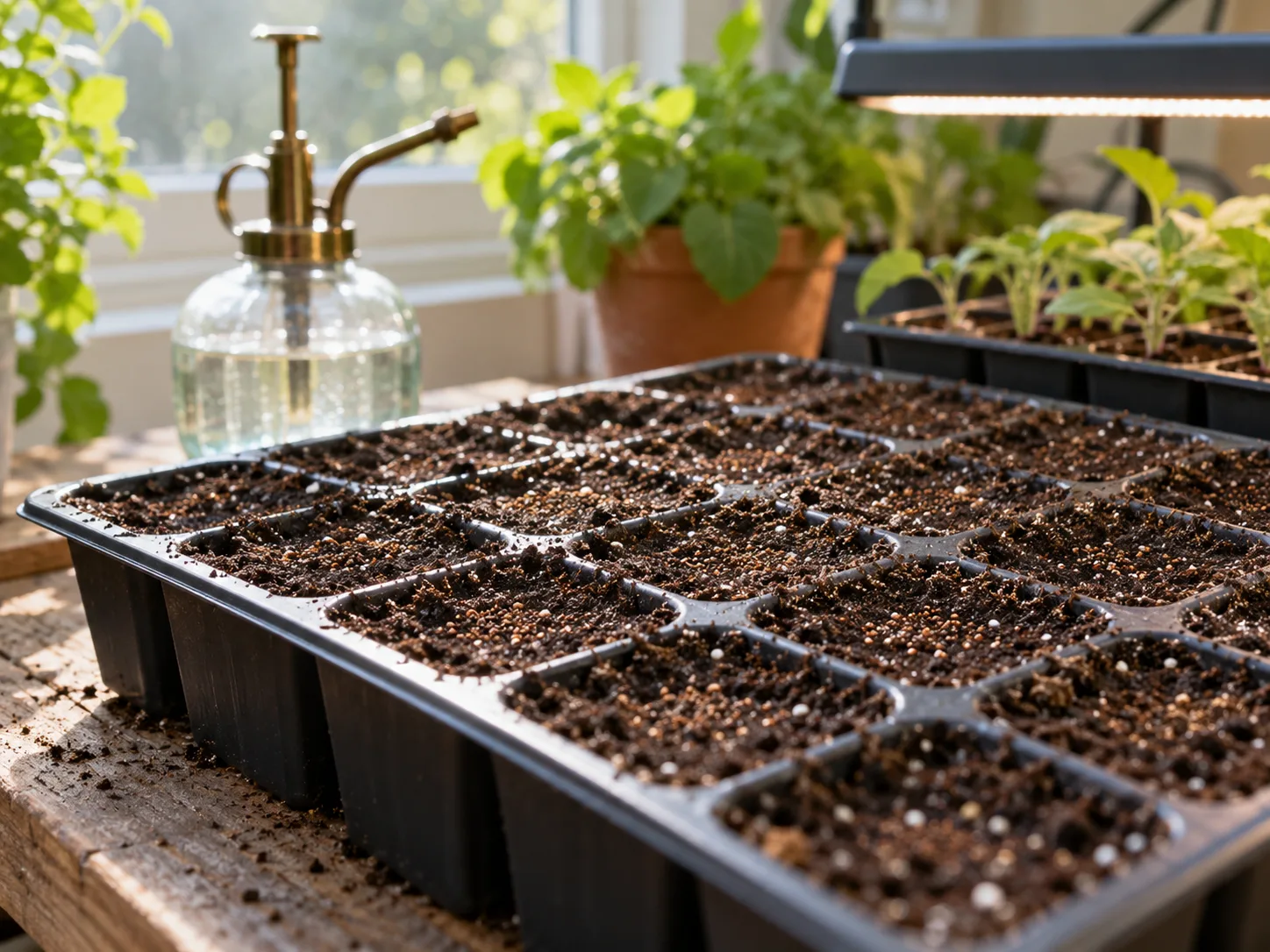
Nicotiana seeds are extremely fine, closer to dust than to the chunky seeds many gardeners are used to handling. That affects both sowing and watering: cover them too deeply and they may fail to emerge; blast them with a heavy stream and they can wash into one corner of the tray. Surface sowing into clean, fine-textured mix and keeping it evenly damp gives them the light and contact they need.
Indoor sowing for an earlier display
For an early summer bed, sow indoors about six to eight weeks before your expected last frost. Fill a clean seed tray with premoistened seed-starting mix, scatter a few seeds on the surface, and press them gently against the mix instead of burying them. A pinch of sand mixed with the seed can help you spread it thinly, but do not add a visible layer of soil on top.
Keep the tray warm and bright; around 70 to 75°F is a practical target, although guidance varies by source and the RHS lists germination at about 64°F. The consistent instructions are more important than chasing one exact number: expose the seeds to light, maintain gentle warmth, and keep the surface from drying. Use a fine mister or water from below so the seeds stay put, and vent or remove a humidity cover once seedlings appear to reduce the chance of damping off. Baker Creek’s Nicotiana guide gives a 7-to-21-day germination window and recommends surface sowing.
After emergence, move the tray under a bright grow light or into a very bright window so seedlings do not stretch toward the light. If several seedlings crowd one cell, snip the weakest at soil level once they are large enough to distinguish; pulling them out can disturb the delicate roots of the seedling you want to keep. Pot individual seedlings on when they have enough true leaves to handle, keeping the root ball intact rather than teasing it apart.
Direct sowing when spring is warm
Direct sowing works when the growing season is long enough that plants have time to reach flowering size before fall frost. Wait until frost danger has passed and the soil is warming, then prepare a weed-free bed with a fine, level surface. Scatter the seeds lightly, press them into contact, and leave them uncovered; a gentle spray or fine rose on a watering can protects the seed from displacement.
Keep the seed zone consistently moist until germination and early rooting. This may mean checking the surface daily in dry weather, especially in a raised bed or exposed container, but it does not mean saturating the soil. If the seedlings come up in a dense carpet, thin them while they are small to the spacing recommended for the variety. Direct-sown plants may flower later than indoor-started ones, so choose this method when a later display is acceptable or when you prefer not to transplant.
Harden off and transplant without shocking seedlings
Indoor seedlings need a gradual transition to outdoor sun, wind, and temperature changes. Over roughly a week, set them outside for a short period in a sheltered, shaded spot, then increase their outdoor time and light exposure each day. Bring them in if frost threatens or conditions turn harsh; seedlings raised indoors are tender even if mature plants later tolerate a cool night.
Plant outside only after the last frost has passed in your area. Choose a cloudy day or late afternoon, water the tray first, and set each plant at the same depth it grew in its pot. Firm soil gently around the root ball, water the bed to settle it, and avoid burying the stem. If plants wilt briefly after transplanting, keep the root zone evenly moist and provide temporary shade rather than repeatedly disturbing or lifting them.
Water by soil condition, not by calendar
Flowering tobacco has low tolerance for prolonged drought, but it also does not need permanently saturated roots. Check the soil near the plant rather than watering on a rigid schedule: if the top inch is drying and the soil below feels only slightly moist, water slowly at the base. In hot, windy weather or a small pot, check more often; after rain or in a cool spell, wait until the bed begins to dry.
A thorough watering that reaches the root zone is more useful than a brief sprinkle that wets only the leaves. Water early in the day where possible so foliage has time to dry, and avoid leaving containers in saucers full of water. A layer of mulch after seedlings are established reduces evaporation, but it cannot compensate for compacted soil or a blocked drainage hole.
Use symptoms together with a soil check. A plant that wilts in hot afternoon sun while the soil remains damp and perks up at night probably needs less exposure to heat, not more water. A plant that stays limp into morning with dry soil needs a deep drink; one that yellows or collapses while the root zone stays wet may be struggling with poor drainage, so pause watering and improve airflow or drainage before adding more moisture.
Feed lightly, pinch selectively, and stake tall plants
Start with reasonably fertile soil and avoid a heavy dose of nitrogen fertilizer. Too much nitrogen can push leafy growth at the expense of flowers, while an overfed plant may become tall and floppy. If growth is pale or weak in a container, use a balanced, water-soluble fertilizer at the label rate; in a rich garden bed, additional feeding may not be needed. Do not keep applying fertilizer when the plant is not actively growing.
Pinching is optional, not a requirement. If you want a fuller, more branched plant, pinch the growing tip once while the young plant is established and still well before it starts setting flower buds. The trade-off is a short delay while side shoots develop. Leave a compact hybrid alone if its label promises a tidy habit, and do not pinch a tall plant late in the season when you want it to flower soon.
Tall N. alata can lean after rain or in wind, especially when planted singly in open soil. Put a discreet stake in early, before the stems become heavy, or group several plants so their branching stems support one another. This is usually more effective than tying an already-flopped plant tightly upright after damage has occurred.
Grow flowering tobacco successfully in pots
Choose a pot with drainage holes and enough volume to hold moisture through a warm afternoon. One tall N. alata usually needs a larger container than a compact hybrid; for a mixed planter, check the mature height on the label and leave space so large leaves do not crowd neighboring plants. A too-small pot dries quickly and can turn a manageable watering routine into twice-daily rescue watering during hot spells.
Use a fresh, well-draining container mix, not garden soil alone. Set the root ball at the same depth it was growing before, water until moisture reaches the bottom, and empty any outer cachepot or saucer that collects runoff. Containers heat and dry faster than garden beds, so check moisture more often, but water only when the mix is beginning to dry rather than on an automatic daily schedule.
A pot near an evening seating area is especially useful for fragrant N. alata, and it can be moved into afternoon shade during a heat wave. If the container becomes top-heavy, use a wider, heavier pot or discreet support. When flowers fade, remove spent blooms if you want a tidier display or do not want seed to scatter; leave some capsules only if you are comfortable with seedlings appearing nearby next year.
Keep flowers coming and decide whether to save seed
Flowering tobacco usually produces a long succession of blooms through summer and into fall when it has enough moisture, suitable light, and warm weather. Individual flowers do not last long, but new buds keep opening along the stems. True N. alata is particularly rewarding after sunset; compact hybrid strains may instead provide a daytime color display with less fragrance. Do not judge a plant’s performance by how many flowers remain open at midday.
Deadheading removes spent flowers and can limit self-sowing, especially if you do it before seed capsules mature and split. It is useful in a formal border, a small garden, or anywhere you want to keep next year’s seedlings under control. You do not need to remove every fading flower to keep the plant healthy; if you want volunteers, leave a few capsules to dry on the plant and watch the area next spring.
To collect seed, wait until capsules are dry and beginning to turn brown, then snip them into a paper bag before they open fully. Store the seed dry, cool, and clearly labeled with the botanical name and cultivar. Seedlings from hybrids may not look or smell like the parent, so save seed for experimentation rather than expecting an exact copy. Seed saved from true, open-pollinated N. alata is a better choice when preserving a known fragrant form matters.
Diagnose common growing problems
When flowering tobacco looks wrong, start with the pattern and the soil rather than reaching immediately for fertilizer or a pesticide. A plant that changes during the hottest hours has a different likely cause from one with persistent distortion, expanding leaf spots, or sudden foliage loss. Inspect the undersides of leaves, the soil moisture, and the newest growth before taking action.
Separate midday heat wilt from dry roots
Some flowering tobacco leaves droop temporarily during a hot afternoon, especially in a sunny, dry, windy location. If the plant recovers overnight and the root zone is moist but not saturated, the useful adjustment is shade during the hottest hours, a thicker established-bed mulch, or a less exposed position. Watering again without checking the soil can create a wet-root problem while leaving the heat stress unchanged.
If the soil is dry several inches down, water slowly and deeply. In a container, check that the root ball is not pulling away from the sides of the pot, since very dry mix can shed water and leave the center dry even after a quick pour. If the soil is wet for days, stop adding water, clear blocked drainage, and improve airflow; yellowing paired with soggy soil is not evidence that the plant needs more fertilizer.
Few flowers can come from too much shade, severe drought, or excess nitrogen. First confirm that the plant is the fragrant type you intended: a compact hybrid may naturally be less scented or shorter, not unhealthy. Then restore even moisture, give it enough sun for its cultivar and climate, and avoid fertilizing a plant already producing abundant leaves.
Inspect leaf damage for beetles and hornworms
Small holes on young leaves can indicate flea beetles or other chewing insects; look for the insects on leaf undersides and nearby soil at the same time. A light amount of damage on a mature plant is usually less urgent than extensive feeding on a seedling. Protect young transplants with a floating row cover if it can be secured without crushing them, and remove it once the plants need pollinator access or begin flowering.
Large sections of foliage disappearing overnight suggest a larger caterpillar, such as a tobacco or tomato hornworm. These caterpillars are green and can blend into stems, so look for dark droppings beneath the plant and inspect stems in the evening or early morning. The Connecticut Agricultural Experiment Station’s flowering-tobacco handbook notes that hornworms can feed on the plant but are often controlled in gardens by natural enemies; hand-picking is a practical response when damage is significant.
Wear gloves when handling the plant, then drop a hornworm into soapy water or relocate it away from valued plants if you choose not to kill it. A caterpillar with small white cocoons attached may be hosting beneficial parasitic wasps, so leave it in place unless the damage is severe. If you use a product such as a biological caterpillar control, verify that the label covers the pest and ornamental use, follow the label exactly, and avoid spraying open flowers where pollinators are active.
Limit tobacco mosaic virus and fungal leaf problems
Mosaic virus can cause mottled light and dark patches, distorted new leaves, and stunted growth; it is not the same as simple yellowing from dry soil. There is no curative spray that restores an infected plant. Remove a plant with convincing virus symptoms carefully, avoid handling healthy plants immediately afterward, and discard infected material rather than composting it. Wash hands and clean tools before returning to other plants.
Tobacco mosaic virus can spread mechanically on hands, clothing, tools, and infected plant debris. Since tomatoes, peppers, and potatoes are also in the nightshade family, keeping flowering tobacco away from those crops reduces opportunities for shared virus problems. It does not replace hygiene: clean pruners between plants, do not handle a suspect plant and then pinch a tomato, and avoid bringing tobacco products into the garden when working with susceptible plants. See Penn State Extension’s TMV guidance and the disease notes from the Connecticut Agricultural Experiment Station.
Leaf spots can also arise from fungal disease or environmental damage, particularly when foliage remains wet and crowded. Remove badly affected leaves with clean pruners, water at soil level, and give plants enough space for air to move. If new spots keep appearing across multiple plants, compare the symptoms with local extension guidance before treating; different causes can look similar, and a spray chosen by appearance alone may not solve the problem.
Overwinter it or plan to replant
In most frost-prone gardens, treat flowering tobacco as an annual and plan to replace it next spring. True N. alata is a tender perennial, but a cold winter can kill it, and many compact bedding hybrids are grown as annuals even where the species might survive mild conditions. NC State lists the species for USDA hardiness zones 10a through 11b; local microclimates and the exact cultivar still matter.
Where winters are reliably mild, a plant may persist or reseed, but do not assume it will return true to type. Letting a few seed capsules mature is often easier than trying to carry a lanky plant indoors, where light and humidity are poor. If you want a dependable repeat display, save dry seed or start a fresh tray indoors rather than waiting for volunteer seedlings.
Handle flowering tobacco safely around children and pets
Treat ornamental tobacco as a toxic plant, not as an edible herb or a safe smoking substitute. The RHS lists Nicotiana alata as harmful if eaten and advises avoiding skin contact and wearing gloves when handling it. California Poison Control states that ingestion of any Nicotiana species can cause nicotine poisoning. Keep seed packets and cuttings out of reach, label pots clearly, and do not use the leaves in teas, home remedies, or homemade insecticide.
Wear gloves when pinching, deadheading, or removing caterpillars, especially if you have sensitive skin, and wash your hands afterward. Place the plant where a young child or pet cannot chew it; fragrant flowers may invite closer inspection, so a raised pot alone is not a reliable barrier for an agile cat. If a person may have swallowed any part of a tobacco plant, contact your local poison center promptly rather than waiting for symptoms; in the United States, the poison hotline is 1-800-222-1222. For a pet exposure, contact a veterinarian or animal poison-control service.
Conclusion
Flowering tobacco is straightforward to grow once you match the plant to the job. Choose true Nicotiana alata when you want taller growth and evening fragrance; choose a labeled compact hybrid when you need daytime color in a smaller space. Start fine seed on the surface, move seedlings outdoors after frost, give them moisture without waterlogging, and place tall forms where their scent can be enjoyed after dusk.
If the plant wilts, check the soil before watering; if leaves are mottled or distorted, consider virus and keep the plant away from related crops while you investigate. Deadhead to prevent volunteer seedlings or leave a few dry capsules if you want to save seed. Because this is an ornamental tobacco, keep it away from mouths, wear gloves when handling it, and seek poison-control advice promptly after suspected ingestion.



