36 Types of Yellow Flowers for Your Garden
Find the right yellow flowers for sun, shade, containers, wet soil, pollinator beds, and small gardens with bloom timing and care notes for every pick.
Yellow flowers can be the first color to appear in late winter, a bright thread through a summer border, or the last warm note before frost. The best choice depends less on the color itself than on whether the plant matches your light, drainage, mature size, and the season when you want it to perform.
Use this list as a menu rather than a shopping cart. Start with the picker, choose two or three bloom windows, then read the notes for plants that fit your actual site.
How to choose a yellow flower that will thrive
Measure the site before you fall for a photograph. A “sun” plant generally needs several hours of direct light, while a spot under mature trees may be bright but dry because tree roots compete for water. Heavy clay, a low wet pocket, a hot reflected wall, and a container all create different growing conditions even in the same garden.
Then decide what job the flower must do. Low spring bulbs and alyssum belong near paths; a tall sunflower or goldenrod can anchor the back of a border; a compact marigold or calibrachoa can carry color in a pot. Treat the hardiness zone on a plant label as a starting point, not a guarantee: cultivar, snow cover, wind, summer heat, and whether the plant is in the ground or a container all affect survival.
Quick picker: yellow flowers by garden job
| Garden job | Strong candidates | What to check first |
|---|---|---|
| Earliest spring color | Daffodil, witch hazel, forsythia, tulip | Chilling, drainage, mature shrub size |
| Long summer flowering | Coreopsis, daylily, black-eyed Susan, marigold | Sun, deadheading, air circulation |
| Dry or lean soil | Yellow alyssum, yarrow, coreopsis, globe centaurea | Local invasiveness and summer heat |
| Partial shade | Azalea, primrose, yellow archangel, iris | Whether the shade is moist or root-dry |
| Wet ground | Marsh marigold | Drainage pattern and summer dormancy |
| Containers | Marigold, calibrachoa, begonia, gerbera, dwarf sunflower | Pot size, watering, and winter protection |
| Pollinator border | Black-eyed Susan, coneflower, goldenrod, coreopsis | Flower form, native status, and bloom succession |
| Cut flowers | Sunflower, dahlia, iris, marigold, yarrow | Stem length and how often you will harvest |
The shortest route to success is “right plant, right place.” The RHS gives the same principle practical weight: plants adapted to their conditions establish better and need fewer extra inputs such as water and fertilizer. That is why a modest plant in the correct site usually beats a showier plant being coaxed through the wrong one.
Plan a yellow bloom calendar, not one yellow week
A garden with only spring yellow can look finished by May, while a bed planted only with late-summer daisies may have a long empty stretch. Instead, overlap early shrubs and bulbs with summer perennials, then use annuals or late perennials to carry the display into fall.
For a cool-climate sequence, combine witch hazel or forsythia with daffodils, follow them with iris and daylily, and finish with rudbeckia, goldenrod, marigolds, and dahlias. In warm climates, heat-tolerant lantana, bidens, zinnia, and yellow dahlia cultivars can take over earlier, while some cool-season plants may pause during intense summer heat.
Bloom dates are estimates, not appointments. Weather, latitude, cultivar, planting time, and whether a plant is newly installed can shift flowering by weeks, so plan in seasons—late winter, spring, early summer, late summer, and fall—rather than relying on one exact month. BBC Gardeners’ World uses the same useful approach in its plant lists, pairing flowers with approximate seasons and mature size rather than treating a bloom date as universal.
Spring bulbs and woodland jewels
Seven early yellow flowers for beds, lawns, and cool shade
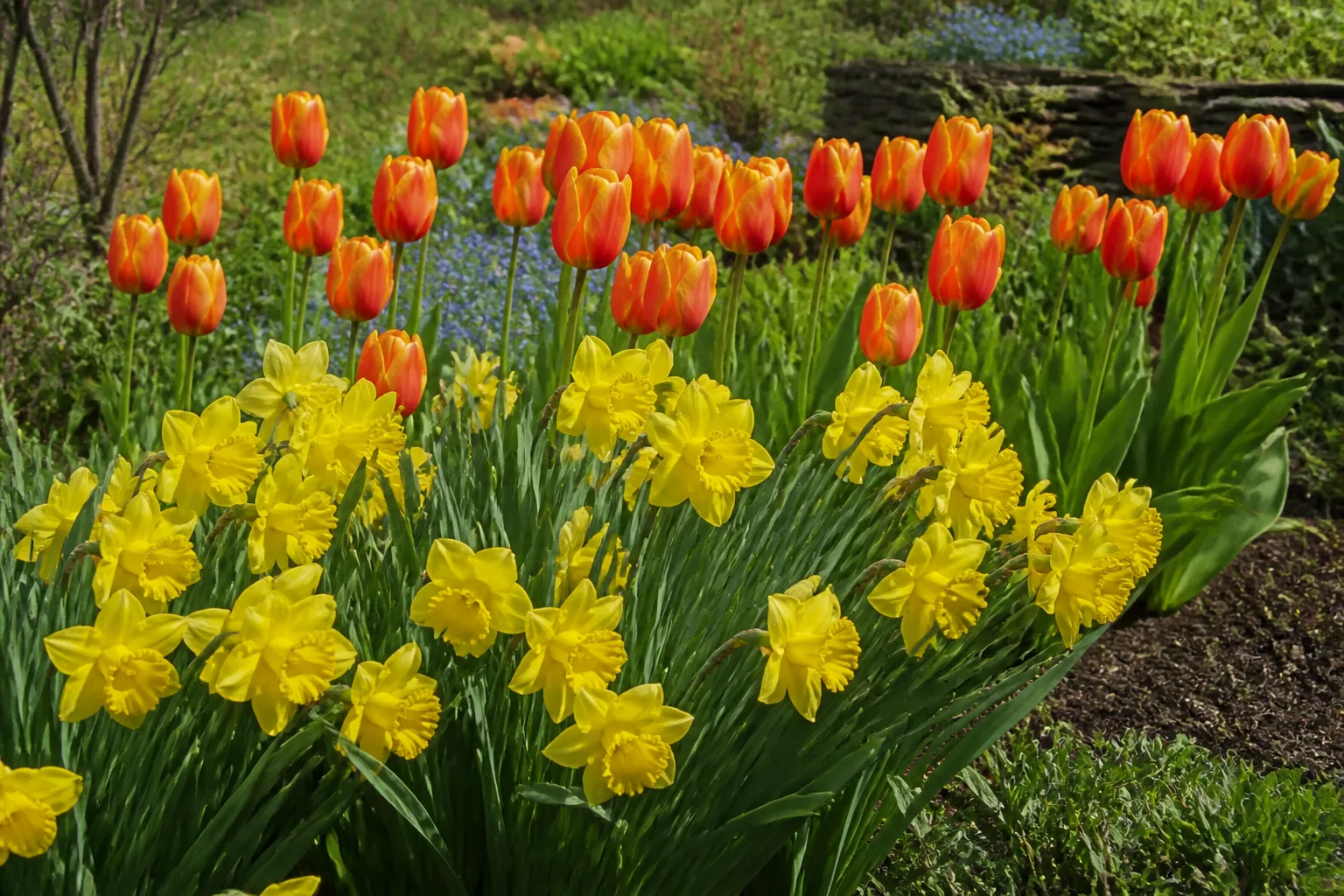
1. Daffodil (Narcissus spp.). Daffodils are among the most dependable spring bulbs for yellow flowers, and a mix of early, midseason, and late cultivars can extend the display. Plant bulbs in fall in gritty, well-drained soil; let the leaves yellow naturally after flowering so the bulb can rebuild for next year.
2. Tulip (Tulipa spp.). Yellow tulips bring a clean, architectural hit of color to formal beds and containers. Many perform best when planted in fall, but longevity varies by group and climate, so treat some as a planned spring show rather than assuming every bulb will return indefinitely.
3. Yellow trout lily (Erythronium americanum). This North American woodland bulb suits moist, humus-rich soil beneath deciduous trees, where it can flower before the canopy fully closes. It is a patient choice: newly planted colonies may take several seasons to settle, and summer dormancy is normal rather than a sign of failure.
4. Primrose (Primula spp.). Primroses are useful for brightening cool, partly shaded borders and containers with moist but well-drained soil. They are not a good substitute for drought-tolerant bedding in a hot, dry exposure; give them afternoon protection and steady moisture while they are flowering.
5. Arctic or Icelandic poppy (Papaver nudicaule). These cool-season poppies produce delicate yellow flowers on short-lived plants that are often grown as annuals or biennials. Sow or plant them where summers are not brutally hot, and provide rich, evenly moist soil without allowing the roots to sit in stagnant water.
6. Amur adonis (Adonis amurensis). Amur adonis is a spring ephemeral with bright yellow flowers that appears early, then retreats underground as summer arrives. It works best in a woodland-style planting where neighboring perennials can cover the space after the foliage fades.
7. Yellow alyssum (Aurinia saxatilis). Yellow alyssum forms a low cushion of bright spring flowers that spills neatly over rock gardens, walls, and path edges. It wants full sun and sharp drainage, and it is a better choice for cool, relatively dry sites than for hot, humid gardens where it may struggle.
Flowering shrubs and small trees for structure
Six woody plants that make yellow a garden feature
8. Hybrid witch hazel (Hamamelis × intermedia). Witch hazel can flower in late winter or very early spring, often on bare branches when the rest of the garden is quiet. Give it room to become a small tree or large shrub, and avoid placing it where summer irrigation keeps the soil constantly saturated.
9. Forsythia (Forsythia spp.). Forsythia is a fast visual signal that spring has arrived, with arching stems covered in yellow blooms. It can become too large for a small foundation bed, and pruning is best timed just after flowering because next year’s flower buds develop on the current season’s growth.
10. Japanese rose (Kerria japonica). Japanese rose offers yellow, chrysanthemum-like flowers on green, arching stems and tolerates partial shade better than many yellow-flowering shrubs. It spreads by suckers, so use it where you can remove runners or where a loose colony is acceptable.
11. Golden chain tree (Laburnum × watereri). Golden chain tree is a dramatic small tree with hanging chains of yellow flowers in late spring. Its size and poisonous plant parts make it a considered choice for yards with children or pets; verify local suitability and keep it away from play areas rather than planting it on impulse.
12. Yellow-flowering azalea (Rhododendron spp.). Cultivars such as ‘Golden Oriole’ bring yellow flowers to a part-shade shrub border with acidic, humus-rich soil. Azaleas dislike alkaline conditions and waterlogged clay, so a raised bed or carefully improved planting pocket may be more reliable than digging one into compact ground.
13. Shrubby cinquefoil (Potentilla fruticosa). Potentilla is a compact deciduous shrub that can flower for much of summer in full sun to part shade. It is a sensible choice for a low hedge or mixed border because it tolerates leaner soil than many flowering shrubs, but it still needs drainage and watering while it establishes.
Full-sun perennials for reliable color
Eight long-lived yellow perennials and wildflowers
14. Stella de Oro daylily (Hemerocallis ‘Stella de Oro’). This compact daylily produces a succession of golden flowers, even though each individual bloom lasts only one day. It is a good front-of-border plant for full sun, but divide crowded clumps only when needed and give new divisions time to root before expecting a full show.
15. Yarrow (Achillea millefolium). Yellow yarrow brings flat flower heads, ferny foliage, and a long summer-to-fall season to dry, sunny beds. It can self-seed or spread more vigorously in favorable conditions, and the foliage may irritate sensitive skin, so place it where its growth can be edited.
16. Threadleaf coreopsis (Coreopsis verticillata). Threadleaf coreopsis makes an airy mound of fine foliage topped with yellow daisies and is especially useful in sandy, rocky, or lean soil. NC State Extension describes it as a long-blooming, easy-care native perennial with drought tolerance once established, but young plants still need regular watering while roots develop.
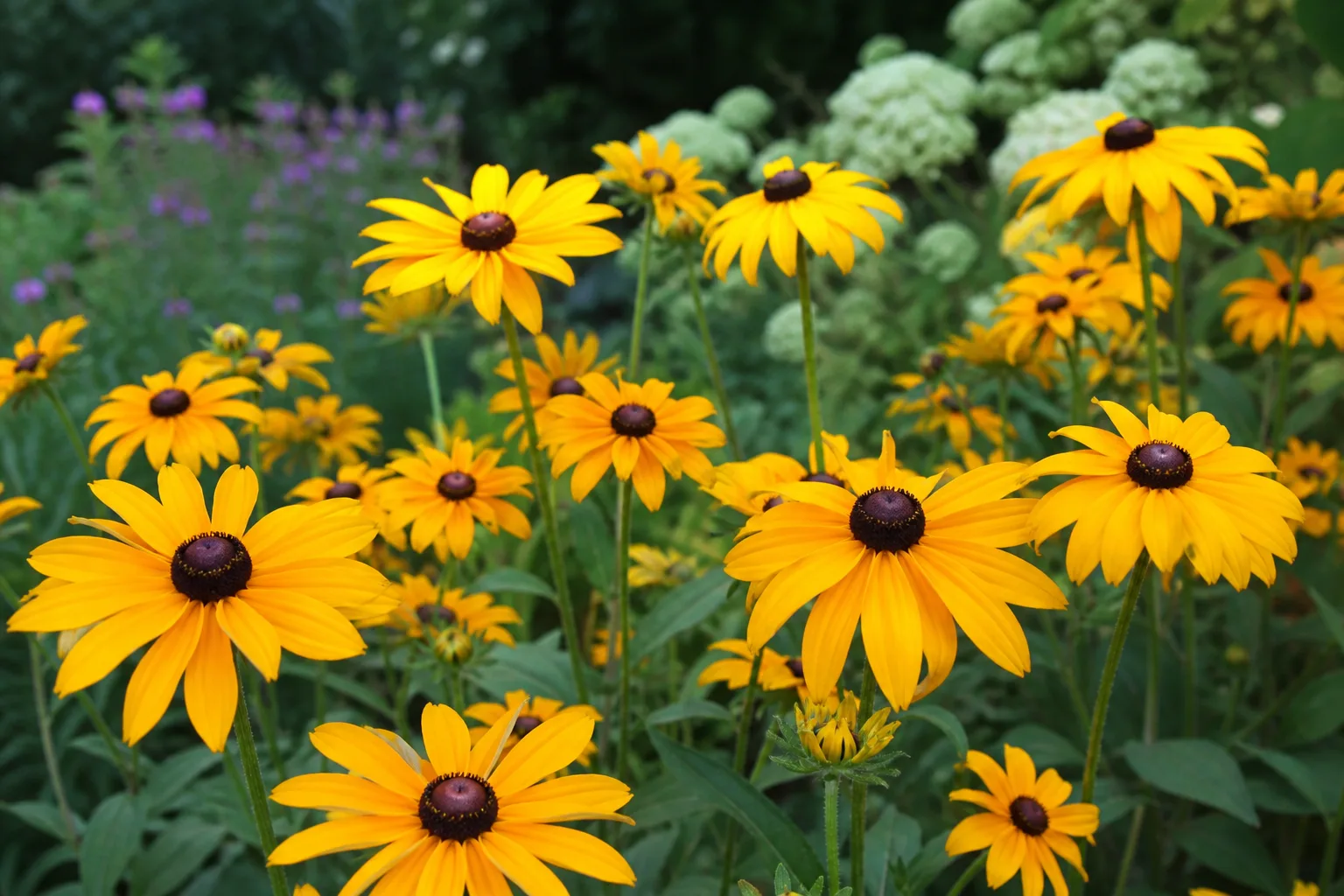
17. Black-eyed Susan (Rudbeckia hirta). Black-eyed Susan is a fast-growing native wildflower that may bloom in its first year and is often treated as an annual, biennial, or short-lived perennial depending on conditions. NC State Extension notes its value in native and pollinator plantings; leave some seedheads standing for birds, or deadhead if you want fewer seedlings.
18. Yellow coneflower (Echinacea cultivars). Yellow coneflowers combine the sturdy central cone of echinacea with petals in soft yellow to gold. They prefer full sun and good drainage, and their seedheads add winter structure, so resist cutting every stem down as soon as the last flower fades.
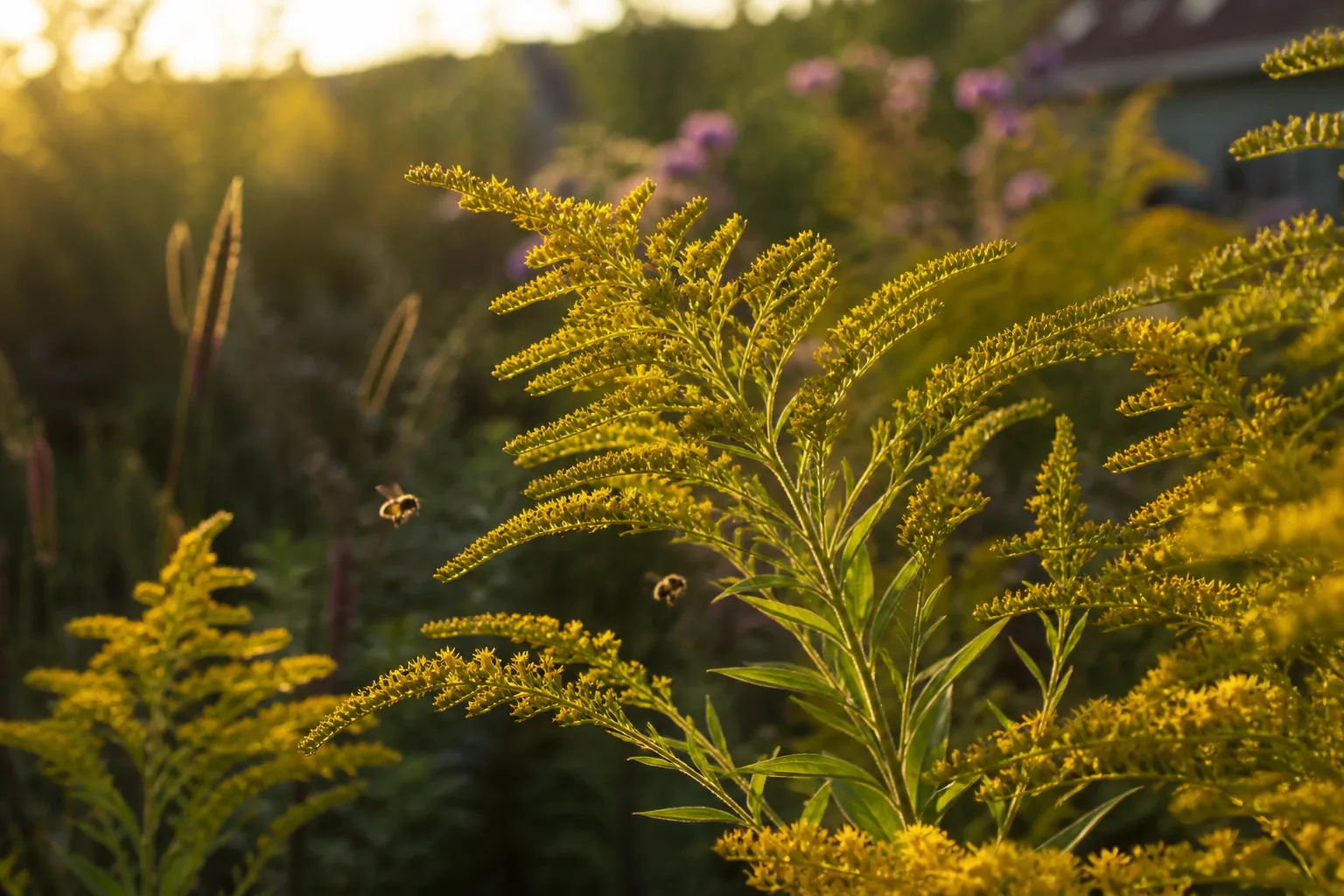
19. Goldenrod (Solidago spp.). Goldenrod is a tall late-summer and fall bloomer with airy sprays of yellow that work especially well at the back of a naturalistic border. Choose a well-behaved garden species or cultivar and check regional guidance, because “goldenrod” covers many plants with different habits and some can spread aggressively.
20. Globe centaurea (Centaurea macrocephala). Globe centaurea makes tall stems topped with thistle-like yellow flowerheads that dry attractively. It suits a sunny, well-drained spot, but its ability to escape cultivation has led to invasive-plant concerns in parts of the Northwest, so confirm local status before buying seed or plants.
21. Yellow-flowering iris (Iris spp.). Bearded, Siberian, Dutch, Japanese, and other irises include yellow cultivars, but they do not share identical soil and moisture needs. Match the species to the site: bearded iris generally wants excellent drainage and a shallow rhizome, while Japanese iris is happier with more consistent moisture.
Annuals and tender plants for instant summer color
Thirteen flexible yellow flowers for beds and containers
22. French marigold (Tagetes patula). French marigolds are compact annuals with fragrant foliage and flowers that can continue from early summer toward frost. Missouri Botanical Garden recommends full sun, average evenly moist soil, and deadheading; in hot summers, light afternoon shade can help flowering recover after a heat pause.
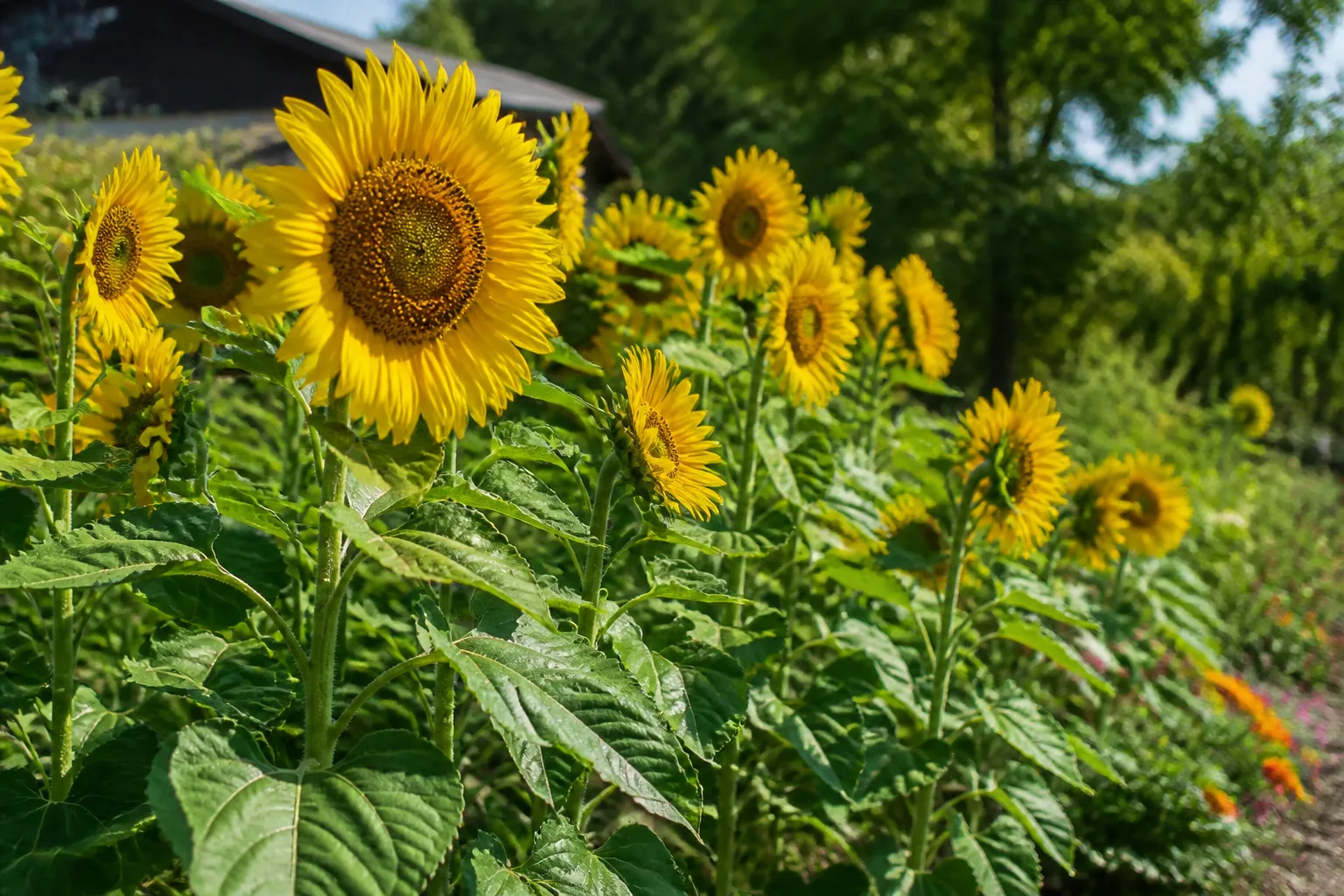
23. Sunflower (Helianthus annuus). Sunflowers range from container-sized types to towering forms, so read the mature height before placing one near a window or path. Full sun, deep watering during rapid growth, and a protected position reduce flopping; leave seedheads for birds only if reseeding is welcome in your area.
24. Zinnia (Zinnia elegans). Yellow zinnias are warm-season annuals that can produce a generous supply of cut flowers in full sun. Give them space for air movement, water the soil rather than the foliage, and sow successive batches if you want a longer display rather than one flush.
25. Snapdragon (Antirrhinum majus). Yellow snapdragons add vertical flower spikes to beds and containers and are especially useful in cooler seasons. They can be grown as annuals or short-lived perennials depending on climate, and plants started from seed need patience before they reach flowering size.
26. Dahlia (Dahlia spp.). Yellow dahlias provide large, late-season flowers in forms ranging from open singles to formal doubles. They need fertile, well-drained soil, regular moisture, and support for tall varieties; in cold climates, tubers may need lifting after frost rather than being left in wet winter soil.
27. Begonia (Begonia spp.). Yellow begonias are valuable for bright shade, patio containers, and sheltered beds where many sun-lovers scorch. The genus is enormous, so confirm whether the cultivar wants shade, morning sun, or full sun before copying a generic label onto every begonia.
28. Gerbera daisy (Gerbera jamesonii). Gerberas bring saturated yellow flowers to sunny containers and warm-climate beds, but they are less forgiving of cold, poor drainage, and chronically wet crowns. Use a porous mix, water deeply when the surface has dried, and treat them as seasonal color where winter survival is uncertain.
29. Lantana (Lantana camara). Lantana is a heat-loving choice for sun, containers, and long summer flowering, with clusters that may shift between yellow and other warm colors as they age. The ASPCA lists Lantana camara as toxic to dogs, cats, and horses, with possible vomiting, diarrhea, weakness, breathing problems, and liver failure in livestock, so do not plant it where animals can chew it.
30. Calibrachoa or Million Bells (Calibrachoa hybrids). Calibrachoa has a trailing habit and small petunia-like flowers that suit hanging baskets and window boxes. Use a fast-draining container, feed during active flowering according to the label, and expect more watering than an in-ground perennial because small pots heat and dry quickly.
31. Bidens (Bidens spp.). Bidens produces small daisy-like yellow flowers and works as a spreading container companion or warm-season border plant. It prefers sun and drainage, and its rangy habit is an advantage in a basket but may need trimming in a narrow bed.
32. Chrysanthemum (Chrysanthemum × morifolium). Yellow garden mums can provide a strong fall display in beds and containers, but plants bought in bloom have often had little time to establish roots. Plant hardy selections earlier in the growing season, give them full sun and even moisture, and treat late purchases as seasonal color unless your climate proves otherwise.
33. Yellow rose (Rosa spp.). Yellow roses range from compact patio forms to large shrubs and climbers, so choose the growth habit before choosing the flower color. Most need sun, air movement, regular moisture during establishment, and pruning that preserves the cultivar’s natural shape rather than forcing every rose into a tight ball.
34. Yellow daisy (Bellis, Euryops, and other daisy relatives). “Yellow daisy” is a useful garden description, not one species, so identify the botanical name before planting. Compact annual forms can brighten containers, while perennial or shrubby types may need different winter protection, soil drainage, and local invasive-plant checks.
Shade and wet-soil choices
Two specialists for difficult moisture and light
35. Yellow archangel (Lamiastrum galeobdolon). Yellow archangel offers yellow flowers and silver-marked foliage for shade, but its spreading habit is the reason to pause before planting. Use a contained site only after checking local invasive-plant guidance, and do not assume attractive variegation makes a vigorous groundcover low-risk.
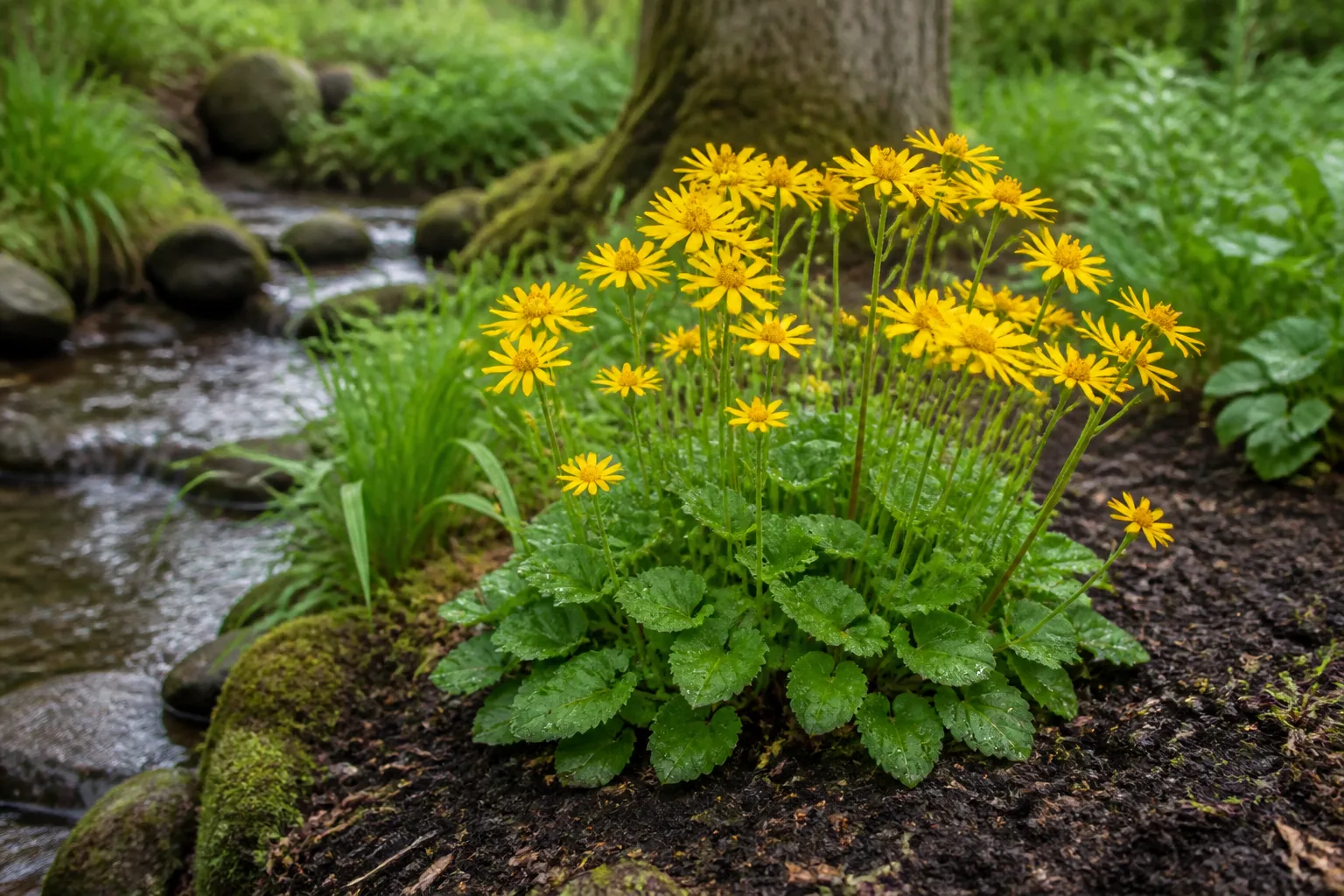
36. Marsh marigold (Caltha palustris). Marsh marigold is a wetland perennial for stream edges, rain gardens, and consistently damp soil—not a general-purpose marigold substitute. It can go dormant during hot weather, and raw plant parts may irritate skin or cause problems if eaten, so site it where pets and children are unlikely to browse.
Pair yellow flowers without making the border look loud
Yellow reads as bright because it reflects a lot of light, so a whole bed of high-saturation yellow can feel visually flat or intense. Use one of three balancing moves: cool yellow with blue or purple, soften it with white and silver foliage, or warm it deliberately with orange, copper, and red.
Height matters as much as color. Put low alyssum, primrose, marigold, or compact daylily near the path; place coreopsis, yarrow, and black-eyed Susan in the middle; reserve sunflower, goldenrod, tall iris, and shrubs for the back or a separate focal point. Repeat a yellow in two or three places rather than scattering twelve unrelated yellow plants like confetti.
Foliage is the quiet structure that keeps the display attractive between flowers. Fine coreopsis leaves, sword-like iris foliage, dark shrub leaves, silver groundcovers, and ornamental grasses create contrast even when yellow blooms are between flushes.
Soil, water, and maintenance that keep blooms coming
Improve drainage before adding fertilizer. A plant in saturated soil cannot compensate with more feeding, and a plant in dry shade may need water even though “shade plants” are often described as moisture-loving. Check the soil at root depth, water slowly at the base during establishment, and adjust frequency for rain, heat, wind, and container size rather than following a universal calendar.
Deadheading is a tool, not a rule. Remove spent flowers from marigolds, zinnias, dahlias, and many repeat-bloomers when you want the plant to keep producing; leave some black-eyed Susan, coneflower, yarrow, and goldenrod seedheads when winter structure and birds matter more than a perfectly tidy border.
Prune woody plants according to when they flower. Forsythia and Japanese rose flower on older wood, so severe winter pruning can remove the coming display; shape them after flowering. Shrubs such as potentilla are more forgiving, but even these recover better when cuts are selective and the plant is not being forced into a size it cannot sustain.
Keep crowded annuals and perennials open enough for air movement. Watering leaves late in the day, burying crowns, and planting a moisture-sensitive plant in a dense, stagnant pocket can increase disease pressure. The French marigold profile from Missouri Botanical Garden specifically lists powdery mildew, Botrytis, leaf spot, rots, spider mites, and thrips as potential problems, so “easy” still means site-aware.
Safety, spreading, and buying cautions
Yellow is not a safety category. Daffodils, lilies, some bulbs, lantana, yarrow, laburnum, and many other garden plants can be harmful if eaten, and plant risk varies by species and plant part. Before buying for a pet-accessible garden, search the exact botanical name in a current veterinary or poison-control database; do not rely on a nursery’s color label.
Invasiveness is also local. Globe centaurea, yellow archangel, some oxalis, certain daisies, and vigorous goldenrods may be manageable in one region and a poor choice in another. BBC Gardeners’ World points out that some oxalis spread through roots, bulbils, runners, or explosive seed capsules; that is a useful reminder to inspect pots before planting and never toss mature weedy material onto a casual compost pile.
Read the plant label for mature width, not just height. A shrub that fits a one-gallon pot can still outgrow a narrow bed, and a “dwarf” sunflower may need less height but still need a wide root zone. When a cultivar name is missing, buy from a nursery that can identify the plant and ask whether the form is sterile, self-seeding, hardy in your area, or likely to need winter lifting.
Three simple yellow-flower planting plans
For a sunny, low-maintenance border: start with threadleaf coreopsis and yellow yarrow, add black-eyed Susan and a restrained goldenrod toward the back, then tuck in marigolds for first-year color. This plan handles a leaner site better than a border built around moisture-hungry begonias or primroses, but establish every new plant with consistent watering.
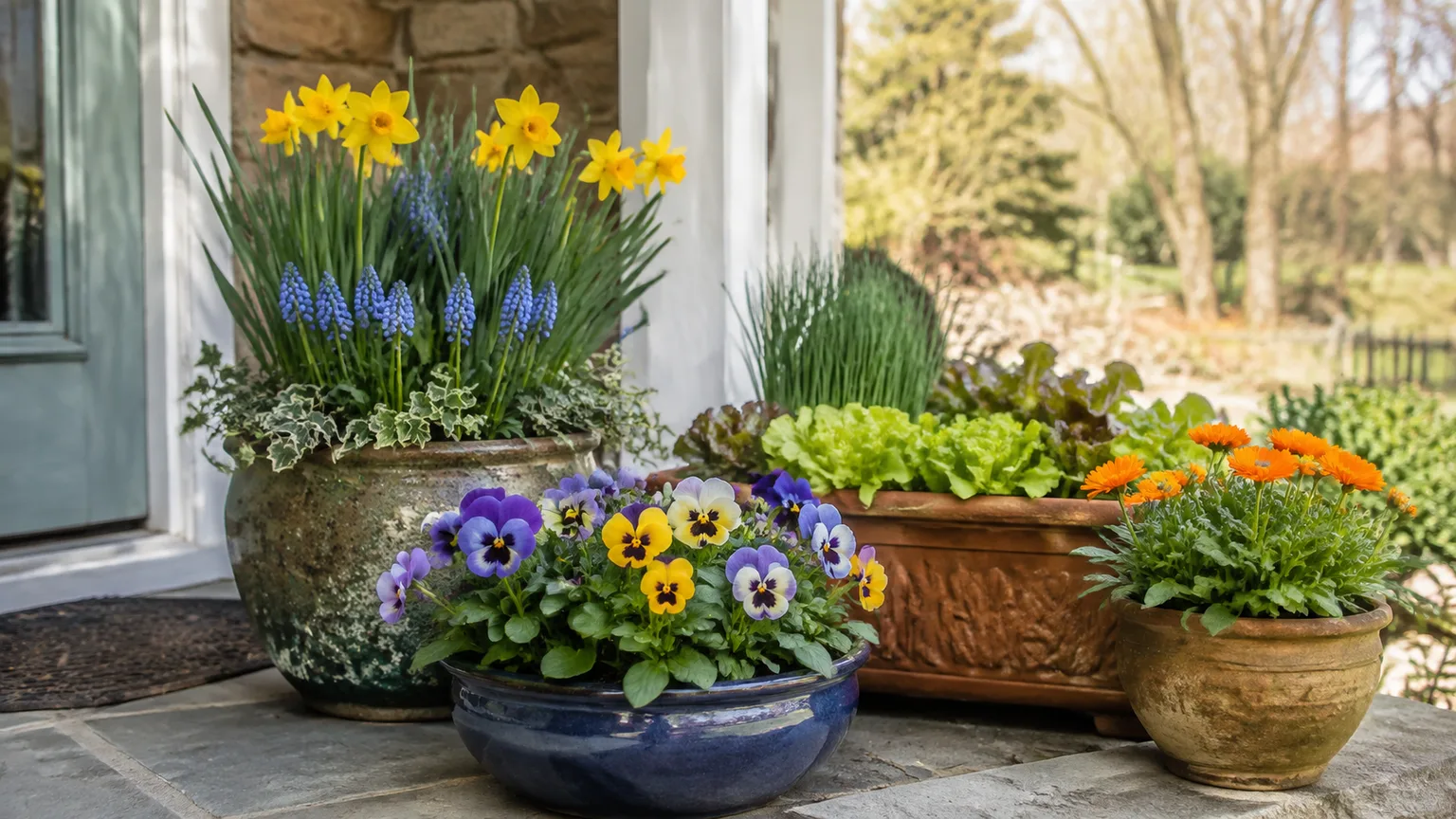
For a spring-to-summer entrance container: layer yellow daffodils with early primrose or pansies for cool weather, replace tired spring plants with French marigold and calibrachoa after the danger of frost, and finish with a compact dahlia if the pot is large enough. The key is not to keep every plant forever; seasonal swaps prevent a small container from becoming root-bound and overcrowded.
For a woodland edge or damp naturalistic corner: use witch hazel or a suitable azalea as the structure, add daffodils and yellow trout lily beneath deciduous trees, and reserve marsh marigold for the genuinely wet edge. Keep yellow archangel out unless you have confirmed it is acceptable locally and can contain its spread; native or well-behaved alternatives are often the better long-term investment.
Common mistakes that shorten a yellow-flower display
The most common mistake is choosing by flower color before checking the site. A full-sun plant in deep shade becomes leggy and sparse, a wetland plant in ordinary soil dries out, and a bulb planted in heavy winter clay may rot before it gets the chance to bloom.
The second is planting every yellow flower at the same time. Pairing spring bulbs with late perennials, annuals, or shrubs creates continuity and makes the garden feel designed rather than briefly decorated. The RHS also recommends planning for structure, coverage, and environmental benefits instead of treating color as the only measure of a successful border.
The third is assuming easy means maintenance-free. Deadheading, staking, dividing, thinning seedlings, checking for spread, and watering during establishment are small jobs that determine whether a plant remains an asset. Finally, recheck pet safety and local invasive-plant lists every time you move from a common name to a new cultivar or species. The RHS guidance on shade planting also emphasizes that condition-matched plants establish more robustly and reduce avoidable inputs.
Conclusion
The best yellow flower is the one that fits the garden you have and the season you want to improve. Choose daffodils, witch hazel, and trout lily for early color; coreopsis, daylily, rudbeckia, yarrow, and coneflower for sunny perennial structure; marigolds, zinnias, sunflowers, dahlias, and calibrachoa for flexible summer impact; and marsh marigold or carefully chosen shade plants only where the moisture and light truly match.
Start with three checks—site, season, and spread—before you buy. That short pause turns a long list of yellow flowers into a planting plan that blooms in sequence, uses water more sensibly, and stays enjoyable after the first flush of color fades.



