14 Best Plant Pairings for a Healthier Garden
Discover 14 plant pairings for a healthier garden, with spacing, sun, moisture, pest limits, and pollinator-friendly combinations you can use now.

The best plant pairings are not magic formulas. They are small, intentional communities in which plants share a useful condition—sun, soil, height, flowering time, or pest-management role—without competing so fiercely that one suffers.
That distinction matters. A fragrant herb beside a vegetable may confuse a few insects, provide flowers for hoverflies, or simply make harvesting easier. It will not sterilize the bed, cure a disease, or guarantee a bigger crop. University of Minnesota Extension’s review of companion planting finds that some combinations have research behind them while many popular claims remain inconsistent or unsupported. RHS makes the same practical point: companion planting can improve space use, habitat, and garden resilience, but not every pairing works in every situation.
Use the 14 combinations below as design options, not commandments. Start with the pairing that matches your bed’s light and moisture, leave enough room for mature plants, and watch what happens. A garden that is easy to inspect and water is healthier than one packed with “companion” plants that cannot breathe.
What makes two plants good neighbors?
Before choosing a companion, compare four resources: light, water, root room, and time. Tomatoes and basil are a sensible match in a sunny summer bed because both enjoy warmth and regular moisture. Rosemary beside a carrot row is a different kind of match: the carrot occupies underground space while the woody herb stays comparatively restrained above ground, but only if the soil drains well and the rosemary is not overwatered.
There are three dependable reasons to pair plants. First, you can use space efficiently by combining different heights, root depths, or harvest dates. Second, flowers and aromatic foliage can make a bed more useful to pollinators and predatory insects. Third, a trap crop or a visually mixed planting may reduce pressure from a particular pest. None of those benefits means one plant is feeding the other through a mysterious underground exchange.
Three benefits worth planning for
Resource sharing is the safest place to begin. A quick crop such as lettuce can fill space around slower vegetables early in the season, while a low oregano plant can edge a path without needing the same vertical room as a tomato. Resource sharing fails when plants have identical, heavy appetites or when a vigorous plant shades a sun-loving neighbor.
Habitat and pollination are often more reliable than “repellent” claims. Open flowers offer nectar and pollen, and a succession of blooms keeps beneficial insects visiting over a longer season. The RHS Plants for Pollinators program, updated with scientific review in 2025, is a useful reminder to choose flowers for accessible nectar, bloom timing, and local growing conditions—not just a trendy label.
Pest disruption is possible but specific. Mixed shapes and scents can make a crop harder for some insects to locate, and trap crops can draw pests toward a plant you are prepared to monitor. They do not replace row covers, hand-picking, sanitation, crop rotation, or an integrated pest-management plan. The University of Minnesota’s companion-planting guidance is especially useful here because it separates examples with research support from long lists repeated without much evidence.
Quick picks: 14 pairings by garden job
| Pairing | Best use | Main caution |
|---|---|---|
| Tomato + basil | Shared warm, sunny bed | Basil still needs its own root room |
| Tomato + marigold | Color and insect diversity | Do not promise nematode control |
| Carrot + rosemary | Contrasting root and canopy habits | Rosemary wants sharper drainage |
| Carrot + sage | Aromatic border near a cool-season crop | Sage can shade seedlings |
| Lettuce + mint | Container edge and harvest convenience | Keep mint contained |
| Cucumber + nasturtium | Trellis base and possible trap-crop role | Nasturtium can sprawl |
| Brassicas + thyme | Low border and flower visits | Avoid dense, damp foliage |
| Oregano + basil | Sunny culinary herb bed | Oregano spreads and dries faster |
| Russian sage + coneflower | Drought-aware perennial border | Give both full sun |
| Agastache + coneflower | Heat-loving pollinator planting | Do not overwater |
| Yarrow + bee balm | Texture and bloom contrast | Bee balm needs airflow |
| Coreopsis + Veronica | Repeated color and contrasting form | Match mature heights |
| Marigold + nasturtium | Edible/ornamental annual edge | Both can crowd small beds |
| Tomato + thyme | Low edge under a sunny crop | Tomato shade reduces thyme vigor |
Edible garden pairings
1. Tomato and basil
Tomato and basil are a good shared-conditions pairing, not a guaranteed pest shield. Both appreciate warmth, bright sun, fertile soil, and consistent moisture during active growth. Plant basil near—but not pressed against—the tomato stem so air can move and you can reach the lower leaves for inspection.
In a raised bed, place basil along the sunny front or side of a tomato row, with roughly 12 to 18 inches between basil centers and enough room to keep tomato foliage off the herb. In containers, one compact tomato can share a large tub with basil only when the pot is genuinely large, drains freely, and is watered for the tomato without leaving basil roots soggy.
The University of Minnesota review notes that some studies have found basil and marigolds associated with lower thrips pressure in tomatoes, and that basil intercropping may promote tomato growth in certain trials. That is promising, not universal. The practical win is that basil gives you a harvestable understory and flowers that can support insects if you let a few stems bloom.
2. Tomato and marigold
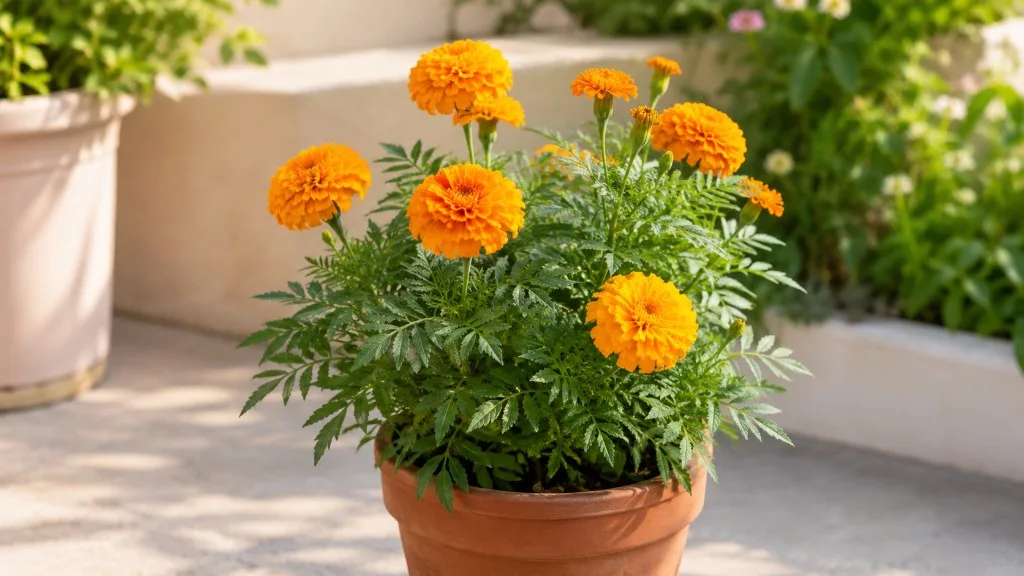
Marigolds add bright flowers, shallow competition, and visual diversity around a tomato bed. They can make a productive row feel like a garden rather than a bare production strip, and their flowers bring visitors when grown as simple, open blooms.
Treat claims about marigolds “repelling everything” with skepticism. University of Minnesota Extension specifically notes that many marigold pest claims are inconsistent, and multiple studies have not shown them to be a dependable Colorado potato beetle deterrent. Plant them because the flowers and layout help, then scout tomatoes normally.
Space marigolds where they will not shade the tomato’s lower canopy or block harvesting. A small French marigold fits better than a sprawling tall cultivar in a tight bed. Deadhead for more flowers if you want a tidy display, but leave a few blooms for seed or insect visits.
3. Carrot and rosemary
Carrots and rosemary make a useful different-layer pairing. Carrots develop their edible root below the soil, while rosemary forms a woody, aromatic mound above it. Both want sun, but their moisture preferences are not identical: carrots need even moisture while germinating and swelling; established rosemary prefers a leaner, sharply drained root zone.
The solution is placement, not wishful thinking. Put rosemary at the edge of a raised bed or in a nearby pot, then run a carrot row where the soil is loose and can be watered evenly. Do not put a large rosemary root ball in the middle of a densely seeded carrot block. Harvesting carrots disturbs soil, so give the herb a permanent position outside the main row.
4. Carrot and sage
Sage offers the same broad logic as rosemary: a strongly scented, sun-loving herb can border a cool-season root crop while adding flowers and structure. Oregon State University’s companion-herb guidance lists sage among herbs that can enhance crops such as carrots, peas, and beans, but the claim should be read as a possible pest-distraction or habitat benefit, not a chemical barrier.
Use a compact sage plant at the sunny end of the bed. Keep it from casting afternoon shade over emerging carrots, and do not irrigate the whole bed on a sage schedule if the carrot soil is still dry. If your garden is humid or your soil stays wet, sage belongs in a separate raised pocket or container.
5. Lettuce and mint
Lettuce and mint can coexist, but mint is the plant that needs managing. Lettuce enjoys cool conditions and regular moisture; mint tolerates similar moisture and partial shade, which makes the combination tempting for a spring container or the damp edge of a bed.
Do not plant mint directly into open soil beside lettuce unless you are comfortable removing runners and rooted stems for years. Penn State Extension advises keeping aggressive members of the mint family in pots, and that is the cleanest approach here: sink a mint pot into the ground or use a separate container beside the lettuce. Leave a gap so mint does not form a humid, slug-friendly mat over the lettuce.
Mint scent may distract some pests, but it will not solve a slug problem. Oregon State Extension’s slug resources emphasize habitat, moisture, and direct management; essential-oil experiments are not the same as planting mint next to a crop. Use the pairing for harvest convenience and space, then control slugs with scouting, debris reduction, barriers, or locally appropriate labeled products.
6. Cucumber and nasturtium
Nasturtium is one of the more defensible annual companions for cucumbers and other cucurbits because it can serve as a trap crop or add flowers around a trellis. University of Minnesota Extension cites research in which nasturtium helped reduce squash-bug populations and, in another study, reduced damage from squash bugs and cucumber beetles alongside other plants.
That does not mean you can plant nasturtium and ignore the cucumber vines. Inspect nasturtium first and often. If it becomes covered with pests, decide whether its role is still useful; a trap crop only buys time when you are willing to monitor and act.
Give the cucumber trellis the tallest, sunniest position. Let nasturtium spill at the base or outside the bed so it does not climb through the cucumber canopy and make harvesting difficult. In a container, choose a compact cucumber variety and one nasturtium, not a jungle of both.
7. Brassicas and thyme
Kale, broccoli, and other brassicas can share a sunny bed with thyme as a low aromatic border. Thyme occupies little vertical space, tolerates leaner soil once established, and flowers attract small pollinators and beneficial insects. Oregon State’s herb-and-flower guidance lists thyme as a crop-enhancing plant and notes its potential to distract or repel some pests.
The pairing is strongest at the edge of a well-drained bed, not inside a crowded cabbage canopy. Brassicas need dependable moisture and room for airflow; thyme dislikes being kept constantly wet. Water the brassica root zone deeply, keep thyme’s crown from sitting in mulch or irrigation runoff, and remove lower leaves that touch soil.
8. Oregano and basil
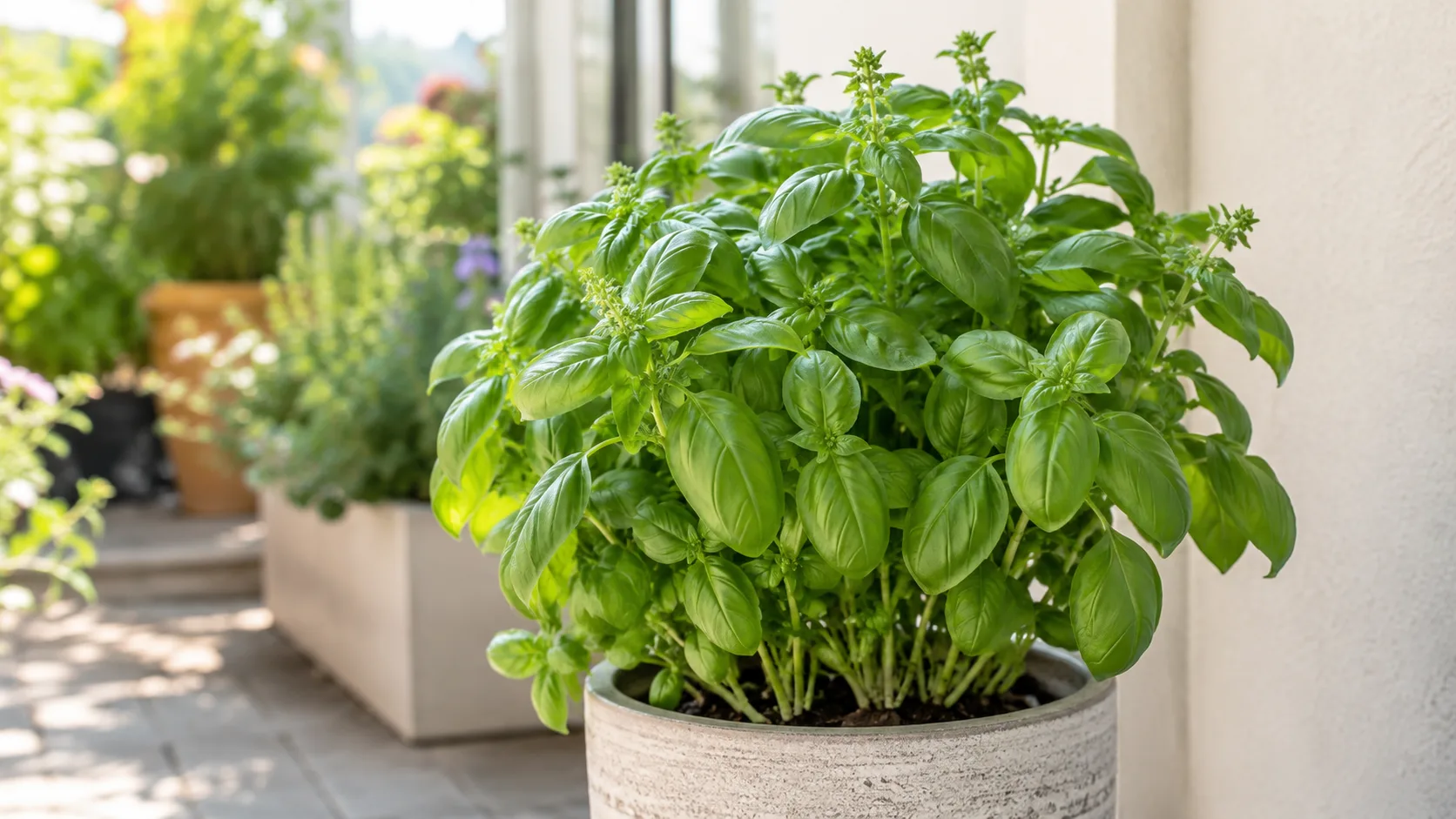
Oregano and basil belong together in a sunny culinary herb bed because both grow actively in warm weather and are easy to harvest for the same meals. Oregano can form a low border, while basil supplies a softer, taller mound. Penn State Extension describes mature oregano’s aroma as a possible way to confuse or repel some tomato pests and notes that its flowers attract bees, ladybugs, and hoverflies.
Give oregano a boundary. It is in the mint family and can spread, though its growth habit varies by cultivar and climate. Keep it in a pot, a defined edge, or a spot where you can shear it without damaging neighboring herbs. Basil usually wants richer soil and more regular water, so a shared bed should be amended for basil while still draining quickly.
Flower-border pairings for pollinators and texture
9. Russian sage and coneflower
Russian sage and purple coneflower are a strong perennial pairing for a hot, sunny border. Russian sage contributes airy stems and cool gray foliage; coneflower adds bold flower heads and sturdy vertical rhythm. Both prefer sun and reasonably well-drained soil, and both can tolerate dry spells once established better than a thirsty annual bed can.
Plant Russian sage toward the back or middle of the border and coneflower where its blooms can be seen. Do not install either in a soggy low spot simply because the color works there. Coneflower is more adaptable than Russian sage, so if the site is heavy clay or winter-wet, improve drainage or choose another combination rather than watering a drought-aware plant constantly.
10. Agastache and coneflower
Agastache and coneflower share heat tolerance, long bloom presence, and strong pollinator value. Agastache brings narrow flower spikes and aromatic foliage; coneflower supplies broad daisy-like blooms that hold the composition together. The pairing is especially effective in a gravelly or low-irrigation border where both plants can receive full sun.
Choose cultivars with similar mature height and bloom timing. Leave space between crowns even when the nursery pots look small. Overcrowding is the fastest way to turn a low-maintenance border into a watering and mildew project, and agastache’s preference for excellent drainage is not negotiable.
11. Yarrow and bee balm
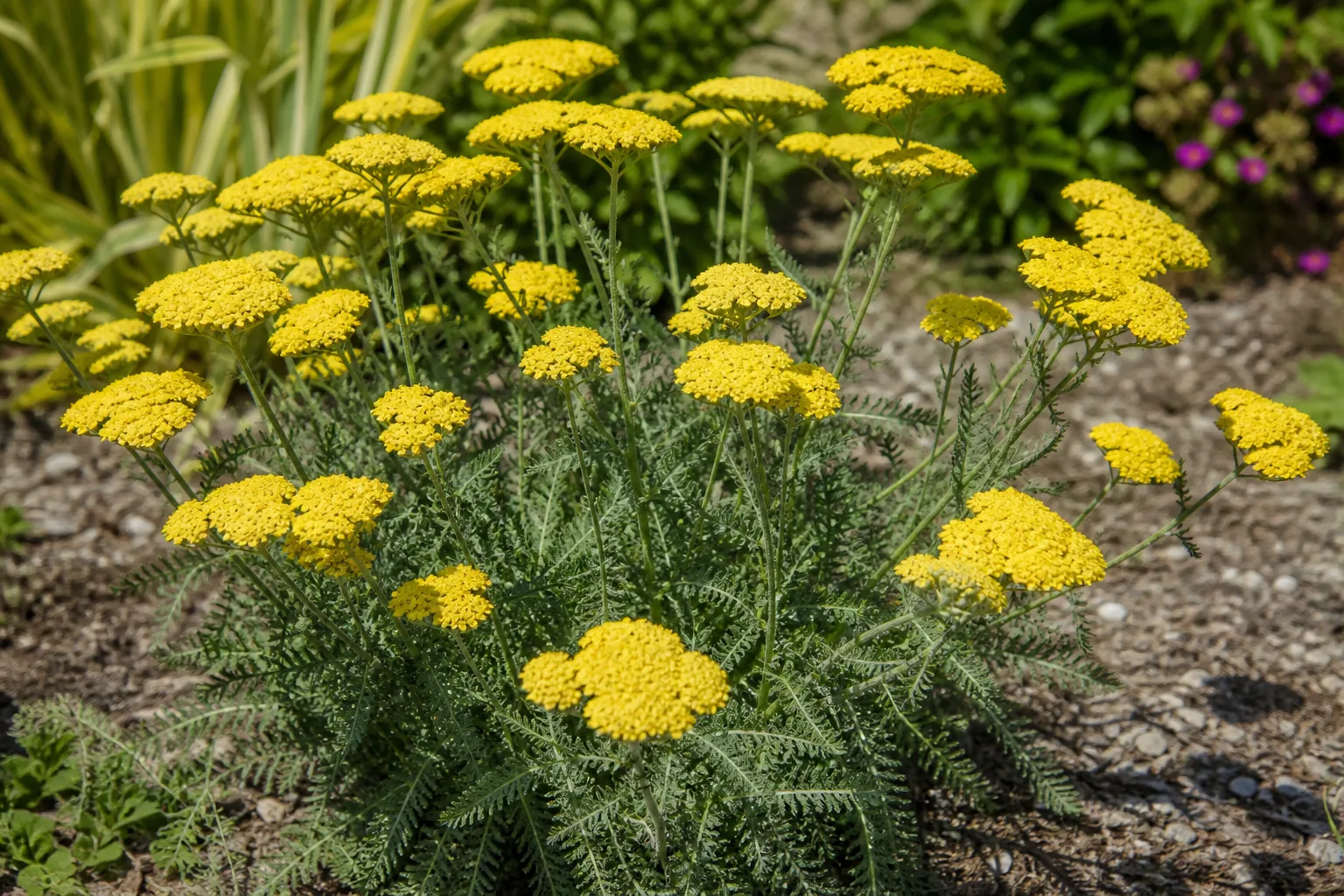
Yarrow’s flat, ferny foliage and level flower clusters make a calm counterpoint to bee balm’s shaggy, tubular blooms. The two plants create useful visual contrast—horizontal against spiky, fine texture against coarse—and their flowers can extend the feeding options in a pollinator border.
Give bee balm more airflow than its mature size suggests. Plant it where morning sun dries foliage, avoid an over-fertilized thicket, and divide or thin it when the clump becomes congested. Yarrow generally prefers leaner, drier conditions, so this pairing works best when irrigation is directed at bee balm’s root zone rather than sprayed across the whole border.
12. Coreopsis and Veronica
Coreopsis and spiked speedwell (Veronica spicata) are a tidy pairing for a sunny bed or large container. Coreopsis contributes fine foliage and cheerful, open flowers; Veronica adds narrow flower spikes and a more architectural silhouette. The contrast is ornamental rather than pest-related, which is a perfectly good reason to plant companions.
Put the lower, spreading coreopsis near the front and Veronica behind it if the cultivars differ in height. Both need drainage and light, but a container dries faster than a border, so check the root zone rather than watering by calendar. Shear spent blooms selectively to encourage another flush and keep the planting from becoming floppy.
13. Marigold and nasturtium
Marigold and nasturtium make a productive annual edge around vegetables. Marigold grows upright and compact in many cultivars; nasturtium can trail or climb, bringing edible flowers and round leaves close to the soil. Together they add color and different plant shapes, and nasturtium may provide the trap-crop role described earlier.
This is not a zero-maintenance pairing. Nasturtium can smother a narrow path, and both plants can become crowded in a small raised bed. Place nasturtium on the outside edge, train it away from seedlings, and remove diseased foliage promptly. The flowers should support the bed’s ecology, not create a damp hiding place for pests.
14. Tomato and thyme
Tomato and thyme deserve a place on the list because they solve a layout problem: the tomato uses height while thyme can form a low edge in full sun. A few thyme plants near the front of a bed make the path smell wonderful when brushed and leave the main tomato root zone accessible.
Keep expectations realistic. Tomato foliage eventually shades anything directly beneath it, so thyme performs best on the sunny south or west edge, not under a dense canopy. Oregon State’s guidance supports thyme as a flower- and herb-based companion, but it does not make thyme a substitute for tomato scouting, pruning decisions, or disease prevention.
How to plan spacing, water, and succession
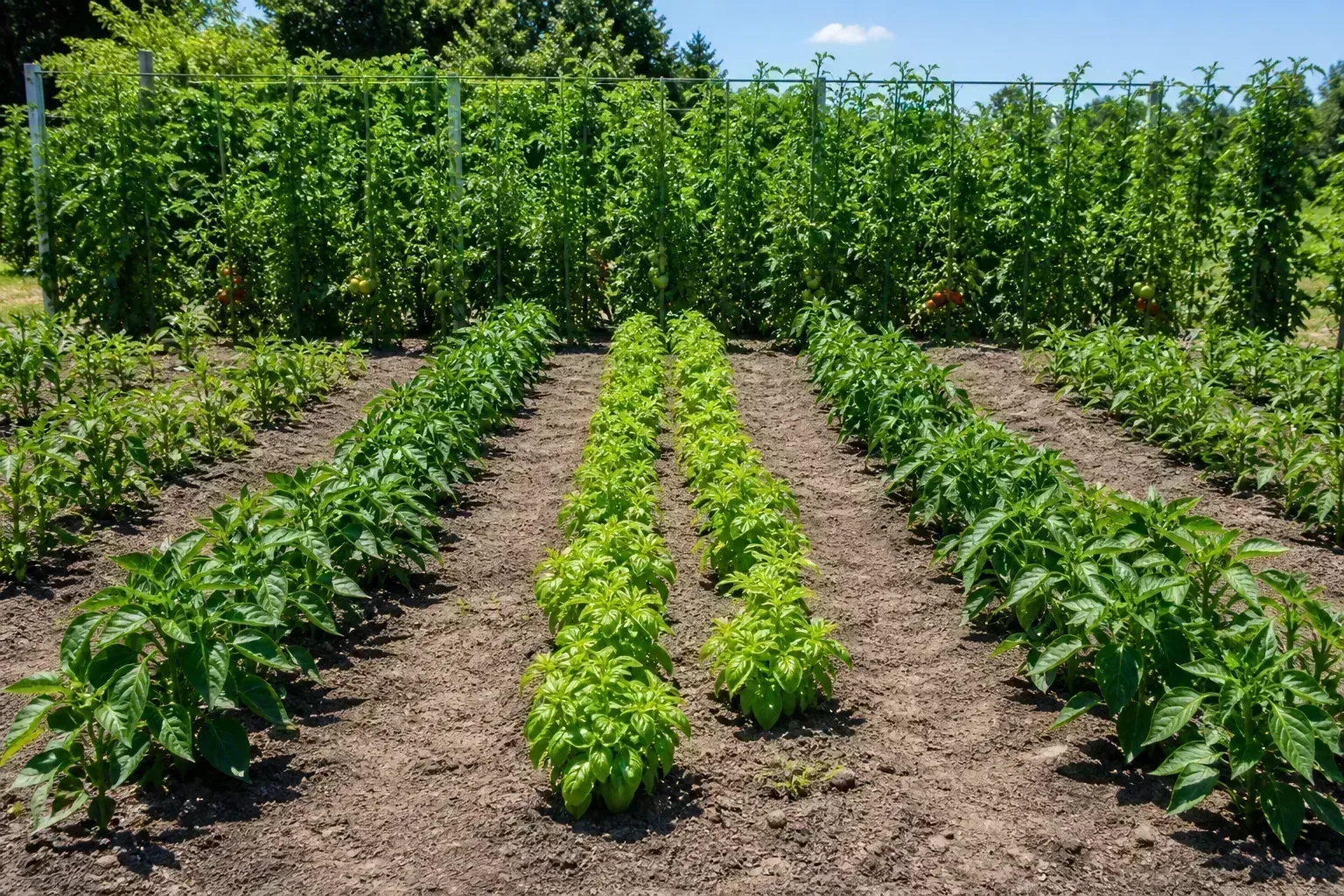
Use mature size, not nursery-pot size, when planning. A practical minimum is usually 12 inches between small herbs, 18 to 24 inches between larger annuals, and more for vigorous perennials or spreading vines. Follow the seed packet or plant tag when it gives a larger range, and remember that spacing is measured from the plant’s center, not leaf edge.
Use a four-question compatibility check
- Do they want the same light? Put the tallest plant on the north side of a bed in the Northern Hemisphere so it does not cast a long shadow over a shorter sun-lover.
- Do they want the same moisture? Combine basil with tomatoes more readily than rosemary with lettuce. If irrigation needs conflict, use separate containers or drip lines.
- Do their roots and canopies occupy different space? A low herb at a bed edge is easier to manage than two sprawling, shallow-rooted plants fighting through the same row.
- Do their calendars overlap? Lettuce may be finished before a tomato fills the bed. That is succession planting: harvest the cool-season crop, then let the warm-season crop expand.
Add a fifth question for perennial pairings: Will both plants still fit in three years? Russian sage, yarrow, bee balm, and coneflower are not temporary bedding plants. Mark their mature spread and leave a path for division.
Common companion-planting mistakes
The first mistake is confusing proximity with protection. A companion must be close enough to share space or habitat, but packing plants together does not make their scent stronger in a useful way. Dense foliage often creates the humidity and poor airflow that disease likes.
The second is giving every plant the same irrigation. Rosemary, sage, thyme, yarrow, Russian sage, and agastache generally dislike the constantly wet conditions that lettuce, basil, and young carrots can tolerate. Group plants by water need before grouping them by color.
The third is letting mint or oregano escape. Containerize mint when you are unsure, and give oregano a hard edge or harvest it regularly. A pairing that takes over the bed is not a successful pairing, even if the first month looked lush.
The fourth is relying on flowers as pest control while ignoring the crop. Check leaf undersides, remove damaged leaves, use physical barriers when appropriate, and identify the pest before choosing a treatment. Oregon State’s slug resources are a good example of why the whole habitat matters: moisture, shelter, and timing often influence slug pressure more than a single aromatic plant.
The fifth is choosing plants for a climate they cannot handle. “Full sun” means different things in a cool coastal garden and a hot inland one. Check your USDA hardiness zone for perennial survival, but also check summer heat, winter drainage, frost timing, and the actual hours of direct light in your bed. For pollinator borders, the RHS Plants for Pollinators program is a useful additional reference for flower choice and bloom timing.
A simple way to test a pairing this season
Do not redesign the whole garden around a companion chart. Test one combination in a small, observable patch. Plant one bed section with the pairing and keep another nearby section as a practical comparison, using the same soil preparation, watering, and crop variety.
Record three things: plant health, harvest or bloom performance, and pest pressure. Take a photo on planting day and another every two weeks. If the pair looks attractive but one plant is shaded, thirsty, or constantly damaged, change the spacing next season. If you notice fewer pests, ask whether weather, crop timing, barriers, or beneficial insects also changed before crediting the companion alone.
This approach gives you something more valuable than a universal list: knowledge about your soil, your microclimate, and the way your garden behaves. Keep pairings that make care easier. Retire those that create work without a clear benefit.
Conclusion: design partnerships around conditions, not promises
The most useful plant pairings are the ones you can explain in plain language. Tomatoes and basil share a warm, sunny season. Cucumber and nasturtium combine a trellis crop with a possible trap crop. Coneflower, agastache, yarrow, and bee balm build a border around bloom, texture, and pollinator habitat. Mint and oregano can be valuable neighbors only when their spread is controlled.
Start with light, moisture, mature size, and timing. Then add the softer benefits—fragrance, flowers, visual contrast, and habitat—without expecting a single plant to solve every pest problem. A thoughtfully spaced garden is easier to scout, easier to harvest, and more likely to stay healthy than one planted by folklore alone.



