7 Reasons Your Plant Is Always Droopy (and How to Fix It)
A drooping plant may be thirsty or waterlogged. Read soil, root, leaf, light, and temperature clues, then choose the safest first fix for your plant now.
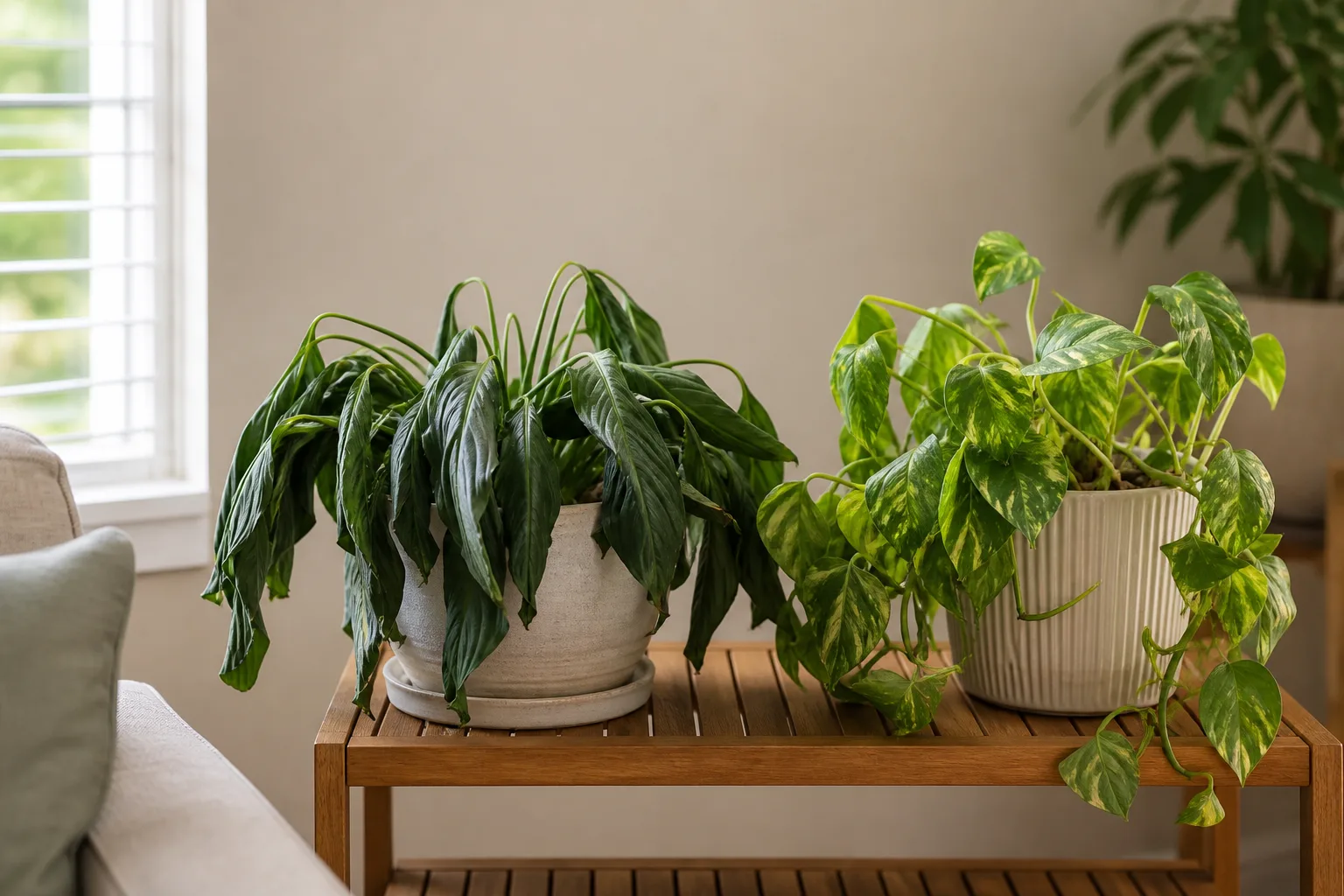
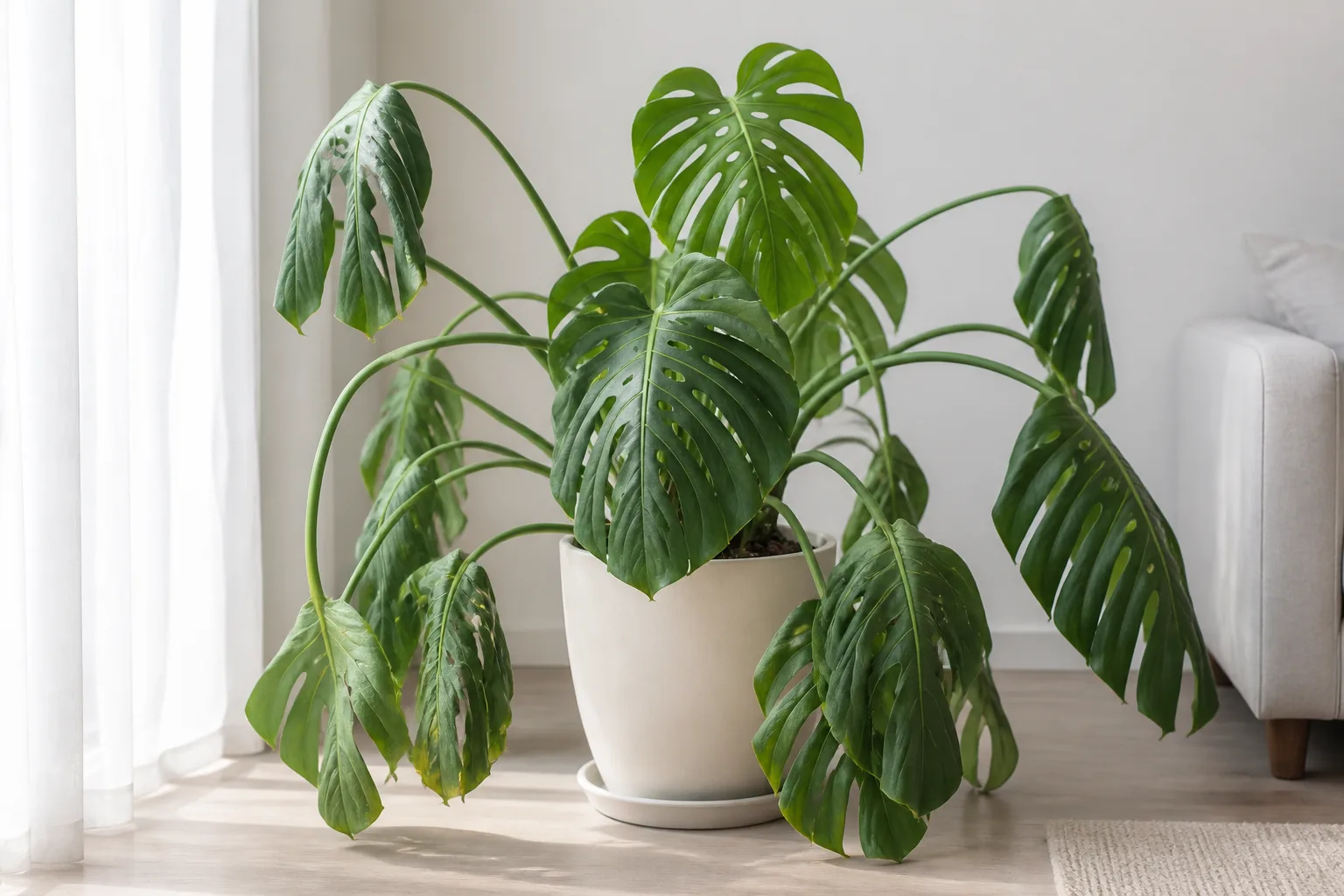
A drooping plant is not automatically asking for water. The same limp leaves can come from a dry root ball, roots sitting in soggy mix, heat stress, or a damaged root system. Watering before you check can rescue a thirsty plant—or push an already waterlogged one closer to root rot.
Start with what is happening below the leaves. Check moisture several centimetres down, feel the pot’s weight, look for drainage, and note when the drooping appears. Those clues usually narrow the problem faster than changing several parts of care at once.
What drooping tells you about the plant
Many leaves and stems stay firm because water inside their cells presses against the cell walls. That internal support is called turgor. When water uptake cannot keep pace with water loss—or roots are too damaged to move water—the pressure falls and the plant looks limp. WVU Extension explains how water supports turgor and how warmth, wind, and dry air affect transpiration.
Drooping describes a result, not a cause. A plant with dry mix may lack available water; a plant in saturated mix may also wilt because damaged or oxygen-starved roots cannot take it up. Light, humidity, temperature, recent repotting, and the plant’s normal daily rhythm can complicate the picture, so use more than one clue before acting.
A 60-second check before you water
Check the conditions around the root ball before reaching for the watering can. Push a finger or clean wooden skewer a few centimetres into the mix, compare the pot’s weight with how it feels after watering, and check whether an inner nursery pot is sitting in water inside a decorative cover pot. The surface alone can be misleading: it may look dry while the lower mix is still wet.
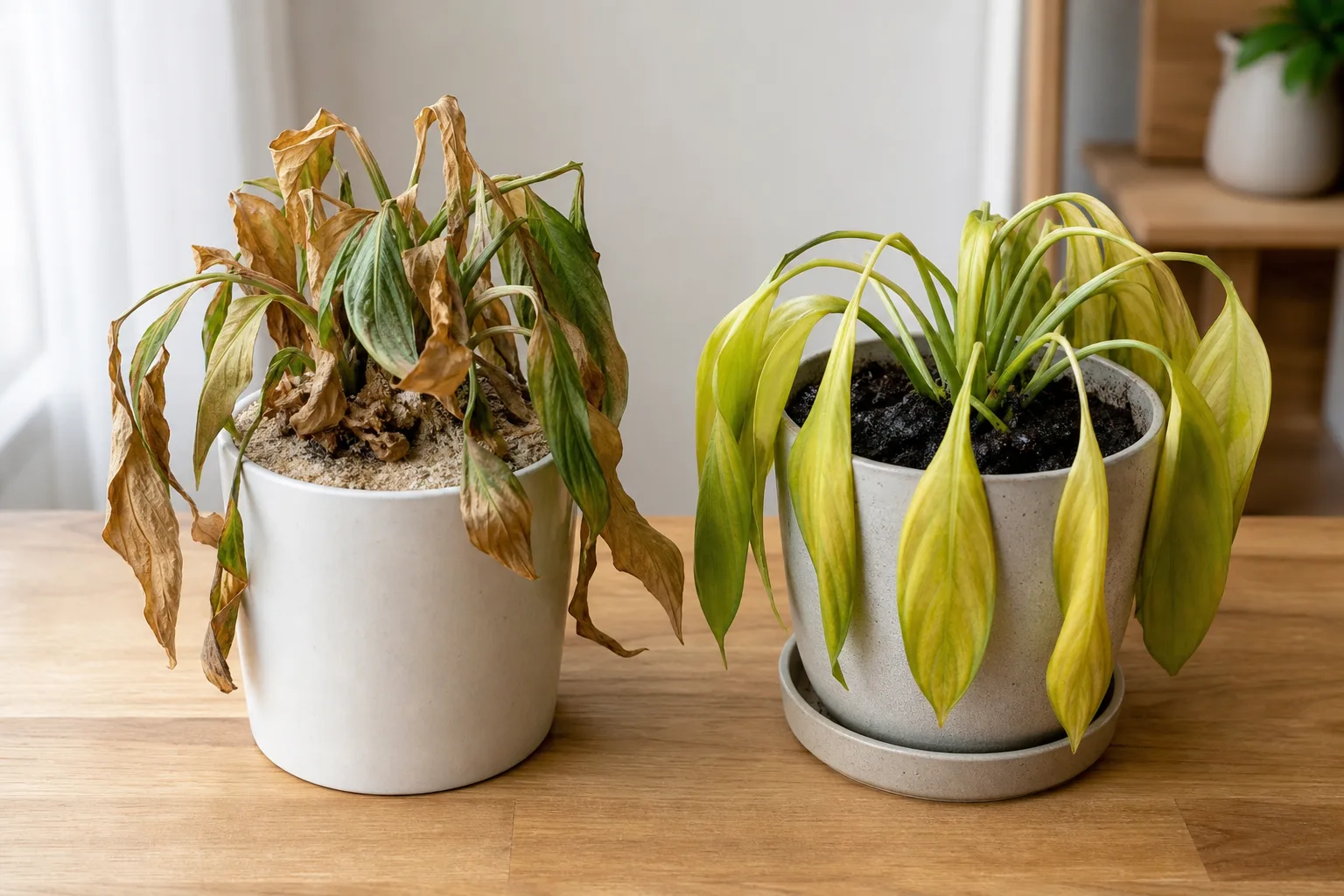
Both dry-root stress and wet-root stress can make foliage droop; check the mix before you water.
| What you notice | More likely explanation | First move |
|---|---|---|
| Mix is dry below the surface; pot feels light; leaves or edges feel crisp | Root ball is too dry | Water thoroughly, then let excess drain |
| Mix stays wet; leaves yellow or stems soften; pot smells sour | Waterlogged roots or poor drainage | Stop watering and check the pot and roots |
| Growth is stretched toward a window and the mix dries slowly | Light is too weak for the plant’s water use | Improve light gradually; do not add water on a schedule |
| Drooping peaks in a hot afternoon near glass, a heater, or an air vent | Heat or moving air | Move it out of the stress zone and recheck later |
Check the root-ball moisture
The Royal Horticultural Society’s houseplant troubleshooting advice recommends checking the growing medium below the surface and warns that overwatering can cause wilting too. For a deep pot, a wooden skewer reaching farther into the mix can reveal moisture that a fingertip misses. A moisture meter can help with consistency, but it is not a substitute for knowing where the plant’s roots sit or what that species prefers.
Also check the outlet. Water should be able to leave the growing pot, and the saucer or cover pot should not hold standing water. If the mix is damp but the plant wilts, more water is not the safe default.
Match the pattern to the timing
A slow decline over weeks points toward chronic conditions such as poor light, compacted mix, or roots that have outgrown their container. A sudden slump after a missed watering, a move outdoors, a repot, or a cold night makes that recent change more relevant. Note the date and what changed; repeated observations are more useful than guessing from one afternoon.
Some plants briefly droop during hot midday conditions and regain firmness when the air cools. If the soil is moist and the plant perks up in the evening, watering may not be needed. A plant that stays limp overnight, keeps losing leaves, or has wet soil for days deserves a closer root and drainage check.
Seven reasons a plant stays droopy
The causes below can overlap. For example, low light can slow growth and keep a pot wet for longer, while poor drainage can turn an ordinary watering routine into root stress. Identify the condition that best fits the evidence, correct that one first, and watch how the plant responds.
1. The root ball is too dry
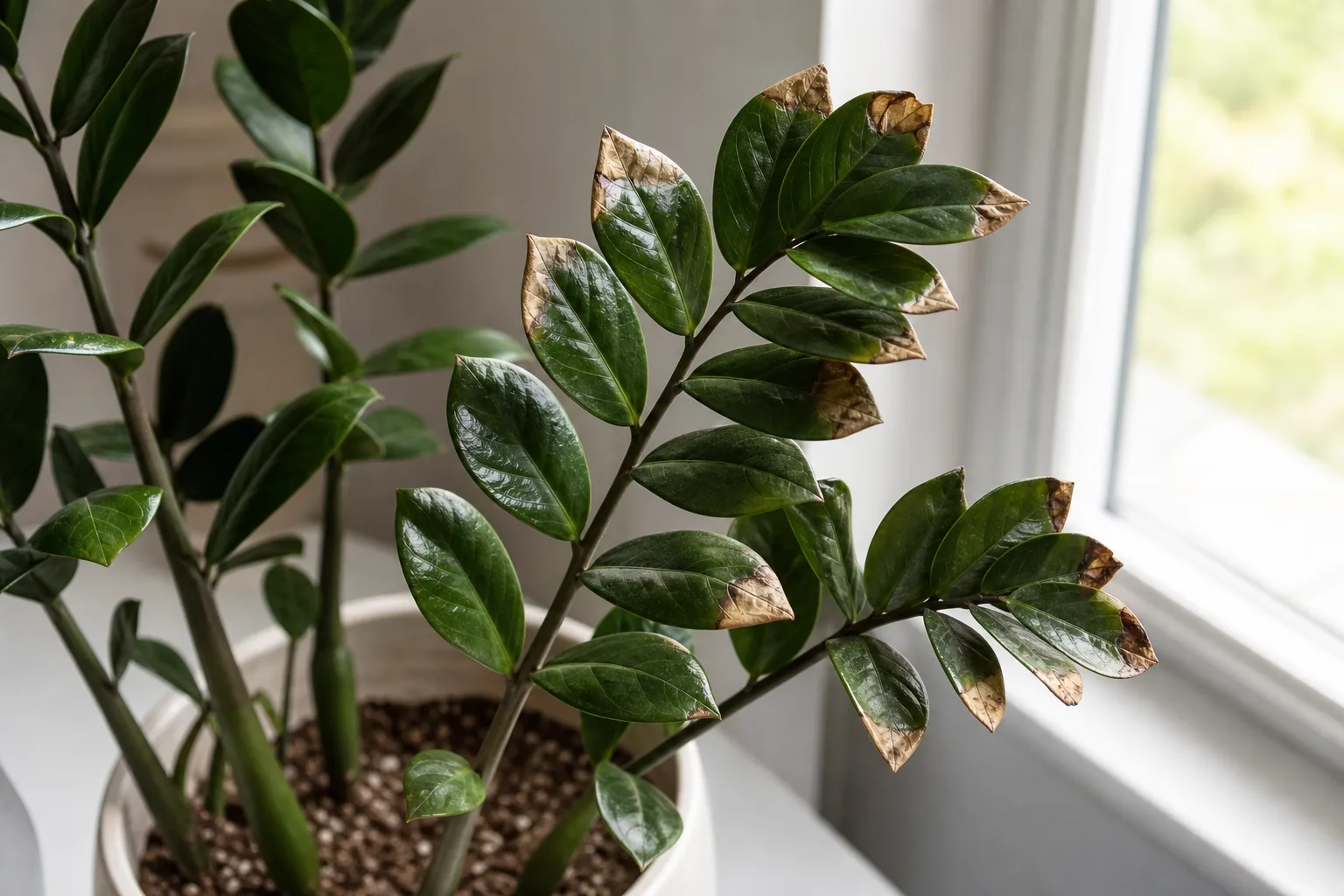
Underwatering is likely when the mix is dry well below the surface, the pot feels unusually light, and leaves are limp with dry or crispy edges. A small plant may dry out quickly in a warm, sunny room; a larger pot can stay wet much longer. A weekly schedule cannot account for differences in species, container size, season, light, or room temperature.
If the root ball is dry, water slowly over the entire surface until water begins to leave the drainage holes. Let it drain fully and empty the saucer. A thoroughly dry, compacted mix may repel water, letting it run down the gap between soil and pot; apply a little water, wait for it to absorb, and repeat until the center of the root ball is moist. Do not leave the pot standing in water afterward.
Most thirsty plants begin to regain some firmness after their roots have access to water, but severely stressed leaves may remain damaged. If the mix is wet after watering and the plant does not improve, pause before adding more. Check that the water reached the root ball and that the roots are functioning.
2. The root zone stays wet
Overwatering usually means the root area stays wet too long, not simply that a person watered once. When water fills the air spaces in a dense or saturated mix, roots have less access to oxygen. Roots that are damaged by persistent wetness can fail to take up water, so a plant may droop even while its pot feels heavy.
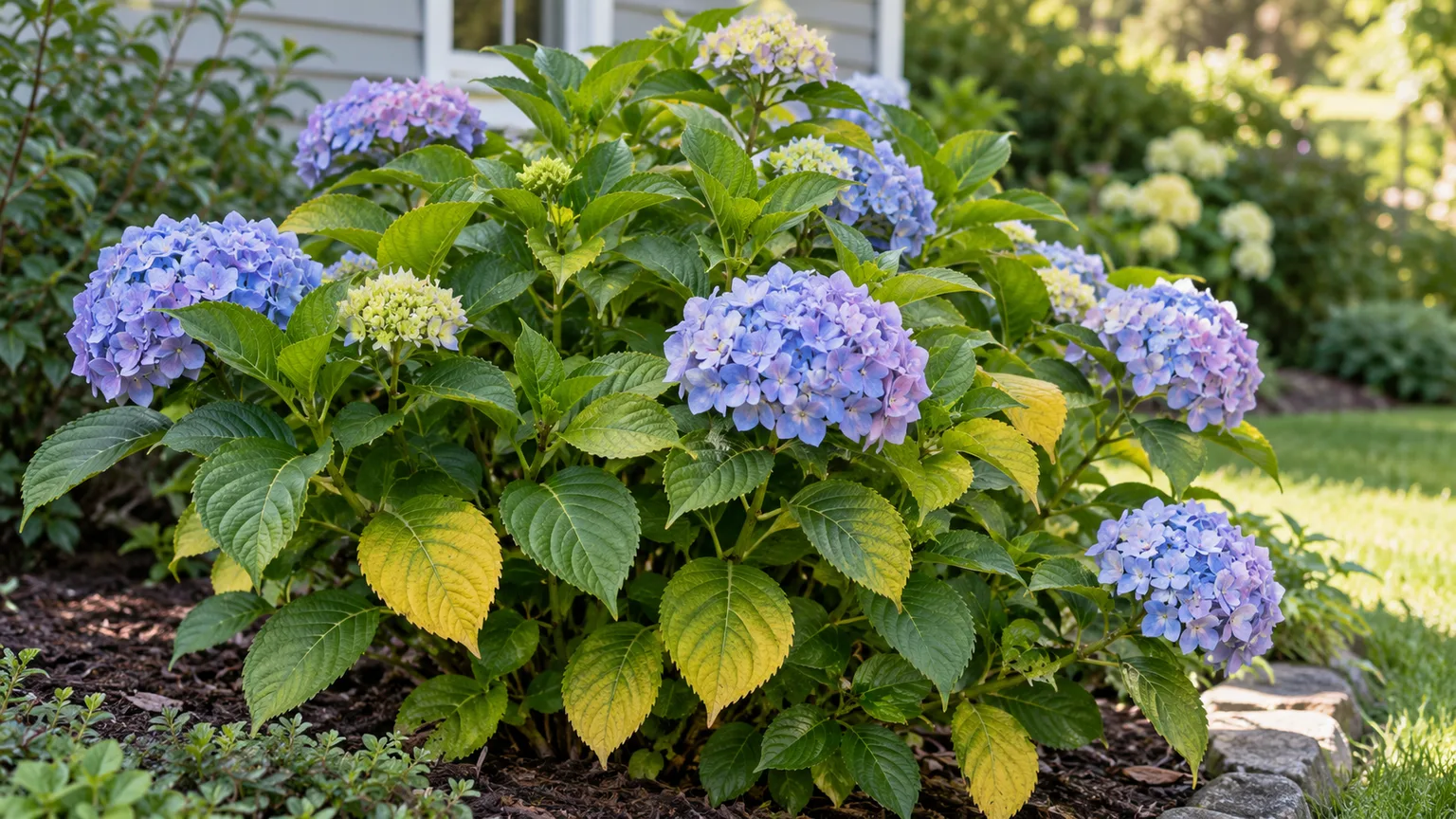
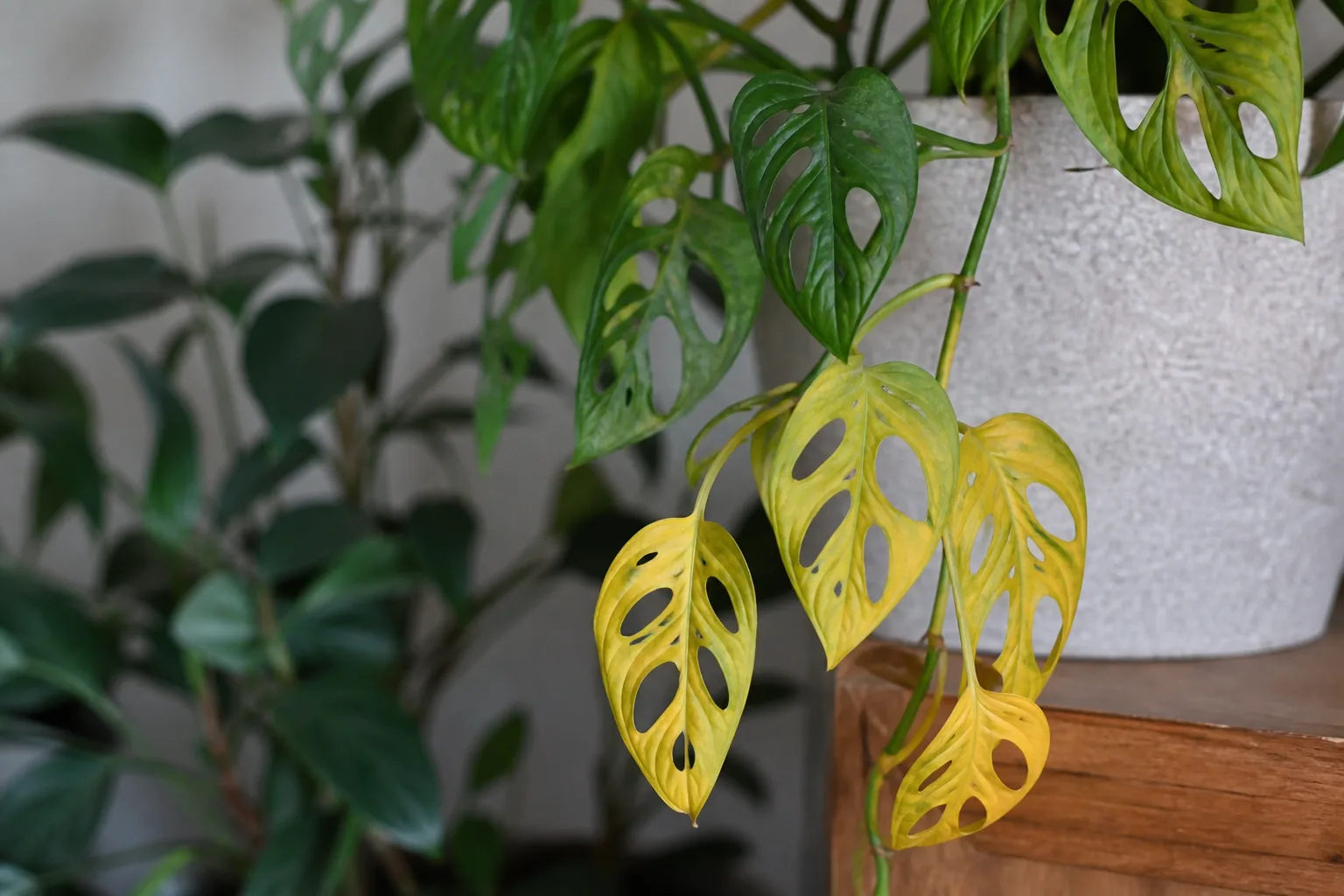
Look for several clues together: mix that remains wet for days, yellowing across older and newer leaves, soft stems, an unpleasant smell, or roots that are limp and mushy. Drooping alone cannot confirm root rot. Penn State Extension notes that root-rotted plants may have dark, soft roots and that similar symptoms can also follow too much or too little water, cold injury, or root crowding. RHS guidance likewise lists wilting among the possible effects of overwatering.
Hold off on watering while the mix is still wet. Move the plant to suitable bright conditions with ordinary room airflow, not baking sun or a heater, and remove water from the saucer. If the plant continues declining in wet mix, inspect the roots rather than waiting for a calendar date. Epic Gardening’s symptom guide also stresses that wilting and yellowing can occur with excess water, which is why soil and root checks matter.
3. The pot or mix drains poorly
A pot without an open drainage hole, a blocked hole, a full cachepot, or a saucer that never gets emptied can keep the root zone wet even when watering seems moderate. Old or compacted potting mix may also hold water unevenly or lose the air spaces roots need. The RHS houseplant growing guide recommends a drainage hole, thorough draining after watering, and emptying water-filled saucers.
Check the whole route water takes: through the mix, out of the growing pot, then away from its base. If you use a decorative pot with no hole, lift the nursery pot out to water and return it only after it has drained. If water sits on top or channels straight down the edge, the mix may be compacted or the root ball may have pulled away from the pot wall.
Use a mix suited to the plant rather than adding fertilizer or random amendments to solve a drainage problem. A moisture-loving fern and a drought-tolerant succulent should not be forced into the same watering pattern or potting medium. When the mix has broken down and stays wet, repot once into an appropriately sized pot with drainage and a fresh, suitable mix.
4. Light does not match the plant
In low light, many plants grow slowly, make weaker or stretched stems, and use water more slowly. The pot can stay wet between waterings even if the routine used to work in a brighter place. Look for growth leaning toward a window, longer gaps between leaves, smaller new leaves, or a generally pale, weak appearance rather than relying on drooping alone.
Too much direct sun can also stress a plant that prefers filtered light. Scorched patches, faded sections, or drooping that begins after a move to a hot window point toward excess intensity. The RHS troubleshooting guide describes weak, spindly growth as a low-light clue and scorched or washed-out leaves as possible excess-light damage.
Match the plant to its species-specific needs and change exposure gradually. Move a low-light plant closer to bright indirect light in stages; do not put it straight into strong midday sun. If the home is genuinely dim, a grow light can help, but more light does not mean more frequent watering unless the soil is actually drying faster.
5. Heat, cold, or moving air is stressing it
Warmth, wind, and dry air increase transpiration, the loss of water vapor from leaves. On a hot day, a plant may lose water faster than its roots can replace it and droop temporarily, even when the pot is not dry. This is especially common beside a sunny window, radiator, heating vent, or air conditioner. WVU Extension describes how warmth, wind, and dry air raise transpiration.
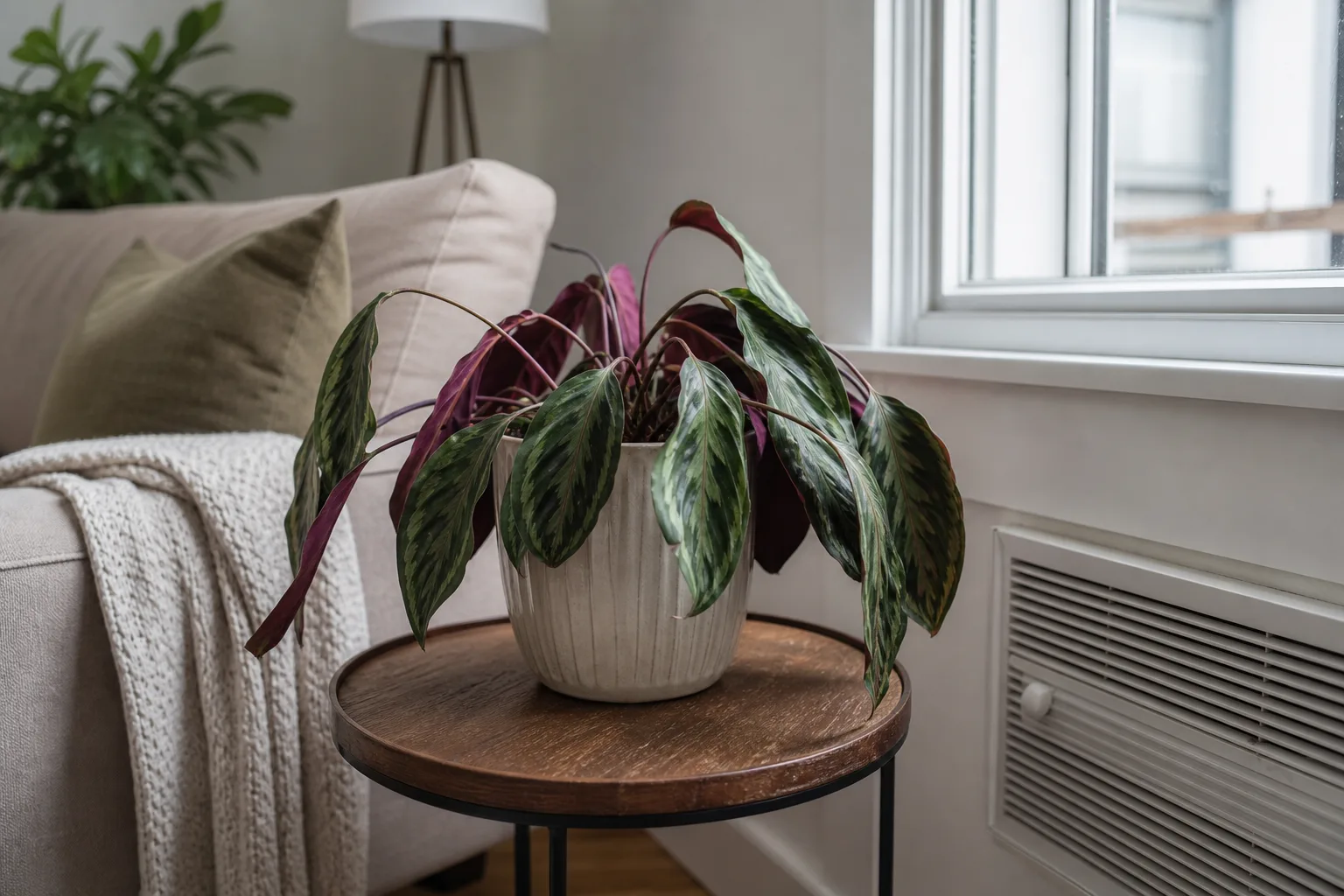
Cold exposure can cause a different pattern: limp growth after a cold draft, blackened tissue, or sudden collapse after a plant sits against a chilly window or is moved outdoors too early. A plant brought home from a greenhouse or moved between indoor and outdoor conditions may also need time to adjust. The RHS identifies heat stress, cold damage, and drafts as distinct problems to check when a houseplant declines.
Move the plant away from direct blasts and extreme temperature swings, then give it time to respond before changing its watering. If droop appears only during the hottest part of the day and eases later, protect it from heat first. Water only if the root zone is dry enough for that particular plant.
6. The air is too dry for the plant
Low humidity can make a moisture-sensitive tropical plant lose water through its leaves faster than its roots replace it. Brown, crispy tips, curled edges, or shriveling alongside droop are stronger clues than a limp leaf by itself. Dry indoor air often becomes more noticeable when heating runs, but different species tolerate it differently.
Check the actual root-zone moisture before treating the air. If the mix is dry, water according to the plant’s needs; if it is wet, adding water will not correct dry air and could worsen root stress. The RHS notes that low humidity can increase transpiration and contribute to wilting in plants that need more moisture in the air.
For plants that need humid conditions, group them or use a room humidifier and monitor the space rather than misting once and assuming the humidity problem is solved. A pebble tray can create a small humid area, but keep the pot base above the waterline. Avoid turning the plant’s leaves and potting mix persistently wet.
7. Roots are crowded, damaged, or recently disturbed
Roots crowded into a tight container can leave little mix to hold water, so the plant dries very quickly after a thorough watering. You may see roots circling the inside of the pot or emerging from drainage holes, and the root ball may lift out in one firm shape. A recently repotted plant can also droop temporarily because fine roots were disturbed or its new conditions differ from the old ones.
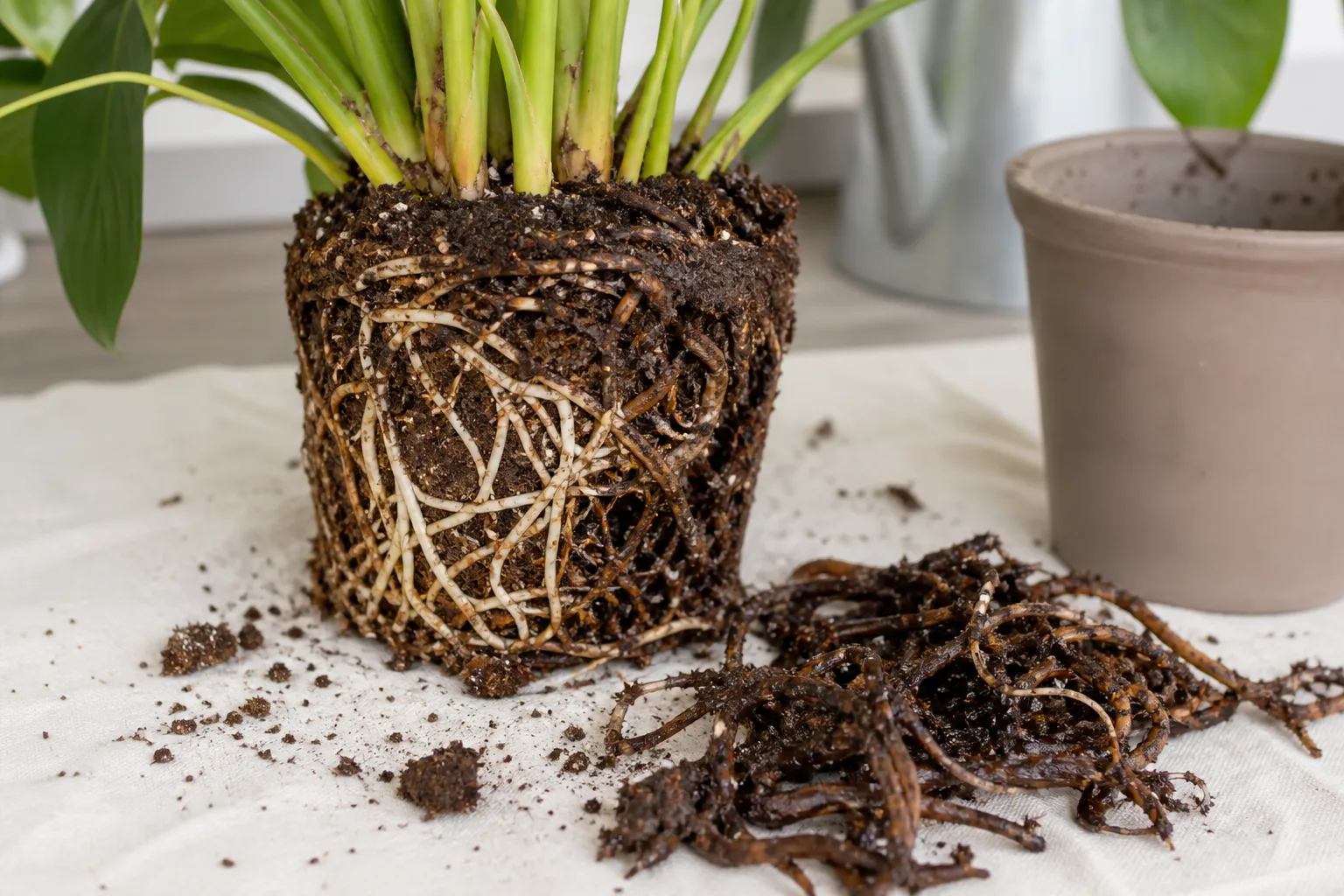
Root color varies by species and growing medium, so do not diagnose rot from color alone. Look for texture and function: healthy roots are generally firm, while rotted roots are often soft, limp, or damaged. Penn State Extension describes dark, soft roots and loss of root tips as signs associated with root rot, but also notes that some plants naturally have darker roots.
Repot only when there is evidence the container or mix is the problem. Choose a pot just large enough to give the roots room, preserve as much healthy root tissue as possible, and avoid repeated repotting while the plant is adapting. Epic Gardening’s houseplant troubleshooting guide discusses container size and gradual transitions; both matter more than reacting to every droop with a new pot.
How to help a drooping plant recover
Correct the most likely cause first and avoid stacking changes. A drooping plant that is moved, repotted, fertilized, pruned, and watered heavily all at once gives you no way to tell what helped, and each extra intervention can add stress. Keep the plant in stable conditions and reassess the soil and leaves over the next several days.
If the root ball is dry
Water evenly and deeply enough to moisten the root ball, then let the pot drain. If water runs straight through a very dry mix, apply it in two or three slow passes with short pauses so the center has time to absorb it. Empty the saucer and do not water again until the mix reaches the appropriate dryness for that plant.
Some leaves may recover their firmness while others remain curled, brown, or permanently damaged. Those damaged areas will not turn green again; wait until new growth appears before deciding that the plant has failed. If it remains wilted despite moist—not soggy—mix, look for root damage, severe heat, or a recent environmental change instead of repeating the watering.
If the soil is wet or roots are damaged
Remove the pot from standing water and pause watering while the mix remains wet. If the plant is otherwise stable, give the mix a chance to dry at a rate that suits the species. If it continues to decline, smells sour, or has soft stems, slide it from the pot carefully and inspect a small section of roots.
When many roots are soft or decayed and the mix is stagnant, use a clean pot with working drainage and fresh mix suited to the species. Remove only clearly dead or mushy root tissue with clean scissors; do not strip healthy roots because they look tan or dark. Water once after repotting if the plant and mix require it, let the pot drain, and then wait for the plant’s normal moisture cue.
Skip fertilizer as a rescue treatment. A plant with damaged roots may not use extra nutrients well, and fertilizer cannot restore roots or correct poor drainage. Keep light and temperature steady while it grows new roots; recovery may take longer than the visible symptoms.
Prevent the droop from becoming a cycle
Replace calendar watering with a repeatable check. Learn how deep the roots sit, feel the pot when it is freshly watered and again when the plant is ready for water, and note how long that interval takes in warm bright weather versus cool low-light conditions. The RHS recommends checking first rather than watering routinely; its guidance also notes that cool rooms and lower growth activity change how quickly pots dry.
Use a pot with drainage, empty standing water, and choose a mix and container size that suit the plant. Keep a simple note of watering dates, light changes, repotting, and droop timing for a couple of weeks. If symptoms recur, that record can reveal whether the soil remains wet, dries too fast, or coincides with hot afternoons, a draft, or a change in light.
Conclusion
When a plant stays droopy, check the root zone before you add water. Dry mix, persistently wet mix, poor drainage, light mismatch, temperature stress, dry air, and compromised roots can all reduce the plant’s ability to stay firm, but their clues and fixes differ.
Start with moisture below the surface, then look at the pot, leaves, environment, and timing. Make one targeted correction, let the plant stabilize, and inspect roots when wet soil and continued decline point to a deeper problem.