How to Deadhead Roses Without Damaging Them
Deadhead repeat-blooming roses without guesswork: identify spent blooms, cut above an outward-facing bud, protect young plants, and leave hips when it matters.
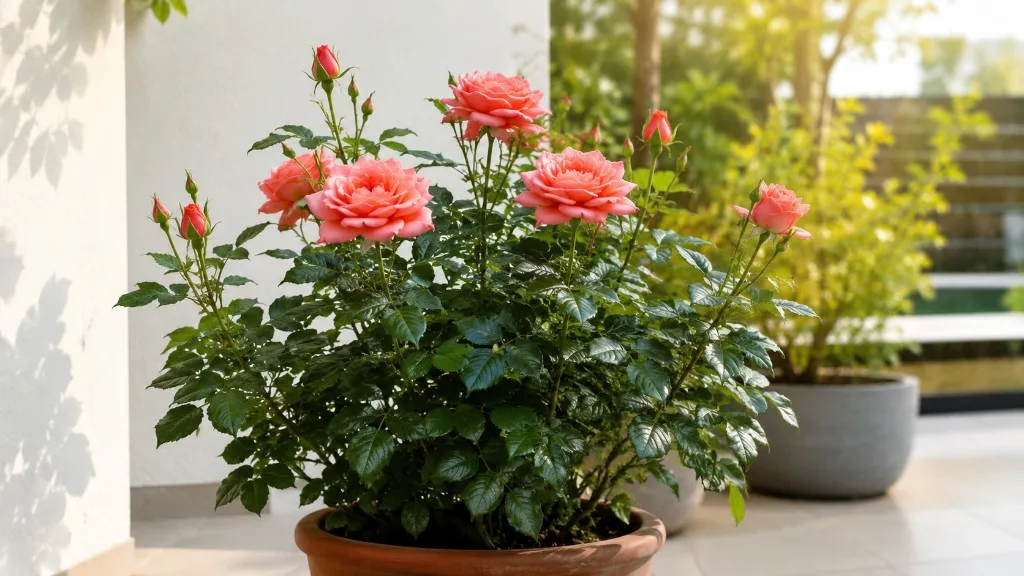
Deadhead a repeat-flowering rose when its flowers fade, but do not make the cut until you know what kind of rose you are holding. The safe default is to follow the finished bloom down to a healthy, outward-facing bud eye and cut just above it, usually near a strong five-leaflet leaf on an established plant. That removes the seed-forming flower without stripping away more foliage than the rose can replace.
The important exception is that not every rose is trying to bloom again right away. A once-flowering rambling rose may be holding next year’s flowers on the stems you are tempted to shorten. A self-cleaning landscape rose may not need the chore at all. A first-year rose needs a lighter cut than a vigorous, established bush. The best deadheading advice is therefore a sequence: identify the rose, identify the finished growth, then cut only as far as the plant needs.
The quick answer: deadhead repeat-flowering roses, but identify the rose first
Deadheading is the removal of a fading flower before the rose finishes developing a rose hip, its fruit containing seeds. On repeat-flowering hybrid teas, grandifloras, floribundas, and many modern shrub roses, removing spent flowers helps keep the plant in a flowering cycle instead of leaving every old bloom to mature into fruit. Iowa State University Extension recommends regular deadheading for modern repeat-blooming roses and notes that young plants should be cut more lightly.
For most established bush roses, remove the spent flower and trace its stem down to a strong, outward-facing bud eye. Make a clean cut about one-quarter inch above that bud, leaving the bud and the healthy leaves below it intact. The cut angle matters less than the location: a clean cut above living tissue is safer than a beautifully angled cut made in the wrong place.
Deadheading is not the same as hard pruning. You are editing a finished flower stem so the next shoot has a good starting point, not reshaping the whole plant or cutting every cane to the same height. If a rose is weak, newly planted, diseased, drought-stressed, or preparing for winter, the amount you remove should be smaller and more deliberate.
Identify your rose before you cut
Rose labels are not always available, especially on an inherited shrub or a plant bought years ago. You can still make a useful first classification by watching how it flowers. Does it produce repeated flushes through summer, or one concentrated display followed by hips? Does it have long permanent canes tied to a support, or a self-contained bush with flowers at the tips?
Repeat-flowering bush roses
Hybrid teas and grandifloras often produce large, individual blooms on long stems. They respond well to a cut farther down the stem when the wood is thin, because a new shoot from stronger wood is more likely to support a good flower. That deeper cut can delay the next bloom slightly, but it usually gives you a sturdier stem and a cleaner shape.
Floribundas produce clusters, or sprays, rather than one flower per stem. You can remove individual faded flowers while the rest of a cluster is still opening, then take the finished spray back to a healthy leaf or side shoot once the cluster is done. There is little value in making a separate cut on every tiny stem after the whole spray has finished.
Many modern shrub and landscape roses repeat-flower with a lighter, less formal habit. They can be deadheaded for appearance and to encourage another flush, but they usually do not need the same deep, show-rose cut that a hybrid tea does. Preserve their healthy framework and avoid turning a naturally rounded shrub into a series of bare stubs.
Shrub, landscape, self-cleaning, and old-fashioned roses
Some landscape roses are bred to shed their petals and keep flowering without help. If the plant looks tidy and continues to produce buds, deadheading is optional. Removing a few conspicuous heads can improve its appearance, but there is no need to chase every petal across a large, thorny shrub.
Old-fashioned and species roses require more caution. Many flower once, and their hips can be part of the plant’s autumn display. The RHS rose-growing guide recommends leaving hip-producing roses alone once you want the fruit to form; those hips also provide winter food for birds. In this group, deadheading may be a cosmetic choice rather than a route to more flowers.
Climbers versus ramblers and once-flowering roses
A repeat-flowering climbing rose is built around a few main framework canes and many flowering side shoots, or laterals. Deadhead the laterals; do not cut the main canes down as if they were bush-rose stems. The framework is the structure you tie in and keep, and horizontal training often creates more flowering side shoots than a hard summer cut.
Rambling roses often flower once, usually in one large flush. Their major pruning is done after flowering, but the goal is to manage old canes and train the plant—not to force a second flush that the variety is not built to make. The RHS climbing-rose guidance distinguishes repeat-flowering climbers from once-flowering ramblers and recommends deadheading during the flowering season while reserving structural pruning for the appropriate period.
If you cannot tell which one you have, do not make a deep cut into a long cane in midsummer. Remove only obviously spent flowers, photograph the plant, and watch whether it repeats. A cautious cleanup costs a little tidiness; an aggressive cut can remove the wood that carries next year’s display.
What to cut and what to leave
Start by looking at the whole flowering stem rather than the brown petals alone. A spent rose is usually loose-petaled, wilted, browned, or shedding petals. The small swelling below it may be a developing hip, while a bud lower on the stem may still be firm and pointed toward a new shoot. The stem can hold both a finished flower and future growth, so the cut belongs below the finished part but above the bud you want to keep.
Remove faded flowers, dry clusters, and any dead stub above a live bud. Remove dead, diseased, or rubbing growth when you can identify it clearly. Leave healthy leaves below the cut, strong new basal canes, and the main framework canes of climbing roses. Leaves are not decoration; they are the plant’s working solar panels, and a rose that loses too much foliage has less capacity to replace the stems you removed.
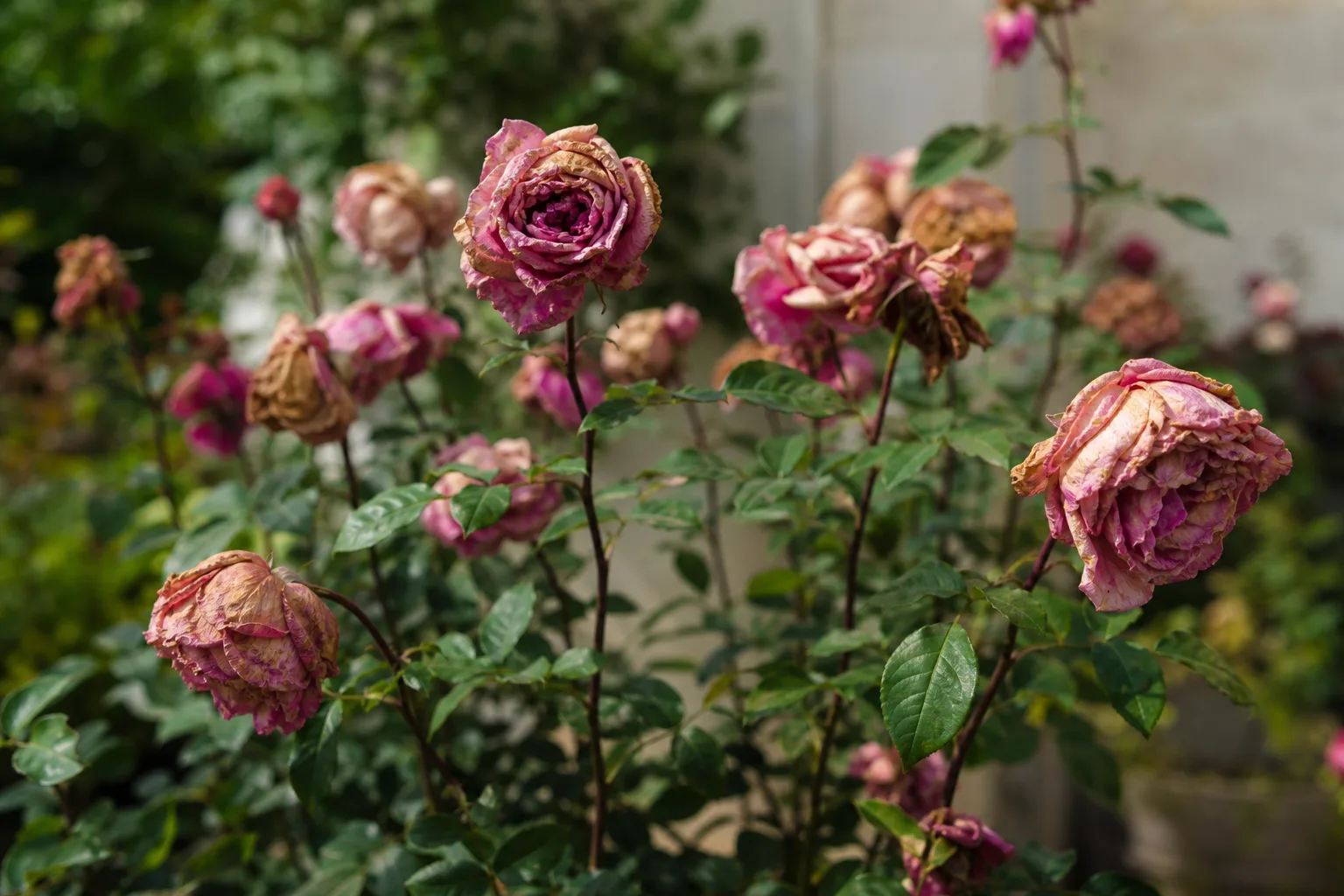
When a flower has already formed a bright orange, red, or plum-colored hip and you want hips for autumn color or wildlife, leave it. You can still deadhead some other flowers on the same plant if you want a compromise between another flush and fruit. Think of deadheading as choosing which stems continue toward seed and which return to vegetative growth, not as a rule that every faded flower must disappear.
Find the cut point: bud eye, leaf set, and stem strength
The bud eye is the small dormant bud where a leaf joins the stem. For an established, healthy bush rose, choose a bud that points outward from the center of the plant. The next shoot will have more room to grow, and repeated outward cuts help keep the middle open rather than building a crowded thicket.
The familiar five-leaflet rule is a useful landmark because a strong five-leaflet leaf often sits above a bud capable of producing a substantial new shoot. It is not a magic number and it is not a reason to remove half a young rose. Chicago Botanic Garden describes cuts just above an outward-facing bud or five-leaf axil, while Jackson & Perkins notes that the five-leaflet rule is a guide rather than a hard rule.
Use this decision at the stem:
| What you see | Where to cut | Why |
|---|---|---|
| Healthy, vigorous stem on an established bush rose | Just above a strong outward-facing five- or seven-leaflet leaf and bud | Balances quick rebloom, stem strength, and shape |
| Thin stem carrying a large hybrid-tea flower | Trace farther down to thicker wood and a well-placed outward bud | Gives the next flower a stronger support stem |
| Young or newly planted rose | Remove the faded head with as little healthy foliage as possible | Preserves leaf area for establishment |
| Finished floribunda spray | Take the cluster back to one strong leaf or side shoot | Avoids a thicket of tiny stubs |
| Repeat-flowering climber | Shorten the flowering lateral, not the main cane | Protects the framework that carries future laterals |
Make the cut just above the bud, not flush against it. A small stub protects the bud from being scraped or crushed; a long stub can die back and look untidy. Use a sharp bypass pruner so the stem is sliced rather than pinched, and make a slight angle that sheds water away from the bud. The Iowa State guidance gives the practical target of about one-quarter inch above the leaf and recommends retaining at least two strong five-leaflet leaves on established shoots.
How to deadhead roses step by step
- Choose a dry, cool part of the day. You will see the bud eyes and leaf sets more clearly, and the plant will not be holding fresh rainwater around the cut.
- Wear gloves and use sharp bypass pruners. Hold the spent flower by its stem rather than crushing the petals against nearby leaves.
- Trace the stem downward. Pass the nearest weak three-leaflet set if it leads to a thin, inward-facing bud, especially on an established plant. Look for firm wood and a healthy bud aimed into open space.
- Cut above the chosen bud. Leave a short stub, keep the cut clean, and do not nick the bud itself.
- Collect the heads and inspect the plant. Remove fallen petals and trimmings, then look for crossing growth, black-spotted leaves, aphids, or a dry root zone before you move to the next section.
The goal is not to remove the most stem. It is to remove the finished flower while setting up a useful next shoot. If you make a cut and realize you chose the wrong bud, stop there; do not keep shortening the cane to make the mistake look symmetrical.
Single blooms on hybrid teas and grandifloras
For a single spent bloom, follow the stem down until it reaches a firm, leafy section. On an established plant, the first strong five-leaflet leaf is often a good stopping point, but a thin stem may need to be followed to stronger wood. Choose the outward-facing bud at that joint, then cut just above it.
The depth is a trade-off. A light cut usually returns color sooner but may produce a thin, floppy flowering stem. A deeper cut to pencil-thick wood takes longer to flower but can give the next bloom better support. Use the light option when the plant is young, heat-stressed, or already carrying plenty of strong stems; use the deeper option only on vigorous established growth that needs the reset.
Clusters on floribundas and shrub roses
On a floribunda, remove individual flowers as they fade if the remaining buds in the cluster are still opening. Once the spray is finished, follow the cluster stem down to a strong leaf or side shoot and cut back to that point. This keeps the shrub productive without leaving a forest of short sticks.
Repeat-flowering shrub roses usually need an even lighter hand. Remove old clusters, shorten awkward flowered tips, and take out weak or crossing growth when it is obvious. If the plant is full of healthy leaves and still looks balanced, do not cut lower simply because a five-leaflet leaf is available.
First-year and newly planted roses
A new rose needs leaves to build roots and settle into its site. During the first growing season, remove the faded flower above the top healthy three-leaflet set or make an even lighter cleanup cut, depending on the plant’s vigor. Do not remove a long section of cane and several leaf sets just to match the cut used on a mature bush.
The same caution applies after transplanting, severe heat, drought, or major pest damage. A rose that is trying to re-establish its root system benefits more from retained foliage and steady moisture than from a perfectly shaped deadheading cut. Let the plant regain strength before asking it to replace large amounts of top growth.
Timing, frequency, and when to stop
Check repeat-flowering roses about once a week during the main bloom period, and more often when a warm spell causes petals to drop quickly. The best time is when the flower is clearly past its peak but before the hip has swollen and the petals have scattered through the canopy. The RHS deadheading guide recommends regular removal of fading flowers and points out that rose petals loosen as they age, so cupping the head before cutting keeps the bed tidier.
You do not have to deadhead every flower on the same day. Prioritize the oldest, wettest, or most conspicuous heads, then return when you have time. A missed week will not ruin a healthy rose; a rushed cut into a bud is the more expensive mistake.
Stop or ease off when your seasonal goal changes. In a cold climate, many gardeners stop deadheading in late summer or early fall so the plant can set hips and begin slowing before frost. In a mild climate, the plant may keep growing and blooming later, so use local frost risk and the rose’s natural cycle rather than copying a calendar date. Chicago Botanic Garden advises stopping after Labor Day in its regional context to avoid encouraging tender growth and to allow hips to form; that is a useful seasonal principle, not a universal deadline.
What deadheading cannot fix
Deadheading helps a rose that has finished a normal bloom. It cannot make a once-flowering variety rebloom, reverse a flower that was scorched by heat, or replace the leaves a plant lost to disease. If every new bud turns brown, flowers open poorly, or the plant stops producing buds while foliage looks stressed, inspect the growing conditions before making more cuts.
Common underlying causes include a root zone that swings from dry to saturated, heat reflected from pavement, too little direct sun, poor drainage, aphids on tender growth, spider mites in hot dry weather, and black spot or powdery mildew. Water slowly at the soil line during dry spells, mulch without covering the base of the canes, and avoid treating every faded bloom as proof that the plant needs more fertilizer.
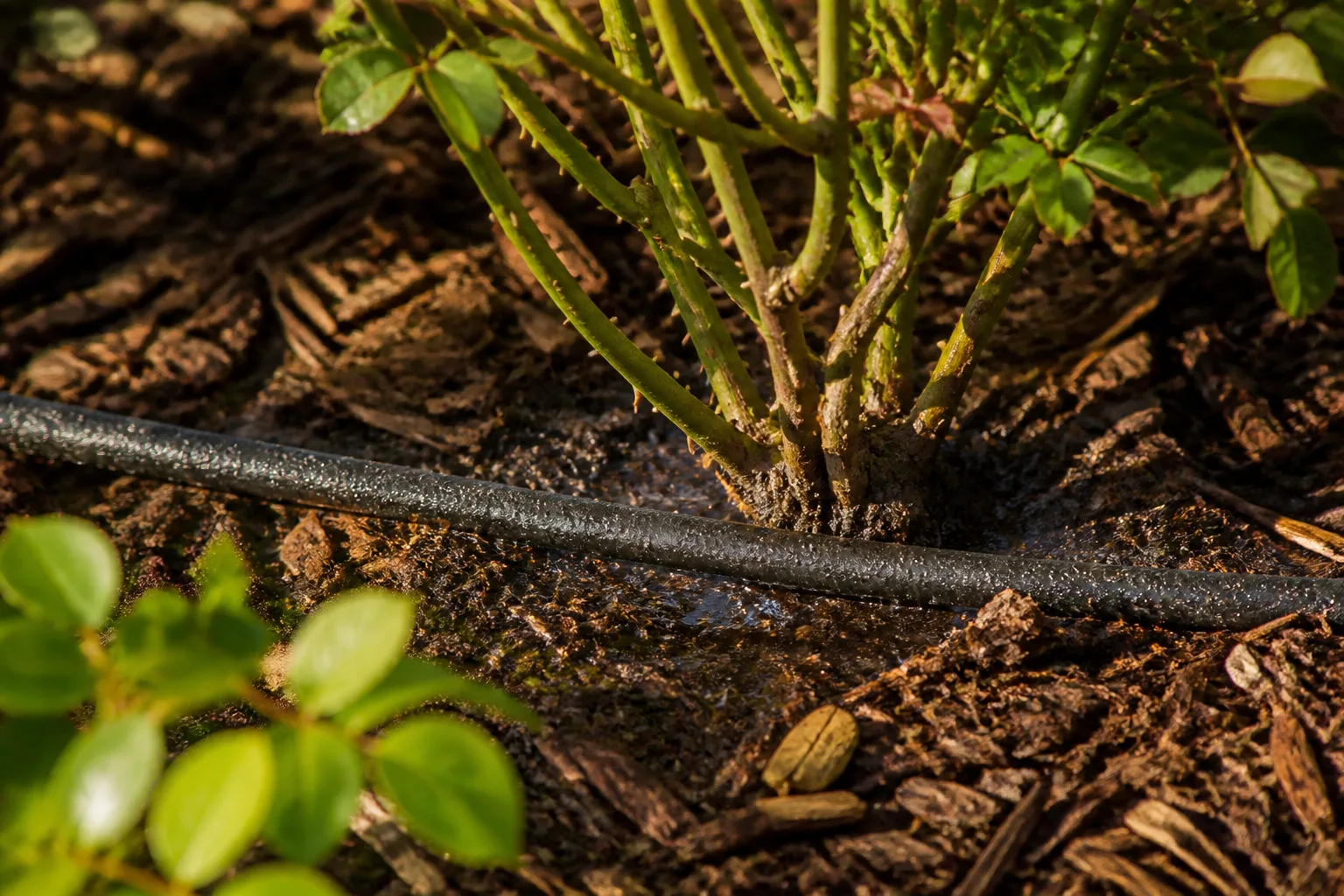
Flower age has a different visual pattern from disease. A naturally spent bloom is loose, papery, and drooping; black spot produces dark lesions and yellowing leaves; heat stress can crisp edges and stop buds from opening; aphids cluster on soft new growth and may leave sticky residue. If you see black spots or rapid leaf drop, remove affected material, improve airflow, and follow a rose disease plan rather than simply deadheading more aggressively. The RHS rose guide lists common rose pests and diseases, while its care advice emphasizes the importance of site, feeding, and moisture alongside deadheading.
Disease hygiene and cleanup after cutting
Rose foliage can carry fungal spores, and pruning tools can move plant pathogens from one stem or plant to another. If you are cutting diseased tissue, wipe or dip the blades in ethanol or isopropyl alcohol between cuts or between plants, then allow them to dry. Ask Extension specifically recommends disinfecting pruners between cuts when managing black spot.
Do not leave piles of wet petals, black-spotted leaves, or diseased trimmings under the bush. Collect them and put infected material in the trash unless your local composting guidance explicitly handles it. Keep the canopy open enough for air to move, water the soil instead of repeatedly wetting leaves, and avoid working through a wet plant when your hands and tools will drag moisture across healthy foliage.
Tool hygiene is not a reason to sterilize after every harmless flower on a dry, healthy bush. It is a reason to slow down when you move from a visibly diseased rose to a clean one, when you cut into cankers, or when several roses share a tight bed. A sharp, clean pruner and a clean work area reduce the chance that a tidy-up job becomes a disease-spreading job.
Common mistakes that weaken roses
Cutting at the first leaf you see. The first leaf may be a weak three-leaflet set with an inward-facing bud. On an established rose, follow the stem to stronger wood and choose a bud that points into open space.
Treating five leaflets as a command. The five-leaflet landmark is helpful, but young roses, shrub roses, and heat-stressed plants need more retained foliage. A good bud and healthy stem matter more than the count alone.
Removing only the petals. Petal plucking leaves the spent flower’s seed-forming base on the stem. Take the flower head and the stem section back to a leaf joint or bud.
Pruning the main cane of a climber. On a repeat-flowering climber, cut flowering laterals and preserve the framework canes. If a main cane is simply long, tie it in before deciding that it needs removal.
Deadheading a once-flowering rose for a second flush. You can remove untidy heads, but do not expect a rambling or once-flowering old rose to behave like a floribunda. Its hips or next year’s flowers may be the better use of that wood.
Cutting hard during heat or drought. A severe summer reset removes leaves just when the plant is struggling to manage water loss. Reduce the deadheading cut, restore root-zone moisture, and wait for cooler conditions.
Leaving diseased debris in the bed. Old petals are mostly a tidiness issue, but black-spotted leaves and infected trimmings are a sanitation issue. Pick them up, disinfect tools, and avoid spreading the problem to the next rose.
What to do after the last flowers
Once the final flush is over, let the plant’s purpose decide your next move. If you want hips for autumn color, seed, or wildlife, leave selected flowers to develop fruit. If the rose is a repeat bloomer in a mild climate and the season is still safely warm, you may continue light deadheading, but stop before a late cut would push soft growth into an approaching freeze.
This is also the point to separate deadheading from dormant pruning. Remove dead, damaged, diseased, or rubbing wood whenever you can identify it, but save major reshaping for the rose’s proper pruning window. A late-summer cleanup is not permission to shear a bush or strip every cane. Chicago Botanic Garden notes that most shrub roses need little pruning beyond height control, while once-flowering climbers and ramblers are pruned after flowering because they bloom on older wood.
Water newly cut roses according to the soil and weather rather than automatically adding more. Keep mulch a few inches away from the canes, remove diseased leaves, and check that late-season fertilizer is appropriate for your climate. In cold regions, the safest end-of-season choice is usually to let the plant slow naturally rather than stimulating a final burst of tender growth.
Conclusion
The safest way to deadhead roses is to cut for the plant in front of you, not to follow a single leaf-count rule. On an established repeat-flowering bush, remove the spent flower back to a strong outward-facing bud eye, usually above a healthy five-leaflet leaf. On young plants, cut lightly. On floribundas, handle the finished cluster as a unit. On climbers, work on the flowering laterals and preserve the framework. On once-flowering and hip-producing roses, leaving some flowers may be the smarter choice.
Make clean cuts, keep healthy leaves, collect diseased debris, and stop when the season is turning toward hips and dormancy. If flowers are fading because of drought, heat, pests, or black spot, fix that stress instead of cutting harder. Done with that context, deadheading becomes a small, useful adjustment that keeps repeat-blooming roses productive without asking the plant to rebuild more than it can support.



