Rojo Congo Philodendron Care for Bold, Healthy Leaves
Learn Rojo Congo philodendron care with practical light, watering, soil, and feeding rules, plus propagation steps and fixes for yellow leaves and root rot.
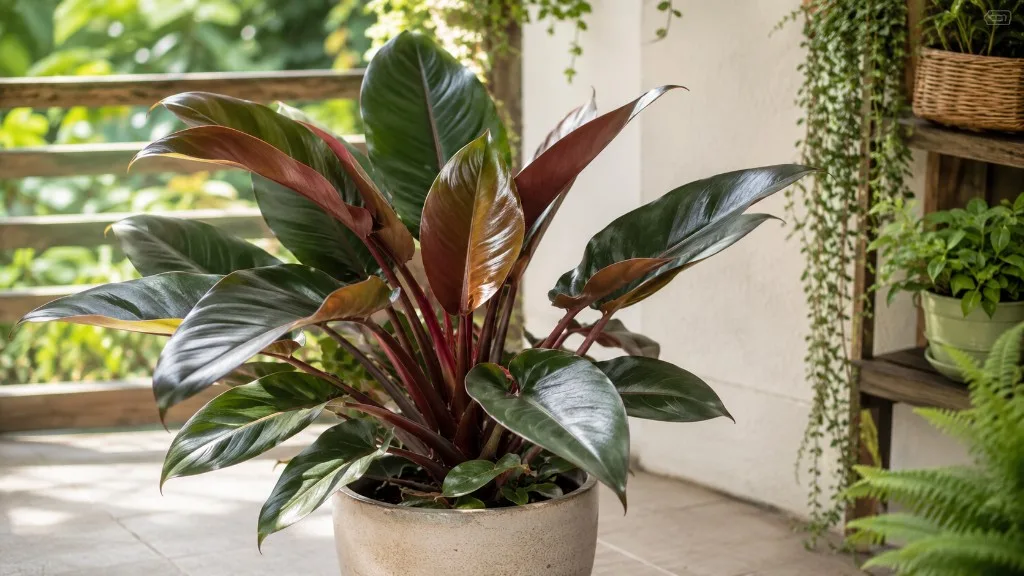
The Rojo Congo is an upright, broad-growing philodendron with glossy leaves that often emerge coppery or burgundy before maturing to deep green. It grows as a self-heading rosette rather than a trailing vine, so it needs room to spread but usually does not need a moss pole. Simplify Gardening’s Rojo Congo guide describes this non-vining form, while the Royal Horticultural Society’s philodendron guide explains why care varies across the genus.
The most reliable routine is simple: give it bright filtered light, water after the upper soil has dried, and keep the roots in a mix that drains freely. The details that prevent setbacks are knowing when a red leaf is simply maturing, when yellowing points to a wet root zone, and whether a plant is ready to divide or repot.
Know the Plant Before You Set It Up
Rojo Congo is also sold as Red Congo or Congo Rojo, and plant labels sometimes vary in how they present its botanical name. What matters for everyday care is its growth habit: leaves rise from a central crown on sturdy petioles, and the plant gradually becomes a wide, upright clump. New leaves can look red, bronze, or copper before they darken, so a healthy plant may show several colors at once.
That clumping habit changes how you use space and propagate the plant. Place it where the leaves can open without hitting a wall, and do not treat it like a vining philodendron that must climb to stay healthy. A stake can steady a top-heavy specimen, but support is a practical choice rather than a routine requirement.
Rojo Congo Care at a Glance
| Care need | Practical target |
|---|---|
| Light | Bright, indirect light; protect leaves from prolonged hot sun |
| Water | Check the upper 2 inches of mix and pot weight; water thoroughly when both indicate drying |
| Soil | Loose indoor potting mix amended with bark and perlite or pumice |
| Pot | Drainage holes; only modestly larger than the root ball |
| Temperature | A warm room, ideally around 65–80°F; avoid cold drafts |
| Humidity | Average home humidity is usually workable |
| Fertilizer | Balanced houseplant fertilizer, diluted, while actively growing |
| Growth habit | Upright and spreading; leave room around the crown |
These are starting points, not a rigid recipe. A plant in a small terracotta pot beside a bright window will dry faster than a large plant in a plastic pot in a dim room, so use the condition of the mix and plant to fine-tune the routine.
Give It Bright, Filtered Light
Set Rojo Congo in a bright room near a window, where it receives plenty of ambient daylight without long exposure to intense direct sun. An east-facing window often works well; near a stronger south- or west-facing window, a sheer curtain or a position a few feet back can soften midday rays. In the Southern Hemisphere, use the same principle rather than copying compass directions: aim for bright light that does not heat or scorch the leaves.
The plant tolerates some medium light, but slower growth, smaller leaves, and a leaning crown can signal that the spot is too dim. Move it closer to a window gradually, because a plant shifted suddenly from shade into direct sun can develop bleached or crisp patches. The RHS recommends bright indirect light for philodendrons, and its warning about summer sun scorching foliage is especially useful for a broad-leaved plant like this one.
Red or bronze new leaves turning green is normal maturation, not a lighting problem. If new growth stays small and the whole plant is stretching toward the window, increase the light; if a sun-facing leaf develops a dry, pale patch while the mix is moist, filter or redirect the light instead.
Water When the Root Zone Begins to Dry
Do not water Rojo Congo on a weekly schedule. Check the mix by inserting a finger about 2 inches below the surface, then lift the pot or compare its weight with how it feels just after watering. When the upper layer is dry and the pot has become noticeably lighter, water slowly across the surface until excess drains from the bottom, then empty the saucer.
The RHS philodendron guide advises letting the compost dry slightly between waterings and avoiding saturated soil. A practical routine from Savvy Gardening’s philodendron care guide likewise uses soil feel and pot weight rather than a fixed calendar. Those checks matter because a plant’s water use shifts with season, window exposure, pot size, and mix.
In warm, bright weather, inspect more often because active leaves use water faster. In winter or a dim room, the mix may stay damp much longer; wait instead of adding a small splash every few days, since repeated partial watering leaves some roots dry while the lower root zone stays wet. If the top dries but the pot remains heavy, wait another day or two and check again.
Build a Loose, Moisture-Retentive Potting Mix
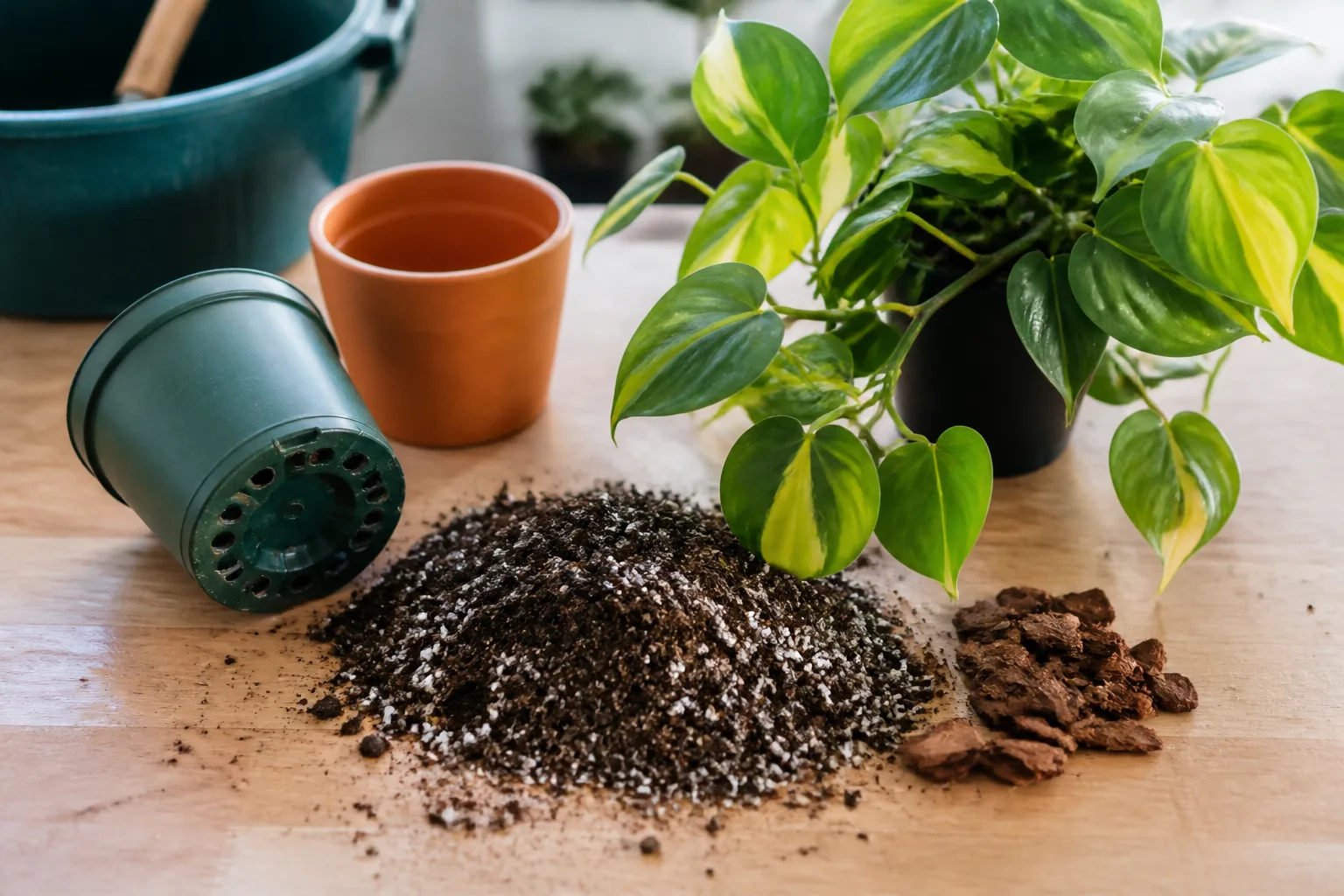
Rojo Congo needs a mix that holds some moisture without collapsing into a dense, airless mass. A useful starting blend is two parts quality indoor potting mix, one part fine orchid bark, and one part perlite or pumice, measured by volume. The potting mix holds water around the roots; bark and mineral pieces create larger air spaces so excess drains away.
Adjust the blend to your room instead of treating the ratio as exact. If the mix dries almost completely between checks, use a little more potting mix; if it stays wet for many days and the plant is not taking up water, increase the bark or perlite and check whether the pot is too large. The RHS guide to philodendrons calls for moisture-retentive but well-drained compost, and its repotting guidance explains why an oversized pot can keep unused compost wet for too long.
Choose a container with open drainage holes and a stable base. Do not compensate for a pot with no drainage by layering stones inside; water can still collect above the stones, leaving the roots in a saturated zone. A heavy ceramic pot can help steady a large crown, while a nursery pot inside a heavier cachepot makes it easier to remove the plant for watering.
Keep It Warm; Average Home Humidity Is Fine
A warm, steady room suits this tropical plant. Aim for ordinary comfortable indoor temperatures, roughly 65–80°F, and keep it away from cold drafts, air-conditioning blasts, and chilly glass in winter. The RHS advises keeping philodendrons above 15°C (59°F), so bring an outdoor plant in before nights approach that threshold.
High humidity can support lush leaves, but most homes do not need to become a greenhouse for Rojo Congo to grow. If the air is very dry and leaf margins repeatedly crisp after watering and light have been checked, a room humidifier or grouping plants can help; keep enough airflow around the leaves. Occasional misting does not reliably change room humidity, so it is not a substitute for correcting dry air or watering problems.
Feed Lightly Through the Growing Season
When the plant is making new leaves in spring and summer, feed with a balanced liquid houseplant fertilizer at about half the label strength every four to six weeks. Use the product’s directions as the limit, and apply fertilizer to slightly moist mix rather than a bone-dry root ball. The RHS growing guide recommends feeding philodendrons during active growth, while BBC Gardeners’ World’s philodendron profile gives monthly spring-and-summer feeding as a practical example for the genus.
Reduce or stop feeding when growth slows in fall and winter, especially if the plant sits in lower light. More fertilizer will not correct poor light, root damage, or soggy soil; it can instead leave salts at the surface and damage roots. If you see a white crust, pause feeding and flush the mix thoroughly with plain water if drainage is good.
Prune for Shape, Not to Force a Vine
Routine pruning is mostly cleanup. Use clean, sharp shears to remove a fully yellow or damaged leaf close to its base, and wipe dust from broad leaves with a damp cloth so they can use available light. Avoid cutting healthy leaves simply because their mature green color is less dramatic than the red new growth.
If the crown leans, first turn the pot toward the light and check whether the root ball is loose or off-center. A small stake can support a heavy plant, but a moss pole will not turn its compact rosette into a trailing vine. Wear gloves when cutting or dividing; philodendron sap can irritate skin.
Propagate by Dividing a Basal Offset
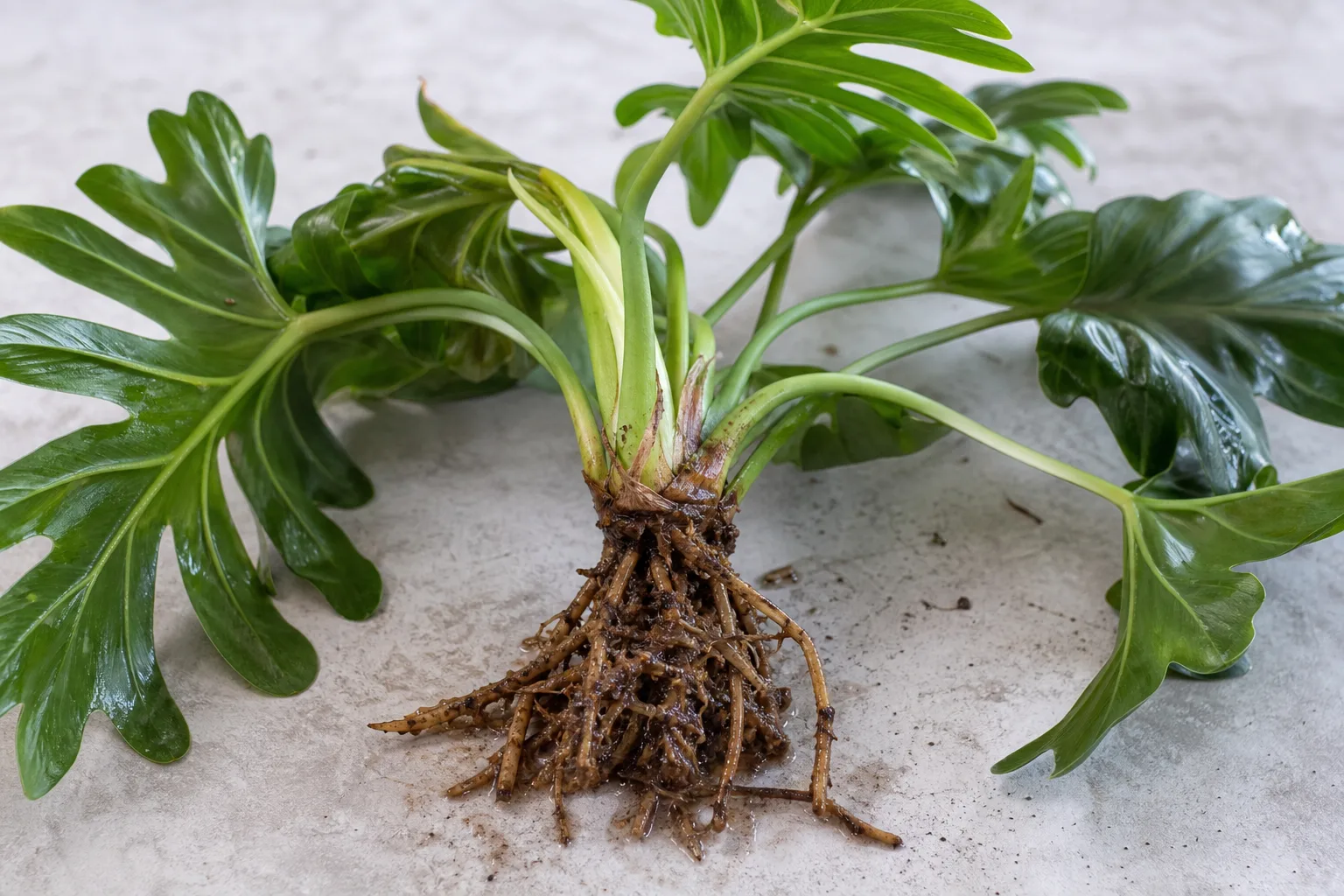
The most dependable time to propagate is when a mature plant has produced a basal offset: a smaller shoot emerging at the base with its own roots or a clear connection to the parent’s root system. This is not guaranteed on a young plant, so do not split the crown just to make more plants. The cultivar-specific Simplify Gardening guide describes division and stem cuttings as propagation options; for a home grower, division is usually the safer starting point when a rooted offset is available.
Water the parent lightly the day before if the mix is dry, then slide the root ball out and brush away enough medium to see the offset’s attachment. With a clean blade, separate the offset while keeping its roots and at least one healthy growing point intact. Pot it in a small container with drainage and fresh airy mix, water it through, and keep it warm in bright indirect light while it settles.
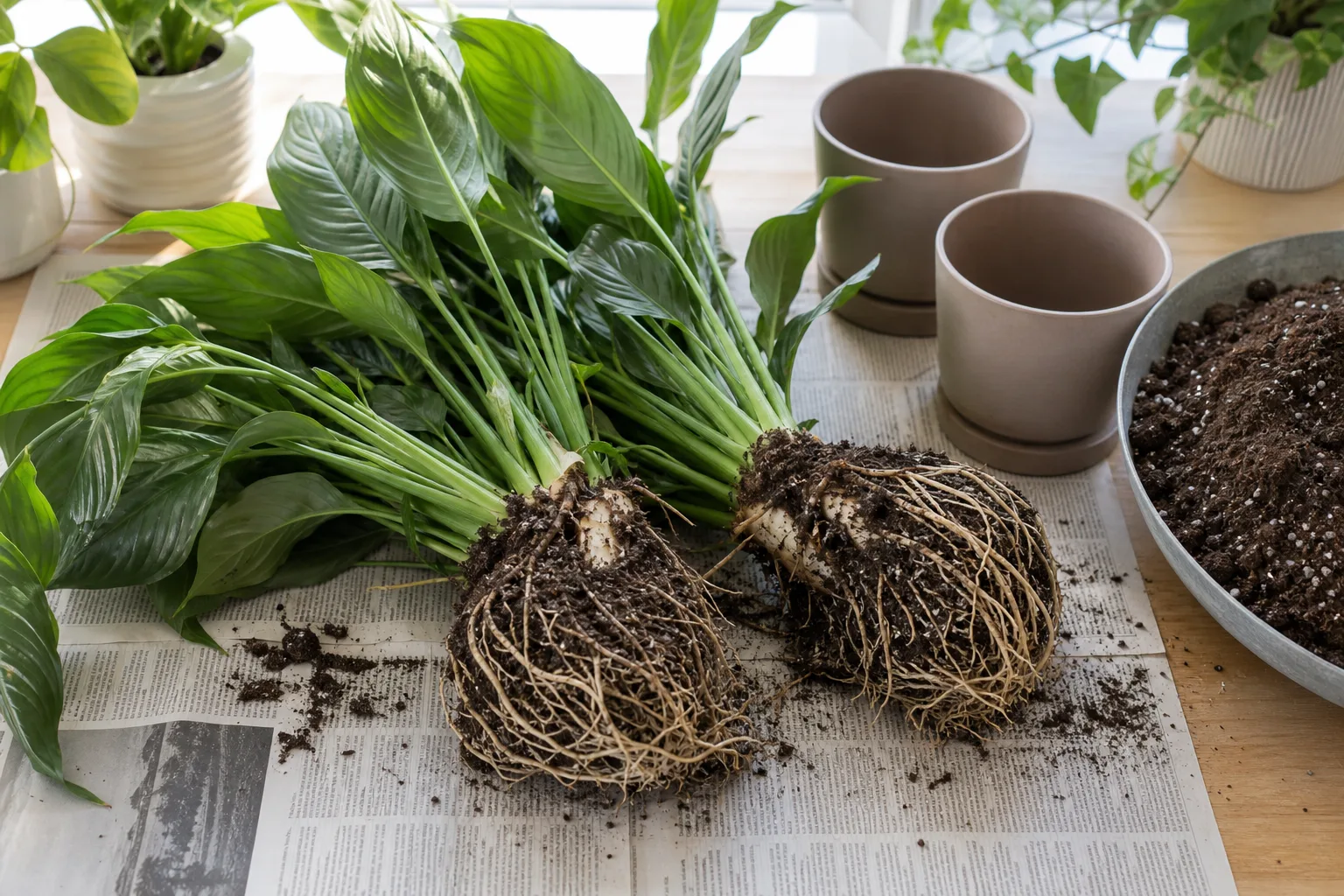
Expect a short pause in growth after division. Keep the new plant lightly and evenly moist while roots recover, but do not leave the pot standing in water or feed it immediately; wait for signs of fresh growth before returning to the normal routine.
Use a Stem Cutting Only If It Has a Node
A single leaf on a long petiole is not a reliable cutting. To try a stem cutting, find a real section of stem with at least one node—the point where a leaf or root emerges—and use a sterilized blade to cut just below it. A cutting without a node may remain green for a while but cannot produce a new shoot.
Root a viable piece in water with the node submerged and the leaf above the water, or place it in a lightly moist, airy propagation mix. Keep it warm with bright indirect light, refresh water if it becomes cloudy, and pot it up when roots are established rather than waiting for a tangled mass. Rojo Congo stems can make nodes difficult to see, so if you cannot identify one, wait for a basal offset instead of taking a guess.
Repot When the Roots, Not the Calendar, Say So
Repot when roots circle densely around the bottom of the root ball, emerge from drainage holes, or the mix dries unusually fast despite normal watering. One lower leaf aging out is not enough reason to repot. The RHS repotting guide recommends checking the root ball directly and notes that root congestion and pot size affect how often a plant needs a new container.
Move the plant into a pot only about 1–2 inches wider than the root ball, with drainage holes and enough weight to support the top growth. Spring or early summer is easiest because the plant is growing, but a badly waterlogged mix or rotting roots need attention promptly rather than waiting for a preferred season. Loosen circling roots gently, remove soft dark roots with a clean tool, and keep the base of the crown at its former soil level.
After repotting, water until the mix is evenly damp and let it drain. Do not immediately move the plant to a much larger pot or add fertilizer to “settle” it; extra wet mix and fertilizer salts create more stress while roots are adjusting.
Diagnose Yellowing, Browning, and Drooping
One symptom rarely identifies the cause by itself. Before changing care, note which leaves are affected, whether the soil is wet or dry, where the plant sits, and whether you recently moved or repotted it. A quick check of moisture, light, and the undersides of leaves is more useful than changing water, fertilizer, and location all at once.
Yellow Leaves: Check Water and Light First
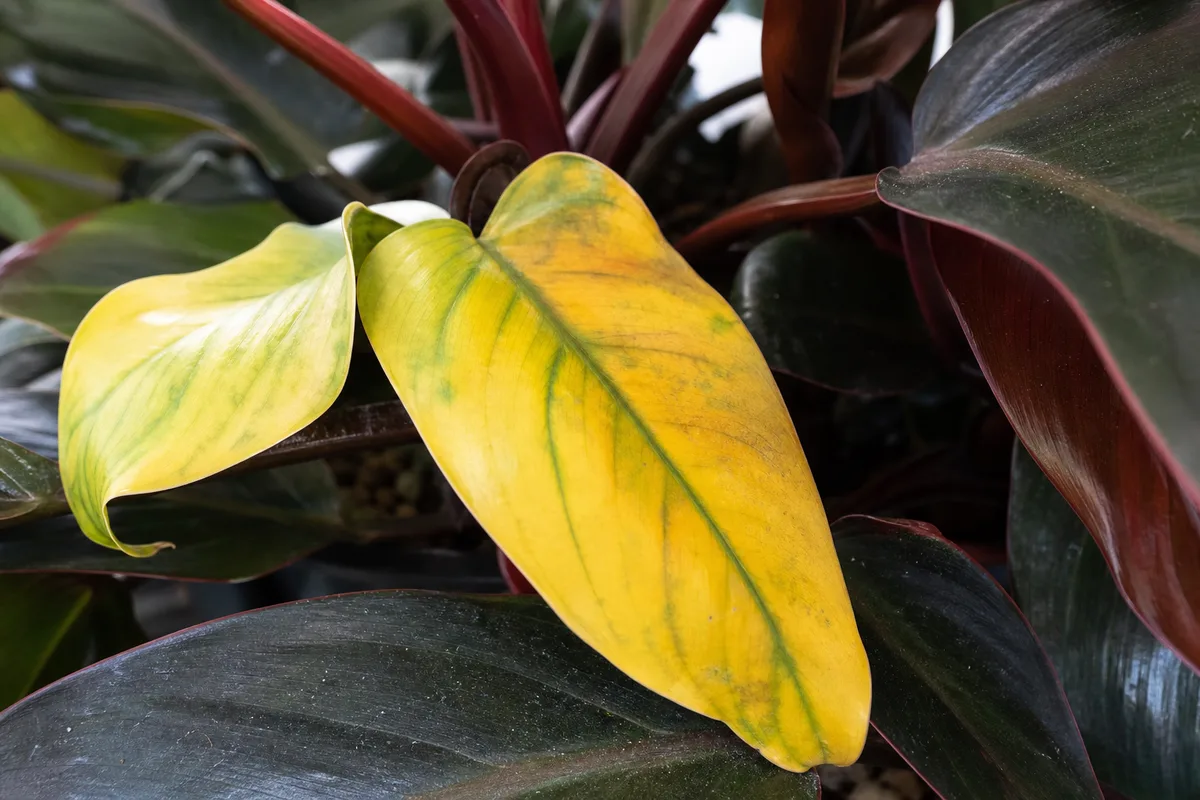
An older bottom leaf can yellow and drop as the plant replaces it; one leaf at a time is different from several leaves turning yellow together. When multiple leaves yellow, check the lower root zone: if it is damp for a long time and the pot feels heavy, reduce watering and inspect drainage; if the mix is dry and the pot is light, water thoroughly. Yellowing paired with small, slow growth can also mean the plant needs a brighter spot.
Do not fertilize a yellow plant before checking its roots and watering history. Nutrient shortage is possible, but a root zone that stays wet cannot take up nutrients properly, and excess fertilizer can burn roots. If the yellowing continues after moisture is corrected, inspect for pests and confirm that the pot drains freely.
Brown Tips and Patches Have Different Causes
Crisp brown margins often follow a stretch of dry soil, very dry air, or fertilizer salt buildup. Check the pot’s weight and the mix first; if both are appropriate, inspect for a crust on the surface and consider flushing the soil at the next watering. You can trim a small dry edge with clean scissors, following the leaf’s natural outline, but the damaged tissue will not turn green again.
Large pale or tan patches on the side facing a window point more toward sun scorch, especially after moving the plant to a brighter location. Brown spots that keep expanding or appear on several leaves deserve isolation from nearby plants and closer inspection rather than a sudden change in watering. Keep the leaf surfaces clean and avoid leaving the plant in direct hot sun.
Drooping Can Mean Dry Soil or Damaged Roots
Check the soil before watering a drooping plant. A light pot and dry mix suggest thirst; water thoroughly and allow excess to drain. A heavy pot with wet mix suggests root stress, and adding more water can deepen the problem even though the leaves look thirsty.
If the soil has stayed wet and the plant continues to droop, slide it out of its pot and inspect the roots. Healthy roots feel firm; rotted roots are soft, dark, and may smell sour. Remove clearly damaged tissue with a clean blade, discard soggy mix, and repot in fresh airy medium in a clean pot that is not oversized. If the crown is soft or most roots have collapsed, focus on saving a healthy rooted offset rather than repeatedly watering the damaged parent.
Inspect Leaf Bases for Pests
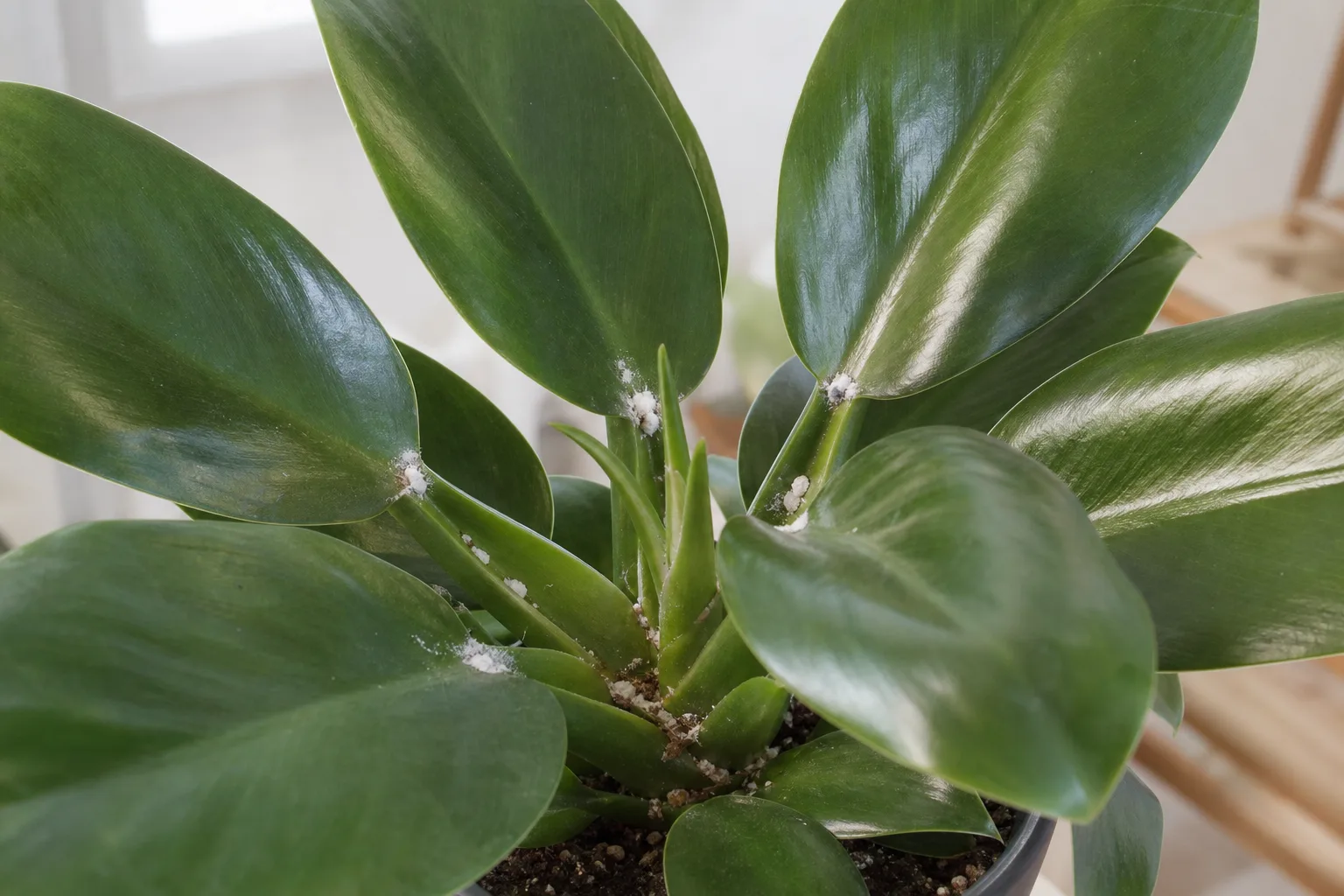
Mealybugs often hide as white cottony clusters where leaves meet the stem; spider mites can leave fine webbing and pale stippling underneath leaves. Scale insects may look like small fixed bumps, while fungus gnats tend to appear around consistently damp potting mix. Inspect the crown, leaf undersides, and the soil surface whenever you bring a new plant home or notice sticky residue, speckling, or distorted new leaves.
Isolate an infested plant before treating it. Wipe visible insects away or rinse the foliage, then repeat the inspection every few days because eggs and hidden insects can survive a single cleanup; use only a product labeled for indoor plants and follow its directions if you need a treatment. Letting the mix dry appropriately also makes the pot less attractive to fungus gnats, but do not let the philodendron wilt just to dry the surface.
Move It Outdoors Only in Warm, Sheltered Weather
Rojo Congo can spend warm months outdoors in a frost-free climate, but a shaded indoor plant needs time to adjust. Start it in bright shade for several days, then increase exposure only if leaves remain firm and unmarked; outdoor direct sun and wind can be harsher than the light it received through a window. Choose a sheltered spot where rain cannot keep the pot saturated.
Bring it back inside before nights approach 59–60°F, and check the leaf joints, undersides, and pot before placing it near other houseplants. Outdoor time can increase growth and pest exposure, so treat the move as a seasonal change rather than leaving the plant outside through cool weather.
Keep Rojo Congo Away from Pets and Children
Treat Rojo Congo as a toxic plant if chewed or swallowed. Philodendrons contain insoluble calcium oxalate crystals that can cause intense mouth irritation, swelling, drooling, and vomiting; the ASPCA’s philodendron listing and Pet Poison Helpline’s philodendron guidance describe these risks for pets. The RHS also cautions that philodendron sap can irritate skin, so wear gloves when pruning and wash tools afterward.
Place the plant where children and animals cannot reach its leaves, fallen pieces, or pruning waste. If a pet may have chewed it, contact a veterinarian or animal poison service promptly instead of waiting for symptoms; keep the plant name available when you call.
Conclusion
Give Rojo Congo a bright spot out of harsh midday sun, use a loose draining mix, and water only after the top layer has begun to dry and the pot feels lighter. That routine does more for healthy roots than a fixed weekly schedule, a humidity gadget, or frequent fertilizer.
Allow room for its upright crown to widen, divide only when a rooted offset is ready, and investigate patterns rather than reacting to one aging leaf. When growth changes, start with the simplest checks—soil moisture, light, drainage, and pests—before changing several parts of the setup at once.