Roses: How to Choose, Plant, and Care for Them Well
Compare rose types, choose a cultivar for your climate and space, and learn the basics of planting, watering, pruning, and solving common problems year-round.
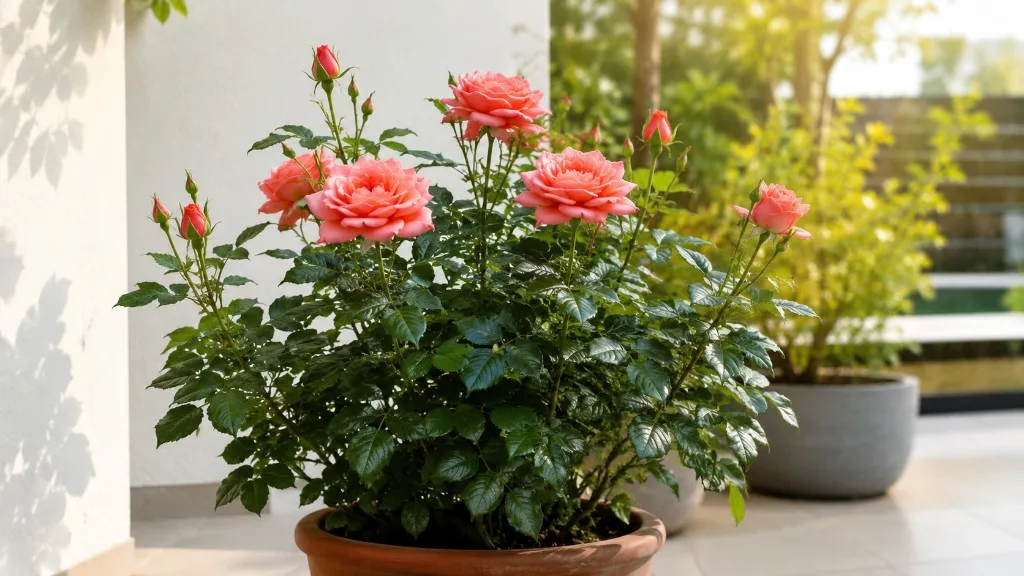
A successful rose starts with a good match, not a complicated spray or feeding schedule. Choose a class that fits your space and patience, give it sun and drainage, water the root zone when it needs moisture, and prune according to how that particular rose flowers. A compact patio rose, a long-caned rambler, and a hybrid tea may all belong to Rosa, but they do not ask for the same garden or the same pruning cut.
This page is a starting point for choosing and growing garden roses. Use the care snapshot for the basics, then follow the linked guides when you need detailed instructions for planting, pruning, watering, disease, or a particular rose class. The most useful label to keep is the cultivar name: it helps you find the plant’s mature size, hardiness, bloom cycle, and specific care notes later.
Rose care at a glance
| Care question | Useful starting point | What changes the answer |
|---|---|---|
| Where should I plant a rose? | A sunny site with fertile, well-drained soil and room for mature growth | Climate, cultivar, reflected heat, drainage, and disease pressure |
| How much sun? | Aim for at least six hours of direct sun for most garden roses | Some cultivars tolerate partial shade; heavy shade usually reduces flowering |
| How should I water? | Water deeply at soil level when the root zone begins to dry | Newly planted roses and pots need closer checks than established shrubs |
| When should I prune? | Identify the class and bloom habit first | Climbers, ramblers, once-blooming old roses, and repeat-flowering bushes differ |
| What is the first disease step? | Confirm symptoms, remove affected debris, and improve growing conditions | Local disease pressure and the cultivar change how much intervention is needed |
The Clemson Cooperative Extension rose guide and UF/IFAS Extension’s rose guidance both emphasize a sunny site, good drainage, and care that supports healthy foliage. Treat the table as a baseline, not a universal prescription. If your local extension or the cultivar’s nursery tag gives region-specific instructions, follow those for planting depth, hardiness, and seasonal timing.
Start by choosing the right rose class
“Rose” is a broad label, not a maintenance category. A rose may be sold by its flower form, growth habit, breeding group, or intended use, and those labels can overlap. For example, floribundas are often bushy repeat bloomers, while “shrub rose” describes a broader growth habit that can include many breeding backgrounds. Read the plant tag for the actual cultivar and mature dimensions rather than assuming that every rose in one broad class behaves identically.
How the main rose classes differ
| Rose class | Typical use | What to check before buying |
|---|---|---|
| Hybrid tea | Large individual flowers on long stems, often grown for cutting | More hands-on shaping and grooming; confirm disease performance locally |
| Floribunda | Clusters of flowers for beds and borders | Mature width, repeat-bloom habit, and resistance notes for your climate |
| Shrub or landscape rose | A fuller garden presence, informal hedge, or mass planting | Final spread, thorniness, scent, hips, and whether it repeats or blooms once |
| Climbing rose | Vertical coverage on a fence, wall, arbor, or trellis | Height, support, flexibility of canes, and whether flowers form on old or new growth |
| Rambler | Vigorous, long canes that can cover a large structure | Often a big single flush; make sure there is room and a way to manage old canes |
| Miniature or patio rose | Smaller beds, edging, or containers | Pot size and more frequent moisture checks as the root ball dries faster |
| Species and old garden rose | Informal habit, fragrance, history, hips, or wildlife value | Many flower once; check mature size and pruning timing |
The BBC Gardeners’ World guide to shrub and species roses describes how those groups range from repeat bloomers to once-flowering roses and need different degrees of pruning. For a fuller directory, including groundcover, grandiflora, English, and other classes, use our guide to types of roses. If you already know you want vertical coverage, the climbing-rose section in our guide to types of roses can help narrow the choices.
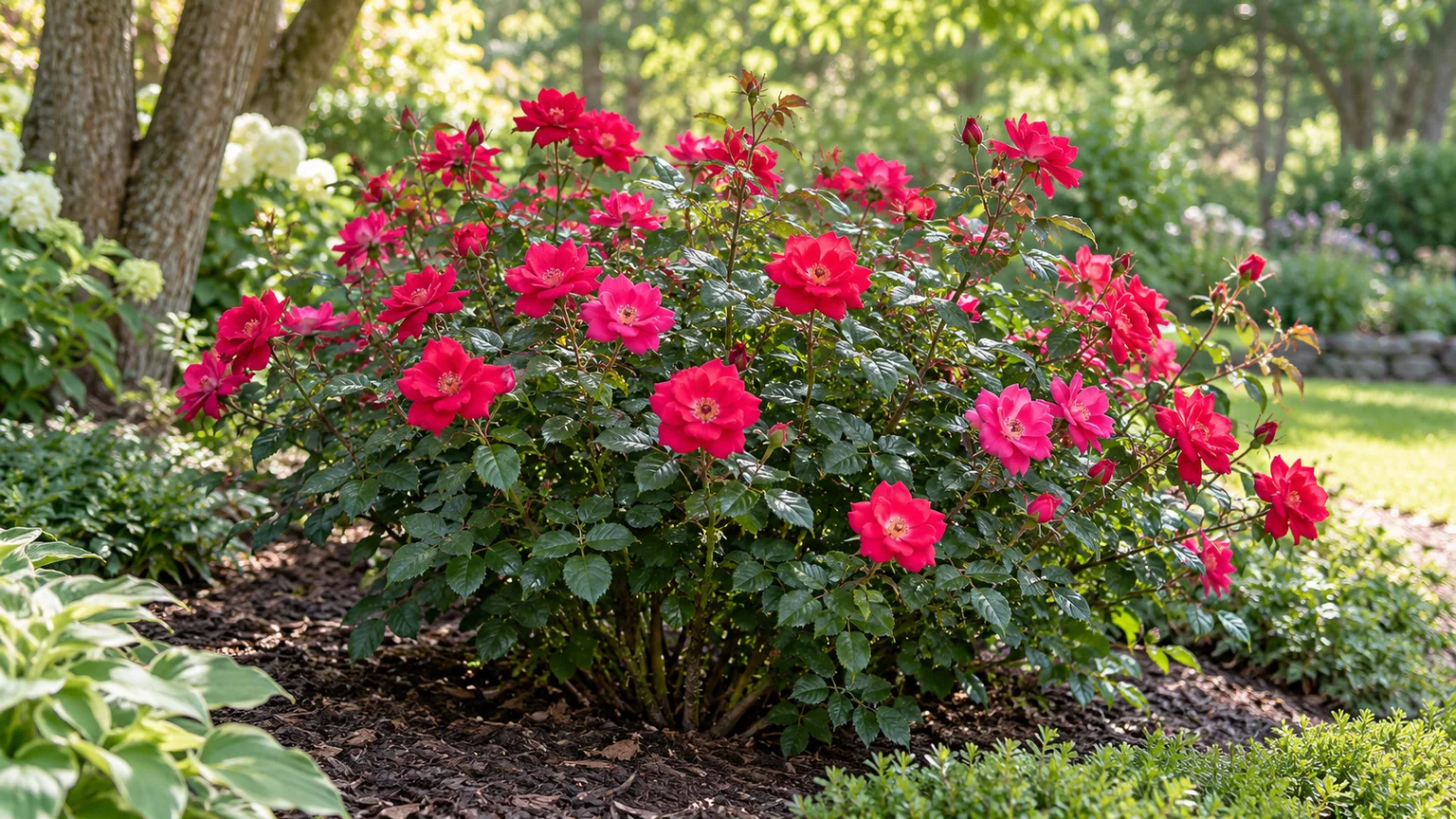
A useful shortcut is to choose by job before choosing by color. For long stems and formal cutting, start with hybrid teas; for clusters of color in a border, compare floribundas and shrub roses; for a fence or pergola, choose a climber with a support plan; for a small patio, look for compact patio or miniature cultivars. If you want less routine grooming, compare proven landscape or shrub roses sold for your region, but still check the plant’s eventual size and disease record. “Easy-care” reduces some work; it does not make a rose immune to drought, poor drainage, or unsuitable pruning.
Match the cultivar to your climate and garden
Rose class narrows the options; the cultivar decides whether a particular plant fits. Before buying, look for the cultivar name, mature height and width, hardiness range, bloom pattern, scent, and disease-resistance information. The RHS guide to choosing roses recommends matching the rose to its intended role and growing conditions rather than choosing by flower color alone. Local rose societies, public gardens, and extension services can add useful regional context because a rose that thrives in a dry summer may struggle where leaves remain wet for long periods.
Be specific about what “resistant” means. A cultivar described as resistant may tolerate one disease better than another, and resistance can vary with climate and pathogen populations. The RHS notes that black-spot resistance can be overcome as new fungal strains arise, so use resistance as one factor in your choice, not as a promise that you will never see disease. If low spraying is important, ask which roses stay healthier in gardens near you and plan for airflow and sanitation as well.
Consider the garden’s practical constraints, too. A rose with spectacular fragrance may have fewer flowers at a time; a heavily double flower may be less useful to pollinators than a simple flower; a rose bred for continuous rebloom may need more regular water than a once-flowering species type. If you want hips for fall color, wildlife, or culinary use, do not automatically deadhead every flower. For rose varieties by purpose, start with the rose types guide and then compare labels from reputable local nurseries.
Choose a sunny, open planting site
Most garden roses flower best with at least six hours of direct sunlight each day, and many do well with more. Clemson recommends a full-sun position with roughly six to eight hours of direct light for many roses; morning sun is especially useful because it helps dry dew from foliage. Some cultivars tolerate partial shade, but shade tolerance does not mean that a rose will flower heavily in a dim corner. If the leaves are green but the plant grows long, weak canes and makes few buds, count actual direct-sun hours before reaching for fertilizer.
Leave room for the plant to reach its labeled mature spread. Crowding against a fence, hedge, or neighboring shrub blocks airflow and makes pruning and cleanup harder. Good circulation does not prevent every fungal infection, but it helps foliage dry and gives you better access to inspect stems and leaves. Avoid low spots where water stands after rain, and do not plant beneath a tree canopy if its roots will compete strongly for moisture.
In hot climates, the brightest west-facing wall or paved corner can stress roots and fade flowers even when the plant technically receives enough sun. Choose a position with morning light and some protection from punishing reflected heat if local rose guidance recommends it. In cooler, humid places, prioritize sun and airflow. The right site is not simply “full sun”; it is sun that supports flowering without creating an avoidable heat or drainage problem.
Prepare soil and plant with the roots in mind
Roses need soil that holds enough moisture for steady growth but drains excess water away. If a bed stays saturated long after rain, do not try to fix it by adding a small amount of compost to the bottom of a planting hole. Choose a better-drained location, improve the wider bed, or use a raised bed where appropriate. In heavy or unusual soils, a local soil test is more useful than adding lime, sulfur, or fertilizer on assumption.
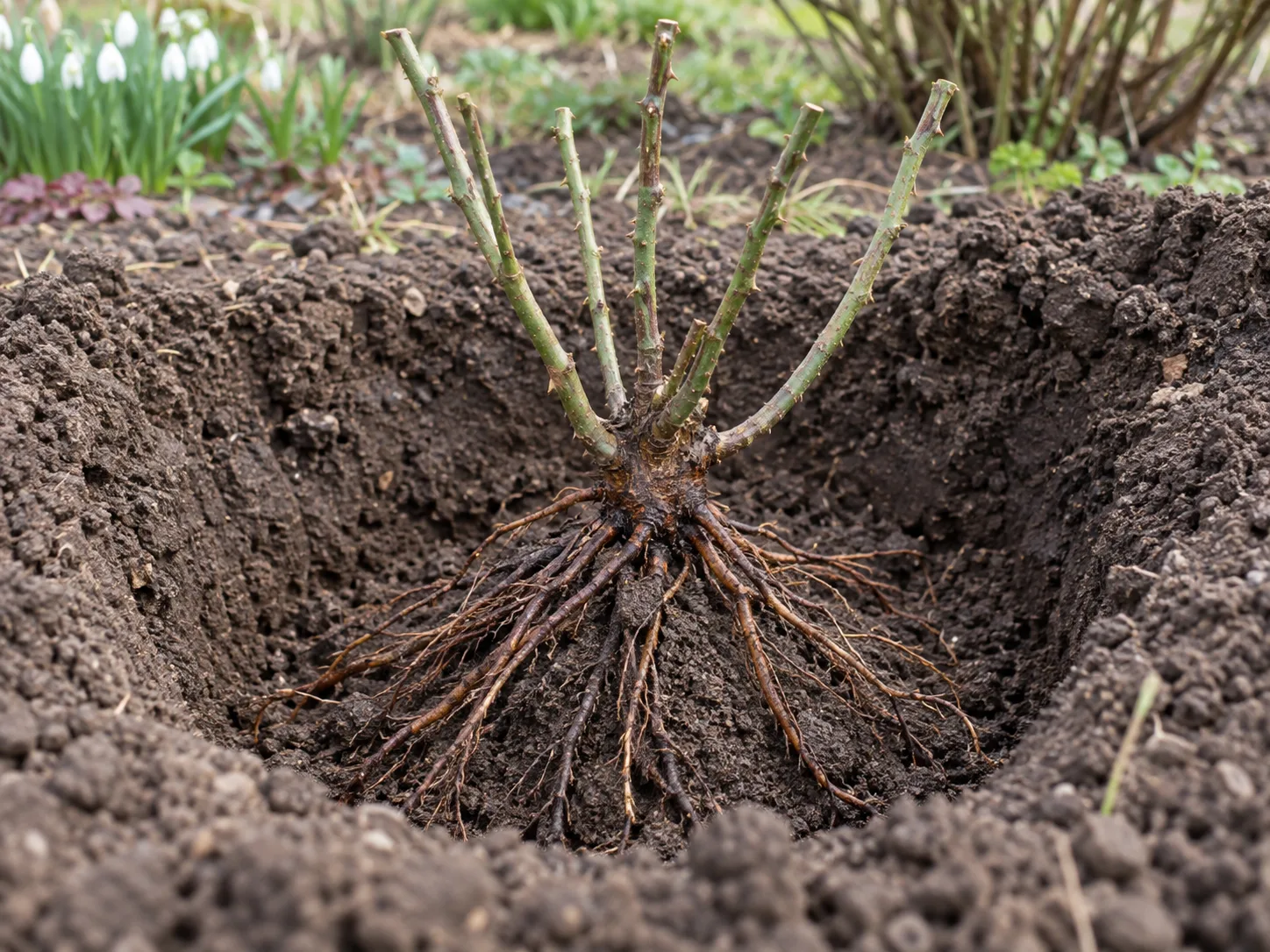
Planting dates depend on both climate and stock. Dormant bare-root roses are usually planted during the cool dormant season when the ground is workable; container-grown roses can be planted over a longer window, but heat makes their root balls dry quickly. Keep bare roots protected from drying before planting, spread them naturally rather than folding them into the hole, and water after backfilling. For the full sequence, including graft-union depth and how to handle potted stock, see how to plant roses.
For grafted roses, the swollen graft union joins the named cultivar to its rootstock. Its finished height is a regional decision: winter cold, rootstock, and local practice can change whether it sits at, below, or above the soil line. Do not average conflicting regional instructions into a new depth. Use the nursery’s directions for that plant and check nearby extension guidance when needed. Own-root roses have no graft union, so use the nursery soil line and local planting advice instead.
After planting, water the root area thoroughly and apply a moderate mulch layer to reduce moisture loss and weeds. Keep mulch pulled away from the canes and crown so the base does not stay damp or become hidden. Fine Gardening’s practical discussion of replacing roses revisits old-site concerns and recommends enriching the soil with well-rotted compost. Treat that as a practical perspective, not a substitute for diagnosing persistent drainage or disease problems before replanting. Avoid treating a disputed soil problem with unverified products; move the new plant to a fresh, suitable site when the cause is unclear.
Water deeply and adjust for containers
Water at the soil line so moisture reaches the root zone without repeatedly wetting the leaves. A slow, thorough soak is more useful than a quick sprinkle that wets the surface and evaporates. Established in-ground roses may need little extra water during mild, rainy periods, while new plants and roses in hot, windy spots need closer attention. Check the soil before watering and adjust for rainfall, temperature, soil texture, and the plant’s growth.
A rose in a pot has a smaller reservoir and loses water faster than one planted in the ground. Check the mix with a finger or moisture meter; when the upper layer is beginning to dry, water until it drains through the holes, then empty any saucer. Do not maintain a calendar interval without checking the pot. A medium container on a windy, sunlit balcony may need water more often than the same pot in a cool, sheltered courtyard. As growth slows in cool weather, the plant uses less water, but roots still should not sit in a waterlogged mix.
Wilting at the hottest part of a summer day does not always mean the root ball is dry. If the soil is damp and the leaves recover as temperatures ease, heat stress is more likely than thirst; adding more water can suffocate roots. A very light pot, dry soil pulled away from the sides, and limp growth point more strongly toward drought. For a step-by-step check, use our rose watering guide, which separates container needs from in-ground watering.
Feed conservatively and protect the root zone with mulch
Do not feed a struggling rose before checking the basics. Low light, standing water, drought, crowding, winter injury, and an incorrect pruning cut can all reduce growth or bloom. More fertilizer will not correct those problems and may push soft growth that is vulnerable to stress. When a rose is established and growing actively, use a soil test, local extension recommendation, or the fertilizer label to choose an appropriate product and rate.
Garden roses differ in how much feeding they need. A container loses nutrients through frequent watering, while a mature landscape shrub in good soil may need far less than a heavily flowering hybrid tea. Do not stack a granular schedule, liquid feed, compost, and a rose-specific product just because each one appears in a separate care article. Our rose fertilizing guide explains timing and how to avoid excess; newly planted roots should not sit against concentrated fertilizer.
Mulch helps conserve moisture and suppress weeds, and organic materials can add organic matter as they break down. Keep it a few inches clear of the crown and canes, and replenish it when it thins rather than piling fresh material indefinitely. A stable root zone can make watering easier, but mulch cannot compensate for soil that never drains or a pot without drainage holes.
Prune by rose class, not by calendar alone
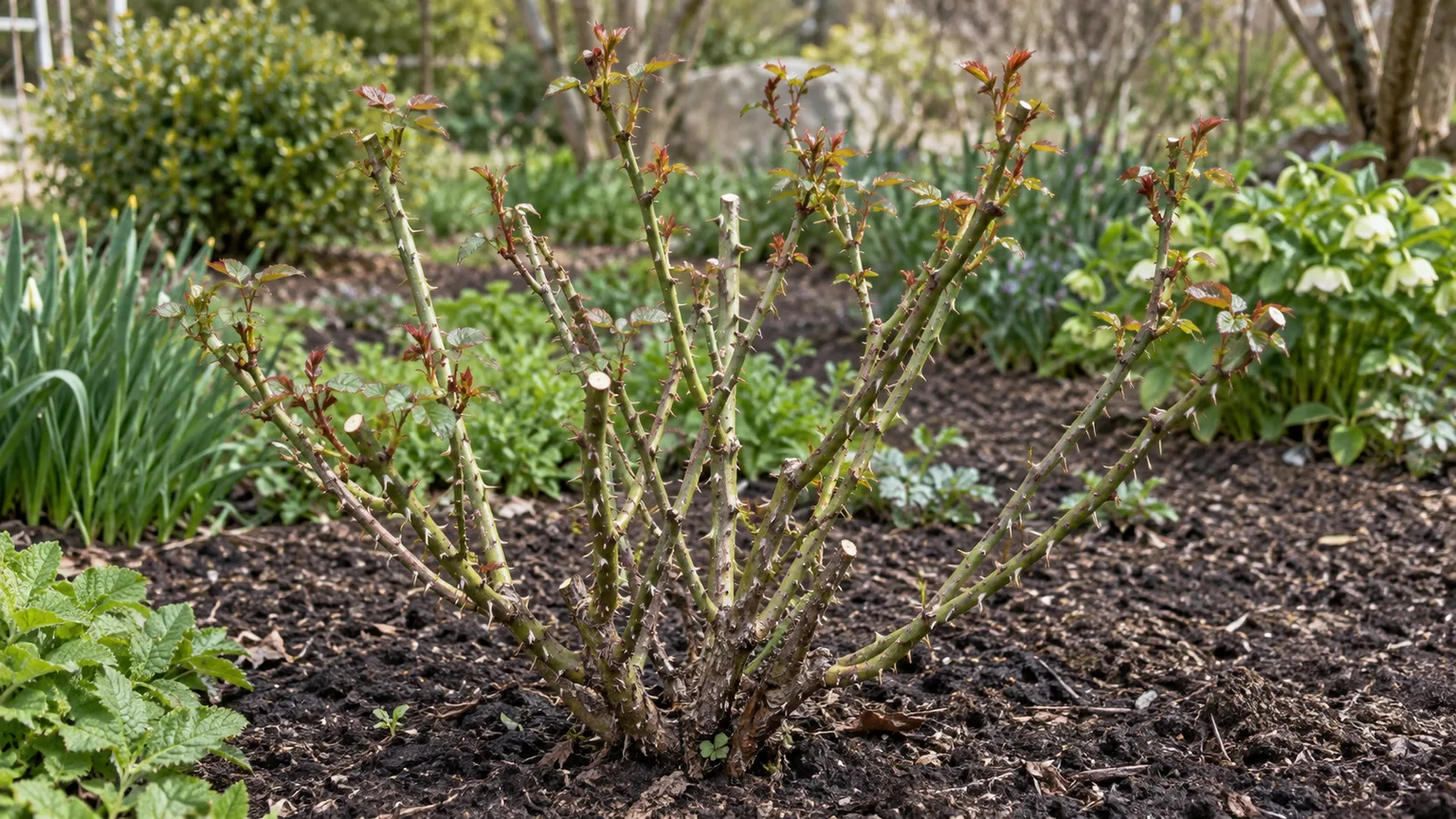
Before cutting, identify whether the rose flowers on new growth, older canes, or both. Many repeat-flowering modern bush roses are shaped during dormancy or just before active spring growth, but exact timing varies with climate. Ramblers and some once-flowering old garden roses may carry next season’s blooms on existing wood, so a hard early-spring cut can remove the flower buds you wanted. The RHS pruning guide and the BBC Gardeners’ World shrub-rose guide both emphasize that pruning depends on the kind of rose.
For most pruning sessions, begin with the same inspection: remove dead, broken, or diseased wood with clean, sharp bypass pruners; then remove crossing canes that rub and growth that clutters the center. Make cuts back to healthy wood or a suitable outward-facing bud, but do not apply a severe shape to every rose. Shrub and species roses often need only light thinning and size control; hybrid teas and floribundas usually benefit from more deliberate annual shaping. The right final height depends on class and local practice, not a universal percentage.
Climbing roses need their framework preserved. Secure long canes to a sturdy support and guide them into a more horizontal fan where the structure allows; this encourages flowering shoots along the canes instead of concentrating bloom at the tips. Prune side shoots and renewal growth according to the cultivar’s directions. Ramblers often grow more vigorously and may flower once, so their main pruning window is commonly after bloom. If the label is gone, wait until flowering and observe which canes bloom before making large cuts.
Use our rose pruning guide for class-specific cut guidance, and our spring rose care guide when you are deciding what to do after winter. If you have a specific Knock Out rose, check the Knock Out rose care guide rather than applying advice for a rambler or an old garden rose.
Deadhead only when it suits the rose
Deadheading removes a fading flower before it forms a hip. For many repeat bloomers, cutting back spent flowers can tidy the plant and encourage another flush, but a rose may still rebloom without a meticulous weekly routine. Cut the fading flower stem back to a healthy leaf or side shoot, using a clean cut that does not leave a long dead stub. Avoid removing a large amount of healthy cane every time you take off a bloom.
Leave flowers in place when you want rose hips, seed, or late-season color, or when the rose naturally sheds petals and looks acceptable without grooming. Species roses and some old garden varieties are valued for their hips after their main bloom. If you want to know how far down to cut a spent stem, the rose deadheading guide walks through the choices without treating all roses as exhibition bushes.
Prevent common rose problems before spraying
Start with a symptom, not a product. Black spot commonly causes dark lesions on foliage, often followed by yellowing and early leaf drop; powdery mildew looks like pale, powdery growth; rust may show orange or dark pustules on leaf undersides; aphids cluster on soft new growth. A rose can also drop leaves or wilt from water stress, poor drainage, heat, or winter injury. Check the pattern across the plant, the soil moisture, and recent weather before diagnosing a disease from one yellow leaf.
The RHS black spot guidance recommends cultivation practices, cultivar selection, and garden hygiene as the first line of management. Remove fallen infected leaves, dispose of diseased debris responsibly, keep foliage as dry as practical, and improve spacing if leaves remain crowded and wet. Clean pruners after cutting visibly diseased tissue. These steps reduce some disease pressure; they cannot stop every airborne spore from reaching the garden.
For aphids, first decide whether the population is causing meaningful damage. A few aphids on new tips often attract lady beetles, lacewings, and other predators; avoid broad-spectrum insecticides that can harm beneficial insects. If an infestation is expanding, use local extension guidance to choose a targeted response and read the label before treating. Disease or pest problems that return each year may be a sign to replace a poorly suited cultivar with one that performs better locally.
What black spot asks you to change
Black spot is not a signal to strip every leaf or begin a weekly spray routine automatically. Check whether the markings fit the disease, remove fallen leaves, reduce avoidable leaf wetness, and look at the plant’s crowding and cultivar history. The RHS notes that the pathogen is genetically diverse and that resistance may not last indefinitely, so prevention is an ongoing mix of site, sanitation, and appropriate rose selection rather than one permanent fix.
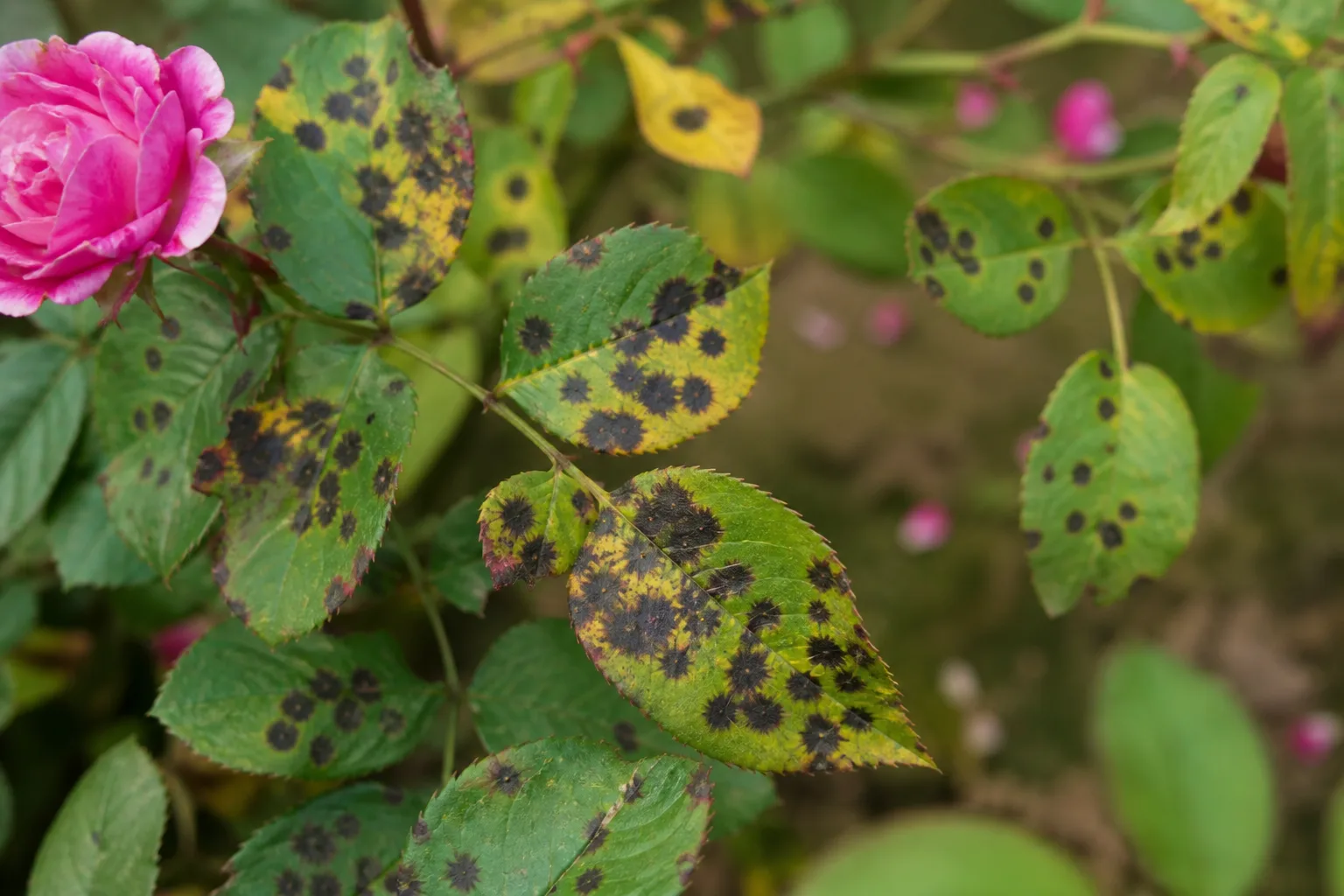
If you suspect a serious disease, unusual cane growth, or a problem spreading despite improved care, take clear photos and ask a local extension office or plant clinic for identification. Do not use a pesticide or homemade mixture just because it is described online as “organic.” Follow the product label and local regulations; the appropriate treatment depends on the confirmed pest or disease and where you live. Our rose problem guide is a useful first comparison, and the black spot guide goes deeper into diagnosis and management.
Adjust care through the seasons and in winter
Use plant stages and local weather rather than a fixed month list. When buds begin to swell, inspect for winter damage and prune only after identifying the rose class. During active growth, water when the root zone needs it, tie in climbing canes, and watch for pests and disease. After the first flower flush, decide whether the plant benefits from deadheading, light feeding, or simply a break from grooming.
As days cool, stop pushing tender growth with fertilizer and let the plant enter dormancy according to your climate. Some roses need little winter intervention, while tender grafted cultivars and potted plants may need protection in colder regions. A container exposes roots to colder air than garden soil does; moving it to a sheltered spot or insulating the pot may help, provided drainage remains open. Do not assume that every rose should be cut back hard or wrapped the same way.
In regions with severe winters, follow locally tested guidance on protecting the graft union and canes. In milder climates, heavy wrapping or pruning can create new problems by holding moisture or forcing premature growth. Our rose winter-protection guide and guide to preparing roses before winter cover the regional choices in more detail.
Grow roses in containers with extra attention
A pot is most forgiving when the rose is naturally compact. Patio, miniature, and some smaller shrub roses are easier to manage than a vigorous climber or broad landscape shrub. Choose a substantial container with unobstructed drainage, a stable base, and enough room for the cultivar’s roots; small decorative pots dry quickly and can make summer care needlessly difficult. Use a quality potting mix rather than garden soil, which can compact in a container.
Set the pot where the plant gets the light it needs while avoiding extreme reflected heat, and check moisture more often than you would for a rose in the ground. Feed only while the plant is actively growing and follow the product instructions; nutrients leach faster from frequently watered containers, but that is not a reason to overfeed. In cold climates, shelter the pot before the root ball freezes solid, keep it from sitting in water, and resume a normal watering routine as growth returns.
If you are choosing a rose specifically for a balcony or patio, use the dedicated guide to growing roses in pots. It covers container size, watering, placement, and overwintering with more detail than a general rose hub can.
Fix the causes behind weak growth and few blooms
When a rose looks poor, change one likely cause at a time. First check direct sun, root-zone moisture, drainage, and whether the plant has enough room. Then look for damaged or diseased canes, pests on new growth, and a recent pruning cut that may have removed flowering wood. Take photos before you prune or spray; a record makes it easier to see whether the problem is spreading or improving.
Use these first moves as a triage sequence:
- Few flowers: Count hours of direct sun, check whether the rose is meant to flower once or repeat, then review pruning timing.
- Wilt: Feel the soil before watering. Dry soil needs a deep soak; wet soil points toward drainage, root damage, or heat stress instead.
- Yellow or dropping leaves: Check whether the pattern begins low on the plant, appears with black spots, follows a heat wave, or occurs in persistently wet soil.
- Long, weak canes: Check light and avoid feeding before the plant has enough sun.
- Poor recovery after winter: Wait for living buds and inspect the cultivar’s hardiness and graft status before removing canes that may still be alive.
A rose that is healthy but too large is usually a selection or placement mismatch, not a reason to prune it into a permanently small shape. If a plant repeatedly outgrows the available space, replace it with a compact cultivar rather than fighting its natural habit every season. For a fuller symptom-by-symptom path, start with what is wrong with my roses?.
Use the right rose guide for your next step
The best next guide depends on what you are trying to do. Start with the types of roses if you are still selecting; use how to plant roses before bare-root or container stock goes in the ground. For ongoing care, go to rose watering, rose pruning, or fertilizing roses; for symptoms, compare common rose problems and rose black spot.
The cultivar name is the best link between these general principles and the plant in your garden. Keep the tag, photograph it before it fades, and note the season when the rose flowers or struggles. That small record can turn next year’s care from guesswork into a much more targeted decision.
Conclusion
Roses become easier to grow when you start with the right class and cultivar for your space, climate, and maintenance preferences. Give most varieties a sunny, well-drained site, keep water at the root zone, and let the plant’s bloom habit guide pruning and deadheading. Local conditions and the cultivar always matter, especially for hardiness, disease resistance, and graft depth.
When something goes wrong, diagnose the conditions before adding water, fertilizer, or spray. Use the linked guides for detailed steps, keep the plant label, and adjust care to what the rose is actually doing. That approach supports strong growth without asking every rose to follow the same calendar.



