Why Are My Snake Plant Leaves Turning Yellow? 7 Causes
Why are snake plant leaves turning yellow? Use leaf texture, soil moisture, root, light, and pest clues to identify seven causes and choose a targeted fix.
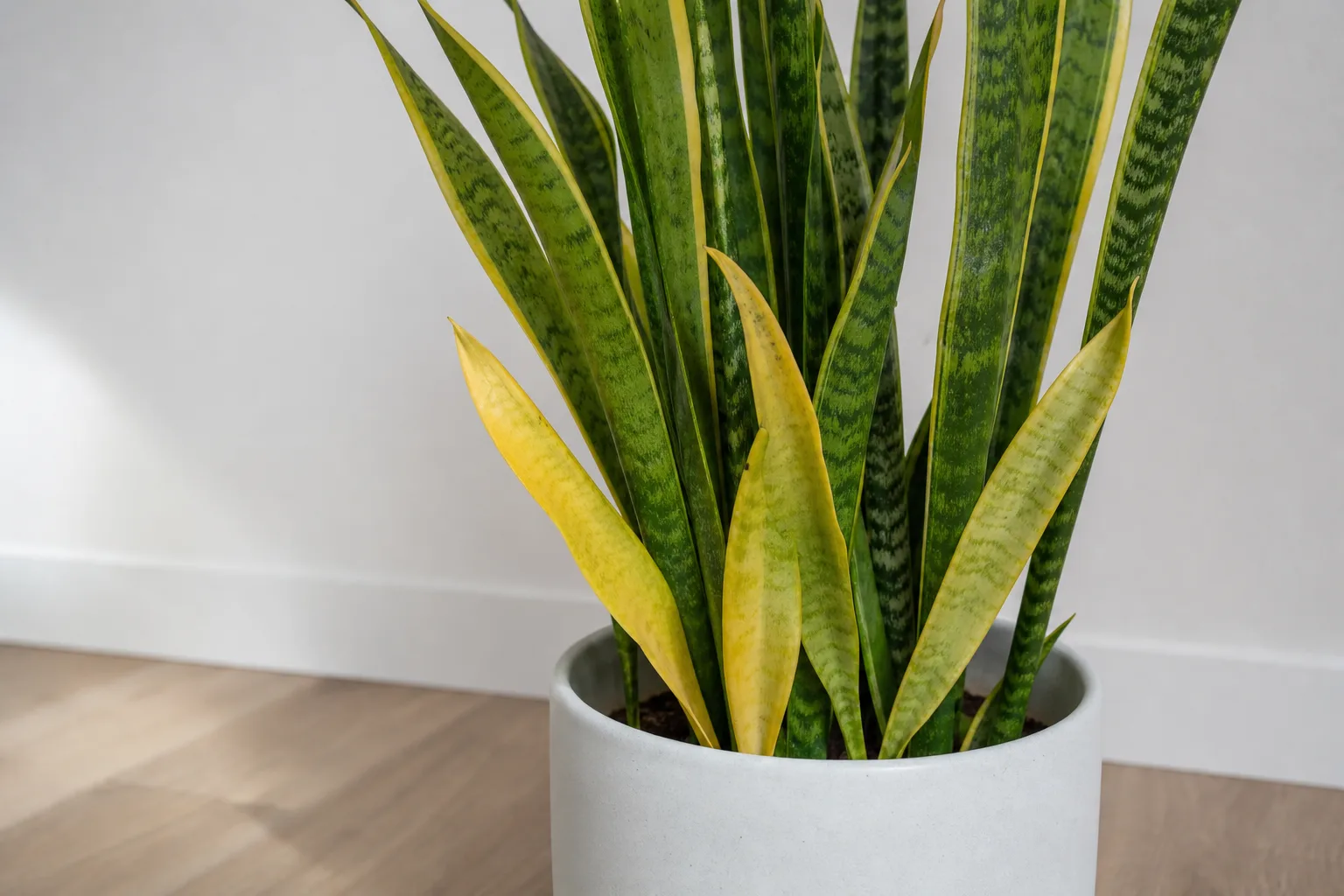
A snake plant can develop yellow leaves after its roots stay wet, its soil becomes bone-dry, or its leaves face a sudden change in sun or temperature. Pests, fertilizer salts, root trouble, and ordinary leaf aging can look similar at first, so color alone cannot identify the cause. Check the plant’s pattern, feel the leaves, and test the root zone before you water, fertilize, or repot.
First, make sure it is a snake plant
The familiar upright houseplant is Dracaena trifasciata, still often labeled Sansevieria trifasciata. It grows as a clump of stiff, fleshy leaves from an underground rhizome, and its water-storing leaves make it more drought-tolerant than many leafy houseplants. North Carolina State Extension lists both names and describes snake plant as a succulent that needs well-drained soil and careful watering. (North Carolina State Extension)
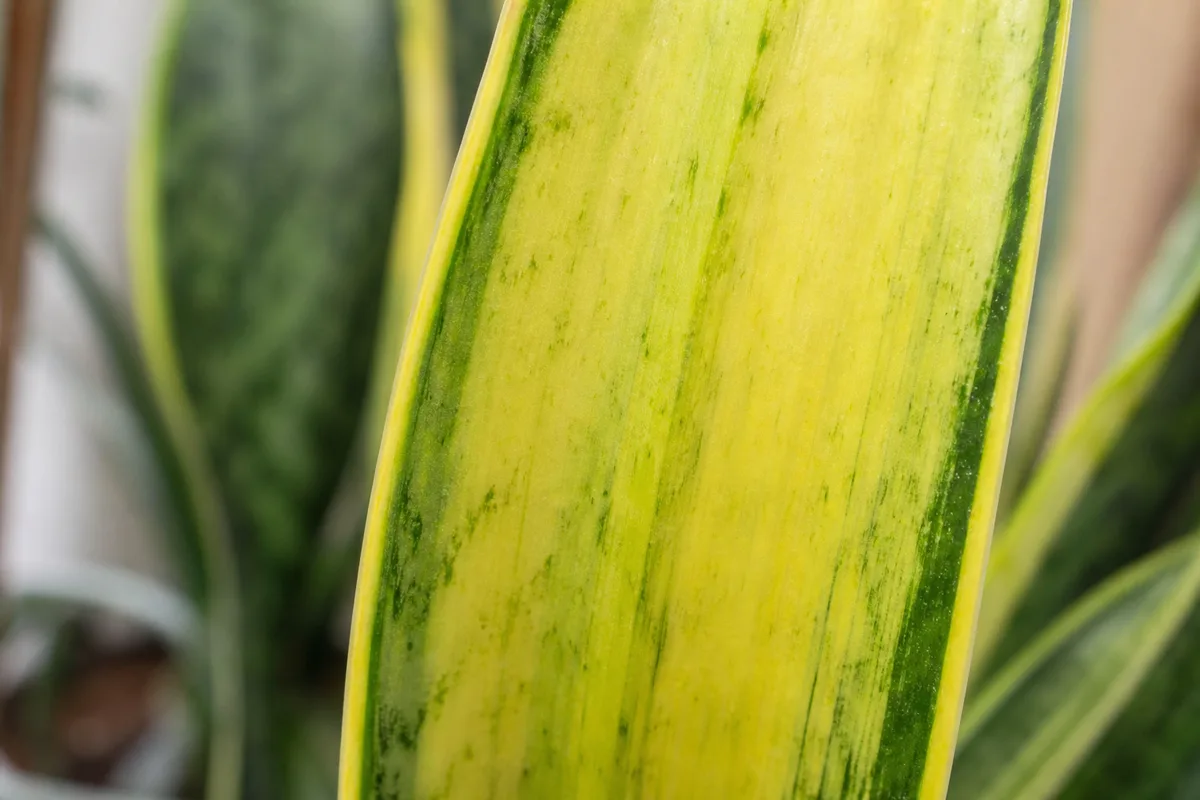
Some snake plants naturally have yellow or cream margins, especially striped cultivars such as ‘Laurentii.’ A stable gold edge that matches the pattern on other leaves is normal variegation, not chlorosis. Look for new yellow patches, fading that spreads across the blade, or leaves that turn soft or limp before deciding that the plant is sick.
Read the yellowing pattern before you change anything
One yellow leaf does not tell the whole story. Notice whether the color starts at the base, tip, or sun-facing side, whether one old outer leaf or several leaves are affected, and whether the tissue feels firm, soft, or papery. Also recall any recent move, cold night, fertilizer dose, change in water, or switch in watering habits.
Snake plants respond slowly to changes, so avoid making several corrections at once. A plant moved out of sun, repotted, watered heavily, and fertilized in the same afternoon gives you no way to tell which condition mattered. Take a photo, record the current soil moisture and leaf firmness, and make the first change that has the clearest evidence.
Check the leaf, the pot, and the timing
Feel the base of a yellowing leaf without pulling it. A soft or collapsing base combined with damp soil is more concerning for root or rhizome rot; a firm leaf with dry, wrinkled tissue points in a different direction. Yellowing after one lower leaf has aged slowly is less urgent than several leaves changing over days.
For a soil-grown plant, lift the pot and check several inches down with a wooden skewer or finger. A surface that looks dry can conceal wet mix around the roots, while a compacted or hydrophobic mix may repel water even after you pour. For a plant that has just been moved, compare the damaged side with the direction of the window, vent, radiator, or cold draft.
Quick symptom guide
| What you see | Check next | What it may indicate |
|---|---|---|
| One oldest outer leaf fades slowly while the rest stays firm | New growth and the rest of the clump | Normal aging |
| Several lower leaves yellow while the pot stays wet and heavy | Drainage, roots, rhizome, and leaf bases | Overwatering or root rot |
| Dry, wrinkled leaves with very dry mix | Whether water runs through or beads off | Drought or hydrophobic soil |
| Pale or tan patches on the window-facing side | Recent direct sun or heat exposure | Sun scorch |
| Pale, stretched growth in a dim spot | How much usable daylight reaches the plant | Chronic low light |
| Fine stippling, webbing, cottony flecks, or sticky leaves | Leaf undersides and leaf bases | Sap-feeding pests |
| Brown tips, white crust, and a recent feeding change | Fertilizer dose and water quality | Soluble salts |
| One lower leaf yellows as fresh growth emerges | Whether the cane and remaining leaves are healthy | Ordinary leaf turnover |
These clues guide the next check; none is conclusive on its own. In particular, wet soil can make roots unable to supply water, so a thirsty-looking plant does not always need more water.
Seven causes of yellow snake plant leaves
The seven causes below can overlap. For example, low light slows growth and water use, so a watering routine that worked in summer may leave roots wet for much longer in a dark winter corner. Start with the visible clue that best matches your plant and confirm it with a second observation before treating.
1. Water stress and root rot
Overwatering usually means the mix stays wet too long, not simply that you gave the plant one generous drink. A snake plant in dense mix, a pot without drainage, or a decorative cachepot holding runoff can remain saturated even when watering is infrequent. Excess moisture reduces oxygen around roots and can damage the fine roots that absorb water; University of Maryland Extension notes that lower or inner leaves may yellow or wilt under excess moisture. (University of Maryland Extension: Overwatered Indoor Plants)
Suspect root rot when several leaves yellow or droop while the soil remains damp, the pot stays heavy, or the base of leaves becomes soft. If you lift the plant only when those signs justify it, healthy roots should feel firm; rotting roots are often dark and mushy, and the outer layer may slough off. Root rot can also affect the rhizome, which is the horizontal storage stem that connects leaf clusters.
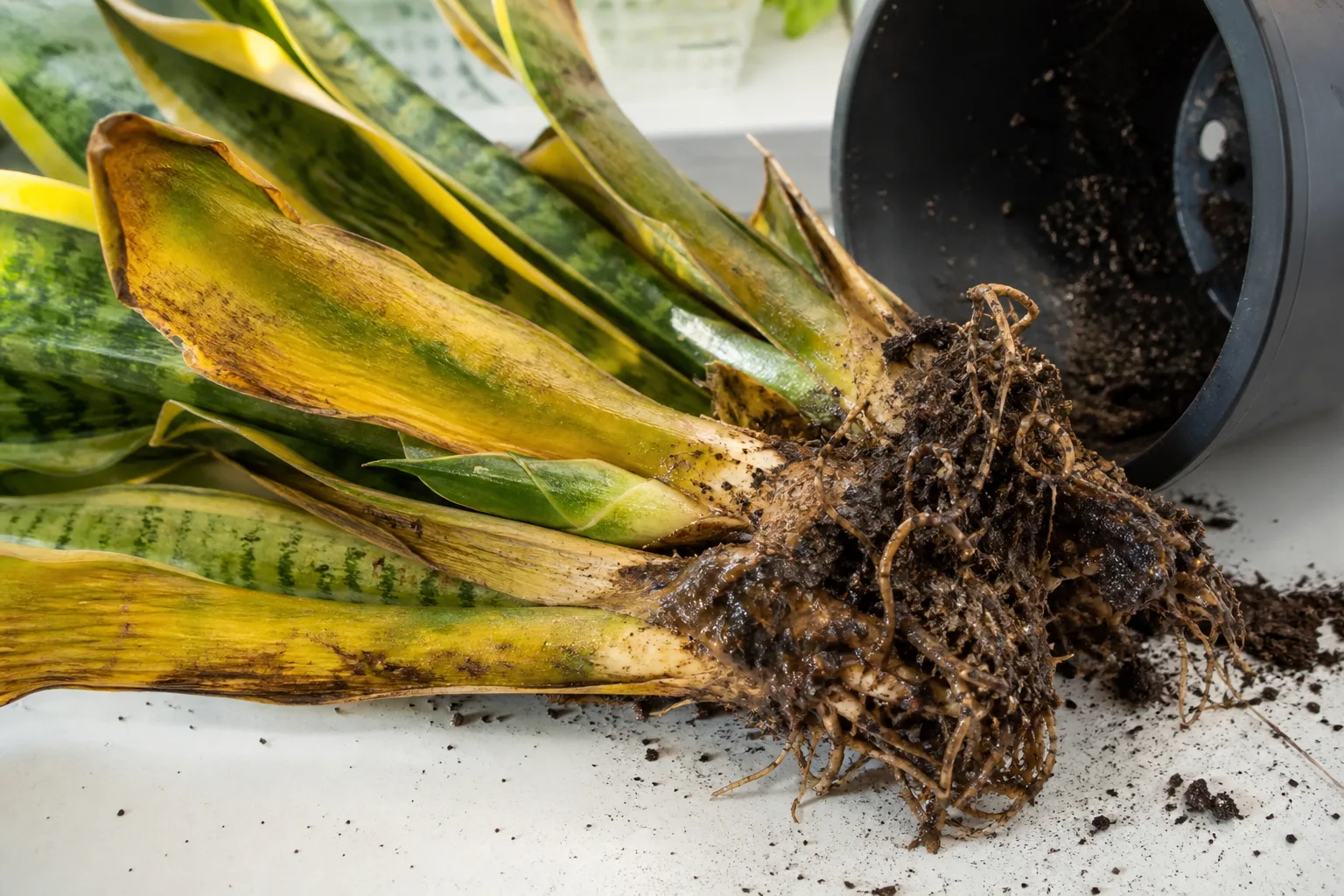
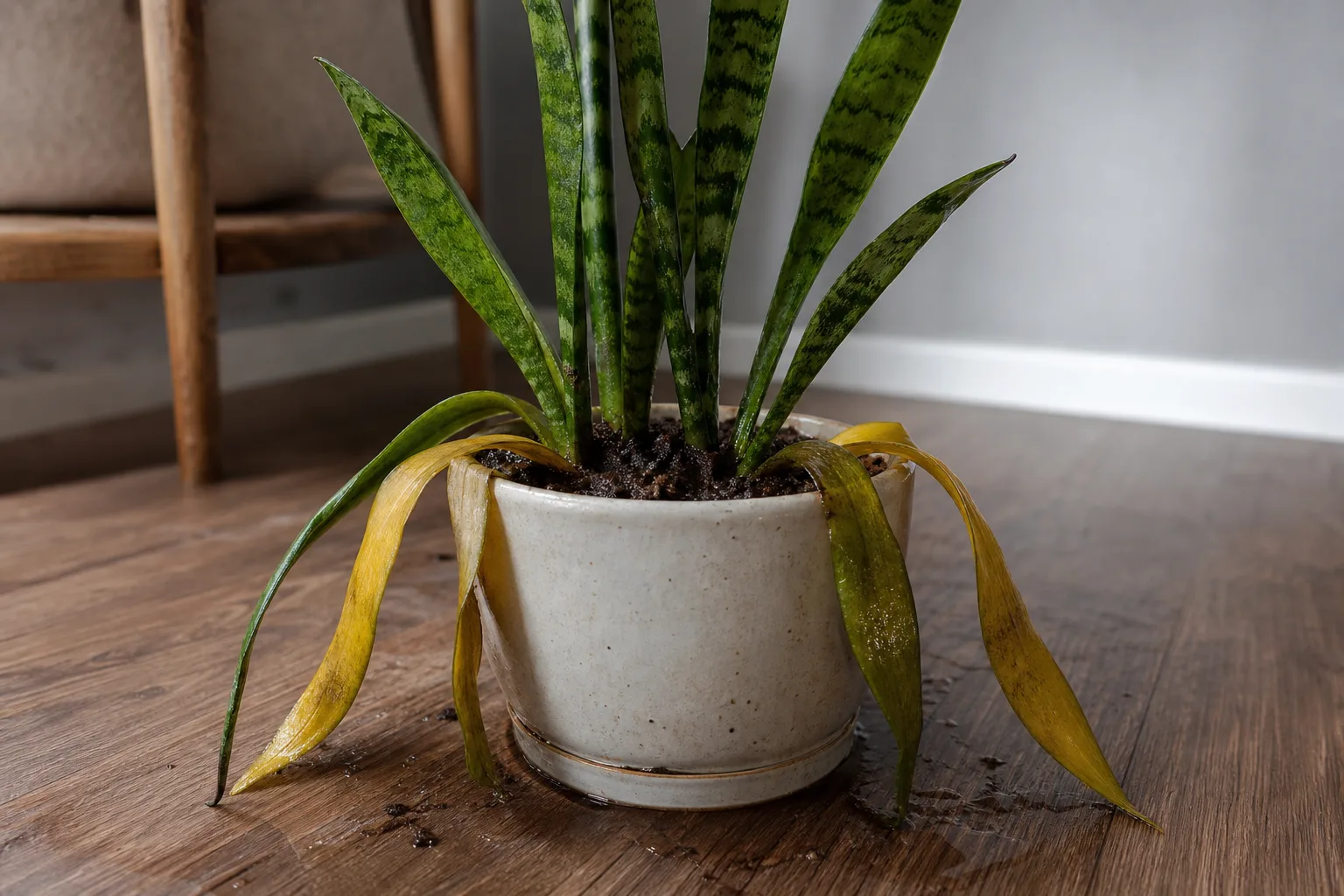
If the mix is wet but the leaves are still firm, stop watering and let the pot drain and dry; do not unpot the plant just to check if no other warning sign is present. If the plant is collapsing, the mix smells sour, or roots and rhizome are soft, remove it from the pot, discard soggy mix, and cut away only tissue that is clearly soft or decayed with clean shears. Repot the remaining firm roots and rhizome in a clean pot with a drainage hole and fresh, free-draining mix, then wait until the mix is dry before watering again.
A permanently wet mix may signal a potting problem rather than a careless watering schedule. Snake plants do best in containers that drain, with a mix that does not hold water around the rhizome for weeks; skip gravel at the bottom of a pot, which does not replace a drainage hole. The RHS recommends free-draining compost and watering only as the growing medium begins to dry, while NC State Extension warns that overwatering can rot snake-plant roots. (Royal Horticultural Society) (North Carolina State Extension)
Underwatering or soil that will not rewet. A snake plant tolerates dry soil, but months without water can eventually deplete the moisture stored in its leaves. Underwatered leaves tend to feel dry, thin, wrinkled, or less rigid, and the potting mix will be dry well below the surface.
This differs from the soft, waterlogged feel and persistent dampness that strengthen the case for overwatering. Very dry peat-based soil can shrink away from the pot or become water-repellent, so a quick pour may run down the sides without wetting the root ball.
Water the soil slowly and evenly until it drains from the bottom, then empty the saucer; if the mix repels water, apply it in two or three small passes with pauses so the root ball can absorb it. Do not leave the pot standing in a basin of water after the soil has rehydrated.
Both too much and too little water can lead to yellowing, which is why the moisture check comes before a watering decision. If the mix is dry and the plant still feels firm, water once and then allow it to dry again; if it is damp, hold off and investigate drainage or roots instead. The Royal Horticultural Society advises allowing the compost to begin drying between waterings, and Maryland Extension recommends watering based on plant and pot conditions rather than a fixed calendar. (RHS Sansevieria guide) (University of Maryland Extension: Watering Indoor Plants)
2. Too much direct sun or too little usable light
Snake plants tolerate a range of light, but a sudden move from a dim interior to strong direct sun can bleach, scorch, or dry patches on exposed leaves. Sun injury is more likely when marks appear on the side facing the window after a recent move, especially during hot afternoon sun; damaged spots may become tan and papery. NC State’s general Dracaena guidance notes that direct sunlight can scorch leaves, while its snake-plant profile says the species tolerates low light and some direct sun, so intensity and acclimation matter. (NC State Extension: Dracaena) (NC State Extension: Snake Plant)
Move a scorched plant a little farther from the glass or filter harsh midday rays with a sheer curtain. Do not put it in a dark corner as a cure; it still needs enough indirect daylight to sustain growth, and brighter light usually helps it grow more strongly. If you take it outdoors, acclimate it gradually to brighter conditions rather than setting it into hot direct sun all day.
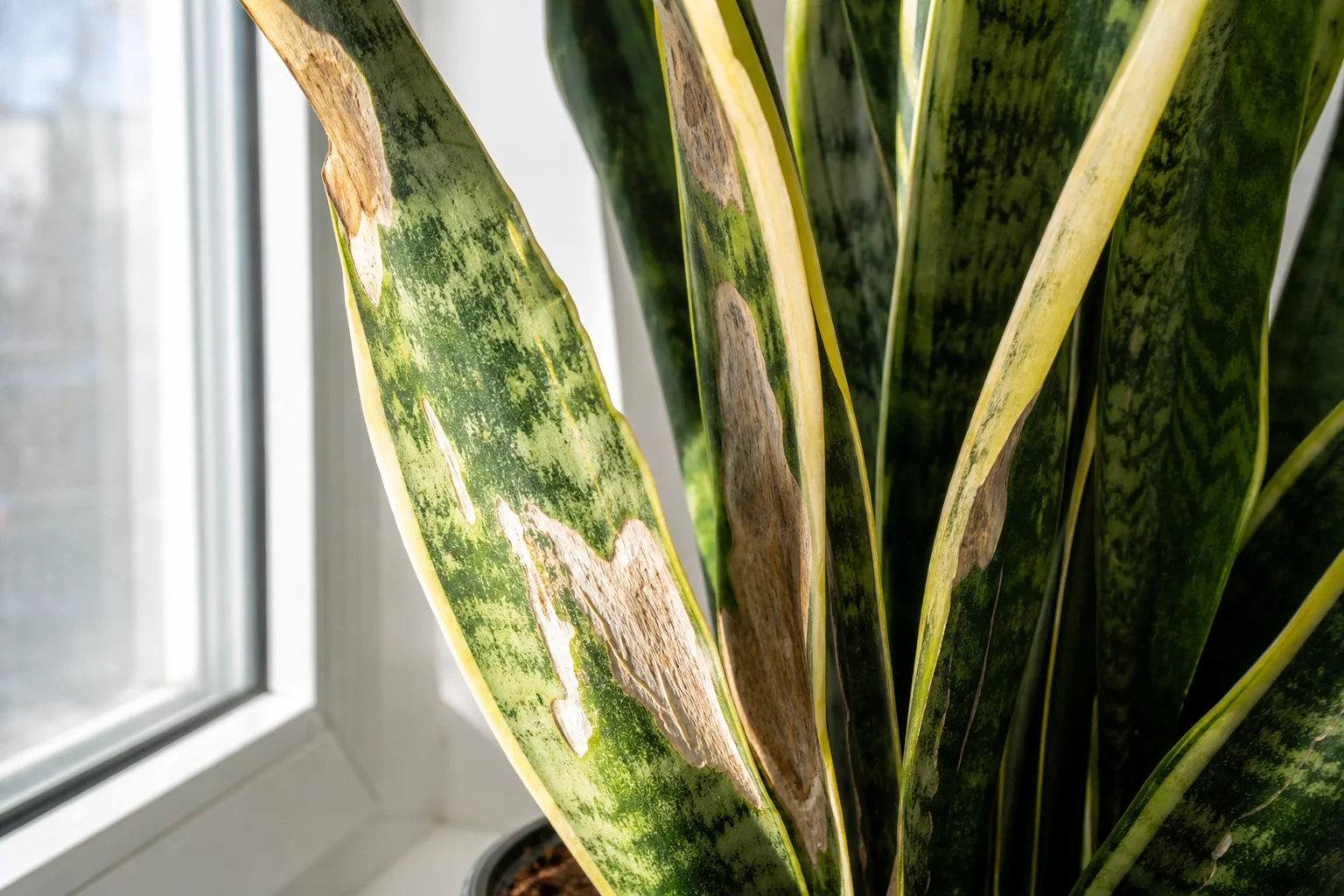
Low light is less likely to cause one sudden yellow leaf by itself. Over a longer period it can slow new growth, reduce vigor, and make watering needs fall; if the plant keeps receiving its summer water amount in a dark room, wet roots may be the more immediate cause of yellowing. Iowa State Extension notes that low indoor light can make succulents pale and lanky, though snake plants tolerate lower light better than many succulents. (Iowa State University Extension: Growing Succulents Indoors)
3. Cold drafts or sudden temperature changes
A cold window, exterior door, air-conditioning stream, or abrupt move outdoors can damage leaves and stress roots. Chilling injury often follows a noticeable exposure event and may show as pale, water-soaked, dark, or collapsing patches rather than an orderly yellowing of one aging leaf. NC State reports that snake plants tolerate cool temperatures around 50°F, but that should not be treated as a target; the RHS lists 15–24°C (60–75°F) as the preferred range for Sansevieria. (North Carolina State Extension) (Royal Horticultural Society)
Move the plant away from cold glass and direct air from vents, and keep its room conditions steady. If it has been outside, bring it indoors before nights become chilly; avoid putting it beside a heater to compensate, since hot, dry airflow can also damage leaf tips. Cut away tissue only after the damage is clearly dead, because a leaf with a firm green base may still support the plant.
4. Sap-feeding pests
Pests are not the first explanation for uniform yellowing, but they become more likely when the leaves show fine speckles, sticky patches, webbing, or cottony clusters. Spider mites feed on leaf undersides and can leave stippling or fine webbing; mealybugs hide in leaf bases and look like white cotton; scale insects appear as small, fixed brown or gray bumps. UC IPM and Maryland Extension describe yellowing, wilting, stippling, honeydew, and cottony wax as signs associated with these pests. (UC Statewide IPM Program: Houseplant Problems) (University of Maryland Extension: Mealybugs on Indoor Plants)
Inspect the undersides of leaves and tight spaces where leaves emerge from the soil, using a phone camera or hand lens if necessary. Isolate a plant with visible pests, rinse leaves where appropriate, and remove a few mealybugs with a damp swab; repeat inspections because eggs and small juveniles may be missed. If you use insecticidal soap or horticultural oil, confirm that the pest and plant are on the label, test a small area, and follow the label directions.
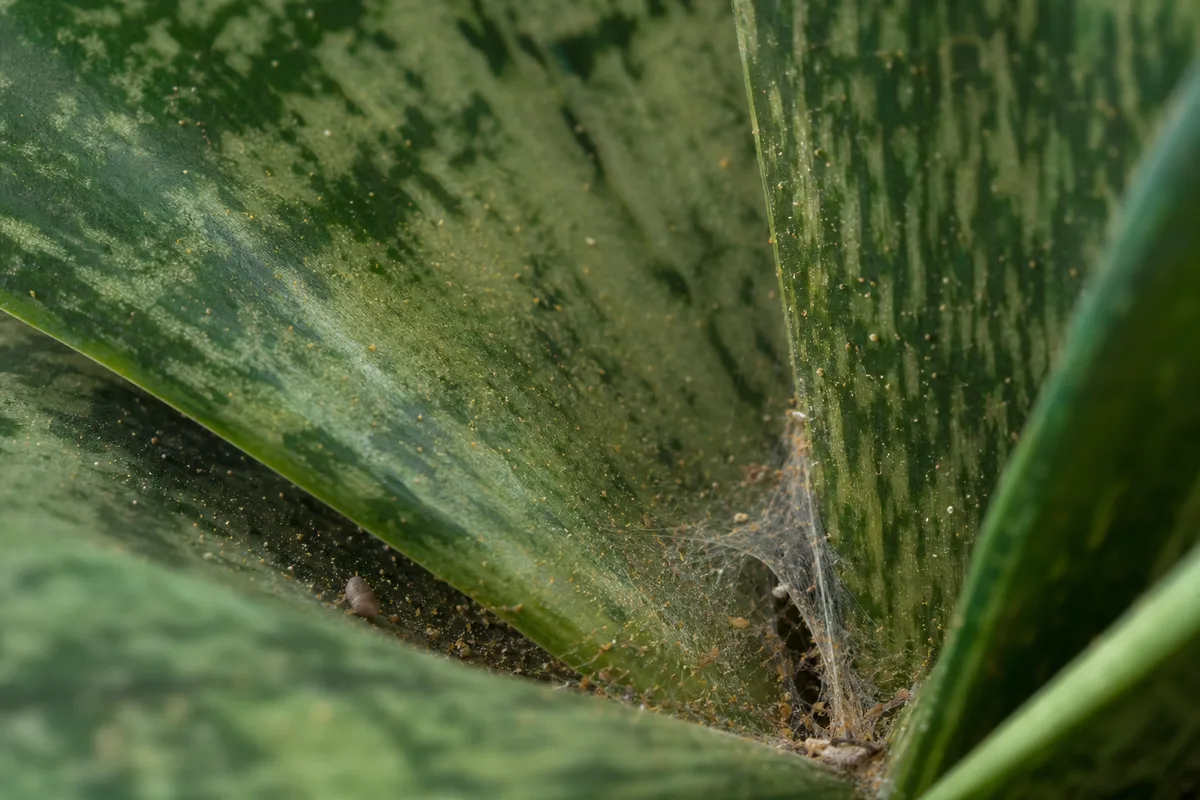
Do not apply pesticide just because a leaf is yellow. Fungus gnats around the soil, for example, usually point to persistently damp mix, while yellow leaf edges without insects, webbing, or sticky residue are not enough to diagnose a pest problem. Confirm the pest first and then choose a treatment that reaches the pest and is safe for indoor use.
5. Fertilizer problems and salt buildup
Snake plants grow slowly and do not need frequent feeding. Too much fertilizer can injure roots or leave soluble salts in the soil, especially if concentrated fertilizer is applied to a dry root ball or if fertilizer is used during low-growth conditions. University of Maryland Extension lists brown or dying leaf tips and margins as common salt-injury signs, with yellowing, stunting, root damage, and white crusts also possible. (University of Maryland Extension: Fertilizer Toxicity or High Soluble Salts)
If yellow or brown tips began after feeding and the pot has crusty deposits, stop fertilizing and check whether the pot drains freely. For a healthy plant with a drainage hole and no root rot, flushing the mix with plain water can leach some salts; let all runoff escape and empty the saucer. If the pot is small, the mix is badly crusted, or drainage is poor, replace the old mix rather than repeatedly soaking a compromised root system.
Nutrient deficiency is possible but is a weaker first guess than water, light, or root trouble. A consistently pale plant with weak growth may be underfed, but do not add fertilizer until the roots are healthy and the light and watering conditions are suitable. Follow the product rate for houseplants during active growth, and avoid fertilizing a stressed plant in the hope that food will reverse existing yellow leaves.
6. Root crowding or root damage
A crowded root ball can make watering uneven or cause a pot to dry quickly, but snake plants are slow-growing and often do well slightly snug in their containers. A plant with roots circling tightly, rhizomes pressing against or lifting the pot, or water immediately running through may need more room; yellow leaves alone do not prove it is root-bound. Gardening Know How notes that snake plants are among plants that tolerate tight pots and should be repotted when roots are working out of the container. (Gardening Know How)
If repotting is justified, choose a pot only slightly wider than the root mass and with a drainage hole. Avoid a much larger pot, which holds more wet soil around roots than a small plant can use, and handle the rhizomes carefully because damaged tissue can rot. A recently repotted plant may show one or two stressed leaves, so give it stable light and water conditions before attempting another move.
7. Normal leaf aging
One oldest lower leaf turning yellow slowly can also be normal aging, especially when the rest of the plant is firm and a new leaf or offset is emerging. A mature plant will not keep every leaf indefinitely, and old outer foliage can fade as the clump grows. If multiple leaves yellow at once, the crown becomes soft, or new growth is weak, do not dismiss it as ordinary turnover; compare its water, light, and pest clues first. (Gardening Know How: Snake Plant Turning Yellow)
What to do now: a safe rescue sequence
Start with the base of the plant and the root-zone moisture, because those checks quickly separate an urgent rot problem from a non-urgent old leaf. If a cane or leaf base is soft, the plant is collapsing, or the soil smells sour and stays wet, prioritize drainage and root health. If the leaf is firm, only one old outer leaf is yellow, and new growth looks healthy, it may be enough to wait and observe.
Use this order to avoid adding stress:
- Photograph and describe the pattern. Note whether one or many leaves are affected, where the color starts, whether the tissue is firm or soft, and when it began.
- Check moisture below the surface. Lift the pot and insert a clean wooden skewer several inches into the mix; wet soil clinging to the skewer means you should not water yet.
- Check drainage and recent events. Look for a blocked hole, standing saucer water, a recent move into sun, a cold draft, fertilizer, or a new water routine.
- Inspect for pests and root warning signs. Look for stippling, webbing, sticky residue, cottony flecks, or mushy tissue at the base; do not unpot a firm plant without a reason.
- Correct one confirmed problem. Adjust watering, light, or temperature, or treat a confirmed pest; do not apply fertilizer as a general tonic.
- Remove only dead or rotting leaves. Use clean scissors at the base for fully yellow or collapsed leaves, but leave partly green foliage while the plant recovers.
After making the change, keep conditions steady and check for progression over the next few weeks. Yellow areas will remain yellow, so success means the damage stops spreading, the remaining leaves stay firm, and any new growth looks healthy. If the plant continues to deteriorate despite corrected conditions, inspect the rhizome and roots or ask a local extension office to help distinguish disease from environmental stress.
Will yellow leaves turn green again?
A leaf that has turned fully yellow will not return to green after you correct the cause. Yellowing reflects damage or loss of chlorophyll in that section, and the plant cannot rebuild the original pattern in the same leaf. A partly green leaf can keep contributing energy, so do not trim it just because one edge or tip has changed color.
A snake plant can still recover if its rhizome and remaining leaves are healthy. Once watering, light, temperature, or a confirmed pest problem is corrected, watch for the yellowing to stop and for new leaves or offsets to emerge normally. A soft, yellowing rhizome or a leaf base that collapses is more serious and may require removing decayed tissue or separating a healthy offset.
Trim fully yellow leaves at the soil line with clean scissors if they are unsightly or beginning to decay. Do not tug them from the pot, because that can tear the rhizome or loosen healthy neighboring leaves. A yellow tip can be snipped for appearance, but leave a small margin of dry tissue rather than cutting into healthy green tissue.
Keep new leaves healthy
Water according to what the mix is doing, not the weekday or the calendar. In a draining pot, water thoroughly, let excess drain away, and wait until the soil has dried well before watering again; the interval changes with pot size, mix, light, season, and room temperature. In winter or a dim room, the plant may use less water, so check deeper before repeating a summer routine. (NC State Extension) (Royal Horticultural Society)
Use a fast-draining potting mix and a pot with open drainage, and do not let a decorative outer pot collect runoff. Give the plant bright indirect light or gentle direct sun after gradual acclimation, keeping it away from hot midday panes and cold drafts. A stable spot is more useful than moving it repeatedly to chase ideal light.
Feed lightly only when the plant is actively growing, and follow the fertilizer label rather than applying extra to cure yellow leaves. Periodically inspect the leaf undersides and bases for pests, and wipe off dust so you can notice new stippling or sticky residue early. Keep a simple note of watering and feeding dates if the same plant has recurring symptoms; it can reveal that the soil stays wet for weeks or that yellowing follows a particular exposure.
Conclusion
Snake plant leaves turning yellow can signal excess water and root rot, drought, unsuitable light, temperature stress, sap-feeding pests, fertilizer salts, root or repotting trouble, or normal aging. Check the leaf texture and location, test the soil below the surface, and look for a matching clue before changing care. A single old leaf may be harmless, while soft bases, persistently wet soil, or several rapidly yellowing leaves call for a closer root check.
Once you have a likely cause, make one targeted correction and give the remaining healthy leaves time to respond. Yellow tissue will not turn green again, but a sound rhizome can support healthy new growth when its growing conditions are right.