12 Tomato Pests to Watch Out for, Plus How to Get Rid of Them
Identify 12 common tomato pests by the damage they leave, then choose hand-picking, barriers, beneficial insects, or a label-approved treatment that fits.
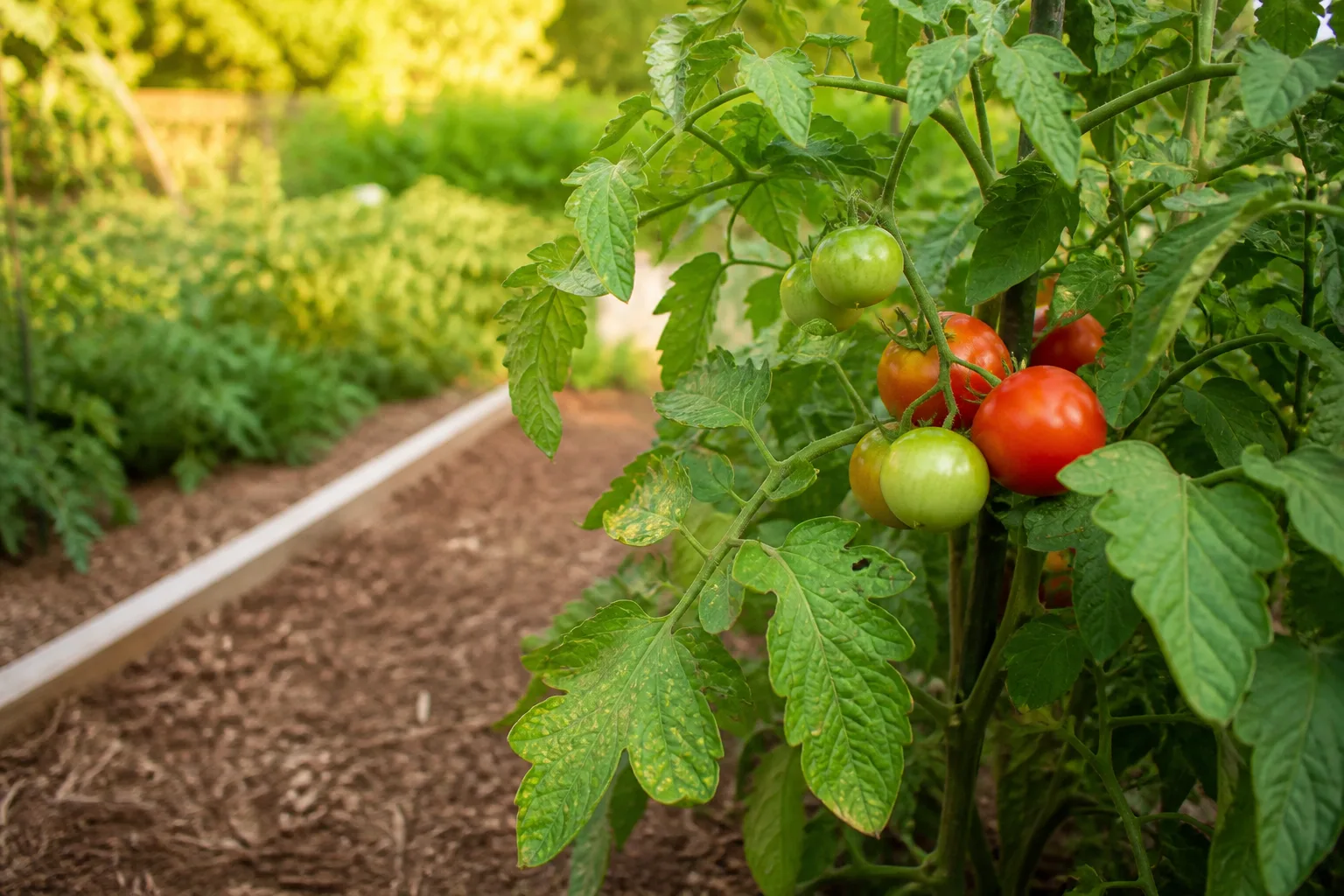
Tomato pests are easiest to control when you identify them before reaching for a spray bottle. A seedling severed at the soil line needs a different response from a fruit with a single entry hole, a leaf covered in pale stippling, or a plant coated in sticky honeydew.
The most useful rule is match the control to the pest’s feeding location and life stage. Hand-pick exposed caterpillars, wash soft-bodied insects from leaves, protect young plants with a barrier, conserve parasitoids that already control leafminers, and reserve a label-approved product for damage that is actually increasing. NC State Extension’s tomato pest guide and Clemson Cooperative Extension’s tomato insect factsheet both emphasize that tomatoes host many insects, but the damage, timing, and need to treat vary widely.
The quick answer: identify the damage before you spray
These are the 12 tomato pests covered here, grouped by the clue they leave behind:
| What you notice first | Most likely pests | First check |
|---|---|---|
| A young plant is cut at ground level | Cutworms | Search the soil and debris around the stem after dusk |
| Leaves disappear overnight and dark pellets collect below | Hornworms or armyworms | Inspect stems, leaf undersides, and the ground for caterpillars |
| Green fruit has a hole and frass inside | Tomato fruitworms or armyworms | Look around the stem end, flowers, and fruit clusters |
| Leaves have tiny round holes | Flea beetles | Disturb the foliage and watch for tiny jumping beetles |
| Leaves are sticky, curled, or covered with black sooty mold | Aphids or whiteflies | Examine new growth and leaf undersides |
| Leaves look sandblasted, bronze, or finely stippled | Spider mites | Tap a leaf over white paper and look for moving specks or webbing |
| Flowers or new growth are silvery and distorted | Thrips | Shake flowers over white paper and inspect for slender insects |
| Leaves contain winding pale trails | Leafminers | Hold the leaf to the light; the larva is between the surfaces |
| Leaves are chewed and orange-red larvae or striped adults are present | Colorado potato beetles | Check undersides for yellow-orange egg clusters |
| Tomatoes develop pale dimples or hard, whitish calluses | Stink bugs or leaf-footed bugs | Look for shield-shaped adults, nymphs, and egg clusters |
The table is a triage tool, not a substitute for looking closely. Several caterpillars create holes, and heat, drought, nutrient problems, and diseases can also distort or discolor tomato leaves. Before treating, take a close photo, inspect both sides of several leaves, and check the stem, soil line, flowers, and fruit.
How to tell pest damage from disease or stress
Start at the newest growth and work downward. Sap-feeders tend to gather on tender tips or leaf undersides; chewing insects leave missing tissue or droppings; miners leave a track inside the leaf; and fruit-feeding caterpillars often leave an entry hole with wet frass. If the pattern is uniform across every plant with no insect, web, honeydew, mine, hole, or frass, consider heat, watering, nutrition, herbicide drift, or disease before calling it a pest.
Scout twice a week when plants are growing quickly, and check daily for the first week after transplanting or during a hot spell. Look at the soil line in the evening for cutworms, use a hand lens for mites and thrips, turn over lower leaves for aphids and whiteflies, and examine flowers and green fruit before deciding that a general insect spray is needed.
If you find a caterpillar with white, rice-like cocoons attached to its back, leave it in place. Those are signs of parasitic wasps developing inside the hornworm, and removing that caterpillar destroys a natural control that can help with the next generation. The same principle applies to leafminers: a mine does not automatically mean the larva is winning, because parasitoids may already be suppressing it.
Cutworms
Cutworms are moth larvae that hide in soil cracks, beneath clods, or under plant debris during the day and feed at night. They are most damaging to seedlings and newly transplanted tomatoes, where one caterpillar can sever more than one plant near the ground. A wilted plant that looks clean above the soil may have been girdled at the stem base.
Check just after dusk or gently scrape the top layer of soil around a damaged plant. The larva may curl into a C-shape when disturbed. Hand-pick any you find, clear weeds and dense debris from the immediate planting area, and place a snug collar around young stems that extends slightly above and below the soil surface without constricting growth. A collar protects an individual transplant better than spraying an entire bed for a pest that may be present only in one spot.
Do not keep a barrier in place once it interferes with stem expansion, and do not assume cutworms are the cause when the stem is chewed higher up. A stem broken several inches above the soil, or leaves stripped without a basal injury, points you toward a different caterpillar.
Hornworms
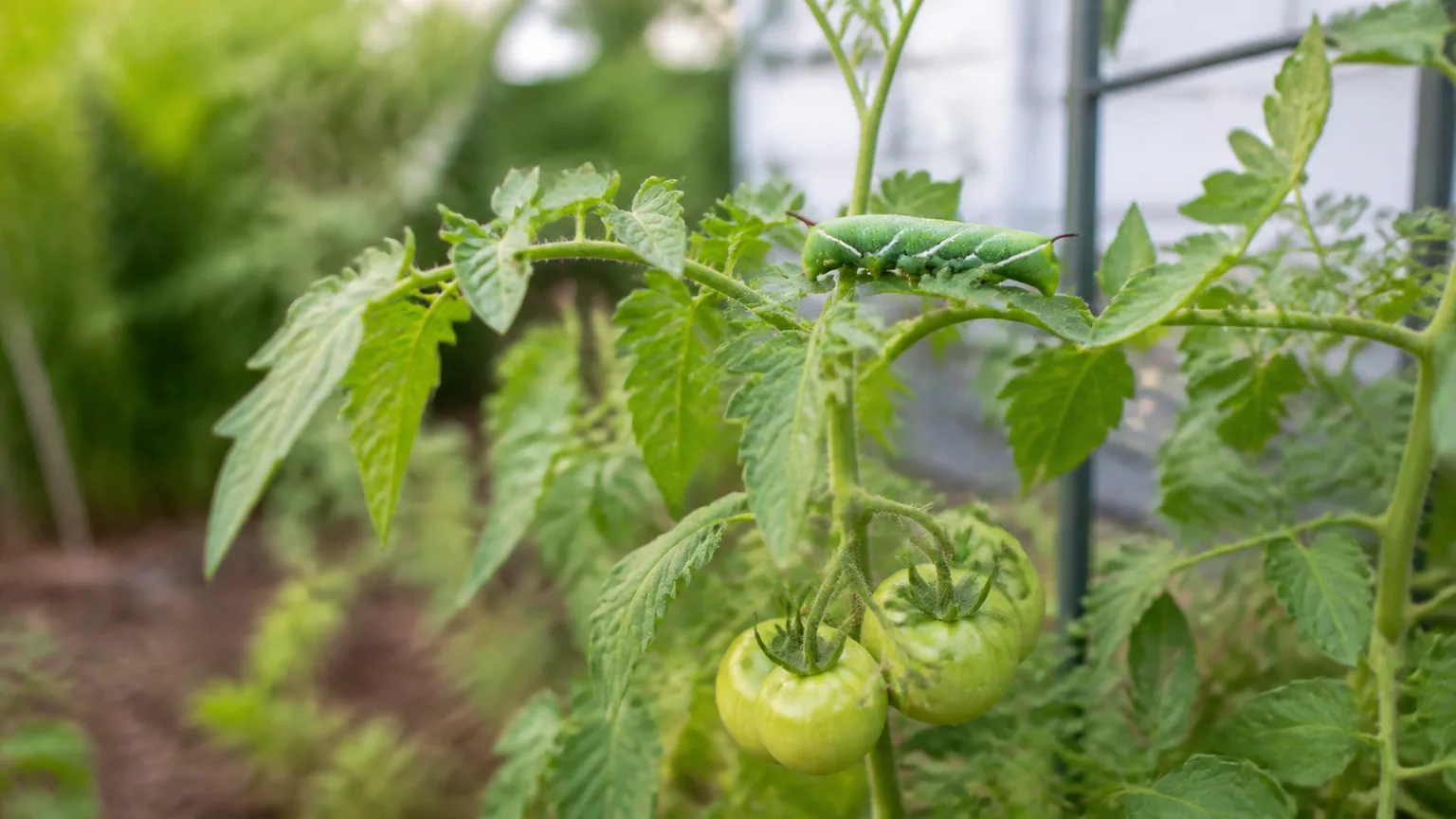
Tomato and tobacco hornworms are large green caterpillars with diagonal stripes or V-shaped markings and a harmless horn at the rear. They blend into foliage, but their damage is unmistakable: leaves and sometimes flowers vanish quickly, dark green droppings collect on lower leaves or the soil, and a previously full vine can look skeletal by morning. UC IPM’s hornworm guidance notes that larvae commonly appear in midsummer, feed for several weeks, and may scar fruit when populations are high.
Hand-picking is usually the best home-garden control because hornworms are large and often localized. Search carefully along stems and leaf undersides in the evening, drop active caterpillars into soapy water, and leave parasitized ones alone. If many small larvae are present, a product containing Bacillus thuringiensis var. kurstaki can work while they are actively feeding; follow the product label for tomatoes, coverage, timing, and harvest restrictions.
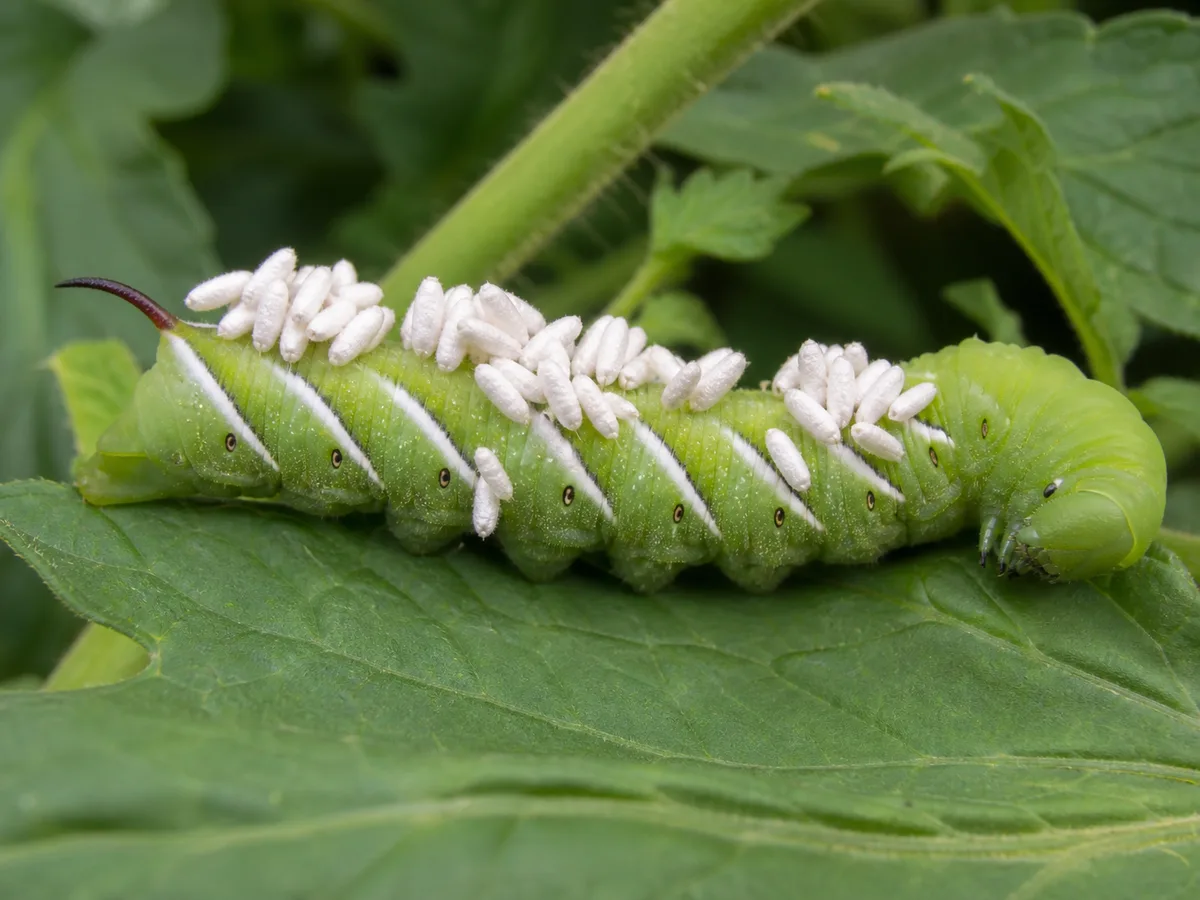
Large hornworms are harder to reach with Bt because they have already consumed much of the foliage and are closer to pupating. UC IPM recommends treating only when foliage injury is extensive or fruit is being fed on, and spot-treating affected areas when possible. That threshold protects beneficial insects and prevents a small, visible problem from becoming a whole-garden spray.
Aphids
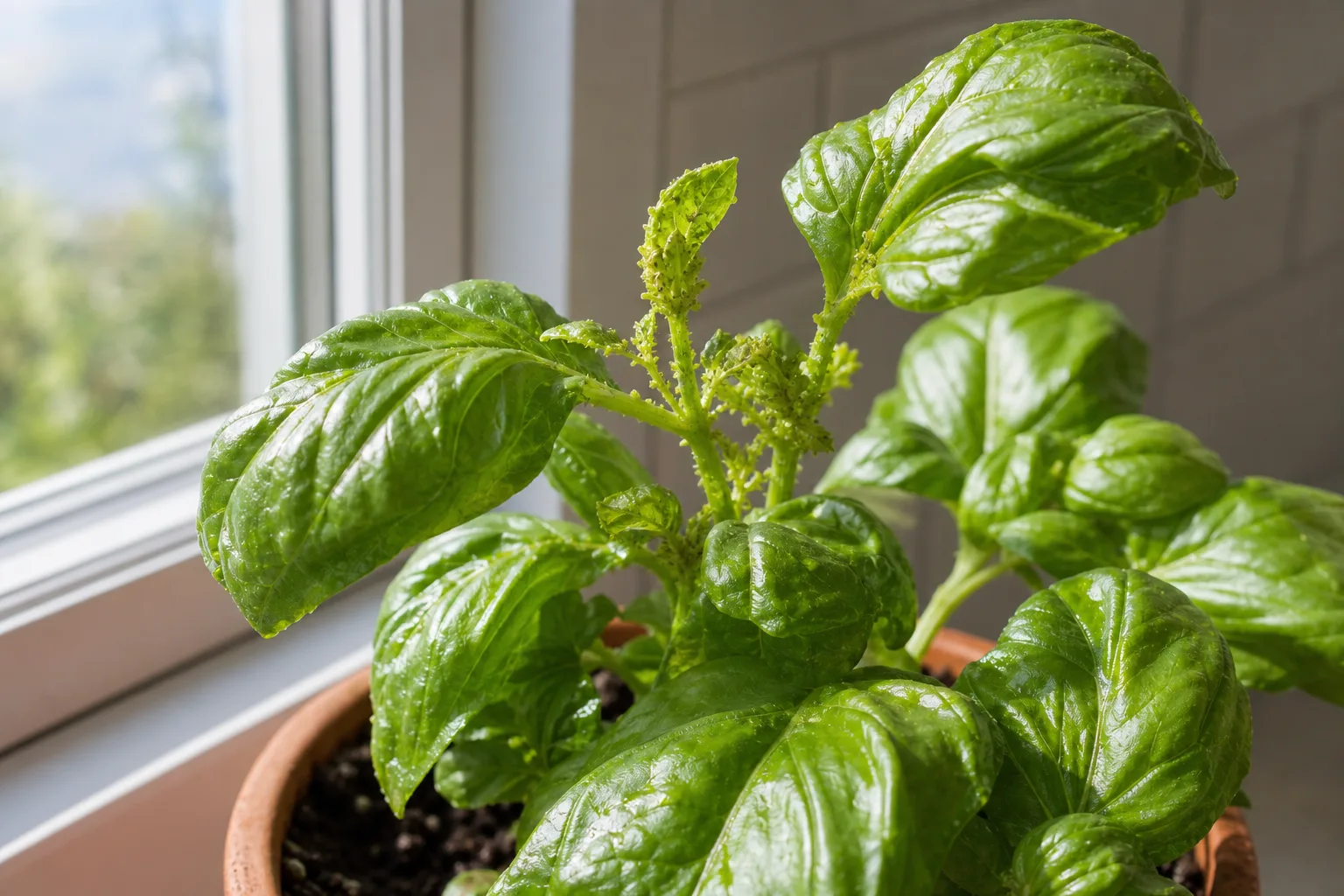
Aphids are tiny, pear-shaped insects that cluster on tender shoots, leaf undersides, stems, and flower buds. They suck sap and excrete sticky honeydew, so ants may appear, leaves may curl, and black sooty mold can grow on the residue. A few aphids on an established tomato are often tolerable; expanding colonies that distort new growth or coat the plant deserve action.
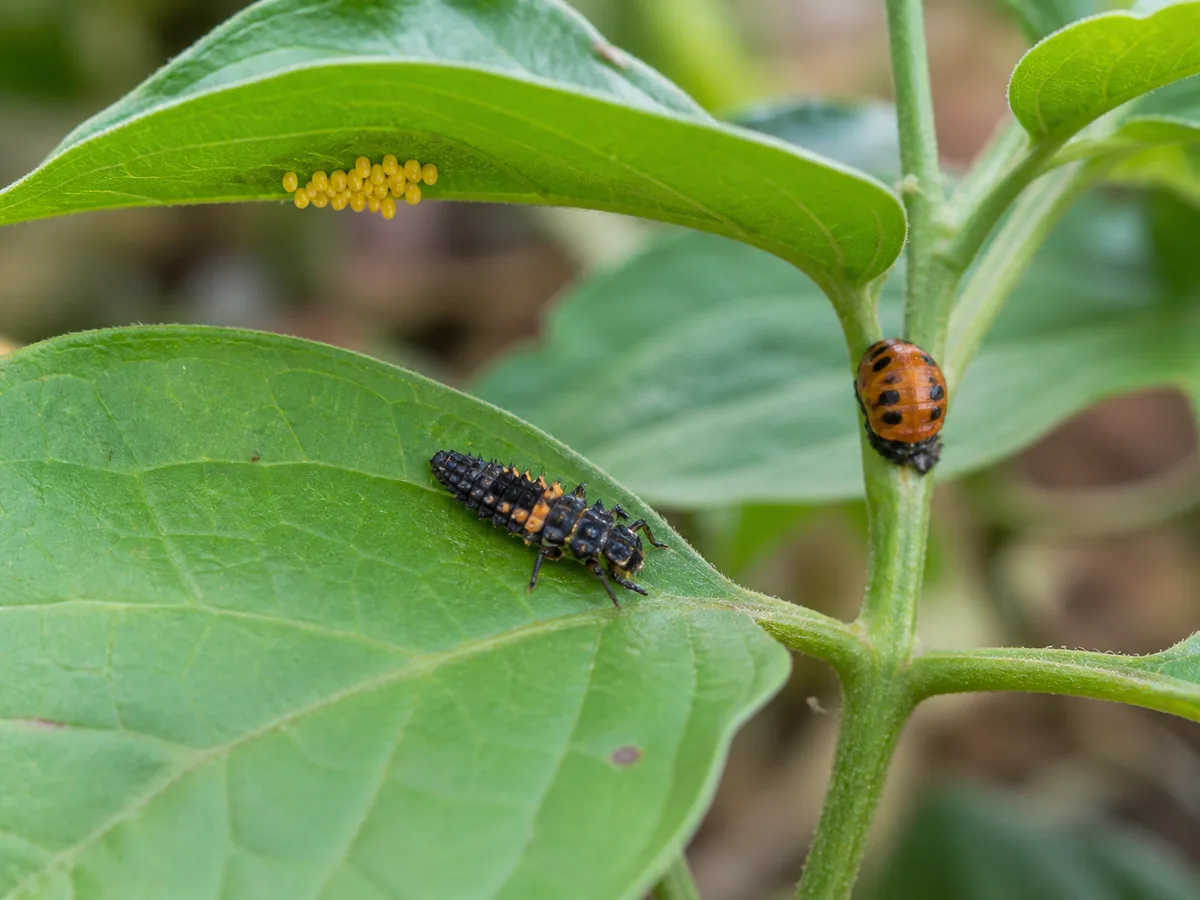
First, spray the colony with a firm stream of plain water, directing it at the undersides without breaking stems or washing soil onto the leaves. Prune a heavily infested tip if the colony is localized, then watch for lady beetle larvae, lacewing larvae, hoverfly larvae, and parasitic wasps. Savvy Gardening and Fine Gardening both emphasize the value of water removal and beneficial insects, while Fine Gardening also cautions that tender, nitrogen-rich growth can encourage aphid buildup.
If the population keeps increasing, use a commercial insecticidal soap or horticultural oil only if the label allows use on tomatoes. These are contact treatments, so they must wet the insects; they will not protect new growth after drying. Never substitute dish detergent for a labeled insecticidal soap. N.C. Cooperative Extension explains that homemade mixtures can injure foliage, and recommends label directions, a small test spray, and avoiding application to water-stressed plants or in high heat.
Spider mites
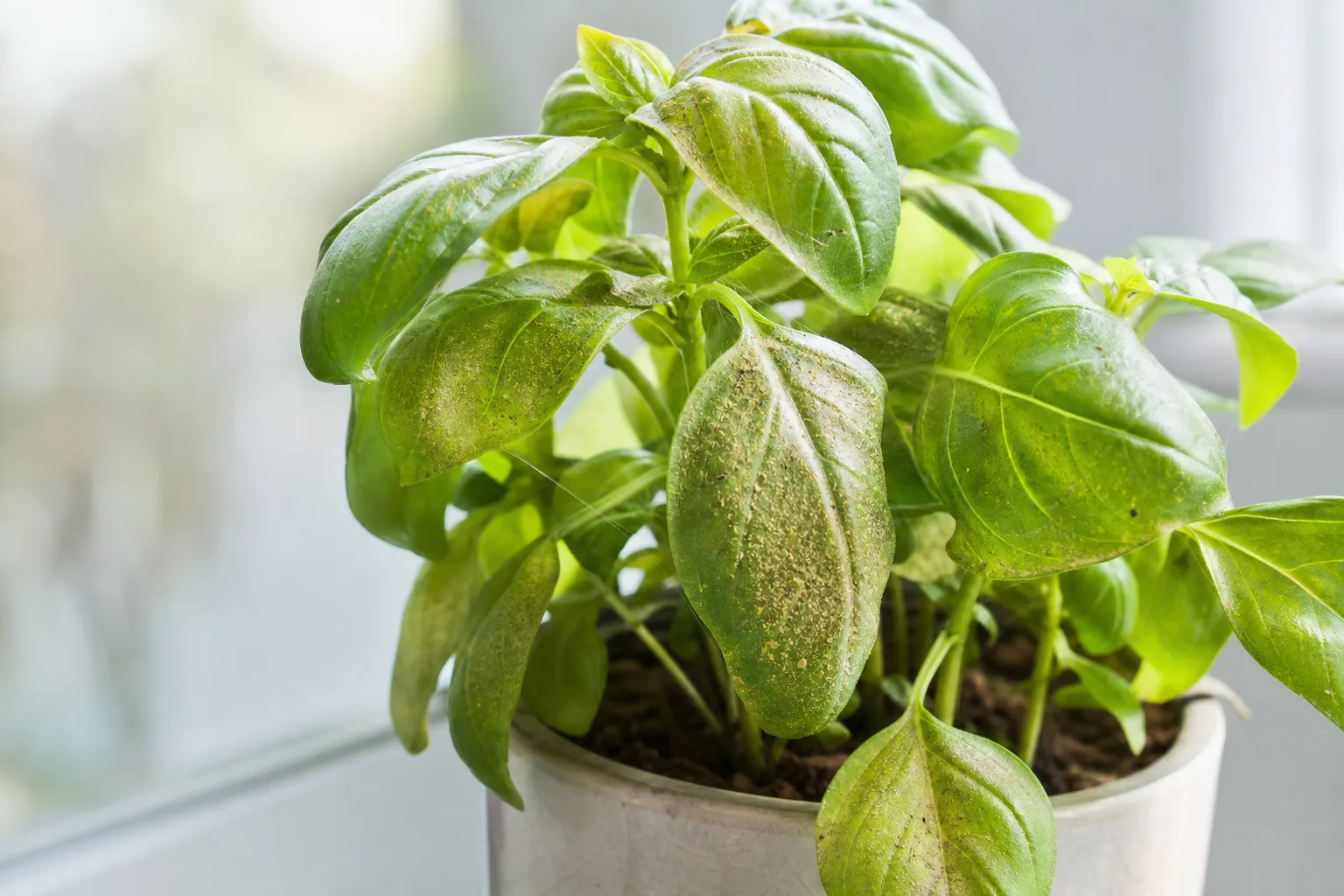
Two-spotted spider mites are so small that the first clue is usually damage rather than the mite. Leaves develop fine yellow stippling, then a gray or bronze cast, and heavy infestations may produce delicate webbing on undersides and growing tips. Hot, dry weather and dusty, stressed plants favor rapid buildup, so inspect tomatoes closely when the weather turns harsh.
Hold a damaged leaf over white paper and tap it. Moving pepper-like specks suggest mites, although a hand lens gives a more reliable confirmation. Wash the undersides with water, reduce dust and drought stress, and remove leaves that are badly damaged. Recheck in a few days rather than assuming one rinse ended the problem; eggs and missed colonies can restart the infestation.
Insecticidal soap or horticultural oil can help when the label lists tomatoes and mites, but thorough contact with leaf undersides matters more than a strong concentration. Avoid spraying a heat-stressed plant or mixing remedies casually. Broad-spectrum insecticides can kill predatory mites and other natural enemies, allowing spider mites to rebound more aggressively; Clemson Extension identifies conservation and limited insecticide use as important parts of tomato pest management.
Tomato fruitworms (corn earworms)
Tomato fruitworms, also called corn earworms, are moth larvae that often move from flowers or tender foliage into green fruit. The entry hole may be near the stem, and frass inside the fruit can lead to decay. The caterpillar’s color varies from greenish to brown or nearly black, so the location of the injury is often more useful than color alone.
Inspect flowers, the undersides of upper leaves, and young fruit at each scouting round. Remove damaged fruit and hand-pick exposed larvae. When small larvae are present, Bt kurstaki is more useful than it is against a large caterpillar already protected inside fruit; spinosad or another product is an option only when the label lists tomatoes and the target pest, and only when the label’s harvest interval and application limits can be followed.
Do not use a calendar spray simply because moths are common in the area. Clemson Extension notes that fruitworms enter green fruit soon after hatching and that a larva may move among small fruit, so the practical trigger is fresh injury or confirmed larvae—not the presence of an adult moth alone.
Flea beetles
Flea beetles are tiny, dark beetles that jump when disturbed. Their feeding produces many small, round “shot holes,” especially on young leaves and small transplants. Established tomato plants usually tolerate light damage better than seedlings, but severe feeding can slow growth before the plant has enough foliage to compensate.
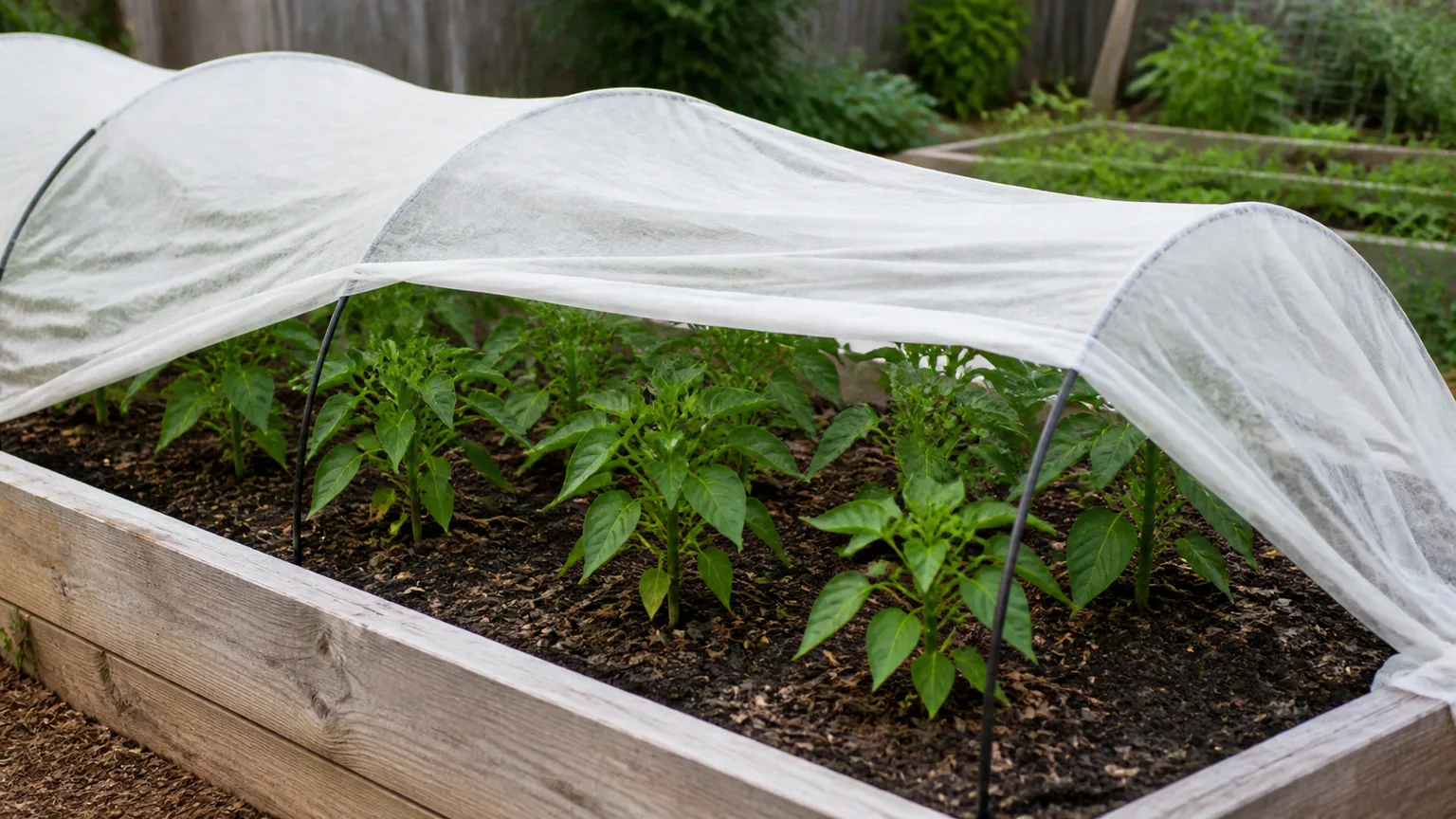
Check seedlings in the morning and disturb the foliage over a light-colored surface. Protect young plants with insect netting or a floating row cover immediately after transplanting, securing the edges so beetles cannot crawl underneath. Remove the cover when flowers need pollination, and use healthy transplants, weed control, and steady watering to help plants outgrow light pressure.
Flea beetles also use other solanaceous crops and weeds, so tidy the bed without stripping every flowering plant from the garden. Crop rotation can reduce the chance that a new tomato bed sits directly over a concentrated overwintering population, although adult beetles can still move in. NC State Extension describes the characteristic tiny holes and the vulnerability of young tomato plants, which is why early exclusion is usually more useful than a late rescue spray.
Thrips
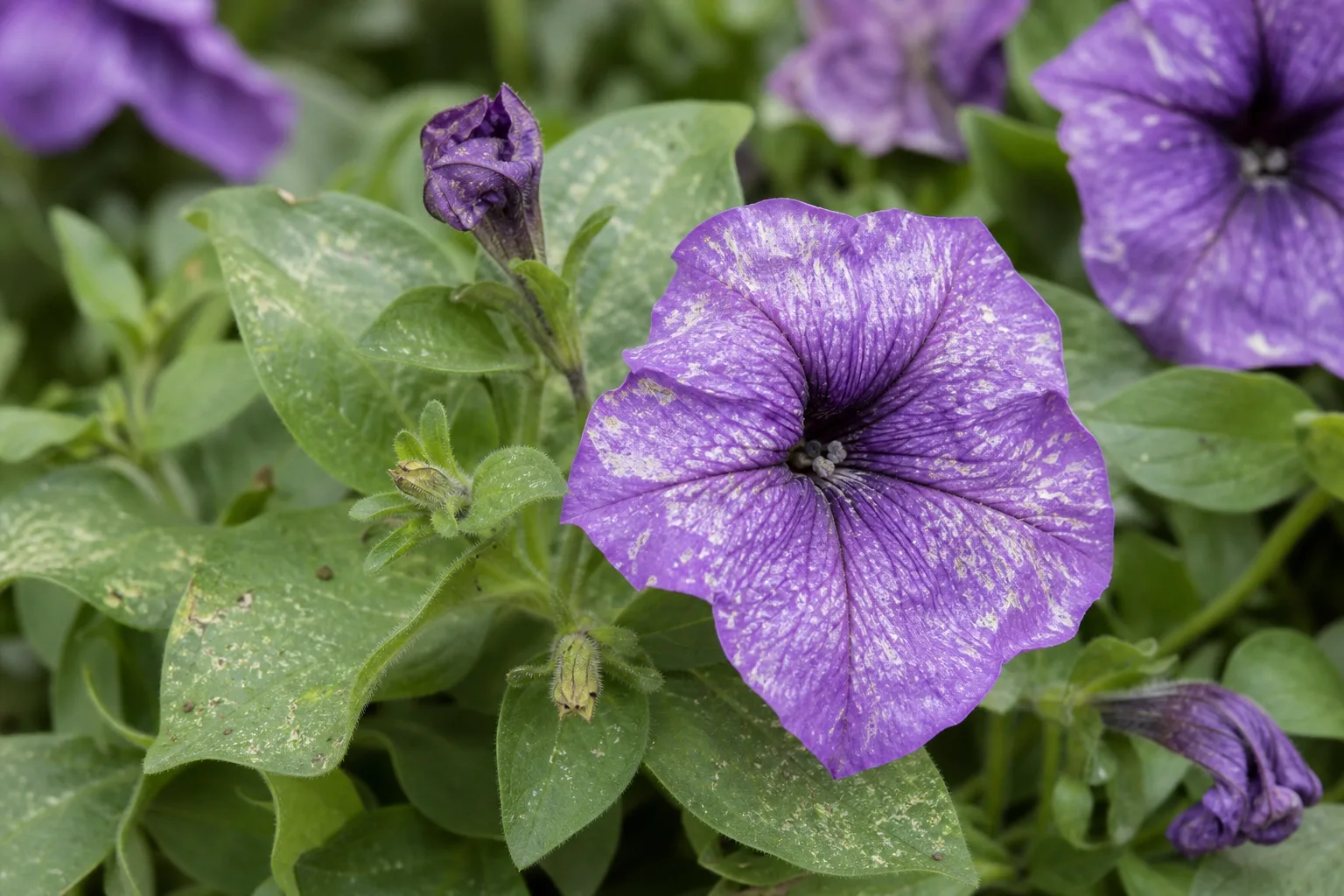
Thrips are tiny, narrow insects that hide in flowers, buds, and new growth. Feeding can leave silvery scars, distorted leaves or flowers, and tiny black fecal spots. Western flower thrips can also transmit tomato spotted wilt virus, so a plant with severe distortion and a spreading pattern of discoloration deserves closer diagnosis rather than repeated surface sprays.
Shake a flower over white paper and use a hand lens to look for slender yellow, brown, or dark insects. Remove weeds and volunteer plants that can host thrips, keep transplants clean, and use fine insect netting while plants are small if it is practical. Once the canopy is flowering, a cover may block pollinators, so it must be managed around bloom.
Thrips are difficult to control because they shelter deep in flowers and buds. If a product is needed, choose one whose current label specifically includes tomatoes and thrips, follow pollinator precautions, and target the timing and coverage the label requires. NC State Extension notes that natural enemies and screening can be important, while routine broad-spectrum spraying may miss protected thrips and remove the predators that would otherwise help.
Leafminers
Leafminers are fly larvae that feed between the upper and lower surfaces of a leaf, leaving winding, pale trails. Mines may merge into blotches when numbers are high, and badly damaged leaves can drop early. The adult fly is easy to miss; the serpentine track is the useful clue.
Remove a small number of heavily mined leaves and discard them away from the bed. Inspect purchased transplants before planting, clean up old tomato foliage promptly after harvest, and control weedy hosts near the crop. Do not crush every leaf with a mine automatically: living parasitoids may be inside, and a mine with no active larva can be old damage.
UC IPM’s leafminer guidance identifies conservation of parasitic wasps as the central management step and warns that disruptive insecticides can cause leafminer outbreaks by killing those natural enemies. Its treatment guidance uses monitoring rather than the mere presence of a mine. For a home garden, that means remove localized damage, watch for fresh mines, and ask your local extension office for a crop-specific threshold before escalating.
Colorado potato beetles
Colorado potato beetles are oval yellowish-brown adults with dark stripes, while their larvae are orange-red to pink with black markings. Both stages chew tomato leaves, and the yellow egg masses are usually tucked on leaf undersides. The pest is more likely where tomatoes grow near potatoes, eggplants, or other nightshades, but adults can travel into a new bed.
Inspect plants early, especially seedlings, and hand-pick adults, larvae, and egg masses into soapy water. Remove volunteer potatoes and nightshade weeds that can bridge one crop to the next. Rotate where tomatoes and potatoes are planted when space allows; rotation will not stop flying adults, but it can reduce immediate pressure from soil-associated stages and make scouting easier.
If chewing becomes severe, use a product only when its label lists the crop and beetle, and do not assume an organic designation means it is harmless to bees or beneficial insects. Spray coverage, resistance, and harvest restrictions vary by active ingredient and jurisdiction. A small, early infestation is far easier to manage by hand than a defoliated plant surrounded by egg masses.
Stink bugs and leaf-footed bugs
Stink bugs and leaf-footed bugs pierce buds, stems, and fruit with needlelike mouthparts. On green tomatoes, feeding may appear as pale fuzzy-edged spots; on ripe fruit, it can look like tiny dimples or pinpricks with hard, whitish tissue underneath. Adults are shield-shaped or elongated with widened hind legs, and nymphs may be brightly marked or orange-red.
Check fruit clusters and the undersides of leaves for adults, nymphs, and egg clusters. Hand-pick slow individuals into soapy water, remove nearby weed patches that are holding large numbers, and keep ripe fruit harvested so the crop spends less time exposed. Because adults move quickly, a blanket spray often treats the garden broadly while missing the bug and harming other insects.
Do not confuse every shield-shaped insect with a pest. Some predatory bugs look similar and feed on caterpillars or other insects. When the identity is uncertain, photograph the insect and look at its mouthparts and behavior before treating. Clemson Extension describes stink bugs and leaf-footed bugs as fruit-puncturing pests whose importance varies with crop stage and local pressure, which is a good reason to focus on fruit injury rather than insect count alone.
Whiteflies
Whiteflies fly up in a small cloud when a tomato plant is disturbed, then settle on the undersides of leaves. Nymphs look like tiny pale scales and stay attached to the leaf while feeding. Yellowing, curling, weak growth, honeydew, and sooty mold follow heavy feeding; sweetpotato whiteflies can also cause uneven ripening in fruit.
Start by checking new transplants and the lower leaf surfaces before bringing plants into the garden. Hose the undersides with water, prune only badly infested leaves, and preserve lacewings, lady beetle larvae, and parasitic wasps. Yellow sticky cards can help you notice incoming adults, but they do not replace inspecting nymphs or treating the plant itself.
Whiteflies are a classic example of why one spray rarely finishes a pest. Eggs and immature stages are less exposed, and adults can recolonize from nearby hosts. UC IPM’s whitefly guidance recommends cultural practices, monitoring, natural enemies, and treatment only when needed; it also notes that soaps, oils, and azadirachtin may be acceptable in some organic systems. For a home crop, use only a product labeled for tomatoes, get thorough underside coverage, and repeat only according to the label.
Armyworms
Armyworms are striped or mottled caterpillars that may begin on leaves and later move into fruit clusters. Small larvae create ragged holes; larger ones can make several holes across a fruit or damage multiple clusters. Finding fresh frass, chewed leaves, and a caterpillar tucked in the canopy at dusk is more useful than trying to identify every color form.
Inspect leaves, flowers, and fruit clusters in the evening, hand-pick what you can, and remove badly damaged fruit. Bt kurstaki is most effective on small, actively feeding caterpillars because it must be eaten; it will not reach a larva hidden inside a fruit. Keep weeds and crop debris from becoming an unnoticed bridge between generations, while remembering that flowering plants can support the beneficial insects that attack caterpillars.
If damage is limited to one or two clusters, spot management is more sensible than treating every tomato. If fresh injury continues across the bed, confirm the caterpillar and consult the current product label or local extension guidance before using a targeted treatment. Avoid mixing products or increasing the concentration because the first application did not solve a pest hidden inside fruit.
Use the least disruptive control that fits
Integrated pest management is a sequence, not a synonym for “organic spray.” First identify the pest, then decide whether the injury justifies treatment, remove or exclude what you can, conserve natural enemies, and use a targeted product only when the earlier steps are not enough. This approach is consistent with the tomato guidance from Clemson Extension, NC State Extension, and UC IPM.
Use this order when you find a problem:
- Confirm the clue. Check undersides, flowers, fruit, stems, and soil at the time the pest is active.
- Measure the trend. Photograph one leaf or fruit, mark the plant, and check again in two or three days. A few aphids on a mature plant is different from a seedling being cut or new fruit being bored.
- Remove or wash. Hand-pick caterpillars and beetles, hose aphids and whiteflies, prune a localized colony, and remove mined or rotting leaves and fruit.
- Exclude early. Use row cover or insect netting on young plants before pests arrive, then remove it when flowering and pollination require access.
- Protect the helpers. Avoid spraying lady beetle larvae, lacewings, hoverflies, parasitoid wasps, predatory mites, and pollinators along with the pest.
- Treat precisely if necessary. Choose a current product label that names tomatoes and the confirmed pest, follow its rate, protective equipment, pollinator warning, re-entry direction, and preharvest interval.
What each common treatment can and cannot do
Bt kurstaki is for feeding caterpillars such as hornworms, fruitworms, and armyworms. It must be eaten, works best on small larvae, and does not control aphids, mites, whiteflies, beetles, or a caterpillar protected inside fruit. Reapply only as directed; rain, sun, and the label’s interval determine when another application is allowed.
Spinosad is used on some tomato caterpillars and thrips, but the label and local registration control whether it is an appropriate choice. It can affect bees and other insects, so do not spray blooming plants while bees are foraging. Do not treat the active ingredient as a universal answer to every pest on this list.
Insecticidal soap and horticultural oil work by contact against exposed soft-bodied pests such as aphids, whiteflies, and some mites. They require thorough coverage, especially under leaves, and have little residual action after drying or washing off. N.C. Cooperative Extension’s insecticidal-soap guidance warns against homemade detergent mixtures and recommends a test spray, label compliance, and avoiding use on drought-stressed plants or in high heat.
“Natural,” “organic,” and “low residue” do not mean risk-free. Any product can injure foliage, kill beneficials, contaminate water, or leave a harvest restriction when used incorrectly. Read the entire label for the specific formulation in your hand, and never increase the concentration because a recipe online promises faster results.
Prevent the next generation of tomato pests
Begin with clean, vigorous transplants. Turn over leaves, inspect the stem and soil line, and reject plants with fresh mines, aphid colonies, whitefly nymphs, webbing, or unexplained stippling. A pest introduced on one plant can establish before the rest of the garden is large enough to hide it.
Make scouting easy by spacing and supporting plants so you can reach the canopy, prune only when there is a clear reason, and keep irrigation aimed at the soil rather than the foliage. Avoid excessive nitrogen that creates a flush of soft new growth, and correct drought or waterlogging because stressed plants have less capacity to outgrow light feeding. Plant health will not make tomatoes pest-proof, but it changes how much injury the plant can absorb.
Use barriers at the stage when they offer the most value. Row cover protects seedlings from some flea beetles, aphids, and thrips, while a stem collar protects an individual transplant from cutworms. Remove covers for flowering or hand-pollinate when appropriate, and check underneath them so a pest is not trapped with the plant.
Clear old tomato vines after harvest, rotate tomato-family crops when practical, and remove weeds that are actively hosting a pest. Do not turn the bed into a sterile patch: flowering herbs and small, open flowers provide nectar and pollen for beneficial insects. BBC Gardeners’ World Magazine’s companion-planting guide describes marigolds and other companion plants as possible tools for confusing pests or attracting predators, but also notes that evidence for many combinations is anecdotal. Use companion planting as habitat and diversity, not as a guarantee that whiteflies or aphids will stay away.

Finally, keep a simple pest log. Note the date, crop stage, weather, damage pattern, insect found, action taken, and result. After one season, you will know whether cutworms arrive with spring weeds, mites appear during dry heat, or fruitworms begin when nearby corn is silking—and you can place the right barrier or scouting reminder before the problem peaks.
Conclusion
The best way to get rid of tomato pests is to make the diagnosis specific. Cutworms call for soil-line inspection and collars, hornworms and armyworms are often hand-pickable caterpillars, aphids and whiteflies can be washed from foliage, leafminers are a reason to conserve parasitoids, and fruit-feeding bugs need attention before the injury spreads through the harvest.
Scout the whole plant, watch how the damage changes, and use the least disruptive step that fits. Clean transplants, early barriers, plant diversity, healthy root growth, and label-directed treatment when truly necessary will protect more tomatoes—and more beneficial insects—than a routine blanket spray.