28 Fall-Blooming Flowers for a Perennial Garden
Choose 28 fall-blooming flowers by sun, soil, bloom timing, and hardiness. Find reliable perennials, tender plants, pollinator picks, and caveats.
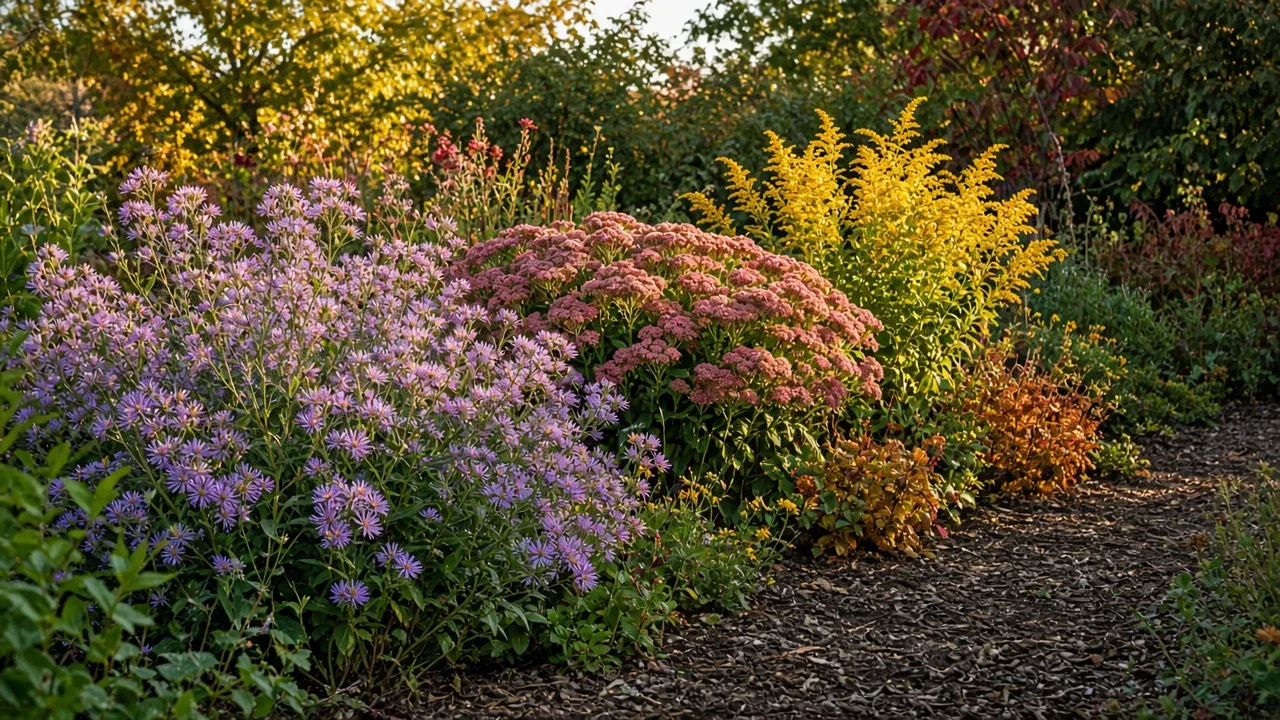
The best fall-blooming flowers are not necessarily the plants with the loudest autumn colors. They are the plants whose flowering window, root hardiness, and site preferences line up with your garden after summer heat has passed. A dry, sunny border needs a different cast than a damp shade bed, and a zone 5 gardener cannot treat a dahlia like a zone 9 gardener can.
Use this list as a menu, not a shopping mandate. First identify your light and moisture, then decide whether you want a plant that returns from the ground, a tender tuber you will lift, or a one-season filler that earns its place with months of color. The botanical names matter because “aster,” “mum,” and “stonecrop” can refer to several plants with different habits.
Start with the site, not the flower color
Match bloom timing to your first frost
“Fall” can mean August in a high-elevation garden and December near the Gulf Coast. The USDA hardiness zone map helps with winter survival, but it does not predict your exact flowering date. Watch your local average first frost and choose a mix of early fall, mid-fall, and frost-tolerant plants so one cold night does not end the display.
In most temperate gardens, asters, sedum, goldenrod, and sneezeweed bridge late summer into September. Japanese anemones, mums, toad lilies, and many salvias carry the show into October. Pansies, violas, ornamental kale, and some cyclamen are better bets when you want color after tender summer flowers have been stopped by frost.
Sort plants by light, moisture, and permanence
Full sun means roughly six or more hours of direct light, and it is especially important for sturdy stems and heavy flowering in asters, sedum, goldenrod, dahlias, and helenium. Part shade is not the same as deep shade: a bed with morning sun or bright filtered light can support Japanese anemone and turtlehead, while a dark corner under dense evergreens may not.
Soil moisture is the other decisive filter. Sedum, Russian sage, leadwort, and blanket flower prefer drainage and can decline in a wet winter. Turtlehead, Joe Pye weed, and sneezeweed need more consistent moisture. A plant tag that says “moist but well-drained” means water is available, but the roots are not sitting in stagnant water.
Sunny perennials that carry the garden into fall
Asters, sedum, goldenrod, and sneezeweed
New England aster (Symphyotrichum novae-angliae) and New York aster (Symphyotrichum novi-belgii) are the classic late-season daisy plants. They flower in purple, blue, pink, or white and support bees and butterflies when many early perennials are finished. New England asters are often taller and more tolerant of heavier soils; New York asters include compact cultivars useful at the front of a border. Pinch tall plants in early summer if you want a shorter, denser mound, and stake or support them if the site is windy.
Autumn Joy stonecrop (Hylotelephium ‘Herbstfreude’) starts with pale flower heads that deepen through pink and rusty red. It is a strong choice for dry beds, gravel gardens, and containers because its succulent leaves store water. The dried heads remain attractive through winter, so do not rush to cut them after frost unless diseased foliage is the problem.
Goldenrod (Solidago spp.) brings yellow sprays to the late-season border and is one of the most useful native plant groups for autumn pollinators. It is often blamed for hay fever, but the wind-pollinated culprit blooming at the same time is usually ragweed; goldenrod’s heavier pollen is carried mainly by insects. Choose a clumping garden selection or a regional species if you want a tidier plant than a vigorous meadow type.
Sneezeweed (Helenium autumnale) produces warm yellow, orange, or red flowers over a long late-summer and fall window. It performs best in full sun with moisture-retentive soil, and removing faded flowers can extend the show. In a dry bed, it will need supplemental irrigation; it is not a drought plant simply because it blooms in autumn.
Rudbeckia, helianthus, tickseed, and Boltonia
Black-eyed Susan (Rudbeckia spp.) can begin in summer and continue into fall, especially when spent flowers are removed before the plant sets heavy seed. Leave some brown cones after flowering for birds and winter texture. Most types prefer full sun and average soil, but short-lived cultivars should be allowed to self-sow if you want a continuing colony.
Perennial sunflower (Helianthus spp.) gives you yellow daisy flowers with a longer-lived root system than an annual sunflower. It can be tall and assertive, so plant it at the back of a border or where spreading is welcome. Check the mature height and width before planting; a “sunflower” that stays four feet tall is a different design tool from one that reaches eight feet.
Tickseed (Coreopsis spp.) is useful when you want a plant that can rebloom after a summer trim. It prefers sun, tolerates periods of dryness once established, and offers yellow flowers for bees and butterflies. Cut back lightly after the first flush rather than shearing a stressed plant during a heat wave.
Boltonia (Boltonia asteroides) forms a cloud of small white, pink, or violet-centered daisies in late summer and fall. It is a good substitute for a large aster where you want a lighter, more informal effect, but it can become broad and floppy in rich soil. Give it room and use neighboring plants as support.
Purple coneflower (Echinacea purpurea) is usually thought of as a summer perennial, but established clumps often continue into early fall, especially when faded flower heads are removed selectively. The sturdy seed cones also feed birds later, so leave some stems standing. Choose it for full sun and average, well-drained soil rather than a permanently wet bed.
Moist or partly shaded late-season performers
Japanese anemone, turtlehead, and toad lily
Japanese anemone (Anemone × hybrida) sends elegant pink or white flowers above dark foliage, often when the border is beginning to thin. It handles sun to part shade, but afternoon shade can reduce stress in hot climates. It spreads by underground runners and may take a few seasons to settle, so plant it where a colony is an advantage rather than a surprise.
Turtlehead (Chelone lyonii) is one of the most dependable choices for a moist, partly shaded bed. Its hooded flowers resemble turtle heads and attract butterflies, while the upright clumps stay orderly compared with more roaming perennials. Do not put it in a dry foundation bed and expect mulch alone to solve the moisture shortage.
Toad lily (Tricyrtis spp.) earns a place in a shade garden with orchid-like, speckled flowers late in the season. It likes humus-rich, evenly moist soil and protection from harsh afternoon sun. Slugs may damage the foliage in wet gardens, so improve air movement and remove hiding places rather than watering the leaves at night.
Joe Pye weed, blue pitcher sage, and leadwort
Joe Pye weed (Eutrochium spp.) is a tall native perennial for the back of a sunny or partly shaded border. Its mauve-pink flower domes are valuable to butterflies, but the plant can reach five to seven feet in favorable soil. Use a shorter cultivar when possible, and do not fertilize heavily; lush, soft growth is more likely to flop.
Blue pitcher sage (Salvia azurea) brings clear blue flowers on tall, open stems in late summer and fall. It appreciates full sun and well-drained soil, and it may need staking in exposed sites. The airy habit is part of its appeal, so support it without forcing it into a dense hedge.
Leadwort (Ceratostigma plumbaginoides) is a low-growing groundcover with late blue flowers and foliage that can turn bronze or red as temperatures fall. It works at the front of a sunny border or in a dry, well-drained spot. Give it room to spread, and avoid treating it as a lawn substitute where foot traffic is frequent.
Mums, dahlias, salvias, and other high-color choices
What returns, what needs lifting, and what is annual
Garden mums (Chrysanthemum spp.) are botanically perennial in many climates, but a flowering pot bought in October is not automatically a reliable perennial. Late-planted mums may spend their energy blooming and have little time to root before winter. For the best chance of return, plant in spring, keep the root zone watered during establishment, and mulch after the ground cools without burying the crown.
Dahlias (Dahlia spp.) are perennial tubers in mild climates but usually need lifting and dry, cool storage in colder zones. They bloom from midsummer until frost, and regular cutting keeps new flowers coming. Dig after frost blackens the foliage, let the tubers dry briefly, label the cultivars, and store them where they will not freeze or stay damp.
Mexican bush sage (Salvia leucantha) produces velvety purple flower spikes with contrasting pale corollas in late summer and fall. It is a tender perennial or shrub-like plant in warm zones and a seasonal accent elsewhere. Give it sun, drainage, and room to become a broad mound; do not confuse it with hardy culinary sage.
Russian sage (Salvia yangii) supplies lavender-blue flowers over silvery foliage and tolerates dry soil once established. It is best cut back in late winter or early spring because the old stems protect the crown and provide winter structure. If it flops, the first questions are usually light, excess fertility, and overly rich or wet soil—not a need for more pruning.
Container and cut-flower options
Strawflower (Xerochrysum bracteatum) is often grown as an annual, though it can act as a short-lived perennial in warm climates. Its papery flowers hold color when dried, making it useful for a cutting garden and fall arrangements. Deadhead for more side shoots, but leave a few blooms if you want seed.
Sweet alyssum (Lobularia maritima) is a low, fragrant filler that often fades in summer heat and rebounds in cool fall weather. It softens the edge of a pot or path and can flower until frost where nights cool gradually. Check local invasive-plant guidance before allowing it to self-seed, especially in regions where it has naturalized.
Bengal tiger canna (Canna spp.) is a warm-season rhizome grown for bold foliage and flowers that can continue into fall. It needs heat and moisture during the growing season and is not hardy in cold winters without lifting. In a mixed border it provides height and tropical texture, but it is a poor choice for a dry, low-water planting.
Strawflower, dahlias, mums, and salvias make excellent cut-flower subjects because they offer distinct shapes: papery bracts, rounded blooms, dense flower heads, and vertical spikes. Harvest in the cool morning, choose stems with partly opened flowers, and strip foliage below the water line so the arrangement lasts longer.
Bulbs, groundcovers, and unusual fall flowers
Autumn crocus, stonecrop, sweet alyssum, and strawflower
Autumn crocus (Colchicum autumnale) appears in September or October as leafless goblets rising from bare soil. It is not a true crocus, and every part is toxic if eaten; the ASPCA lists autumn crocus among plants of concern for pets. Keep it away from children and animals that dig or graze, and do not plant it where a curious dog can chew the corms.
Stonecrop ‘Lidakense’ (Hylotelephium cauticola) is a low, creeping sedum with fleshy leaves and pink flowers. It suits rock gardens, edging, and containers where excellent drainage matters. Unlike upright Autumn Joy, it is valued as a groundcover, so use the growth habit to fill the front of a bed rather than expecting a tall focal point.
Blanket flower (Gaillardia aristata) gives red-and-yellow daisy flowers on plants that tolerate lean, well-drained soil. It can be short-lived, especially in wet winter conditions, but it often repays you with seedlings and a long flowering season. Avoid improving a sandy site with heavy, moisture-holding amendments; drainage is part of the plant’s hardiness.
Balloon flower (Platycodon grandiflorus) opens from inflated buds into blue, white, or pink flowers and can provide late-summer color that overlaps with early fall. It prefers sun and well-drained soil and dislikes being moved once established because of its thick root. Mark its location before dormancy so you do not accidentally dig into it in spring.
Sweet autumn clematis (Clematis paniculata) can cover a trellis with fragrant white flowers late in the season, but it is a vigorous self-seeder and is invasive in some regions. Check your state or provincial invasive-plant list before planting. If it is appropriate where you live, give it a strong support and prune it after flowering or in early spring because it blooms on new growth.
Build a longer fall display with layers
A pollinator-friendly succession
The strongest fall garden is a sequence, not a single wave. Pair a flat, nectar-rich flower such as goldenrod, aster, sneezeweed, or rudbeckia with tubular flowers such as salvia for different pollinators. Add sedum for late nectar and winter seed-head structure, then place a moist-site plant such as turtlehead or Joe Pye weed only where the soil can support it.
The RHS highlights stonecrops, dahlias with accessible open flowers, salvias, and other late-season plants as important autumn resources for pollinators. Avoid spraying insecticides on open flowers, and buy from pesticide-free suppliers when you can; a plant marketed for pollinators is not helpful if its blooms carry persistent residues.
Maintenance that protects winter value
Deadhead when you want more flowers, but do not cut every perennial to the ground on the same day. Leave some aster, sedum, rudbeckia, goldenrod, and sunflower seed heads for birds and visual structure. Remove diseased foliage and any stems that are collapsing into wet crowns, but allow healthy hollow stems to remain where stem-nesting bees can use them.
In the first season after planting, water new perennials deeply when the top few inches of soil begin to dry, especially if they are flowering in a nursery pot. Mulch around—not over—the crown, and do not push high-nitrogen fertilizer late in the season. The goal is a well-rooted plant, not a flush of soft growth just before cold weather.
Sources used for this guide: RHS guide to asters, RHS anemone guide, RHS autumn pollinator plants, North Carolina Extension Gardener Plant Toolbox, Missouri Botanical Garden chrysanthemum guidance, ASPCA autumn crocus listing, USDA Plant Hardiness Zone Map, and Fine Gardening’s fall garden coverage.
Conclusion
For the most dependable perennial fall garden, start with plants that match your site: asters, sedum, goldenrod, sneezeweed, rudbeckia, and tickseed for sun; anemone, turtlehead, toad lily, and Joe Pye weed for moisture or part shade; Russian sage, leadwort, and blanket flower for dry drainage. Add mums or dahlias for concentrated color only after deciding whether you will plant early, lift tubers, or treat them as seasonal accents.
Plant for overlapping bloom windows, keep some seed heads standing, and judge every “hardy” label against your climate and planting date. That approach gives you a garden that is still useful to pollinators and still visually alive when summer annuals have finally stopped.



