32 Types of Poinsettias Perfect For Holiday Blooms
Compare 32 poinsettia types by color, pattern, size, and season so you can choose a healthy plant that fits your holiday display and home.
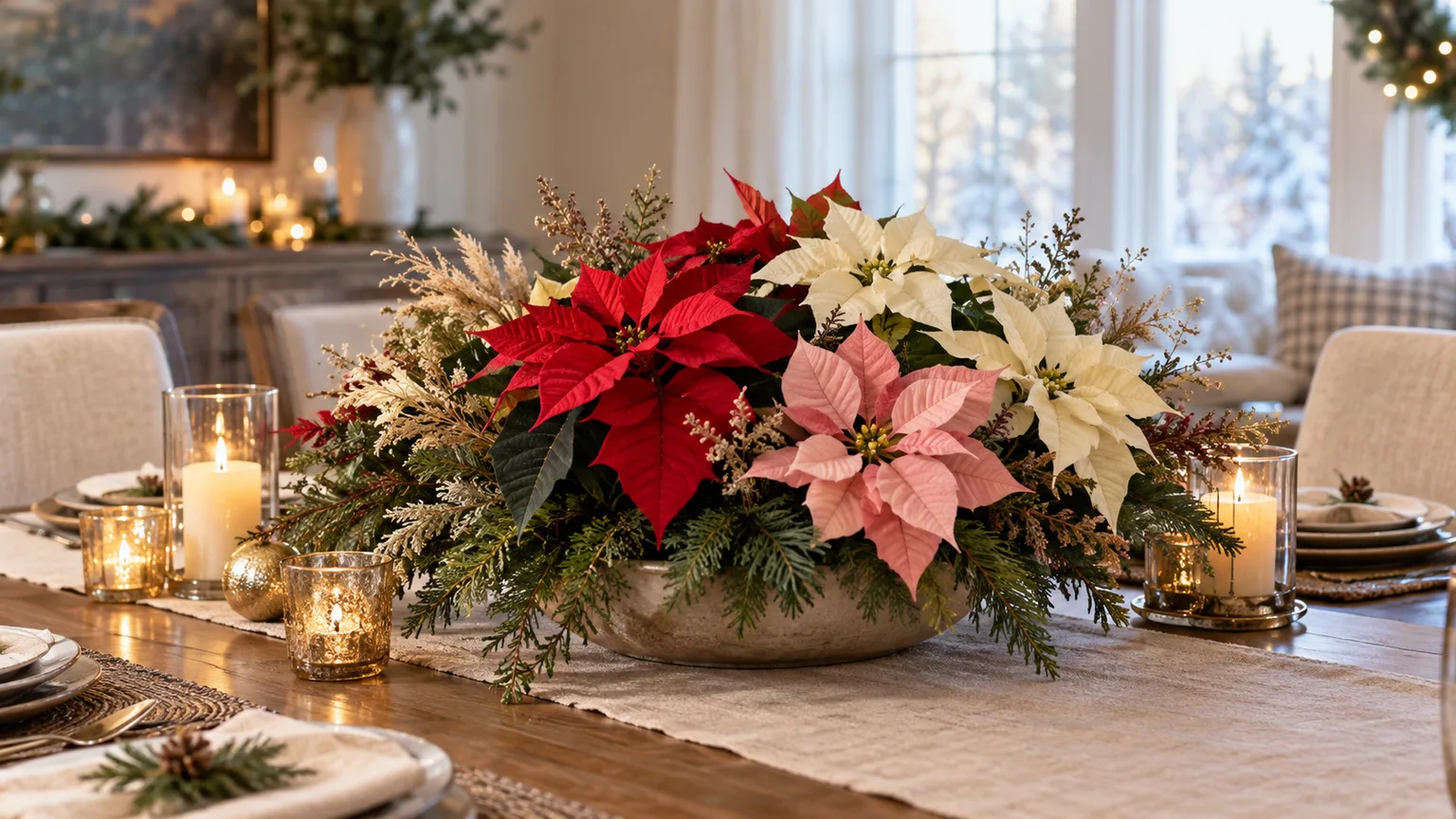
Poinsettias are no longer limited to one shade of Christmas red. Modern poinsettia varieties range from cream and clear white to blush pink, peach, burgundy, lime green, marbled, speckled, and ruffled forms. The best choice is not simply the rarest color; it is the plant whose timing, size, branch structure, and condition fit the place where you will display it.
This guide compares 32 types of poinsettias and adds the selection details a nursery tag often leaves out. Use the list for inspiration, then use the buying and care sections to choose a plant that is already healthy enough to carry its color through your celebration.
Start with three decisions: color, timing, and scale
Begin with the room, not the cultivar name. A compact plant with upright bracts works well on a dining table, a broad plant with strong branching fills an empty corner, and a late-season variety may be a better purchase close to Christmas than an early one that has already begun to fade.
Think about color in groups. Solid reds and burgundies are forgiving partners for evergreen branches; whites and creams brighten a dark room; pinks and peaches soften a neutral interior; and marbled or speckled forms act as the focal point. For a mixed display, choose one dominant color and one accent instead of combining every novelty at once.
Timing matters because commercial growers classify cultivars as early, mid-, or late-season based on when they develop their colored bracts under production conditions. That label is a useful guide, not a guarantee: light, temperature, shipping, and the plant’s stage when you buy it all affect how long the display looks fresh.
Bracts, cyathia, and what “bloom” means
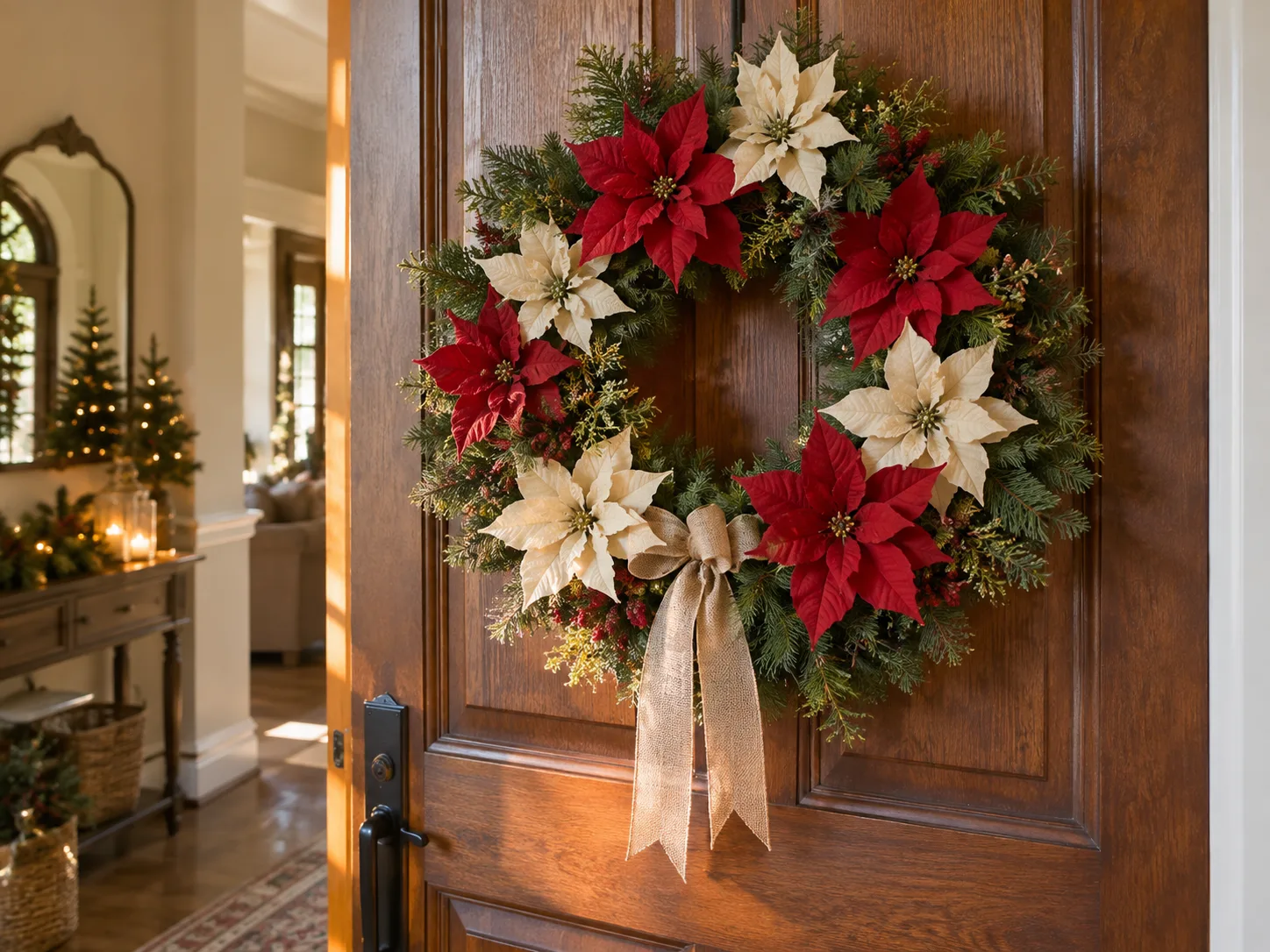
The colorful parts people call poinsettia flowers are bracts, or modified leaves. The true flowers are the small yellow-green structures called cyathia in the center of each cluster. NC State’s Plant Toolbox describes poinsettias as shrubs or small trees in the spurge family that are usually sold as potted florist plants in the United States, with commercial colors extending beyond red to pink, white, peach, and combinations of those shades.
That distinction helps you judge a plant. Look for fresh, firm bracts and small cyathia that are still present rather than a crown where most of the centers have already dried or dropped. A plant can still look colorful after the true flowers have passed, but the display is usually further along than its color alone suggests.
The variety notes below combine recognizable appearance with practical buying context, cross-checking the broader variety coverage in Gardener’s Path and Epic Gardening. Cultivar names are not stocked consistently from one retailer or region to another, so treat them as a useful shopping vocabulary rather than a promise that every garden center will carry all 32.
Red poinsettias for a traditional display
Classic red remains the easiest color to place and the easiest to combine with green foliage, wood, brass, and white lights. Within that group, the shape of the bract changes the mood: pointed bracts feel star-like, rounded bracts look lush, and dark red forms read as more formal.
- Cortez Early Red — A medium-red, early-season type for shoppers who want color before the main December rush. Its upright, even look suits a pair of matching plants on a mantel or console.
- Early Orion Red — Another early color option with a reliable, traditional red appearance. Choose it when you are decorating for late November or the first week of December and want the plant to look established on arrival.
- Grande Italia — A large, starry red choice with the classic silhouette many people expect from a holiday poinsettia. Give it room to spread so the broad crown does not crowd a narrow table.
- Cortez Burgundy — A deep red cultivar that reads almost wine-colored beside dark foliage. It is a better fit for an elegant, low-contrast display than for a bright red-and-white theme.
- Christmas Beauty Princess — A red type with a lighter center and a fuller, upright habit. It brings more visual variation than a solid red without becoming as busy as a heavily speckled cultivar.
- Carousel Red — Look for scalloped or ruffled bracts and a compact, gathered shape. This is a strong match for ribbon-heavy decorations, small groupings, and displays that need texture rather than another flat block of color.
- Holly Berry — A compact red selection with pointed, holly-like bracts. Its scale makes it useful for a tabletop, a kitchen counter, or the front edge of a larger plant grouping.
- Christmas Surprise — A warm reddish-orange red that brings more heat to a holiday palette. Pair it with cream, brass, or natural wood when a standard scarlet plant feels too cool.
White and cream poinsettias for a lighter palette
White poinsettias are often creamy rather than paper-white, especially under warm indoor lights. If a crisp snowy look is important, inspect the plant in person or ask for a photo in daylight; labels such as white, pure white, ivory, and cream can describe noticeably different plants.
- Alaska — A bright white type with pointed bracts and dark green foliage for a high-contrast winter display. It looks especially clean in a simple pot rather than a busy container sleeve.
- Enduring Marble — A compact bicolor with creamy bracts and dusky rose toward the centers. It is an easy bridge between a white display and a pink or red one.
- SkyStar® — A dramatic red-and-white speckled form that looks dusted rather than evenly painted. Use it as a focal plant, because a second patterned cultivar nearby can make the arrangement feel visually noisy.
- Freedom Family — This is a group rather than one exact color, with red, pink, white, and bicolor selections. It is useful when you want a familiar, smooth-bracted look and need to match several plants across a room.
- Marble Star — A soft, late-season combination of creamy edges and rose-pink centers. Buy it closer to the date you need it so the timing works with its later color development.
- Christmas Mouse® — A small novelty with rounded bracts and leaves that suggest mouse ears. It is more playful than formal and works best as a gift plant or a small accent where its unusual shape can be seen up close.
Pink, peach, and orange poinsettias for softer color
Pink and peach types are useful when red would clash with a room’s palette or when you want a plant that can stay out after Christmas. Their color can range from cool rose to warm salmon, so compare them beside your existing textiles rather than relying on a catalog description.
- J’adore Pink — A compact pink choice with pointed bracts and an open center. Miniature plants are particularly useful for place settings, office desks, and small shelves where a full-size crown would dominate.
- Christmas Season Pink — A pink cultivar with a deeper center and a fresher green edge. It has enough contrast to stand alone but also mixes well with white and pale green plants.
- Marco Polo — Salmon-pink and cream coloring gives this type a quiet, warm appearance. It suits a soft neutral room, a natural-material arrangement, or a holiday display that needs color without high saturation.
- Robyn Pink — A compact, well-branched pink with a full appearance. Choose it when you want a generous crown in a smaller footprint and prefer a clear bubblegum or rose-pink effect.
- Plum Pudding — A dusky violet-purple novelty for people who want the plant to feel more like a decorative ornament than a traditional Christmas flower. The unusual tone is easiest to use when the rest of the display is restrained.
- Pink Champagne — Rose and coral tones fade into each other across the bracts. It can carry a display from Christmas into New Year’s without looking tied to one particular decoration style.
- Autumn Leaves — A warm blend of peach, yellow, and pink that works especially well for Thanksgiving or early seasonal decorating. Protect it from cold during transport and keep it away from drafty doors once indoors.
- Visions of Grandeur — A vigorous, larger plant with creamy, pink, and golden tones. It is a floor or large-container choice, not a plant to squeeze behind a centerpiece.
Marbled, speckled, green, and unusual poinsettias
Patterned poinsettias are often the most memorable, but they also deserve the most careful placement. Their color variation can look different from one plant to the next, and some cultivars may produce occasional bracts that are more solid or more heavily marked than the label photograph.
- Monet Twilight — Creamy bracts carry pink flecks that deepen toward rose as they mature. It works as a transition plant between white and red, especially in a display where you want painterly variation without sharp stripes.
- Christmas Beauty Cinnamon — A peachy-pink member of the Christmas Beauty group. Its warm color suits copper, brown, and evergreen decorations; give the plant room for air movement if the room is unusually humid.
- Peppermint Ruffles — A ruffled, wavy-bracted type with pale red, cream, and pink patterning. Its broad, textured shape needs more horizontal space than a narrow, upright cultivar.
- Jingle Bell Rock — Bright red bracts carry large cream blazes, making it one of the clearest choices for a red-and-white focal point. NC State’s trial notes describe strong stems and branching but also later flowering and a tendency for some plants to show more white or more solid color than others.
- Green Envy — Lime or chartreuse bracts with wavy edges bring a fresh green note to a holiday display. Pair it with one strong red plant rather than several green plants, or the color can disappear into the foliage.
- Candy Wintergreen — A brighter lime-green type with an upright habit and a classic poinsettia silhouette. It is an effective companion for red and white plants when you want contrast without adding another pattern.
- Tapestry — Red bracts are paired with variegated foliage edged in cream and yellow. Because the leaves are part of the display, inspect the lower foliage as carefully as the crown before you buy.
- Ice Punch — Rosy red bracts carry a strong white blaze down the middle. NC State’s Ice Punch trial summary describes it as an early-flowering cultivar with good branching and a range of container sizes, which makes it one of the more versatile patterned choices.
- Winter Rose — Ruffled, recurved bracts create a rose-like appearance in red, pink, white, and marbled forms. Its compact shape is attractive on a table, but the curled bracts can hide the centers, so inspect closely for fresh cyathia.
- Lemon Glow — Bright yellow bracts with dark gray-green leaves provide an unusual autumn-to-holiday accent. It is best for a color story that already includes warm gold, cream, or green rather than a traditional red-only scheme.
Match the cultivar to your holiday calendar
The NC State Poinsettia Trials organize cultivars by color group, vigor, and early-, mid-, or late-season flowering. That kind of trial information is more useful than a vague promise that a plant “blooms for a long time,” because a plant that colors early may look tired by Christmas while a late one may still be opening when you need it.
Early-season picks
For Thanksgiving, early December decorating, or a gift you will deliver several weeks ahead, start with Cortez Early Red, Early Orion Red, Autumn Leaves, Holly Berry, Ice Punch, or a confirmed early selection from a grower. Buy the healthiest plant you can find, but avoid choosing a crown that is already shedding many lower leaves or has dry, brown centers.
Mid-season picks
Mid-season plants are the safest all-purpose choice when you are shopping in the first half of December. Grande Italia, Christmas Beauty Cinnamon, Candy Wintergreen, Robyn Pink, Monet Twilight, and many Freedom and Christmas Beauty selections fit this window, although the exact retail timing depends on the grower and local climate.
Late-season picks
Late-season cultivars make sense when your event is close to Christmas or when you want color that is still developing at purchase. Jingle Bell Rock and some Winter Rose, marble, and Christmas Beauty selections may be later, but never rely on the name alone; ask the grower whether the individual crop is early, mid-, or late-season.
Choose size and shape before you buy
Color catches your eye, but scale determines whether the plant will be easy to live with. A small pot can still have a wide, heavy crown, while a taller plant may be narrow enough for a floor corner. Turn the pot slowly and look at the canopy from all sides rather than judging the front-facing side only.
Compact plants for tables and shelves
Choose J’adore Pink, Holly Berry, Christmas Mouse®, Enduring Marble, or a compact Robyn or Winter Rose when the plant must share space with food, candles, or serving dishes. Keep the crown clear of a hot flame and give it enough light that the side facing the room does not become the only healthy side.
Full plants for floors and entryways
Choose Grande Italia, Visions of Grandeur, a full Freedom selection, or a broad Peppermint Ruffles when you need a statement plant. Measure the display area before buying, including the space needed to keep foliage away from a heater, fireplace, cold pane, or frequently opened exterior door.
Inspect a poinsettia before purchasing
The healthiest plant is usually the one with the best balance of fresh growth, intact foliage, and developing centers, not necessarily the one with the largest crown. Use this quick inspection:
- Check that the plant is evenly branched and does not lean heavily toward one side.
- Look underneath the leaves for webbing, sticky residue, cottony clusters, scale, or flying insects.
- Avoid plants with widespread yellowing, limp leaves, broken stems, or many dropped leaves on the bench.
- Examine the potting mix. It should not be saturated, sour-smelling, or completely dried away from the pot wall.
- Look at the cyathia in the centers. A few open or aging flowers are normal, but a crown with almost no fresh centers is already well along.
- Check that the sleeve is not trapping water against the pot. Decorative foil is fine for transport, but drainage holes must be able to empty after watering.
When two plants look equally good, choose the one that has been protected from outdoor cold and has a label identifying the cultivar or color group. Retail tags are not always precise, but a named plant is easier to compare with trial notes and care information later.
Protect it on the journey home
Poinsettias are warm-climate plants, and cold exposure can damage leaves before the symptoms are obvious. Ask the seller to sleeve the plant fully, carry it straight to a warm vehicle, and do not leave it in an unheated car while you run errands. A short, protected trip is part of the plant’s care, not an optional extra.
At home, remove the outer sleeve once the plant is inside and let excess water drain. Do not place a newly purchased poinsettia immediately beside a radiator, fireplace, heat vent, or cold window. Sudden temperature swings are more damaging than a room that is simply a little cooler than ideal.
Keep the color fresh indoors
Place the plant in bright, indirect light or gentle filtered sun, with enough space around the canopy for air movement. Sunset’s poinsettia care guidance recommends bright indirect light and protection from drafts, fireplaces, and heater vents; NC State gives a 65 to 70°F target for best growth. That is a practical range for a holiday display even when the plant is being treated as temporary decor.
Water by the root zone, not by the calendar. When the surface feels dry, water thoroughly until a little drains from the bottom, then empty the saucer and any decorative sleeve. Repeatedly leaving the pot in standing water reduces air around the roots and can lead to yellowing, wilt, and premature leaf drop; letting the plant become bone dry can cause the same visual collapse for a different reason.
Do not mist the bracts or use leaf-shine products. Water spots and oily residues are especially visible on pale or patterned cultivars, and wet foliage in a cool, poorly ventilated room can stay damp longer than the plant needs. Rotate the pot every few days if one side is receiving all the light.
The plant’s color is a short-day response, but indoor light after sunset can affect a plant being grown for rebloom. University of Maryland Extension explains that even ordinary room light may be enough for a poinsettia to detect that the night is no longer uninterrupted. For a purchased holiday plant, you do not need to create artificial darkness; simply give it a stable, bright location and avoid stressing it.
Poinsettia sap is milky and may irritate skin or eyes, particularly for people with latex sensitivity. NC State advises protective gloves when handling cut stems, and pets should not be encouraged to chew the plant. The ASPCA’s poinsettia listing describes irritation to the mouth and stomach and notes that vomiting can occur, so contact a veterinarian or poison-control service if a pet eats the plant rather than relying on a broad “safe” or “toxic” label.
Decide what to do after the holidays
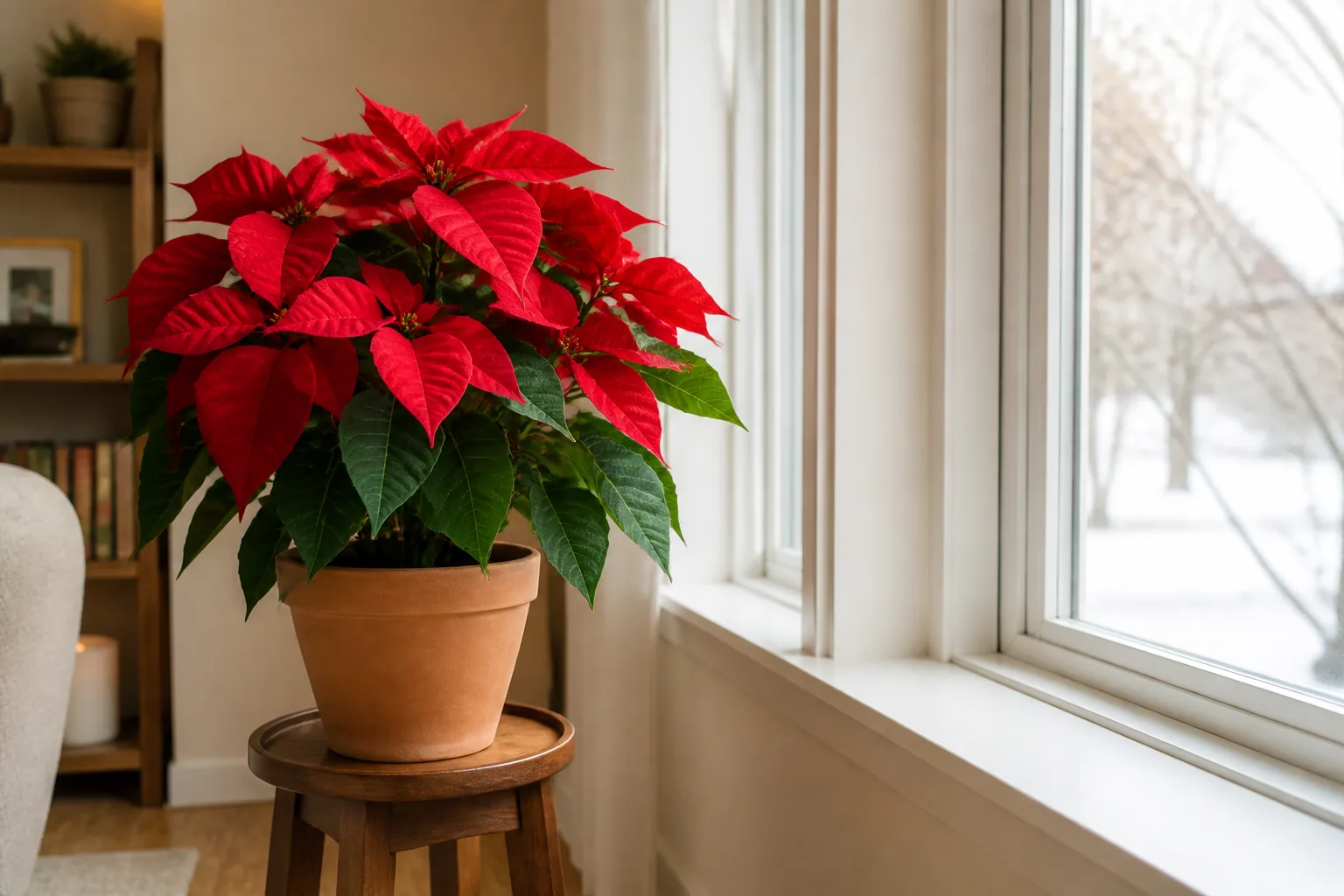
When the bracts fade or turn green, the plant is not necessarily dead. It has completed the colorful phase that made it useful as holiday decor, and it can remain an attractive green foliage plant if you have a bright window and a warm, draft-free place for it.
Keep it as foliage or try to rebloom it
Keeping a poinsettia as foliage is the lower-effort option. Maintain sensible watering, prune only when growth is active and the plant has clearly finished its display, and move it outdoors only after temperatures are reliably warm. In frost-free climates, poinsettias can be grown as shrubs; in colder regions they need to return indoors before cold damage.
Reblooming is possible but exacting. A healthy plant needs active summer growth and, beginning in early autumn, long uninterrupted nights for several weeks; stray light from a room, porch, or street can delay the color response. The University of Maryland Extension notes that cultivar genetics and plant vigor also affect how long bracts keep their color, so a second-year plant may not match the timing or size of the original nursery crop.
That trade-off is why a named variety is fun to keep, but not a guarantee of an identical repeat performance. If you want another holiday display next year, the reliable path is to buy a fresh, healthy cultivar and treat the old plant as a bonus project rather than a promise.
Conclusion
The best of these 32 types of poinsettias is the one that fits your actual holiday: an early Cortez Early Red for November color, a compact Holly Berry for a small table, a bright Alaska for a pale palette, a patterned Ice Punch for a focal point, or a full Visions of Grandeur for a room that needs height. Choose by timing and scale first, then compare color and pattern.
Once you bring it home, protect it from cold, heat, standing water, and sudden changes. Those simple decisions usually matter more to the life of the display than whether the label says red, marble, peppermint, or a brand-new novelty.